Cart
0
You may also like


Book a call with our development team to get started.



Apply online and access wholesale pricing.

When you're selecting packaging for corporate gifts, one of the most consequential design decisions sits right in front of you: should recipients see what's inside before they open the box, or should the contents remain hidden until the moment of reveal? Clear corporate gift boxes and opaque alternatives each create distinctly different recipient experiences, and the right choice depends on what you're packaging, who's receiving it, and what impression you want to leave.
The decision isn't purely aesthetic. Research shows that Packaging Digest consistently identifies transparency as a driver of consumer trust and purchase intent, while psychological studies confirm that visible products create stronger feelings of ownership. But in corporate gifting, where surprise, brand positioning, and perceived value intersect, the visibility question requires a more nuanced framework.
This guide walks through the practical considerations that should inform your choice between clear and opaque corporate holiday gift packaging, including content type, presentation goals, and the role of branding in each approach.
Clear corporate gift boxes excel when the contents themselves are the hero of your presentation. If you've invested in high-quality, visually cohesive items—artisan cookies arranged in rows, color-coordinated product assortments, or beautifully branded merchandise—transparency allows that investment to do the talking before the box is even opened.
Academic research supports this intuition. Studies published in the International Journal of Research in Marketing found that transparent packaging increases psychological ownership, particularly when products are visually desirable. The effect is mediated by the reduced barrier between the recipient and the gift—when people can see an item, they begin to imagine owning it, which strengthens their connection to both the product and the sender.
Clear boxes also reduce the need for extensive exterior decoration. When a recipient can see a dozen perfectly decorated cookies or a curated gift set through the lid, the packaging itself doesn't need to work as hard to communicate value. This makes transparent options particularly efficient for bakery items, candy assortments, and gifts where color and arrangement are part of the appeal.
For corporate senders working within tight timelines, clear packaging offers another advantage: it's easier to verify contents at a glance during assembly and quality checks. When you're preparing fifty or two hundred gift boxes, being able to confirm that each structured kraft gift box contains the correct items without opening it saves meaningful time.

Not all gifts photograph well through plastic. Clear boxes perform best when contents meet three criteria: visual appeal, uniform presentation, and resistance to handling damage.
Bakery items top the list. Decorated sugar cookies, macarons, chocolate-covered pretzels, and other confections that feature color, pattern, or artisan detail benefit from immediate visibility. The cookie and bakery box category has seen steady growth in windowed and fully transparent formats precisely because these items are designed to be seen.
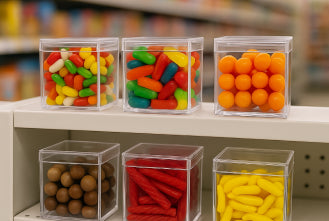
Candy assortments also work well, particularly when packaged in a plastic suitcase candy box or similar clear container that keeps individual pieces separated and visible. Gourmet popcorn, chocolate truffles in foil wrappers, and hard candies in bright colors all create visual interest through transparency.
Branded merchandise benefits from visibility when items are high-quality and logo placement is subtle. A clear box containing a premium notebook, insulated tumbler, and pen set communicates thoughtfulness more effectively than an opaque box with a product list printed on the outside.
Gift sets with coordinated colors—spa products in matching bottles, office supplies in a cohesive palette, or themed collections—also gain impact from transparency. The visual harmony becomes part of the gift experience before the recipient touches the contents.
Opaque packaging serves a different strategic purpose. It creates anticipation, controls the reveal sequence, and allows you to manage perception when contents vary in visual appeal or value.
The element of surprise carries weight in corporate gifting. When a client or employee opens an opaque box and discovers something unexpected—a bottle of wine, a tech accessory, a handwritten note alongside a gift card—the moment of discovery creates a stronger emotional response than gradually recognizing familiar items through clear plastic.
Opaque boxes also solve a practical problem for mixed-value gifts. If you're sending different gift tiers to different recipient groups—executive clients receive premium items, while broader contacts receive simpler tokens—using uniform opaque packaging across all tiers prevents visible comparisons. Recipients focus on what they received rather than wondering whether others got something different.
For items that don't photograph well in packaging—books, fabric goods, electronics in retail boxes, or products with busy label designs—opaque containers provide a cleaner presentation. The exterior of the gift box becomes the design surface, and you control the aesthetic rather than relying on product packaging that wasn't designed to be viewed through plastic.
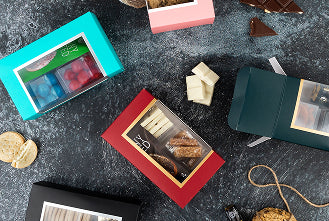
Window boxes offer a compromise that works well when you want to show a preview without full transparency. A die-cut window on the lid allows recipients to glimpse part of the contents—enough to identify the gift category (cookies, for example) without revealing the full assortment.
This approach works particularly well for wine bottle gift boxes, where a small window shows the wine label while the rest of the box maintains structure and protects the bottle. It also suits gift boxes where one hero item deserves visibility while supporting items are better left as a surprise.
From a branding perspective, window boxes let you maintain more print real estate for logos, messaging, or seasonal graphics while still offering the trust-building benefit of product visibility that Flexible Packaging Association research consistently links to transparent elements in packaging.
Clear gift boxes typically use PET plastic or acetate, which means they're lighter than paperboard equivalents but require different handling during shipping and assembly. Plastic boxes resist moisture better than kraft or SBS paperboard, making them a practical choice for cookies, candies, and other items where humidity control matters.
However, plastic boxes offer less cushioning than paperboard. If you're packaging items that could shift or break during transit, you'll need more internal support—shredded paper, tissue, or fitted inserts—to prevent movement. Opaque paperboard boxes, by contrast, often provide enough structural rigidity to protect contents with minimal fill material.
Sustainability considerations also differ. Clear plastic boxes made from PET are technically recyclable, but acceptance varies by municipal program. Many corporate gift programs now prioritize recyclable or compostable materials, which tilts the decision toward kraft paperboard or other fiber-based options that recipients can more easily dispose of responsibly.
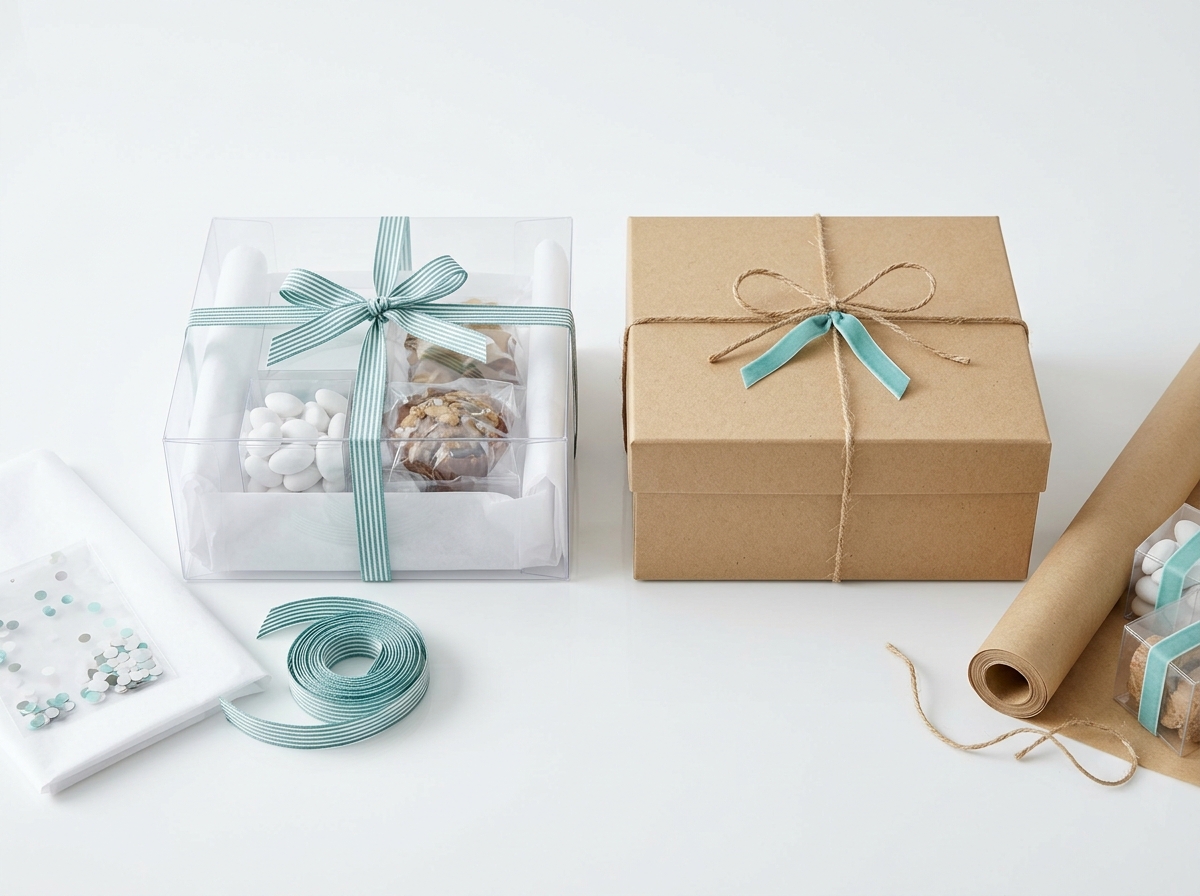
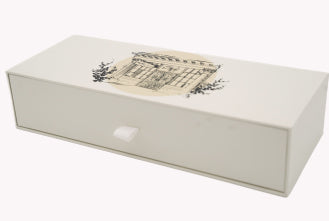
Opaque boxes offer significantly more surface area for branding. You can print directly on kraft or white paperboard, add custom labels, or use belly bands to incorporate logos, seasonal messaging, or personalized recipient names. This makes opaque packaging the default choice when brand visibility is a primary goal.
Clear boxes limit branding to labels, stickers, or ribbons, since you can't print on transparent plastic without obscuring the contents. Some corporate senders solve this by using branded tissue paper inside clear boxes, or by placing a custom card on top of the contents where it's visible through the lid. These approaches maintain transparency while adding a branded element.
For organizations following quiet branding principles, clear boxes with minimal exterior marking can actually serve the strategy better than heavily logoed opaque packaging. The gift itself becomes the focus, with branding relegated to a small label or ribbon that feels less promotional.
Clear plastic boxes generally cost less per unit than custom-printed paperboard boxes, particularly at lower volumes. If you're ordering fewer than 500 units, stock clear boxes with added labels or ribbons often prove more economical than custom opaque boxes that require printing setup fees.
However, minimum order quantities for custom printing have decreased in recent years, making smaller runs of branded opaque boxes more accessible. The cost calculation depends on your specific volume, timeline, and whether you plan to reuse the same box design across multiple campaigns.
Lead times also differ. Stock clear boxes ship immediately, while custom opaque boxes typically require two to four weeks for printing and production. If you're working within the compressed timeline that characterizes most corporate holiday gift programs, clear boxes offer more flexibility for last-minute orders or additions.
The unboxing experience differs fundamentally between clear and opaque packaging, and understanding that difference helps you align packaging choice with your relationship goals.
Clear boxes create a sense of transparency—literally and figuratively—that can reinforce trust in B2B relationships. When a client can see exactly what they're receiving, there's no question about value or contents. This directness suits transactional relationships or situations where you want to emphasize the quality of specific items you've selected.
Opaque boxes build anticipation and create a more traditional gift experience. The act of opening the box and discovering contents triggers a stronger emotional response, which can deepen relationship bonds. This approach works better for gifts intended to surprise and delight rather than simply deliver value.
For corporate programs that include an unboxing experience component—layered tissue, nested boxes, or reveal sequences—opaque packaging is almost always the better choice. You can't build suspense when everything is visible from the start.
To choose between clear and opaque corporate gift boxes, consider these questions:
Most corporate gift programs don't require choosing one approach exclusively. You might use clear boxes for client cookie gifts sent to fifty contacts, while selecting opaque boxes for executive gifts that include wine, books, or mixed items. The key is matching packaging style to contents and relationship context rather than defaulting to a single format.
Some corporate senders combine clear and opaque elements to balance visibility with surprise. A kraft outer sleeve around a clear box, for example, conceals contents during shipping but allows recipients to slide off the sleeve and see inside before fully opening the gift. This approach works well for tiered corporate gift programs where you want unified exterior branding across multiple gift levels while still showcasing contents.
Another hybrid approach uses clear boxes nested inside opaque shipping boxes. Recipients open the outer box to discover a transparent inner container, which provides both the protection of opaque packaging during transit and the visual appeal of clear presentation at the moment of opening.
For food gifts that require both visibility and structure, consider clear boxes with opaque bases and clear lids. This format shows contents from above while providing the stability and cushioning of paperboard on the bottom, and it creates a natural surface for branding on the base that doesn't interfere with product visibility.
Not necessarily. Clear boxes can look highly professional when contents are well-presented and the box quality is high. The key is ensuring that what's visible through the packaging—the arrangement, color coordination, and item quality—meets the same standard you'd apply to exterior box design. Clear boxes work best when the gift itself is visually polished. If contents are mixed or lack visual cohesion, opaque boxes with strong exterior branding often create a more professional impression.
Yes, though your options differ from opaque boxes. Most corporate senders use custom labels, stickers, or belly bands on clear boxes rather than printing directly on the plastic. You can also place branded tissue paper, cards, or ribbons inside or around the box. These approaches maintain transparency while incorporating your branding. Some suppliers offer clear boxes with small printed areas on the lid or base, but extensive printing defeats the purpose of transparent packaging.
Opaque paperboard boxes generally ship more safely because they provide better cushioning and structural support. Clear plastic boxes are lighter and moisture-resistant, but they require more internal padding to prevent contents from shifting during transit. If you're using clear boxes for shipped gifts, plan to add tissue paper, shredded fill, or fitted inserts to protect contents. For hand-delivered gifts, clear boxes work well without additional protection.
Most clear gift boxes are made from PET plastic, which is technically recyclable, but acceptance varies by location. Many municipal recycling programs accept PET, but some do not. If sustainability is important to your corporate gifting program, check with your recipients' local recycling guidelines or opt for kraft paperboard boxes, which are more universally recyclable and often compostable. You can also include disposal instructions with your gift to help recipients recycle properly.
Choose a fully clear box when all contents are visually appealing and you want maximum transparency. Window boxes work better when you want to show a preview—such as a wine label or the top layer of cookies—while keeping other elements hidden. Window boxes also give you more exterior surface area for branding and messaging while still offering the trust-building benefit of partial visibility. If you're uncertain, window boxes provide a middle ground that works for most corporate gift applications.
The decision between clear and opaque corporate gift boxes isn't about one being universally better than the other. It's about matching packaging style to your specific contents, recipient relationships, and program goals. Clear boxes excel when you've invested in visually appealing contents and want transparency to build trust. Opaque boxes create anticipation, offer more branding flexibility, and work better for mixed-value items or gifts where surprise enhances the experience.
Most successful corporate gift programs use both formats strategically—clear boxes for food gifts and visually cohesive sets, opaque boxes for executive gifts and items that benefit from concealment. The framework outlined here gives you the criteria to make that choice confidently for each gift occasion, recipient tier, and relationship context you encounter.