Cart
0
You may also like


Book a call with our development team to get started.



Apply online and access wholesale pricing.

The oversized logo on that corporate gift box might be costing you more than printing fees. In 2026, companies are replacing aggressive branding with clean layouts and discreet logo placements because oversized logos actually decrease a gift's perceived value and the likelihood recipients will use it. When your client tosses that branded tumbler in a drawer or your partner regifts that logo-heavy gift box, the message is clear: visibility doesn't equal relationship building.
The shift toward quiet branding corporate gifts reflects a broader change in how businesses approach client relationships. Subtle branding wins because when merchandise looks good first and branded second, it gets used more and appreciated more. This article examines when to choose understated elegance over promotional visibility, how packaging design affects gift retention, and the specific contexts where each approach strengthens—or weakens—business relationships.
Corporate gifting has moved beyond promotional tactics. Less is more when it comes to corporate logos in 2026, with the modern approach utilizing subtle, tonal embossing, custom ribbon colors, or elegant personalized greeting cards. The trend isn't about removing your brand entirely—it's about respecting the recipient's space and preferences.
Over a third of corporate gift orders now include customization, and two shifts stand out: branding is getting quieter, with tonal, color-on-color marks reading as more premium than loud logos. This evolution reflects a fundamental truth about relationship-based gifting: the focus should be on the recipient's enjoyment, not your company's marketing metrics.
When you're planning corporate holiday gift packaging that builds lasting relationships, packaging aesthetics matter as much as the gift inside. A kraft gift box with clean lines paired with a custom ribbon creates a more memorable impression than a box plastered with logos.

The most revealing metric in corporate gifting isn't how many gifts you send—it's how many recipients keep. Keepsake packaging is designed for consumers to keep and use alongside the product after purchase, such as a jewelry card designed as a bookmark or a box that converts into a branded display stand, which lessens environmental impact while adding value and encouraging repeat purchases.
Recipients make split-second decisions about whether packaging deserves drawer space or trash-bin space. Logo-heavy packaging typically fails this test because it announces "promotional item" rather than "thoughtful gift." Quiet branding passes because the packaging itself has utility or aesthetic value independent of the brand message.
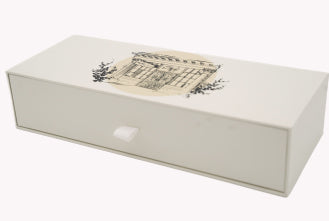
Consider the difference between two gift presentations: a white gift box with a small debossed company monogram versus the same box with a full-color logo covering the lid. The first feels like a gift you'd give a friend. The second feels like a branded giveaway. A gift does not need a large logo to be remembered—in fact, oversized branding can make a high-end corporate gift feel like a promotional giveaway.
Before finalizing your corporate gift packaging, ask these retention-focused questions:
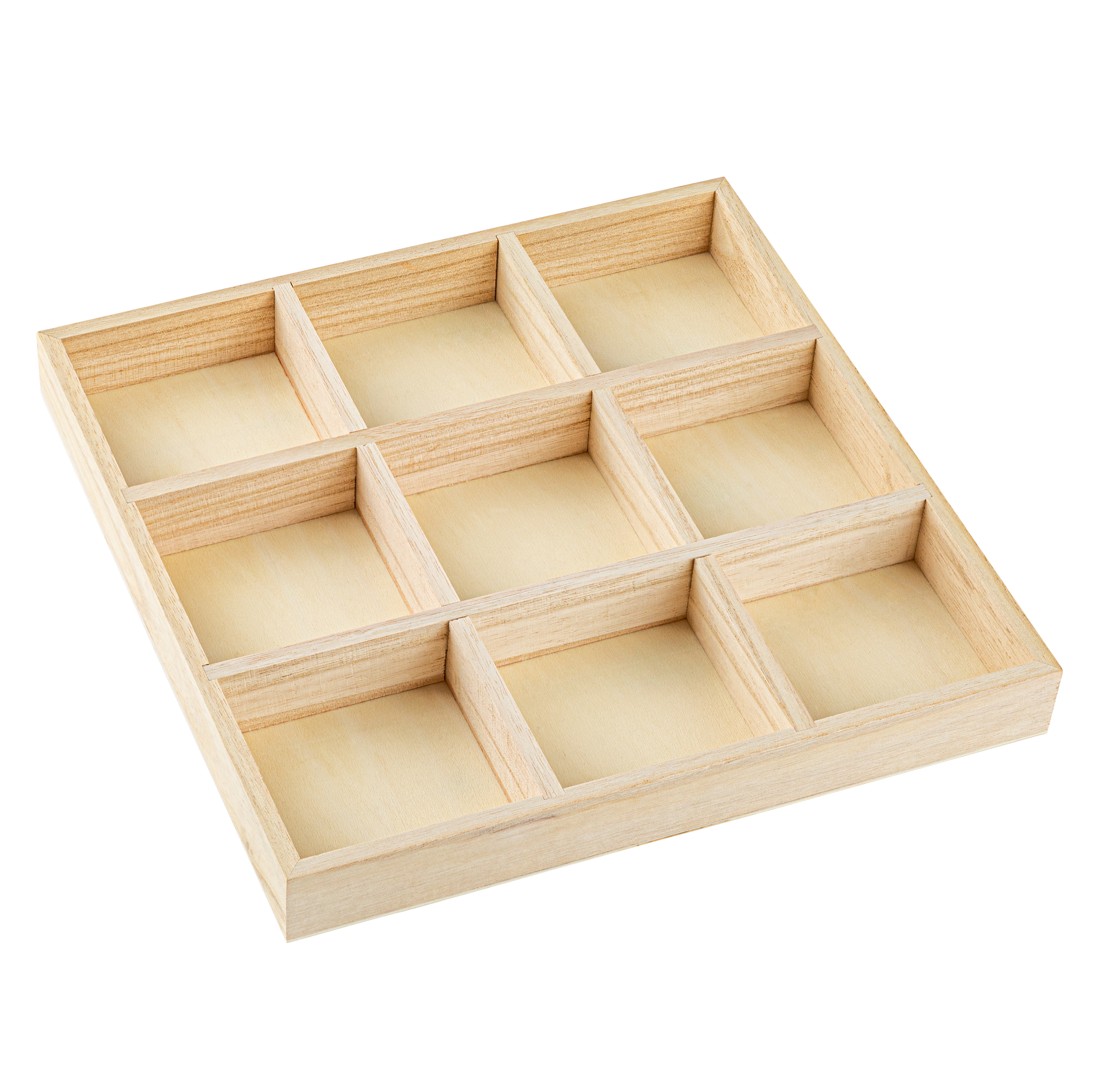
A wooden nested serving tray set exemplifies keepsake packaging principles: it's useful beyond the initial gift presentation, displays well in any home, and doesn't require prominent branding to communicate thoughtfulness.
Quiet branding isn't universally appropriate. Certain corporate gifting contexts still benefit from visible brand presence, but the key is understanding when visibility serves relationship building rather than undermining it.
Event-specific promotional gifts are the clearest exception. If you're distributing gifts at a trade show booth, conference, or branded company event, recipients expect and accept promotional packaging. The context frames the gift as marketing collateral rather than a personal gesture.
Internal employee recognition programs often work better with visible branding because the gift reinforces company culture and team identity. An employee receiving a company-branded gift at an all-hands meeting experiences it differently than a client receiving the same item at their office.
High-volume, lower-value gifts distributed to broad audiences (think thank-you gifts for webinar attendees or new customer welcome packages) can accommodate more prominent branding because the relationship depth differs from executive-level client gifting. Recipients understand these as transactional rather than relational gestures.
Many companies are adopting a hybrid strategy: packaging exteriors feature minimal or no branding, while interior elements—tissue paper, cards, product tags—carry more visible brand identity. This approach respects the recipient's public-facing aesthetic preferences while still building brand recognition when they open the gift.
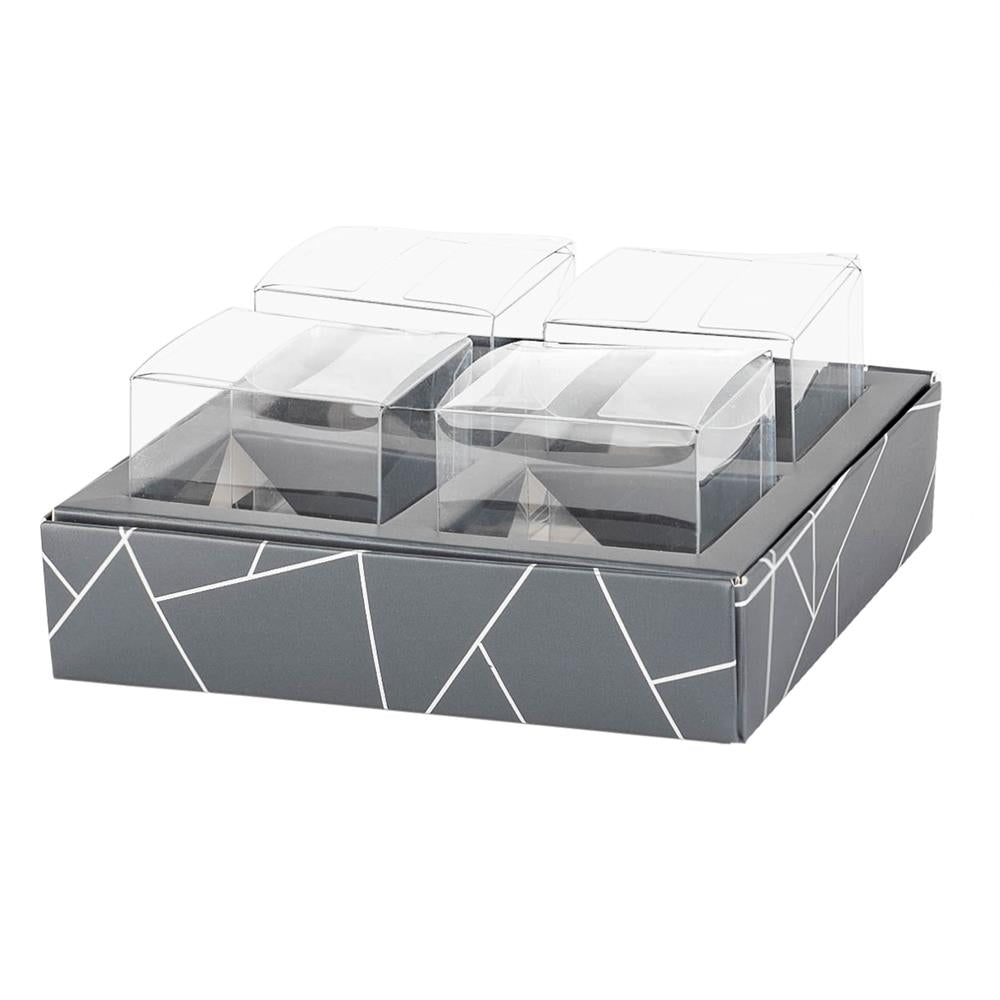
A clean white cube box with a custom-printed interior card delivers brand messaging without compromising the exterior's gift-appropriate appearance.
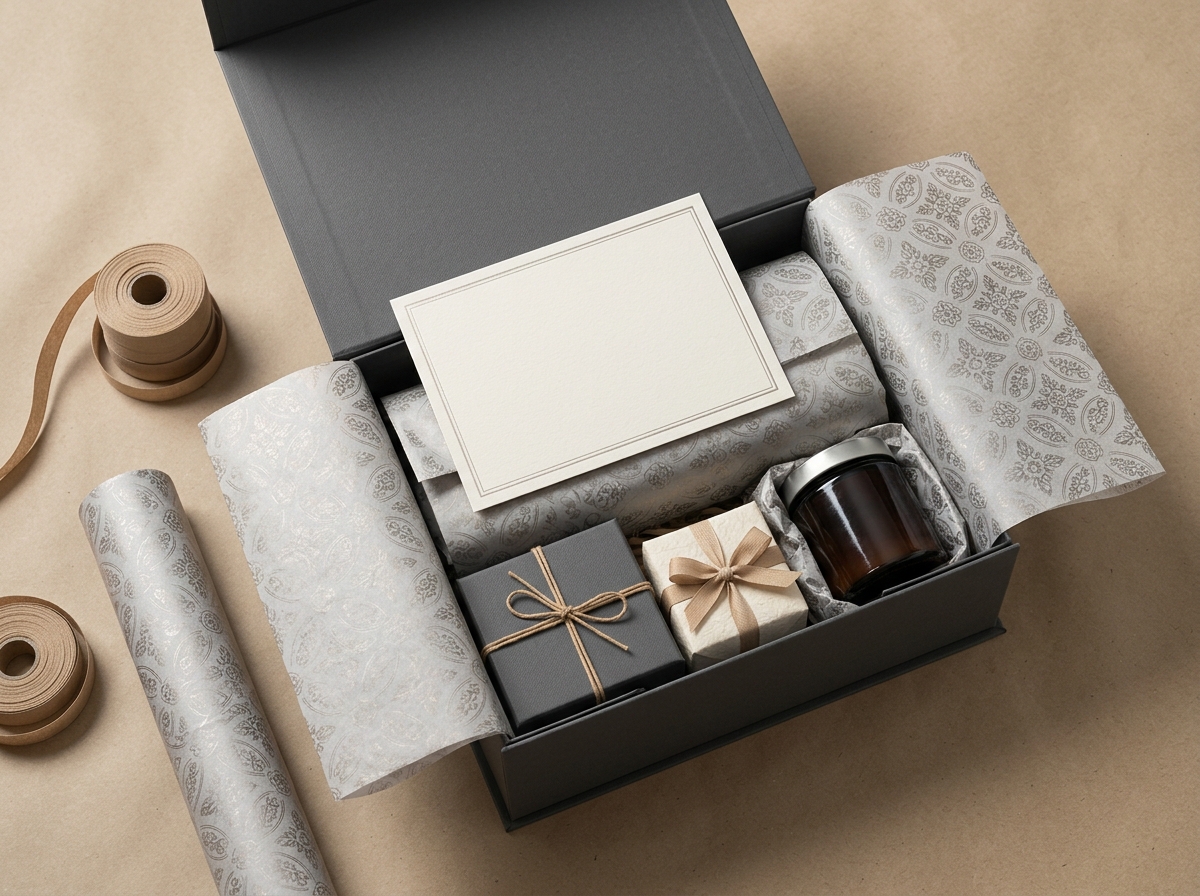
The materials and colors you select communicate as much as your logo placement. The most effective corporate holiday gifts in 2026 are those where branding is a whisper, not a scream—think small, tonal embroidery or a tiny laser-etched logo on the bottom of a matte-finish item.
Natural materials like kraft, wood, and linen inherently support quiet branding aesthetics. These materials communicate quality and thoughtfulness without requiring bold graphics. A simple debossed logo on kraft paper feels premium. The same logo printed in bright colors on glossy paper feels promotional.
Monochromatic color schemes—where your brand color appears as a tonal variation rather than a contrasting element—create sophisticated presentations. If your brand color is navy, consider navy ribbon on a kraft box rather than a navy logo on white packaging. The brand presence registers subconsciously without dominating the visual experience.
Embossing, debossing, and letterpress techniques add tactile brand presence without visual noise. These printing methods work particularly well for quiet branding because they're discoverable rather than assertive. Recipients notice the detail when they handle the packaging, creating a moment of appreciation rather than immediate brand bombardment.
Foil stamping in metallic tones (gold, silver, copper) can work in quiet branding contexts when applied sparingly—a small foil logo or monogram on a solid-color box reads as elegant rather than promotional. The key is restraint: a 1-inch foil detail communicates luxury, while a 4-inch foil logo communicates "we paid for expensive printing."
Traditional marketing metrics—impressions, reach, visibility—don't capture the ROI of relationship-focused corporate gifting. Quiet branding requires different success measures.
Relationship depth indicators matter more than visibility metrics. Did the gift prompt a thank-you call or email? Did the client mention it in your next meeting? Does the packaging still sit on their desk three months later? These qualitative signals indicate successful relationship building.
Repeat business and referral rates offer more meaningful ROI data than logo visibility. Recipients are quicker than ever to judge, and poor quality or awkward design doesn't just disappoint—it reflects badly on the brand behind it. Conversely, gifts that recipients genuinely appreciate strengthen the relationship foundation that leads to continued partnership.
Gift retention and reuse extend your brand presence far beyond the initial moment. A logo-heavy box gets discarded immediately, generating zero ongoing impressions. A beautifully designed box that recipients repurpose for storage generates impressions every time they see it—and these impressions carry positive associations because the box proved useful.
Quiet branding often costs more per unit than logo-heavy promotional packaging because it requires higher-quality materials, more sophisticated printing techniques, and more thoughtful design. But the cost-per-relationship metric tells a different story.
If you send 100 promotional gifts with prominent logos and 20 recipients keep them, you've made 20 meaningful impressions (and possibly 80 negative ones from recipients who felt the gift was too promotional). If you send 50 quietly branded gifts and 45 recipients keep them, you've made 45 positive impressions while spending less on total volume. The relationship ROI favors quality over quantity.
Shifting from logo-heavy to quiet branding doesn't require abandoning your existing packaging inventory overnight. A phased approach lets you test recipient responses while managing costs.
Start with your highest-value relationships. Implement quiet branding for executive-level gifts, major client appreciation packages, and strategic partnership gestures. These relationships offer the clearest ROI from relationship-deepening tactics, and the smaller volume makes premium packaging more budget-feasible.
Test hybrid approaches in mid-tier gifting. For broader client appreciation programs, try minimal exterior branding with more prominent interior brand elements. This strategy reduces the promotional feel without requiring complete packaging redesigns.
Reserve logo-heavy packaging for genuinely promotional contexts. Trade shows, new customer acquisition campaigns, and mass-distribution programs can continue using visible branding because the relationship context differs.
Most wholesale packaging suppliers offer customization options that support quiet branding without requiring fully custom packaging. Ask about:
These techniques let you maintain brand presence while achieving the understated aesthetic that recipients appreciate. They're also often more cost-effective than full custom printing because they work with standard packaging stock.
Different industries have varying expectations around corporate gift branding. Understanding your sector's norms helps you calibrate the right balance between visibility and subtlety.
Professional services (law, consulting, finance) typically favor the quietest branding. Clients in these sectors expect discretion and sophistication. A law firm sending gifts to general counsel clients should err toward minimal branding—these recipients particularly value gifts that don't announce promotional intent.
Technology and creative industries have more flexibility. A design agency can use bolder brand expression in gift packaging because creative presentation aligns with brand identity. However, even in creative sectors, the trend moves toward restraint over excess.
Manufacturing and B2B suppliers often occupy a middle ground. Some logo visibility helps maintain brand awareness in competitive markets, but overly promotional packaging still undermines relationship building. Consider industry events and trade show contexts where your clients expect some brand visibility versus private gift-giving where subtlety strengthens relationships.
Quiet branding aligns naturally with sustainability priorities because it encourages packaging reuse. 49% of Gen Z and 47% of Millennials say they would pay more for eco-friendly packaging, and 82% of respondents are willing to pay more for sustainable packaging.
When recipients keep and reuse packaging, they're participating in circular economy principles without requiring complex take-back programs or industrial composting. A beautiful kraft box with minimal branding becomes a jewelry organizer. A linen bag with a small embroidered logo becomes a reusable shopping bag. This organic reuse has genuine environmental impact while extending your brand presence.
Logo-heavy packaging rarely gets reused because the prominent branding limits its utility. Recipients won't repurpose a box with a large company logo for personal storage, and they won't reuse a branded bag for non-business purposes. The packaging becomes single-use by default, regardless of its material recyclability.
Quiet branding typically costs 15-40% more per unit than standard logo printing because it uses premium materials and specialized printing techniques like embossing, debossing, or foil stamping. However, you often need fewer units because you're focusing on quality over quantity. A $12 quietly branded gift box that recipients keep delivers better ROI than a $7 logo-heavy box that gets discarded immediately. The cost-per-relationship metric favors quiet branding even when the per-unit cost is higher.
Yes, and often more positively. Brand recall comes from the overall gift experience—the quality, thoughtfulness, and utility—not just logo visibility. A beautifully designed gift with subtle branding creates stronger positive associations than a mediocre gift with prominent logos. Include a branded card inside the packaging, use custom colors that align with your brand identity, and ensure the gift itself reflects your company values. Recipients will remember who sent a gift they actually use, even without a large logo reminding them.
Logo-heavy packaging works best in promotional contexts: trade show giveaways, conference swag, new customer welcome kits for broad audiences, and internal employee recognition where company branding reinforces culture. If the gift is part of a marketing campaign rather than a relationship-building gesture, more prominent branding is appropriate. The key distinction is whether you're building a specific relationship (quiet branding) or generating broad brand awareness (visible branding).
Natural materials like kraft paper, wood, linen, and cotton support quiet branding aesthetics because they communicate quality without requiring bold graphics. Kraft boxes with debossed logos, wooden trays with laser-etched details, and linen bags with small embroidered monograms all create sophisticated presentations. Matte finishes work better than glossy for quiet branding because they feel premium and understated. Avoid materials that look overtly promotional—bright plastics, metallic films, or anything with a "trade show booth" aesthetic.
Track qualitative relationship indicators rather than traditional marketing metrics. Monitor thank-you response rates, note whether clients mention the gift in follow-up conversations, and ask your sales team if they've seen the packaging displayed in client offices. Survey a sample of recipients 3-6 months after gifting to ask if they still have the packaging and how they're using it. Track repeat business rates and referral patterns from gifted clients compared to non-gifted clients. These relationship-depth metrics reveal quiet branding ROI better than impression counts or visibility measures.
The shift toward quiet branding corporate gifts reflects a broader maturation in how businesses approach client relationships. When you prioritize recipient experience over brand visibility, you're investing in relationship depth rather than marketing impressions. The packaging choices you make—from material selection to logo placement—communicate whether you view the recipient as a marketing target or a valued partner. In 2026 and beyond, that distinction determines which gifts get kept and which get discarded.