Cart
0
You may also like


Book a call with our development team to get started.



Apply online and access wholesale pricing.

When a customer walks out of your bakery carrying a whole pie priced between $25 and $40, the packaging tells them whether they made a smart purchase or a special one. Premium thanksgiving pie gift packaging transforms a baked good into a gift-ready centerpiece that justifies higher pricing and drives repeat orders during the holiday season.
Presentation elements—ribbon closures, printed sleeves, and coordinated tags—signal quality before the first slice is cut. For bakeries targeting Thanksgiving gifting occasions, these add-ons are not decorative extras; they're margin-protecting tools that align packaging with product value and customer expectations.
This guide walks through the specific presentation strategies that support premium pie sales: which ribbon materials hold up during transport, how sleeves and bands create autumn branding without custom printing, and which gift tags and inserts encourage reorders. Each recommendation is grounded in the practical realities of small-batch bakery operations—lead times, per-unit costs, and assembly speed matter as much as aesthetics.
Packaging presentation directly influences perceived value. Ipsos research indicates that 68% of consumers believe packaging reflects brand value, and bakeries using premium presentation elements report higher conversion rates for seasonal orders. When a pie arrives in a thoughtfully assembled package—structured box, coordinated ribbon, branded tag—customers perceive the purchase as gift-appropriate and worth the premium price.
Thanksgiving pie buyers fall into two segments: hosts purchasing for their own table and gift-givers bringing a dessert to someone else's celebration. The second group drives higher average order values and is more sensitive to presentation quality. A pie that looks gift-ready eliminates the need for customers to repackage at home, removing friction from the purchase decision.
The economics are straightforward. Adding $1.50 to $3.00 in presentation costs per pie—ribbon, sleeve, tag—supports a $5 to $8 retail price increase when the finished package looks cohesive and intentional. Customers interpret the elevated presentation as a signal of ingredient quality and care, making them less likely to question pricing and more likely to recommend your bakery to others.
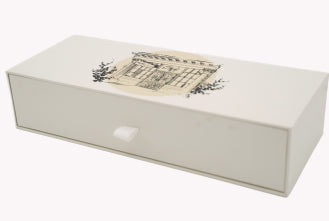
For context, thanksgiving pie boxes provide the structural foundation, but presentation elements transform that foundation into a complete gift experience that commands premium pricing.
Ribbon serves two functions: it secures the box lid during transport and adds visual appeal. The material you choose determines whether the ribbon stays tied through a 20-minute car ride or arrives at the customer's destination as a loose tangle.
Grosgrain ribbon in 1.5-inch to 2-inch widths offers the best balance of structure and appearance. The ribbed texture grips itself when tied, preventing slippage better than satin or organza. Autumn colorways—burnt orange, deep burgundy, olive green, cream—coordinate with Thanksgiving themes without requiring custom printing. Wholesale grosgrain costs $0.25 to $0.50 per yard in bulk orders; a standard 10-inch pie box requires 30 to 36 inches of ribbon for a secure cross-tie with bow.
For bakeries handling high volumes, pre-cut ribbon lengths streamline assembly. Cut 36-inch segments in advance and store them flat in labeled bins by color. This reduces per-pie assembly time from 90 seconds to under 30 seconds, a meaningful efficiency gain when you're packaging 50 to 100 pies in a compressed pre-holiday window.
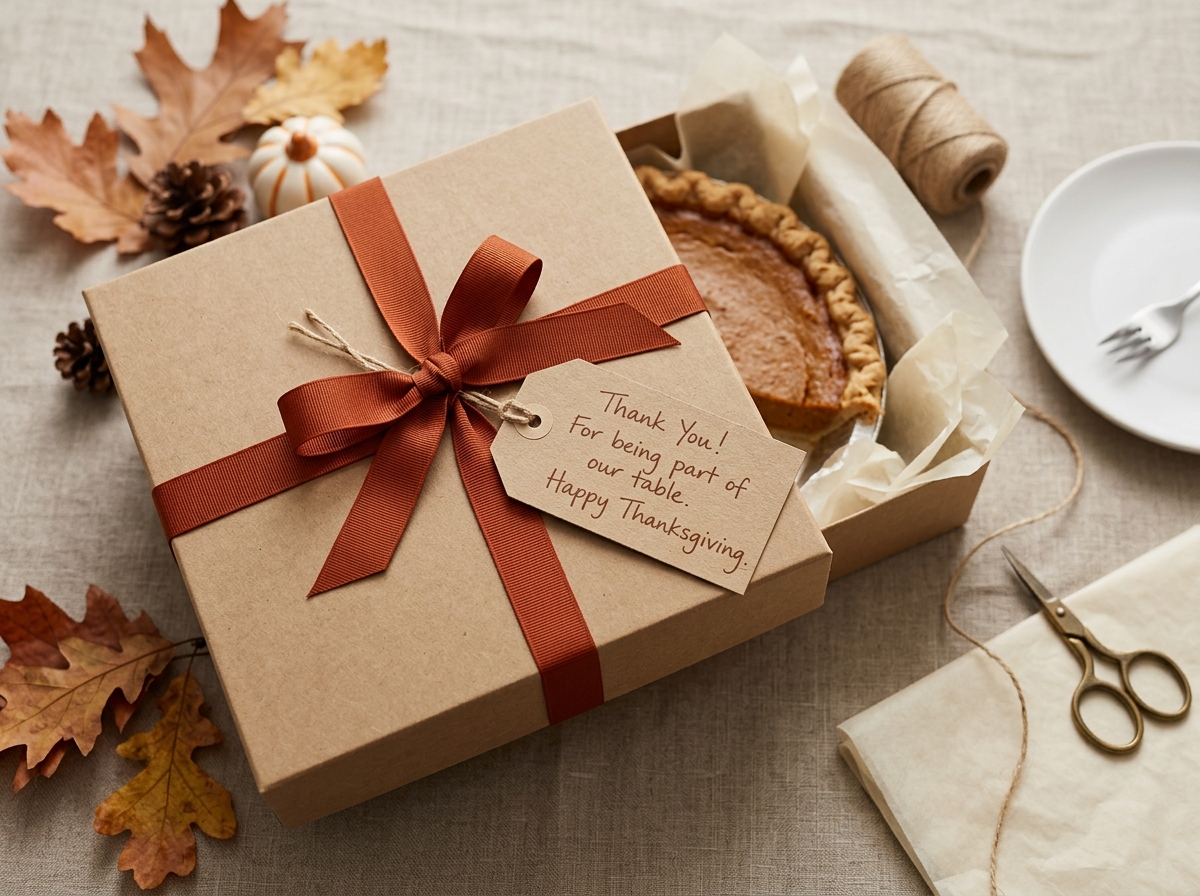
Tying method affects both security and aesthetics. A cross-tie—ribbon running under the box, crossing on top, then tied in a bow—distributes tension evenly and prevents the lid from lifting if the box tips. Train staff to tie bows with 3-inch loops; smaller loops look pinched, larger loops snag during bagging. For extra security on pies traveling more than 30 minutes, add a small adhesive dot under the knot to lock the ribbon in place without visible tape.
Avoid wired ribbon for food packaging. The wire rusts when exposed to condensation from refrigerated pies, and customers often discard wired ribbon rather than reusing it, reducing the perceived value of your presentation investment.
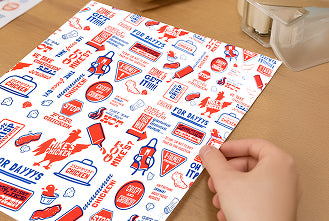
Custom-printed boxes require minimum order quantities of 250 to 500 units and lead times of four to six weeks—impractical for many small bakeries. Printed sleeves and belly bands deliver branded presentation at lower MOQs (often 100 units) and faster turnaround, while still creating a cohesive autumn aesthetic.
A belly band is a 3-inch to 4-inch strip of cardstock that wraps around the box perimeter, held in place with a small adhesive tab or tuck closure. Print your logo, a "Happy Thanksgiving" message, and care instructions on kraft or cream cardstock for a rustic look that aligns with artisan bakery branding. Belly bands cost $0.40 to $0.80 per unit at 100-piece minimums through local print shops, and they slide on and off in seconds during packaging.
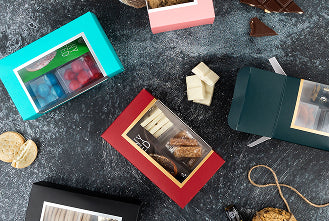
Sleeves—partial wraps that cover the box sides but leave the top and bottom exposed—work well for windowed kraft gift boxes where you want the pie visible from above. Design sleeves with autumn illustrations—leaves, pumpkins, wheat stalks—that frame the window without obscuring the product. Sleeves require slightly higher MOQs than belly bands (typically 250 units) but offer more design real estate for storytelling and ingredient callouts.
For bakeries without design resources, template-based services like Canva or Vistaprint offer Thanksgiving-themed belly band and sleeve templates that you can customize with your logo and contact information. Choose designs with muted, earthy tones rather than bright, saturated colors; the former reads as premium and artisan, the latter as mass-market.
A well-designed gift tag serves three purposes: it provides space for a handwritten "to/from" message, reinforces your bakery's branding, and includes a call-to-action that drives future orders. Tags measuring 2.5 by 3.5 inches offer enough space for all three elements without overwhelming the package.
Print tags on heavyweight cardstock (110 lb cover stock minimum) so they feel substantial rather than flimsy. Include your bakery name and logo at the top, a blank "To/From" section in the middle, and a footer with your website, phone number, and a seasonal offer—"Order by Dec 10 for holiday pies" or "15% off your next whole pie with code THANKS24." Punch a hole in the corner and attach the tag to the ribbon with twine or a small clip.
Enclosure cards—business-card-sized inserts tucked inside the box—provide space for care instructions, reheating guidance, and a thank-you message. This is where you build customer loyalty. A simple "Thank you for choosing [Bakery Name] for your Thanksgiving celebration. We're grateful to be part of your tradition." feels personal without requiring handwritten notes on every order. On the reverse, print storage instructions and your January menu preview to keep your bakery top-of-mind after the holidays.
For bakeries taking corporate or bulk orders, upgrade to custom enclosure cards that include the gift-giver's company name or a personalized message. Charge $2 to $5 per order for this service; the incremental cost is under $0.50 per card, and corporate clients expect and value this level of customization.
Tissue paper is not just filler—it's a protective layer that absorbs condensation, prevents the pie from shifting, and creates a reveal moment when the box is opened. For Thanksgiving pies, choose tissue in autumn hues: kraft brown, cream, rust, or sage green. Avoid bright white; it reads as clinical rather than celebratory.
Layer two sheets of tissue paper over the pie before closing the box. The first sheet sits directly on the pie surface, protecting the crust; the second sheet drapes over the edges, creating a gathered effect when the box opens. Crinkle the tissue slightly before placing it—this adds volume and a handcrafted feel that flat tissue lacks.
Tissue paper costs $0.08 to $0.15 per sheet in bulk (reams of 480 sheets). Calculate two sheets per pie; for 100 Thanksgiving orders, you'll use 200 sheets, or roughly $16 to $30 in material cost. The perceived value added far exceeds the actual expense.
For pies with delicate toppings—meringue, whipped cream, decorative leaves—add a parchment liner cut to fit the box interior. This creates a non-stick surface that prevents topping damage if the pie shifts during transport. Parchment rounds cost $0.10 to $0.20 each and are particularly important for pies priced above $35, where customers have higher expectations for perfect presentation on arrival.
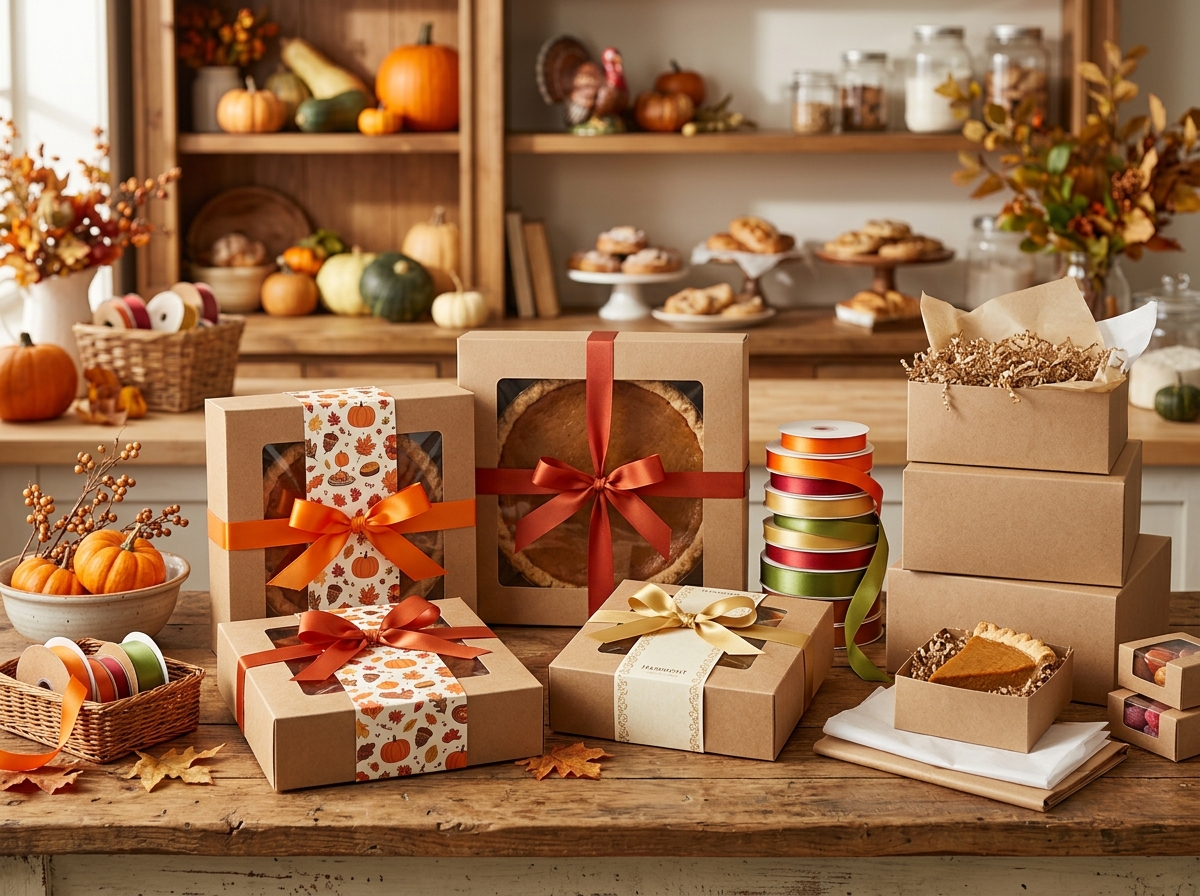
Small textural accents—cinnamon sticks tied into the ribbon bow, a few preserved autumn leaves tucked under the belly band, a sprig of dried wheat—create a sensory experience that photographs well and signals attention to detail. These elements cost pennies per unit but significantly increase the likelihood that customers will share photos on social media, generating organic marketing.
Cinnamon sticks (3-inch lengths) cost $0.15 to $0.25 each in bulk. Bundle three sticks with twine and tuck them into the ribbon bow. The visual and aromatic cues reinforce the Thanksgiving theme and make the package feel more artisan. Avoid synthetic cinnamon-scented items; customers can detect the difference, and artificial scents undermine premium positioning.
Preserved leaves—available from floral wholesalers in bundles of 50 to 100—add color and texture without wilting. Choose leaves that have been glycerin-treated for flexibility; brittle leaves crack during handling and look cheap. Tuck one or two leaves under the belly band or ribbon, positioning them so they're visible but not covering your branding.
For bakeries concerned about food safety, keep decorative accents outside the box interior. All elements that touch the pie or its immediate packaging should be food-safe; decorative items live on the exterior where they enhance presentation without contamination risk.
A cohesive color palette—three to four coordinating hues repeated across box, ribbon, tag, and tissue—creates a polished, intentional look that customers associate with premium brands. For Thanksgiving, palettes typically center on warm, muted tones that evoke harvest and comfort.
One effective palette: kraft box + rust-colored grosgrain ribbon + cream tissue + olive green gift tag. Another: white box + burgundy ribbon + kraft tissue + cream tag with copper foil accents. The key is repetition—each element should share at least one color with the others, creating visual continuity.
Avoid mixing more than four colors in a single package; beyond that threshold, the design reads as chaotic rather than curated. Similarly, limit pattern mixing. If your belly band features a leaf illustration, keep the ribbon solid rather than patterned. One focal pattern plus coordinating solids creates balance.
For bakeries without design experience, start with a neutral base (kraft or white box) and add one or two accent colors through ribbon and tags. This approach is nearly foolproof and allows you to swap accent colors seasonally without replacing your entire packaging inventory.
Efficient assembly matters when you're packaging 50 pies the day before Thanksgiving. Set up a dedicated packing station with all materials within arm's reach: boxes, tissue, ribbon, tags, scissors, and adhesive. Organize materials in the order you'll use them to minimize motion waste.
A four-step assembly sequence works for most bakeries. First, line the box with tissue and place the pie inside. Second, add the top tissue layer and close the lid. Third, apply the belly band or sleeve. Fourth, tie the ribbon and attach the gift tag. Train staff to complete this sequence in 60 to 90 seconds per pie; faster than that risks sloppy presentation, slower creates bottlenecks.
For large orders, consider pre-assembling elements the day before. Pre-tie ribbon bows and clip them to a hanging rack; when you're ready to package, slip the pre-tied bow around the box and tighten. Pre-punch and string gift tags so they're ready to attach. These small prep steps reduce per-pie time by 20 to 30 seconds, which compounds significantly over dozens of orders.
If you're managing both walk-in and pre-order volume, designate separate packing areas for each. Pre-orders can be fully assembled and stored in a cool, clean area; walk-ins require a faster, simplified assembly that still looks polished. For walk-ins, consider a two-tier presentation system: standard (box + ribbon) and premium (box + ribbon + tag + sleeve), with the premium option priced $3 to $5 higher.
Customers accept presentation costs when they're framed as value-adds rather than fees. Instead of itemizing "ribbon: $1.50" on the receipt, build presentation into tiered pricing. Offer a "Classic" pie at $28 (basic box, no ribbon) and a "Gift-Ready" pie at $35 (box, ribbon, tag, tissue, sleeve). Most customers ordering for gifting will choose the higher tier without hesitation.
For corporate or bulk orders, presentation upgrades become expected rather than optional. A company ordering 20 pies for client gifts assumes those pies will arrive beautifully packaged; quote the fully-loaded presentation price from the start rather than offering it as an add-on.
Transparency builds trust. If a customer asks why the gift-ready option costs more, explain: "The gift-ready presentation includes autumn ribbon, a custom gift tag, decorative tissue, and a branded sleeve—everything you need to give the pie as a beautiful gift without any additional wrapping." This framing emphasizes convenience and completeness, not just materials.
Track your actual per-pie presentation costs (materials plus labor) and aim for a 3:1 retail-to-cost ratio. If your presentation materials and assembly time cost $2.50 per pie, charge at least $7.50 for the upgrade. This covers not just materials but also the design work, inventory management, and quality control that go into a cohesive presentation system.
Not all Thanksgiving pies serve the same occasion. Hosts buying for their own table prioritize structural protection and ease of transport. Gift-givers prioritize visual impact and gift-ready presentation. Corporate buyers prioritize brand alignment and consistent quality across multiple units. Offering presentation options tailored to each segment maximizes revenue without overcomplicating operations.
For hosts, a sturdy kraft gift box with a simple ribbon tie and care card is sufficient. These customers value function over decoration; they'll transfer the pie to their own serving dish and discard the packaging. Price this tier competitively and emphasize the box's strength and food-safe materials.
For gift-givers, add the full presentation suite: coordinated ribbon, printed sleeve, gift tag with space for a personal message, and decorative tissue. These customers are buying an experience, not just a pie; they want the recipient to feel valued when they open the box. Price this tier 20 to 30 percent higher than the host tier and market it as "gift-ready" or "celebration-ready."
For corporate orders, offer customization: branded enclosure cards with the company's logo, ribbon in the company's colors, or custom gift tags with a message from the leadership team. Charge a flat customization fee ($25 to $50 per order) plus the per-pie premium pricing. Corporate clients expect this level of service and rarely push back on pricing when the presentation aligns with their brand standards.
Presentation materials have different lead times than packaging. Ribbon and tissue are commodity items available year-round with minimal lead time, but custom-printed sleeves, tags, and belly bands require advance planning. For more guidance on planning timelines, see when to order thanksgiving pie boxes.
Order custom-printed items six to eight weeks before Thanksgiving. Most print vendors require two weeks for design approval, two weeks for production, and one week for shipping. Ordering in September ensures you receive materials by early November, giving you time to test assembly workflows and train staff before the pre-holiday rush.
For ribbon, tissue, and other commodity items, order four weeks out. Calculate your expected Thanksgiving volume, add 20 percent for buffer, and order in bulk. Ribbon and tissue have long shelf lives; overordering slightly is safer than running out mid-holiday and paying expedited shipping fees.
If you're a first-time seasonal packager, start with smaller quantities of multiple presentation elements rather than committing to large runs of a single design. Order 100 units each of two or three ribbon colors, sleeve designs, and tag styles. Track which combinations customers prefer, then scale up the winners for future years.
Presentation materials are useless if they arrive at the packing station wrinkled, dusty, or tangled. Proper storage protects your investment and speeds assembly.
Store ribbon on spools or in clear plastic bins, organized by color. Label each bin with the ribbon width and color name to prevent grabbing the wrong material mid-assembly. Keep ribbon away from heat sources and direct sunlight, which can fade colors over time.
Store tissue paper flat in its original packaging until you're ready to use it. Once opened, keep tissue in a clean, dry drawer or bin with a lid to prevent dust accumulation. Wrinkled or dusty tissue looks cheap; pristine tissue looks premium.
Store printed materials—sleeves, tags, belly bands—in rigid envelopes or flat file boxes to prevent bending and creasing. Even minor damage is visible on finished packages and undermines the premium positioning you're trying to create.
Designate a clean, dedicated area for presentation assembly, separate from baking and raw ingredient handling. This prevents cross-contamination and ensures that every package leaving your bakery looks as clean and polished as it did when you designed it.
Invest in professional photography of your fully-assembled Thanksgiving pie packages before the season begins. These images drive pre-orders, set customer expectations, and provide content for social media and email campaigns.
Photograph packages in natural light against a neutral background—wood table, linen cloth, or simple countertop. Include context shots (package held in hands, package on a holiday table setting) and detail shots (close-up of ribbon bow, tag, and tissue arrangement). Use these images in pre-order forms, website banners, and Instagram posts to communicate the quality customers can expect.
Encourage customers to share photos of their delivered pies by including a social media handle and hashtag on your gift tag or enclosure card. Offer a small incentive—$5 off their next order, entry into a holiday drawing—for customers who tag your bakery in their posts. User-generated content is more persuasive than branded content, and it costs you nothing beyond the incentive.
For email campaigns, send a "Thanksgiving Pre-Order Now Open" message in early October featuring your gift-ready presentation. Highlight the convenience factor: "Skip the wrapping—our gift-ready pies arrive beautifully packaged and ready to give." This messaging resonates with busy customers who value time savings as much as visual appeal.
Use 1.5-inch to 2-inch grosgrain ribbon for 10-inch pie boxes. This width provides enough structure to hold the box closed during transport while creating a proportional bow that doesn't overwhelm the package. Narrower ribbons (under 1 inch) slip more easily and look undersized on larger boxes. Wider ribbons (over 2.5 inches) are difficult to tie securely and can look bulky.
Basic presentation materials—ribbon, tissue, and a simple gift tag—add $1.50 to $2.50 per pie in material costs when purchased in bulk. More elaborate presentations including custom-printed sleeves, decorative accents, and premium tissue can add $3.00 to $4.50 per pie. Labor for assembly adds another $0.75 to $1.50 per pie depending on complexity and staff efficiency. Total presentation costs typically range from $2.25 to $6.00 per pie.
Yes, many presentation elements are season-neutral and can be adapted. Kraft boxes, cream tissue, and neutral ribbon colors (cream, brown, olive) work for Thanksgiving, Christmas, and spring occasions. Swap seasonal accents—autumn leaves for Thanksgiving, evergreen sprigs for Christmas, dried flowers for spring—while keeping the base materials consistent. This approach reduces inventory complexity and per-unit costs while still creating seasonal differentiation.
Most print vendors require minimum orders of 100 to 250 units for custom belly bands and sleeves. Local print shops often accept smaller runs (50 to 100 units) at higher per-unit costs, which can be worthwhile for bakeries testing presentation concepts before committing to larger quantities. Digital printing has lowered MOQs significantly compared to offset printing, making custom presentation materials accessible to small bakeries.
Use grosgrain ribbon rather than satin or organza—the ribbed texture grips itself and resists slipping. Tie a cross-tie pattern (ribbon under the box, crossing on top, tied in a bow) rather than a simple loop, which distributes tension evenly. For extra security, place a small adhesive dot under the knot before tying the bow. This locks the ribbon in place without visible tape or damage to the box surface.
Effective thanksgiving pie gift packaging is a system, not a collection of random decorative elements. When boxes, ribbons, tags, and tissue coordinate in color and quality, the finished package communicates intentionality and care—qualities that justify premium pricing and encourage customers to choose your bakery over competitors.
Start with a cohesive color palette, invest in quality materials that hold up during transport, and streamline your assembly workflow to maintain consistency across high-volume days. Track which presentation elements customers respond to most enthusiastically, then double down on those winners in future seasons.
Presentation is not an expense; it's a margin-protection tool. The $3 to $5 you invest in materials and labor per pie supports a $7 to $10 retail price increase when the finished package looks gift-ready and professional. For bakeries serious about growing Thanksgiving revenue, presentation is as important as the pie itself.