Cart
0
You may also like


Book a call with our development team to get started.



Apply online and access wholesale pricing.

When you're running a small bakery, every dollar counts—and packaging is one of those line items that can either eat into your margins or work as a strategic investment. Wholesale cookie boxes offer a path to professional presentation without the premium price tag of one-off retail purchases, but navigating minimum order quantities, volume discounts, and supplier relationships requires a different approach than picking up boxes at the craft store.
This guide breaks down the economics of buying cookie exchange packaging in bulk, from understanding typical MOQ requirements to calculating what percentage of your retail price should go toward the box. Whether you're a home baker scaling up or a small shop looking to optimize costs, the numbers and strategies below will help you make smarter purchasing decisions.
Minimum order quantity—MOQ—is the smallest number of units a supplier will produce or sell in a single transaction. For small bakeries, this threshold determines whether you can access wholesale pricing or remain stuck paying retail rates. The gap between those two price points can be substantial: often 30 to 50 percent lower per unit once you cross the MOQ line.
For stock (plain, unprinted) cookie boxes, MOQs tend to be low. Many wholesale suppliers set minimums at 50 to 100 units, which makes them accessible even for home-based operations or seasonal bakers. If you're ordering standard white or kraft boxes without custom branding, you can often start with a single case—typically 50 to 100 boxes—and still receive wholesale pricing.
Custom-printed boxes carry higher MOQs because of setup costs: printing plates, machine calibration, and design proofing. Expect minimums in the 100 to 500 unit range for custom work, with some suppliers requiring 1,000 or more units depending on the complexity of the design and the printing method. For small bakeries, this can feel like a significant upfront investment, but the per-unit cost savings often justify the spend if you have consistent volume.
Small and mid-sized baking operations benefit most from flexible MOQ structures that let them test packaging formats before committing to large runs. If you're uncertain about a new box size or style, look for suppliers who offer sample kits or lower-tier minimums on first orders—this reduces risk while you validate fit and customer response.
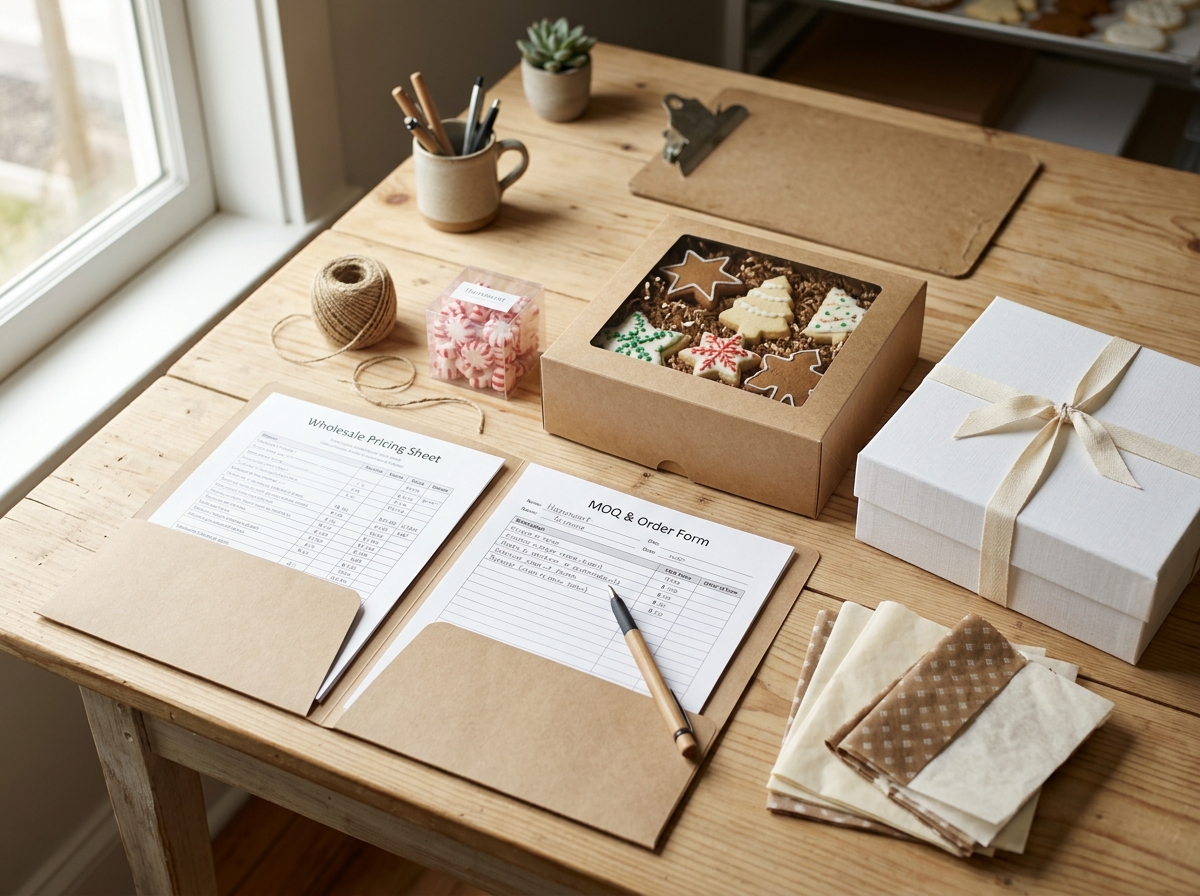
Once you meet the MOQ, the next lever for cost management is volume. Wholesale suppliers structure pricing in tiers: the more you order, the lower the per-unit cost. A typical discount curve might look like this: 100 units at $0.75 each, 250 units at $0.60 each, 500 units at $0.50 each, and 1,000 units at $0.40 each. The steepest drops usually occur between the first and second tiers, so even a modest increase in order size can yield meaningful savings.
Volume discounts exist because fixed costs—setup, tooling, shipping—are spread across more units. If a supplier spends $100 on printing plates, that's $1.00 per unit at 100 boxes but only $0.10 per unit at 1,000 boxes. Understanding this cost structure helps you negotiate and plan: if you can consolidate orders or commit to a predictable schedule, suppliers are often willing to lock in lower pricing even at smaller volumes.
For small bakeries, the challenge is balancing volume discounts against cash flow and storage constraints. Ordering 1,000 boxes to get the best price doesn't help if you only sell 50 cookies per week and lack warehouse space. A practical approach: calculate your monthly usage, then order a two- to three-month supply at the next pricing tier. This captures most of the discount without tying up excessive capital or requiring a storage unit.
Some suppliers also offer seasonal or promotional discounts—typically 10 to 20 percent off during slower months or for new customers. If your cookie packaging timeline allows flexibility, placing orders during these windows can stack additional savings on top of volume discounts.
Industry benchmarks suggest that packaging should represent 10 to 40 percent of a product's retail price, with the appropriate percentage depending on product category, positioning, and fragility. For bakery items—which are relatively low-margin and perishable—the target is typically lower: 5 to 10 percent for everyday products, up to 15 percent for premium or gift-oriented items.
Here's how the math works. If you sell a half-dozen cookies for $12 and spend $0.60 on the box, packaging represents 5 percent of retail price—a healthy ratio. If that same box costs $1.20 because you're buying in smaller quantities or choosing a premium format, you're at 10 percent, which is still acceptable but leaves less room for other costs. Push beyond 15 percent, and packaging starts to compress your overall margin unless you can raise prices or reduce other expenses.
For small bakeries, keeping packaging costs in the 5 to 8 percent range is a practical target. This leaves enough margin for ingredients, labor, rent, and profit while still allowing for attractive, food-safe boxes that protect the product and communicate quality. If you find yourself consistently above 10 percent, it's a signal to either increase order volume to access better pricing, switch to a more cost-effective format, or adjust retail prices to reflect the true cost of doing business.
One useful exercise: calculate your packaging cost per unit at different order quantities, then map those costs against your current retail price. This reveals exactly where the break-even points are and helps you decide whether it's worth ordering more now to reduce per-unit costs later. Spreadsheets are your friend here—track SKU, retail price, box cost at various volumes, and the resulting percentage. Update this quarterly as supplier pricing and your own sales mix evolve.
Not all cookie boxes cost the same, even at identical dimensions. Format choices—window vs. solid, kraft vs. white, auto-lock vs. tuck-top—directly impact both unit price and labor costs. Understanding these trade-offs helps you optimize for total cost, not just the price on the invoice.
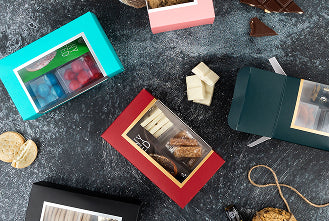
Solid boxes (no window) are typically 10 to 20 percent cheaper than window cookie boxes because they require less material handling and no die-cutting for the acetate insert. If your cookies don't need to be visible before purchase—say, you're selling at a farmers market where customers can see the product on display—solid boxes save money without sacrificing function. For retail or gift contexts where visibility drives purchase decisions, the window premium is usually justified.
Kraft paperboard costs less than bleached white board, and it carries the added benefit of an eco-friendly perception that many customers value. If your brand aesthetic supports it, kraft cookie boxes can reduce per-unit costs by 15 to 25 percent compared to white or printed options. The trade-off: kraft shows grease more visibly, so pair it with parchment or a grease-resistant liner if you're packaging buttery cookies.
Auto-lock bottoms cost slightly more than tuck-style closures but save assembly time. If you or your staff are hand-packing hundreds of boxes per week, the labor savings from auto-lock construction can offset the higher box cost. Run the math: at a $15 hourly labor rate, each second of assembly costs about $0.004, so an auto-lock box that costs $0.05 more needs to save at least 12 seconds per box to pay for itself. Against a tuck-top that takes 20 to 30 seconds to fold, an auto-lock box that assembles in under five seconds clears that bar and lowers your total cost.
Consider using a tall windowed gift box for premium cookie assortments where presentation justifies a slightly higher packaging investment, then switch to simpler formats for everyday or bulk orders. This tiered approach lets you match packaging cost to product positioning without overspending across the board.
Wholesale purchasing is as much about relationships as it is about price lists. Reliable suppliers offer more than just boxes—they provide consistent quality, predictable lead times, and flexibility when your needs change. Cultivating these relationships pays dividends, especially when you need a rush order or want to negotiate better terms.
Start by identifying two to three suppliers who specialize in bakery packaging. Request samples, compare quality and pricing, and place small initial orders to test reliability. Once you've found a supplier whose product and service meet your standards, communicate your long-term needs. If you expect to order 500 boxes per quarter, say so—it signals that you're a repeat customer worth investing in, which can unlock volume discounts, net-30 payment terms, or priority production slots.
Payment terms matter for cash flow. Retail purchases require immediate payment, but wholesale suppliers often extend net-30 or even net-60 terms to established customers. This means you can receive and use the boxes—and ideally sell the cookies inside them—before the invoice is due, which smooths out cash flow bumps. To qualify for terms, you'll typically need to complete a credit application and demonstrate a history of on-time payments.
Don't hesitate to ask about price matching or volume commitments. If you find a lower price elsewhere, many suppliers will match it to keep your business. Similarly, if you commit to a certain annual volume—say, 2,000 boxes over 12 months—some suppliers will lock in a discounted rate for the duration of the agreement. These arrangements reduce your per-unit cost and give the supplier predictable revenue, a win for both sides.
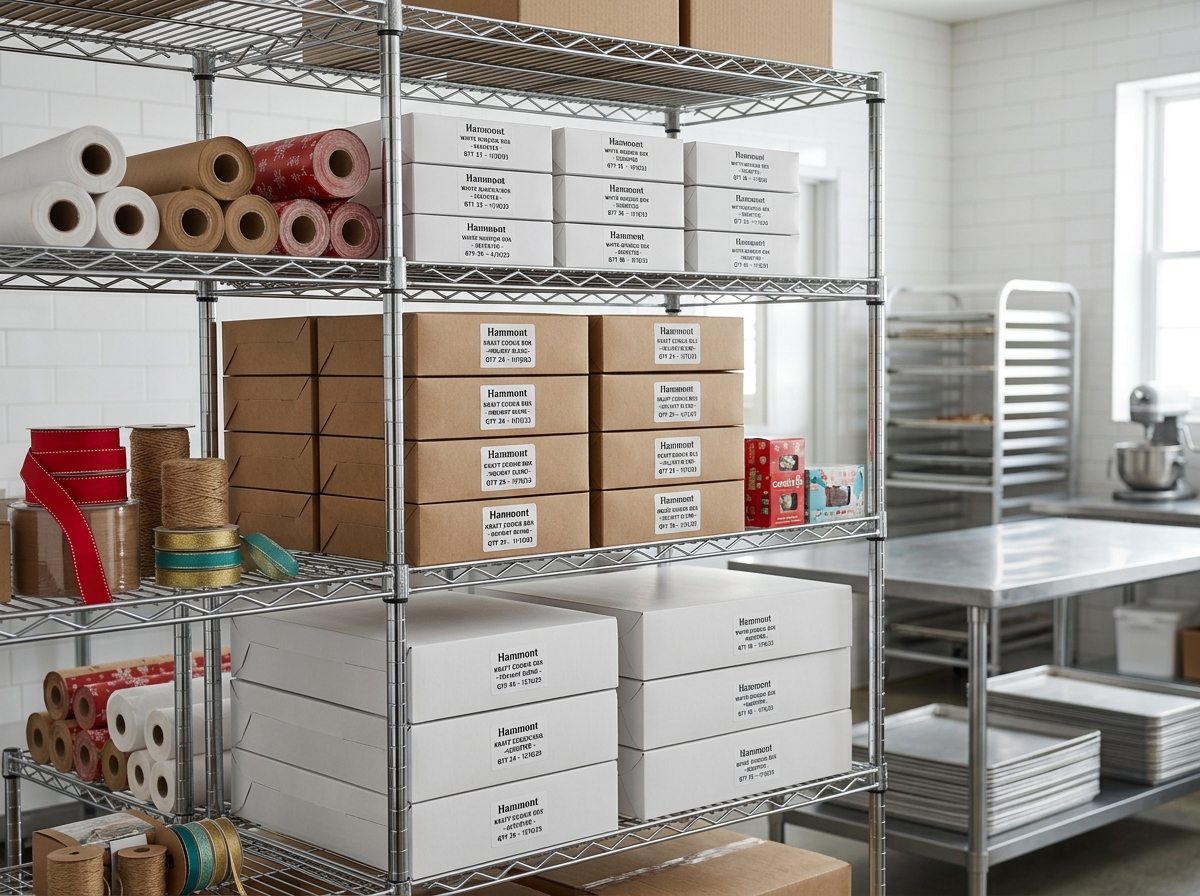
Buying in bulk saves money, but only if you have a plan for storing and managing the inventory. Poorly stored boxes can warp, accumulate dust, or take up valuable space that could be used for production. A few simple practices keep bulk packaging organized and ready to use.
Allocate dedicated storage space—ideally a dry, climate-controlled area away from ovens and sinks. Humidity and heat can warp paperboard, and grease or flour dust can soil boxes before they're ever used. Shelving units work well: stack boxes by size and format, with the most frequently used items at eye level and slower-moving SKUs higher up. Label each stack with the box dimensions and quantity so you can track usage and reorder before running out.
Implement a simple first-in, first-out (FIFO) system. When a new shipment arrives, place it behind or below existing stock so you use older boxes first. This prevents situations where boxes sit for months and develop creases or discoloration. For small bakeries, a spreadsheet or even a whiteboard tracking current inventory, reorder point, and lead time is sufficient—no need for complex software until you're managing dozens of SKUs.
Plan your reorder point based on lead time plus a buffer. If your supplier's lead time is two weeks and you use 100 boxes per week, reorder when you have 300 boxes left (two weeks of usage plus a one-week buffer). This ensures you never run out, even if a shipment is delayed. Adjust the buffer based on how critical the packaging is to your operations and how reliable your supplier has been.
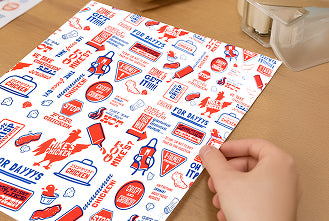
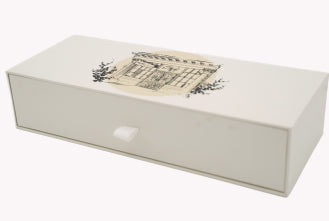
Custom-printed boxes with your logo and branding elevate perceived value and reinforce brand identity, but they come with higher MOQs and longer lead times. Stock packaging—plain white or kraft boxes—offers flexibility and lower upfront costs. For most small bakeries, a hybrid approach makes sense: custom boxes for signature products or gift lines, stock boxes for everything else.
Custom printing typically requires 250 to 1,000 units minimum, depending on the supplier and print method. If you're selling 50 cookies per week, a 500-unit order represents 10 weeks of inventory—manageable, but a significant commitment. The payoff: custom boxes can support higher retail prices (customers perceive branded packaging as more premium) and build brand recognition over time. If your cookies are sold in retail stores or given as corporate gifts, custom packaging is often worth the investment.
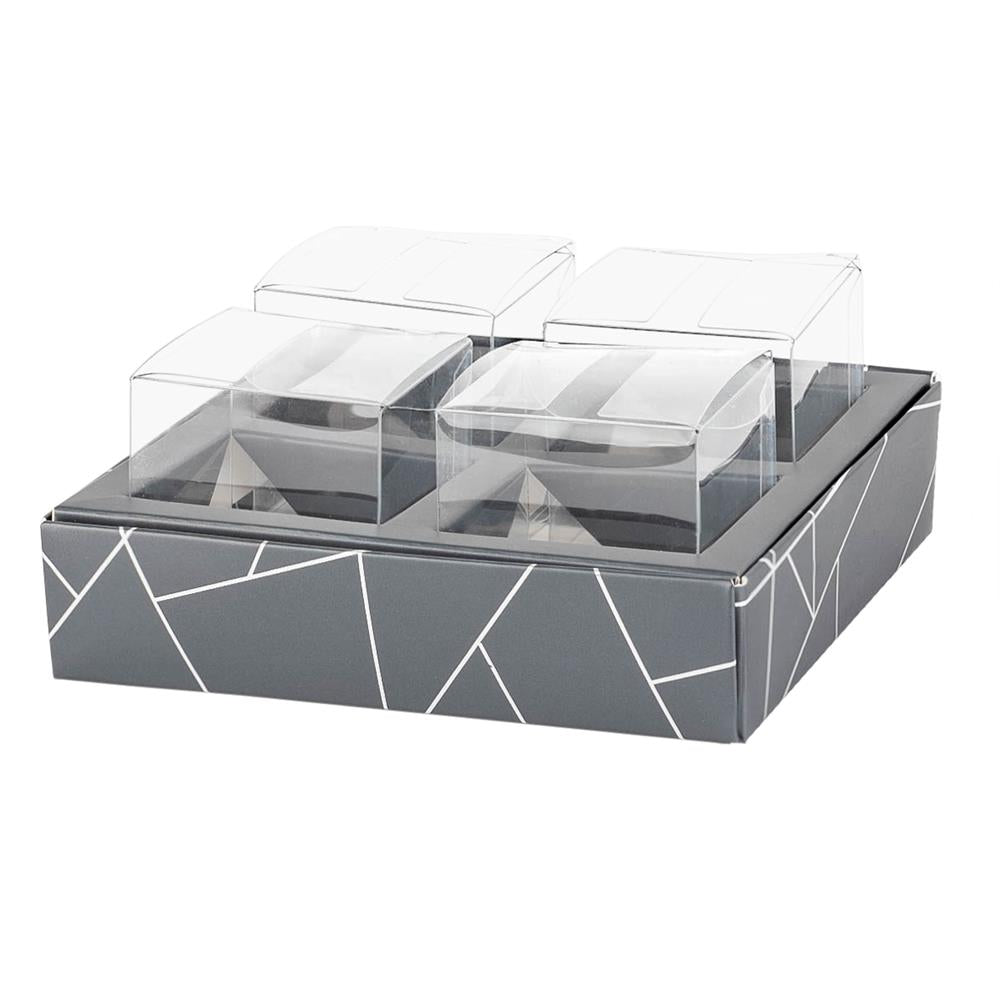
Stock packaging works well for farmers markets, wholesale accounts, or any context where the product itself is visible and the box is primarily functional. You can still add branding via stickers, stamps, or printed labels applied to stock boxes—this approach keeps MOQs low and allows you to change designs seasonally without wasting pre-printed inventory. A neutral gray windowed box paired with a custom label can look polished and professional at a fraction of the cost of full custom printing.
Consider starting with stock packaging and transitioning to custom once your sales volume and cash flow support the higher MOQ. This staged approach reduces risk: you validate the box size, format, and customer response before committing to a large custom run. Many successful bakeries operate this way for years, reserving custom printing for their top one or two SKUs and using stock boxes for everything else.
Wholesale cookie boxes must meet the same food-safe standards as any packaging that comes into direct contact with baked goods. This means materials should be free from harmful chemicals, resistant to grease migration, and suitable for the product's moisture and fat content. Cutting corners on food safety to save a few cents per box is never worth the risk—both to your customers and to your business reputation.
Most bakery boxes are made from food-grade paperboard, which is safe for direct contact with cookies. However, if the paperboard lacks a grease-resistant coating or liner, oils from butter-based cookies can seep through, creating stains and potentially compromising structural integrity. For cookies with high fat content, look for boxes with a poly-coated interior or plan to use parchment paper or glassine sheets as a barrier layer.
If you're sourcing boxes internationally or from unfamiliar suppliers, ask for documentation confirming food-safe compliance. In the U.S., packaging materials intended for food contact should meet FDA guidelines, though paperboard itself is generally recognized as safe. Reputable suppliers will provide this information without hesitation; if a supplier can't or won't confirm food safety, move on.
Eco-friendly materials—recycled paperboard, soy-based inks, water-based coatings—are increasingly available at competitive prices. Many wholesale suppliers now offer FSC-certified options (Forest Stewardship Council), which signal responsible sourcing. If sustainability is part of your brand story, these certifications can justify a modest price premium and resonate with environmentally conscious customers.
Lead times for wholesale packaging vary based on order complexity, supplier capacity, and time of year. Stock boxes often ship within a few business days, while custom-printed runs can take two to four weeks or longer during peak seasons. Understanding these timelines—and planning accordingly—helps you avoid expensive rush fees and stockouts.
For stock packaging, expect lead times of three to seven business days for in-stock items, plus shipping time. If you're ordering a standard size in white or kraft, most suppliers keep these on hand and can turn orders around quickly. Custom work is a different story: figure two weeks minimum for design approval, plate-making, printing, and quality control, with an additional week for shipping if the supplier is overseas or across the country.
Holiday seasons—Thanksgiving, Christmas, Valentine's Day—create demand spikes that extend lead times and strain supplier capacity. If you're planning to sell cookies during these periods, place your packaging orders at least six to eight weeks in advance. This buffer accounts for potential delays and ensures you're not scrambling (or paying rush fees) when you should be focused on baking and selling.
Rush fees can add 20 to 50 percent to your order cost, which erases much of the savings from buying wholesale in the first place. If you do find yourself in a bind, call your supplier and explain the situation—sometimes they can expedite an order for a smaller fee than the standard rush charge, especially if you're a repeat customer. But the better strategy is to build lead time into your planning and reorder before you're down to your last case.
The sticker price on a wholesale cookie box is only part of the total cost equation. Shipping, storage, labor for assembly, and even the opportunity cost of cash tied up in inventory all contribute to the true expense. A holistic view of these factors leads to smarter purchasing decisions.
Shipping costs can be significant, especially for bulky, lightweight items like boxes. A case of 100 cookie boxes might weigh only 10 pounds but occupy two cubic feet, which triggers dimensional weight pricing from carriers. Some suppliers offer free shipping on orders above a certain threshold—often $50 to $500—which can offset the cost of ordering a larger quantity. Compare the per-unit price at different order sizes, then add shipping to see the true landed cost.
Labor for box assembly is another hidden cost. If you're using tuck-top boxes that require manual folding and tucking, that's 15 to 30 seconds per box. At $15 per hour, that's $0.06 to $0.13 in labor cost per box—potentially as much as the box itself if you're buying at volume. Auto-lock or pre-glued formats cost more upfront but can cut assembly time to under five seconds, which reduces labor cost and frees up time for higher-value tasks like decorating or customer service.
Opportunity cost matters, too. If you tie up $500 in a bulk box order, that's $500 you can't spend on ingredients, marketing, or equipment. For small bakeries operating on tight margins, this trade-off is real. One approach: calculate your return on investment for packaging purchases. If spending $500 on boxes enables you to fulfill $2,000 in cookie sales that wouldn't otherwise happen (because you'd be out of stock or using inferior packaging), the ROI is clear. If the boxes just sit in storage for six months, the opportunity cost is harder to justify.
Even experienced bakers stumble when transitioning from retail to wholesale packaging purchases. A few common missteps—and how to avoid them—can save both money and frustration.
Ordering the wrong size is a frequent issue. A box that's too large wastes material and increases shipping costs; a box that's too small won't close properly or protect the cookies. Before placing a bulk order, buy a sample or single case and test it with your actual product. Measure the cookies, account for any liners or tissue, and confirm that the box closes securely without crushing the contents. The cookie box size guide can help you match dimensions to product, but nothing replaces a physical test.
Overcommitting to a single format is another trap. If you order 1,000 custom-printed boxes and then decide to change your packaging design, offer a new cookie size, or shift to a different format, you're stuck with obsolete inventory. Start with smaller runs—even if the per-unit cost is higher—until you're confident in the format and design. Once you've validated customer response and sales velocity, scale up to larger orders for better pricing.
Ignoring lead times and reorder points leads to stockouts, which force you to either turn down orders or pay rush fees for emergency packaging. Set calendar reminders based on your reorder point and lead time, and treat packaging replenishment with the same discipline you apply to ingredient ordering. Running out of flour is bad; running out of boxes when you have a corporate order due is worse.
Focusing only on box price while ignoring total cost is a classic mistake. A box that costs $0.40 but takes 30 seconds to assemble may be more expensive in total than a $0.50 auto-lock box that takes five seconds. Similarly, a box that costs $0.30 but requires a $50 shipping fee on a small order may not be the bargain it appears. Always calculate landed cost per unit, including shipping, and factor in labor when comparing options.
Minimum order quantities for stock cookie boxes typically range from 50 to 100 units per order, which makes them accessible for small bakeries and home-based operations. Custom-printed boxes require higher MOQs—usually 100 to 500 units—because of setup costs for printing plates and design proofing. Some suppliers offer lower minimums for first-time customers or sample orders, so it's worth asking if you're uncertain about committing to a full production run.
Industry benchmarks suggest keeping bakery packaging costs between 5 and 10 percent of retail price for everyday products, with up to 15 percent acceptable for premium or gift-oriented items. For example, if you sell a dozen cookies for $18, aim to spend $0.90 to $1.80 on the box. Staying within this range preserves margin for ingredients, labor, and profit while still providing attractive, food-safe packaging that protects the product.
Yes, volume discounts typically begin at the first pricing tier above the MOQ. For example, if the minimum order is 100 units at $0.75 each, ordering 250 units might drop the price to $0.60 each—a 20 percent savings. The steepest discounts usually occur between the first and second tiers, so even a modest increase in order size can yield meaningful per-unit savings. Consolidating orders or committing to a predictable schedule can also help you negotiate better pricing.
The answer depends on your sales volume, brand positioning, and budget. Stock packaging (plain white or kraft boxes) offers lower MOQs, faster turnaround, and flexibility to change designs seasonally. Custom-printed boxes require higher minimums and longer lead times but elevate perceived value and reinforce brand identity. A practical hybrid approach: use custom boxes for signature products or gift lines, and stock boxes for everything else. You can add branding to stock boxes via stickers or labels to achieve a polished look at lower cost.
For stock packaging, plan for three to seven business days of lead time plus shipping. Custom-printed runs typically require two to four weeks, with longer timelines during peak seasons like the holidays. If you're ordering for Thanksgiving, Christmas, or Valentine's Day, place orders at least six to eight weeks in advance to account for demand spikes and potential delays. Building lead time into your planning helps you avoid rush fees and ensures you have packaging on hand when you need it.