Cart
0
You may also like

Book a call with our development team to get started.



Apply online and access wholesale pricing.

If you're planning to package cookies for December holiday events, the time to order is now. Standard packaging lead times range from 7 to 35 working days from artwork approval to production completion, and that's before freight time. For bakeries ordering wholesale quantities or custom-printed boxes, the window narrows further. Bakers placing orders in mid-September for peak December demand are working within industry-standard timelines—but only if they understand what those timelines actually include.
Understanding when to order cookie packaging isn't just about counting backward from your event date. It's about accounting for production schedules, freight delays, inventory buffers, and the seasonal crush that hits every packaging supplier between October and early December. This guide walks through the lead-time realities, order windows, and contingency strategies that keep professional bakers stocked through the busiest season of the year.
Lead time is the total span from order placement to delivery at your door. Packaging lead time is the total time elapsed from the moment you confirm a packaging order with a manufacturer to the moment the finished packaging arrives at your location. That includes artwork approval, production, quality control, and freight—each with its own timeline.
For standard, non-custom cookie boxes and cellophane bags, production typically runs 7 to 14 business days once the order is confirmed. Freight adds another 5 to 10 business days for ground shipping, depending on your location relative to the supplier's warehouse. That puts the baseline door-to-door lead time at roughly 2 to 4 weeks for stock items with no customization.
Custom-printed boxes stretch the timeline considerably. Custom packaging lead time is the total number of days between placing your order and receiving the finished boxes at your door. For most standard orders, that window runs between 15 and 30 business days. Add another week if you're ordering during peak season, when production queues lengthen and freight carriers face higher volumes.
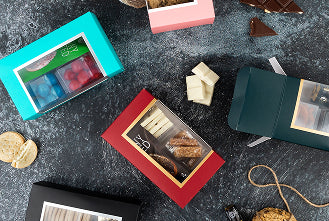
Bakers who choose windowed gift boxes for cookie presentation benefit from faster turnaround on stock designs, but customization—even something as simple as a logo sticker—introduces additional steps that extend lead time. The key is knowing which elements of your packaging require custom work and which can be standardized to keep orders moving.
Bakeries ordering in mid-September for December 1-24 delivery are working within a 10- to 14-week planning window. That might seem excessive, but it aligns with the realities of seasonal production and freight. July is one of the most important times of the year for bakeries and food manufacturers to begin planning, and by September, orders for holiday-specific packaging are already in motion.
September orders give you a buffer against the two biggest risks in holiday packaging: production delays and freight congestion. Packaging suppliers experience their highest order volumes from October through early December, which means queue times lengthen and rush fees climb. Freight carriers face similar pressure, with ground shipping times extending by several days during peak weeks in November and December.
Ordering in September also gives you time to test your packaging before committing to large quantities. If you're introducing a new box size or trying clear cellophane bags for the first time, a September order lets you receive samples, adjust your assembly process, and place a second order if needed—all before Thanksgiving.
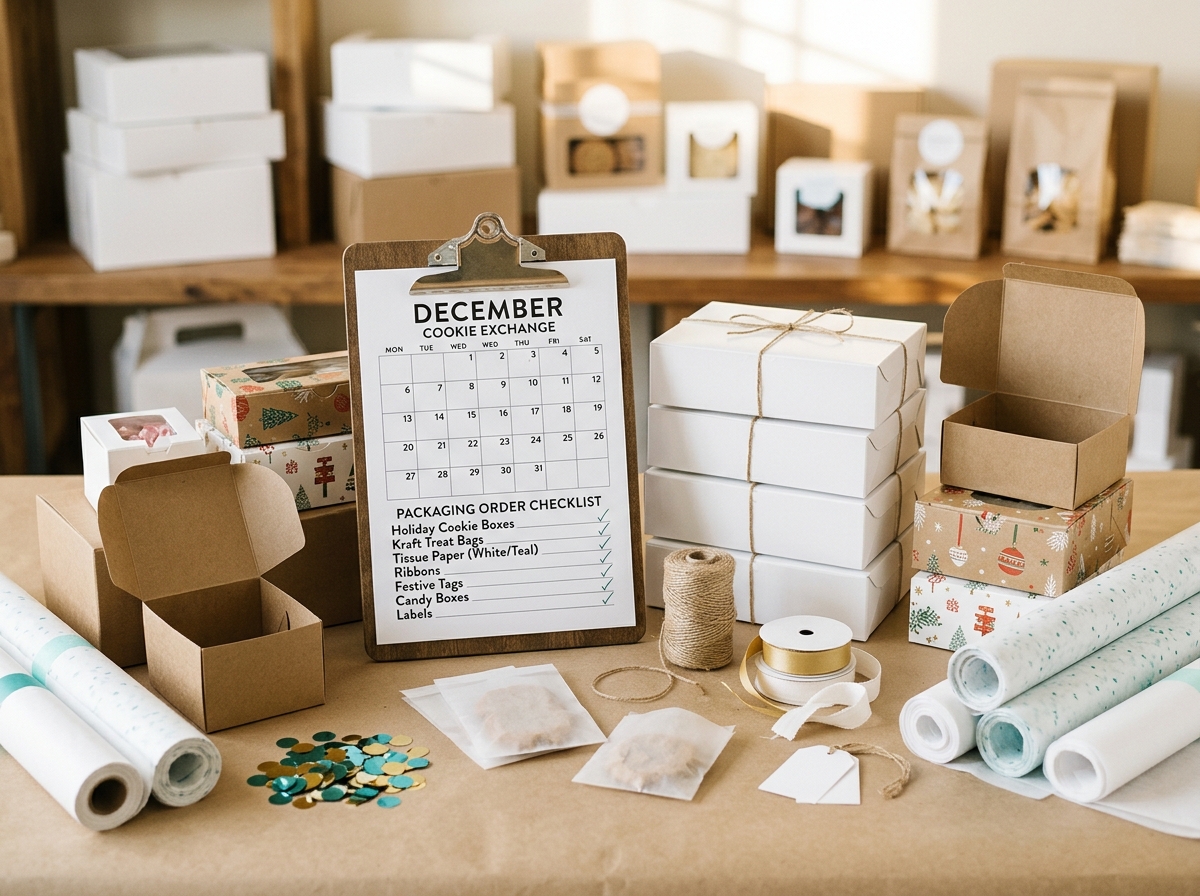
Accurate demand forecasting prevents both stockouts and overstock. Start by reviewing last year's sales data. Solid preparation starts with accurate forecasts. Dive into your past sales reports and spot the patterns. What sold best, and when did foot traffic surge? Pay attention to record-setting days, best-selling pastries, and holiday-specific trends like Thanksgiving pies or Christmas cookies.
If you're new to holiday baking or expanding your offerings, use a conservative multiplier. Estimate your typical weekly cookie sales, then multiply by 1.5 to 2.0 for each week in December. Add a 20% buffer for unexpected orders, corporate gifts, and last-minute event requests. This approach keeps you stocked without tying up cash in excess inventory.
Break your packaging needs into categories: individual cookie bags, small gift boxes for assortments, and larger boxes for bulk orders. Most bakeries find that 60% of holiday cookie orders fall into the small gift box category (4 to 12 cookies), 25% are individual bags or single-serving portions, and 15% are bulk orders requiring larger boxes or trays. Adjust these ratios based on your customer mix—corporate clients skew toward bulk, while retail walk-ins favor smaller gift-ready packages.
Don't forget closures and finishing materials. If you're using cellophane wrap rolls to bundle boxes or add decorative touches, order those at the same time. Running out of ribbon or bag ties in mid-December is a common oversight that disrupts packaging flow.
Stock packaging ships faster, but custom options build brand recognition. The decision comes down to lead time, budget, and how much visual differentiation matters to your customer base. Stock boxes and bags typically ship within 3 to 7 business days after order confirmation, plus freight time. Custom-printed packaging requires artwork approval, plate creation, and a production run—adding 2 to 4 weeks to the timeline.
For holiday orders, many bakeries split the difference: they order stock boxes in bulk for general use and reserve custom-printed options for corporate clients or premium gift assortments. This hybrid approach keeps lead times manageable while still offering branded packaging where it has the most impact.
Another middle-ground option is stock boxes with custom labels or stickers. Order plain white or kraft boxes in September, then apply your own printed labels as orders come in. This method gives you flexibility to adjust branding or messaging without committing to a single design months in advance. It also reduces minimum order quantities, since you're not locked into a single custom print run.
Keep in mind that for Q4 orders, extend that buffer to two to three weeks beyond standard lead times. Suppliers prioritize orders based on confirmation date, so early placement moves you to the front of the queue.
Production time is predictable; freight is not. Shipping adds 2 to 5 weeks for sea freight or 5 to 10 days for air freight, and ground freight typically falls in the middle—5 to 10 business days for most domestic shipments. But those timelines assume normal conditions. Holiday freight congestion, weather delays, and carrier capacity constraints can add days or even weeks to delivery.
Bakeries ordering in September benefit from pre-peak freight rates and more reliable delivery windows. By November, freight carriers are operating at or near capacity, which means longer transit times and higher surcharges. If you're ordering large quantities, consider splitting shipments: place one order in September for your baseline inventory and a second order in late October to top off stock before the December rush.
When calculating your order date, add a 5- to 7-business-day buffer to the supplier's quoted lead time. Add 5 to 7 business days as a buffer for proof revisions, queue delays, or freight disruptions. This buffer accounts for unexpected delays without forcing you to pay rush fees or expedited shipping.
If your supplier offers freight tracking, use it. Knowing when your shipment is en route lets you adjust production schedules and communicate realistic timelines to customers who've placed pre-orders.
Rush fees speed up production, not freight. Rush fees speed up factory production time only. They do not affect freight speed unless expedited shipping is explicitly included. If you're ordering in late October or early November and need packaging by early December, confirm whether the rush fee covers both production and shipping. Paying for faster production while using standard ground freight may save you only a day or two on the final delivery date.
Most packaging suppliers offer 3- to 5-day rush production for stock items, but availability is limited during peak season. Custom orders rarely qualify for rush service, since tooling and plate creation can't be compressed below a certain threshold. If you're considering a rush order, call the supplier directly rather than relying on website estimates—queue times fluctuate daily in November and December.
Rush orders also carry higher costs. Expect to pay 20% to 50% above standard pricing for expedited production, plus additional fees for faster freight. For a bakery ordering 500 boxes, that premium can add $100 to $300 to the total cost. Weigh that against the revenue at risk if you run out of packaging mid-season.
The better strategy is to avoid rush orders altogether by planning ahead. If you're reading this in mid-September, you're still within the ideal order window. If it's late October or November, focus on stock items and consider hybrid solutions—like pairing plain boxes with custom ribbon or printed labels—that keep lead times short.
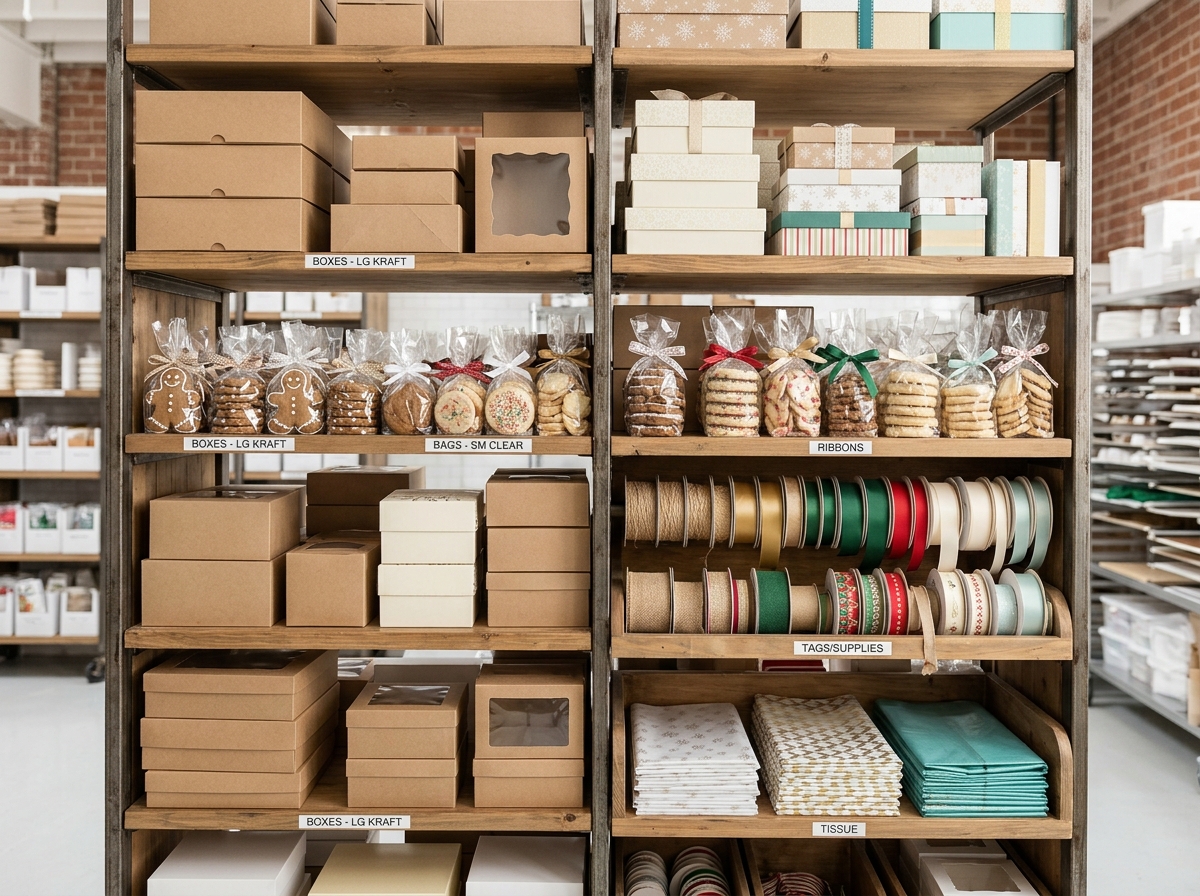
Ordering early means storing packaging for weeks or months before use. Plan for storage space before placing large orders. Cookie boxes and cellophane bags are lightweight but bulky, and a 1,000-unit order can occupy 10 to 20 cubic feet of shelf or floor space.
Store boxes flat and stacked to maximize vertical space. Keep cellophane bags in their original packaging to prevent dust and moisture exposure. If you're ordering windowed boxes, inspect them upon delivery and store them away from direct sunlight—prolonged UV exposure can yellow the plastic windows over time.
Label your inventory by size and style, especially if you're ordering multiple box dimensions for different cookie assortments. A simple labeling system—"4x4x2 kraft," "6x6x3 white window," etc.—prevents confusion during the December rush when you're packaging dozens of orders per day.
If storage space is limited, consider a phased delivery schedule. Some suppliers offer split shipments at no additional cost, delivering half your order in September and the second half in November. This approach reduces upfront storage needs while still locking in early-order pricing and lead times.
Even with careful planning, delays happen. Have a backup plan for late deliveries. Keep a small stock of generic boxes or bags on hand that can serve as temporary substitutes. Many bakeries maintain a 50- to 100-unit emergency supply of plain kraft boxes or clear cellophane bags—enough to cover a few days of orders while waiting for the primary shipment to arrive.
If a delay threatens to disrupt your holiday schedule, communicate with customers early. Most clients understand supply chain challenges, especially during peak season, and appreciate transparency. Offer alternatives—like plain packaging with a handwritten note or a small discount on their next order—to maintain goodwill.
Another contingency option is local pickup from a packaging supplier's warehouse or a retail packaging store. While unit costs are typically higher than wholesale orders, local pickup eliminates freight delays and can bridge a gap of a few days. Keep a list of local suppliers in your contact file for emergency situations.
Cookie packaging is one piece of a larger holiday supply chain. Coordinate your packaging orders with ingredient deliveries, label printing, and ribbon or finishing materials. Holiday production isn't just about baking more product—it's about making sure every part of your operation is ready when demand peaks. Planning your packaging strategy early allows you to stay ahead of production schedules.
If you're ordering custom labels or stickers to apply to stock boxes, confirm those lead times separately. Label printers often face their own peak-season backlogs, and a delay in label delivery can leave you with boxes you can't use. Order labels at least 2 weeks before you need them, and request a proof before final production.
Ribbon, twine, and other finishing touches also require advance planning. While these items are less prone to long lead times, popular colors and styles can sell out in November. If your packaging design relies on a specific ribbon color or width, order it when you order your boxes—not as an afterthought two weeks before your first holiday event.
Every holiday season provides data for the next. After December wraps up, review what worked and what didn't. Did you run out of a specific box size? Did you over-order on bags that didn't sell? Track your usage by week and by product type, then adjust your next year's order quantities and timing accordingly.
Many bakeries find that their first holiday season involves some trial and error, but by the second or third year, they've dialed in their packaging needs with precision. Keep notes on lead times, supplier performance, and any delays you encountered. This historical data becomes the foundation for more accurate planning in future years.
If you're working with a new supplier, place a small test order well before peak season. Evaluate their lead times, packaging quality, and customer service before committing to a large December order. Switching suppliers mid-season is disruptive and expensive, so vet your options early.
Not all packaging suppliers operate on the same timelines or terms. Before placing your holiday order, ask these questions:
Clear communication with your supplier prevents misunderstandings and ensures you're both working from the same timeline. If you're ordering custom packaging, request a production proof before the full run begins. Catching an error at the proof stage costs nothing; catching it after 1,000 boxes are printed is expensive.
Map your packaging delivery dates against your event calendar. If you're supplying cookies for a December 15 corporate event, your packaging needs to arrive no later than December 10 to allow time for assembly and any last-minute adjustments. Work backward from that date: if your lead time is 4 weeks, your order should be placed by mid-November at the latest. But if you're ordering in mid-November, you're already cutting it close—September or early October is the safer window.
For bakeries juggling multiple events throughout December, consider ordering in tiers. Place a large baseline order in September for general inventory, then place smaller top-up orders in late October and mid-November as specific event orders come in. This approach balances early planning with the flexibility to adjust quantities based on confirmed orders.
If you're participating in holiday markets, craft fairs, or pop-up events, factor in packaging for on-site sales. These events often require smaller, grab-and-go packaging—like individual cellophane bags with twist ties—rather than larger gift boxes. Order a mix of sizes to cover both pre-ordered gifts and walk-up customers.
Encouraging customers to place pre-orders gives you visibility into demand before you finalize packaging quantities. Start marketing graduation, Mother's Day and summer celebration cakes weeks ahead of peak trading periods to secure volume early—the same principle applies to holiday cookies. Open pre-orders in October, and use the first two weeks of data to adjust your packaging order if needed.
Pre-orders also reduce waste. If you know you have 50 confirmed orders for a specific cookie assortment, you can order exactly 50 boxes in the right size rather than guessing and potentially over-ordering. This precision is especially valuable for custom or specialty packaging that carries higher unit costs.
Promote pre-orders through your website, social media, and in-store signage. Offer a small incentive—like free ribbon or a discount on orders placed before November 1—to encourage early commitment. The more pre-orders you secure, the more accurate your packaging forecast becomes.
Lead times vary by region and season. Bakeries on the West Coast ordering from East Coast suppliers should add 2 to 3 business days to standard freight estimates. International orders—even from nearby countries like Canada—introduce customs clearance, which can add a week or more to delivery times.
Seasonal weather also affects freight. November and December bring snow, ice, and holiday closures that can delay shipments by several days. If you're in a region prone to winter weather disruptions, build an extra week into your lead time buffer. Suppliers can't control freight delays caused by weather, so the responsibility for planning around those risks falls to the buyer.
Some suppliers experience regional capacity constraints during peak season. If your supplier's main warehouse is in the Midwest and you're ordering from the Southeast, confirm whether they have regional distribution centers that can shorten freight times. Multi-location suppliers often offer faster delivery and lower shipping costs for customers within their regional footprint.
Order stock packaging 6 to 8 weeks before you need it, and custom-printed packaging 10 to 12 weeks in advance. For December events, that means placing orders in September or early October. This timeline accounts for production, freight, and a buffer for unexpected delays. Ordering earlier also avoids peak-season surcharges and ensures better supplier availability.
Stock cookie boxes typically ship within 3 to 7 business days after order confirmation, plus 5 to 10 business days for ground freight. Custom-printed boxes require 15 to 30 business days for production, plus freight time. During peak season (October through December), add an extra week to these estimates to account for higher order volumes and freight congestion.
Rush orders are possible for stock items, but availability is limited during peak season. Rush fees typically add 20% to 50% to the base price and cover production only—not freight. If you need packaging in November, contact the supplier directly to confirm whether rush service is available and whether expedited shipping can be included. Ordering in September or October is the more reliable and cost-effective approach.
Start by reviewing last year's sales data to identify patterns in cookie orders during December. If you're new to holiday baking, estimate your typical weekly sales and multiply by 1.5 to 2.0 for each week in December. Add a 20% buffer for unexpected orders and last-minute requests. Break your needs into categories—individual bags, small gift boxes, and bulk orders—and adjust ratios based on your customer mix.
Keep a small emergency stock of plain boxes or cellophane bags on hand to cover a few days of orders while waiting for your primary shipment. Communicate delays to customers early and offer alternatives like plain packaging with a handwritten note. For urgent situations, consider local pickup from a packaging supplier's warehouse or retail store to eliminate freight delays, even if unit costs are higher.
Planning your cookie packaging timeline well in advance is one of the most practical steps you can take to ensure a smooth holiday season. By understanding lead times, coordinating with suppliers, and building in buffers for delays, you'll keep your bakery stocked and your customers happy through the busiest weeks of the year. For more guidance on selecting the right boxes and bags for your holiday cookies, explore our full guide to cookie exchange packaging.