Cart
0
You may also like

Book a call with our development team to get started.



Apply online and access wholesale pricing.

Cookie exchange party packaging serves two distinct purposes: guests need containers to transport 2-5 dozen cookies to the event safely, and hosts need take-home packaging for 6-10 attendees to leave with their assorted cookie haul. Whether you're bringing cookies or providing the packaging station, the right containers prevent breakage, maintain freshness, and add a festive presentation layer to this beloved holiday tradition.
This guide covers container types, quantities, and setup strategies for both roles. You'll learn how to calculate packaging needs based on guest count, which materials work best for different cookie types, and how to create a self-serve packaging station that keeps the exchange organized. The approach differs significantly depending on whether you're a guest transporting fragile shortbread or a host managing a dozen varieties at once.
The standard cookie exchange packaging format follows a simple formula: each guest brings enough cookies for every attendee to take home 3-6 pieces per variety. For an 8-person party, that means baking 24-48 cookies of one type. Your packaging must protect this quantity during transport, then allow easy redistribution at the event.
Cookie exchanges typically run 2-3 hours, with the first hour dedicated to mingling and the second to the actual swap. Hosts set up a buffet-style table where guests display their cookies, then everyone circulates with containers to collect their assortment. This flow means guest packaging needs differ from host packaging—you're solving for inbound transport versus outbound variety packs.
Food safety standards apply even to home-baked goods shared in social settings. The FDA regulates substances that come into contact with food, including packaging materials, which means your cellophane bags, boxes, and wraps should be labeled food-safe. Most consumer packaging from reputable suppliers meets these standards, but verify that materials are intended for direct food contact rather than decorative use only.
As a guest, your primary packaging goal is protecting 2-5 dozen cookies during the trip from your kitchen to the host's table. Fragile varieties like lace cookies or meringues need more structure than sturdy gingerbread or biscotti. Consider whether your cookies are stacked, individually wrapped, or displayed flat when choosing containers.
Clear cellophane bags work well for most cookie types because they showcase your baking while providing a moisture barrier. A cellophane bag measuring 11" × 17" holds 2-3 dozen standard-sized cookies with room for a tied ribbon closure. Fill bags loosely—cookies need air circulation to prevent condensation, which softens crisp textures.
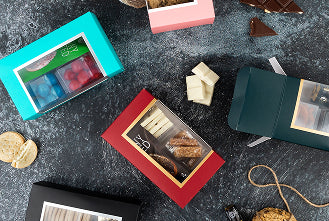
For decorated sugar cookies or intricate cut-outs, window cookie boxes offer superior protection. The rigid structure prevents crushing, and the clear panel lets your decorating work shine. Layer cookies with parchment paper between rows if stacking more than one layer. A 6.75" × 3.5" × 2" box typically holds 8-12 medium cookies arranged in two layers.
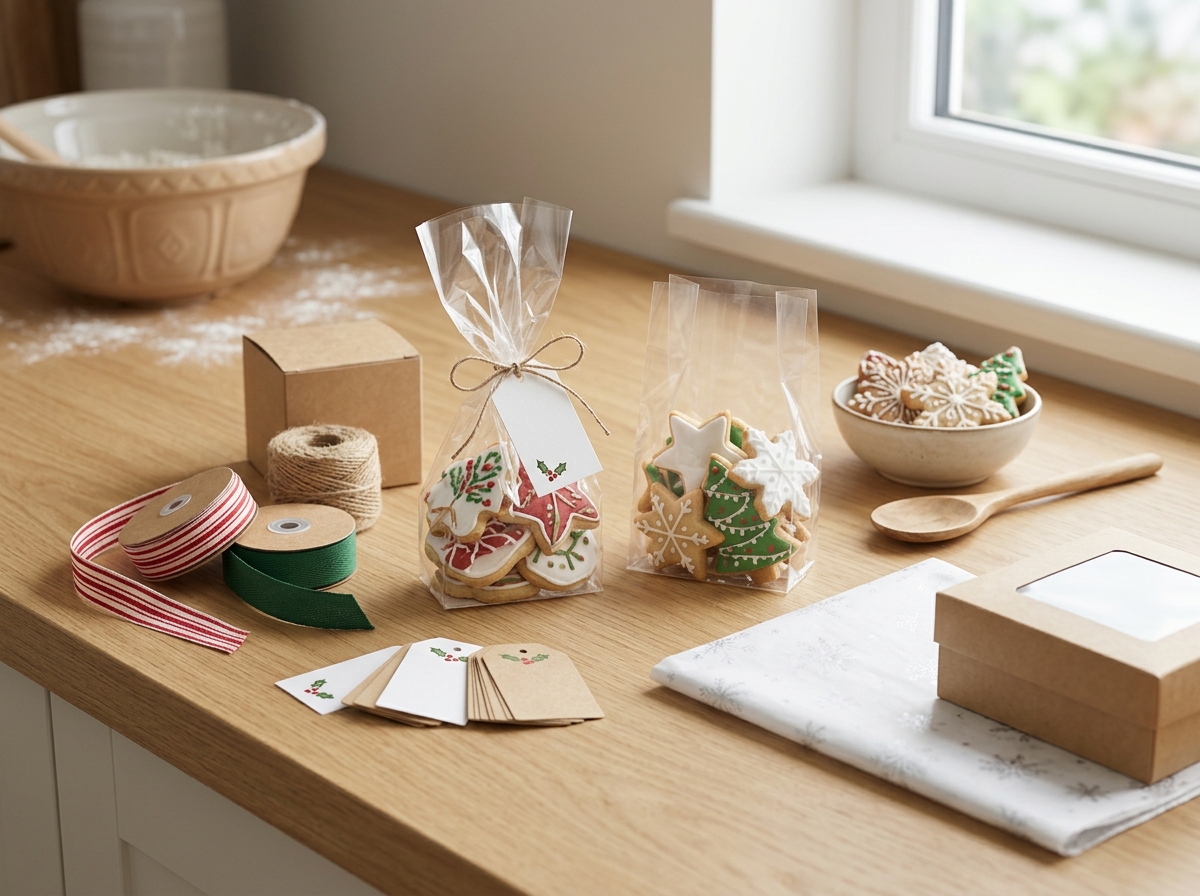
Timing matters for guest packaging. Bag or box cookies no more than 24 hours before the exchange—earlier packaging traps residual heat and creates condensation. Let baked goods cool completely (at least 2 hours for most cookies) before sealing. For soft cookies like snickerdoodles, add a small piece of bread to the container to maintain moisture; for crisp varieties, skip this step.
Transport containers in a single layer if possible. Stack boxes carefully with heavier, sturdier cookies on the bottom and delicate varieties on top. Avoid leaving packaged cookies in a hot car—temperature swings cause condensation inside sealed bags. If your drive exceeds 30 minutes, consider bringing cookies in open containers and packaging them at the host's home.
Hosts face a different challenge: providing enough take-home containers for 6-10 guests to collect samples from every variety. Calculate quantities using this formula: (number of guests) × (number of cookie varieties) × (3-6 cookies per variety). For 8 guests bringing 8 varieties, that's 192-384 total cookies redistributed into 8 take-home packages.
The most efficient host setup uses a self-serve packaging station with multiple container options. Place the station near the cookie display table with clear signage: "Fill your container with 3-6 cookies from each variety." Stock at least two container types—rigid boxes for fragile cookies and bags for sturdier varieties. Guests appreciate the choice, and it prevents bottlenecks as people package simultaneously.
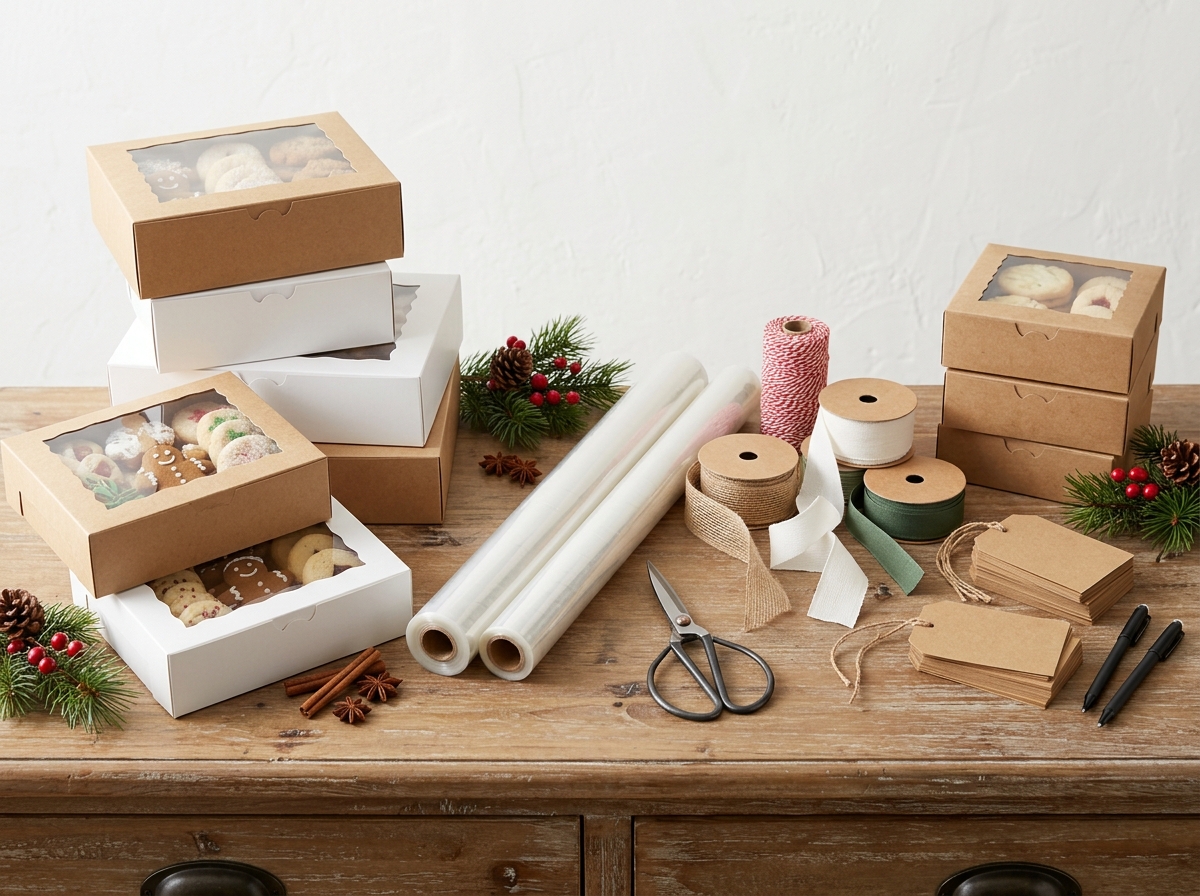
Window gift boxes in the 8" × 5.5" × 2.5" size are the host workhorse. They hold a generous assortment (20-30 mixed cookies) while keeping varieties visible for Instagram-worthy photos. Buy one box per guest plus two extras for late additions or breakage. Tall paper boxes with windows ship flat and assemble in seconds—a key advantage when you're setting up the morning of the party.
Supplement boxes with cellophane bags for guests who prefer flexible packaging or want to create multiple smaller gift packs. A 30" × 100 ft cellophane roll allows guests to cut custom lengths for their haul. Pre-cut 18-20" lengths and stack them next to scissors and ribbon for faster service. Include twist ties or 12" ribbon pieces in a small bowl.
Small exchanges (4-6 guests) generate 12-18 dozen cookies total. Each guest takes home approximately 2-3 dozen mixed cookies, which fits comfortably in a single 8" × 5.5" box or a gallon-sized cellophane bag. Hosts can order packaging in smaller quantities—an 8-pack of boxes covers the guest list with minimal waste.
Medium exchanges (7-10 guests) are the most common format, producing 21-30 dozen cookies. Take-home portions increase to 3-4 dozen per person, requiring larger containers or multiple boxes. Hosts should stock 12-15 boxes plus 20-25 pre-cut cellophane bags to accommodate different preferences. This scale benefits from advance packaging order timing—place orders 3-4 weeks before the event to avoid holiday shipping delays.
Large exchanges (12+ guests) typically occur in workplace or community settings. With 36+ dozen cookies in circulation, hosts need a more robust packaging strategy. Set up two packaging stations to prevent crowding, and use uniform containers (all boxes or all bags) to streamline the process. Provide recipe cards at each cookie variety so guests can label their containers—this becomes essential when managing 12+ different recipes.
Crisp cookies (biscotti, shortbread, gingersnaps) need breathable packaging to maintain texture. Cellophane bags with a loose closure work better than airtight containers, which trap moisture and soften the cookies within hours. Leave a 2-3 inch opening at the top of the bag rather than sealing completely. For exchanges where cookies sit on the display table for 60+ minutes, this breathability prevents sogginess.
Soft cookies (chocolate chip, oatmeal, sugar cookies) benefit from tighter seals to retain moisture. Window boxes with full closures or cellophane bags tied snugly preserve the chewy texture. If the exchange runs longer than 2 hours, consider providing small squares of parchment paper guests can place between cookie layers—this prevents sticking without requiring elaborate packaging.
Decorated or frosted cookies demand rigid packaging to protect delicate icing work. Stacking frosted cookies in flexible bags causes smearing and disappointment. Use boxes with at least 2" depth, and provide tissue paper or parchment squares for layering. Guests bringing elaborately decorated cookies should transport them in shallow, single-layer boxes rather than stacking multiple layers.
Bar cookies and brownies occupy a middle ground. Cut them into individual portions before the exchange, then package like soft cookies. A 6.75" × 3.5" × 2" box holds 6-8 brownie squares without crushing. Alternatively, wrap individual bars in parchment paper, then group them in cellophane bags—this makes it easy for guests to grab exact quantities.
A well-organized packaging station keeps the exchange moving and prevents the "traffic jam" that occurs when everyone tries to package simultaneously. Dedicate a 6-foot table or kitchen counter to packaging supplies, positioned adjacent to but separate from the cookie display. This layout creates a natural flow: browse cookies, select varieties, move to packaging station, assemble take-home container.
Essential station supplies include: boxes (1 per guest plus 2 extras), pre-cut cellophane bags (20-25 pieces), scissors (2 pairs), ribbon spools (3-4 colors), twist ties (1 box), parchment paper squares (for layering), and blank labels or gift tags. Arrange supplies in zones—boxes on the left, bags in the center, finishing touches (ribbon, tags) on the right. This prevents reaching and crowding.
Include a small trash bin under the table for packaging waste. Guests will unwrap their transport containers, discard damaged cookies, and generate paper scraps. Providing a dedicated waste receptacle keeps the station tidy and prevents trash from migrating to the food display area.
Recipe cards are technically optional but highly valued. Print 8-10 copies of each recipe (one per guest plus extras), then stack them next to the corresponding cookie variety. Guests can tuck recipe cards into their take-home containers, transforming the exchange from a one-time treat into a year-round baking resource. Use 4" × 6" index cards or print on cardstock for durability.
Cookie exchanges involve home-prepared foods shared among multiple households, which requires attention to basic food safety practices. Food contact substances must meet safety standards ensuring reasonable certainty of no harm, so verify that all packaging materials are labeled for direct food contact. Avoid decorative bags or boxes that specify "not for food use"—these may contain dyes or coatings unsuitable for edible items.
Communicate allergen information clearly. If you're hosting, ask guests to list major allergens (nuts, dairy, eggs, gluten) on a tent card next to their cookie display. As a guest, bring printed ingredient lists for anyone with dietary restrictions. Package nut-containing cookies separately from nut-free varieties to prevent cross-contamination during the exchange.
Freshness windows vary by cookie type. Most cookies maintain peak quality for 3-5 days when properly packaged. Advise guests to store take-home containers at room temperature in a cool, dry location—not in the refrigerator, which introduces moisture. Crisp cookies should be consumed within 3 days; soft cookies last up to 5 days; frosted cookies are best within 2-3 days before icing begins to weep.
For cookies that travel particularly poorly (meringues, delicate lace cookies), consider a "display only" approach: bring a small sample for tasting, but don't include them in the take-home exchange. This prevents disappointment when fragile varieties crumble during redistribution. Alternatively, package these varieties in rigid boxes immediately after the exchange, handling them separately from sturdier cookies.
Guest packaging costs typically run $3-8 depending on container choice and cookie quantity. A pack of 30 cellophane bags costs $8-12, providing enough bags for multiple exchanges. Window boxes sold in 8-packs run $12-18, or $1.50-2.25 per box. Factor in ribbon, tags, and parchment paper, and most guests spend under $5 per exchange on packaging alone—less than the ingredient cost for 2-3 dozen cookies.
Host packaging budgets scale with guest count. For an 8-person exchange, budget $25-40 for take-home containers, supplies, and extras. This covers 10 window boxes ($15-20), 25 pre-cut cellophane bags ($4-6), ribbon and tags ($5-8), and parchment paper ($3-5). Buying in bulk reduces per-unit costs—a 100 ft cellophane roll costs $12-15 but serves 3-4 exchanges.
Wholesale packaging suppliers offer better pricing than craft stores for hosts managing annual exchanges. Buying boxes in quantities of 24-50 pieces drops the per-unit cost by 30-40%. If you host the same group yearly, store unused boxes flat in a closet—they'll last indefinitely and eliminate next year's packaging budget entirely.
Cookie exchanges peak in the three weeks before Christmas, creating demand surges for holiday-themed packaging. Hosts should order supplies by late November to avoid stock-outs and shipping delays. Standard white or kraft boxes remain available year-round, but seasonal prints (snowflakes, holiday patterns) sell out by mid-December.
Guests can package cookies up to 24 hours in advance if stored properly. Avoid packaging more than 48 hours ahead—even airtight containers allow gradual moisture loss, affecting texture. For exchanges scheduled on weekend afternoons, bake Thursday evening, package Friday morning, and transport Saturday. This timeline balances freshness with practical time management during busy holiday weeks.
If you're hosting multiple holiday events, coordinate packaging orders to maximize value. Cellophane rolls, ribbon spools, and bulk boxes serve cookie exchanges, bake sales, and gift-giving alike. A single packaging order in early November can supply all December events, reducing per-event costs and minimizing last-minute shopping trips.
Overpacking containers is the most frequent error. Cookies need space—cramming 40 cookies into a box designed for 25 causes crushing and breakage. Leave 1/4" clearance on all sides, and never stack more than three layers without parchment dividers. If you have more cookies than container capacity, use two containers rather than forcing everything into one.
Packaging warm cookies creates condensation that softens crisp varieties and makes frosting sticky. Wait until cookies reach room temperature (2 hours for most types, 3 hours for thick cookies like biscotti). If you're short on time, spread cookies on cooling racks in a single layer and run a fan nearby—this accelerates cooling without compromising texture.
Mismatched container sizes frustrate guests at the packaging station. If you're hosting, choose one primary box size and one bag size rather than offering four different options. Too many choices slow the line and create confusion. The exception: provide one rigid option and one flexible option to accommodate different cookie types.
Skipping labels seems like a time-saver but causes problems later. Guests forget which cookies are which, especially when collecting 8-10 varieties. Provide blank adhesive labels or tie-on tags at the packaging station. A simple "Peppermint Bark - Jane" label prevents mix-ups and helps guests remember favorites for next year's exchange.
The standard formula is one-half dozen cookies per guest attending. For a 10-person exchange, each guest brings 5 dozen cookies (60 total) of a single variety. This ensures everyone takes home 5-6 cookies of each type. Smaller exchanges (4-6 people) often reduce this to 3-4 dozen per guest, while large community events may request 6-8 dozen to accommodate higher attendance.
Rigid window boxes with at least 2" depth provide the best protection for decorated cookies. The structure prevents crushing, and the clear panel displays your decorating work. Layer cookies with parchment paper between rows if stacking, and never pack more than two layers. For very delicate royal icing designs, transport cookies in a single layer in shallow bakery boxes rather than stacking multiple layers.
Package cookies no more than 24 hours before the exchange for optimal freshness and texture. Cookies must cool completely (2-3 hours) before packaging to prevent condensation. For exchanges on Saturday afternoon, bake Thursday evening and package Friday morning. Packaging more than 48 hours ahead causes texture changes—crisp cookies soften and soft cookies dry out, even in sealed containers.
Yes, cookie type affects packaging choice. Crisp cookies (biscotti, shortbread) need breathable cellophane bags with loose closures to maintain texture. Soft cookies (chocolate chip, oatmeal) require tighter seals to retain moisture. Decorated or frosted cookies demand rigid boxes to prevent smearing. Bar cookies work well in either boxes or bags, but should be individually wrapped in parchment before grouping to prevent sticking.
Plan $25-40 for an 8-person exchange, covering take-home boxes, cellophane bags, ribbon, tags, and parchment paper. This breaks down to approximately $15-20 for 10 window boxes, $4-6 for pre-cut cellophane bags, and $6-14 for finishing supplies. Buying in bulk reduces costs—a 100 ft cellophane roll serves 3-4 exchanges for $12-15. Guests typically spend $3-8 on their transport packaging, depending on cookie quantity and container choice.
Cookie exchange party packaging succeeds when it balances protection, presentation, and practicality. Guests need containers that showcase their baking while surviving the trip to the host's home. Hosts need a self-serve station stocked with enough variety to accommodate different cookie types without overwhelming guests with choices. Calculate quantities based on guest count and cookie varieties, order supplies 3-4 weeks ahead of holiday events, and provide clear instructions at the packaging station. With proper containers and setup, the exchange flows smoothly from baking to transport to redistribution, letting everyone focus on the real goal: enjoying a diverse cookie collection and building holiday traditions with friends.