Cart
0
You may also like


Book a call with our development team to get started.



Apply online and access wholesale pricing.

Black Friday gift orders place unprecedented demands on bakery operations. While retail stores prepare for general merchandise surges, bakeries and specialty food retailers face a unique challenge: packaging perishable goods that must arrive intact, fresh, and gift-ready during the year's highest-volume shipping week. For operations processing cookie gift boxes, corporate dessert orders, or holiday baked goods bundles, Black Friday packaging decisions made in September determine whether November fulfillment runs smoothly or collapses under volume.
Bakery boxes black friday bulk orders require different planning than standard retail packaging. Food-safe materials, protective construction for shipping, and assembly speed during peak hours all factor into packaging selection. A box that works perfectly for in-store pickup may fail completely when shipped via ground carrier during holiday volume peaks.
The shift from in-store sales to shipped gift orders fundamentally changes packaging requirements. US online Black Friday sales reached $11.8 billion in 2025, and a significant portion of that growth comes from food gifts and specialty items that weren't traditionally part of Black Friday commerce.
Bakeries shipping cookies, brownies, and decorated treats face three packaging challenges that don't exist for in-store transactions. First, the box must protect contents during carrier handling—drops, compression, and temperature fluctuations that controlled retail environments never encounter. Second, assembly time multiplies during peak volume; a box that takes 45 seconds to fold and secure becomes a bottleneck when you're processing 200 orders per day instead of 20. Third, the packaging itself becomes part of the gift experience when customers can't inspect products before purchase.
Food safety regulations don't pause for holiday rushes. FDA-approved materials that do not leach harmful substances remain mandatory regardless of order volume. Bakery packaging must use food-safe paperboard with grease-resistant coatings, and window patches must use FDA-approved PET film. Switching to untested suppliers or substituting materials to meet demand creates compliance risk that no bakery can afford.
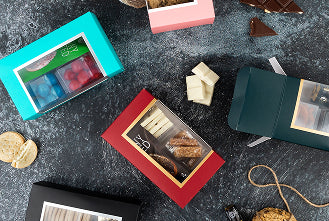
Window bakery boxes dominate retail displays because visibility drives impulse purchases. But shipped gift orders operate under different rules. The window serves a different function when the recipient—not the purchaser—opens the box.
Clear PET windows allow gift recipients to see decorated cookies, iced brownies, or custom designs without opening the package. This matters for corporate gifts and client appreciation boxes where presentation drives perceived value. The window also provides immediate quality verification; recipients can confirm the order arrived intact before fully unpacking.
However, windows add two complications for high-volume Black Friday fulfillment. Assembly takes longer because the window panel requires careful alignment, and any grease or condensation from fresh-baked goods shows immediately through clear film. Bakeries shipping items with high butter content or moist fillings often choose solid boxes with printed graphics instead, accepting that recipients won't see contents until opening.
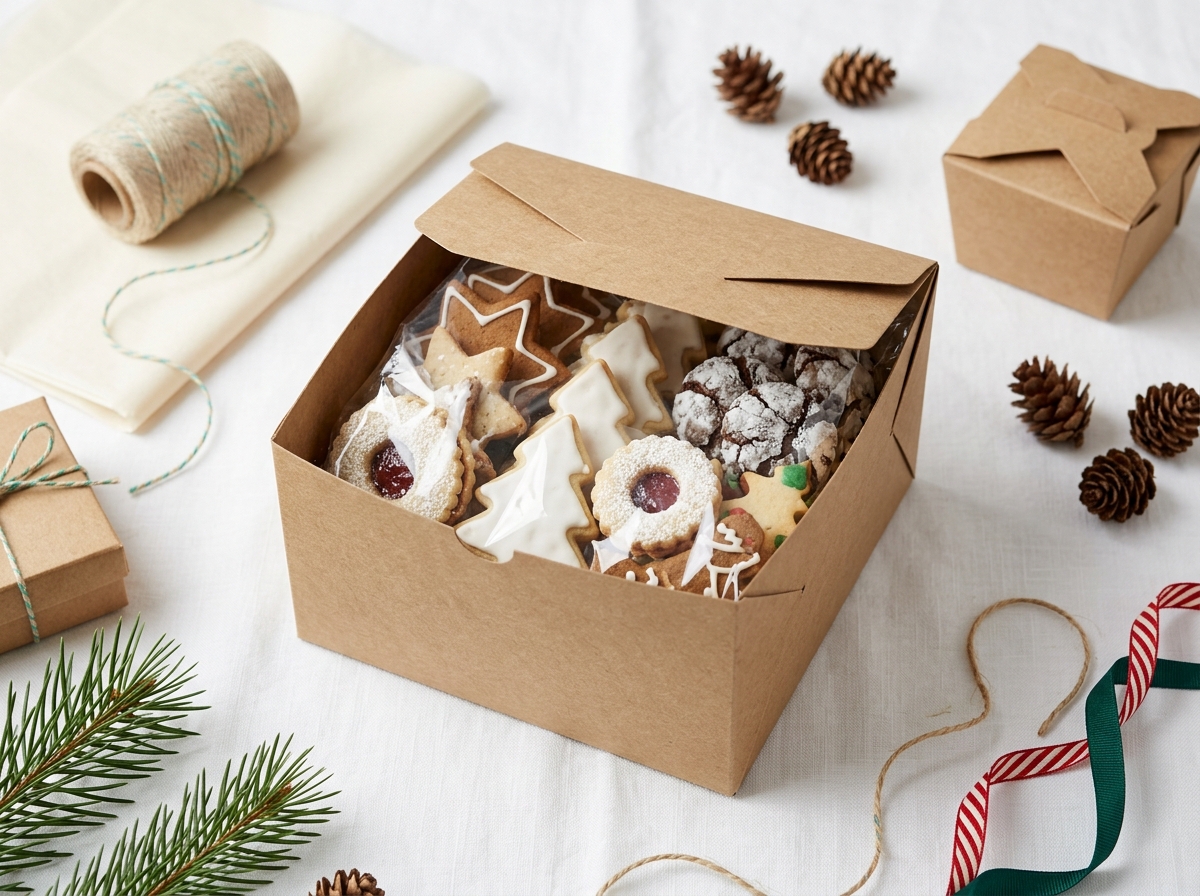
The cube kraft gift box offers a middle path for operations balancing presentation and assembly speed. The tuck-top design requires no tape or adhesive, cutting packaging time to under 20 seconds per unit, while the solid construction protects contents during shipping without revealing grease marks that can appear on window boxes.
Bakery packaging stock planning differs from general retail because food products can't be held indefinitely if packaging runs short. A boutique that runs out of gift bags can offer rain checks; a bakery that runs out of boxes during peak order days loses perishable inventory and customer relationships.
The baseline calculation starts with confirmed orders plus projected walk-in volume, then adds a buffer for damaged boxes, assembly errors, and last-minute corporate orders that arrive between November 20-26. Stock planning for Black Friday should account for 15-20% overage on bakery boxes specifically, higher than the 10% standard for non-food retail packaging.
Order timing matters as much as quantity. Black Friday packaging lead times compress in October as suppliers allocate inventory to confirmed orders. Bakeries placing box orders after October 15 often face partial fulfillment or delayed delivery that pushes arrival into mid-November—too late to test assembly processes or identify quality issues before peak production begins.
Bulk orders create cost advantages that matter for bakeries operating on tight margins. Volume discounts for Black Friday bulk packaging typically start at 500-unit minimums, with additional pricing tiers at 1,000 and 2,500 units. A bakery processing 40 gift orders per day from November 22-30 requires approximately 360 boxes for that window alone, before accounting for pre-Black Friday orders or Cyber Monday extensions.
The paperboard weight that works for counter service fails under shipping stress. Boxes holding cookies or brownies for carrier delivery require heavier stock—typically 18-point SBS (solid bleached sulfate) minimum—to prevent crushing when packages stack in delivery trucks.
Grease resistance becomes critical for items containing butter, oils, or chocolate. Uncoated paperboard absorbs fats, creating visible stains that make gift packaging look used or damaged before it reaches the recipient. Food-safe grease-resistant coatings maintain appearance during the 3-5 day ground shipping window that most Black Friday orders require.
Temperature fluctuations during November shipping create condensation issues that don't exist in climate-controlled retail spaces. Boxes sitting in unheated delivery trucks overnight, then moving to warm distribution centers, accumulate moisture that can compromise structural integrity. Moisture barriers are critical for items shipped overnight, and packaging must withstand temperatures to -20°F without cracking or delaminating.
The cellophane wrap roll provides an additional moisture barrier for bakery boxes heading into carrier networks. Wrapping the assembled box before applying the shipping label creates a protective layer that prevents both moisture infiltration and grease transfer to outer packaging.
Packaging that takes two minutes to assemble during normal operations becomes a production bottleneck when order volume triples. Black Friday fulfillment requires boxes that bakery staff can assemble correctly under time pressure, without extensive training or complicated folding sequences.
Tuck-top designs eliminate tape, reducing both assembly time and supply costs. A well-designed tuck closure holds securely during shipping while allowing recipients to open the package without tools or excessive force. This matters for corporate gifts where the unboxing experience reflects on both the bakery and the company sending the gift.
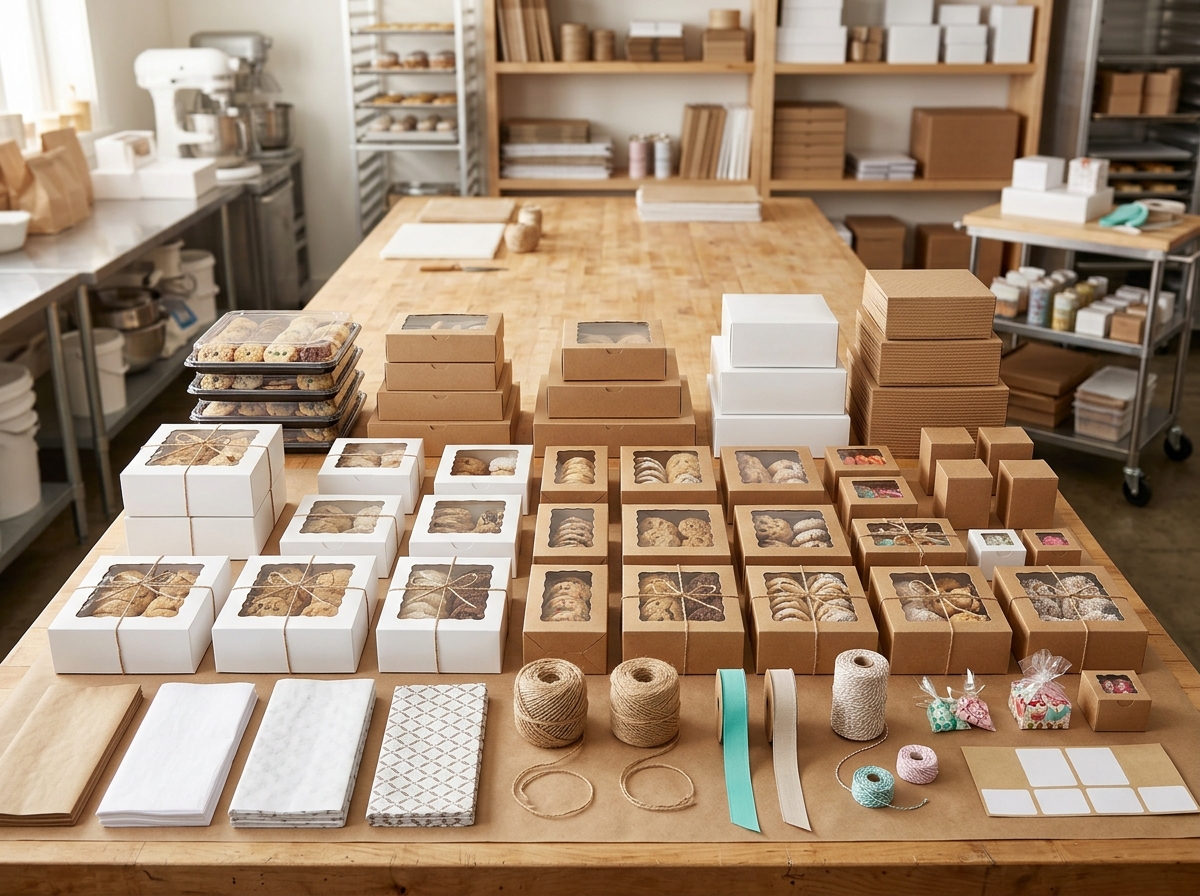
Pre-scoring and pre-gluing from the manufacturer reduce in-house assembly steps. Boxes that arrive flat but pop into shape with minimal folding allow bakeries to set up assembly stations where less-experienced staff can package orders while skilled bakers focus on production. Fast-assembly packaging for Black Friday warehouse operations applies equally to bakery fulfillment—every second saved per unit multiplies across hundreds of orders.
Cookie gift boxes typically fall into three size categories based on order value and recipient type. Individual gift boxes (3x3x3 to 4x4x4 inches) work for client appreciation gifts, teacher presents, or small thank-you orders. These boxes hold 4-8 cookies depending on size and typically ship at first-class mail rates, keeping delivery costs reasonable for lower-price-point gifts.
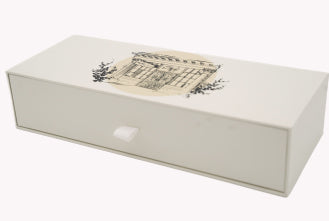
Mid-size boxes (6x6x3 to 8x8x4 inches) accommodate cookie assortments, brownie samplers, or mixed dessert boxes that represent the bulk of Black Friday bakery gift orders. These dimensions provide enough space for variety while maintaining structural integrity during shipping. The 4x4x4 white gift box sits at the upper end of the small category, offering clean presentation for premium cookie assortments without requiring oversized shipping cartons.
Corporate and bulk gift boxes (10x10x5 inches and larger) handle large cookie platters, multi-tier assortments, or combination gift sets that pair baked goods with coffee or tea. These boxes require careful internal structure—dividers, inserts, or compartments—to prevent contents from shifting during transit. Without proper internal support, cookies arrive as crumbs regardless of external box quality.
When window boxes make sense for your Black Friday fulfillment model, construction details determine whether they survive shipping intact. The window material matters as much as the paperboard. PET window film meets FDA food-contact material standards due to its inert, non-toxic properties, and it is also fully recyclable when separated from the box.
Window placement affects both product visibility and structural strength. Top-panel windows showcase decorated cookies effectively but reduce crush resistance compared to side-panel windows. Bakeries shipping via ground carrier during peak season often specify side windows that maintain top-panel strength while still providing product visibility.
The seal between window film and paperboard creates a potential failure point under shipping stress. Heat-sealed windows outperform adhesive-attached films for orders entering carrier networks, particularly in cold weather when some adhesives lose bonding strength. Quality window boxes should show no gaps or lifting at the film edge—any separation visible before packing will worsen during transit.
A pallet of 2,000 bakery boxes occupies approximately 40 cubic feet of floor space and requires climate-controlled storage to prevent warping or moisture damage. Bakeries ordering in bulk for Black Friday need staging areas that keep packaging clean, dry, and accessible without disrupting production flow.
Warehouse storage planning for Black Friday packaging addresses timing, space allocation, and inventory rotation. Boxes delivered in early October provide time for quality inspection and assembly testing, but they also occupy valuable space for 6-8 weeks before peak usage. Bakeries with limited storage often split orders—taking half in October for early orders and pre-Thanksgiving production, then receiving the second delivery in mid-November for the peak weekend.
Vertical storage racks designed for flat packaging maximize floor space efficiency while keeping boxes accessible for high-volume packing days. Storing boxes horizontally in stacks above 4 feet risks crushing bottom layers, particularly with lighter-weight paperboard. Purpose-built shelving prevents damage while allowing staff to pull quantities needed for daily production without disturbing the full inventory.
Decorated sugar cookies, iced gingerbread, and royal-icing designs require additional protection beyond the primary box. Even food-safe boxes with proper construction can't prevent decorated surfaces from touching each other during shipping unless internal barriers separate individual pieces.
Clear cellophane bags provide individual cookie protection while maintaining visibility for window boxes. Each cookie slides into its own bag, preventing icing transfer and creating a professional presentation that matches retail bakery standards. The bags also extend shelf life by reducing air exposure, important for cookies shipped on Monday or Tuesday that won't be consumed until the weekend.
Tissue paper inserts create cushioning and visual appeal for premium gift boxes. A single sheet of food-safe tissue placed between cookie layers prevents shifting while adding perceived value that justifies higher price points. For Black Friday orders where customers can't inspect products before purchase, these details communicate quality and care that build repeat business.
The time to discover that your chosen bakery boxes fail during shipping is September, not November 26. Bakeries should conduct real-world shipping tests with actual products at least 6 weeks before Black Friday to identify problems while solutions remain possible.
A proper test involves packing cookies exactly as you would for customer orders, then shipping boxes to yourself or colleagues via the same carriers and service levels you'll use during peak season. Ship on a Monday for Thursday delivery to simulate the time in transit that most Black Friday orders experience. Inspect boxes for crush damage, check cookies for breakage, and evaluate whether the packaging arrives in gift-ready condition or requires repacking.
Temperature testing matters for bakeries in northern climates where November shipping exposes packages to freezing temperatures. Boxes sitting in unheated delivery trucks overnight can arrive with condensation damage when they warm up at delivery. Testing in actual November conditions reveals these issues before they affect paying customers.
Packaging suppliers face the same volume pressures as bakeries during November. Manufacturers prioritize confirmed orders over rush requests, and production lead times extend as capacity fills. Bakeries establishing relationships with suppliers in August-September secure better inventory allocation than operations placing first-time orders in October.
Minimum order quantities increase during peak season as suppliers batch production for efficiency. A supplier offering 100-unit minimums in July may require 500-unit minimums in October, forcing small bakeries to either over-purchase or accept delayed delivery. Understanding these seasonal dynamics allows better planning and budget allocation.
Backup suppliers provide insurance against stockouts or quality issues with primary vendors. Identifying a secondary source for bakery boxes before peak season—even if you don't place an order—means you have options if your primary supplier faces delays or ships damaged goods. The time to build these relationships is not during the week before Thanksgiving.
Food safety protocols that work during normal operations face stress during Black Friday volume. Bakeries processing 10x normal order volume often bring in temporary staff, use additional packing stations, or work extended hours—all situations that increase cross-contamination risk.
If your bakery produces items with wheat, eggs, dairy, nuts, or soy, cross-contamination warnings are essential. This applies to packaging operations as much as baking. Boxes used for nut-containing cookies must never be used for allergen-free products, even if the boxes appear clean. During high-volume periods, clear labeling of packaging materials prevents dangerous mix-ups.
Dedicated packing stations for allergen-free products create physical separation that reduces risk. A bakery offering gluten-free holiday cookies should maintain separate boxes, tissue, and cellophane supplies that never contact gluten-containing products. This segregation becomes more difficult during peak volume but more critical for customer safety.
Order bakery boxes by September 30 for guaranteed October delivery. Suppliers prioritize orders received before October 1, and lead times extend to 4-6 weeks for orders placed after mid-October. Bakeries ordering in November risk delayed delivery or partial fulfillment that forces last-minute substitutions during peak production.
Most suppliers set 500-unit minimums for bulk bakery boxes during peak season, with better pricing at 1,000 and 2,500 units. Some specialty or custom-printed boxes require 1,000-unit minimums year-round. Standard white or kraft boxes typically offer lower minimums, but availability tightens in November as suppliers allocate inventory to confirmed orders.
Quality window boxes with properly sealed PET film survive ground shipping when products are packaged correctly. Individual cookie protection (cellophane bags or tissue separation) matters more than window vs. solid construction. Solid boxes work better for high-grease items like butter cookies where window film shows oil transfer, while window boxes excel for decorated cookies where visibility adds value.
Start with confirmed pre-orders plus projected daily walk-in volume for November 22-30. Add 15-20% overage for damaged boxes, packing errors, and unexpected orders. A bakery averaging 30 gift orders per day during the 9-day peak window needs approximately 270 boxes minimum, or 320 boxes with recommended buffer. Split orders between early-October and mid-November delivery if storage space is limited.
Food-safe bakery packaging uses FDA-approved paperboard and coatings that don't transfer chemicals to food products. Request a Certificate of Compliance from your supplier documenting that materials meet 21 CFR food-contact standards. Grease-resistant coatings should be PFAS-free, and window films should be PET or PLA rather than PVC. Reputable suppliers provide this documentation automatically; if a supplier can't produce compliance certificates, find a different source.
Black Friday bakery packaging decisions affect operations for the entire holiday season. Boxes ordered in September determine fulfillment speed in November, and quality choices made months in advance show up in customer reviews and repeat business. Bakeries treating packaging as a strategic input rather than a commodity expense build competitive advantages that extend well beyond a single shopping weekend.