Cart
0
You may also like


Book a call with our development team to get started.



Apply online and access wholesale pricing.

If you're planning Black Friday packaging for your retail operation, the answer to "when should I order?" is straightforward: you're already in the critical window. For standard gift boxes, mailers, and cellophane bags, expect 2-4 weeks from order to delivery. Custom or printed packaging requires 8-12 weeks. With Black Friday falling on November 27-30 this year, mid-September represents the last comfortable ordering window for standard stock, and early September is the cutoff for anything custom. Wait until October, and you're risking stockouts during your highest-volume weekend of the year.
This guide walks through the black friday packaging lead times you need to plan around, the factors that extend or compress those timelines, and the specific ordering deadlines that separate prepared retailers from those scrambling for alternatives in late November.
Not all packaging carries the same lead time. The distinction between standard stock items and custom orders determines whether you're working with a two-week or a three-month planning horizon.
Standard packaging—plain kraft boxes, white tuck-top cubes, clear cellophane rolls, unprinted gift bags—ships fastest because it's already manufactured and sitting in distributor warehouses. These items typically require 2-4 weeks from purchase order to delivery, assuming normal freight conditions. A kraft gift box ordered in mid-September will arrive by early October, giving you time to prep, label, and stage inventory before Thanksgiving week.
Custom packaging is a different timeline entirely. Printed boxes, branded bags, or any item requiring artwork setup, proofing, plate creation, and dedicated production runs need 8-12 weeks minimum. That timeline includes design approval (1-2 weeks), manufacturing (4-6 weeks), and freight (2-4 weeks depending on origin and shipping method). For Black Friday delivery, custom orders needed to be placed by late July or early August. If you're reading this in September and haven't ordered custom packaging yet, you've missed that window for November 27-30 peak.
The packaging industry operates on cumulative lead times—every stage from artwork sign-off to final delivery stacks sequentially. A delay in one phase pushes every subsequent deadline. This is why experienced retailers treat lead time planning as non-negotiable rather than aspirational.
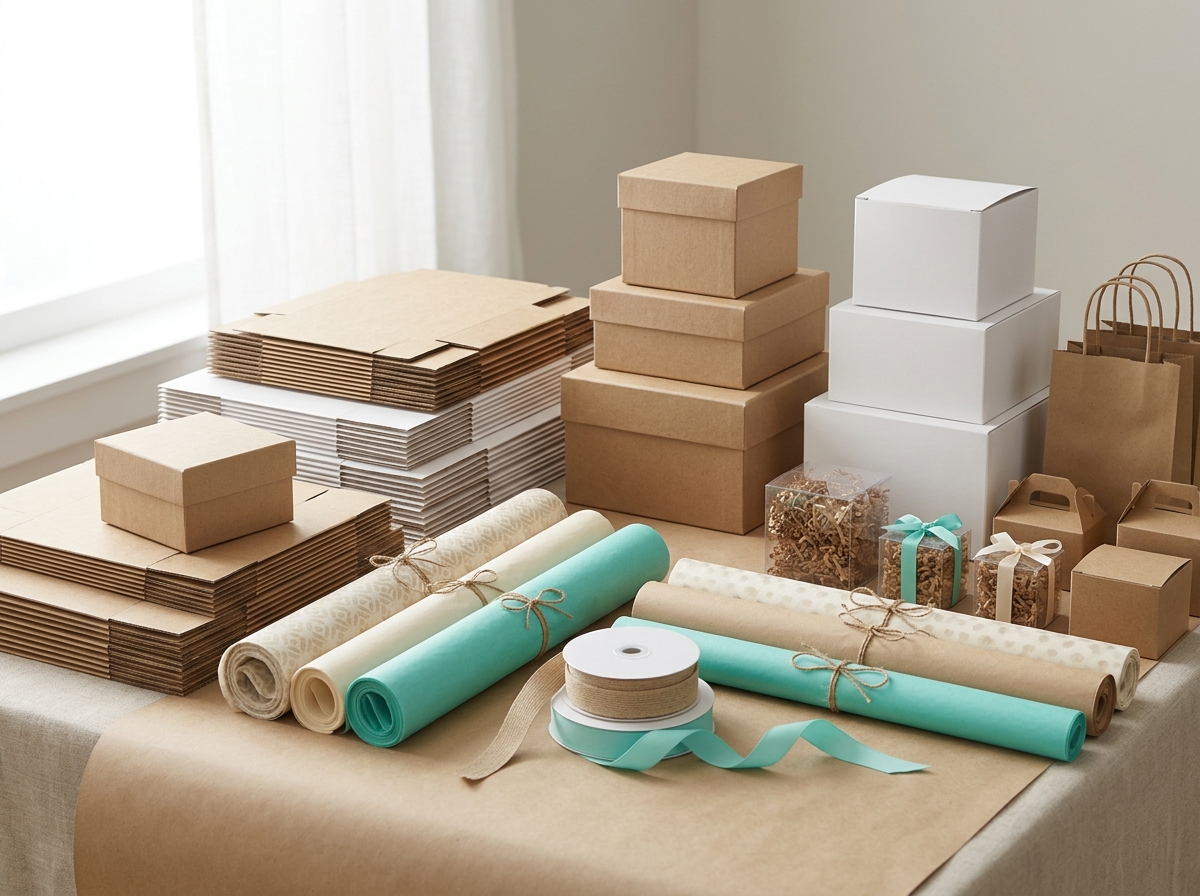
Retailers ordering standard packaging in early September are working within a safe margin. Place an order September 4, and standard items ship within 5-10 business days, arriving by mid-to-late September. That gives you six weeks of buffer before Black Friday weekend—enough time to absorb minor freight delays, coordinate with your fulfillment team, and pre-pack high-velocity SKUs.
Push that order into late September, and the margin tightens. An order placed September 25 might not arrive until mid-October, leaving only four weeks before peak. You're still covered, but there's no room for error. If a shipment is delayed, a box size is backordered, or you underestimated volume, you won't have time to reorder.
By October 2, you're at the edge of viability for standard stock. Freight alone can take 7-10 days, and any production or warehouse delays push delivery into late October or early November. At that point, you're unpacking boxes during the week you should be running fulfillment dry runs and training seasonal staff.
The National Retail Federation notes that many large retailers stock holiday inventory as early as October, which means packaging must arrive in September to support that timeline. Smaller operations have less warehousing flexibility, making early ordering even more critical.
Ordering packaging in October for a November 27 Black Friday is not impossible, but it introduces significant risk. Standard items may still ship in time, but you'll pay for expedited freight, lose negotiating leverage on pricing, and have zero contingency if anything goes wrong. Stockouts, substitutions, or mismatched box sizes become real possibilities.
Custom packaging ordered in October will not arrive in time for Black Friday. Period. Manufacturing timelines don't compress just because a retailer is late. If you need branded packaging and missed the summer ordering window, your only option is to order plain stock now and apply branding via stickers, stamps, or inserts—a workaround that still requires lead time but can be executed in 2-3 weeks rather than 10-12.
Even when you order early, certain variables can stretch delivery timelines beyond the standard 2-4 or 8-12 week windows. Knowing these factors helps you build realistic buffers into your planning.
Freight method and origin. Domestic freight (truck or rail) typically takes 5-10 business days. Ocean freight from overseas suppliers takes 4-6 weeks, and that's before customs clearance and inland transport. Air freight is faster but expensive and often capacity-constrained during peak season. If your supplier ships from Asia, assume 6-8 weeks minimum for standard items and 12-16 weeks for custom.
Artwork approval delays. Custom packaging timelines don't start until artwork is finalized and approved. If your design goes through multiple stakeholders, requires regulatory review, or needs revisions, you can add 1-3 weeks before manufacturing even begins. This is the most common reason custom orders miss deadlines—not production delays, but late sign-offs.
Material availability. Corrugated board, kraft paper, and certain specialty materials can experience shortages during high-demand periods. If your packaging requires a specific material that's backordered, the entire order stalls. Standard stock items are less vulnerable to this because distributors maintain inventory, but large-volume or unusual size orders may still face delays.
Peak season congestion. September through November is peak ordering season for packaging suppliers. Production schedules fill up, freight carriers prioritize high-volume accounts, and warehouse labor is stretched thin. Orders placed in late September or October are competing with every other retailer's holiday inventory, which can add days or weeks to standard lead times.
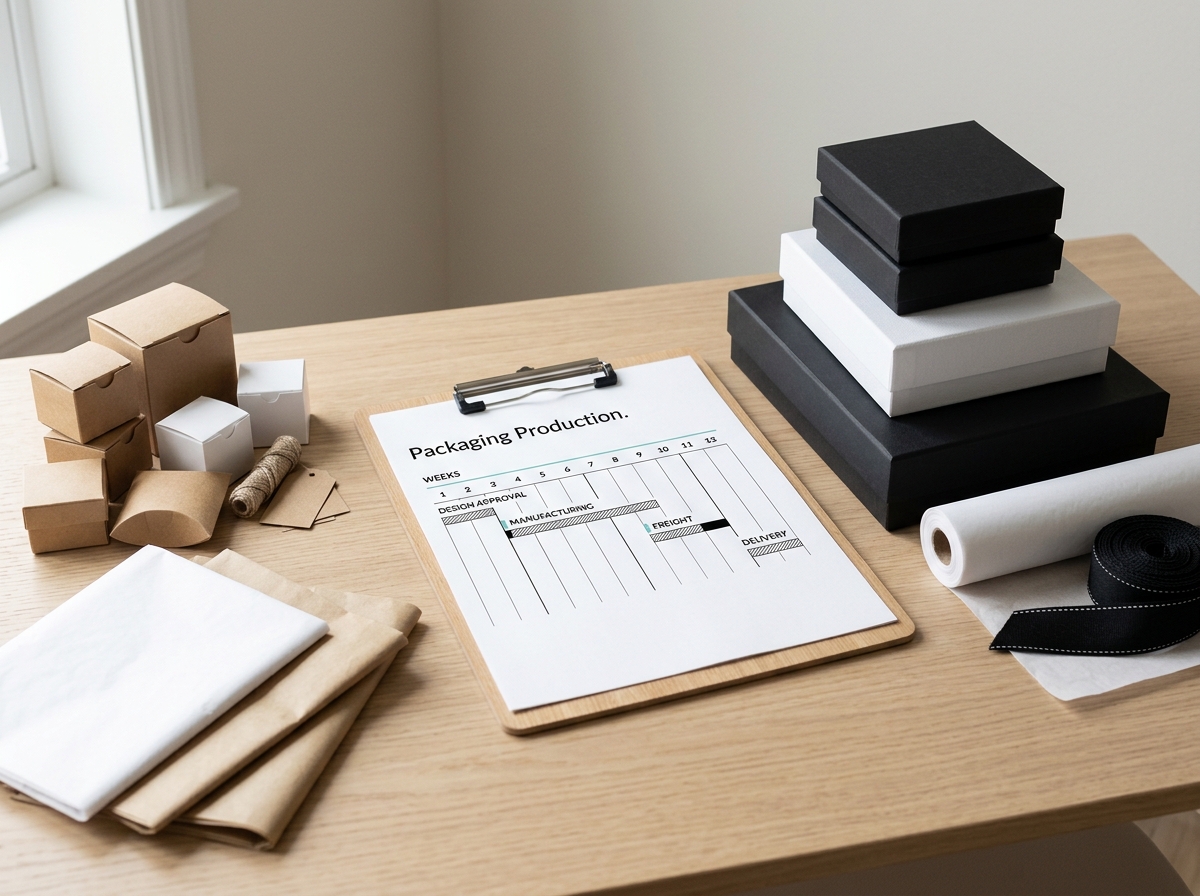
To determine your specific ordering deadline, work backward from your required delivery date using these steps:
Step 1: Identify your staging date. When do you need packaging physically in your warehouse or fulfillment center? For Black Friday, most retailers want inventory staged by November 15 at the latest—two weeks before peak to allow for receiving, quality checks, and pre-packing.
Step 2: Add freight time. Domestic standard freight: 7-10 business days. Expedited domestic: 3-5 business days. International ocean: 30-45 days. International air: 7-14 days. Use the longer end of the range to build in buffer.
Step 3: Add production time. Standard stock: 5-10 business days (mostly warehouse pick-and-pack). Custom packaging: 4-6 weeks for manufacturing, plus 1-2 weeks for artwork approval if not already finalized.
Step 4: Add contingency. Build in at least one week of buffer for unexpected delays—weather, carrier issues, material shortages, or order errors. High-stakes orders (large volume, critical SKUs) should have two weeks of contingency.
For example: You need white gift boxes in your warehouse by November 15. Working backward: November 15 delivery, minus 10 days freight, minus 10 days production, minus 7 days contingency = order deadline of October 14. That's your last safe ordering date. Anything later introduces risk.
If you're reading this in late September or early October and haven't ordered yet, you still have options—but they require decisive action and some compromise.
Order standard stock immediately. Skip custom printing and order plain kraft, white, or black boxes that ship within 2-4 weeks. A black cube tuck-top box can be just as effective as a printed box when paired with a branded sticker or thank-you card insert.
Pay for expedited freight. If standard freight won't get your order in on time, expedited shipping (3-5 business days) may close the gap. It's expensive—often 50-100% more than standard rates—but cheaper than running out of packaging during peak weekend.
Order more than you think you need. When lead times are tight, there's no opportunity to reorder if you underestimate demand. Overordering by 20-30% is safer than running short. Excess stock can be used for post-Black Friday sales, holiday orders, or January clearance fulfillment.
Source locally when possible. Domestic suppliers eliminate international freight time and customs risk. Even if per-unit cost is slightly higher, faster delivery and lower freight expense often offset the difference.
Use hybrid branding. If you wanted custom-printed boxes but missed the deadline, order plain stock and apply branding via stickers, stamps, or printed tissue paper. These elements can be sourced in 1-2 weeks and applied in-house or by your 3PL, giving you a semi-custom look without the 12-week lead time.
If you operate both e-commerce and brick-and-mortar channels, your packaging lead times need to account for different staging and delivery windows.
E-commerce fulfillment typically requires packaging earlier than in-store inventory. Online orders begin ramping up in early November, and some retailers see Black Friday-level volume as early as November 10-15 due to extended sale windows. Your fulfillment center needs mailers, boxes, and void fill in stock by early November at the latest.
Brick-and-mortar stores need gift bags, shopping bags, and point-of-sale packaging staged by mid-November, but the volume curve is steeper and more concentrated around the actual Black Friday weekend. In-store packaging can often be ordered slightly later than e-commerce stock, but only if you're managing inventory separately.
Omnichannel operations—where online orders ship from stores or customers pick up online orders in-store—need packaging that works for both channels. That usually means standardizing on boxes and bags that function equally well for shipping and hand-off, which simplifies ordering but requires higher total volume.
Packaging is one link in a longer supply chain that includes product manufacturing, warehousing, labor scheduling, and carrier contracts. When packaging arrives late, it creates a bottleneck that disrupts every downstream process.
If your packaging arrives November 20 instead of November 1, your fulfillment team loses three weeks of prep time. They can't pre-pack popular items, can't run test batches to optimize packing speed, and can't train seasonal staff on your packaging process. The result: slower order processing, higher error rates, and increased labor cost during your highest-volume week.
Late packaging also ties up working capital at the worst possible time. If you're forced to expedite freight or pay rush fees, that's cash that could have gone toward inventory, staffing, or marketing. And if packaging doesn't arrive at all, you're sourcing emergency alternatives at retail prices—often 2-3x wholesale cost.
Experienced supply chain managers treat packaging lead times as a core constraint, not an afterthought. They set ordering deadlines in summer, track shipments weekly, and maintain contingency relationships with backup suppliers. This level of discipline is what separates retailers who execute flawlessly during Black Friday from those who scramble.
For standard, unprinted packaging like kraft boxes or cellophane bags, the minimum lead time is typically 2-4 weeks from order to delivery, assuming domestic suppliers and standard freight. Custom or printed packaging requires 8-12 weeks minimum. If you're ordering in late September for a November 27 Black Friday, you should focus exclusively on standard stock items and plan for expedited freight if necessary.
No. Custom packaging requiring artwork setup, proofing, plate creation, and dedicated production runs needs 8-12 weeks minimum. An order placed in October will not be manufactured and delivered in time for late November. If you need branded packaging and missed the summer ordering window, your best option is to order plain stock boxes now and add branding through stickers, stamps, or inserts, which can be sourced in 2-3 weeks.
When lead times are tight and reordering isn't an option, it's safer to overorder by 20-30% than to run short. Use last year's Black Friday order volume as a baseline, adjust for expected growth, and add a buffer. Excess packaging can be used for Cyber Monday, holiday orders through December, or post-holiday clearance sales. Running out of packaging during peak weekend is far more costly than carrying extra inventory for a few weeks.
Freight delays during peak season are common due to carrier congestion, weather, and high demand. If your packaging is delayed, immediately contact your supplier to confirm the revised delivery date and explore expedited shipping options. Have a backup plan: identify local suppliers who stock similar items, even at higher per-unit cost, or arrange to pick up inventory directly from a regional warehouse. Building a one- to two-week contingency buffer into your ordering timeline helps absorb these delays without disrupting fulfillment.
Using a single supplier simplifies ordering, consolidates freight, and often improves pricing through higher volume. However, e-commerce and retail channels have different packaging needs—mailers and corrugated boxes for shipping, gift bags and shopping bags for in-store. If one supplier can't meet both needs at competitive pricing and lead times, it's better to split the order between specialists. The key is to place both orders early enough that you're not managing two separate tight deadlines simultaneously.
Black Friday packaging lead times are predictable, but only if you plan around them. Standard stock ordered in early September arrives with weeks to spare. Orders placed in October arrive with days to spare—or not at all. The retailers who execute flawlessly during the November 27-30 peak are the ones who treated packaging as a supply chain priority in summer, not an October afterthought.