Cart
0
You may also like


Book a call with our development team to get started.



Apply online and access wholesale pricing.

Corporate gift boxes serve a distinct purpose: they communicate appreciation, strengthen business relationships, and extend your brand presence beyond a single transaction. Unlike personal gifting, corporate packaging must balance professionalism with thoughtfulness, scale with customization, and budget constraints with perceived value. The packaging you choose becomes part of the message—whether you're thanking a long-term client, welcoming a new partner, or recognizing employee milestones.
The corporate gifting sector represents a significant driver in the broader gift packaging market. In 2023, corporate clients accounted for approximately 32.5% of gift box market share, with demand driven by seasonal peaks, employee recognition programs, and client appreciation initiatives. Companies typically order between 50 and 5,000 units per batch, making bulk ordering capabilities and consistent quality non-negotiable factors in packaging selection.
If you're building a DIY gift boxes program for your business, understanding the nuances of corporate packaging—from material selection to branding options—helps you create a professional presentation that aligns with your company's values and budget. This guide walks through the practical considerations, design trends, and sourcing strategies that make corporate gift boxes work at scale.
Corporate gift boxes differ from consumer packaging in several fundamental ways. First, they must accommodate bulk ordering without sacrificing quality. A box that looks polished in a quantity of ten needs to maintain that same standard when ordered in hundreds. Second, they require consistency—every recipient should receive packaging that reflects identical quality and branding, regardless of when or where the order ships.
Material durability matters more in corporate contexts because gifts often travel through multiple hands before reaching the final recipient. A sturdy kraft gift box with a secure tuck-top closure protects contents during shipping and handling while maintaining a professional appearance. Paperboard weight, structural integrity, and closure mechanisms all contribute to whether a box arrives in presentable condition.
Budget planning for corporate gifting differs from personal purchases. Rather than pricing per box, companies evaluate cost per recipient across an entire program. This includes the box itself, any customization (printing, stickers, ribbons), fill materials, contents, and shipping. According to industry research, 68% of companies increased their corporate gifting budgets in 2024, reflecting a growing recognition that thoughtful packaging yields measurable returns in client retention and employee satisfaction.
Kraft paperboard remains the dominant material choice for corporate gift boxes, valued for its natural aesthetic, structural strength, and sustainability credentials. The material photographs well, accepts various printing and stamping techniques, and aligns with the shift toward eco-conscious business practices. In 2024, paper-based gift packaging grew 15% year-over-year, with 45% of manufacturers shifting to sustainable materials in response to corporate procurement policies.
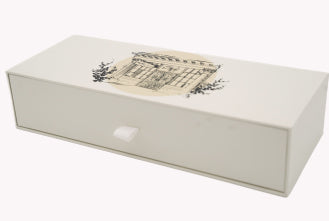
White paperboard offers a clean, premium alternative that works particularly well for luxury goods, cosmetics, or tech accessories. The smooth surface provides an ideal canvas for full-color printing or minimalist branding. White cube boxes in smaller sizes suit jewelry, promotional items, or high-value gifts where presentation drives perceived value.
Sustainability certifications increasingly influence material decisions. Forest Stewardship Council (FSC) certification verifies that paper and wood products originate from responsibly managed forests, with a documented chain of custody from forest to finished product. For companies with environmental, social, and governance (ESG) commitments, FSC-certified packaging provides transparent, third-party verification of sustainable sourcing practices.

Box sizing in corporate programs requires different thinking than one-off personal gifts. The goal is to identify two to three standard sizes that accommodate 80-90% of your typical gift contents, allowing you to order in bulk while maintaining flexibility. Cube formats—2x2x2, 3x3x3, and 4x4x4 inches—offer the most versatility because they stack efficiently for storage and shipping.
A 3x3x3 cube handles most small corporate gifts: branded USB drives, gourmet chocolates, candles, or small tech accessories. The compact footprint reduces shipping costs while providing enough interior volume for tissue paper and a branded card. For larger items like drinkware, apparel, or gift sets, a 4x4x4 or rectangular format prevents awkward empty space that requires excessive fill material.
Avoid the temptation to size boxes too precisely to contents. A box filled to 90% capacity looks intentional; a box filled to 100% capacity looks cheap and difficult to open. Build in 10-15% headroom for tissue paper, shred, or other fill that protects contents and creates a more considered unboxing experience.
Corporate gift boxes walk a fine line between brand visibility and subtlety. Overly promotional packaging feels transactional; completely unbranded packaging misses an opportunity to reinforce your company identity. The most effective corporate packaging integrates branding in ways that feel organic rather than imposed.
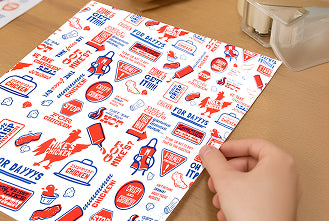
Custom stickers offer the most cost-effective branding solution for small to mid-sized orders. A well-designed sticker featuring your logo, company colors, or a simple message can be applied to kraft or white boxes without the setup costs and minimum order quantities required for custom printing. Stickers also provide flexibility—you can adjust messaging seasonally or by recipient type without committing to large print runs.
For larger orders (typically 500+ units), custom printing becomes economically viable. Digital printing technology now enables personalized packaging at production scale, allowing companies to print recipient names, custom messages, or variable design elements within a single production run. This capability has driven a 22% increase in demand for personalized corporate gift packaging, particularly for employee recognition and client appreciation programs.
Minimalist design trends dominate current corporate packaging aesthetics. Rather than covering every surface with logos and graphics, leading brands are opting for clean layouts that let material quality and subtle branding speak for themselves. A single-color logo on kraft paperboard, a debossed company name, or a monochromatic color palette creates a more sophisticated impression than busy, multi-color graphics.
Minimum order quantities (MOQs) vary significantly across packaging suppliers. Standard, unprinted boxes typically carry lower MOQs—often 18-24 units per size—making them accessible for small businesses or pilot programs. Custom printing usually requires MOQs of 250-1,000 units, depending on the printing method and complexity.
Smart corporate gifting programs order in tiers. A base inventory of neutral, unbranded boxes in your most-used sizes provides flexibility for immediate needs or small recipient lists. These can be customized on-demand with stickers, ribbons, or printed cards. For annual programs with predictable recipient counts—holiday gifts, milestone anniversaries, or quarterly client appreciation—custom printed boxes ordered once per year offer better per-unit economics.
Storage space becomes a practical constraint for bulk orders. A case of 100 flat-packed 4x4x4 boxes occupies roughly 2 cubic feet, manageable for most office storage rooms. Calculate storage requirements before committing to large orders, and consider whether your vendor offers drop-shipping or warehousing services that allow you to order in bulk while taking delivery in smaller batches.
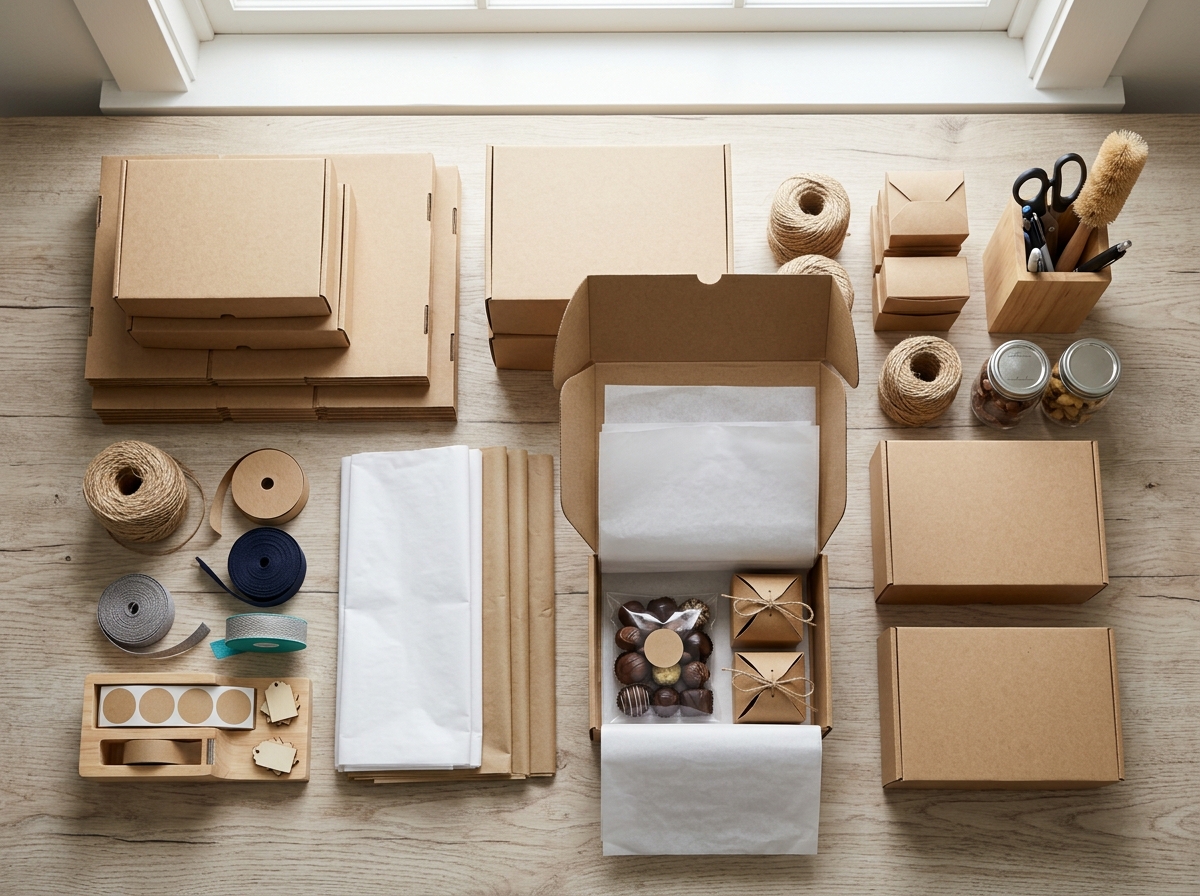
Efficient assembly processes matter when you're packaging dozens or hundreds of gifts. Tuck-top cube boxes require no tape or adhesive, reducing assembly time and eliminating the need for dispensers or cutting tools. A single person can assemble, fill, and close 20-30 boxes per hour once a rhythm is established.
Set up an assembly line workflow for larger batches: one station for box assembly, one for filling and arranging contents, one for adding tissue or fill material, and one for applying final touches like stickers, ribbons, or cards. This division of labor increases throughput and reduces errors, particularly important when gifts contain multiple components or require specific arrangement.
Quality control checkpoints prevent costly mistakes. Before beginning full production, assemble and fill three sample boxes to verify that contents fit properly, branding elements are positioned correctly, and the overall presentation meets your standards. For orders exceeding 100 units, implement spot checks every 25-30 boxes to catch any inconsistencies before they compound.
Corporate gifting follows predictable seasonal peaks: year-end holidays account for the largest volume, followed by employee appreciation events, client milestones, and industry-specific occasions. A flexible packaging strategy accommodates both seasonal surges and ongoing programs without requiring separate inventory systems.
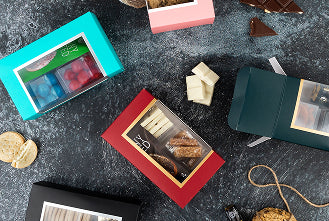
Neutral base packaging in kraft or white works across seasons and occasions. Seasonal differentiation comes through ribbons, tissue paper colors, or printed cards rather than the box itself. A kraft cube box looks equally appropriate for holiday gifts when paired with red ribbon and evergreen tissue, or for spring client appreciation with pastel tissue and natural twine.
Plan seasonal orders 8-12 weeks in advance, particularly for custom printing or specialty materials. Lead times extend during Q4 as packaging suppliers experience peak demand. Companies that order holiday packaging in September avoid both rush fees and the risk of delayed delivery that could derail gifting timelines.
Many businesses discover that corporate gift packaging can serve double duty. The same boxes used for client gifts may work for product samples, employee onboarding kits, event swag, or trade show giveaways. Identifying these overlaps allows you to increase order volumes, improve per-unit pricing, and simplify inventory management.
For companies with existing small business packaging programs, corporate gifting represents a natural extension. The skills and systems developed for customer-facing product packaging—branding guidelines, supplier relationships, quality standards—transfer directly to corporate gift applications. The primary difference lies in scale and recipient expectations rather than fundamental packaging principles.
Cross-functional coordination improves corporate gifting outcomes. Marketing teams contribute brand guidelines and messaging frameworks. Operations teams manage inventory and fulfillment logistics. Finance teams establish budgets and approve vendors. Human resources teams identify employee recognition opportunities. When these functions collaborate on packaging decisions, the result is more cohesive, cost-effective programs that align with broader business objectives.
Sustainable packaging has shifted from a differentiator to an expectation in corporate gifting. In 2024, approximately 26% of corporate gifts included sustainable products, with eco-friendly packaging following the same trajectory. Recipients—particularly in B2B contexts—increasingly evaluate business partners on environmental commitments, making packaging choices a visible signal of corporate values.
Paper-based packaging inherently offers better sustainability credentials than plastic alternatives. Kraft and white paperboard are widely recyclable through standard municipal programs, and many products now incorporate post-consumer recycled content. However, true sustainability extends beyond material selection to include production processes, transportation impacts, and end-of-life disposal.
Communicate sustainability efforts transparently but avoid greenwashing. If your packaging uses recycled content, specify the percentage. If materials are FSC-certified, display the certification mark. If boxes are designed for reuse, include a brief note suggesting secondary uses. These details demonstrate genuine commitment rather than vague environmental claims that sophisticated B2B buyers increasingly scrutinize.
Corporate gift box costs break down into several components: the box itself, customization (printing, stickers, ribbons), fill materials (tissue, shred, inserts), contents, labor for assembly, and shipping. Understanding this cost structure reveals optimization opportunities that maintain quality while controlling expenses.
Per-unit box costs typically range from $0.50 to $3.00, depending on size, material, and customization. Unprinted kraft boxes occupy the lower end of this range, while custom-printed rigid boxes with specialty finishes reach the upper end. For a corporate program distributing 200 gifts annually, the difference between a $1 box and a $2 box represents $200—meaningful but not prohibitive when weighed against the relationship value of each gift.
Labor costs often exceed material costs in corporate gifting programs. A box that requires complex assembly, multiple inserts, or precise arrangement may cost $5-10 in labor per unit when accounting for employee time. Packaging that assembles quickly and accommodates simple, consistent filling processes reduces this labor burden significantly. Tuck-top designs, for example, eliminate the time spent cutting and applying tape while providing secure closure.
Shipping costs scale with dimensional weight and fragility. Compact, sturdy boxes reduce both factors. A well-designed 3x3x3 cube ships at a lower rate than a 6x4x3 rectangular box of similar volume because carriers charge based on dimensional weight calculations that penalize inefficient shapes. For programs shipping hundreds of gifts, these per-unit savings compound quickly.
While corporate gifts serve relationship-building objectives that resist simple quantification, several metrics help evaluate program effectiveness. Client retention rates, repeat purchase frequency, employee satisfaction scores, and referral generation all provide indirect measures of gifting impact. More sophisticated organizations track these metrics before and after implementing or expanding corporate gifting programs to isolate effects.
Packaging quality influences recipient perception of gift value. Research indicates that presentation significantly affects how recipients evaluate both the gift and the giver. Professional packaging elevates perceived value, while cheap or damaged packaging diminishes it—regardless of the actual contents. This perception gap means that investing in quality packaging may generate better returns than spending the same amount on more expensive contents in inferior packaging.
Track packaging costs as a percentage of total gift value rather than in isolation. A $3 box for a $50 gift represents 6% of total value—reasonable for most corporate programs. The same $3 box for a $15 gift represents 20% of total value, suggesting either the box is overspecified or the contents undervalued. Maintaining packaging costs at 5-10% of total gift value provides a useful benchmark for budget planning.
Corporate gifting programs benefit from stable, long-term vendor relationships rather than constantly shopping for the lowest per-unit price. Reliable vendors understand your quality standards, maintain consistent inventory of your preferred sizes and styles, accommodate rush orders when needed, and provide continuity across multi-year programs.
Evaluate vendors on several dimensions beyond price: product quality and consistency, MOQ flexibility, customization capabilities, lead times, customer service responsiveness, and sustainability practices. A vendor that charges 15% more per unit but never misses deadlines, maintains quality standards, and solves problems proactively often delivers better total value than a cheaper alternative that requires constant oversight and generates frequent issues.
Consolidating packaging purchases with fewer vendors simplifies procurement, increases order volumes for better pricing, and builds relationships that yield preferential treatment during peak seasons. Rather than sourcing boxes from one vendor, ribbons from another, and tissue from a third, identify suppliers who can provide complete packaging solutions that reduce coordination overhead.
Several trends are reshaping corporate gift packaging in 2025 and beyond. Personalization at scale, enabled by digital printing technology, allows companies to customize individual boxes within large production runs without prohibitive cost increases. This capability supports more targeted, recipient-specific gifting that feels less transactional and more thoughtful.
Reusable packaging formats are gaining traction as companies seek to extend brand presence beyond the initial unboxing. Boxes designed for secondary uses—storage, organization, display—remain in recipients' homes or offices longer, providing ongoing brand visibility. This trend aligns with sustainability objectives by reducing single-use packaging waste while delivering marketing benefits.
Interactive elements like QR codes, NFC tags, or augmented reality triggers are being integrated into corporate packaging to connect physical gifts with digital experiences. A QR code on a gift box might link to a personalized video message, product information, or exclusive content. These technologies bridge the gap between tangible gifting and digital relationship-building, particularly relevant as remote work reduces face-to-face business interactions.
Minimalist aesthetics continue to dominate, with brands moving away from heavy graphics toward material-led design. Clean layouts, subtle branding, and quality materials communicate sophistication more effectively than busy, logo-heavy packaging. This shift reflects broader design trends but also practical benefits: minimalist packaging ages better, works across multiple occasions, and appeals to diverse recipient preferences.
Several common mistakes undermine corporate gifting programs. Oversized packaging creates unnecessary shipping costs and environmental waste while making contents appear inadequate. Conversely, undersized packaging damages contents and creates frustrating unboxing experiences. Size packaging to allow 10-15% headroom beyond contents for optimal presentation and protection.
Inconsistent branding confuses recipients and dilutes brand identity. If your corporate colors are navy and silver, don't switch to red and green for holiday gifts unless those colors appear in your brand guidelines. Maintain visual consistency across all corporate communications, including gift packaging, to reinforce brand recognition.
Neglecting quality control in bulk orders leads to embarrassing situations when recipients receive damaged, incorrectly assembled, or poorly branded packages. Implement spot checks throughout assembly and conduct final inspections before shipping. The cost of replacing a few defective units pales compared to the relationship damage caused by substandard gifts reaching important clients.
Waiting until the last minute to order packaging creates unnecessary stress and limits options. Rush fees, limited inventory, and compressed timelines force compromises on quality, customization, or pricing. Plan corporate gifting programs quarterly rather than reactively, allowing adequate lead time for sourcing, customization, and fulfillment.
Successful corporate gifting programs require systems that scale efficiently as recipient lists grow. Document standard operating procedures for box assembly, gift selection, personalization, and shipping. These procedures ensure consistency when multiple team members participate in fulfillment and provide training materials for new employees joining the process.
Maintain a core inventory of versatile packaging that accommodates 80% of gifting needs, supplemented by specialty packaging for specific occasions or high-value recipients. This two-tier approach balances efficiency with flexibility, allowing you to respond to most situations from existing inventory while retaining the ability to create custom presentations when circumstances warrant.
Leverage technology where it adds value without overcomplicating processes. Spreadsheets tracking recipient lists, gift contents, and shipping addresses suffice for programs under 100 recipients. Beyond that scale, dedicated gifting platforms or CRM integrations help manage complexity, automate reminders, and track program metrics more effectively than manual systems.
Unprinted kraft or white cube boxes typically range from $0.50 to $1.50 per unit in quantities of 50-500 units, with prices decreasing at higher volumes. Custom-printed boxes start around $1.50-$3.00 per unit depending on printing complexity and order size. Total packaging costs—including boxes, fill materials, ribbons, and stickers—generally run $2-5 per gift for mid-range corporate programs. Premium programs with rigid boxes, specialty finishes, or extensive customization may reach $5-10 per unit in packaging costs alone.
Standard unprinted boxes typically have MOQs of 18-50 units, making them accessible for small programs or testing. Custom printing MOQs vary by printing method: digital printing may start at 100-250 units, while offset printing typically requires 500-1,000 units minimum. Sticker customization offers the lowest entry point, often with no minimums beyond the base box purchase, making it ideal for companies ordering fewer than 100 units or requiring flexible messaging across smaller recipient segments.
For standard, unprinted boxes, 2-4 weeks provides adequate lead time during non-peak periods. During Q4 holiday season (October-December), extend lead times to 6-8 weeks to account for increased demand across the packaging industry. Custom-printed orders require 8-12 weeks year-round, with 12-16 weeks recommended for holiday delivery. Rush production is sometimes available for premium fees, but it limits customization options and creates unnecessary stress. Companies with annual gifting programs should establish recurring orders in September for December delivery.
Yes, using consistent packaging across client and employee programs creates economies of scale and simplifies inventory management. Differentiate recipient types through contents, personalized cards, or subtle variations like ribbon colors rather than completely different box styles. Some companies maintain two parallel inventories—premium boxes for clients and partners, standard boxes for internal employee recognition—but this approach only makes sense at larger scales where volume discounts offset the complexity of managing separate SKUs.
Prioritize recyclable, paper-based materials over plastic alternatives as the foundation of sustainable corporate packaging. Look for FSC certification to verify responsible forest sourcing, and consider post-consumer recycled content when available. Minimize packaging waste by sizing boxes appropriately to contents rather than oversizing. Choose packaging designed for potential reuse—sturdy construction and timeless design encourage recipients to repurpose boxes for storage or organization. Communicate sustainability features transparently through brief notes or labels, but avoid vague environmental claims that sophisticated B2B recipients may view as greenwashing.
Corporate gift boxes represent more than containers—they're tangible expressions of business relationships that extend your brand into clients' and employees' daily environments. By selecting appropriate materials, sizing strategically, implementing efficient fulfillment systems, and maintaining quality standards, you create gifting programs that strengthen relationships while respecting budget constraints. Whether you're assembling small gift boxes for individual clients or coordinating hundreds of milestone celebration packages, the principles of professional presentation, consistent quality, and thoughtful customization remain constant. Start with versatile, high-quality packaging that reflects your brand values, scale systematically as programs grow, and measure results to refine your approach over time.