Cart
0
You may also like


Book a call with our development team to get started.



Apply online and access wholesale pricing.

When a bakery ships pies to retail partners or serves catering clients, the packaging must do more than protect the product during transit. It must meet federal food safety standards, resist grease migration, and survive health department scrutiny. For bakeries selling thanksgiving pie boxes through commercial channels, understanding FDA food contact requirements and grease-resistant coatings isn't optional—it's foundational to legal operation and customer safety.
Food safe pie boxes are governed by the Federal Food, Drug, and Cosmetic Act, which mandates that any material touching food must not transfer harmful substances. The coating applied to paperboard plays a critical role: it prevents butter, fruit juices, and oils from soaking through while ensuring no migration of chemicals into the pie filling. This article walks through the regulatory framework, coating technologies, and testing standards bakeries encounter when sourcing compliant pie packaging.
The U.S. Food and Drug Administration regulates packaging materials as food contact substances (FCS). A food contact substance is defined as "any substance intended for use as a component of materials used in manufacturing, packing, packaging, transporting, or holding food if such use is not intended to have any technical effect in such food." For pie boxes, this includes the paperboard substrate, adhesives, printing inks, and any barrier coatings applied to the interior surface.
Any packaging material that comes into contact with food is subject to regulation, and substances classified as food additives must be authorized by the FDA before they can legally enter the U.S. market. Bakeries don't need to submit their finished pie boxes for individual FDA approval, but they must ensure every component—paperboard, coatings, adhesives—uses substances already cleared through one of four regulatory pathways.
Established food contact materials have existing FDA regulations specific to them, laid out in 21 CFR Parts 170-199. These regulations cover the vast majority of paperboard and coating chemistries used in bakery packaging. For pie boxes, the most relevant sections are 21 CFR 176 (Paper and Paperboard Components) and 21 CFR 175 (Adhesives and Components of Coatings).
Materials can also achieve compliance through Generally Recognized as Safe (GRAS) status, Prior Sanctioned substance letters issued before 1958, or Threshold of Regulation exemptions when migration levels fall below 0.5 parts per billion. For new food contact substances, manufacturers must register the product with the FDA, typically through a Food Contact Notification (FCN), though higher or lower exposure materials may require a Food Additive Petition or Threshold of Regulation Submission.
When sourcing pie packaging, bakeries should request documentation from suppliers confirming that all materials comply with 21 CFR or have valid FCN coverage. Reputable packaging manufacturers maintain compliance files and can provide this documentation upon request. If a supplier cannot produce proof of FDA compliance, the packaging should not be used for food contact applications.
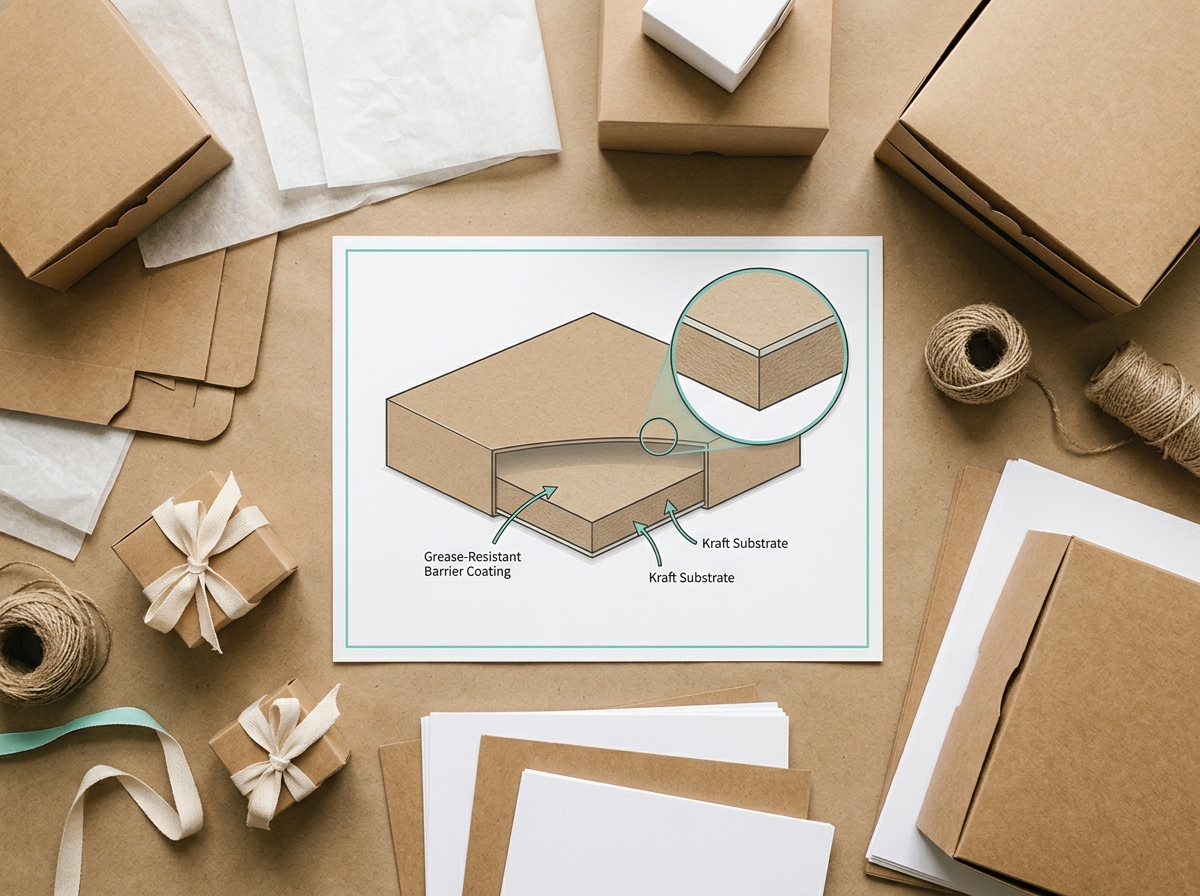
Pie fillings—especially those with butter crusts, fruit syrups, or custard bases—generate grease and moisture that can compromise paperboard integrity. Historically, per- and polyfluoroalkyl substances (PFAS) provided near-bulletproof grease resistance by treating individual fibers at the mill level. PFAS treatments were applied through a saturation process that pushed chemistry into the fiber network itself, with no film on the surface and no coat weight to manage, because there was no coating in the conventional sense. Each fiber became individually grease-repellent through surface-energy chemistry.
Regulatory pressure and health concerns have driven the industry toward PFAS-free alternatives. PFAS-free aqueous food packaging coatings comprise water-based barrier systems devoid of intentionally added per- and polyfluoroalkyl substances, engineered to provide grease, water, and oil resistance. These coatings achieve grease resistance through a fundamentally different mechanism than legacy PFAS treatments.
PFAS-free coatings achieve grease resistance through continuous, dense film formation that physically blocks oil from entering the substrate. The polymer does the work, and the polymer has to form a complete, defect-free film across a porous paper or paperboard surface. The coating must also survive folding, scoring, abrasion, heat, moisture, and time—all common stresses in bakery operations.
Acrylic emulsions are the most common starting point for PFAS-free grease resistance. They deliver highly oil-resistant, low-coat-weight barriers, along with optical clarity, broad regulatory compatibility, and attractive recyclability performance. Water-based acrylic coatings work well for pies with moderate grease content, such as fruit pies or custard-based fillings. For higher-grease applications—pecan pies, butter-heavy crusts, or pies with oily nut toppings—silicone-based coatings offer superior heat tolerance and oil repellency.
Bakeries ordering kraft vs. SBS paperboard pie packaging should confirm with suppliers that coatings are explicitly certified PFAS-free and meet FDA food contact standards. Some manufacturers now use plant-based polymers, clay dispersions, or cellulose nanofiber coatings as alternatives to synthetic acrylics, particularly for compostable or recyclable packaging lines.
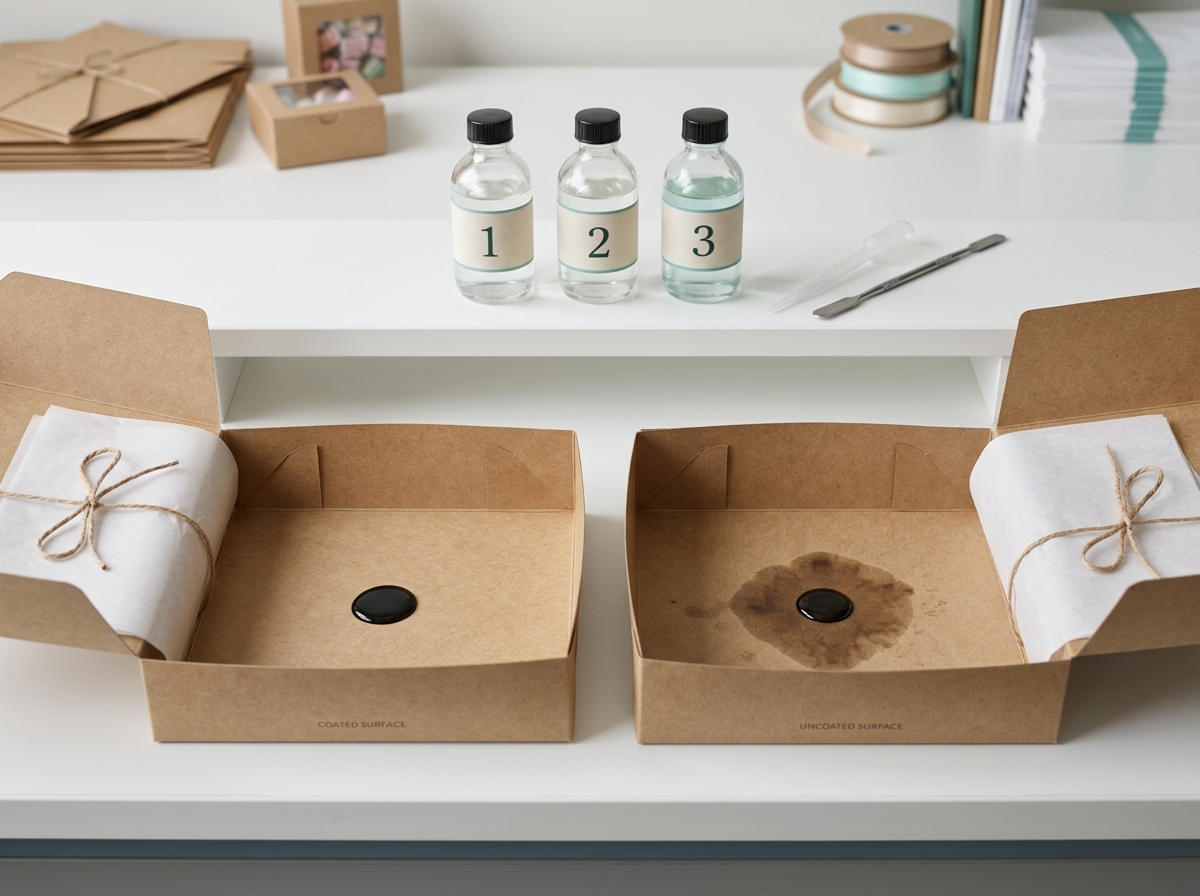
Grease resistance is quantified using the TAPPI T559 standard, commonly called the KIT test. The method describes a procedure for testing the degree of repellency of paper or paperboard treated with sizing agents, accomplished by testing production samples with a series of numbered reagents varying in surface tension and viscosity. The highest numbered solution that remained on the surface without causing failure was reported as the "kit rating."
Oil and grease resistance is measured by the 3M kit test (TAPPI Standard T559 cm-02), with ratings from 1 (the least resistance to oil and grease) to 12 (excellent resistance to oil and grease penetration). A KIT rating of 8 or higher is generally suitable for most pie applications. Pies with butter crusts or high-fat fillings may require boxes with KIT ratings of 10 or above to prevent visible grease staining or structural failure during transport.
A KIT rating of 3–5 indicates minimal grease resistance, suitable only for dry baked goods like cookies or bread. Ratings of 6–8 handle light grease exposure—think fruit pies with minimal butter or custard-based desserts. For traditional Thanksgiving pecan pies, pumpkin pies with butter crusts, or any pie stored overnight before delivery, a KIT rating of 9–12 is the safer specification.
When comparing quotes from packaging suppliers, ask for KIT test results on the specific paperboard and coating combination you're ordering. Some suppliers list KIT ratings on spec sheets; others require a request. If a supplier cannot provide KIT data, consider that a red flag. Bakeries shipping pies to grocery chains or catering high-volume events should also request Oil Cobb testing, which measures the mass of oil absorbed over a 30-minute period. Lower Oil Cobb values indicate better grease resistance.
For bakeries planning seasonal orders, understanding lead times for pie box procurement is critical, especially when requesting custom coatings or specific KIT ratings that may require mill-level adjustments.
Bakeries sourcing compliant pie packaging should evaluate three material layers: the paperboard substrate, the interior coating, and any exterior printing or lamination. Each layer must meet FDA food contact standards, but the interior coating bears the heaviest regulatory and performance burden.
Virgin SBS (solid bleached sulfate) paperboard and kraft paperboard are both FDA-compliant when sourced from reputable mills. Recycled content paperboard can be used for exterior layers or structural components, but FDA guidelines restrict its use on direct food-contact surfaces due to potential contamination from post-consumer waste. If a bakery wants to market sustainable packaging, a virgin paperboard interior with a recycled-content exterior layer is the compliant approach.
Thickness matters for structural integrity and grease barrier performance. Pie boxes typically use 18-point to 24-point paperboard (0.018 to 0.024 inches thick). Thicker substrates provide better puncture resistance and reduce the risk of grease bleed-through, but they also increase material costs and shipping weight. For standard 9-inch and 10-inch pies, 20-point SBS with a water-based acrylic coating offers a strong balance of cost, performance, and compliance. Bakeries comparing pie box dimensions should also consider how substrate thickness affects box assembly and storage efficiency.
Coatings are applied at the mill or during converting, typically through roll coating, spray coating, or curtain coating. Coverage must be uniform across the entire food-contact surface, with no pinholes, skips, or thin spots that could allow grease migration. Coat weight—the amount of coating applied per unit area—directly impacts grease resistance. Higher coat weights improve barrier performance but add cost and can affect the box's ability to fold cleanly along score lines.
Water-based acrylic coatings typically require coat weights of 3 to 6 grams per square meter to achieve KIT ratings of 8 or higher. Silicone-based coatings can achieve similar performance at lower coat weights due to their superior oil repellency. Bakeries ordering custom pie boxes should specify both the coating chemistry and the target KIT rating to ensure suppliers apply adequate coverage.
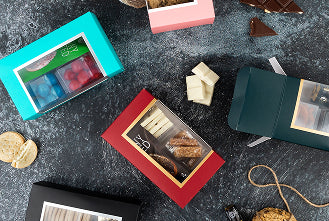
For bakeries offering pies in windowed boxes, the acetate or PET panel must also meet FDA food contact standards. Clear panels are typically made from polyethylene terephthalate (PET) or oriented polystyrene (OPS), both of which have established FDA clearances. Acetate panels, while less common today, are also FDA-compliant when sourced from approved suppliers. More details on panel materials are covered in our guide to pie boxes with windows.
Local health departments enforce food safety regulations at the retail and foodservice level, and packaging is within their inspection scope. Inspectors may request documentation proving that pie boxes meet FDA food contact standards, particularly if a bakery has experienced customer complaints about packaging odors, grease staining, or visible contamination.
Bakeries should maintain a compliance file for all packaging materials, including supplier certifications, FDA compliance letters, and test reports (KIT ratings, migration testing, heavy metal analysis). This file should be accessible during inspections and updated whenever packaging suppliers or specifications change. If a bakery switches from one pie box supplier to another, request updated compliance documentation even if the boxes appear identical.
One frequent issue: bakeries assume that "food-grade" packaging is automatically FDA-compliant. "Food-grade" is a marketing term, not a regulatory classification. Packaging must meet specific FDA regulations to be legally used for food contact. Another pitfall is sourcing packaging from overseas suppliers who claim FDA compliance but cannot provide verifiable documentation. If a supplier references "FDA-approved" packaging, ask for the specific CFR citation or FCN number. The FDA does not approve finished packaging—it regulates the substances used to make it.
Printing inks on the exterior of pie boxes must also comply with FDA regulations if there's any possibility of ink migration to the food-contact surface. Low-migration inks or inks formulated for indirect food contact are the standard for bakery packaging. Bakeries ordering custom-printed boxes should confirm with their printer that inks meet 21 CFR 175.300 or equivalent standards.
For small bakeries navigating wholesale pie box orders, understanding minimum order quantities and bulk pricing structures helps balance compliance costs with budget constraints.
When evaluating pie box suppliers, bakeries should ask five key questions to confirm compliance and performance:
1. What is the KIT rating of the interior coating, and can you provide test results? If the supplier cannot answer this, the packaging may not be suitable for high-grease pie applications.
2. Is the coating PFAS-free, and do you have third-party certification? Some states have enacted or proposed bans on PFAS in food packaging. Even if your state hasn't, PFAS-free packaging future-proofs your supply chain.
3. Can you provide FDA compliance documentation for all food-contact materials? This should include CFR citations or FCN numbers for the paperboard, coating, adhesives, and any printing inks on interior surfaces.
4. What is the substrate thickness and composition? Confirm whether the paperboard is virgin or recycled content, and whether recycled content (if any) is limited to non-food-contact layers.
5. What are your lead times for custom orders with specific coating requirements? Custom coatings or non-standard KIT ratings may extend lead times, especially during peak seasons like Thanksgiving.
Reputable suppliers will answer these questions without hesitation and provide documentation. If a supplier is evasive or dismissive about compliance, consider it a warning sign. The cost savings from cheaper, non-compliant packaging are not worth the risk of health department violations, product recalls, or customer safety incidents.
Hammont offers kraft gift boxes and clear acrylic serving trays with lids that meet FDA food contact standards for bakery applications. These options provide grease-resistant, food-safe packaging for pies, tarts, and other baked goods requiring secure, compliant transport.
A pie box is FDA-compliant when all materials that contact food—paperboard, coatings, adhesives, and inks—use substances authorized under 21 CFR Parts 170-199, have valid Food Contact Notifications, or meet GRAS or Prior Sanctioned status. The supplier should provide documentation confirming compliance with these regulatory pathways. Bakeries are responsible for ensuring their packaging meets these standards, even though finished boxes do not require individual FDA approval.
Ask your packaging supplier for a PFAS-free certification or third-party test results. PFAS-free coatings are typically water-based acrylics, silicone-based formulations, or plant-derived polymers. If the supplier cannot confirm PFAS-free status, request the coating's Safety Data Sheet (SDS) and look for fluorinated compounds in the ingredient list. Many states are phasing out PFAS in food packaging, so confirming PFAS-free status now avoids future compliance issues.
For most Thanksgiving pies—pumpkin, pecan, apple, or sweet potato—a KIT rating of 8 to 10 is sufficient. Pecan pies and pies with butter-heavy crusts benefit from KIT ratings of 10 or higher due to higher grease content. Fruit pies with minimal butter can perform well with KIT ratings of 7 to 9. If your pies will be stored overnight or transported long distances, choose the higher end of the range to prevent grease bleed-through.
Recycled paperboard can be used for structural or exterior layers, but FDA guidelines restrict its use on direct food-contact surfaces due to contamination risks from post-consumer waste. A compliant approach is a hybrid construction: virgin paperboard on the interior food-contact surface with recycled content on the exterior. This allows bakeries to market sustainable packaging while meeting food safety standards.
Update your compliance file whenever you change suppliers, switch to a different box specification, or when your supplier notifies you of material changes. Health departments may request this documentation during routine inspections, and having current records demonstrates due diligence. If you've been using the same supplier for more than two years without updates, contact them to confirm that materials and certifications remain current.
Food safe pie boxes are a regulatory requirement, not a packaging upgrade. Bakeries operating in commercial channels—retail, catering, or wholesale—must ensure their packaging meets FDA food contact standards and provides adequate grease resistance for the products they contain. By understanding the regulatory framework, specifying PFAS-free coatings with appropriate KIT ratings, and maintaining compliance documentation, bakeries protect both their customers and their businesses from avoidable risk.