Cart
0
You may also like


Book a call with our development team to get started.



Apply online and access wholesale pricing.

When you're packaging fresh pies for a farmers market stand or holiday retail counter, the window on your pie box does more than show off your work—it influences purchase decisions, protects the product during transport, and signals quality to your customers. The two most common window materials, acetate and PET (polyethylene terephthalate), differ in clarity, durability, moisture handling, and cost. For bakeries packaging refrigerated pies during Thanksgiving week or transporting warm pies to catering events, choosing the right panel material prevents fogging, maintains structural integrity, and aligns with your budget.
This guide explains how acetate and PET windows perform in real bakery conditions, addresses condensation concerns for refrigerated and warm pies, and helps you decide which material fits your production volume and presentation goals. If you're finalizing your Thanksgiving pie boxes order, understanding these material differences now saves you from customer complaints and wasted inventory later.
Both acetate and PET serve as transparent panels adhered to die-cut openings in paperboard pie boxes, but their chemical compositions and physical properties create distinct performance profiles for bakery applications.
Acetate film is a cellulose-based polymer derived from wood pulp and cotton. It offers optical clarity and biodegradability, and it has been approved by the FDA for direct food contact. Acetate is dimensionally stable up to approximately 60°C (140°F) and features a high moisture vapor transmission rate, meaning water vapor can pass through the film rather than condensing on its surface. This property makes acetate a traditional choice for bakery boxes containing products that are packaged while still warm.
PET, or polyethylene terephthalate, is a petroleum-based plastic widely used in food packaging, from beverage bottles to bakery windows. PET provides superior impact resistance, optical clarity exceeding 92% light transmission, and resistance to fogging when warm baked goods are placed inside. PET is also FDA-compliant for food contact and is fully recyclable when separated from paperboard, which appeals to bakeries positioning themselves as environmentally conscious. According to Packaging Strategies, PET meets FDA food-contact material standards due to its inert, non-toxic properties.
The primary function of any window box is to let customers see the product without opening the package. Clarity differences between acetate and PET affect how your lattice crusts, meringue peaks, and fruit fillings appear under retail lighting.
Acetate delivers good optical clarity with light transmission rates around 90-92%, comparable to glass in thin sheets. However, acetate can develop a slight haze over time when exposed to humidity or temperature fluctuations, particularly in refrigerated display cases. If your pies spend several days in a grocery store cooler before sale, acetate windows may lose some of their initial brilliance.
PET offers slightly higher clarity with haze values below 1.5% for standard thicknesses used in bakery boxes. The material resists scratching better than acetate, which matters when boxes are stacked during transport or stored in bulk before use. For high-volume bakeries stacking dozens of clear acrylic serving trays with lids or pie boxes in walk-in coolers, PET's durability prevents the surface scuffing that can make acetate windows appear cloudy.
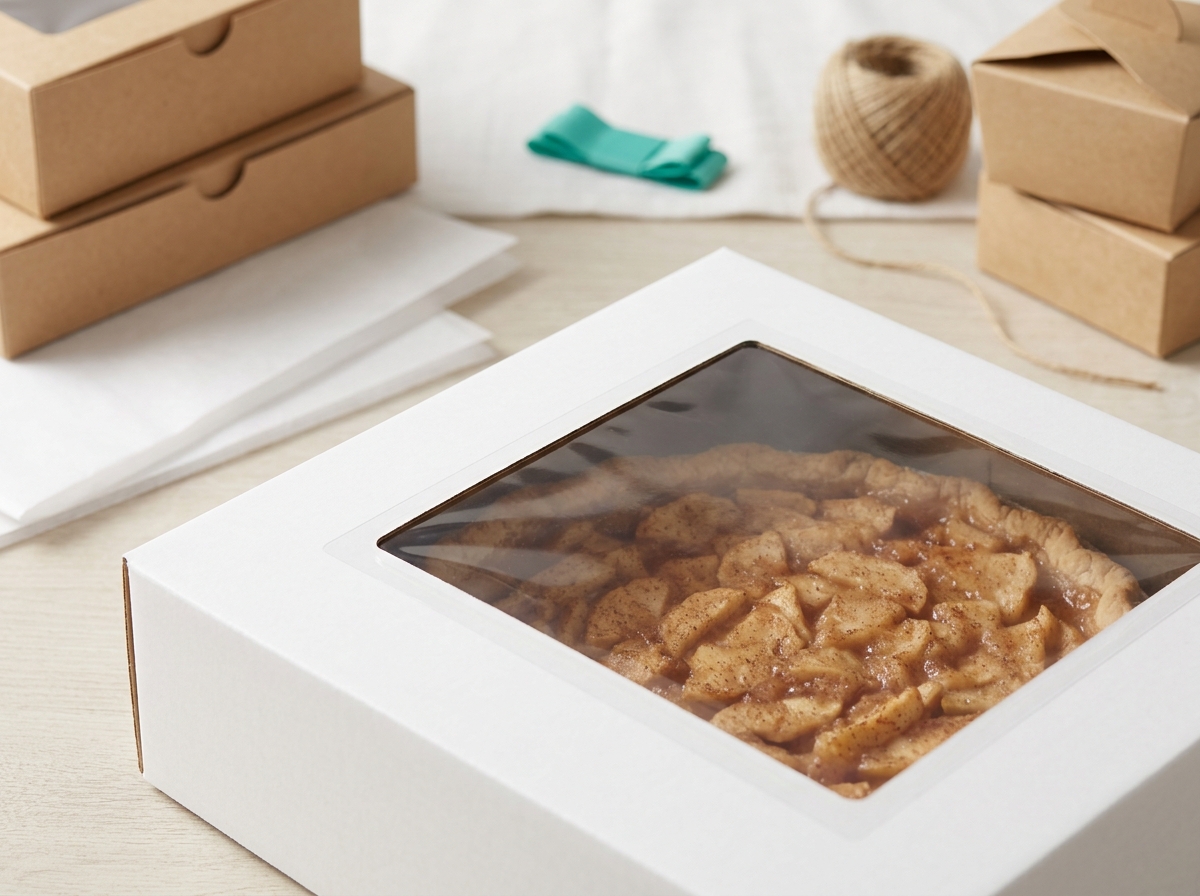
Condensation on window panels is the most common complaint bakeries face during Thanksgiving week, when pies move from warm ovens to refrigerated storage to customer transport. The two materials handle moisture in fundamentally different ways.
Acetate's high moisture vapor transmission rate allows water vapor to pass through the film rather than condensing on the surface. When a warm pie is placed in an acetate-windowed box and then refrigerated, moisture escapes through the film, reducing the fogging that obscures the product. This property also prevents moisture from pooling inside the box, which can soften the crust or make the bottom soggy during multi-hour transport.
PET, by contrast, provides a strong barrier against water vapor. While this prevents external humidity from entering the box—useful for protecting pies during outdoor farmers market setups—it also means that moisture from a warm pie has nowhere to go. If you box a pie straight from the oven and immediately refrigerate it, a PET window will fog. The solution is to let pies cool to room temperature before boxing, or to choose PET only for pies that are already chilled when packaged.
For bakeries running high-volume Thanksgiving production, where pies move quickly from oven to box to cooler, acetate windows offer a practical advantage. For retail bakeries that refrigerate pies overnight before morning display, PET works well as long as the pies are fully cooled before packaging. Understanding your specific workflow determines which material prevents the condensation that makes customers hesitate at the point of sale.
Window boxes must survive stacking, loading into delivery vehicles, and customer handling without the window tearing, peeling, or compromising the box's structural integrity. Acetate and PET differ significantly in tensile strength and resistance to puncture.
Acetate softens at around 60-70°C, which is below the temperature of a pie fresh from the oven. If you're packaging pies that are still warm—common in catering operations where pies go directly from kitchen to delivery van—acetate windows can deform slightly, creating wrinkles or losing their taut appearance. Acetate is also more prone to tearing along the adhesive line when boxes are roughly handled, particularly in cold conditions where the film becomes more brittle.
PET maintains its shape and strength across a wider temperature range and resists tearing even when boxes are dropped or stacked heavily. For bakeries shipping pies via regional carriers or selling at outdoor markets where boxes endure temperature swings, PET's durability reduces the risk of window failure. The material's shatter resistance also matters for pies with decorative elements—meringue peaks, whipped cream borders—that require careful handling to avoid smudging against a collapsed window.
If you're comparing kraft vs. SBS paperboard for pie packaging, remember that the window material choice interacts with the board's rigidity. A heavier SBS board paired with a PET window creates a premium-feeling package that withstands commercial shipping, while a lighter kraft board with an acetate window suits hand-delivered local sales where cost per unit matters more than shipping durability.
Material cost differences between acetate and PET become significant when ordering pie boxes in bulk for seasonal peaks like Thanksgiving or holiday cookie exchanges.
Acetate is typically the lower-cost option, with per-box pricing running 10-20% less than PET-windowed equivalents at wholesale volumes. For small bakeries ordering 500-1,000 boxes for a single holiday season, this difference might amount to $50-$100 in total spend—meaningful for operations with tight margins. Acetate's biodegradability also eliminates concerns about separating window material from paperboard for recycling, which simplifies disposal instructions for customers.
PET costs more per unit but offers better performance in high-volume or long-distance shipping scenarios. If you're a commercial bakery supplying grocery chains or shipping pies regionally, the reduced risk of window failure and the superior clarity under fluorescent retail lighting justify the higher material cost. PET's recyclability, when properly separated, also supports sustainability messaging for brands targeting environmentally conscious consumers.
Minimum order quantities (MOQs) for custom-printed pie boxes with windows typically start at 500-1,000 units, regardless of window material. If you're ordering kraft gift boxes or pie boxes for the first time, consider splitting your order between acetate and PET to test which material performs better in your specific workflow before committing to a single option for the next season.
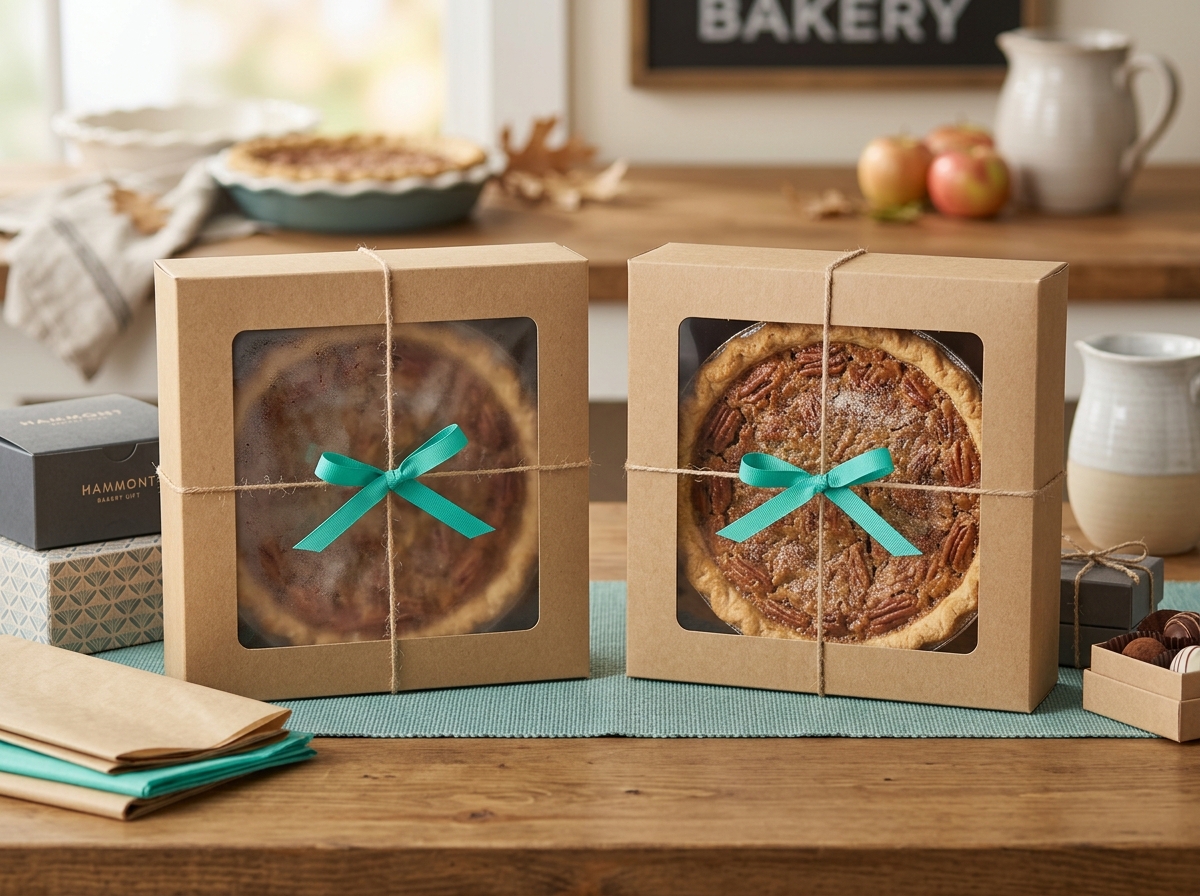
Both acetate and PET are approved for direct food contact by the FDA, but understanding the regulatory framework helps you communicate safety to wholesale buyers and retail partners.
Acetate's FDA approval for direct food contact makes it suitable for pies where the window may touch the crust or filling—common with deep-dish pies in shallower boxes. The material's biodegradability means it breaks down in landfill conditions without releasing toxic gases or heavy metals, which aligns with organic or natural brand positioning.
PET's compliance with FDA food-contact material standards under 21 CFR Parts 170-199 ensures it meets the same safety thresholds as acetate. PET's inert properties mean it doesn't react with acidic fillings like lemon meringue or cherry pie, preventing flavor transfer or chemical migration. For bakeries supplying institutional buyers—hospitals, universities, corporate cafeterias—PET's established regulatory status and widespread use in food packaging simplifies vendor approval processes.
If you're also packaging cookies or pastries, the same food-safety principles apply. Many bakeries use clear acrylic boxes for cookies alongside windowed pie boxes, creating a cohesive presentation across product lines while maintaining food-safe standards throughout the packaging program.
Customer expectations around sustainable packaging have shifted rapidly, with many buyers now asking whether packaging materials are compostable, recyclable, or made from renewable resources. Acetate and PET offer different sustainability narratives.
Acetate is derived from renewable resources (wood pulp and cotton) and is fully biodegradable in landfill conditions, typically breaking down within several months to a few years depending on environmental conditions. This makes acetate a strong choice for bakeries marketing to eco-conscious consumers or participating in farmers markets where sustainability is a key purchasing factor. However, acetate's lower durability means it may not survive long-distance shipping, potentially leading to damaged goods and wasted product—an environmental cost that offsets the material's biodegradability.
PET is petroleum-based but fully recyclable when separated from paperboard. Many municipalities accept PET in curbside recycling programs, and the material can be reprocessed into new food-contact packaging or fiber for textiles. For bakeries serving urban markets with robust recycling infrastructure, PET's recyclability supports sustainability goals. The challenge is educating customers to separate the window from the paperboard box before disposal, which requires clear labeling or instructions printed on the packaging.
If sustainability is central to your brand, consider your customer base and local infrastructure. A bakery selling at a zero-waste farmers market might prioritize acetate's biodegradability, while a bakery supplying upscale grocery chains in cities with strong recycling programs might choose PET and include disposal instructions on the box.
The decision between acetate and PET windows depends on your specific production workflow, sales channels, and customer expectations. Here's how to match material properties to operational needs.
Choose acetate if you package pies while still warm, sell primarily through local channels with minimal shipping, operate on tight margins where per-unit cost matters, or market to customers who prioritize biodegradable packaging. Acetate works well for bakeries producing 50-500 pies per week during peak seasons, selling at farmers markets, local retailers, or through direct-to-consumer pickup.
Choose PET if you refrigerate pies before packaging, ship regionally or supply grocery chains, need windows that withstand heavy stacking and rough handling, or want maximum clarity under retail lighting. PET suits commercial bakeries producing 500+ pies per week, supplying institutional buyers, or building a premium brand where packaging quality signals product quality.
For many bakeries, a hybrid approach makes sense: acetate for high-volume, cost-sensitive products like standard apple and pumpkin pies sold locally, and PET for premium pies—bourbon pecan, salted caramel apple—shipped to corporate clients or sold through upscale retail partners. If you're also managing pie box sizes for both 9-inch and 10-inch pies, coordinating window material choices with box dimensions ensures your entire packaging program aligns with your operational capabilities and brand positioning.
Window boxes require longer lead times than basic paperboard boxes due to the additional manufacturing steps involved in die-cutting openings and adhering film panels. Understanding these timelines prevents last-minute scrambles during peak seasons.
Custom-printed pie boxes with windows typically require 3-4 weeks from order confirmation to delivery, with an additional week if you're requesting samples before committing to a full production run. Stock (unprinted) windowed boxes from wholesale suppliers may ship within 5-10 business days, but availability varies by size and window material during high-demand periods like October and November.
If you're ordering for Thanksgiving, place your order by late September to ensure delivery by early November, allowing time to test the boxes in your workflow before peak production begins. For detailed guidance on seasonal ordering, see our post on when to order Thanksgiving pie boxes.
For bakeries planning multiple seasonal pushes—Thanksgiving, Christmas, Valentine's Day—consider ordering a year's worth of stock boxes in a single bulk order to lock in pricing and ensure availability. Store boxes flat in a dry location, and they'll remain usable for 12-18 months without degradation of the window material or paperboard.
Yes, acetate windows resist fogging better than PET because acetate has a high moisture vapor transmission rate that allows water vapor to pass through the film rather than condensing on the surface. If you're packaging warm pies and immediately refrigerating them, acetate windows will stay clearer than PET. However, if you let pies cool to room temperature before boxing, PET windows remain clear and offer better long-term clarity and durability.
PET windows are recyclable, but most recycling facilities require you to separate the plastic window from the paperboard box before disposal. Acetate windows can often be composted along with the paperboard in commercial composting facilities, though not all facilities accept them. Check with your local waste management provider for specific guidelines, and consider printing disposal instructions on your pie boxes to help customers recycle properly.
Acetate is typically 10-20% less expensive than PET at wholesale volumes, making it the more cost-effective choice for small bakeries ordering 500-1,000 boxes for seasonal peaks. However, if your pies require shipping or extended refrigerated display, PET's superior durability and clarity may reduce waste from damaged packaging, offsetting the higher material cost. Calculate total cost including potential product loss, not just the per-box price.
Both acetate and PET are FDA-approved for direct food contact and meet the same safety standards for bakery packaging. Acetate is derived from cellulose (wood pulp and cotton) and is biodegradable, while PET is a petroleum-based plastic that is fully recyclable. Neither material leaches harmful chemicals into food when used as intended, and both are suitable for pies with acidic fillings like lemon or cherry that might react with inferior packaging materials.
To prevent condensation in PET-windowed pie boxes, allow pies to cool completely to room temperature before packaging. If you must box warm pies, consider using acetate windows instead, as they allow moisture vapor to escape. Alternatively, you can add small ventilation holes in the paperboard (away from the window) to allow steam to escape while maintaining the visual appeal of the window panel. For refrigerated pies, ensure they're fully chilled before boxing to minimize temperature differentials that cause condensation.