Cart
0
You may also like

Book a call with our development team to get started.



Apply online and access wholesale pricing.

Choosing the right pie box size prevents crushed meringue, smashed lattice tops, and customer complaints. The 9-inch square footprint with a 2.25-inch height fits standard pies, while 10-inch boxes accommodate deep-dish styles and taller toppings. The difference matters: a box that's too small damages presentation, while oversized packaging wastes money and storage space. This guide walks bakery operators and caterers through the two most common pie box dimensions, height requirements for different pie styles, and how to match boxes to your pie plates and seasonal volume.
For broader seasonal packaging strategies, see our complete guide to Thanksgiving pie box packaging for bakeries and caterers.
The majority of pie recipes are written to fit a standard 9-inch pan with a depth of 1.5 inches, making the 9x9x2.5-inch box the most common size in commercial bakeries. This dimension provides roughly half an inch of clearance on all sides when a pie baked in a standard 9-inch plate is placed inside.
The 2.5-inch height works for most single-crust fruit pies, custard pies, and pecan pies where the filling sits level with or slightly below the crust edge. It also accommodates pies baked with a traditional top crust or simple crumb topping. Bakeries running high volumes of apple, cherry, pumpkin, and similar styles typically stock this size as their workhorse box.
However, the 2.5-inch height becomes a constraint when toppings rise above the crust line. Whipped cream dollops, meringue peaks, and lattice-work crusts that arch upward will press against the lid in a standard-height box, leaving visible marks or collapsing delicate textures.
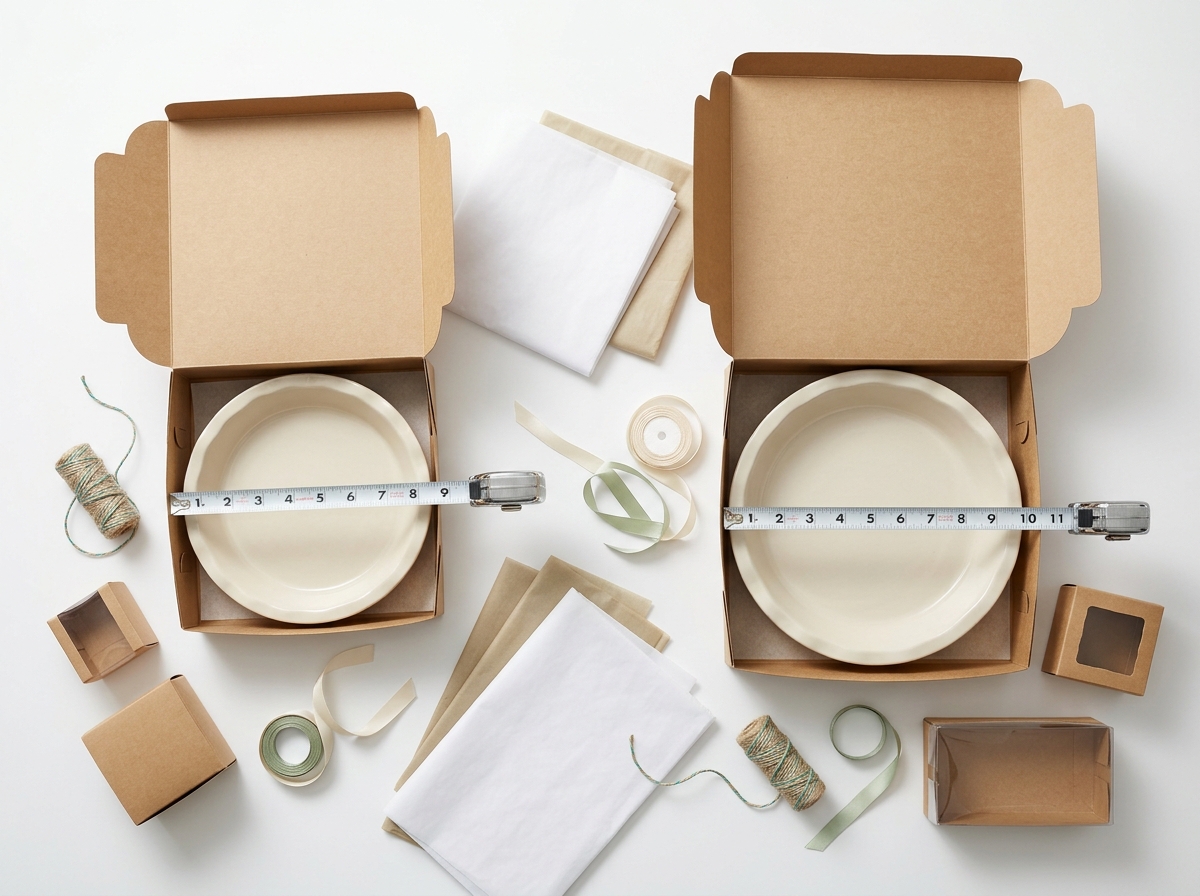
The 10-inch footprint serves two distinct needs: pies baked in larger plates and pies with wider decorative edges. A deeper 9-inch or even 10-inch pie plate is often used for fruit pies, and these require the extra interior space to avoid contact between crust and box walls.
Deep-dish fruit pies—particularly apple, blueberry, and cherry styles with high fruit volume—often use plates that measure closer to 10 inches at the rim or have taller sides that push the crust outward. A 9-inch box will fit, but the crust edge may press against the sides during transport, causing cracks or flattening decorative crimps.
The 10x10 dimension also benefits pies with hand-braided edges, wide fluted rims, or lattice tops that extend to the plate's outer edge. That additional inch of width on each side provides clearance that preserves the baker's work and maintains the pie's visual appeal from box to table.
For small bakeries managing seasonal order surges, planning your packaging inventory early helps avoid last-minute shortages. Read our post on when to order Thanksgiving pie boxes for lead-time guidance.
Standard 2.5-inch boxes fail with any pie topped by meringue, whipped cream, or tall decorative elements. Domes are available in multiple heights to accommodate any height pie creation, including cream pies, meringues, and fruit pies. Lemon meringue, chocolate cream, and coconut cream pies typically need 3 inches or more of interior clearance to prevent the topping from contacting the lid.
Meringue peaks can rise 2 to 3 inches above the crust edge depending on the baker's technique. A 2.5-inch box will compress those peaks, leaving unsightly divots and ruining the pie's signature look. Investing in 3-inch or 3.5-inch height boxes for cream and meringue styles protects both the product and your reputation.
Some bakeries use clear dome lids for cream pies, which allow customers to see the topping while providing 3 to 4 inches of vertical space. These are especially effective for retail display, where the visual appeal drives impulse purchases. The trade-off is cost—dome lids typically run higher per unit than standard flat-lid boxes—but the reduction in damaged goods and the increase in perceived value often justify the expense.
Pie plates themselves vary in depth from 1.25 inches (shallow) to 2 inches (deep-dish). A deep-dish plate filled to capacity will produce a pie with a taller profile even before adding meringue or whipped cream. Measure your most commonly used pie plates from the base to the rim, then add the expected height of your topping or crust arch. That total height, plus a quarter-inch buffer, determines your minimum box height.
For example, a 1.5-inch deep plate filled with pumpkin custard and topped with a flat crust will measure roughly 1.75 inches tall. A 2.5-inch box provides ample clearance. But the same plate filled with a mounded fruit filling and topped with a lattice crust that arches an inch above the rim will measure 2.75 inches or more—too tall for a standard box.
Most bakeries place finished pies on corrugated cake boards before boxing. Standard cake boards for 9-inch pies measure 9 or 9.5 inches in diameter, and those for 10-inch pies measure 10 or 10.5 inches. The board adds rigidity during transport and makes it easier for customers to remove the pie from the box without touching the crust.
When selecting boxes, account for the board diameter, not just the pie plate size. A 9-inch pie on a 9.5-inch board will fit comfortably in a 10-inch box but may feel tight in a 9-inch box, especially if the crust edge is wide. Similarly, a 10-inch pie on a 10.5-inch board requires an 11-inch box to avoid friction against the sides.
If your operation uses clear acrylic serving trays with lids, verify that the tray's footprint matches your standard box dimensions. Trays offer reusable, display-ready packaging for premium pies and work well for catering clients who want to serve directly from the container.
Thanksgiving and Christmas drive the highest pie volumes for most bakeries, with orders spiking in the two weeks before each holiday. Running out of boxes during peak season forces expensive last-minute orders, rush shipping fees, or worse—turning away customers. Plan your inventory by reviewing prior-year sales data and increasing stock by 15 to 20 percent to accommodate growth and unexpected demand.
Order boxes at least six to eight weeks before Thanksgiving to avoid supply chain delays. Many packaging suppliers experience backorders in October as bakeries and caterers place bulk orders simultaneously. Locking in your quantities early also improves your chance of securing volume discounts.
Store flat boxes in a dry, climate-controlled area away from moisture and direct sunlight. Humidity can weaken paperboard and cause boxes to warp, while UV exposure fades printed designs. Stack boxes on pallets rather than directly on concrete floors to prevent moisture wicking from below.
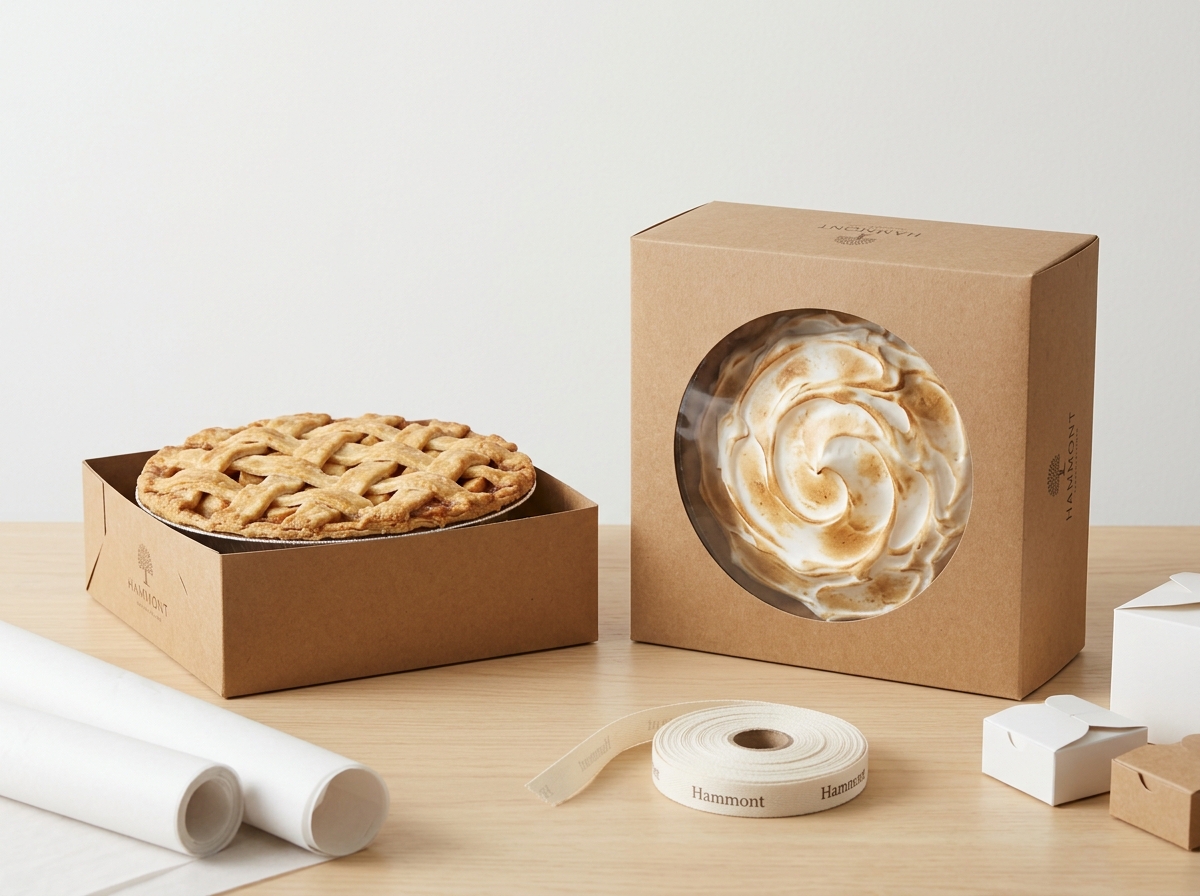
Pie boxes are available in kraft paperboard, white paperboard, and windowed styles. Kraft boxes convey a rustic, artisan aesthetic and appeal to customers seeking a homemade or farm-to-table feel. White boxes offer a clean, classic look that works across all bakery styles and accepts custom stamps or labels easily.
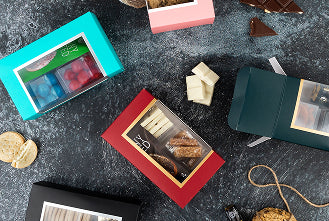
Windowed boxes—typically featuring a clear film panel on the lid—allow customers to see the pie without opening the package. This visibility drives impulse purchases in retail settings and reassures customers about the product's quality before they leave the counter. The trade-off is slightly higher cost and the need to ensure the pie's top surface is visually appealing, as any imperfections will be visible.
All three materials are food-safe and perform similarly in terms of structural integrity when properly sized. The choice comes down to brand positioning, customer expectations, and whether you want the pie visible at point of sale.
The most frequent error is ordering boxes based solely on pie plate diameter without accounting for crust width, board size, or topping height. A 9-inch pie plate can produce a finished product that measures 9.5 or even 10 inches across when the crust is crimped wide or the pie is placed on a board.
Another common mistake is assuming all 9-inch or 10-inch boxes have the same height. Suppliers may offer the same footprint in multiple height options—2 inches, 2.5 inches, 3 inches—and ordering the wrong height results in either crushed toppings or excessive headspace that allows the pie to shift during transport.
Always request sample boxes before committing to a bulk order, especially if you're switching suppliers or introducing a new pie style. Place one of your actual pies—on its board, with topping—into the sample box and close the lid. Check for adequate clearance on all sides and above the pie. If the lid touches the topping or the crust contacts the walls, move up one size.
Pie boxes typically arrive flat and require folding and tucking to assemble. Train staff to pre-fold a batch of boxes during slower periods so they're ready when orders ramp up. Pre-assembly reduces packing time per pie and minimizes bottlenecks during holiday rushes.
Some bakeries use cube kraft gift tuck top boxes for mini pies or pie slices, which offer a compact, secure closure and work well for individual servings at farmers markets or grab-and-go retail displays.
When packing multiple pies for catering delivery, stack boxes no more than three high to prevent crushing the bottom pies under the weight of those above. Use sheet trays or sturdy cardboard flats between layers to distribute weight evenly.
Pie boxes are typically sold in cases of 50, 100, or 250 units. Per-unit cost drops significantly at higher volumes, but over-ordering ties up cash and storage space. Calculate your expected pie output for the season, add a 15 percent buffer, and order in the largest case size that fits your budget and storage capacity.
Kraft boxes generally cost less than white or windowed styles, but the price difference narrows at higher volumes. If windowed boxes improve your retail sales or reduce customer returns due to visibility, the incremental cost per box—often just a few cents—pays for itself quickly.
Some suppliers offer mixed case packs with multiple sizes in one shipment, which can be useful for bakeries that produce both 9-inch and 10-inch pies regularly. Confirm minimum order quantities and lead times before committing, as custom or mixed packs may require longer production windows.
A 9x9x2.5-inch box fits most 9-inch pies baked in standard-depth plates with flat or minimally topped crusts. If your pie has a tall meringue, whipped cream, or lattice top, move up to a 9x9x3-inch or 10x10x3-inch box to prevent lid contact. Always measure the finished pie's height, including topping, before selecting a box.
Yes. Deep-dish pies baked in plates with 2-inch or deeper sides require boxes with at least 3 inches of interior height. A 10x10x3-inch box accommodates most deep-dish fruit pies and provides clearance for taller crusts or decorative edges. Measure your pie from the board to the highest point of the crust or filling to confirm fit.
Not typically. Pumpkin pies with flat crusts fit in standard 2.5-inch height boxes, while meringue pies with peaks rising 2 to 3 inches above the crust need 3-inch or taller boxes. Stocking both heights prevents topping damage and ensures each pie style arrives intact. If storage space is limited, prioritize the taller box and use it for all pies—it will work for both, though it's slightly oversized for flat-topped styles.
Place your finished pie, on its board, into the box and close the lid without forcing it. If the lid touches the topping, the crust presses against the sides, or you have to compress any part of the pie to close the box, it's too small. A properly sized box provides at least a quarter-inch of clearance on all sides and above the pie's highest point.
Kraft and white paperboard both perform well for holiday pies. Kraft offers a rustic, homemade aesthetic that appeals to customers seeking artisan products, while white provides a clean, classic look that accepts custom stamps and labels easily. Windowed boxes work well for retail environments where visibility drives sales, but they cost slightly more per unit. Choose based on your brand positioning and whether you want the pie visible before the customer opens the box.
Pie box sizing comes down to three measurements: the pie's diameter, its height including toppings, and the cake board diameter if you use one. Start by measuring your most commonly produced pies in their finished state, then select boxes that provide a quarter-inch of clearance on all sides and above. Stock at least two sizes—9x9x2.5-inch for standard pies and 10x10x3-inch for deep-dish and meringue styles—to cover the majority of your product line.
Order inventory six to eight weeks before peak seasons, store boxes in a dry environment, and train staff to pre-assemble during slower periods. These steps reduce packing time, prevent product damage, and ensure you're ready when holiday orders surge. The right box protects your work, preserves presentation, and delivers pies to customers exactly as you intended them to arrive.