Cart
0
You may also like

Book a call with our development team to get started.



Apply online and access wholesale pricing.

Small business owners face a unique packaging challenge: creating memorable, branded gift boxes without the budget or minimum order quantities that enterprise brands command. The right gift box packaging ideas can transform a simple product delivery into a brand-building moment—and you don't need custom printing or a warehouse full of inventory to make it happen.
Whether you're packaging handmade jewelry, artisan treats, or boutique retail products, strategic DIY gift boxes allow you to compete on presentation while keeping costs predictable. This guide walks through practical customization techniques, material choices, and branding strategies designed specifically for small business operations.
Packaging serves three critical functions in a small business context: product protection, brand communication, and customer experience. According to the Flexible Packaging Association, packaging industry trends reveal alignment with improving customer experience alongside operational efficiency.
For small businesses, the unboxing moment creates a tangible brand impression that digital marketing can't replicate. When a customer opens a thoughtfully packaged gift box, they're more likely to share that experience on social media, reorder, and recommend your products to others. The packaging itself becomes a silent salesperson long after the transaction is complete.
The challenge is balancing impact with cost. Full custom printing typically requires minimum orders of 500–1,000 units and setup fees that can exceed your monthly packaging budget. That's where DIY customization strategies become essential: they let you create a branded look in small batches, adjust designs seasonally, and test different approaches without financial risk.
Your base box sets the foundation for every customization decision that follows. The most cost-effective approach for small businesses is to start with stock boxes in versatile sizes and neutral colors, then add branded elements as needed.
Cube tuck-top boxes offer exceptional flexibility for small business applications. A structured kraft gift box in a 3×3×3 or 4×4×4 size accommodates jewelry, candles, bath products, and small accessories while maintaining a clean, professional appearance. The natural kraft aesthetic signals sustainability and craftsmanship—two values that resonate strongly with modern consumers.
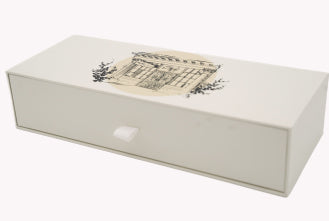
White boxes provide a blank canvas for colorful branding. They photograph well for e-commerce listings and social media, and they pair easily with ribbons, stickers, and tissue paper in any color palette. For businesses with a minimalist or modern brand identity, a white cube box creates an upscale look without additional embellishment.
Black boxes communicate luxury and sophistication. They're particularly effective for premium-priced products or gift items where perceived value matters. A simple black box with metallic accents or a single-color ribbon can compete visually with packaging that costs three times as much to produce.
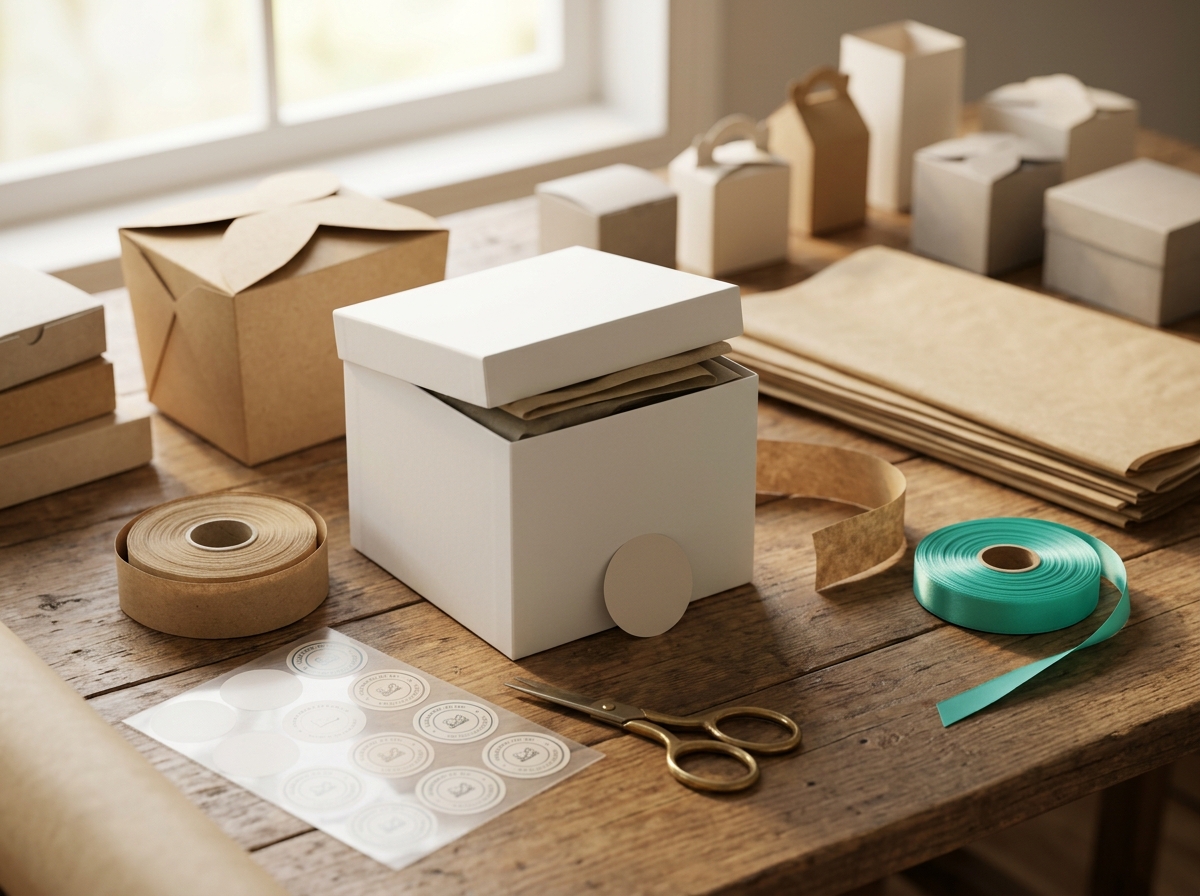
The most successful small business packaging strategies combine stock boxes with low-cost, high-impact customization methods. These techniques allow you to create a branded look without investing in custom printing or large inventory commitments.
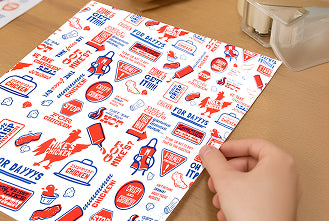
Custom stickers represent the single most cost-effective branding tool for small businesses. You can order logo stickers in quantities as small as 50–100 units, test different designs without waste, and apply them to boxes, tissue paper, or product inserts. Circle stickers work well as box seals, while rectangular labels can display product names, ingredient lists, or care instructions.
For businesses with access to a quality printer, printable sticker sheets offer even more flexibility. You can print small batches on demand, personalize each order with customer names, or create seasonal variations without ordering new inventory.
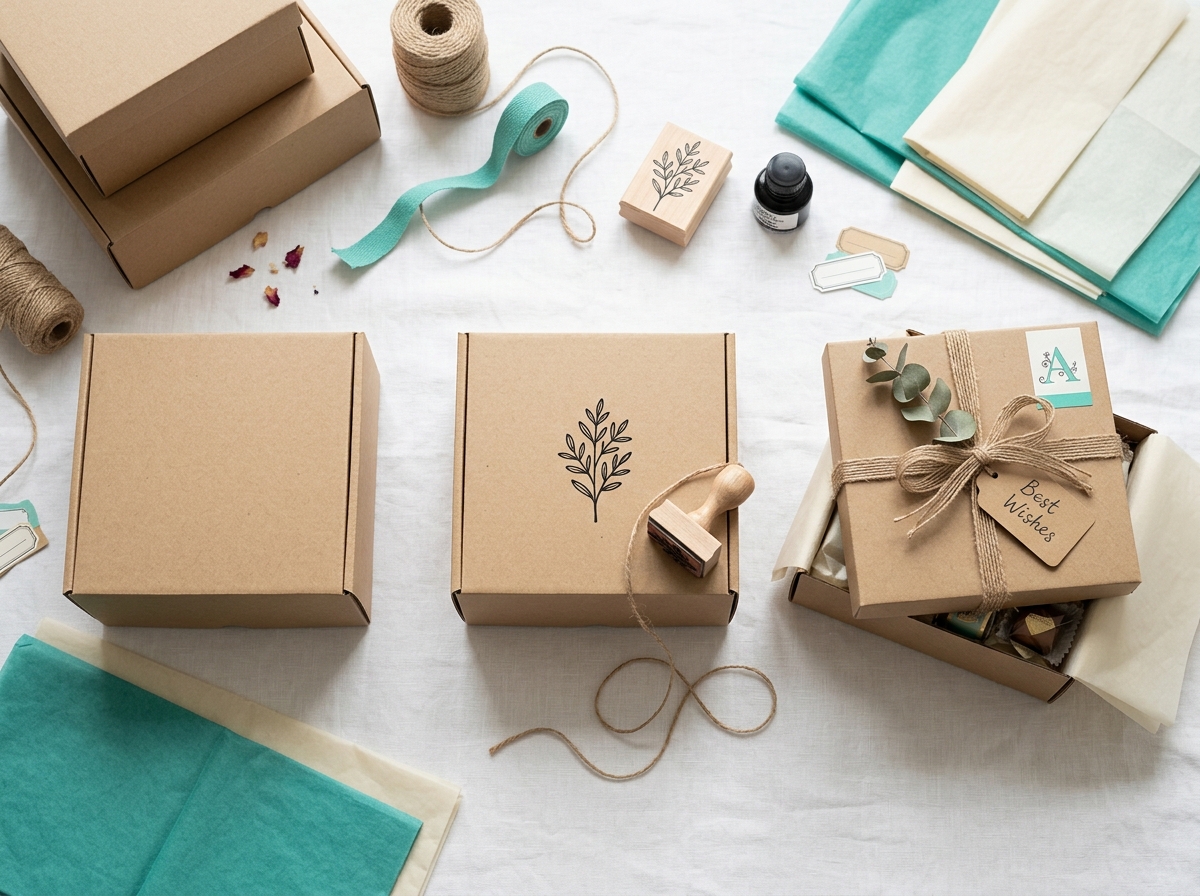
A custom rubber stamp costs $20–$50 and lasts for thousands of impressions. Stamping directly onto kraft boxes creates an artisan, handmade aesthetic that aligns with the values many small businesses want to communicate. You can stamp your logo, a tagline, care instructions, or decorative elements like borders and icons.
Stamp placement matters. Corner stamps create a subtle branded detail, while centered stamps on the box lid make a bolder statement. Experiment with ink colors—black and navy work well on kraft, while white or metallic inks stand out on dark boxes.
Ribbon transforms a plain box into a gift-ready package. Satin ribbon communicates elegance, while natural jute twine reinforces a rustic or eco-friendly brand position. The cost per box is typically $0.15–$0.40 depending on ribbon width and material, making it one of the most affordable ways to add visual interest.
Consider tying ribbon around the box perimeter and finishing with a bow on top, or threading it through small punched holes for a more integrated look. For businesses shipping high volumes, pre-cut ribbon lengths and simple knots are faster than elaborate bows.
Tissue paper serves both protective and aesthetic functions. It cushions products during shipping while adding a layer of anticipation to the unboxing experience. Kraft tissue paper costs less than colored varieties and coordinates with almost any brand palette. For a more custom look, stamp or sticker-brand plain tissue paper before wrapping products.
Printed inserts—thank-you cards, care instructions, or discount codes for future purchases—cost pennies per unit when printed in-house or through online print services. These inserts extend the customer relationship beyond the initial purchase and provide a natural place to request reviews or social media follows.
One of the most practical strategies for small businesses is the hybrid approach: invest in custom elements for high-visibility touchpoints while using stock packaging for structural components. This allows you to create a branded experience without the financial commitment of fully custom boxes.
For example, you might use stock kraft paper gift boxes as your base, then add a custom-printed belly band, branded sticker, and coordinating ribbon. The box itself remains versatile and reorderable, while the branded elements can be updated seasonally or as your design evolves.
This approach also reduces waste. If you rebrand or change product lines, you're not stuck with hundreds of unusable custom boxes. The stock boxes can be repurposed or used with new branding elements, protecting your investment.
Choosing the right box size directly impacts both material costs and shipping expenses. Oversized packaging requires more filler material, increases dimensional weight charges, and creates a less polished unboxing experience. Undersized packaging risks product damage and returns.
Measure your products carefully, accounting for any protective wrapping or cushioning. The box should allow 0.5–1 inch of clearance on all sides—enough space for tissue paper or padding, but not so much that products shift during transit. For businesses with multiple product sizes, maintaining a small inventory of 2–3 box sizes typically covers most scenarios more cost-effectively than ordering a unique box for every item.
Cube boxes offer particular versatility because their uniform dimensions work well for a wide range of products. A 3×3×3 box suits rings, earrings, lip balms, and sample sets. A 4×4×4 accommodates larger jewelry pieces, candles, soaps, and small gift bundles. Standardizing on cube formats also simplifies storage and inventory management.
Different product types benefit from specific packaging approaches. Here's how to apply gift box packaging ideas to common small business categories.
Jewelry and accessories: Small cube boxes in 2×2×2 or 3×3×3 sizes provide adequate protection without excess material. Add a cotton insert or tissue paper nest to secure pieces during shipping. A ribbon-tied box eliminates the need for additional gift wrapping, making these items ready for gifting upon arrival.
Bath and body products: Kraft boxes align well with the natural ingredients many bath brands emphasize. Stamp or sticker-brand the box lid, then line the interior with tissue paper to prevent product movement. For liquid products, include a small instruction card reminding customers to check for leaks before gifting.
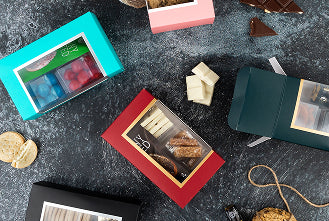
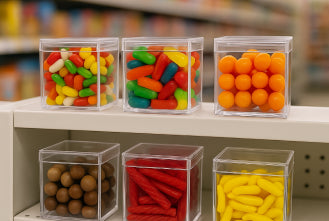
Food and treats: Food-safe boxes are essential for direct food contact. Many cube boxes are suitable for wrapped candies, cookies in sealed bags, or jarred products. Include a small ingredient or allergen card to meet labeling requirements and build customer trust.
Stationery and paper goods: Flat, shallow boxes work better than cubes for notecards, prints, and stationery sets. If using cube boxes, choose sizes that minimize empty space. A belly band or custom sleeve can display product details while keeping the box itself reusable.
Effective small business branding focuses on consistency and clarity rather than complexity. Your packaging should communicate who you are and what you sell within the first three seconds of the customer seeing it.
Logo placement is critical. On cube boxes, the top center of the lid is the most visible location. For businesses using stickers, this is where your branded sticker should go. If using stamps, the lid center or one upper corner creates a professional look.
Color consistency matters more than color variety. Choose 2–3 brand colors and use them across all packaging elements: boxes, tissue paper, ribbon, and inserts. This creates visual cohesion and makes your packages instantly recognizable, even before customers see your logo.
Typography should be legible at small sizes. Intricate script fonts may look beautiful on your website but become illegible when stamped or printed at 1-inch width on a box. Test your logo and any text elements at actual size before ordering stamps or stickers.
Avoid overcrowding. A simple kraft box with a single logo sticker and coordinating ribbon often looks more professional than a box covered in multiple design elements. White space is a design tool—use it intentionally.
Small businesses benefit from ordering packaging in smaller, more frequent batches rather than committing to large bulk orders. This approach reduces storage requirements, minimizes cash tied up in inventory, and allows for design iteration as your brand evolves.
Start with a 30–60 day supply of base boxes based on your average order volume. This quantity is usually small enough to store in a closet or under a workspace, yet large enough to qualify for wholesale pricing from most suppliers. Customization elements like stickers and ribbon can be ordered in similar quantities.
Track your packaging usage alongside product sales. If you're consistently running low on specific box sizes, increase those quantities in your next order. If certain sizes sit unused for months, reduce or eliminate them from your inventory.
For seasonal businesses or those with variable order volumes, consider maintaining a small core inventory of neutral packaging year-round, then adding seasonal elements (colored ribbon, holiday-themed stickers) only during peak periods. This prevents waste while still allowing you to participate in seasonal marketing opportunities.
One advantage of DIY packaging approaches is the ability to test and refine your design without significant financial risk. Before committing to large orders of any customization element, create 5–10 sample packages and evaluate them critically.
Photograph your packaging in natural light, as customers would see it. Does it photograph well? Does the branding read clearly? Does it align with your brand identity and the expectations of your target customer?
Ship a sample package to yourself or a friend in another location. How does it arrive? Is the product secure? Does the packaging hold up to handling? This real-world test often reveals issues that aren't apparent when packing boxes at your workspace.
Request feedback from customers. A simple follow-up email asking "How was your unboxing experience?" provides valuable insight. Pay attention to both explicit feedback and indirect signals—if customers frequently post unboxing photos on social media, your packaging is working. If they don't, consider what might make it more share-worthy.
As order volumes increase, the packaging strategies that worked at 10 orders per week may become inefficient at 100 orders per week. Plan for this transition by identifying which customization steps are most time-intensive and exploring ways to streamline them.
Pre-assembly can save significant time during busy periods. Spend slower days assembling boxes, pre-cutting ribbon, and organizing packaging stations so that during peak order times, you're simply filling boxes rather than building them from scratch.
Batch processing is more efficient than custom-packing each order individually. Group orders by product type or box size, then move through each packaging step in batches: box assembly, product placement, tissue wrapping, sticker application, ribbon tying.
At higher volumes, the economics of custom printing begin to make sense. Once you're consistently ordering 500+ boxes every 2–3 months, request quotes for custom-printed boxes. Compare the per-unit cost including your labor time for customization. You may find that custom printing becomes cost-competitive with DIY methods at scale, while also saving you hours of hands-on work.
Gift box packaging creates natural opportunities for cross-selling and customer retention. Include a small product sample, a discount code for the customer's next purchase, or a catalog card showcasing other products in your line.
For businesses that sell gift-appropriate products, consider offering gift messaging services. A simple "gift message included" option at checkout, paired with a small printed card tucked into the box, adds perceived value at minimal cost. This positions your products as gift-ready and can increase average order values during holiday seasons.
Encourage customers to reuse your packaging. High-quality boxes that are attractive and sturdy enough for reuse extend your brand presence into customers' homes and create positive associations. A small note like "This box is designed to be reused—enjoy!" reinforces sustainability values while keeping your brand visible.
Custom stickers and rubber stamps are the most cost-effective branding methods for small businesses. Stickers can be ordered in quantities as small as 50–100 units and cost approximately $0.10–$0.30 per sticker depending on size and finish. A custom rubber stamp costs $20–$50 upfront but provides thousands of impressions at essentially no per-use cost. Both methods allow you to brand stock boxes without minimum order quantities or setup fees associated with custom printing.
Measure your product's dimensions including any protective wrapping, then select a box that provides 0.5–1 inch of clearance on all sides. This space accommodates tissue paper or padding while preventing excessive movement during shipping. For small businesses with multiple product sizes, maintaining inventory of 2–3 standard cube box sizes (such as 2×2×2, 3×3×3, and 4×4×4) typically covers most scenarios more cost-effectively than ordering unique sizes for every item. Cube formats offer particular versatility across product categories.
Stock boxes with DIY branding elements make more sense for most small businesses, especially those fulfilling fewer than 500 orders per month. This approach requires no minimum order quantities, allows design flexibility, and reduces inventory risk if your branding evolves. Custom printing becomes cost-competitive once you're consistently ordering 500+ boxes every 2–3 months and your brand identity is stable. At that volume, compare the per-unit cost of custom printing against your labor time for DIY customization.
Kraft paperboard boxes signal sustainability and natural values to customers. These boxes are typically made from recycled content and are fully recyclable in standard paper recycling streams. Avoid excessive plastic elements like plastic ribbon or non-recyclable stickers. Instead, use paper-based stickers, natural fiber ribbons like jute or cotton, and kraft tissue paper. Including a small note about your packaging's recyclability reinforces your commitment to sustainability and guides customers toward proper disposal.
Focus on visual cohesion and unboxing layers. Use consistent brand colors across all packaging elements, ensure your logo is clearly visible on the box exterior, and create an intentional reveal sequence—outer box, branded tissue paper, product nested in additional tissue or padding, and a thank-you card or insert. Natural textures like kraft paper and cotton ribbon photograph particularly well. Consider including a small card that says "Tag us @yourbrand" to encourage social sharing. The key is making the unboxing experience feel special enough that customers want to document and share it.
Gift box packaging for small businesses is ultimately about creating consistent, memorable brand touchpoints that build customer loyalty over time. Every box that leaves your workspace is an opportunity to reinforce who you are, what you value, and why customers should return.
The most effective packaging strategies aren't necessarily the most expensive or complex. They're the ones that authentically represent your brand, protect your products, and create a moment of delight when customers open them. Whether you're just starting out with simple kraft boxes and logo stickers or scaling up to custom-printed packaging, the principles remain the same: consistency, quality, and attention to detail.
Start with the basics—choose versatile base boxes, select one or two customization methods that align with your budget and brand, and refine your approach based on customer feedback and operational realities. As your business grows, your packaging can evolve alongside it, always serving as a tangible representation of the care and thought you put into every product you sell.
For more inspiration on creating beautiful, functional gift packaging, explore our guides on small gift box ideas for jewelry and treats and free printable gift box templates. If you're preparing for seasonal selling, our DIY Christmas gift box ideas provide holiday-specific strategies that can be adapted year-round.