Cart
0
You may also like

Book a call with our development team to get started.



Apply online and access wholesale pricing.

Gift box packaging ideas for retail and e-commerce brands need to balance cost, presentation, and practicality. Whether you're packaging handmade candles, artisan cookies, or wellness products, the right gift box protects your product while reinforcing your brand. This guide walks through accessible, proven formats—from kraft cube boxes to tuck-top designs—that work for small businesses scaling their operations.
The shift toward direct-to-consumer sales has made packaging more strategic. Growth of DTC and omnichannel retail requires packaging that is durable, lightweight, right-sized, and sustainable. Your gift box is often the first physical interaction a customer has with your brand, making it a critical touchpoint for building loyalty and encouraging repeat purchases.
Below, we'll explore material choices, structural formats, design strategies, and how to integrate custom packaging ideas for small businesses into your product line without overextending your budget or inventory.
Gift boxes serve a dual function: they protect products during transit and create a memorable unboxing experience. For retail brands, a well-designed gift box can increase perceived value, justify premium pricing, and reduce return rates by arriving intact. For e-commerce sellers, packaging becomes a silent brand ambassador—your box speaks for you before the customer even opens it.
Recent market data shows the importance of packaging in purchase decisions. Key trends driving a long runway for growth and M&A activity include a focus on sustainability & ESG, the growth of e-commerce and omnichannel retail, design, and smart packaging, and technology automation. Brands that invest in thoughtful packaging see measurable returns in customer satisfaction and social media engagement.
The unboxing experience has become content in itself. Customers photograph and share packaging that feels intentional, minimal, or surprising. This organic visibility is especially valuable for small brands competing against larger retailers with bigger advertising budgets.
Material selection shapes cost, durability, and brand perception. Most small businesses work with three primary categories: paperboard, kraft, and rigid boxes. Each has distinct advantages depending on your product weight, shipping method, and brand positioning.
Paperboard boxes—lightweight and economical—suit products under one pound. They're ideal for jewelry, cosmetics, or small food items. Paperboard folds flat for storage, reducing warehouse space, and accepts custom printing at lower minimums than rigid structures.
Kraft boxes offer a natural, eco-conscious aesthetic without requiring custom design. The unbleached texture reads as sustainable and artisan, making kraft a go-to for bakeries, soap makers, and specialty food brands. A kraft gift box with a tuck-top closure provides structure and ease of assembly, keeping fulfillment efficient during high-volume periods.
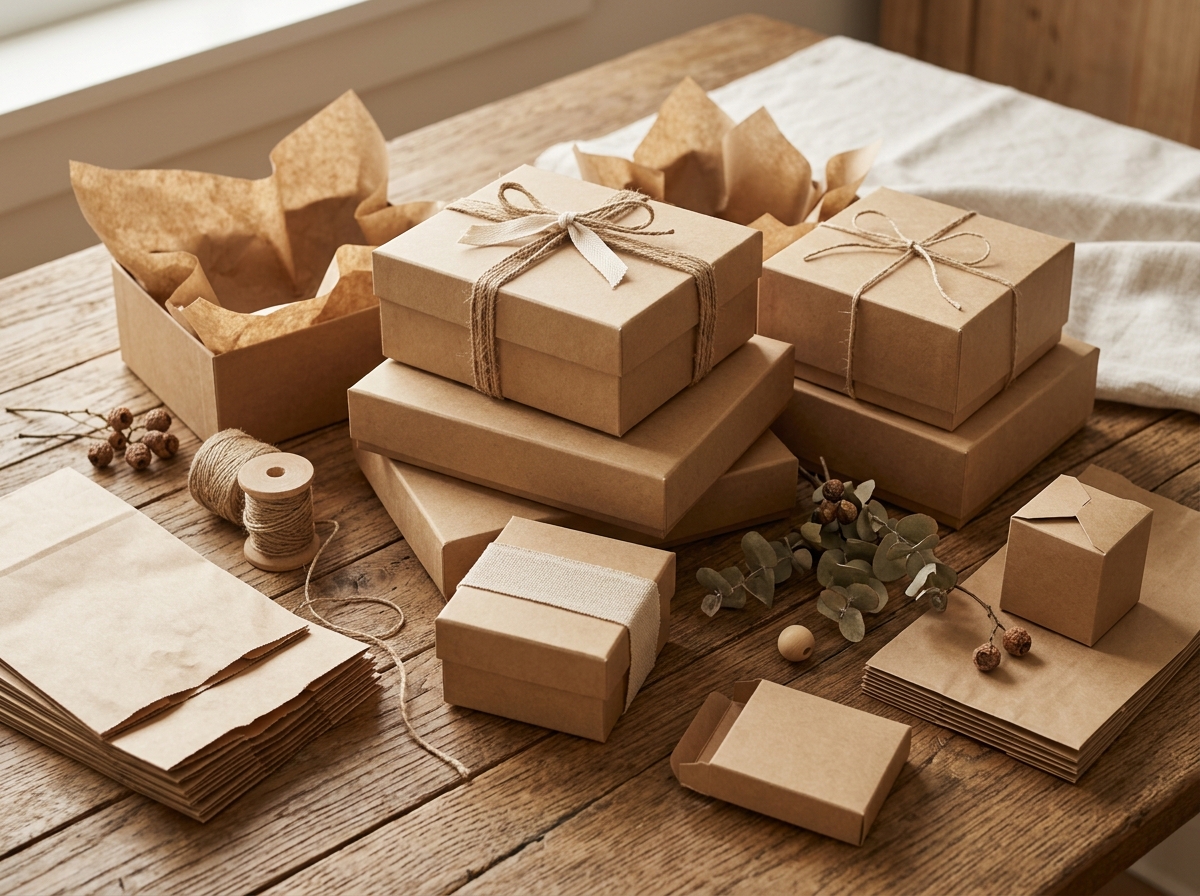
Rigid boxes—also called set-up boxes—deliver premium presentation. They arrive pre-assembled, with thicker walls and a magnetic or lift-off lid. Rigid boxes work well for high-margin products where the packaging itself becomes part of the gift. They're heavier and costlier to ship, so they're best reserved for products above a certain price threshold.
When choosing materials, consider sustainability certifications. FSC-certified packaging can help to demonstrate a commitment to responsible sourcing through the use of FSC-certified materials and the application of the FSC labels. Many retailers now require or prefer Forest Stewardship Council certification, and customers increasingly look for the FSC logo as a trust signal. For more on balancing environmental responsibility with budget, see our guide on eco-friendly packaging options that don't break the budget.
Box structure affects assembly time, storage efficiency, and presentation. The three most versatile formats for small businesses are cube boxes, tuck-top boxes, and nested sets.
Cube boxes offer uniform dimensions, making them easy to stack, ship, and photograph. A 3x3x3 or 4x4x4 cube fits candles, mugs, small plush items, or bundled goods. Cube formats also simplify inventory—you can use the same box across multiple product lines, reducing SKU complexity.
Tuck-top boxes feature interlocking flaps that secure without tape or adhesive. They assemble quickly, which matters during seasonal peaks or when fulfilling large orders. Tuck-tops work well for bakery items, soaps, or any product that doesn't require airtight sealing. For brands that ship cookies or pastries, a 4x4x4 kraft tuck-top box provides structure without adding unnecessary weight to shipping costs.
Nested sets—multiple boxes that fit inside one another—create a layered unboxing experience. Customers perceive nested packaging as more luxurious, even when the materials are simple. Nested formats also allow you to separate product components, include instruction cards, or add a small gift with purchase in a dedicated compartment.
Effective gift box design doesn't require full-color printing or complex graphics. Many successful small brands use minimal design elements—a single-color logo, a custom sticker, or a stamped message—to create recognition without the cost of custom printing runs.
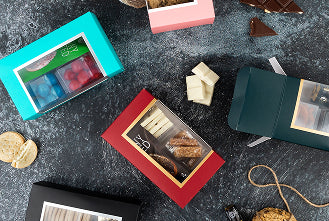
Start with your box color. Neutral tones—white, kraft, black—provide a clean canvas and pair well with almost any product. If your brand has a signature color, consider using it sparingly: a colored ribbon, tissue paper, or belly band can reinforce brand identity without requiring custom box production.
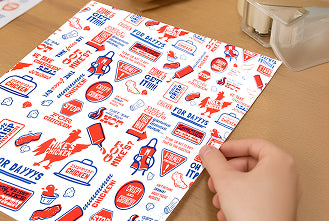
Typography matters more than most brands realize. A simple, well-placed logo or tagline on the box lid creates a professional impression. If custom printing isn't in your budget yet, invest in a quality rubber stamp or order pre-printed stickers in bulk. Both options allow you to brand stock boxes at a fraction of the cost of custom printing.
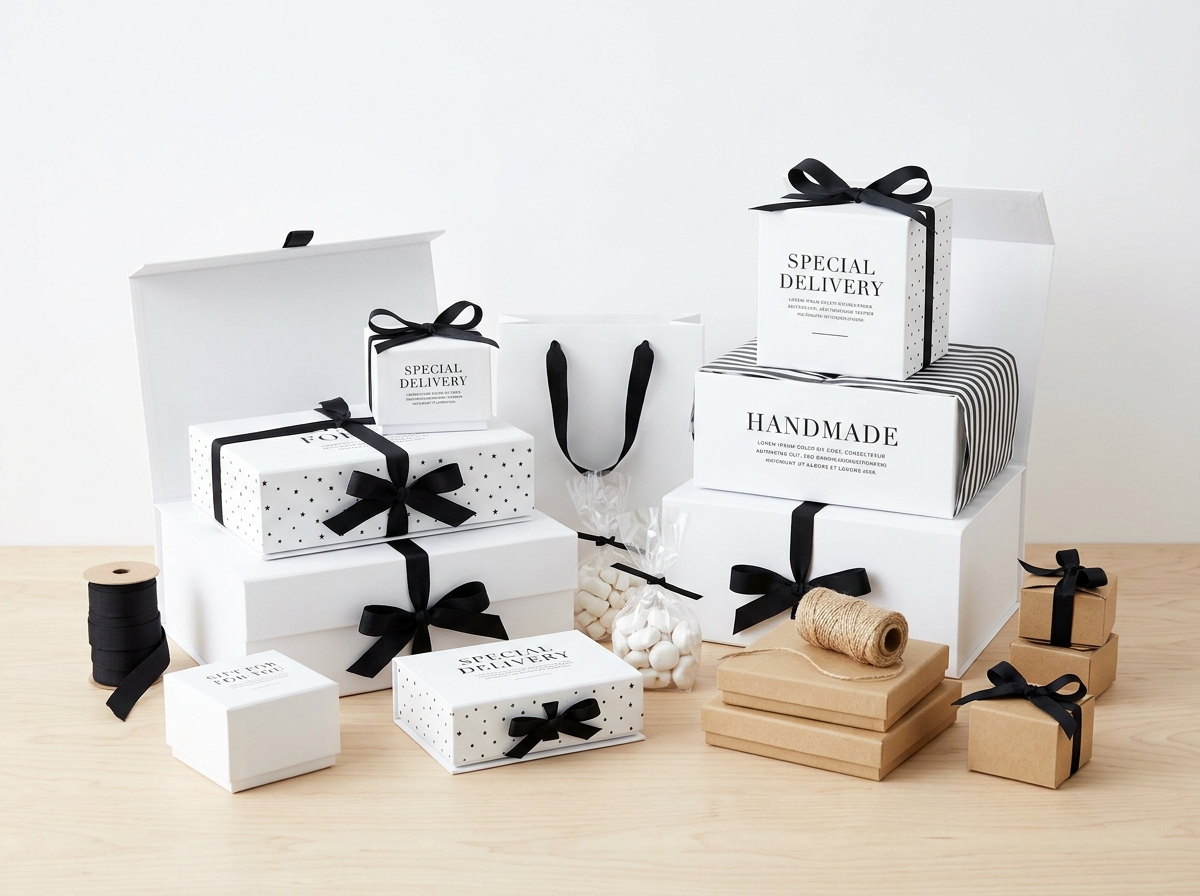
Interior presentation elevates perceived value. Tissue paper, shredded paper fill, or a branded insert card all contribute to the unboxing experience. For brands focused on sustainability, consider recycled paper fill or reusable fabric wraps that customers can repurpose. These small touches signal care and attention, which translates to customer loyalty. For more on creating a memorable opening moment, read our post on how to design an unboxing experience that builds loyalty.
Packaging costs scale with volume, but small businesses often face high per-unit prices when ordering in low quantities. Understanding minimum order quantities (MOQs) helps you plan inventory and cash flow more effectively.
Stock boxes—pre-made boxes in standard sizes—typically have low or no MOQs. You can order 25, 50, or 100 units without custom tooling fees. Stock boxes are ideal for testing new product lines or seasonal offerings before committing to larger orders.
Custom-printed boxes usually require MOQs of 500 to 1,000 units, depending on the printer and box style. For many small businesses, this represents a significant upfront investment. Before ordering custom boxes, calculate your monthly sales volume and ensure you can move through the inventory within six to twelve months. Packaging materials degrade over time, and tying up cash in slow-moving inventory limits your ability to respond to new opportunities.
One strategy to manage MOQs is to design versatile packaging that works across multiple products. A neutral box with a removable product label or sticker allows you to use the same packaging for different SKUs, increasing your effective order volume without overcommitting to a single product. For a deeper look at navigating MOQs, see our guide on understanding MOQ for small business packaging.
Seasonal packaging creates urgency and aligns your brand with key shopping moments. Rather than designing entirely new boxes for each season, consider modular elements—ribbons, hang tags, or belly bands—that transform a stock box into seasonal packaging.
For winter holidays, deep jewel tones and metallic accents signal premium gifting. A simple kraft box paired with a velvet ribbon and a gold foil sticker feels festive without requiring custom printing. For spring and summer, pastel tissue paper or floral-patterned inserts lighten the presentation.
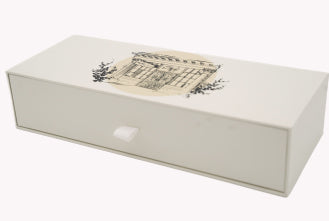
Occasion-specific packaging—birthdays, weddings, corporate gifts—often justifies a higher price point. Customers shopping for these moments expect elevated presentation and are willing to pay for it. A compact white gift box works well for jewelry, small favors, or individual desserts, offering a clean, versatile base that pairs with any occasion.
Corporate gifting represents a growing segment for small brands. Businesses ordering in bulk often request neutral, understated packaging that reflects professionalism rather than personal celebration. For these clients, focus on quality materials and clean design over decorative elements.
E-commerce packaging must survive shipping while remaining cost-effective. Oversized boxes increase dimensional weight charges, eating into margins. Right-sizing your packaging—choosing the smallest box that safely fits your product—reduces shipping costs and material waste.
Test your packaging before committing to large orders. Ship sample boxes to yourself or friends in different regions. Check for crushing, tearing, or shifting during transit. If your product arrives damaged, adjust cushioning, box thickness, or closure method before scaling up.
Assembly time matters during peak seasons. Choose packaging that your team (or you) can assemble quickly and consistently. Complicated folding sequences or multi-step closures slow fulfillment and increase labor costs. Tuck-top and snap-close formats typically assemble faster than boxes requiring tape or ribbon tying.
Consider packaging storage in your workspace. Flat-pack boxes take up less room than pre-assembled rigid boxes, which is critical if you're fulfilling from a home office or small warehouse. Calculate your monthly volume and ensure you have adequate space to store at least one month's worth of packaging without crowding your work area.
Branding doesn't require a large budget—it requires consistency. Small, repeatable touches create recognition over time. Start with one or two brand elements and apply them consistently across all customer touchpoints.
Custom stickers offer the most cost-effective branding option. Order stickers in bulk (500 to 1,000 units) and apply them to stock boxes. This approach gives you flexibility to change box sizes or styles without being locked into a single custom-printed format.
Rubber stamps provide a handmade, artisan feel that resonates with customers seeking authenticity. A well-designed stamp on kraft paper or white boxes looks intentional and professional. Stamps work best for simple logos or one-line messages—detailed designs don't always transfer cleanly.
Inserts and thank-you cards add a personal touch without increasing packaging costs significantly. A small card with care instructions, a discount code, or a handwritten note makes customers feel valued. These inserts also drive repeat purchases by including a clear call to action. For more budget-friendly branding strategies, explore our post on branded packaging on a budget using stickers, stamps, and inserts.
Choose the smallest box that fits your product with minimal movement. Measure your product's dimensions, add half an inch on each side for cushioning, and select the nearest standard box size. For e-commerce, smaller boxes reduce dimensional weight shipping charges. For retail display, consider how the box will sit on a shelf—cube formats stack neatly, while rectangular boxes may require more shelf depth.
Stock paperboard boxes typically cost $0.30 to $1.50 per unit, depending on size and quantity. Rigid boxes range from $1.50 to $5.00 per unit. Custom printing adds $0.20 to $1.00 per box, with higher costs at lower volumes. Budget an additional $0.10 to $0.50 per unit for tissue paper, stickers, or ribbon. Total packaging cost should generally stay below 10% of your product's retail price to maintain healthy margins.
FSC-certified paperboard and kraft paper are the most accessible sustainable options for small businesses. Both materials are recyclable, biodegradable, and widely available without high MOQs. Avoid boxes with plastic windows, foil stamping, or lamination, as these features complicate recycling. If your brand prioritizes sustainability, clearly communicate your material choices on your website and packaging—customers value transparency.
Use custom stickers, rubber stamps, or printed tissue paper to brand stock boxes. Add a colored ribbon or twine in your brand color. Include a custom insert card or hang tag. Layer different textures—kraft box with white tissue and a black ribbon creates visual interest. Consistency matters more than complexity: using the same elements across all orders builds recognition over time.
Invest in custom printing when you're consistently selling at least 500 units of a single product per quarter and have established your brand identity. Custom boxes make sense when the per-unit cost (including printing setup fees) is lower than your current cost of stock boxes plus branding materials. If you're still testing product-market fit or frequently changing packaging sizes, stick with stock boxes and removable branding elements until your volume and design stabilize.
Gift box packaging ideas for retail and e-commerce brands should evolve with your business. Start with simple, versatile formats that allow you to test and learn without large upfront investments. As your volume grows, you can layer in custom elements—printing, unique structures, or premium materials—that reinforce your brand and justify higher price points.
Focus on consistency, quality materials, and the customer experience. A well-chosen stock box with thoughtful branding will always outperform an elaborate custom box that arrives damaged or feels mismatched to your product. Pay attention to how customers respond—track social media mentions, unboxing photos, and feedback—and refine your packaging based on what resonates.
The most successful small brands treat packaging as an extension of their product, not an afterthought. By choosing materials that align with your values, formats that simplify fulfillment, and design elements that build recognition, you create a packaging system that supports growth without constant reinvention.