Cart
0
You may also like


Book a call with our development team to get started.



Apply online and access wholesale pricing.

Custom packaging ideas for small businesses transform ordinary transactions into memorable brand experiences. If you're shipping products, selling at markets, or building a retail presence, your packaging communicates value before a customer ever sees what's inside. The challenge most small business owners face isn't recognizing packaging's importance—it's navigating minimum order quantities, budget constraints, and design decisions without the resources of larger competitors.
This guide provides practical custom packaging ideas for small businesses at every stage of growth. You'll learn how to start with budget-friendly branding methods, understand supplier requirements, choose materials that match your product and values, and scale your packaging investment as your business grows. Whether you're ordering your first 100 boxes or planning your fifth iteration, the strategies here prioritize operational feasibility alongside brand impact.
Packaging serves three distinct functions for small businesses: protection, presentation, and promotion. While the protective function is non-negotiable, the latter two create competitive advantage in crowded markets. Packaging is the defining moment where brands have seconds to capture attention, communicate value, and convert browsers into customers.
For businesses selling direct-to-consumer, packaging represents your most reliable marketing channel. Unlike social media algorithms or email open rates, 100% of your customers interact with your packaging. The unboxing moment creates an opportunity for emotional connection that influences repeat purchase behavior and word-of-mouth recommendations. Customers who share unboxing content on social platforms provide free advertising to audiences already interested in your product category.
Small businesses competing against established brands benefit from packaging differentiation. When product quality and pricing reach parity, packaging design becomes the decision factor. A thoughtfully designed box signals care, professionalism, and attention to detail—qualities that justify premium pricing and build customer loyalty. Branded packaging for small business also reduces the risk of your product being mistaken for a generic alternative, particularly important for wholesale accounts where multiple brands share shelf space.
The business case extends beyond customer-facing benefits. Consistent packaging streamlines operations by standardizing materials, simplifying inventory management, and reducing fulfillment errors. Custom boxes sized precisely for your products minimize void fill requirements and reduce dimensional weight shipping charges. These operational efficiencies compound over hundreds or thousands of shipments.
Minimum order quantity (MOQ) requirements represent the primary barrier between small businesses and custom packaging. By setting an MOQ, suppliers ensure that each order covers the fixed costs associated with production, packaging, and shipping and still yield a profit. Understanding why MOQs exist helps you negotiate effectively and plan realistic packaging investments.
Custom packaging MOQs typically range from 100 to 1,500 units depending on the packaging type and production method. Digital printing technologies enable lower minimums (100-250 units) for boxes, mailers, and tissue paper. Offset printing, which produces superior color consistency and finish quality, generally requires 500-1,000 unit minimums. Rigid boxes with complex construction or specialty finishes may require 1,000-3,000 units due to tooling costs and setup complexity.
Several factors influence the MOQ a supplier sets. Design complexity affects setup time—simple one-color logos require less preparation than full-color photographic printing. Material selection matters because suppliers stock standard substrates in bulk; requesting custom paper weights, textures, or colors may trigger higher minimums. Printing method determines whether the supplier can economically produce smaller runs. Specialty finishes like foil stamping, embossing, or spot UV coating add separate setup costs that must be amortized across the order quantity.
Budget planning should account for per-unit costs that decrease with volume. A 500-unit order might cost $2.50 per box while 2,000 units drops to $1.20 per box—the setup costs remain constant but spread across more units. Calculate your packaging cost as a percentage of product retail price to determine affordability. Most product categories support 8-15% of retail price allocated to packaging; premium gift items may justify 20-25%.
For detailed strategies on navigating supplier requirements and calculating order quantities that balance cash flow with per-unit economics, see our minimum order quantity guidance.
The most successful small businesses approach packaging as a phased investment rather than an all-or-nothing decision. This strategy conserves cash, allows design iteration based on customer feedback, and scales investment in proportion to revenue growth.
Phase One: Stock Packaging with Custom Branding
Start with unprinted stock boxes, bags, or mailers and add your branding through low-MOQ methods. Thanks to digital printing, you can order high-quality, full-color custom labels for a very low cost and at MOQs as low as 100-250 pieces. Custom stickers applied to kraft boxes create a deliberate, artisan aesthetic that resonates with customers who value authenticity. Rubber stamps offer even lower entry costs—a custom logo stamp costs $20-40 and can brand thousands of boxes.
This phase proves your packaging concept before committing to larger custom orders. You can test different box sizes, experiment with tissue paper colors, and gather customer feedback on unboxing experience. Stock packaging also provides flexibility for seasonal variations—use the same base box with different sticker designs for holidays, product launches, or special promotions.
Phase Two: Semi-Custom Components
As order volume increases, introduce custom-printed elements while maintaining stock structural packaging. Custom tissue paper and packaging inserts typically have 250-500 unit MOQs and dramatically elevate perceived value. Custom tape, thank-you cards, and product information inserts add branded touchpoints throughout the unboxing experience.
This phase allows you to test which custom elements generate the strongest customer response. Track social media mentions, customer service feedback, and repeat purchase rates to identify which investments deliver measurable returns. Semi-custom packaging also maintains flexibility if your product line expands—the same custom tissue works across multiple product boxes.
Phase Three: Fully Custom Packaging
Commit to fully custom printed boxes when your monthly order volume consistently exceeds the supplier's MOQ. At this stage, you've validated product-market fit, refined your brand identity, and accumulated customer insights about packaging preferences. Fully custom packaging offers maximum brand impact, precise structural design for your products, and the lowest per-unit costs at scale.
Plan this transition 8-12 weeks before you need inventory to accommodate design, proofing, production, and shipping timelines. Order conservatively on your first custom run—it's better to reorder sooner than warehouse excess inventory if you're still refining your design.
For businesses operating on tight budgets, our guide to affordable branded packaging strategies provides specific tactics for maximizing visual impact while minimizing costs.
Effective packaging design balances aesthetic appeal with functional clarity. Small businesses benefit from design systems that work across multiple packaging types and scale from stickers to full custom printing.
Logo Placement and Hierarchy
Your logo should appear prominently but not dominate the entire design. Top center or front panel placement ensures visibility when boxes are stacked or photographed. Include a smaller secondary logo placement on closure flaps or interior surfaces for unboxing moments. Maintain minimum clear space around your logo equal to the height of the logo itself to prevent visual crowding.
Color Strategy
Limit your packaging palette to 2-3 brand colors plus neutral backgrounds. This constraint reduces printing costs, ensures color consistency across production runs, and strengthens brand recognition. Specify colors using Pantone Matching System (PMS) codes rather than CMYK or RGB values—PMS colors maintain consistency across different materials and printing methods.
Consider how your colors photograph under different lighting conditions. Packaging that looks sophisticated in person may appear washed out or oversaturated in customer photos. Test your design by photographing it under natural light, indoor lighting, and flash conditions before finalizing.
Typography
Choose legible typefaces that reflect your brand personality. Script fonts communicate elegance or handcrafted quality but sacrifice readability at small sizes. Sans-serif fonts project modern professionalism and maintain clarity across all sizes. Limit your packaging to two typeface families—one for headlines and one for body copy.
Size your text appropriately for viewing distance. Box exterior text should be readable from 3-4 feet away; interior messages can use smaller point sizes. Include essential information (product name, variant, quantity) in minimum 10-point type.
Pattern and Texture
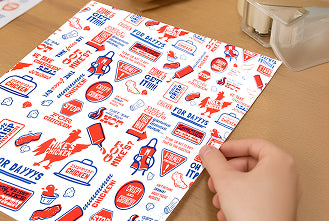
It's also become a cultural touchpoint and a statement of intent, presenting an opportunity for small businesses to connect with customers through unique designs that catch their eyes and spark curiosity. Background patterns, illustrations, or textures add visual interest without requiring full-color photography. Repeating geometric patterns, botanical illustrations, or abstract textures create distinctive brand identities while keeping printing costs manageable.
Texture can also be structural—kraft paper, linen-finish cardstock, or soft-touch coatings add tactile interest that photographs well and feels premium. These material choices often cost less than adding multiple ink colors.
White Space
Resist the urge to fill every surface with design elements. Strategic white space (or kraft space on unprinted boxes) creates visual breathing room that makes your key elements more impactful. Minimalist designs often photograph better for social media because they provide clean backgrounds that don't compete with the product.
For guidance on designing packaging specifically for customer sharing and social media visibility, explore our resource on packaging that photographs well for social media.
Choosing appropriate packaging materials requires balancing product protection, brand positioning, cost constraints, and sustainability goals. Different product categories have distinct requirements that narrow material options.
Paperboard Folding Cartons
Paperboard boxes suit lightweight products that don't require rigid protection—cosmetics, candles, small gifts, apparel, and food items under 2 pounds. These boxes ship flat, reducing storage space and freight costs. Setup requires simple folding without tools or tape. Paperboard accepts high-quality printing and finishes including matte or gloss coating, spot UV, and foil stamping.
Standard paperboard weights range from 12pt to 24pt (0.012" to 0.024" thickness). Lighter weights (12-16pt) work for small items and reduce material costs. Heavier weights (18-24pt) provide sturdier construction for retail display or products with modest weight. Paperboard costs typically range from $0.40 to $2.50 per unit depending on size, printing, and quantity.
Rigid Setup Boxes
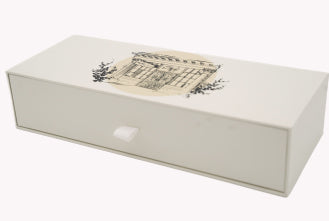
Rigid boxes communicate premium positioning through substantial construction and precise manufacturing. These boxes feature separate lids and bases, wrapped exterior surfaces, and optional interior lining. Rigid construction suits high-value products—jewelry, electronics, luxury gifts, and premium food items—where packaging cost represents a smaller percentage of product price.
Rigid boxes require higher MOQs (typically 1,000-3,000 units) due to hand assembly and material complexity. Per-unit costs range from $2.50 to $8.00 depending on size, materials, and finishing details. The investment makes sense when packaging significantly influences purchase decisions or when unboxing experience drives social sharing and referrals.
For a detailed comparison of construction methods, cost implications, and ideal use cases, review our analysis of paperboard versus rigid box options.
Corrugated Shipping Boxes
Corrugated boxes provide superior protection for e-commerce shipping, heavier products, and items requiring cushioning during transit. The fluted inner layer absorbs impact and prevents crushing. Corrugated boxes accept printing but with less detail and vibrancy than paperboard—bold graphics and simple color schemes work best.
Standard corrugated comes in several flute sizes. E-flute (1/16" thick) offers the thinnest profile suitable for small products and retail-ready packaging. B-flute (1/8" thick) provides moderate cushioning for general shipping. C-flute (3/16" thick) delivers maximum protection for fragile or heavy items. Choose flute size based on product fragility and shipping distance.
Poly Mailers and Flexible Packaging
Poly mailers minimize packaging costs and shipping weight for non-fragile products—apparel, textiles, and soft goods. These lightweight mailers reduce dimensional weight charges and require minimal storage space. Custom-printed poly mailers with 100-unit MOQs provide affordable branding for high-volume shippers.
Consider the environmental perception of poly mailers. While they use less material than boxes, plastic packaging faces consumer resistance. Communicate recyclability clearly if using recyclable poly mailers, or explore compostable alternatives made from plant-based materials. For detailed guidance on when each shipping format makes sense, see our comparison of poly mailers versus boxes.
Specialty Packaging for Food and Beverage
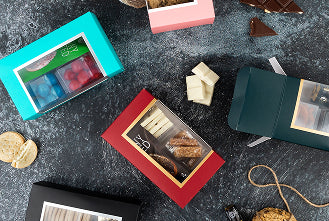
Food packaging must meet safety regulations, provide appropriate barriers against moisture and oxygen, and clearly communicate contents and allergen information. Bakery items require grease-resistant coatings or wax linings. Products with short shelf life benefit from windowed boxes that showcase freshness. Our specialized bakery packaging solutions address food-safe materials, regulatory compliance, and design considerations for baked goods.
Wine and beverage packaging faces different challenges—bottles require cushioning, premium presentation, and often gift-ready formats. Cylindrical tubes, two-bottle carriers, and windowed boxes serve different use cases from retail to corporate gifting. Explore our wine and beverage packaging ideas for format options and design strategies.
The unboxing experience encompasses every interaction from package arrival through product reveal. Thoughtfully designed unboxing sequences create shareable moments that extend your marketing reach and strengthen customer relationships.
Exterior Presentation
First impressions begin with exterior packaging. Clean, uncluttered designs with minimal shipping labels photograph better than boxes covered in barcodes and handling instructions. Use custom shipping labels that integrate with your design rather than generic carrier labels when possible. Include a small branded sticker or stamp that seals the box closure—this detail signals care and creates anticipation.
Consider package arrival context. Boxes sitting on doorsteps should look appealing even before opening. Avoid excessive branding that announces contents to passersby—subtle elegance often outperforms loud logos for products customers prefer to receive discreetly.
Opening Mechanics
The physical act of opening should feel satisfying without frustration. Avoid excessive tape, difficult-to-remove adhesives, or packaging that requires tools to open. Magnetic closures, ribbon pulls, or tuck-top designs create smooth opening experiences. The goal is building anticipation, not creating obstacles.
Interior reveals should unfold in layers. Tissue paper, crinkle fill, or custom inserts create visual separation between opening the box and seeing the product. This pacing extends the unboxing moment and provides opportunities for branded elements to appear progressively.
Sensory Details
Engage multiple senses throughout unboxing. Textured materials—soft-touch coatings, embossed logos, or natural kraft paper—add tactile interest. The sound of tissue paper rustling or a box lid lifting contributes to the experience. Some brands include subtle scent elements through sachets or scented tissue paper, though this requires careful consideration of customer sensitivities.
Color psychology influences emotional response. Crisp whites and metallics convey luxury and cleanliness. Natural kraft and earth tones communicate sustainability and authenticity. Bold colors create energy and excitement. Choose colors that align with both your brand identity and the emotional response you want to trigger.
Branded Inserts and Documentation
Include purposeful inserts that add value rather than clutter. Thank-you cards with handwritten notes (or handwritten-style printing) create personal connection. Product care instructions, usage tips, or recipe cards extend product value. Discount codes for future purchases drive repeat business. Social media handles with a gentle invitation to share (never a demand) encourage organic promotion.
Keep insert quantity reasonable—3-4 pieces maximum. Excessive paper feels wasteful and creates disposal burden for customers. Every insert should serve a specific purpose: build relationship, provide information, or drive action.
Shareability Factors
Customers share unboxing content when the experience feels special enough to warrant documentation. Distinctive design elements, unexpected details, or personalized touches motivate sharing. Products that photograph well against your packaging interior encourage flat-lay photos. Clever copy on box interiors or under lids creates "Easter egg" moments worth capturing.
Make sharing easy by including your social handle and a branded hashtag, but avoid making it feel mandatory. The most authentic shares come from genuine delight, not from bribing customers with contest entries. For comprehensive strategies on designing every element of the unboxing journey, see our guide to creating unboxing experiences that drive repeat orders.
Sustainability in packaging extends beyond using recycled materials—it encompasses design efficiency, end-of-life considerations, and transparent communication about environmental impact. Small businesses face pressure from environmentally conscious consumers while navigating complex and evolving regulations.
Material Choices with Environmental Benefits
In 2026, the most forward-thinking brands are minimizing substrates and components so the entire pack can move cleanly through a single recycling flow—paper with paper, PE with PE, aluminum with aluminum. Mono-material packaging simplifies recycling by eliminating mixed-material construction that requires separation. Choose paperboard boxes over plastic-windowed versions, paper tape over plastic tape, and avoid laminated materials that bond paper with plastic films.
Recycled content demonstrates commitment to circular economy principles. Post-consumer recycled (PCR) paperboard uses fibers recovered from consumer waste streams. Recycled content percentages range from 10% to 100%—higher percentages show stronger commitment but may affect printing quality or structural strength. Specify your recycled content requirements clearly with suppliers and request documentation.
FSC certification (Forest Stewardship Council) verifies that paper products come from responsibly managed forests. FSC-certified packaging appeals to environmentally conscious customers and meets procurement requirements for some wholesale accounts. Certification adds modest costs but provides third-party verification of sustainability claims.
Design for Recyclability
Recyclability depends on local infrastructure, not just material composition. Design packaging that works with widely available recycling streams—corrugated cardboard and paperboard recycle in most municipal programs. Avoid materials that contaminate recycling streams: glitter, metallic films, excessive adhesives, or mixed-material laminates.
Include clear disposal instructions on your packaging. Simple icons indicating "recyclable," "compostable," or "reusable" help customers make proper disposal decisions. Specify whether customers should remove certain elements (like plastic windows or ribbon) before recycling.
Right-Sizing and Material Efficiency
The most sustainable packaging uses only the material necessary for product protection and presentation. Oversized boxes require excess material, increase shipping emissions through wasted space, and need void fill to prevent product damage. Custom-sized packaging eliminates waste while reducing shipping costs—a rare alignment of environmental and economic benefits.
Calculate your packaging efficiency ratio: product volume divided by package volume. Ratios above 60% indicate efficient use of space. Lower ratios suggest opportunities to reduce packaging size or redesign product configuration.
Regulatory Compliance and Greenwashing Avoidance
Environmental claims on packaging face increasing regulatory scrutiny. California's SB 343 restricts use of the "chasing arrows" recycling symbol to materials that actually recycle in most California communities. Extended Producer Responsibility (EPR) laws in several states require brands to fund recycling infrastructure for their packaging. The Federal Trade Commission's Green Guides prohibit unsubstantiated environmental claims.
Make only claims you can substantiate with documentation. "Recyclable" requires that recycling facilities accept the material and that the material actually gets recycled in practice. "Compostable" requires certification to ASTM D6400 or D6868 standards and access to commercial composting facilities. "Eco-friendly" is too vague to use without specific supporting details.
For comprehensive coverage of sustainable material options, certification requirements, and compliance considerations, review our guide to eco-friendly packaging options.
Seasonal packaging variations create urgency, capitalize on gift-giving occasions, and keep your brand presentation fresh throughout the year. The key is implementing seasonal changes efficiently without maintaining excessive inventory or ordering custom packaging for short selling windows.
Holiday Packaging Strategy
Fourth-quarter holidays (Thanksgiving through New Year) represent peak packaging demand for gift-oriented businesses. Plan holiday packaging by late August to accommodate 8-10 week production timelines and ensure inventory arrives by early November. Holiday designs should feel festive without being overly specific—winter themes, metallic accents, and rich colors work across multiple December holidays.
Consider whether holiday packaging should replace or supplement your standard packaging. High-volume businesses may order custom holiday boxes. Lower-volume businesses can add holiday elements to standard packaging through seasonal tissue paper, stickers, ribbon, or gift tags—all available with lower MOQs and shorter lead times.
Valentine's and Mother's Day
These gift-focused holidays benefit from romantic or elegant packaging treatments. Soft pinks, deep reds, florals, and gold accents communicate appropriate sentiment. These occasions have shorter selling windows than winter holidays—most Valentine's purchases occur within two weeks of February 14. Order seasonal elements by early January to ensure availability.
Mother's Day packaging serves similar aesthetic preferences but with slightly longer selling windows (late April through early May). Consider whether the same spring-themed packaging can serve both occasions with different messaging inserts rather than ordering separate Valentine's and Mother's Day inventory.
Seasonal Product Launches
If you release seasonal product collections, coordinate packaging updates with product launches. Spring collections benefit from fresh colors and botanical themes. Summer packaging can incorporate bright, energetic palettes. Fall designs work with earth tones and harvest themes. These seasonal rotations keep your brand feeling current and provide reasons for repeat customers to make additional purchases.
Event and Occasion Packaging
Weddings, graduations, baby showers, and corporate events create demand for occasion-specific packaging. If these occasions represent significant revenue, maintain inventory of neutral, elegant packaging that works across multiple event types. Avoid overly specific messaging—"Celebrate" works for more occasions than "Congratulations Graduate."
For detailed seasonal planning calendars, design ideas for major holidays, and strategies for managing seasonal inventory, explore our seasonal packaging ideas resource.
Packaging mistakes become expensive when discovered after producing 1,000 units. Systematic testing identifies design flaws, structural weaknesses, and user experience problems before committing to full production runs.
Digital Proofing
Request digital proofs (PDF mockups) from your supplier before approving production. Review these carefully for spelling errors, color accuracy, alignment issues, and design placement. Check that required information appears clearly: product names, quantities, ingredient lists, barcodes, or regulatory disclosures. Confirm that bleed areas and safety margins meet specifications—critical elements should stay at least 0.25" from cut lines.
Review proofs on calibrated monitors and request printed color samples if color accuracy is critical. Screen colors never match printed results exactly. If your brand colors must match precisely, specify PMS colors and request a printed proof on your actual packaging substrate.
Physical Samples
Order physical samples before committing to full production whenever possible. Some suppliers offer sample production for $50-200 depending on packaging complexity. Physical samples reveal issues invisible in digital proofs: material weight and stiffness, color accuracy on actual substrate, finish quality, and structural integrity.
Test samples rigorously. Fill them with your actual product. Close and open them multiple times to verify closure mechanisms work smoothly. Ship samples to yourself to test durability during transit. Photograph samples under different lighting conditions to ensure they look good in customer photos.
User Testing
Give samples to friends, family, or beta customers and observe their unboxing experience. Watch for confusion about how to open the package, frustration with excessive packaging, or missed opportunities for delight. Ask specific questions: Was anything difficult to open? Did the packaging feel appropriate for the product price? Would you photograph this to share with friends?
User feedback often reveals assumptions you made as the designer that don't match customer expectations. A closure method that seems obvious to you might confuse first-time customers. Copy that feels clever might actually create confusion about product contents or usage.
Compliance Verification
If your packaging requires regulatory compliance—food safety information, ingredient disclosures, warning labels, or accessibility features—have samples reviewed by someone familiar with relevant regulations. Packaging errors that violate regulations can result in recalls, fines, or retailer rejection.
For step-by-step testing protocols, sample ordering guidance, and checklists for validation before production, see our guide on testing packaging before committing to large orders.
Successful packaging execution depends on understanding supplier capabilities, communicating requirements clearly, and planning timelines that accommodate production realities.
Lead Time Planning
Standard custom packaging lead times range from 4-8 weeks from design approval to delivery. This timeline includes prepress setup (3-7 days), production (1-3 weeks depending on quantity and complexity), quality control, and shipping. Rush services may reduce timelines to 2-3 weeks but typically add 20-40% to costs.
Plan backward from when you need inventory in hand. If you're launching a product on October 1, initiate packaging orders by mid-August at the latest. Add buffer time for potential delays, shipping complications, or the need to make corrections after receiving samples. Running out of packaging during peak season costs more in lost sales than the carrying cost of modest excess inventory.
Clear Communication
Provide suppliers with complete specifications upfront: exact dimensions, material preferences, printing requirements, finish options, quantity needed, and delivery deadline. Include high-resolution artwork files in the format your supplier requests—typically Adobe Illustrator or PDF with outlined fonts. Specify PMS colors rather than relying on CMYK conversion.
Ask questions about anything unclear in the supplier's quote or specifications. Confirm whether quoted prices include shipping, setup fees, or plate charges. Understand the supplier's revision policy—how many design iterations are included before additional fees apply? What constitutes a production error versus a design change?
Building Supplier Relationships
Treat suppliers as partners rather than vendors. Reliable suppliers provide valuable guidance on design optimization, material selection, and cost-saving opportunities. They may accommodate lower MOQs or rush timelines for established customers with consistent order patterns.
Pay invoices promptly according to agreed terms. Provide clear, organized artwork files that don't require extensive cleanup. Respect production timelines by approving proofs quickly. Suppliers remember customers who make their jobs easier and often prioritize those orders during busy seasons.
Domestic vs. Overseas Production
Domestic suppliers offer shorter lead times (2-4 weeks), easier communication, lower shipping costs for small quantities, and simpler logistics. Per-unit costs typically run higher than overseas options but total cost may favor domestic production for orders under 2,500 units when shipping and minimum order considerations are included.
Overseas production (primarily Asia) offers lower per-unit costs at higher volumes, typically requiring 5,000+ unit MOQs to justify the complexity. Lead times extend to 8-12 weeks including ocean freight. Language barriers, time zone differences, and quality control challenges require more sophisticated supply chain management. Overseas production makes sense for established products with predictable demand and businesses ready to commit to larger inventory investments.
Seasonal Demand and Capacity Constraints
Packaging suppliers face capacity constraints during peak seasons—August through October for holiday production. During these windows, lead times extend, rush fees increase, and suppliers may decline new customer orders to prioritize existing relationships. Place holiday orders by late July or early August to avoid capacity issues.
Similarly, suppliers serving specific industries face seasonal demand spikes. Bakery packaging suppliers get overwhelmed before Valentine's Day and December holidays. Wine packaging peaks before November and December. Plan orders well ahead of these predictable bottlenecks.
Custom packaging ideas for small businesses succeed when they balance brand ambition with operational reality. Start with clear objectives: Are you primarily solving a functional problem, building brand recognition, creating shareable moments, or communicating values like sustainability? Your objectives determine which packaging investments deliver the strongest returns.
The phased approach outlined here—beginning with stock packaging and low-MOQ branding, progressing to semi-custom elements, and eventually investing in fully custom packaging—allows you to validate decisions before committing significant capital. Each phase generates customer feedback and operational insights that inform the next level of investment.
Remember that packaging serves your business, not the reverse. The most sophisticated custom packaging fails if it doesn't protect your product, fit your fulfillment workflow, or justify its cost through measurable business outcomes. Conversely, simple packaging executed consistently often outperforms complex designs implemented inconsistently.
As you develop your packaging strategy, prioritize decisions that compound over time. Choosing standard box dimensions that ship efficiently matters more than selecting the trendiest color palette. Building relationships with reliable suppliers creates more long-term value than chasing the lowest per-unit price. Designing packaging that scales across product lines reduces complexity as you grow.
The businesses that succeed with custom packaging treat it as an integrated component of their brand strategy, operational planning, and customer experience design. Your packaging tells your brand story, protects your product, and creates moments that turn first-time buyers into loyal advocates. With the frameworks and strategies in this guide, you can make packaging decisions that strengthen your business at every stage of growth.