Cart
0
You may also like

Book a call with our development team to get started.



Apply online and access wholesale pricing.

Bakery boxes for coffee shops need to do more than hold a croissant. They protect delicate pastries during transport, keep product fresh until the customer opens the lid, and reinforce your brand every time someone carries one out the door. Most coffee shops generate 30–50% of their revenue from food sales, yet many operators treat pastry packaging as an afterthought—ordering generic white boxes that do nothing to differentiate their brand from the shop next door.
The right bakery packaging supports your operational flow, meets food safety regulations, and turns every to-go order into a walking advertisement. This guide covers the materials, sizes, and features that matter for cafe environments, plus how to coordinate your pastry boxes with the rest of your custom packaging for coffee shops.
Coffee shop pastry packaging faces unique demands. Unlike standalone bakeries that may hand customers a box across a counter, cafes often prepare multiple items during a morning rush—bagging a muffin, boxing a slice of cake, and handing over an almond croissant in quick succession. Your packaging must open easily, stack efficiently behind the counter, and protect products that range from flaky to frosted.
Food safety is non-negotiable. The Food and Drug Administration (FDA) oversees safety standards for food packaging, ensuring that materials intended to come into contact with food meet strict safety standards. Any material that touches your pastries—paperboard, grease-resistant coatings, or window film—is classified as a food contact substance and must not transfer harmful chemicals or alter taste.
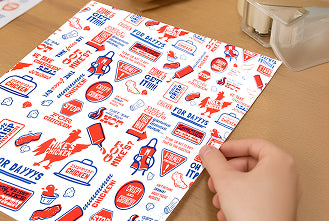
Branding matters just as much. A customer who leaves your shop with a generic box forgets where they bought that scone. A customer carrying a box printed with your logo, color palette, and tagline becomes a mobile billboard. When your bakery packaging coordinates with your coffee cups and bags, you create a cohesive brand experience that builds recognition and repeat visits.
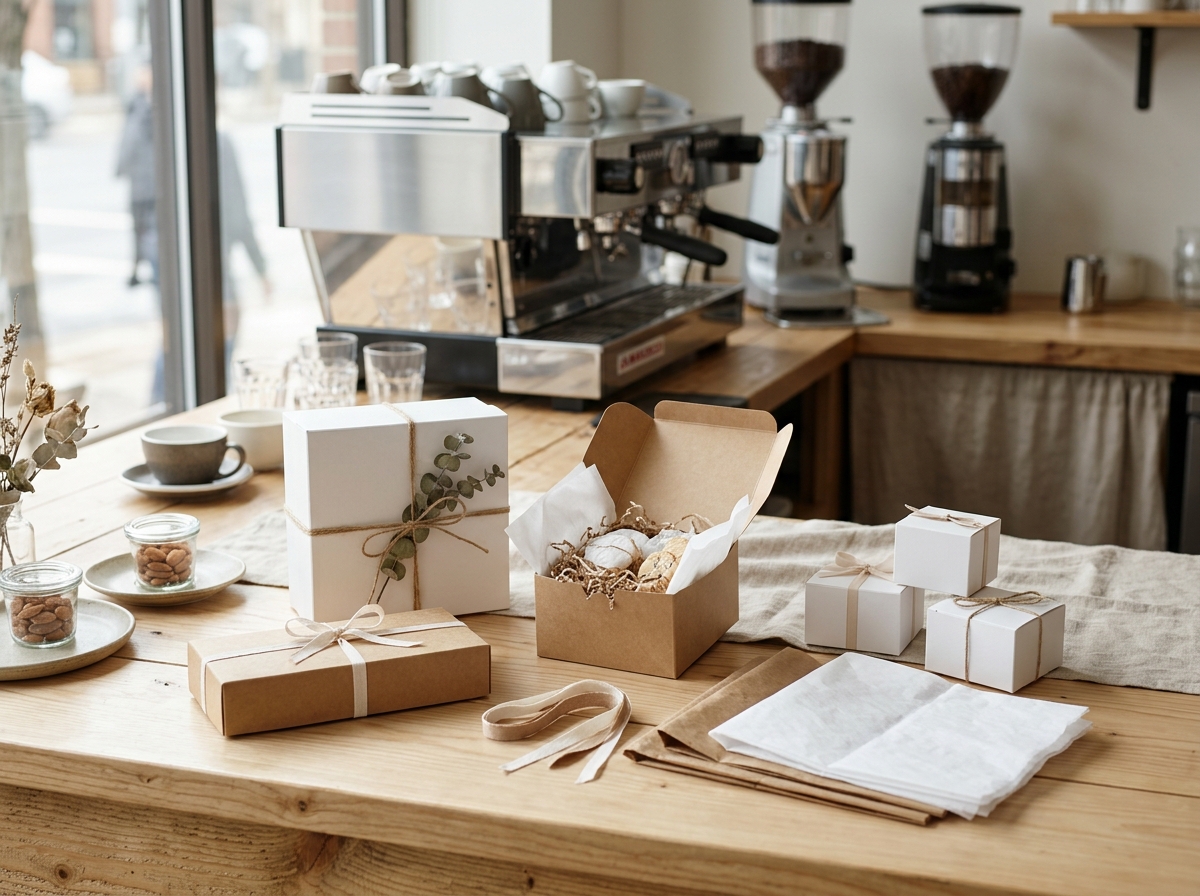
The material you choose affects durability, grease resistance, and how well your branding prints. Most coffee shop bakery boxes fall into three categories: kraft paperboard, white paperboard, and windowed boxes.
Kraft boxes deliver a natural, eco-friendly aesthetic that appeals to customers who prioritize sustainability. The unbleached brown tone pairs well with minimalist branding—think black or white ink with clean typography. Kraft paperboard is sturdy enough for cookies, brownies, and muffins, though it may show grease spots if you're packaging items with high butter content. Many shops use kraft for grab-and-go items and reserve white boxes for special occasion cakes.
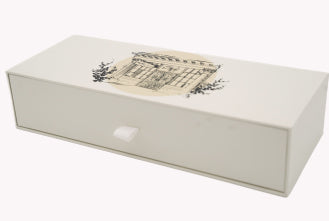
White bakery boxes offer a classic, clean look and provide the best surface for full-color printing. They're ideal for cupcakes, decorated cookies, and layered cakes where presentation is part of the purchase. White paperboard typically includes a clay-coated interior that resists grease better than uncoated kraft, making it a practical choice for buttery pastries and frosted items.
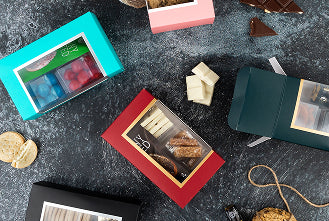
Boxes with clear acetate or PET windows let customers see the product before they buy—a significant advantage for display cases and grab-and-go shelves. The window is usually die-cut into the lid and secured with food-safe adhesive. Windowed boxes work especially well for visually appealing items like fruit tarts, decorated donuts, and layered cakes. The transparency builds trust and can increase impulse purchases, though windowed boxes typically cost 15–25% more than solid paperboard.
Matching box size to product prevents shifting, crushing, and wasted material. Coffee shops typically stock three to five core sizes to cover their menu.
Single pastry boxes (4" × 4" × 2.5" or 5" × 5" × 3"): For individual croissants, danishes, cinnamon rolls, or large cookies. These boxes fit comfortably in a customer's hand and stack neatly on your back counter.
Cupcake boxes (6" × 6" × 3" for singles; 10" × 7" × 4" for four-packs): Cupcake boxes include interior inserts that hold each cupcake in place and prevent frosting from smudging the lid. Single-cupcake boxes are popular for grab-and-go; four- and six-count boxes serve group orders and gifts.
Cookie boxes (8" × 5.5" × 2.5"): Designed for half-dozen cookies or a small assortment of bar cookies. The shallow depth keeps cookies visible and prevents them from sliding around.
Cake slice boxes (4" × 2" × 4" or triangular): Tall, narrow boxes that accommodate a single slice of layered cake. Triangular boxes mirror the slice shape and reduce excess space.
Full cake boxes (10" × 10" × 5" or 12" × 12" × 6"): For whole cakes, large tarts, or dozen-count cupcake orders. These boxes often include a separate base and lid for easier assembly and a more premium presentation.
If your menu includes specialty items—oversized muffins, eclair towers, or multi-layer celebration cakes—you may need custom dimensions. Keep in mind that non-standard sizes usually require higher minimum order quantities.
Your bakery boxes should feel like part of the same family as your coffee cups, bags, and napkins. Start with your core brand elements: logo, color palette, typography, and any signature patterns or icons. If your coffee cups feature a bold logo on a kraft background, carry that same kraft material and logo treatment onto your pastry boxes. If your brand uses a specific Pantone color, specify that color for your box printing to ensure consistency.
Print placement matters. For boxes with windows, position your logo on the lid or side panel where it remains visible when the box is closed. For solid boxes, consider printing on both the lid and the base so your branding is visible whether the box is stacked, carried, or opened on a desk.
Many coffee shops find success with a two-tier approach: a fully custom box for signature items (house-made cakes, seasonal specials) and a simpler stock box with a custom sticker for everyday pastries. This strategy balances branding impact with budget, especially for new shops still refining their packaging needs. For more guidance on creating a unified look across all your packaging, see our post on how to design coffee packaging that builds your brand.
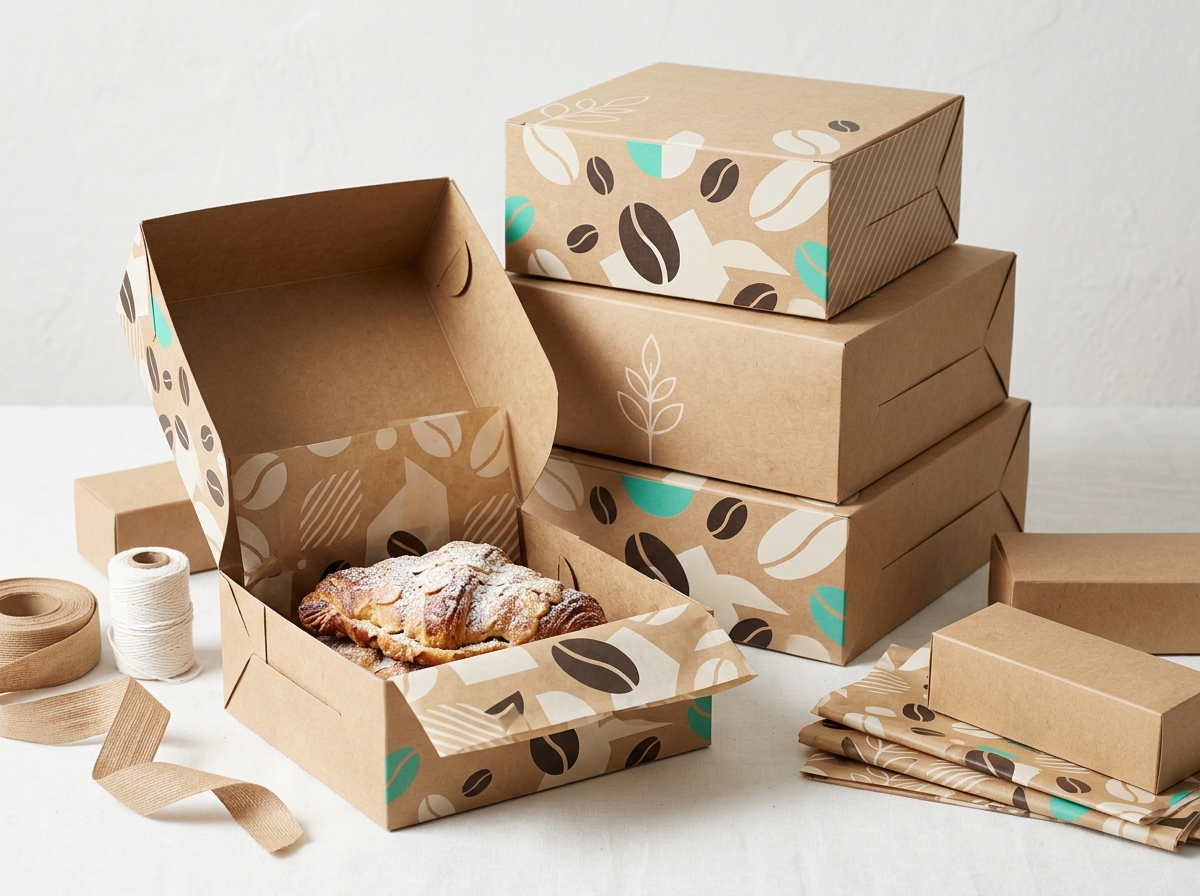
Stock bakery boxes—plain white or kraft with no custom printing—are available in quantities as low as 25 or 50 units. Custom-printed boxes typically require minimums of 250 to 1,000 units per size, depending on the supplier and printing method. Digital printing allows for lower minimums (often 250–500 boxes) but costs more per unit. Offset printing requires higher minimums (1,000+ boxes) but drops the per-unit cost significantly, making it the better choice once your volume justifies the order size.
When planning your first order, calculate your weekly usage for each box size. If you sell 30 croissants and 20 muffins per day, you'll need roughly 350 single-pastry boxes per week. Ordering a three-month supply (around 4,000 boxes) positions you for offset printing and better pricing. If you're just opening or testing a new product line, start with stock boxes and add custom stickers until your volume supports a full custom print run.
Storage is a practical concern. Bakery boxes ship and store flat, but a 1,000-unit order of 10" × 10" cake boxes still occupies several cubic feet. Make sure you have dedicated dry storage space that keeps boxes away from moisture and direct sunlight, which can warp paperboard and fade printing. For a detailed breakdown of how MOQs work across different packaging types, read our guide on minimum order quantities for coffee shop packaging.
Small design details make a measurable difference during peak hours. Look for boxes with the following features:
Auto-lock bottoms: These boxes pop open and lock into shape without tape or manual folding, saving seconds per assembly—seconds that add up when you're serving a line of customers.
Tuck-top lids: Tuck closures are faster than tab locks and create a cleaner look. They're especially useful for single-pastry boxes where speed matters.
Interior inserts: Cupcake inserts, cookie trays, and cake boards prevent products from shifting. If you're packaging items with delicate frosting or multiple layers, inserts are non-negotiable.
Grease-resistant coatings: A food-safe coating or wax lining prevents oil from butter, chocolate, or frosting from seeping through the box. This is particularly important for croissants, danishes, and anything with a high fat content.
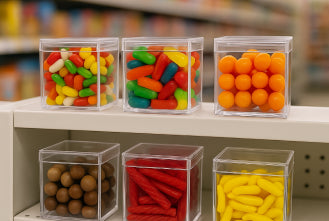
Consider pairing your bakery boxes with complementary items like resealable zipper treat bags for cookies and smaller pastries. These bags work well for grab-and-go items and can be branded with custom stickers or labels to maintain a cohesive look.
Customer expectations around sustainability continue to rise. Studies report that 63% of consumers eat bakery items every week, and many of those consumers actively seek out brands that prioritize eco-friendly packaging. Fortunately, most paperboard bakery boxes are already recyclable, provided they're free of heavy grease contamination and plastic windows.
To strengthen your sustainability position, look for boxes made from recycled content (typically 30–100% post-consumer waste) and certified by the Forest Stewardship Council (FSC). FSC certification confirms that the paperboard comes from responsibly managed forests. If your brand story emphasizes environmental responsibility, print a small FSC logo or recycling symbol on your boxes to communicate that commitment.
Compostable window film is an emerging option. Traditional acetate windows are not compostable, but newer PLA (polylactic acid) films derived from plant starches break down in commercial composting facilities. PLA windows cost more and may not be available from all suppliers, but they're worth exploring if you operate in a city with robust composting infrastructure and a customer base that values zero-waste practices.
Most coffee shops source bakery boxes through one of three channels: local restaurant supply distributors, online wholesale packaging suppliers, or direct from manufacturers. Local distributors offer the advantage of immediate availability and no shipping costs, but their selection is usually limited to stock items. Online suppliers provide broader selection and customization options, though you'll need to account for lead times (typically two to four weeks for custom printing) and shipping costs.
When requesting quotes, provide the following details: box dimensions, material (kraft or white paperboard), print specifications (number of colors, logo placement), and quantity. Ask for a physical sample before committing to a full print run—colors and paper weight can look different on screen than in hand. If you're ordering custom boxes for the first time, request a pre-production proof to confirm that your logo, colors, and text appear exactly as intended.
For coffee shops that also retail whole bean coffee, coordinating your bakery packaging order with your custom coffee bags can streamline logistics and sometimes unlock volume discounts from suppliers who handle both product categories.
Seasonal packaging creates urgency and gives customers a reason to share your products on social media. Many coffee shops introduce special bakery boxes for fall (think autumn leaves and warm tones), winter holidays (red and green, snowflakes, or metallic accents), and spring (pastels, florals). Limited-edition boxes don't require a massive investment—a 500-unit run of a seasonal design, paired with your core year-round boxes, adds variety without overcomplicating inventory.
If full custom seasonal boxes aren't in the budget, consider seasonal stickers or stamps applied to your standard boxes. A rubber stamp with a holiday greeting or a sheet of themed stickers can transform a plain kraft box into something special for under $100.
A single cupcake fits comfortably in a 4" × 4" × 4" box, though some shops prefer a 5" × 5" × 4" box for larger gourmet cupcakes with tall frosting. For multiple cupcakes, a 10" × 7" × 4" box with a four-count insert is the most common configuration. Always choose a box height that allows at least half an inch of clearance above your tallest frosting to prevent smudging.
Yes, as long as the window material and adhesive are approved for food contact. Most windowed boxes use PET or acetate film that meets FDA food safety standards. Verify with your supplier that all materials, including the adhesive securing the window, comply with FDA regulations for direct food contact.
Store boxes flat in a cool, dry location away from direct sunlight and moisture. Stack boxes on shelves or pallets rather than directly on the floor to protect against water damage. Avoid storing boxes near heat sources (ovens, dishwashers, or heating vents), which can warp paperboard. Properly stored boxes remain in good condition for 12–18 months.
Most paperboard bakery boxes work well for room-temperature and chilled items. For hot pastries (like freshly baked croissants or warm cinnamon rolls), ensure your boxes have adequate ventilation or small vent holes to release steam. Trapped moisture can make pastries soggy and weaken the box structure. Some shops use vented bags or boxes with small perforations for hot items.
The terms are often used interchangeably. "Bakery box" is a broad category that includes any box designed for baked goods—cookies, cakes, pastries, bread. "Pastry box" typically refers to smaller boxes designed for individual pastries like croissants, danishes, or eclairs. In practice, the distinction matters less than choosing the right size and features for your specific products.
Bakery boxes are one component of a complete coffee shop packaging system. Once you've selected your core box sizes and coordinated your branding, consider how your boxes integrate with bags, napkins, cups, and sleeves. A unified packaging system—where every touchpoint reflects the same visual identity—builds brand recognition faster than isolated packaging decisions.
Start by auditing your current packaging. List every item a customer might take out of your shop: coffee cups, lids, sleeves, pastry boxes, cookie bags, napkins, shopping bags. Identify which items are generic and which carry your branding. Prioritize the highest-visibility items first—typically coffee cups and bakery boxes—and build out from there as budget allows.
If you're working with limited capital, stock boxes with custom stickers or stamps deliver 80% of the branding impact at 20% of the cost. As your volume grows and you're ready to invest in fully custom printed boxes, you'll have refined your design and confirmed which sizes you actually need, reducing the risk of overordering the wrong configuration.