Cart
0
You may also like

Book a call with our development team to get started.



Apply online and access wholesale pricing.

When you're ready to order corporate holiday gift packaging, the first hard number you'll encounter is the minimum order quantity—usually 500 to 1,000 units for custom-printed boxes, sometimes higher depending on structure and finish. For a corporate gifting program manager placing an order for the first time, that figure can feel like a barrier, especially when you're testing a new design or serving a modest client list. But gift box minimum order quantity isn't arbitrary. It reflects the fixed costs of custom manufacturing: printing plates, die-cutting tools, machine setup, and material waste during calibration runs. Understanding why MOQs exist and how to work within them—or around them—gives you the leverage to plan smarter, negotiate better, and avoid costly mistakes.
This guide explains the economics behind custom gift box MOQs, what typical minimums look like across different packaging formats, how to negotiate with suppliers, when stock packaging makes more sense than custom, and how to structure multi-year programs that hit volume thresholds efficiently without tying up cash in excess inventory.
Every custom packaging order requires setup work that costs the same whether you're ordering 200 boxes or 2,000. The supplier must create a die-cutting tool for your box dimensions, prepare printing plates for each color in your design, calibrate the press, run test sheets to verify color accuracy, and adjust the folding and gluing machines. These are fixed costs. If a supplier produces only a small batch, those setup expenses make each box disproportionately expensive—often to the point where the job isn't economically viable for either party.
According to industry data, custom packaging typically starts between 500 and 1,000 units, depending on the packaging type and complexity. For gift boxes specifically, semi-custom options (printing on pre-made box styles) often start at 500 units, while fully custom structures—drawer boxes, rigid two-piece boxes, or magnetic closures—can require 1,000 to 3,000 units to justify the tooling investment. Material efficiency also plays a role: cardboard and specialty papers are purchased in large rolls, and small orders create proportionally more waste during cutting and setup.
The print method matters, too. Offset printing, which delivers photographic-quality images and precise color matching, requires metal plates that cost $150 to $400 per color. Digital printing eliminates plate costs and can reduce MOQs to as low as 100 to 250 units, but the per-unit price is higher and color consistency across large runs can be less predictable. For corporate gifting programs that need brand-accurate Pantone colors and a premium look, offset printing is often the better choice—but it comes with those higher minimums.
Not all gift boxes carry the same MOQ. The structure, material, and finish all influence the minimum a supplier will accept. Here's what corporate buyers typically encounter:
Folding carton gift boxes (tuck-top, auto-lock, or sleeve styles) made from SBS paperboard or kraft stock usually start at 500 to 1,000 units for one or two-color printing. If you add foil stamping, embossing, or a matte lamination finish, expect minimums to rise to 1,000 to 2,000 units because of the additional setup and material waste those processes create.
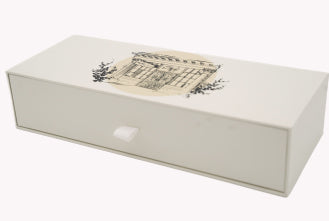
Rigid two-piece gift boxes (lid-and-base construction, often wrapped in printed paper or fabric) typically require 1,000 to 2,000 units. The assembly is more labor-intensive, and the chipboard core and wrap materials are often sourced in minimum batch sizes that make smaller runs impractical. Magnetic closure boxes or boxes with custom foam inserts push minimums even higher—sometimes 2,000 to 3,000 units—because of the added tooling and assembly steps.
Corrugated mailer boxes used for shipping corporate gifts (often printed on the interior or exterior with branding) generally start at 500 to 1,000 units for flexographic printing. If you need full-color litho-laminated printing on corrugated, minimums jump to 2,000 to 5,000 units due to the cost of the litho label production.
Stock boxes with custom printing (printing your logo or design onto an existing box template) offer the lowest MOQs—often 250 to 500 units—because the die-cutting tool already exists. The supplier only needs to prepare printing plates, which cuts setup time and cost significantly. For corporate programs testing a new gift concept or serving a smaller recipient list, this is often the most practical entry point.
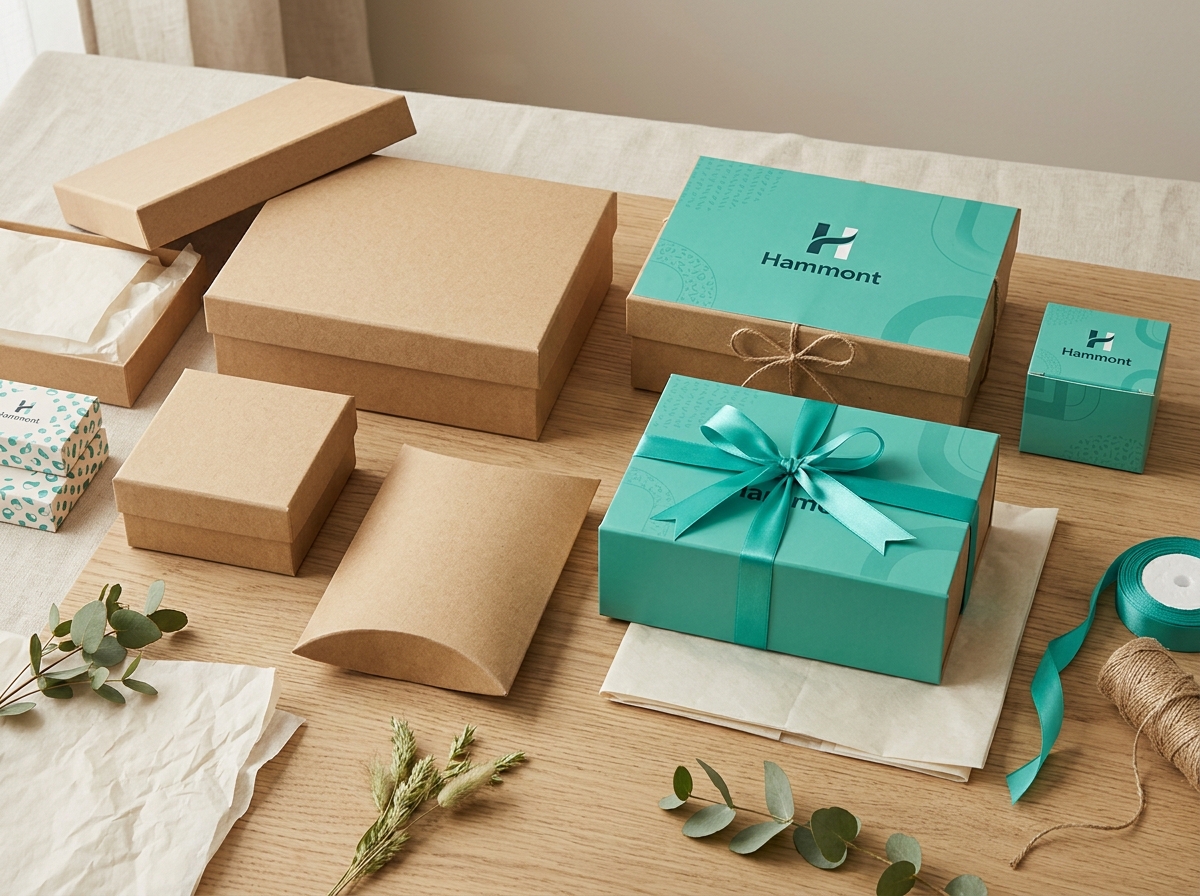
MOQs aren't always immovable. Suppliers set them based on their cost structure, but there's often room for flexibility—especially if you can demonstrate long-term value or adjust your specifications to reduce their setup burden. Here are the levers that work:
Commit to repeat orders. If you can credibly signal that this is the first order in a multi-year program, many suppliers will lower the initial MOQ. A corporate gifting manager who orders 500 boxes now but projects 2,000 boxes annually across quarterly campaigns is a more attractive customer than a one-time buyer ordering 1,000. Make that clear upfront, and ask if they'll waive or reduce the minimum for the first run.
Simplify the design. Every additional color, finish, or structural feature adds setup cost. A two-color design on a standard tuck-top box will carry a lower MOQ than a four-color design with spot UV and a custom die-cut window. If you're testing a new program, start with a simpler version. You can always add complexity once you've validated demand and are ready to order at higher volumes.
Consolidate SKUs. If you're ordering multiple box sizes or styles, ask whether the supplier can combine them into a single production run to meet the MOQ. For example, ordering 300 units of a small box and 300 units of a medium box might not individually hit the 500-unit threshold, but together they could. Not all suppliers will accommodate this, but it's worth asking—especially if the boxes share the same material and print setup.
Accept split shipments. Some suppliers will produce your full MOQ but ship it in installments over several months, allowing you to spread storage costs and cash outlay. This works well for corporate programs with predictable quarterly gifting cycles. You lock in the volume pricing without warehousing a year's worth of boxes at once.
Use digital printing for the first run. If you need to test a design or validate a new gifting concept, digital printing's lower MOQs (100 to 250 units) let you move quickly without committing to a large offset run. Once you've confirmed the design works and have a clearer volume forecast, you can transition to offset printing for subsequent orders and capture the cost savings that come with higher volumes.
Custom packaging isn't always the right answer—especially for smaller programs, one-time events, or budgets that can't absorb the upfront cost of tooling and high MOQs. Stock gift boxes offer a practical alternative that still delivers a professional presentation without the custom manufacturing burden.
Stock boxes are pre-manufactured in standard sizes and sold in smaller quantities—often as low as 18 to 50 units, depending on the supplier and style. You won't get your logo printed directly on the box, but you can brand them with custom stickers, stamps, tissue paper, or printed inserts. For many corporate gifting programs, this approach hits the right balance: it looks intentional and polished, costs less per unit at low volumes, and doesn't require a six-week lead time or a $2,000 minimum order.
Consider stock packaging when your recipient list is under 200, when you're testing a new gift concept before committing to a full custom run, when your budget prioritizes the gift contents over the packaging, or when your timeline doesn't allow for the 4- to 8-week lead time custom orders typically require. For example, a kraft tuck-top box paired with a custom sticker and branded tissue delivers a cohesive look without the MOQ commitment.
Stock packaging also makes sense for wine bottle gift boxes or bakery box packaging where the structure is standardized and the focus is on the product inside rather than elaborate exterior branding. A clean, well-constructed stock box signals quality and care—and for many corporate clients, that's enough.
Corporate gifting programs rarely exist in isolation. Most companies send gifts at multiple touchpoints throughout the year: client appreciation in Q4, employee milestones quarterly, event giveaways, new client onboarding, and seasonal campaigns. If you're ordering separately for each occasion, you're likely paying premium per-unit pricing on small batches and missing the volume discounts that come with consolidated orders.
A smarter approach is to plan your packaging needs annually and place one or two large orders that cover multiple campaigns. This requires forecasting your recipient counts across all gifting occasions, standardizing box sizes where possible, and coordinating with your finance and operations teams to manage inventory and cash flow. The payoff is significant: hitting a 2,000-unit MOQ instead of ordering four separate 500-unit runs can reduce your per-box cost by 20% to 35%, and you'll avoid paying setup fees multiple times.
Here's how to structure it: Start by auditing your gifting calendar for the next 12 months. Identify every occasion where you'll send a packaged gift—holiday client gifts, quarterly employee recognition, event swag, new business welcome kits. Estimate recipient counts for each, and add a 10% to 15% buffer for growth or last-minute additions. If your box dimensions can be standardized across multiple campaigns (for example, a 6" x 6" x 3" box works for both a wine gift and a curated snack set), consolidate those into a single SKU to maximize volume.
Next, map your order timing to your corporate holiday gift packaging timeline. If your largest gifting push is in December, place your annual order in late summer to lock in production capacity and avoid the Q4 rush. Store the boxes in your warehouse or, if space is tight, negotiate split shipments with your supplier so you receive inventory in batches aligned to your campaign schedule.
Finally, design your packaging with longevity in mind. Avoid date-specific or campaign-specific copy on the box itself. Instead, use a timeless design—your logo, brand colors, and a clean layout—that works across all occasions. Customize each campaign with printed inserts, stickers, or ribbons that are cheaper to produce in smaller quantities and don't carry the same MOQ constraints.
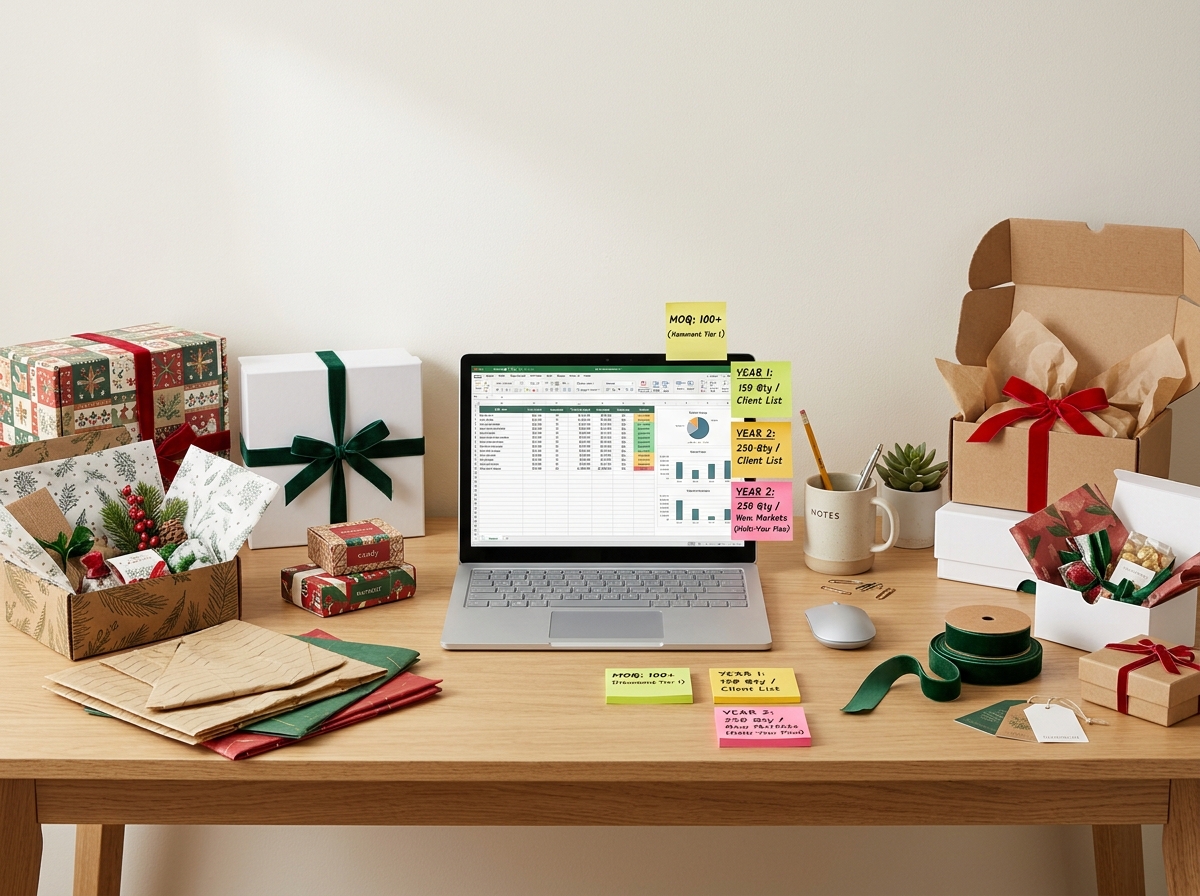
When evaluating MOQs, corporate buyers often focus on per-unit cost—and that's important—but it's not the only number that matters. The total cash outlay, storage costs, and opportunity cost of capital tied up in inventory all factor into the real cost of an order. A 1,000-unit order at $3.50 per box sounds better than a 500-unit order at $4.20 per box, but if you only need 600 boxes this year, you're spending $3,500 to save $420 while tying up $1,400 in excess inventory that might sit in a warehouse for 18 months.
Here's the calculation framework: Multiply the MOQ by the per-unit price to get your total upfront cost. Then estimate your storage cost per month (if you're warehousing the boxes yourself) or ask your supplier if they offer inventory hold programs where they store your boxes and ship on demand. Add the cost of capital—if that $3,500 could otherwise be invested in your business at a 10% annual return, you're forgoing $350 in opportunity cost over the year. Finally, factor in obsolescence risk: if your branding changes, your gifting strategy shifts, or the boxes get damaged in storage, that excess inventory becomes a sunk cost.
For many corporate programs, the optimal order size isn't the full MOQ that delivers the lowest per-unit price—it's the quantity that balances unit cost, cash flow, and inventory risk. If you're ordering for a single campaign with no clear reorder plan, paying a slightly higher per-unit price for a lower MOQ (or choosing stock packaging) often makes more financial sense than over-ordering to chase a volume discount.
The first mistake is ordering at the minimum without negotiating. Many suppliers list an MOQ as a starting point for conversation, not a hard floor. If you don't ask, you won't know whether they'd accept 400 units instead of 500, or whether they'd waive the minimum for a committed annual contract. The second mistake is failing to account for lead times when planning around MOQs. Custom packaging typically requires 4 to 8 weeks from artwork approval to delivery. If you're ordering just enough to hit the MOQ and your recipient list grows unexpectedly, you won't have time to place a reorder before your campaign deadline.
The third mistake is over-customizing the first order. Elaborate finishes, complex die-cuts, and multi-layer constructions all push MOQs higher and lock you into a design before you've validated whether it works. Start simple, test the concept, and add complexity once you're confident in the program's direction and volume. The fourth mistake is ignoring stock alternatives. Corporate buyers sometimes assume custom is the only way to look professional, but a well-executed stock box with thoughtful branding elements often delivers the same impact at a fraction of the cost and commitment.
The fifth mistake is treating packaging as a one-time purchase instead of a program. If you're ordering reactively—placing a new order every time a gifting occasion arises—you'll never hit the volume thresholds that unlock better pricing. Plan annually, consolidate orders, and build relationships with suppliers who understand your cadence and can offer flexibility as your program scales.
Certain corporate gift formats carry their own MOQ considerations. Wine packaging, for example, often uses rigid chipboard boxes with foam or pulp inserts to protect the bottle. These structures are more complex to manufacture and typically require 1,000 to 2,000 units minimum. However, stock wine boxes with custom sleeves or belly bands can reduce that threshold to 250 to 500 units, giving you a branded presentation without the full custom MOQ.
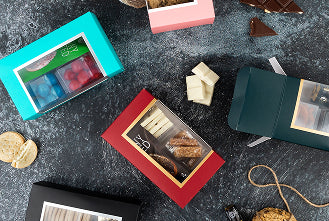
Bakery and food gift boxes face additional constraints because they often require food-safe coatings or grease-resistant materials, which can increase both cost and MOQ. Standard bakery boxes in stock sizes are widely available in small quantities, but if you need a custom size or shape to fit a specific product assortment, expect minimums of 1,000 to 2,000 units. For corporate gifting programs that include food items, it's often more practical to use stock food boxes and invest your customization budget in printed inserts, labels, or outer sleeves.
Luxury rigid boxes with fabric wraps, magnetic closures, or foam inserts are at the high end of the MOQ spectrum—often 2,000 to 5,000 units—because of the labor-intensive assembly and specialized materials. These are best suited for high-value corporate gifts where the packaging is part of the brand experience and the recipient count justifies the investment. For smaller programs, a structured kraft gift box with a clean design and quality construction can deliver a premium feel without the luxury-tier MOQ.
Not all packaging suppliers operate the same way. Large manufacturers optimized for high-volume production often have rigid MOQs and limited willingness to negotiate—they're set up to run long production batches for big brands, and small orders disrupt their workflow. Smaller, more flexible suppliers or those specializing in short-run digital printing can offer lower minimums and faster turnarounds, but their per-unit pricing is usually higher and their capacity may be limited during peak seasons.
When evaluating suppliers, ask these questions: What's your standard MOQ for this box style, and is there flexibility for first-time orders or committed annual contracts? Do you offer digital printing for lower-volume runs, and how does the quality compare to offset? Can you produce the full MOQ but ship in installments over several months? Do you have inventory hold programs where you store my boxes and ship on demand? What's your lead time from artwork approval to delivery, and how does that change during Q4?
The answers will tell you whether the supplier is a good fit for your program's size and cadence. For corporate buyers managing ongoing gifting programs, a supplier who offers MOQ flexibility, split shipments, and predictable lead times is often more valuable than one who simply offers the lowest per-unit price at high volumes.
If your recipient list is under 200 and custom packaging's MOQs don't align with your budget or volume, there are several alternatives that still deliver a professional, branded experience. Stock boxes with custom stickers or stamps are the most common approach. You can order stock gift boxes in small quantities and apply a custom-printed sticker with your logo, a QR code linking to a personalized message, or a campaign-specific tagline. Stickers are inexpensive to produce (often $0.10 to $0.30 per unit) and have no MOQ constraints.
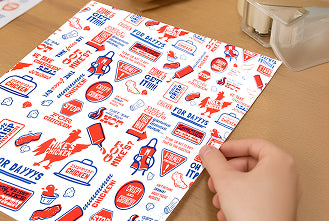
Custom tissue paper or printed inserts are another option. Stock boxes paired with tissue paper printed with your logo or brand colors create a cohesive unboxing experience without requiring custom box production. Printed inserts—a folded card, a thank-you note, or a product story—add a personal touch and can be produced in quantities as low as 50 units through digital printing.
Outer sleeves or belly bands offer a middle ground between stock and custom. You use a stock box for structure and protection, then add a printed paper sleeve that wraps around the exterior with your branding. The sleeve is simpler and cheaper to produce than a full custom box, and MOQs are typically 250 to 500 units. This approach works especially well for quiet branding strategies where you want a subtle, elegant presentation rather than logo-heavy packaging.
Most custom gift box suppliers set MOQs between 500 and 1,000 units for semi-custom or standard folding carton styles with one- to two-color printing. Fully custom structures like rigid two-piece boxes, magnetic closure boxes, or boxes with complex die-cuts typically require 1,000 to 3,000 units. Digital printing can reduce minimums to 100 to 250 units, but per-unit costs are higher. Stock boxes with custom branding elements like stickers or inserts have no MOQ and can be ordered in quantities as low as 18 to 50 units.
Yes, MOQs are often negotiable, especially if you can demonstrate long-term value. Suppliers may reduce the initial minimum if you commit to repeat orders, simplify your design to reduce setup costs, consolidate multiple box sizes into a single production run, or accept split shipments over several months. Digital printing also offers a path to lower MOQs, though at a higher per-unit price. Always ask—the published MOQ is often a starting point, not a fixed rule.
Stock packaging is the better choice when your recipient list is under 200 units, when you're testing a new gift concept before committing to a full custom run, when your budget prioritizes the gift contents over elaborate packaging, or when your timeline doesn't allow for the 4- to 8-week lead time custom orders require. Stock boxes paired with custom stickers, stamps, tissue paper, or printed inserts can deliver a professional, branded presentation without the MOQ or cost commitment of fully custom packaging.
Plan your gifting calendar annually and consolidate orders across multiple campaigns to hit higher volume thresholds that unlock better per-unit pricing. Standardize box sizes where possible so you can order one SKU in bulk rather than multiple small batches. Negotiate split shipments so you don't have to warehouse a year's worth of inventory upfront. Simplify your design—fewer colors, standard structures, and minimal finishes all reduce setup costs and lower MOQs. Consider stock packaging with custom branding elements for smaller programs, and transition to full custom once your volume justifies the investment.
Semi-custom packaging means printing your design onto an existing box template with a pre-made die-cutting tool. Because the structural tooling already exists, MOQs are lower—typically 250 to 500 units. Fully custom packaging involves creating a unique box structure, size, or shape, which requires new die-cutting tools and often more complex assembly. This pushes MOQs to 1,000 to 3,000 units or higher. For most corporate gifting programs, semi-custom offers the best balance of branding flexibility and manageable minimums.