Cart
0
You may also like

Book a call with our development team to get started.



Apply online and access wholesale pricing.

Kraft cookie boxes have become the go-to choice for holiday bakers who want packaging that aligns with their values without sacrificing performance. These natural brown boxes deliver biodegradable materials, grease resistance for buttery cookies, and a rustic aesthetic that communicates homemade quality and organic positioning. Whether you're packaging cookies for a holiday exchange, selling baked goods at a farmers market, or preparing gift boxes for clients, kraft cookie boxes offer a sustainable alternative to plastic or heavily coated options.
The appeal goes beyond environmental credentials. Kraft paper's inherent strength and moisture-repelling qualities make it practical for cookies that contain butter, chocolate, or oil-based ingredients. For small bakeries and home bakers building a brand around natural or artisan products, kraft packaging reinforces that message before the recipient even opens the box.
Kraft paper is produced through a chemical pulping process that retains most of the wood fiber's natural strength. The term "kraft" comes from the German word for strength, reflecting the material's durability compared to other paper types. This manufacturing method creates a tear-resistant substrate that holds up during transport and handling—essential when you're stacking boxes for a cookie exchange or shipping orders.
The material's natural composition makes it biodegradable, breaking down in weeks to months under suitable composting conditions rather than persisting in landfills for decades like plastic alternatives. For bakers focused on cookie exchange packaging that minimizes environmental impact, this lifecycle advantage matters.
Kraft paper also provides inherent grease resistance. While not as impermeable as polyethylene-coated boxes, uncoated kraft naturally resists oil penetration better than standard paperboard. Some manufacturers apply food-safe coatings to enhance this property further, creating boxes that handle buttery shortbread or chocolate-dipped cookies without visible grease stains on the exterior.
Consumer preference for sustainable packaging has shifted from niche concern to mainstream expectation. 67 percent of consumers prefer paper packaging because it is the most compostable and biodegradable, according to the 2025 Trend Tracker survey. For holiday bakers positioning their products as homemade, organic, or locally sourced, packaging choice reinforces brand identity.
Kraft paper's sustainability stems from three core attributes: biodegradability, recyclability, and renewable sourcing. Unlike plastic packaging derived from petroleum, kraft paper comes from wood pulp—a renewable resource when forests are managed responsibly. Forest Stewardship Council (FSC) certification provides third-party verification that paper products trace back to responsibly managed forests, offering an additional credibility layer for eco-conscious brands.
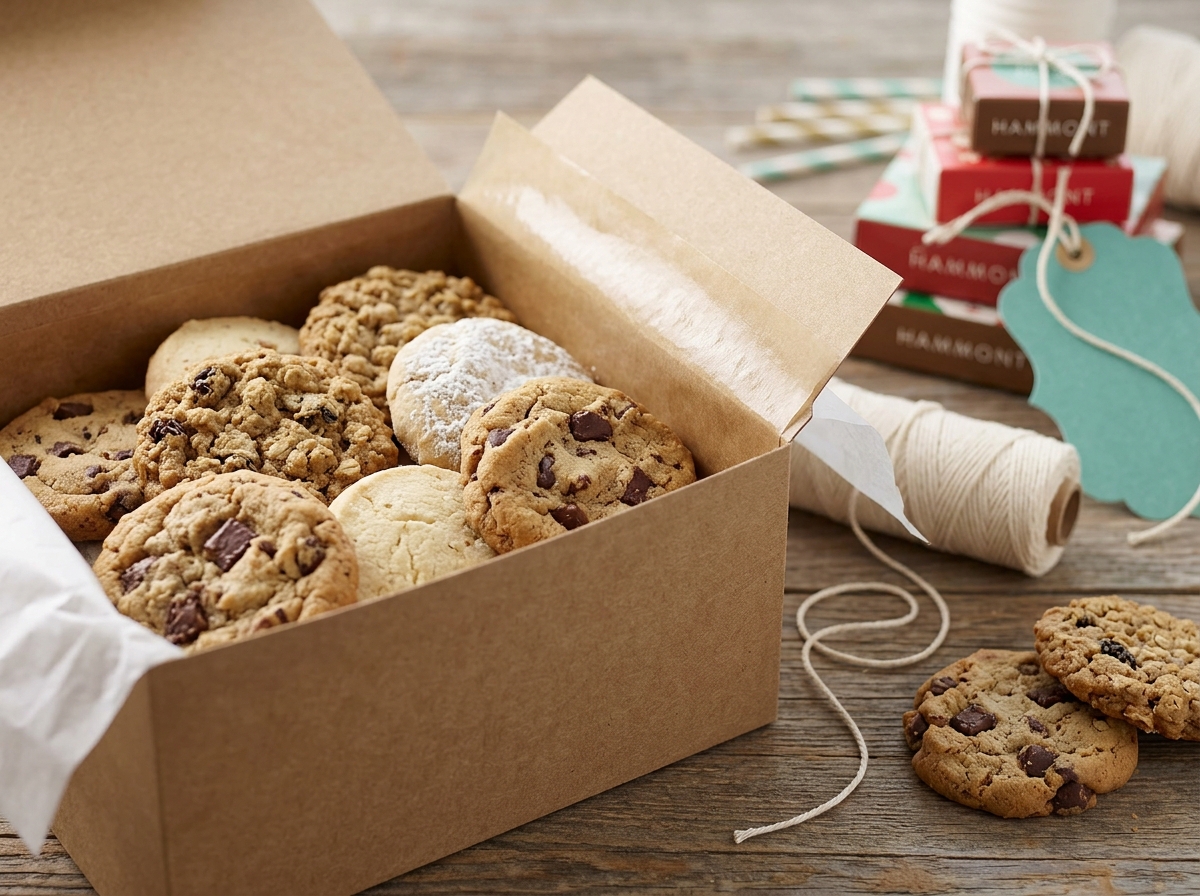
The recycling infrastructure for kraft paper is well-established in most municipalities. Paper and cardboard packaging achieves recycling rates around 75 percent, significantly higher than plastic alternatives. When customers finish the cookies, they can place kraft gift boxes directly into curbside recycling bins without sorting or special handling.
For bakers concerned about complete lifecycle impact, kraft's biodegradability provides a safety net. If a box ends up in a landfill or composting facility rather than recycling, it will break down naturally without leaving microplastic residue or requiring centuries to decompose.
Cookies present specific packaging challenges due to their fat content. Butter, oils, and chocolate can migrate through porous materials, creating visible stains that diminish perceived quality and potentially transfer grease to hands or surfaces. Kraft paper addresses this through both its natural fiber structure and optional coatings.
Uncoated kraft paper provides baseline grease resistance through tight fiber calendering during manufacturing. The dense fiber structure creates a barrier that slows oil penetration, suitable for moderately buttery cookies like sugar cookies or gingerbread. For higher-fat products—chocolate chip cookies, pecan sandies, or anything with a chocolate coating—coated kraft offers enhanced protection.
Modern grease-resistant coatings have evolved beyond traditional fluorochemical treatments. Food-safe acrylic emulsions and plant-based wax coatings provide oil resistance while maintaining recyclability and biodegradability. These coatings create a continuous film on the kraft substrate that prevents grease from wicking through the paper fibers.
When selecting kraft cookie boxes, verify that any coatings meet food-contact regulations. In the United States, this means compliance with FDA indirect food additive standards outlined in Title 21 of the Code of Federal Regulations. Reputable suppliers will provide documentation confirming their boxes meet these requirements, particularly important for commercial bakeries subject to health department inspections.
The natural brown color of kraft paper communicates specific brand values before a customer reads a single label. That rustic, unbleached appearance signals handmade quality, minimal processing, and environmental consciousness—attributes that resonate with consumers seeking alternatives to mass-produced goods.
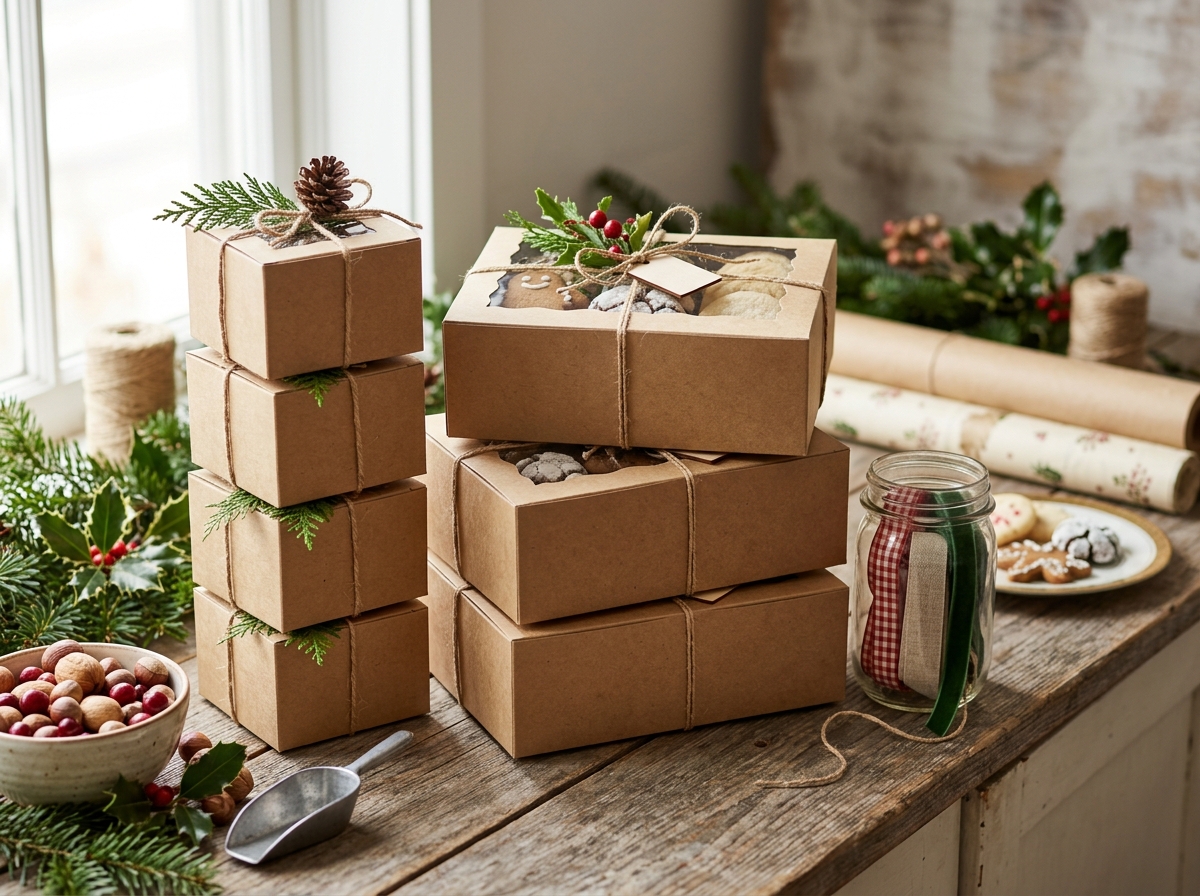
For holiday cookie exchanges and gift-giving occasions, kraft boxes provide a neutral canvas that pairs well with natural decorating elements. Twine, dried flowers, hand-stamped labels, or simple ribbon transforms a basic kraft box into a thoughtful presentation. This versatility matters when you're packaging cookies for multiple recipients with different aesthetic preferences.
The matte, uncoated surface of kraft paper also accepts stamps, stickers, and handwritten notes more readily than glossy or plastic-coated alternatives. Home bakers can personalize each box with the recipient's name, ingredient lists for allergy considerations, or a brief note—touches that enhance the gift-giving experience without requiring custom printing.
Small bakeries building a recognizable brand can use kraft boxes as a consistent packaging element across product lines. The same kraft substrate works for cookies, brownies, small cakes, and other baked goods, creating visual continuity that reinforces brand recognition. Adding a simple custom stamp or sticker with your bakery logo maintains professional appearance while keeping costs manageable.
Kraft cookie boxes come in formats designed for specific cookie dimensions and quantities. Understanding these options helps you select packaging that protects cookies during transport while presenting them attractively.
Standard cookie boxes typically measure 6.75 to 8 inches in length, accommodating a single layer of medium-sized cookies. These work well for cookie exchange parties where each participant brings one dozen of a single variety. The shallow depth (usually 2 to 2.5 inches) prevents cookies from shifting during transport while maintaining a compact footprint for stacking.
For larger batches or mixed assortments, deeper boxes in the 8x8x3-inch range provide space for multiple layers with parchment paper dividers. This format suits holiday gift boxes containing three or four cookie varieties, allowing visual separation without individual wrapping. When selecting cookie box sizes, consider both the cookie diameter and whether you'll stack multiple layers.
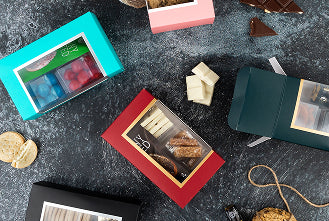
Window-front kraft boxes combine the natural aesthetic of kraft paper with product visibility. A clear acetate or PET panel on the lid lets recipients see the cookies without opening the box, useful for retail sales or gift presentations where visual appeal drives purchase decisions. If transparency matters for your application, explore window cookie boxes that maintain the kraft aesthetic while showcasing contents.
Pillow boxes and sleeve-style kraft packaging offer alternatives to traditional rectangular formats. These work particularly well for individually wrapped cookie favors at weddings or corporate events, where each guest receives a small quantity. The curved pillow box shape adds visual interest while using less material than a standard box.
Kraft boxes occupy a specific niche in the cookie packaging landscape, offering advantages and trade-offs compared to alternatives like cellophane bags, white bakery boxes, or plastic clamshells.
Cellophane bags provide maximum product visibility and use less material per unit, making them cost-effective for high-volume applications. However, they lack the structure that boxes provide, allowing cookies to shift and potentially break during transport. For detailed comparison of when each format makes sense, see cellophane bags vs. bakery boxes.
White SBS (solid bleached sulfate) paperboard boxes offer a cleaner, more formal appearance than kraft. The bright white surface accepts color printing more vividly and communicates a different aesthetic—polished and professional rather than rustic and handmade. White boxes work well for wedding favors or upscale retail environments where kraft's casual appearance might not align with brand positioning.
Plastic clamshells provide superior protection and complete product visibility but contradict sustainability messaging. For bakeries where environmental credentials are secondary to display and protection—think grocery store bakery sections—clear plastic serves a purpose. For brands built around natural ingredients and eco-consciousness, the packaging material conflict undermines the product story.
Kraft boxes balance protection, sustainability, and cost in a way that aligns with small bakery and home baker needs. They're sturdy enough to protect cookies during transport, biodegradable enough to support environmental claims, and affordable enough for businesses operating on tight margins.
Not all kraft boxes deliver the same performance or environmental credentials. When evaluating suppliers, consider these factors to ensure you're getting packaging that meets your functional and sustainability requirements.
Verify the material composition. Some boxes marketed as "kraft" are actually white paperboard printed with a brown kraft pattern—a cosmetic choice that doesn't deliver kraft paper's inherent properties. True kraft boxes use unbleached or minimally processed paper fibers, giving them the natural brown color throughout the material rather than as a surface coating.
Ask about grease resistance specifications. Suppliers should be able to provide KIT (Kit test) values that quantify oil resistance. Higher KIT numbers indicate better grease resistance. For reference, a KIT value between 5 and 8 provides medium grease resistance suitable for most cookie applications, while values above 8 offer heavy-duty protection for very oily products.
Check for food-contact certification. Any box that will directly contact food should meet FDA regulations for indirect food additives. Reputable suppliers provide documentation confirming compliance, often in the form of a letter of guarantee or third-party testing results. This matters not just for food safety but also for liability protection if you're selling baked goods commercially.
Consider FSC certification if forest management practices matter to your brand story. FSC-certified kraft paper traces back to forests managed according to environmental and social standards, providing third-party verification of sustainable sourcing. The certification adds minimal cost but offers credibility when communicating sustainability commitments to customers.
Evaluate minimum order quantities (MOQs) against your volume needs. Custom-printed kraft boxes often require MOQs of 1,000 to 5,000 units, suitable for established bakeries but prohibitive for home bakers or seasonal operations. Stock kraft boxes from wholesale suppliers like structured kraft gift boxes offer flexibility for smaller quantities without custom printing commitments.
Holiday baking operates on compressed timelines, with most cookie exchanges and gift-giving concentrated in a three-week window. Planning your packaging procurement ahead of this rush prevents last-minute scrambling and ensures you have adequate inventory for your needs.
For stock kraft boxes available through wholesale suppliers, lead times typically range from a few days to two weeks depending on shipping method and supplier location. Ordering four to six weeks before your first planned baking session provides buffer for shipping delays while avoiding excessive advance inventory storage.
Custom-printed kraft boxes require significantly longer lead times—typically six to eight weeks from artwork approval to delivery. This timeline includes proof approval, printing, die-cutting, and shipping. If you're planning custom packaging for holiday 2026, place orders by late September or early October to ensure delivery before Thanksgiving baking begins. For more detailed timeline guidance, see when to order cookie packaging.
Consider storage requirements when determining order timing and quantity. Kraft boxes are lightweight and nest or stack efficiently, but they do require dry storage space protected from moisture. Humid environments can affect the material's grease resistance and structural integrity, so factor climate-controlled storage into your planning if you're ordering months in advance.
Getting the most from kraft cookie boxes involves a few practical considerations that affect both cookie quality and presentation.
Line boxes with parchment paper or food-safe tissue even when using grease-resistant kraft. This extra layer provides additional protection against oil migration and creates visual separation between cookie layers. It also makes it easier for recipients to remove cookies without handling them directly, maintaining presentation quality.
Allow cookies to cool completely before boxing. Residual heat creates condensation inside closed boxes, which can soften cookies and compromise the kraft paper's structural integrity. For cookies with royal icing or chocolate coating, ensure decorations are fully set before packaging to prevent smudging or transfer.
Seal boxes appropriately for their intended use. For cookie exchange parties where boxes will be opened within hours, a simple ribbon or sticker suffices. For shipping or longer storage, use food-safe tape to fully seal the box and prevent it from opening during transit. Avoid excessive tape that makes opening difficult—one strip across the center seam usually provides adequate security.
Store filled boxes in a single layer until delivery or transport. Stacking heavy items on top of kraft boxes can compress cookies and deform the packaging. If you must stack boxes, use a rigid tray or cardboard sheet between layers to distribute weight evenly.
Communicate storage instructions to recipients, especially for cookies that require refrigeration or have limited shelf life. A small label or note card indicating "best within 5 days" or "refrigerate if not consuming within 24 hours" helps ensure cookies are enjoyed at peak quality and reduces food waste.
Kraft cookie boxes typically cost more per unit than basic cellophane bags but less than custom-printed white bakery boxes. Understanding the cost structure helps you make informed decisions that balance budget constraints with packaging quality.
Stock kraft boxes in standard sizes generally range from $0.30 to $0.80 per unit when purchased in quantities of 50 to 100. Prices decrease with volume—ordering 500 units might bring per-unit cost down to $0.20 to $0.50 depending on size and supplier. These figures reflect plain kraft boxes without custom printing or specialty features like windows.
Window-front kraft boxes add $0.10 to $0.30 per unit compared to solid kraft boxes of the same size, reflecting the cost of the clear panel material and additional manufacturing steps. For retail applications where product visibility drives sales, this premium often justifies itself through increased purchase conversion.
Custom printing on kraft boxes requires setup fees (typically $50 to $200 for die creation) plus per-unit printing costs. Total project cost depends on design complexity, number of colors, and order quantity. For seasonal businesses or home bakers, custom stamps or stickers applied to stock kraft boxes offer personalization without setup fees or minimum order commitments.
When evaluating cost, consider the complete packaging system rather than box price alone. Kraft boxes that require minimal additional materials—no plastic windows to source separately, no special liners needed for grease protection—may cost more per unit but less overall when you factor in labor and accessory costs.
Stock kraft cookie boxes typically cost between $0.30 and $0.80 per unit for quantities of 50 to 100 boxes, with prices decreasing to $0.20 to $0.50 per unit for larger orders of 500 or more. Window-front kraft boxes add approximately $0.10 to $0.30 per unit. Custom-printed boxes require setup fees of $50 to $200 plus per-unit printing costs, making them more economical for established bakeries with consistent volume needs rather than occasional home bakers.
Yes, kraft cookie boxes are biodegradable when made from true kraft paper rather than kraft-printed white paperboard. The material breaks down naturally within weeks to months under suitable composting conditions due to its wood fiber composition. However, boxes with plastic windows or certain synthetic coatings may not be fully compostable. Check with your supplier about coating materials if complete biodegradability is essential for your application. Uncoated or naturally coated kraft boxes will decompose without leaving harmful residues.
Kraft paper provides inherent grease resistance through its dense fiber structure, making it suitable for moderately buttery cookies like sugar cookies or gingerbread. For higher-fat cookies containing chocolate or significant butter content, look for kraft boxes with food-safe grease-resistant coatings. These coatings create a barrier that prevents oil from wicking through the paper fibers. Suppliers should be able to provide KIT test values quantifying grease resistance—values between 5 and 8 indicate medium resistance appropriate for most cookie applications.
Most kraft cookie boxes are recyclable through standard curbside recycling programs, as paper and cardboard packaging achieves recycling rates around 75 percent. However, boxes with plastic windows, excessive tape, or food contamination may not be accepted by all recycling facilities. Remove any plastic components and minimize food residue before recycling. If your boxes have food-safe coatings, verify with your local recycling program that coated paperboard is accepted, though most modern grease-resistant coatings are designed to be recyclable.
For stock kraft boxes from wholesale suppliers, order four to six weeks before your first planned baking session to allow for shipping and provide buffer against delays. Stock boxes typically have lead times of a few days to two weeks. If you're ordering custom-printed kraft boxes, plan for six to eight weeks from artwork approval to delivery. For holiday baking that begins in late November, this means placing custom orders by late September or early October to ensure timely arrival.