Cart
0
You may also like

Book a call with our development team to get started.



Apply online and access wholesale pricing.

Cookies remain one of the most practical corporate holiday gifts—they're budget-friendly, universally appreciated, and easy to scale across client lists. But the packaging determines whether a dozen cookies feel like a thoughtful gesture or an afterthought. Corporate cookie gift boxes need to protect the product, communicate quality, and align with the sender's brand positioning, all while meeting food-safety standards.
This guide covers the material, structure, and design decisions that turn bakery items into credible corporate gifts. Whether you're a bakery fulfilling bulk orders or an office manager assembling client gifts in-house, the right box makes cookies feel intentional.
Cookies occupy a practical middle ground in corporate holiday gift packaging. They're affordable enough to send to broad client lists, shelf-stable enough to ship without refrigeration, and familiar enough to avoid dietary guesswork. Unlike wine or candles, cookies rarely conflict with workplace policies or personal preferences.
Bakery gifts also scale efficiently. A single commercial kitchen can produce hundreds of identical cookie assortments in the time it takes to source and personalize other gift categories. For companies managing December timelines, that production speed matters. Packaging becomes the variable that differentiates a generic cookie tin from a gift that reflects the sender's attention to detail.
The challenge is elevation. Cookies are common. The box has to signal that this particular assortment was chosen with care, not grabbed from a grocery display. That distinction starts with structure and material, not just a logo sticker.
The first structural decision is visibility. Window boxes let recipients see the cookies before opening; closed boxes rely on exterior design to communicate quality. Both formats have specific use cases in corporate gifting.
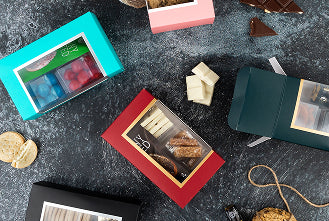
Window boxes work when the cookies themselves are the visual anchor—decorated sugar cookies, iced holiday shapes, or artisan varieties with visible ingredients. The clear acetate or PET film panel turns the product into part of the presentation. For bakeries shipping directly to clients, window boxes reduce the need for additional photography or product descriptions. The recipient sees exactly what they're receiving.
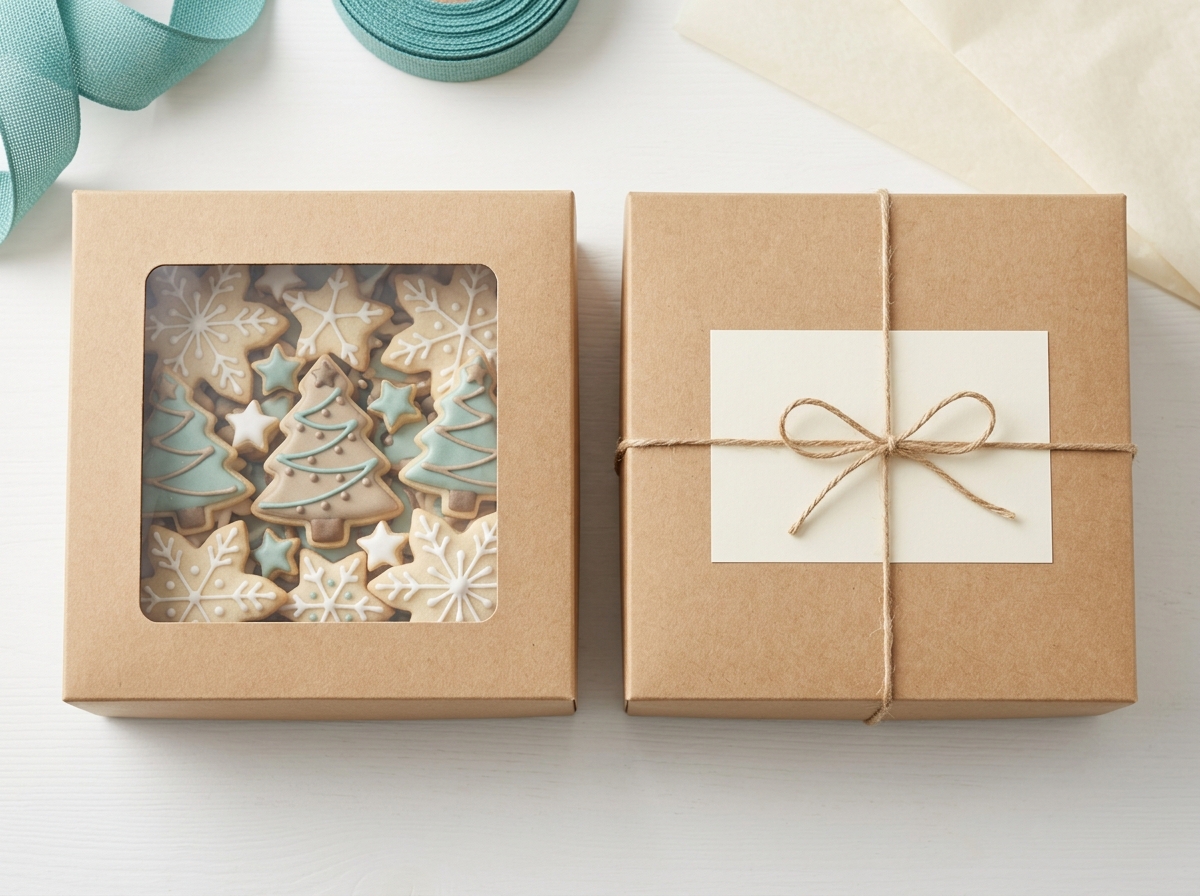
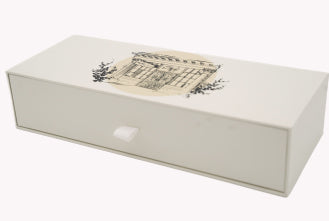
Closed boxes suit corporate senders who want packaging to carry branding or messaging without competing with the product. A solid kraft or white paperboard box offers more printable surface area for logos, custom inserts, or seasonal graphics. Closed boxes also feel more premium in categories where mystery and anticipation are part of the unboxing experience. If the cookies are individually wrapped inside, a window serves no functional purpose.
Material choice intersects with structure. Window boxes require food-safe acetate or PET film inserts, which add a small per-unit cost but improve shelf appeal. Closed boxes can use simpler tuck-top or sleeve construction. For orders above 500 units, the cost difference narrows—custom printing on closed boxes often costs less than sourcing and applying window film at scale.
Not all paperboard is suitable for direct food contact. FDA regulations require that packaging materials in contact with food must meet safety standards to prevent contamination. For corporate cookie gift boxes, that means selecting materials designed for bakery use, not repurposing general-purpose boxes.
Food-safe paperboard typically uses SBS (Solid Bleached Sulfate) at 14pt to 18pt thickness, with a smooth interior surface that won't transfer fibers or chemicals to the cookies. Grease-resistant coatings are critical for butter-based or frosted cookies—uncoated paperboard absorbs oil, which weakens the box and creates visual staining that undermines the gift's presentation.
Kraft paperboard is a common choice for corporate cookie gift boxes because it signals craft and authenticity. However, kraft paper must still meet food-contact standards. Natural kraft is unbleached, which gives it the characteristic brown tone, but the lack of bleaching doesn't automatically make it food-safe. Verify that any kraft box supplier provides materials compliant with FDA food-contact regulations.
Window films also fall under food-safety requirements. Acetate and PET are the standard options. PET film is more durable and resists moisture better than acetate, which makes it the better choice for cookies shipped in humid climates or stored for extended periods. Both materials are FDA-approved for food contact when sourced from compliant manufacturers.
Inks and adhesives matter as much as the base material. Water-based, low-VOC inks are the standard for food packaging because they don't leach solvents into the product. If you're ordering custom-printed boxes, confirm that the printer uses food-safe inks—this is non-negotiable for any packaging that touches edible items directly.
Corporate cookie gift boxes typically fall into three size categories, each suited to different relationship tiers and budget levels.
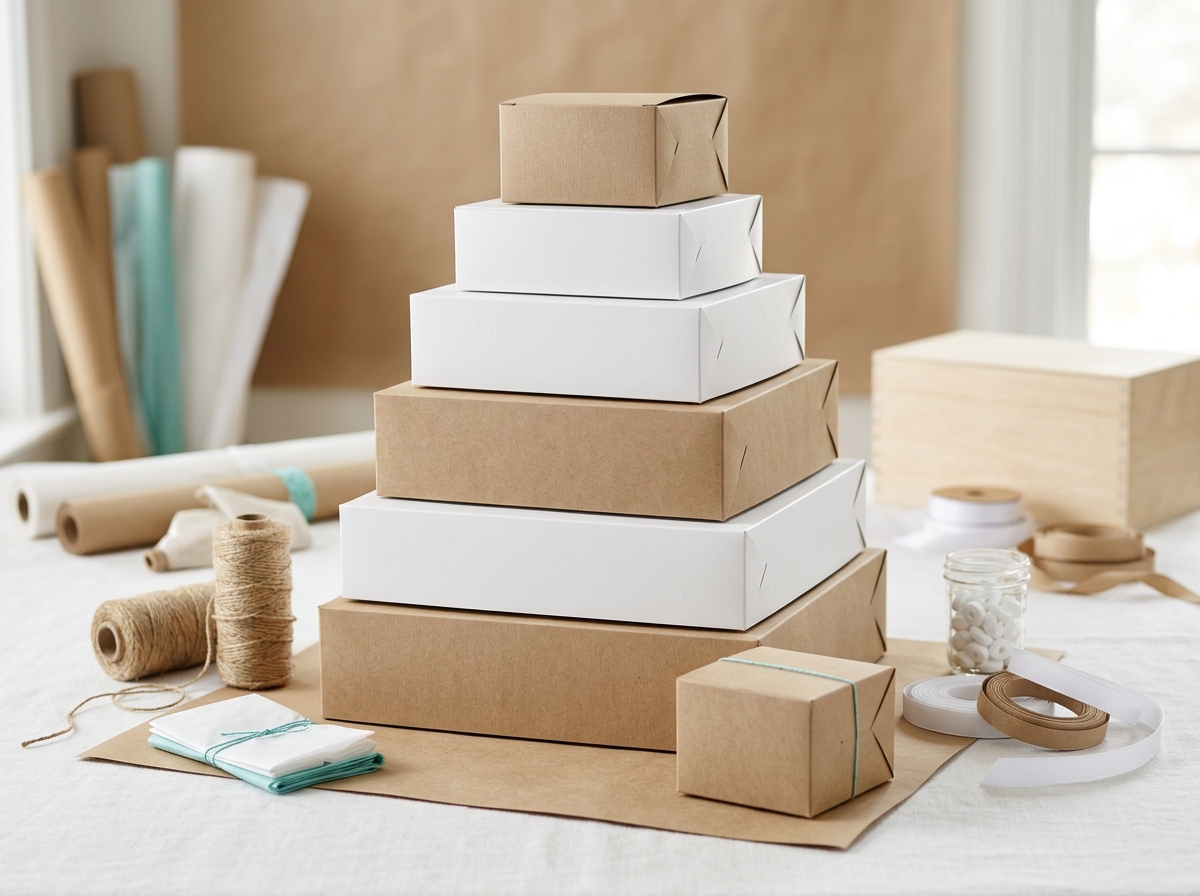
Small boxes (4" x 4" x 2" to 6" x 4" x 2") hold six to twelve cookies. These work for broad client lists, vendor appreciation, or employee gifts where volume matters more than extravagance. A kraft tuck-top box in this range feels substantial enough to convey intention without inflating per-unit costs. Pair with individual cookie sleeves or parchment dividers to prevent contact between decorated surfaces.
Medium boxes (8" x 6" x 3" to 10" x 7" x 3") accommodate 12 to 24 cookies, often arranged in two layers with a divider. This format suits key client gifts or executive-level appreciation. Medium boxes offer enough interior space for branded tissue, a handwritten card, or a small secondary item like a packet of specialty coffee. The added real estate also supports more sophisticated exterior design—embossed logos, foil accents, or custom sleeves that reinforce brand identity.
Large boxes (12" x 9" x 4" and above) are reserved for VIP clients or collaborative gifts that include cookies alongside other items. At this scale, the box itself becomes a keepsake. Rigid setup boxes with magnetic closures or ribbon-tied lids create an unboxing experience that extends beyond the cookies. Large formats also allow for more creative interior layouts—individual compartments, nested tins, or layered presentations that reveal different cookie varieties as the recipient unpacks.
Avoid the temptation to oversize. A half-empty box reads as cheap filler, not generous abundance. If you're including fewer cookies, choose a smaller box or add complementary items to fill the space intentionally.
Premium positioning in corporate cookie gift boxes comes from material weight, finish, and interior details—not just exterior decoration. A thin, flimsy box undermines even the best cookies. Thickness matters. Paperboard below 14pt feels insubstantial when lifted. For corporate gifts, 16pt to 18pt SBS or kraft provides the rigidity that signals quality.
Finish options add tactile and visual interest without custom printing. Matte lamination gives paperboard a smooth, non-glossy surface that feels refined. Soft-touch coating creates a velvety texture that's distinctive when recipients handle the box. Both finishes resist fingerprints and scuffing better than uncoated paperboard, which keeps the box looking pristine through shipping and handling.
Interior dividers prevent cookie damage and improve presentation. Molded pulp inserts, corrugated partitions, or food-safe plastic trays keep individual cookies separated during transit. For decorated cookies, dividers are essential—frosting and icing smudge easily, and a single damaged cookie diminishes the entire gift's perceived value. Dividers also create visual order when the box is opened, which reinforces the impression of care and planning.
Closure style affects both function and perception. Tuck-top boxes are economical and easy to assemble, but they don't stay closed if tipped during shipping. Magnetic closures, ribbon ties, or belly bands add security and create a more deliberate opening experience. For quiet branding strategies, a simple grosgrain ribbon in the company's accent color can convey identity without overt logos.
Inserts and liners extend the premium feel. Food-safe tissue paper, parchment sheets, or custom-printed inserts add layers to the unboxing. A printed card explaining the cookie varieties or sharing a seasonal message personalizes the gift without requiring individualized packaging. These small additions cost pennies per unit but significantly increase perceived value.
Corporate cookie gift boxes walk a narrow line between brand visibility and gift-like presentation. Over-branding turns the box into a promotional item; under-branding makes it forgettable. The goal is recognition without advertisement.
Logo placement matters. A small, tasteful logo on the box lid or corner panel identifies the sender without dominating the design. Debossing or foil stamping creates a subtle, high-quality mark that feels more refined than full-color printing. For companies sending gifts to clients who already know the brand, a monogram or brand color palette may be sufficient—overt logos aren't necessary when the relationship is established.
Custom inserts allow branding to live inside the box rather than on it. A printed card, branded tissue, or logo sticker on an interior divider keeps the exterior clean while still marking the gift as intentional. This approach works especially well for companies that want packaging to feel giftable rather than corporate.
Color and pattern can convey brand identity without text or logos. If your company uses a distinctive color palette, applying those tones to the box, ribbon, or liner creates visual association without explicit branding. Seasonal patterns—winter florals, geometric snowflakes, or abstract holiday motifs—add festive context while remaining neutral enough for diverse recipient preferences.
Corporate cookie programs require lead time for both the cookies and the packaging. Custom bakery boxes typically require four to six weeks from order to delivery, depending on printing, finishing, and quantity. Stock boxes ship faster—often within a week—but offer limited customization.
For companies planning December delivery, September is the latest realistic window to finalize packaging specs. October orders may still arrive in time for early December assembly, but production delays compound during Q4 as packaging suppliers manage peak volume across all clients. If you're ordering custom-printed boxes for the first time, plan for an extra two weeks to accommodate proof revisions and material selection.
Stock packaging offers a faster alternative. Plain kraft or white bakery boxes with standard window sizes ship quickly and accept custom labels, stamps, or ribbon without requiring full print runs. For orders below 200 units, stock boxes with added customization often cost less and arrive faster than fully custom options.
Order slightly above your confirmed client count. Damaged boxes, last-minute additions, and assembly errors are inevitable at scale. A 10% overage cushion prevents scrambling for replacements in late November when lead times have evaporated.
Corporate cookie programs can be assembled in-house or outsourced to a bakery or fulfillment partner. Each approach has cost and control trade-offs.
In-house assembly gives you direct control over presentation, timing, and personalization. Boxes can be packed as orders are confirmed, and last-minute changes—substituting a cookie variety, adding a custom note—are simple. In-house assembly works best for orders under 100 units, where the labor investment is manageable and the flexibility justifies the time.
For that scale, stock kraft gift boxes simplify the process. Pre-scored tuck-top boxes assemble in seconds, and standard sizes accommodate most cookie counts without custom die-cutting. Pair with food-safe tissue or parchment to line the interior, then add cookies and close. If branding is needed, apply labels or stamps after packing.
Outsourced fulfillment makes sense for orders above 200 units or when internal bandwidth is limited. Bakeries that specialize in corporate gifts often offer turnkey programs—they source the cookies, handle packaging, and ship directly to recipients. The per-unit cost is higher than DIY, but the time savings and reduced error rate offset the expense. Outsourcing also shifts liability for food safety and shipping damage to the vendor.
Hybrid models split responsibilities. A bakery provides the cookies and basic packaging, while your team adds branded inserts, custom labels, or gift cards before final shipping. This approach preserves some personalization while offloading the most labor-intensive steps.
Cookies are more durable than most baked goods, but they're still fragile. Packaging must protect against impact, moisture, and temperature swings during transit.
Double-boxing is standard for shipped cookie gifts. The bakery box holds the cookies; an outer corrugated mailer protects the bakery box. The outer box should be slightly oversized to allow for cushioning material—crumpled kraft paper, air pillows, or biodegradable packing peanuts—that absorbs shock without adding excessive weight.
Moisture barriers matter in humid climates or during winter shipping. Cookies exposed to moisture lose crispness and develop off-flavors. Sealed cellophane bags inside the bakery box provide an extra layer of protection. For bulk orders, consider boxes with grease-resistant or moisture-barrier coatings that prevent condensation from weakening the paperboard.
Temperature extremes affect both cookies and packaging. Frosted or chocolate-dipped cookies soften in heat; packaging adhesives can fail in freezing conditions. If you're shipping to regions with extreme weather, choose packaging materials rated for temperature stability and avoid shipping during the hottest or coldest parts of the day.
Labeling requirements vary by state and product type. Commercially produced cookies shipped across state lines may require ingredient lists, allergen warnings, and nutritional information. Verify local regulations before finalizing packaging design—retrofitting labels onto finished boxes is inefficient and often results in a less polished presentation.
A 6" x 6" x 2.5" or 8" x 6" x 3" box comfortably holds 12 standard-sized cookies (3" diameter) in a single layer with minimal shifting. If cookies are decorated or frosted, choose the larger size to prevent contact between surfaces. For stacked arrangements, an 8" x 6" x 3" box accommodates two layers of six cookies each with a parchment or cardboard divider between them.
Kraft boxes are food-safe if they meet FDA food-contact standards and use grease-resistant coatings. Not all kraft paperboard is suitable for direct food contact—verify that the supplier provides materials compliant with FDA regulations. Uncoated kraft absorbs oil from butter-based cookies, which weakens the box and creates staining. Choose kraft boxes specifically marketed for bakery use to ensure proper food-safety certification.
Windows are optional and depend on your presentation strategy. Use window boxes when the cookies themselves are visually distinctive—decorated, iced, or artisan varieties. Windows let recipients see the product before opening, which builds anticipation and reduces the need for exterior product photography. Closed boxes work better when branding or messaging is the primary visual element, or when cookies are individually wrapped and not visible anyway.
Custom-printed bakery boxes typically require four to six weeks from order to delivery. For December corporate gifts, finalize packaging specs by early September to allow time for proofs, revisions, and production. Stock boxes with custom labels or stamps ship within one to two weeks, which makes them a faster option for orders confirmed in October or November. Always order 10% above your confirmed count to cover damaged boxes and last-minute additions.
Tuck-top closures are economical and easy to assemble, suitable for hand-delivered gifts or low-volume orders. For shipped gifts, magnetic closures, ribbon ties, or belly bands provide better security and prevent the box from opening during transit. Magnetic closures create a premium unboxing experience but add cost—reserve them for VIP clients or executive-level gifts. Ribbon ties offer a middle ground: they're affordable, secure, and add a decorative element without complex assembly.
Corporate cookie gift boxes succeed when the packaging effort matches the relationship value. A carefully selected box signals that the sender understands the recipient's preferences and invested time in presentation. Conversely, a generic or flimsy box reduces even excellent cookies to an obligatory gesture.
The decisions outlined here—material weight, window vs closed, food-safe coatings, interior dividers—aren't about perfection. They're about alignment. The packaging should reflect the same care that went into choosing cookies as the gift in the first place. When the box, the product, and the intent align, the result feels intentional. That's what recipients remember.