Cart
0
You may also like


Book a call with our development team to get started.



Apply online and access wholesale pricing.

When order volumes increase 200-400% over baseline during peak events like Black Friday, every second at the packing station matters. The difference between shipping on time and missing your delivery window often comes down to how quickly your warehouse team can assemble packaging. Fast assembly packaging black friday operations demand formats that warehouse staff can set up in seconds, not minutes—especially when you're training temporary workers under pressure.
This isn't about cutting corners on presentation. It's about choosing Black Friday packaging formats that balance speed, structural integrity, and brand presentation while reducing the cognitive load on your fulfillment team. The right packaging design can cut assembly time by 30-50% per order, which compounds into thousands of labor hours saved across a peak season.
Warehouse efficiency isn't just about picking speed or inventory placement. Packaging choice affects warehouse efficiency by changing how products are handled, stored, and moved—directly impacting how quickly your team can unload trucks, how efficiently you use storage space, and how often you deal with damage or rework. During Black Friday peak, small inefficiencies become large liabilities.
The assembly bottleneck shows up in three ways. First, complex packaging formats require more manual decisions at the pack station. Packaging design can reduce the number of decisions required at each pick, and in doing so, improve warehouse efficiency. When your team has to figure out which flap folds first or where the glue tab goes, that cognitive friction adds 5-10 seconds per box—which multiplies across hundreds of orders per shift.
Second, temporary worker ramp-up takes time to reach full productivity, reducing throughput during the initial weeks. If your packaging requires a learning curve, you're losing speed exactly when you need it most. Target: New warehouse workers at 80% productivity within 3-5 days. Packaging that's intuitive to assemble shortens that ramp-up window.
Third, pre-assembled boxes consume cubic footage that could hold actual inventory. Flat-pack packaging stores completely flat until you need it. The space savings are significant. You can stock far more units per pallet or shelf, which frees up cubic footage for actual inventory instead of empty boxes. When you're trying to fit two months of packaging stock into limited warehouse space before Black Friday lead times close, storage density matters.
One-piece folding boxes—sometimes called tuck-top boxes or auto-bottom mailers—are designed so all panels, locking flaps, and edges come from one die-cut layout. Once folded, the interlocking flaps create a rigid, self-locking structure without the need for a separate lid or additional components. Because the entire box is one piece, mailer boxes assemble quickly and maintain consistent strength across all sides.
The speed advantage comes from eliminating steps. A standard two-piece rigid box requires you to assemble the base, place the product, then fit the lid—three distinct motions. A one-piece folder collapses that into a single fluid motion: pop the base open, load, fold the top flaps. Quick to assemble, One Piece Folders allow for easy loading and speed packaging during fulfillment.
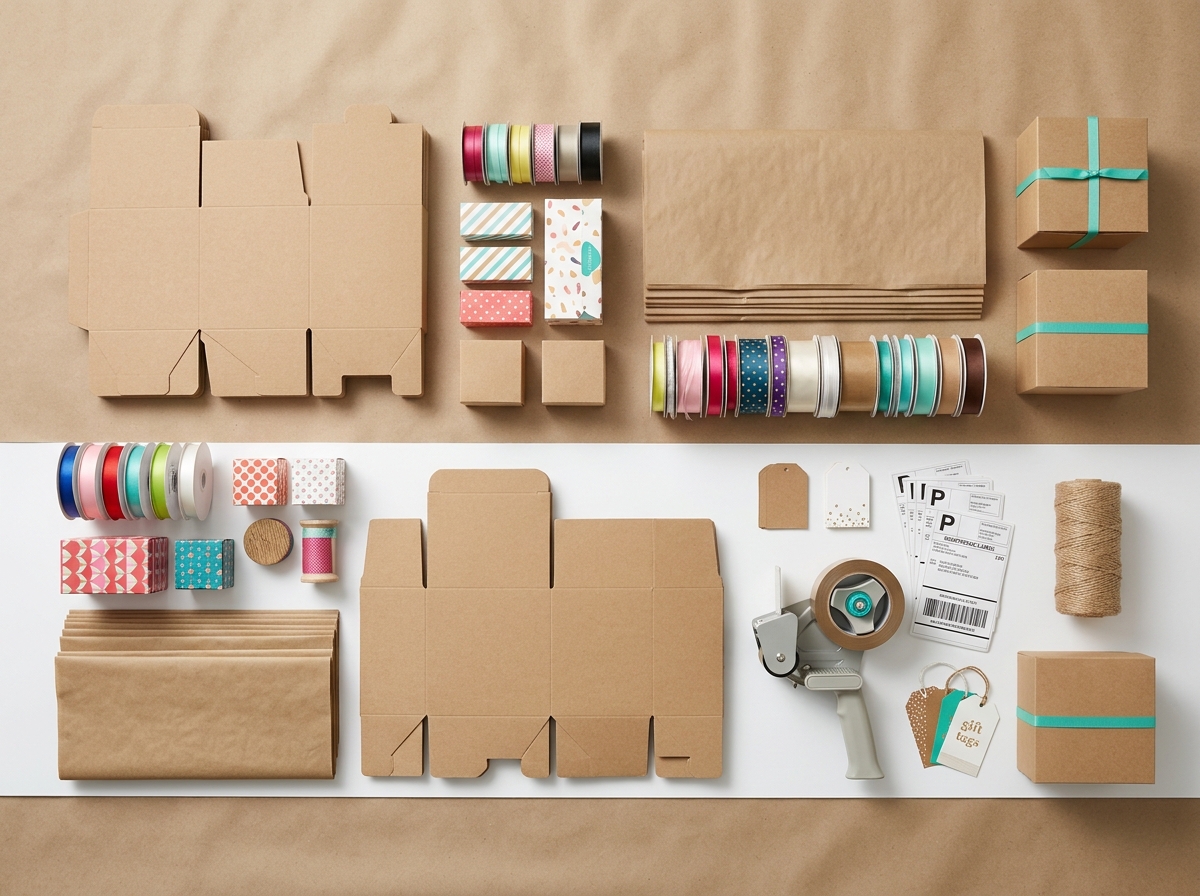
For Black Friday fulfillment, cube kraft gift boxes with tuck-top closures hit the sweet spot. They ship and store flat, assemble in under 10 seconds, and don't require tape or glue at the pack station. The 3x3x3 format works for jewelry, cosmetics, small electronics, and gift sets—high-velocity SKUs during holiday peak.
Larger formats like 4x4x4 white gift tuck-top boxes handle candles, mugs, and apparel accessories. The white finish gives you a clean branded canvas without custom printing lead times, and the tuck-top closure stays secure through shipping without adding assembly complexity.
Tape application is one of the most time-consuming steps at a packing station—and one of the easiest to eliminate. Pre-glued and auto-lock packaging formats remove the need for tape guns, reduce material waste, and speed up the close-and-ship motion.
Auto-lock bottom boxes (also called crash-lock or snap-lock boxes) use a pre-glued bottom panel that pops into a locked position when you open the flat blank. The bottom stays rigid without tape, and the top can use a tuck closure or a single strip of tape for added security. This design is common in e-commerce mailer boxes where speed and consistency matter more than elaborate presentation.
Tool-Free Assembly: Ships flat and assembles in seconds without the need for adhesive tape. That's the benchmark for peak-season packaging. Every time your team reaches for a tape gun, you're adding 3-5 seconds to pack time. Multiply that by 500 orders per shift, and you've lost 25-40 minutes of productive labor—just on tape.
For operations running multiple shifts with varying skill levels, the design and organization of a well-structured packing station facilitate speed and efficiency, enabling quick assembly of orders and reducing the time taken from order receipt to dispatch. Packaging that doesn't require tools or consumables (tape, glue, staples) reduces the variables that can slow down a shift.
The fastest packaging isn't always the simplest—it's the most intuitive. Fixed carton inventories, manual forming processes, and void fill handling can create congestion at pack stations. These constraints increase travel time, introduce variability between shifts, and make it harder to maintain consistent throughput.
Standardizing your packaging dimensions reduces the number of decisions your team makes per order. Instead of choosing between eight box sizes, narrow it to three or four core formats that cover 80% of your SKUs. Standardize packaging sizes to reduce SKU complexity. Align packaging with your actual handling equipment and standard operating procedures.
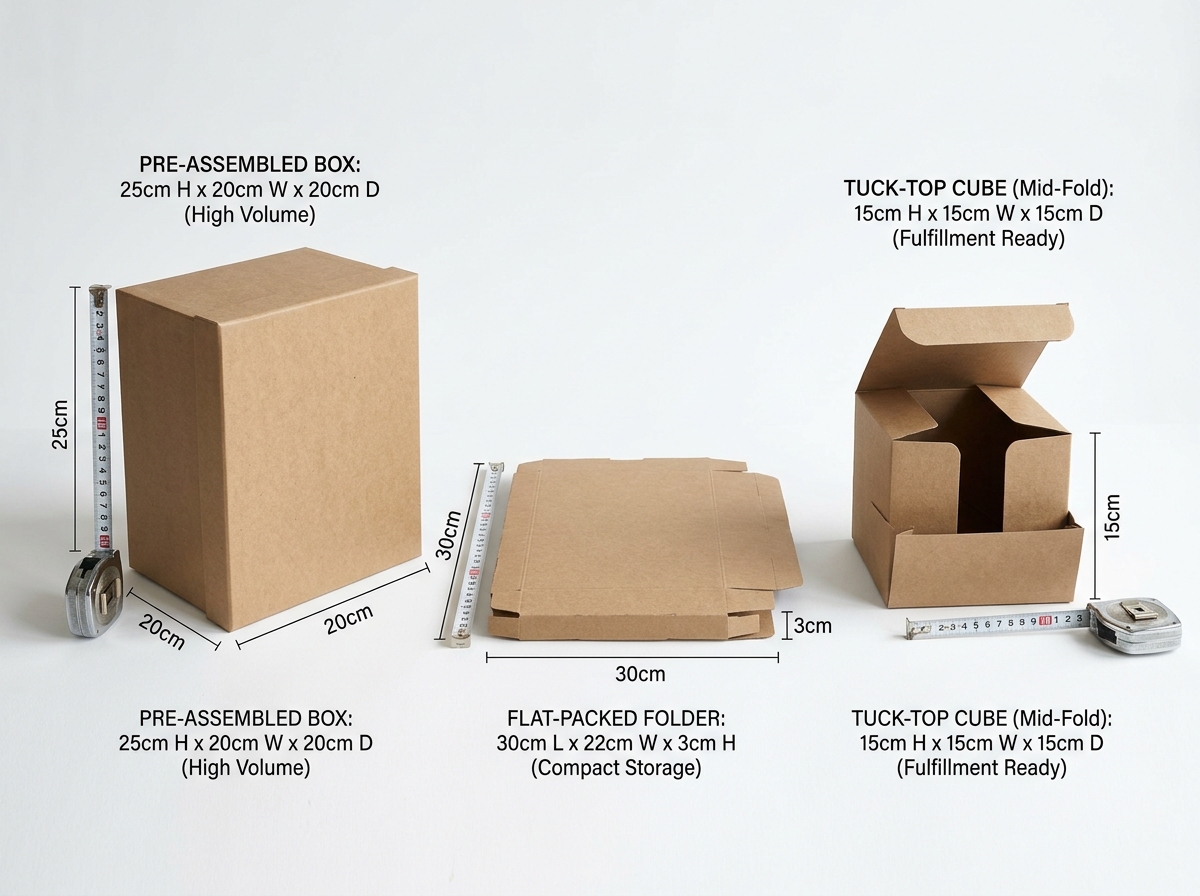
For gift packaging during Black Friday, cube boxes in 2x2x2, 3x3x3, and 4x4x4 dimensions handle most small-to-medium products. The uniform shape makes them easy to stack, easy to identify, and easy to train on. A new hire can learn the entire system in one shift because the folding motion is identical across all three sizes.
Color-coding by size accelerates picking. Stock kraft 2x2x2 boxes for jewelry and small accessories, white 2x2x2 boxes for premium cosmetics, and black 2x2x2 boxes for high-end tech accessories. The visual distinction reduces mis-picks and speeds up restocking.
Most retailers track cost-per-box but ignore cost-per-assembled-box. The difference matters during peak season when labor is your most constrained resource. A box that costs $0.50 but takes 30 seconds to assemble is more expensive than a $0.75 box that takes 8 seconds—once you factor in labor.
Here's the math. If your average warehouse wage (including overhead) is $20/hour, that's $0.33 per minute or roughly $0.006 per second. A packaging format that saves 20 seconds per order saves $0.12 in labor. Across 10,000 Black Friday orders, that's $1,200 in labor savings—plus the throughput gain that lets you process more orders with the same headcount.
Labor efficiency: Measure hours per 100 orders. Monitoring labor productivity helps identify bottlenecks and over-reliance on manual work. Track your current assembly time per box type, then test faster formats during a non-peak week. The data will show you where switching packaging yields the highest ROI.
For operations that have already locked in bulk packaging orders for Black Friday, this analysis becomes a planning tool for next year. But if you're still finalizing your packaging mix, prioritize speed-optimized formats for your highest-volume SKUs.
The simplest packaging format still requires training—but the training time scales with complexity. Seasonal workers can be trained to use the Descartes Peoplevox mobile WMS and be productive in under an hour. Your packaging should match that learning curve.
Create a one-page visual guide for each packaging format you use. Show the box flat, show it mid-fold, show it closed. No text—just images with arrows. Laminate it and mount it at each pack station. New hires can reference it without asking a supervisor, which keeps your floor leads free to handle exceptions instead of answering the same folding question twelve times per shift.
For operations running high-volume Black Friday stock, consider pre-folding a small buffer of boxes during slow periods. This isn't practical for all formats, but tuck-top boxes can be partially folded (bottom locked, sides creased) and stacked without taking up much more space than flat stock. It gives your team a head start during morning rush.
Packaging storage is part of the speed equation. Well-designed packaging can improve storage capacity, increase picking efficiency, reduce transport costs, and streamline the entire supply chain. In contrast, inefficient packaging can lead to wasted warehouse space, higher freight costs, and unnecessary operational challenges.
Flat-pack formats store at a 10:1 or 15:1 ratio compared to pre-assembled boxes. A pallet of 2,000 flat tuck-top boxes occupies the same cubic footage as 150-200 pre-assembled rigid boxes. When you're staging two months of packaging inventory before Black Friday, that density difference determines whether you need to rent overflow space or not.
Stage your fastest-moving packaging formats closest to pack stations. Use gravity-feed racks or angled shelving so the next box slides forward automatically when the previous one is pulled. This eliminates the reach-and-search motion that adds 2-3 seconds per pick. Over a shift, that's 15-20 minutes of wasted motion per packer.
For retailers managing warehouse storage planning for Black Friday, flat-pack packaging reduces the pressure on cubic footage and makes it easier to keep fast-moving stock within arm's reach of your fulfillment team.
When packaging is aligned with the overall warehouse system, it supports flow instead of interrupting it. Operational efficiency improves when repeatable tasks are standardized or automated. Fast-assembly packaging isn't a standalone fix—it's part of a larger workflow design.
If your fulfillment process includes gift wrapping or custom inserts, choose packaging that accommodates those steps without requiring disassembly. Tuck-top boxes work well here because you can load the product, add tissue or inserts, then close the top flaps in one motion. Rigid two-piece boxes force you to handle the lid separately, which breaks the packing rhythm.
For operations using conveyor systems or automated sortation, packaging dimensions need to align with your equipment specs. A box that's fast to assemble by hand but doesn't fit your conveyor width creates a different bottleneck. Supply chain logistics research consistently shows that standardized packaging dimensions make order picking faster, reduce labor time, and work better with warehouse automation.
Fast assembly doesn't mean sacrificing brand experience. The key is choosing formats that deliver both—packaging that opens quickly at the pack station but still creates a positive unboxing moment for the customer.
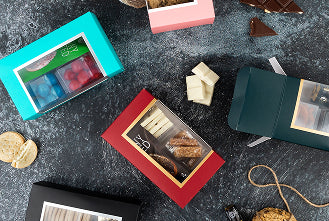
Kraft and white tuck-top boxes offer a clean, minimalist aesthetic that works for a wide range of brands. You can dress them up with custom stickers, stamps, or printed belly bands without adding assembly complexity. The box itself assembles in seconds; the branding layer takes another 5-10 seconds if you're applying a label or wrap.
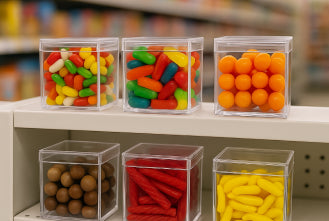
For premium products that need more visual impact, consider clear acrylic boxes with separate lids. Clear acrylic cube boxes require no assembly—they arrive ready to use—and the transparency creates instant product visibility. They're ideal for high-margin SKUs where the extra per-unit cost is justified by the presentation value.
The fastest packaging strategy for Black Friday is a tiered approach: use speed-optimized formats (tuck-top, auto-lock) for 70-80% of your volume, and reserve more elaborate packaging for VIP orders or gift-flagged purchases that justify the extra handling time.
Don't wait until Black Friday week to discover that your packaging choice slows down fulfillment. Run time trials during September or early October when order volumes are still manageable. Pull a cross-section of your top 20 SKUs and pack them in your proposed packaging formats. Time each assembly from flat box to sealed and labeled.
Compare formats side by side. Does the auto-lock mailer actually save time over the tuck-top cube? Does the two-piece rigid box create a better experience that justifies the extra 15 seconds? The answers depend on your specific products, your team's skill mix, and your brand positioning.
Automation and systems like Logix WCS™ help coordinate equipment, increase throughput, and maintain real-time visibility when demand surges. Continuous improvement through post-season audits and data analysis ensures each peak season becomes more efficient and less stressful than the last. Apply the same principle to packaging: test, measure, refine.
One-piece tuck-top or auto-lock boxes typically assemble in 8-12 seconds, while two-piece rigid boxes (separate base and lid) take 25-35 seconds. The difference comes from eliminating the lid-fitting step and reducing the number of motions required. Over a high-volume Black Friday shift, this can translate to 30-40% faster pack times and significantly higher throughput per worker.
Yes. Kraft, white, and black tuck-top cube boxes offer a clean, modern aesthetic that works for gift presentation. You can enhance them with custom stickers, ribbon, or printed tissue without adding significant assembly time. For ultra-premium products, clear acrylic boxes require zero assembly and provide instant product visibility. The key is matching the packaging format to your brand positioning and order volume.
Tuck-top cube boxes are the easiest to train on because the folding motion is identical across all sizes (2x2x2, 3x3x3, 4x4x4). New hires can learn the system in one shift, and the uniform shape reduces picking errors. Avoid packaging that requires glue, complex folding sequences, or separate components—these add cognitive load and slow down workers who are still building muscle memory.
Multiply the time savings (in seconds) by your fully-loaded labor cost per second, then multiply by your expected order volume. For example: if a faster box saves 20 seconds and your labor cost is $0.006/second, that's $0.12 saved per order. Across 10,000 orders, you save $1,200 in labor—plus the throughput gain that lets you process more orders with the same team. Compare that to the per-unit cost difference to determine ROI.
For some formats, yes. Tuck-top boxes can be partially pre-folded (bottom locked, sides creased) and stacked without taking up much more space than flat stock. This gives your team a head start during peak hours. However, avoid pre-folding weeks in advance—boxes can lose their crease integrity or get damaged in storage. A 24-48 hour buffer is usually optimal.
Fast assembly packaging black friday operations come down to eliminating friction at every step: fewer folds, fewer decisions, fewer tools, and fewer seconds per order. When you're processing hundreds or thousands of orders per day under compressed timelines, those seconds compound into the difference between meeting your ship dates and falling behind. Choose packaging formats that your team can execute consistently at speed, and you'll turn your packaging from a bottleneck into a competitive advantage.