Cart
0
You may also like

Book a call with our development team to get started.



Apply online and access wholesale pricing.

Wine remains one of the most popular corporate gift categories, with 17% of client gifts being wine or spirits. When you're ordering wine gift boxes corporate clients will actually appreciate, the packaging matters as much as the bottle inside. The right box protects the wine during shipping, reinforces your brand's attention to quality, and creates a presentation moment that strengthens the relationship you're building.
This guide walks through the practical decisions: one-bottle versus multi-bottle configurations, rigid versus folding construction, how to coordinate wine packaging with branded elements, and presentation strategies that make the gift feel intentional rather than transactional. If you're planning corporate holiday gift packaging that goes beyond logo placement, understanding these structural and design choices will help you select wine boxes that align with both your budget and the impression you want to leave.
Corporate gifting is no longer a December-only ritual. Around 68% of companies increased their corporate gifting budgets in 2024 to support year-round client appreciation, milestone recognition, and relationship-building touchpoints. Wine fits naturally into this strategy because it's consumable, culturally versatile, and carries an inherent perception of thoughtfulness when presented well.
The packaging you choose signals how much care went into the selection. A premium bottle shipped in a plain corrugated mailer communicates utility. The same bottle in a structured gift box with coordinated tissue or a custom insert communicates intention. Both protect the wine, but only one creates a moment worth photographing or mentioning in a thank-you note.
From a logistics perspective, wine packaging must solve two problems simultaneously: it needs to survive shipping without breakage, and it needs to look gift-ready upon arrival. Rigid boxes excel at presentation but add weight and cost. Folding boxes ship flat and assemble quickly but may read as less formal. Your choice depends on whether the wine is being hand-delivered, shipped domestically, or sent internationally, and whether the recipient will open it in a boardroom or at home.
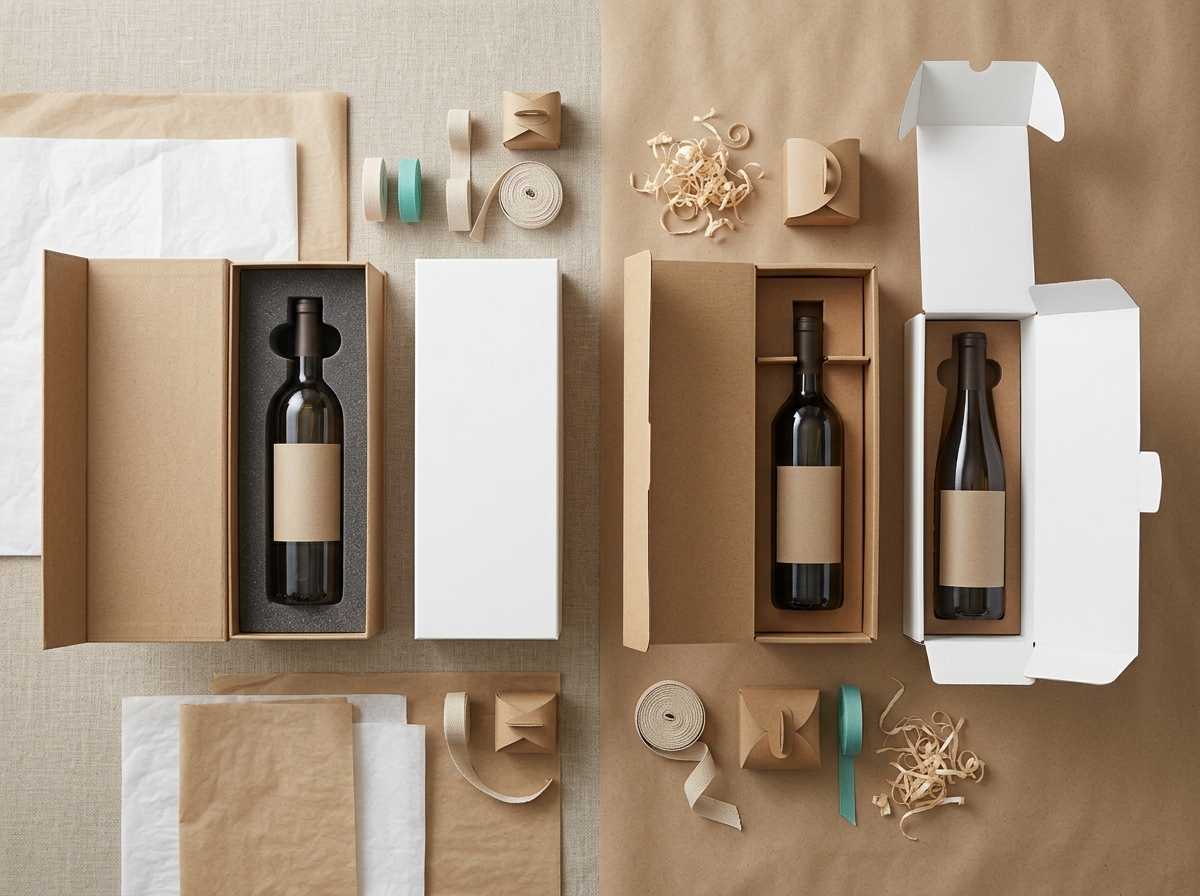
The first structural decision is bottle count. Single-bottle boxes are the most common format for corporate wine gifts. They're compact, easy to personalize, and work well when you're sending different varietals to different recipients based on preference data. A well-designed single-bottle box can include a foam or cardboard insert to center the bottle, a ribbon pull for easy opening, and enough interior height to accommodate standard 750ml Bordeaux or Burgundy bottles without the neck protruding.
Two-bottle boxes are ideal for pairing a red and a white, showcasing a vertical tasting from the same vineyard, or doubling the perceived value without doubling the packaging complexity. Most two-bottle designs use a center divider—either molded pulp, corrugated cardboard, or foam—to keep the bottles from clinking during transit. The footprint is only slightly larger than a single box, but the presentation feels more substantial.
Three- and six-bottle configurations are typically reserved for higher-value clients, wine club shipments, or year-end gifts to executive teams. These larger formats almost always require corrugated construction for structural integrity, especially if the box will be shipped rather than hand-delivered. Handle cutouts or rope handles make carrying easier, and some designs incorporate a magnetic closure or lift-off lid to maintain a premium unboxing experience despite the utilitarian size.
When deciding on bottle count, consider the recipient's context. A single bottle to a client's office is discreet and easy to transport home. A six-bottle case delivered to a home address signals a more significant investment and works well for milestone gifts—anniversaries, major contract renewals, or executive retirements. For most routine corporate gifting, one or two bottles hit the sweet spot between generosity and practicality.
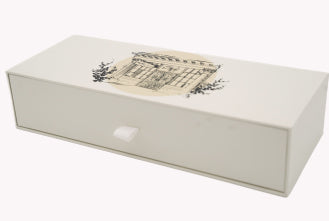
Rigid wine boxes are constructed from thick paperboard, typically 1.5mm to 3mm, and arrive fully assembled. Rigid boxes offer superior protection and create a luxury unboxing experience that enhances brand perception. They're the default choice for premium wines, limited releases, or any situation where the packaging itself is part of the brand story. Common rigid structures include lift-off lids, book-style boxes with magnetic closures, and drawer-style designs where the bottle slides out from a slipcase.
The advantages are tactile and visual. Rigid boxes feel substantial in the hand, they photograph well, and they're often kept and reused for storage, which extends your brand's visibility. The tradeoffs are cost and logistics. Rigid boxes cannot be shipped flat, so they take up significantly more warehouse space, and per-unit shipping costs are higher because you're paying for air. If you're ordering 500 wine boxes for a holiday campaign, storage and freight become meaningful line items.
Folding wine boxes are die-cut from paperboard and ship flat, then pop into shape when needed. Folding boxes are lightweight and material-efficient, and they can be shipped flat to improve logistics efficiency. They're the practical choice for high-volume corporate programs, seasonal campaigns, or any scenario where you need to store inventory compactly until it's time to pack and ship. The assembly process is simple—most designs use tuck flaps or locking tabs—and some brands intentionally highlight the assembly as part of the recipient experience.
Folding boxes can still feel premium if the paper stock, printing, and finishing are executed well. Matte lamination, spot UV on a logo, or embossed text can elevate a folding structure to near-rigid quality perception. The key limitation is structural strength: folding boxes work best for single- or two-bottle configurations and lighter-weight bottles. For larger formats or international shipping, the added rigidity of a fully constructed box may be worth the cost.
Corporate wine gifts sit at the intersection of generosity and brand visibility. The most effective packaging balances both without tipping into overt advertising. Quiet branding principles apply here: a foil-stamped logo on the box lid, a custom belly band, or a letterpress business card tucked inside the tissue all reinforce your brand without overwhelming the gift itself.
If you're working with stock wine boxes, you can add branded elements through inserts and accessories. A kraft tuck-top box paired with a custom-printed wrap or a branded sticker on the closure creates a cohesive look without requiring a full custom print run. Tissue paper in your brand colors, a hang tag with a handwritten note, or a small wooden serving tray included alongside the bottle all add layers of intentionality.
For higher-volume programs, custom printing becomes cost-effective. A single Pantone color printed on kraft stock can be surprisingly elegant—think a tonal logo, a simple pattern, or a thank-you message in a serif typeface. Full-color printing is an option for product launches, event sponsorships, or gifts tied to a specific campaign, but it's not a requirement for the packaging to feel considered.
Avoid over-branding. If the box, the tissue, the insert, the hang tag, and the card all carry your logo, the gift starts to feel like a marketing activation rather than a gesture of appreciation. Choose one or two brand touchpoints and let the quality of the wine and the thoughtfulness of the presentation do the rest of the work.
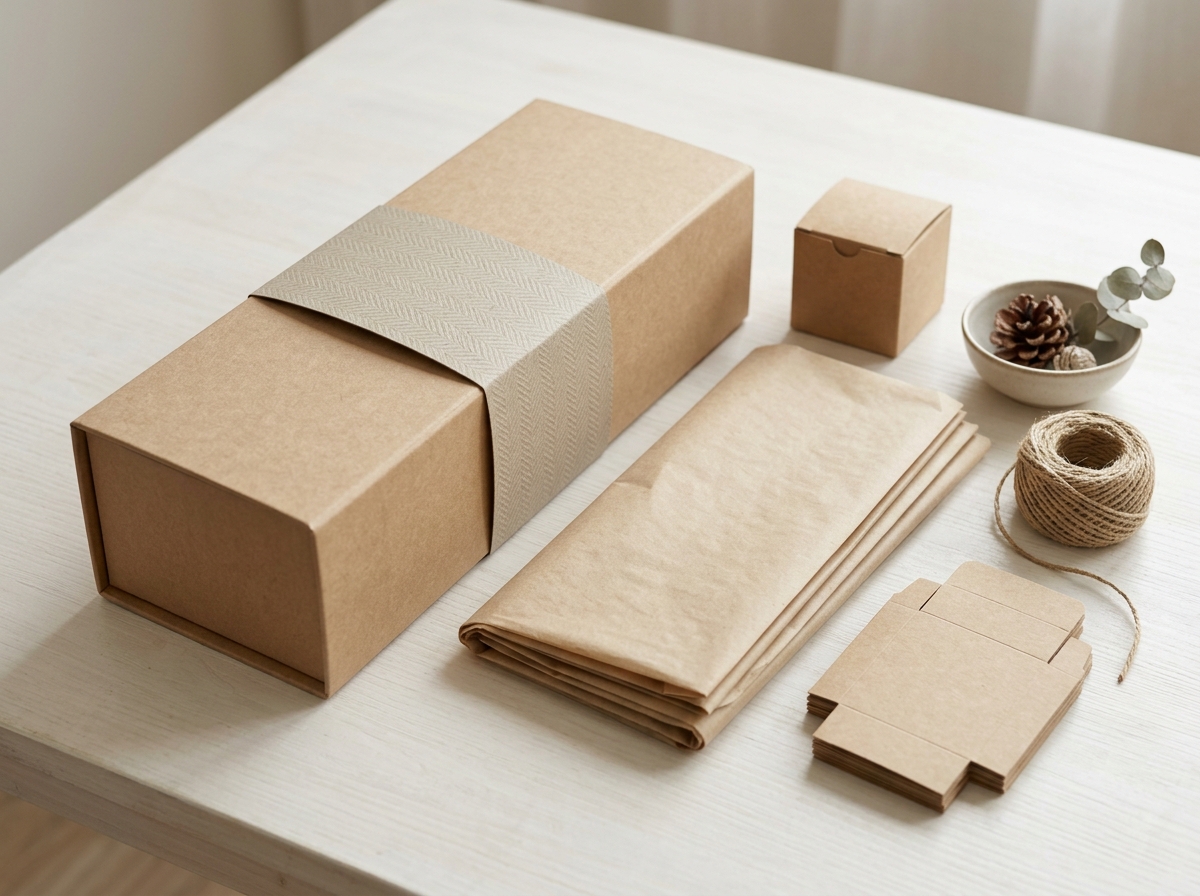
Presentation begins before the box is opened. If the wine is being shipped, the outer packaging matters. A plain brown mailer with a wine box inside is functional. A mailer with a branded label, a "Gift Enclosed" sticker, and interior crinkle paper signals that the contents were packed with care. Small details—using a box size that fits snugly rather than one with excess void fill, including a packing slip that doubles as a tasting note card—contribute to the overall impression.
For hand-delivered gifts, consider portability. A wine box with a ribbon handle or a reinforced cutout handle makes it easy for the recipient to carry the gift from a meeting to their car. If you're presenting the wine during a dinner or event, a box that opens cleanly without tape or complicated closures allows for a smoother reveal.
Timing and context also shape presentation strategy. A wine gift sent in early November as a Thanksgiving gesture has a different tone than one sent on December 23rd as part of a last-minute holiday push. Planning your corporate gift timeline ensures the packaging arrives in pristine condition and the gesture feels intentional rather than rushed.
Personalization elevates any wine gift. This doesn't require custom bottles or engraved glasses—though those are options for top-tier clients. Often, a handwritten card that references a specific conversation, a shared project milestone, or a personal interest makes a more lasting impact than any amount of packaging customization. The box gets the wine to the recipient in good condition and looking presentable. The note is what turns the transaction into a relationship moment.
If you're managing a corporate wine gifting program at scale, a few operational details will determine whether the execution feels seamless or chaotic. First, standardize your box sizes. Ordering three or four SKUs in bulk—say, a single-bottle rigid box, a two-bottle folding box, and a six-bottle corrugated shipper—gives you flexibility without requiring custom tooling for every occasion. Stock boxes have shorter lead times and lower minimums, which matters when you need to add recipients mid-campaign.
Second, plan for storage. Rigid boxes take up space. If you're ordering 200 units for a Q4 program, make sure you have somewhere to store fully assembled boxes for two months. Folding boxes solve this problem but require labor to assemble. Some companies handle assembly in-house; others work with a fulfillment partner who can pack, personalize, and ship on demand.
Third, coordinate with your wine supplier on bottle dimensions. Not all 750ml bottles are the same height, and Champagne bottles have a wider diameter than Bordeaux bottles. If you're ordering boxes before finalizing the wine selection, confirm the interior dimensions accommodate the tallest and widest bottles in your range. A box that's too tight won't close; one that's too loose allows the bottle to shift during shipping.
Fourth, build in a buffer for customization lead times. If you're adding foil stamping, embossing, or custom inserts, expect 3-4 weeks for production after artwork approval. Stock boxes with applied labels or belly bands can often ship within a week. Understanding these timelines prevents last-minute compromises on quality.
Different corporate gifting scenarios call for different packaging approaches. For client appreciation gifts sent throughout the year, a simple white tuck-top box with a custom label and tissue works well. It's cost-effective, ships flat, and can be personalized per recipient without requiring a large inventory of pre-printed boxes.
For year-end executive gifts, a rigid box with a magnetic closure and a foam insert signals a higher level of investment. These boxes are often kept and repurposed, which means your brand stays visible on a shelf or in a closet long after the wine is consumed. Pairing the wine with a small accessory—a corkscrew, a set of wine charms, or a wooden serving board—turns the gift into a curated set and justifies the larger packaging format.
For event sponsorships or conference giveaways, portability trumps luxury. A wine bag with handles or a lightweight folding box that fits in a tote bag makes it easy for recipients to transport the gift home. In these scenarios, the packaging should be durable enough to survive a day of handling but not so precious that recipients feel anxious about damaging it.
For international clients, packaging needs to prioritize protection. Double-wall corrugated boxes with molded pulp inserts reduce breakage risk during long-distance shipping. If the gift is crossing borders, confirm that the packaging includes any required labeling for alcohol shipments and that the box size complies with carrier restrictions.
Most single-bottle wine boxes measure approximately 3.5" x 3.5" x 13" to accommodate a standard 750ml Bordeaux bottle. The interior height should be at least 12.5" to fit the bottle without the neck protruding, and the width should allow for a small amount of padding or tissue. Champagne bottles require a wider base, typically 4" x 4", due to their larger diameter. Always confirm bottle dimensions with your wine supplier before ordering boxes in bulk.
Stock wine boxes typically range from $2 to $8 per unit depending on size, material, and quantity. Rigid boxes with magnetic closures or custom inserts start around $6-12 per unit. Adding custom printing, foil stamping, or embossing can add $1-3 per unit depending on complexity and order volume. Minimum order quantities for fully custom boxes usually start at 500-1,000 units, while stock boxes with applied labels or stickers can be ordered in quantities as low as 50-100 units.
Folding boxes made from sturdy paperboard can protect a wine bottle adequately for domestic shipping, especially when paired with interior padding or a molded insert. However, rigid boxes offer superior structural integrity and are the better choice for international shipping, multi-bottle configurations, or situations where the box will be handled frequently before reaching the recipient. For most corporate gifting scenarios where wine is shipped domestically or hand-delivered, a well-constructed folding box with proper inserts provides sufficient protection at a lower cost.
The most effective approach is to choose one or two subtle brand touchpoints rather than covering every surface with logos. A foil-stamped logo on the box lid, a custom belly band, or a letterpress business card tucked inside the tissue all reinforce your brand without overwhelming the gift. Using your brand colors in the tissue paper or ribbon, or including a small branded accessory like a wooden tray or serving piece, creates cohesion without feeling overtly promotional. Avoid placing large logos on multiple surfaces—if the box, tissue, card, and insert all carry prominent branding, the gift starts to feel like marketing collateral rather than a thoughtful gesture.
For stock boxes with minimal customization, ordering 4-6 weeks before your ship date provides a comfortable buffer. If you're adding custom printing, foil stamping, or embossing, plan for 8-10 weeks to account for artwork approval, production, and shipping. December is the busiest season for corporate gifting, so packaging suppliers and fulfillment partners often reach capacity by mid-November. Ordering in September or early October ensures you have inventory on hand and avoids rush fees or compromises on customization quality.
Wine gift boxes for corporate clients are more than protective packaging—they're part of the relationship-building gesture. Whether you're selecting rigid boxes for executive gifts or folding boxes for a high-volume appreciation campaign, the structure, presentation, and branded elements you choose all contribute to how the gift is received and remembered. By understanding the practical differences between box styles, coordinating packaging with your brand identity, and planning your timeline to avoid last-minute compromises, you create wine gifts that feel intentional, generous, and aligned with the relationships you're working to strengthen.