Cart
0
You may also like

Book a call with our development team to get started.



Apply online and access wholesale pricing.

If you're launching a small business or exploring custom packaging ideas for small businesses, you've likely encountered the term MOQ—minimum order quantity. For many founders, MOQ feels like a barrier: suppliers require 1,000, 5,000, or even 10,000 units, but you're only shipping 50 orders per month. Understanding what drives these minimums, how to negotiate them, and which alternatives exist can save you thousands of dollars and months of cash-flow stress. This guide explains the economics behind packaging MOQ for small business, practical negotiation tactics, and phased ordering strategies that let you start small without sacrificing brand quality.
Minimum order quantity (MOQ) is the smallest number of units a supplier will produce or sell in a single order. In the packaging industry, MOQs exist because custom production involves significant upfront costs that must be spread across enough units to remain profitable. According to the Flexible Packaging Association, these fixed costs include plate-making for printing, machine setup time, material waste during calibration, and labor for quality control. A supplier running a custom print job for 100 boxes incurs nearly the same setup expense as a 5,000-unit run, which is why per-unit pricing drops dramatically at higher volumes.
Setup costs vary by production method. Digital printing typically allows lower MOQs—often 250 to 1,000 units—because it eliminates the need for printing plates. Traditional offset or flexographic printing, which delivers richer color and lower per-unit costs at scale, usually requires 3,000 to 10,000 units to justify the plate and press setup. Structural customization—die-cutting a unique box shape or adding a window—adds tooling fees that further increase minimums. Understanding these cost drivers helps you evaluate whether a supplier's MOQ is reasonable or negotiable.
For a startup shipping 100 orders per month, a 5,000-unit MOQ represents 50 months of inventory. That ties up capital in packaging materials instead of product development, marketing, or working capital. Excess inventory also creates storage costs: renting warehouse space, managing stock rotation, and risking obsolescence if your branding or product line changes. Many small businesses underestimate these hidden costs when comparing a $0.80 custom box at 5,000 units versus a $1.50 stock box with no minimum.
Cash flow timing matters as much as total cost. Most packaging suppliers require a 30 to 50 percent deposit upfront, with the balance due before shipment. A 5,000-unit order at $1 per box means $2,500 to $5,000 out the door before you've sold a single product. Phased ordering—placing smaller orders more frequently—reduces upfront outlay but raises per-unit cost. The right balance depends on your monthly sales velocity, available capital, and how quickly your branding or packaging needs might evolve.
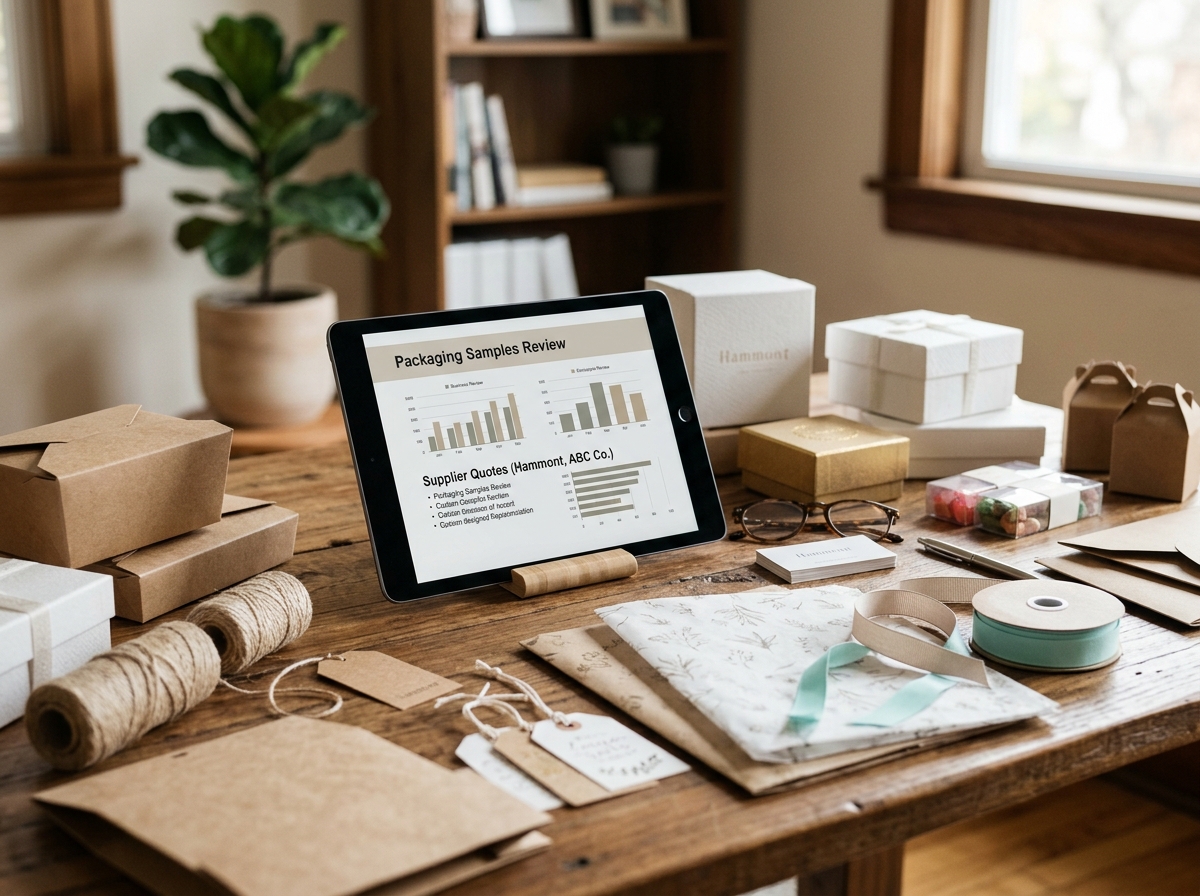
MOQs are rarely as fixed as suppliers initially present them. Several negotiation tactics can reduce minimums or improve terms without sacrificing quality. Start by demonstrating long-term value: suppliers are more flexible when they see potential for repeat orders. If you're ordering 500 units now but projecting 2,000 units per quarter within a year, share that forecast. Suppliers often accept lower first-order minimums to secure ongoing business.
Offer to pay a higher per-unit price in exchange for a lower MOQ. A supplier quoting $1.20 per box at 3,000 units might accept 1,000 units at $1.60. The total order value drops from $3,600 to $1,600, preserving your cash flow while still covering the supplier's fixed costs. This approach works best when you're confident in reordering: the premium on the first batch is offset by volume pricing on subsequent orders.
Bundle multiple SKUs into a single order. If you need 500 units each of two different box sizes, propose a combined 1,000-unit order using the same material and printing setup. Suppliers can often accommodate this because the major cost—press setup and color matching—is shared. Similarly, if you're sourcing both boxes and bags, ask whether ordering both from the same supplier unlocks a lower combined minimum.
Request a phased production schedule with staggered delivery. Some suppliers will produce the full MOQ but ship in smaller batches over three to six months. You pay for all units upfront (or in milestone payments), but you avoid storing 5,000 boxes in your garage. This preserves the supplier's economies of scale while giving you manageable inventory levels. Confirm storage fees and delivery logistics before committing.
Leverage competitive quotes. Approach three to five suppliers with identical specifications and compare not just pricing but MOQ flexibility. When you receive a better offer, return to your preferred supplier and ask if they can match the terms. Transparency about competing bids signals that you're a serious buyer and encourages suppliers to sharpen their pencil. Avoid fabricating quotes—suppliers talk, and credibility matters for long-term relationships.
One of the most practical ways to bypass high MOQs is starting with stock packaging and adding custom branding through stickers, stamps, or printed tissue. Stock boxes—standard sizes produced in bulk—are available with no minimum from wholesalers like Hammont. You can order exactly the quantity you need, then apply custom labels or zipper treat bags with printed inserts to create a branded unboxing experience.
This hybrid approach delivers 80 percent of the brand impact at 20 percent of the cost. A stock hexagon gift box tower paired with a custom thank-you card and branded sticker looks intentional and polished. As your order volume grows, you can transition to fully custom printed boxes without having overcommitted capital in the early stages. Many successful brands launch with stock-plus-stickers and only move to custom printing once they're consistently shipping 500-plus units per month.
When selecting stock packaging, prioritize materials and construction that align with your brand. Kraft boxes signal eco-conscious values; rigid setup boxes convey luxury; clear acrylic boxes like our round acrylic boxes showcase the product itself. Choose a size that fits your product snugly to minimize filler material and reduce dimensional weight shipping costs. Stock doesn't mean generic—thoughtful material selection communicates as much as custom printing.
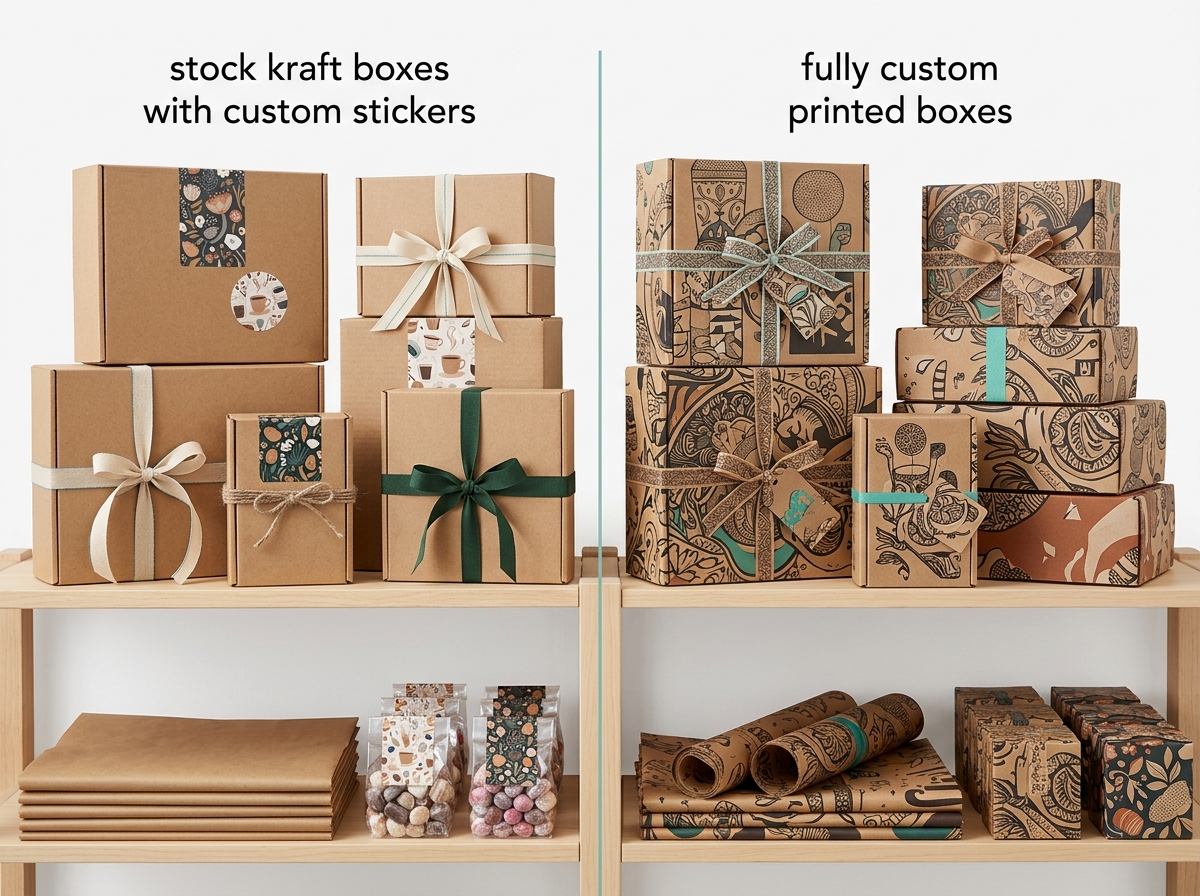
There's a tipping point where higher MOQs make financial sense. If you're shipping 300-plus units per month and expect consistent growth, the per-unit savings from a 3,000 or 5,000-unit order can fund other growth initiatives. Calculate your break-even: if a custom box costs $1 at 5,000 units versus $1.80 for stock-plus-stickers, you save $0.80 per unit. Over 5,000 units, that's $4,000—enough to fund a product photoshoot, a trade show booth, or additional inventory.
Commit to higher MOQs when your branding is stable. If you're still testing product names, color palettes, or taglines, a 10,000-unit box order becomes a liability the moment you rebrand. Wait until your visual identity and messaging have been consistent for at least six months and validated by customer feedback. Rebranding with 8,000 obsolete boxes in storage is an expensive mistake.
Seasonal businesses should time large orders around peak demand. If 70 percent of your sales happen in Q4, place a high-MOQ order in July or August to lock in pricing and ensure availability. Off-peak ordering sometimes unlocks better pricing because suppliers have excess capacity. Conversely, ordering custom packaging in October for a November delivery often means premium pricing and longer lead times due to holiday demand.
Not all packaging materials carry the same minimums. Corrugated boxes and folding cartons made from standard kraft or white paperboard typically have lower MOQs because the base materials are commodity items. Specialty substrates—metallic finishes, textured paper, or biodegradable films—often require higher minimums because suppliers must source or produce the material specifically for your order.
Finishing techniques also influence MOQ. Foil stamping, embossing, and spot UV coating require additional setup and tooling, which raises minimums to 2,500 or 5,000 units. Simpler finishes—matte or gloss lamination, single-color printing—allow lower minimums because they use standard equipment and processes. When choosing packaging materials for your small business, weigh the brand impact of premium finishes against the cash-flow cost of higher minimums.
Color count matters more than most founders expect. A one-color or two-color print job on kraft stock can often be produced at 1,000 units. Full-color (CMYK) printing requires more complex setup and calibration, pushing minimums to 3,000 or higher. If your logo uses three colors, consider simplifying to a single Pantone ink for your first production run, then upgrading to full color once volume justifies it. This incremental approach balances brand quality with financial pragmatism.
MOQ decisions are inseparable from lead times. Custom packaging typically requires eight to twelve weeks from artwork approval to delivery: two weeks for sampling and revisions, four to six weeks for production, and two weeks for ocean freight if manufacturing overseas. Domestic suppliers shorten lead times to four to six weeks but often charge 20 to 40 percent more. Factor lead time into your cash-flow model—ordering too late forces expensive air freight or stock-outs that damage customer experience.
Establish a reorder trigger based on sales velocity and lead time. If you sell 200 units per month and lead time is ten weeks, reorder when inventory drops to 500 units (2.5 months of safety stock). This buffer accounts for demand spikes, production delays, and shipping variability. Automated inventory management systems can trigger reorder alerts, but even a simple spreadsheet with weekly stock counts prevents the panic of running out mid-campaign.
Plan for demand seasonality when setting MOQs. A candle brand selling 100 units per month in summer and 800 in December should place a higher-MOQ order in August to cover Q4 demand, not twelve equal monthly orders. Seasonal ordering leverages volume discounts when you need them and avoids excess inventory during slow months. Review twelve months of sales data before committing to annual order quantities.
Relying on a single supplier for all packaging creates risk: production delays, quality issues, or price increases can halt your business. Diversifying across two or three suppliers for different packaging components—boxes from one, tissue and stickers from another—reduces dependency and creates negotiating leverage. If Supplier A raises prices, you can shift volume to Supplier B without scrambling for a new source.
Split testing packaging options is easier with multiple suppliers. Order 500 units of Box Style A from Supplier 1 and 500 units of Box Style B from Supplier 2, then measure which drives better customer feedback or reduces damage rates. This empirical approach beats guessing and ensures your eventual high-MOQ order goes to the right design and supplier. Track cost, quality, lead time, and communication responsiveness for each supplier in a simple scorecard.
Regional suppliers offer advantages beyond MOQ. A local converter might accept 300-unit orders because they value the relationship and proximity. You gain faster turnaround, easier plant visits for quality checks, and the ability to pick up orders yourself to save freight costs. National or overseas suppliers offer lower per-unit pricing at scale but less flexibility on minimums. Balance cost with service level based on your stage of growth.
Digital printing technology has disrupted traditional MOQ economics. Services using HP Indigo or similar digital presses can produce full-color custom boxes starting at 50 to 250 units. Per-unit costs are higher—often $2 to $5 per box versus $0.50 to $1.50 for offset printing—but the elimination of setup fees and plate costs makes small runs economically viable. Digital printing is ideal for product launches, limited editions, or businesses testing multiple package designs.
On-demand packaging platforms aggregate small orders across multiple brands to achieve supplier minimums. You order 100 boxes; the platform combines your job with nine other brands to meet the supplier's 1,000-unit minimum. This model sacrifices some customization—you choose from preset templates and sizes—but delivers branded packaging without inventory risk. Evaluate whether template constraints align with your brand needs before committing.
Hybrid models combine digital and offset printing. Your first order of 500 units ships via digital printing at $2 per box. Once you validate demand, you reorder 5,000 units via offset at $0.80 per box. The upfront premium on the digital run is an insurance policy against overcommitting to an unproven design. Many suppliers offer this pathway explicitly, recognizing that today's 500-unit customer becomes tomorrow's 10,000-unit account.
MOQ is one term in a broader contract negotiation. Payment terms affect cash flow as much as order size: net-30 or net-60 terms mean you can receive and potentially sell product before paying the balance, improving working capital. New suppliers often require 50 percent deposits, but established relationships can unlock better terms. Propose milestone payments—25 percent deposit, 25 percent at production start, 50 percent on delivery—to spread cash outlay.
Quality assurance clauses protect you from defective shipments. Specify acceptable defect rates (typically 2 to 5 percent), inspection rights, and remedies for non-conforming goods. Request pre-production samples and the right to approve or reject them before full production begins. Include provisions for replacement or refund if the delivered product doesn't match the approved sample. These protections matter more as order size increases—rejecting 500 defective boxes is manageable; rejecting 5,000 is a business crisis.
Revision policies determine how much flexibility you have after placing an order. Can you adjust quantities up or down before production starts? What happens if you need to change a color or text element after sample approval? Clarify these terms upfront. Some suppliers allow minor tweaks at no charge; others treat any change as a new order with fresh setup fees. Lock in your design and branding before submitting final artwork to avoid expensive mid-production changes.
Your packaging strategy should evolve with your business stage. In the pre-launch or validation phase (0 to 50 units per month), prioritize speed and flexibility: use stock packaging with custom finishing. In the growth phase (50 to 300 units per month), transition to low-MOQ digital printing or negotiate smaller minimums with offset suppliers by committing to reorders. In the scale phase (300-plus units per month), commit to higher MOQs to unlock cost savings that fund further growth.
Document your packaging specifications and supplier performance at each stage. Maintain a packaging playbook that includes artwork files, Pantone colors, material specs, approved samples, and supplier contact details. This institutional knowledge prevents costly mistakes when you scale or onboard new team members. Include cost-per-unit targets for each product line so you can evaluate whether a supplier's quote is competitive without starting from scratch each time.
Plan packaging changes around natural reorder cycles to avoid waste. If you're sitting on 2,000 units of current packaging, don't rebrand until that inventory is depleted unless the old design actively harms sales. Schedule redesigns to coincide with stockouts, allowing you to introduce new branding without discarding usable materials. This discipline prevents the "shiny object syndrome" that leads to closets full of obsolete packaging.
MOQs vary widely by production method and supplier. Digital printing typically starts at 250 to 1,000 units, while offset printing ranges from 3,000 to 10,000 units. Stock packaging with custom finishing (stickers, stamps) often has no minimum, making it ideal for small businesses just starting out.
Yes, MOQs are often negotiable. Demonstrate long-term order potential, offer to pay a higher per-unit price for a smaller first order, or bundle multiple SKUs into a single production run. Suppliers are more flexible when they see you as a reliable, repeat customer rather than a one-time buyer.
Start with stock packaging and custom finishing to avoid large upfront orders. As volume grows, negotiate phased delivery schedules where the supplier produces the full MOQ but ships in smaller batches over several months. Calculate your monthly sales velocity and reorder when inventory drops to two to three months of safety stock.
Digital printing eliminates setup costs and printing plates, allowing MOQs as low as 50 to 250 units but at higher per-unit costs ($2 to $5). Offset printing requires significant setup investment, pushing MOQs to 3,000-plus units, but delivers much lower per-unit pricing ($0.50 to $1.50) at scale. Choose digital for testing and validation, offset for volume production.
Commit to higher MOQs when you're consistently shipping 300-plus units per month, your branding is stable for at least six months, and you have the cash flow to fund a larger upfront order. Calculate the per-unit savings and ensure the payback period aligns with your growth projections and working capital needs.