Cart
0
You may also like


Book a call with our development team to get started.



Apply online and access wholesale pricing.

When you're packaging cookies for a holiday exchange, farmer's market, or small bakery business, food safety isn't optional—it's foundational. Food safe cookie packaging protects your customers, preserves freshness, and keeps you compliant with federal regulations. The right materials prevent grease stains, block moisture migration, and extend shelf life without compromising flavor or texture.
Whether you're a home baker scaling up or a commercial operation refining your processes, understanding FDA requirements, grease-resistant liners, and moisture barriers will help you choose packaging that performs. This guide covers the regulatory framework, material options, and practical freshness strategies for cookie exchange packaging that meets both legal and culinary standards.
The U.S. Food and Drug Administration regulates all materials that come into contact with food through the Federal Food, Drug, and Cosmetic Act. For cookie packaging, this means every component—boxes, bags, liners, adhesives, inks, and coatings—must comply with Title 21 of the Code of Federal Regulations (21 CFR). The FDA classifies packaging materials as food contact substances, which are subject to strict safety standards to prevent chemical migration into food.
Materials used in food safe cookie packaging must meet one of four approval pathways: they're listed in 21 CFR Parts 170-199 as approved indirect food additives, they're Generally Recognized as Safe (GRAS) for food contact applications, they're covered by a Threshold of Regulation exemption, or they've been approved under a Food Contact Substance Notification. Most commercially available cookie boxes and bags from reputable suppliers already use FDA-compliant materials, but it's your responsibility to verify compliance—especially if you're sourcing custom or imported packaging.
Grease-resistant coatings and moisture barriers add another layer of complexity. These treatments must also comply with FDA regulations for indirect food additives, since trace amounts can migrate into cookies. Paper treated with fluorochemicals, wax coatings, or synthetic polymers each have different regulatory profiles. When evaluating suppliers, ask for material safety data sheets and confirmation that all coatings meet 21 CFR requirements for bakery products.
Butter, shortening, and chocolate—the ingredients that make cookies delicious—also make them challenging to package. Oil migration causes visible stains on paper packaging, weakens cardboard structures, and creates an unprofessional appearance. Grease-resistant materials solve this problem by creating a barrier that blocks lipid penetration while maintaining the breathability paper packaging needs.
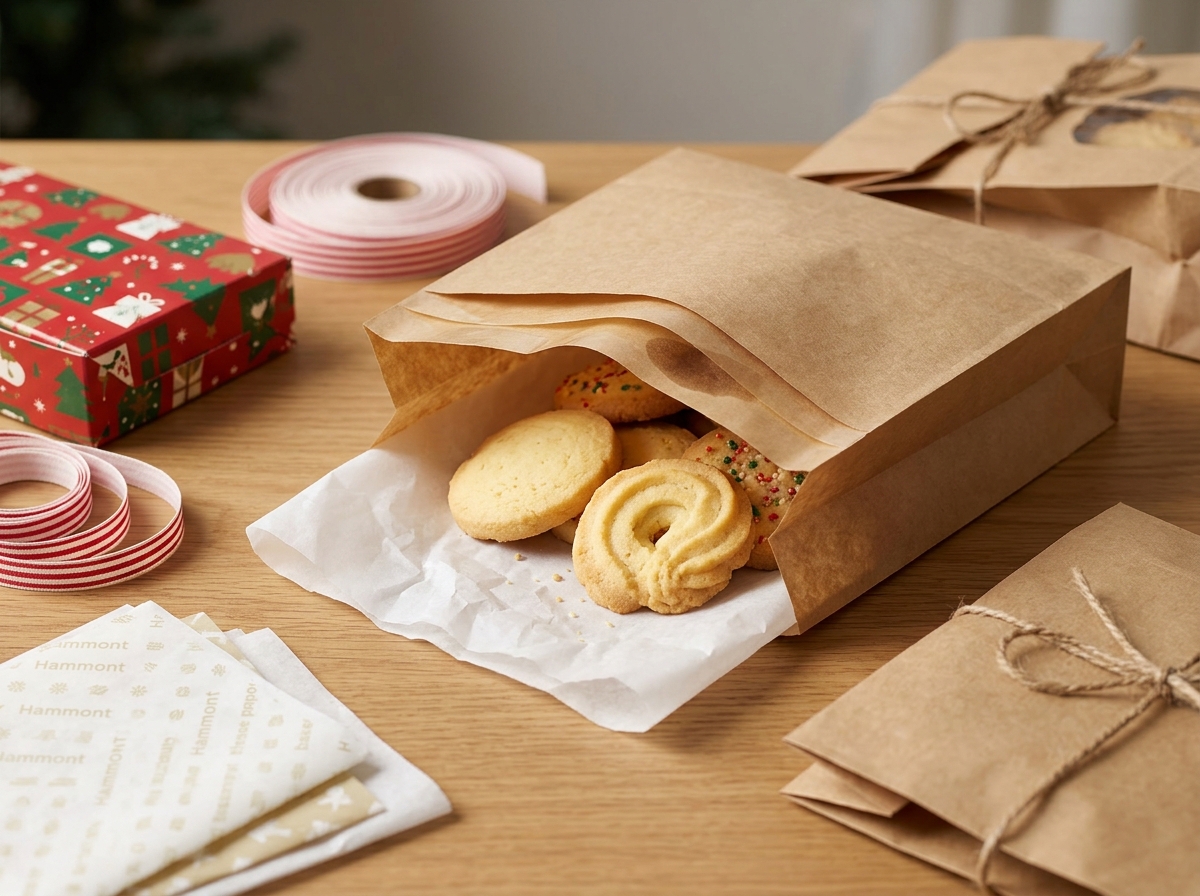
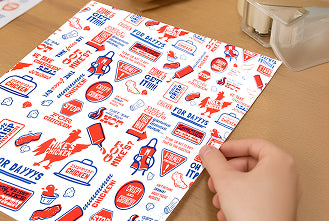
The most common grease-resistant treatments for cookie packaging include glassine liners, grease-resistant kraft paper, and polymer-coated paperboard. Glassine is a smooth, glossy paper that's been super-calendered to create a dense fiber structure that naturally resists grease. It's often used as a liner inside window cookie boxes or as a standalone bag material. Grease-resistant kraft paper uses a similar mechanical process but maintains the natural brown color and texture bakers prefer for rustic presentations.
Polymer coatings—typically polyethylene or biodegradable alternatives—provide a more aggressive grease barrier for high-fat cookies like shortbread or pecan sandies. These coatings are heat-sealed to the paper substrate and create an impermeable layer that blocks both grease and moisture. The trade-off is reduced recyclability compared to uncoated paper, though newer plant-based coatings are closing that gap. For crystal-clear cellophane wrap, the material itself is naturally grease-resistant and provides excellent visibility for gift packaging.
When selecting grease-resistant packaging, consider the fat content and baking method of your cookies. Fried or twice-baked cookies with exposed oils need more aggressive barriers than standard drop cookies. Test your packaging by storing cookies for 24-48 hours and checking for visible oil stains or structural softening. If grease penetrates the outer layer, upgrade to a heavier coating or add an inner liner.
Moisture is both enemy and ally in cookie packaging. Crisp cookies need protection from environmental humidity that causes sogginess, while soft cookies require packaging that prevents moisture loss and staling. The challenge is that these two goals demand opposite barrier properties—and many bakers package both types for the same event or customer.
Crisp cookies—gingersnaps, biscotti, pizzelles—maintain their texture best in packaging with moderate moisture vapor transmission rates. Completely airtight packaging can trap residual steam from cooling cookies and create condensation that turns crisp cookies soggy. Paper-based packaging with grease resistance but some breathability works well for short-term storage (3-7 days). For longer shelf life, cellophane bags with resealable closures allow you to add a silica gel packet that absorbs excess moisture without direct food contact.
Soft cookies—chocolate chip, oatmeal raisin, molasses—need the opposite approach. These cookies contain higher moisture content that will migrate to the environment if packaging isn't sealed properly. According to Packaging Digest, moisture vapor transmission is the primary driver of cookie staleness in soft varieties. Airtight packaging materials like heat-sealed cellophane, zipper-closure bags, or boxes with tight-fitting lids preserve the original moisture balance and extend freshness by 3-5 times compared to open paper bags.
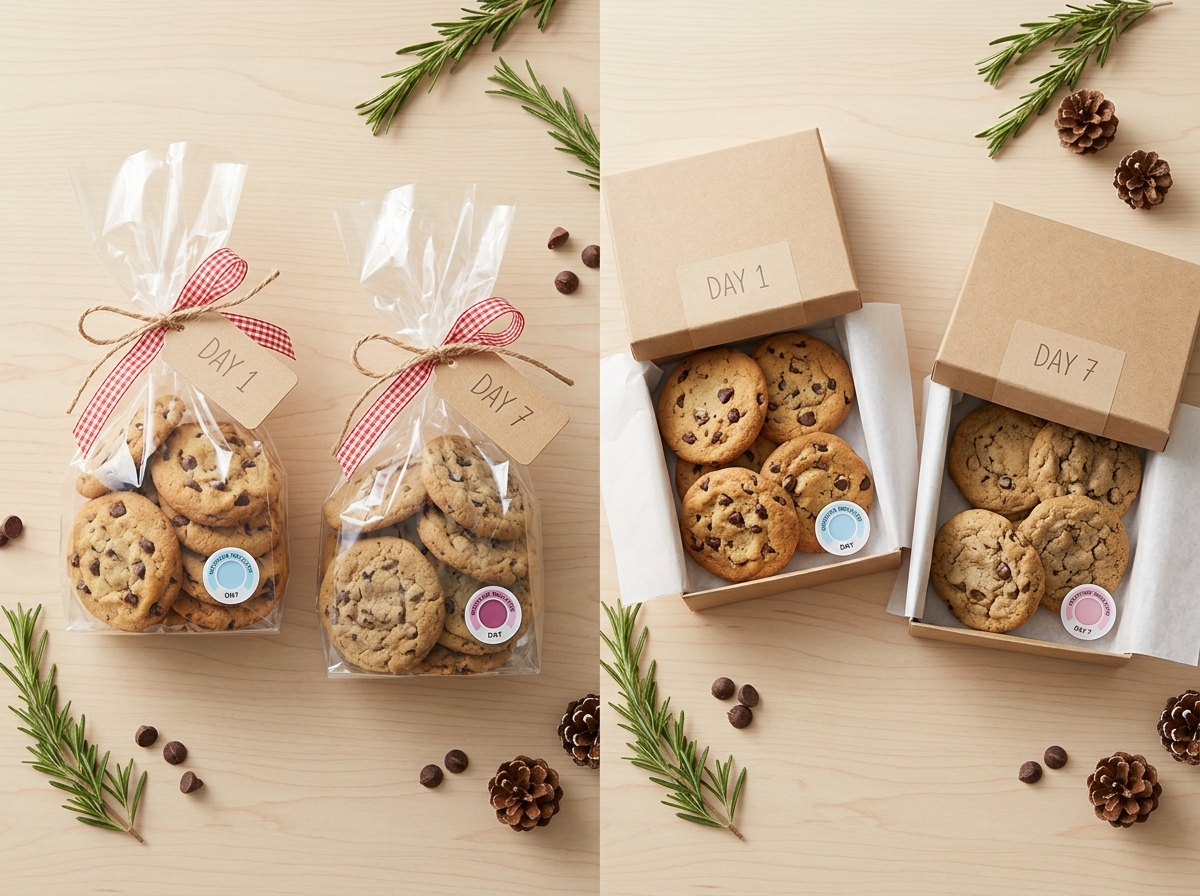
The practical solution for mixed cookie assortments is to package crisp and soft varieties separately, even within the same gift box. Use dividers or individual small cellophane bags to isolate each cookie type. This prevents moisture transfer between varieties—soft cookies won't steal crispness from gingersnaps, and delicate pizzelles won't absorb humidity from chewy cookies. If you're preparing cookies for a cookie exchange party, label each package with the cookie type and recommended storage method so recipients know how to maintain quality.
Cookie shelf life depends on three variables: ingredient composition, packaging material, and storage environment. Butter-based cookies with high fat content oxidize faster than lean cookies. Cookies with eggs or dairy have shorter safe storage windows than vegan varieties. And all cookies degrade faster in warm, humid conditions regardless of packaging quality.
Paper bakery boxes with grease-resistant liners typically preserve cookie quality for 3-5 days at room temperature. This timeline works well for cookie exchanges, weekend farmer's markets, or local bakery sales where turnover is quick. Beyond five days, even grease-resistant paper allows enough moisture and oxygen transmission that texture and flavor begin to decline. The advantage of paper packaging is its breathability—cookies don't develop condensation or off-flavors from trapped volatiles.
Heat-sealed cellophane bags or resealable zipper bags extend shelf life to 7-14 days for most cookie types. The improved barrier properties block oxygen that causes fat oxidation and moisture that drives staling. For maximum shelf life, package cookies only after they've cooled completely to room temperature—residual heat creates steam that condenses inside sealed packaging and promotes mold growth. Adding oxygen absorbers or silica gel packets can push shelf life to 3-4 weeks, though this level of preservation is typically only necessary for mail-order bakeries or wholesale distribution.
Frozen storage in airtight packaging preserves cookies for 2-3 months without significant quality loss. Wrap cookies in plastic film or place in freezer-safe zipper bags, removing as much air as possible before sealing. Thaw frozen cookies in their packaging at room temperature to prevent condensation from forming directly on the cookie surface. This method works particularly well for pre-baked cookie exchange contributions—you can bake weeks in advance and thaw the morning of the event.
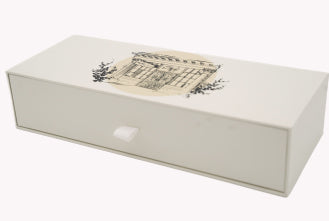
Choosing between paper and cellophane packaging often comes down to presentation priorities versus functional requirements. Paper packaging—kraft boxes, glassine bags, parchment wraps—communicates artisanal quality and eco-friendliness. It's the default choice for kraft cookie boxes at farmers markets, holiday gift exchanges, and bakeries emphasizing natural ingredients. Paper accepts custom stamps, labels, and handwritten notes easily, making it ideal for personalized gifting.
The limitation of paper is its relatively poor moisture and oxygen barrier compared to plastic films. Even grease-resistant paper allows some gas exchange, which limits shelf life. Paper also offers less product visibility unless you add a window panel—and those panels are typically made from cellulose acetate or PET film, which reduces the recyclability advantage. For short-term packaging where presentation matters more than extended freshness, paper remains the best choice.
Cellophane and polypropylene bags provide superior barrier properties and crystal-clear visibility. Customers can see exactly what they're buying, which increases impulse purchases for visually appealing cookies like decorated sugar cookies or colorful macarons. Cellophane is technically a plant-based material (regenerated cellulose), though it's not widely recyclable in municipal systems. Polypropylene bags are petroleum-based but widely recyclable where film collection programs exist.
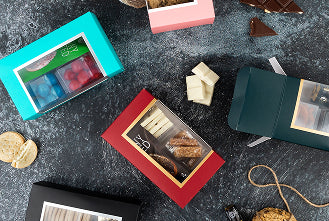
Hybrid packaging combines the strengths of both materials. A common approach is a paper box with a clear window—the box provides structure, branding surface, and eco-friendly messaging, while the window panel shows the product and provides a better moisture barrier than paper alone. Another hybrid is cellophane-wrapped cookies placed inside a decorative paper box, which gives you maximum freshness protection with premium presentation. This approach is common for cellophane bags versus bakery boxes decisions—you don't have to choose one or the other.
Even the best packaging can't compensate for poor handling practices. Start by cooling cookies completely on wire racks before packaging—this typically takes 30-45 minutes for standard drop cookies, longer for thick or filled varieties. Packaging warm cookies traps steam, creates condensation, and promotes mold growth within 24-48 hours. If you're packaging large batches, use a thermometer to verify cookies have reached room temperature (68-72°F) before sealing.
Layer cookies with parchment or wax paper dividers to prevent sticking and breakage during transport. This is especially important for frosted or glazed cookies, which can smudge or transfer decoration to adjacent cookies. For stacked packaging in boxes, place heavier, sturdier cookies on the bottom and delicate varieties on top. If you're using different cookie box sizes, match the box dimensions closely to the cookie quantity—excess air space allows cookies to shift and break during handling.
Store packaged cookies in a cool, dry location away from direct sunlight and heat sources. Room temperature (65-72°F) with moderate humidity (40-60% RH) is ideal for most cookie types. Avoid refrigerating cookies unless they contain perishable fillings like cream cheese or fresh fruit—refrigeration accelerates staling in flour-based baked goods through a process called starch retrogradation. The exception is cookies with high-moisture fillings, which require refrigeration for food safety but should be brought to room temperature before serving.
For cookies you're shipping or transporting to events, add cushioning material around the package to prevent crushing. Crumpled tissue paper, bubble wrap, or air pillows work well. If you're using seasonal cookie packaging, plan your order timeline to allow for testing—order samples, package a test batch, and evaluate the packaging performance over 3-5 days before committing to large quantities. This simple step prevents the costly mistake of discovering packaging failures after you've already baked hundreds of cookies.
Cookie packaging is FDA compliant when all materials that contact food—boxes, bags, liners, inks, adhesives, and coatings—meet standards outlined in Title 21 of the Code of Federal Regulations. Materials must be listed as approved indirect food additives, designated Generally Recognized as Safe (GRAS), covered by a Threshold of Regulation exemption, or approved through a Food Contact Substance Notification. Reputable packaging suppliers provide documentation confirming their products meet these requirements. Always verify compliance before using packaging for commercial food sales.
Grease-resistant cookie bags use specialized paper treatments or coatings that block lipid penetration. Glassine paper is mechanically pressed to create a dense fiber structure that naturally resists grease. Kraft paper can be treated with food-safe coatings like polyethylene or plant-based polymers that create an impermeable barrier. These treatments prevent butter, chocolate, and other fats in cookies from soaking through the packaging material, which maintains a clean appearance and prevents structural weakening of paper packaging.
The answer depends on cookie texture. Crisp cookies like biscotti and gingersnaps perform better in slightly breathable packaging that prevents condensation while protecting from environmental humidity. Soft cookies like chocolate chip or oatmeal need airtight packaging to prevent moisture loss that causes staling. For mixed cookie assortments, package crisp and soft varieties separately in individual bags or use dividers to prevent moisture transfer between types. Airtight packaging generally extends shelf life by 2-3 times compared to open paper packaging.
Cookies in heat-sealed or resealable cellophane bags typically stay fresh for 7-14 days at room temperature, compared to 3-5 days in paper boxes with grease-resistant liners. Cellophane provides a better moisture and oxygen barrier, which slows staling and fat oxidation. Paper boxes work well for short-term packaging where quick turnover is expected, such as cookie exchanges or weekend sales. For mail-order or wholesale distribution requiring longer shelf life, cellophane or hybrid packaging (cellophane-wrapped cookies inside a paper box) is the better choice.
Reusing cookie packaging for food products is not recommended for food safety and regulatory reasons. Once packaging has been used, it may harbor bacteria, absorb odors, or contain residues that contaminate new products. FDA regulations require that food contact materials maintain their safety and integrity throughout their intended use. Single-use packaging is designed for one product cycle. If you want reusable packaging for environmental reasons, choose food-grade containers specifically designed and labeled for multiple uses, and follow proper washing and sanitization protocols between uses.
Food safe cookie packaging protects your product, your customers, and your reputation. By understanding FDA requirements, selecting appropriate grease-resistant and moisture-barrier materials, and following proper storage practices, you ensure cookies arrive fresh and safe whether they're traveling across town for a cookie exchange or across the country for mail-order sales. The investment in quality packaging pays dividends in customer satisfaction, reduced waste, and the confidence that comes from meeting professional food safety standards.