Cart
0
You may also like


Book a call with our development team to get started.



Apply online and access wholesale pricing.

Affordable corporate gift packaging doesn't mean settling for boxes that look cheap. When budgets tighten but client relationships still matter, the gap between what you can spend and what you need to project becomes a strategic design problem—not a compromise. The solution lies in understanding which elements signal quality to recipients and which exist only to inflate vendor invoices.
Corporate buyers working within tight Q4 budgets face a common tension: leadership expects gifts that reflect brand standards, but finance has capped per-unit costs at levels that rule out custom rigid boxes or fully branded packaging systems. The answer isn't to skip corporate holiday gift packaging altogether—it's to redirect spend toward the details recipients actually notice.
Custom packaging quotes often include setup fees, die-cutting costs, and minimum order quantities that push per-unit prices beyond what many programs can justify. Stock boxes eliminate those surcharges entirely. You're buying existing inventory, which means no setup fees and access to smaller order quantities that match realistic distribution lists.
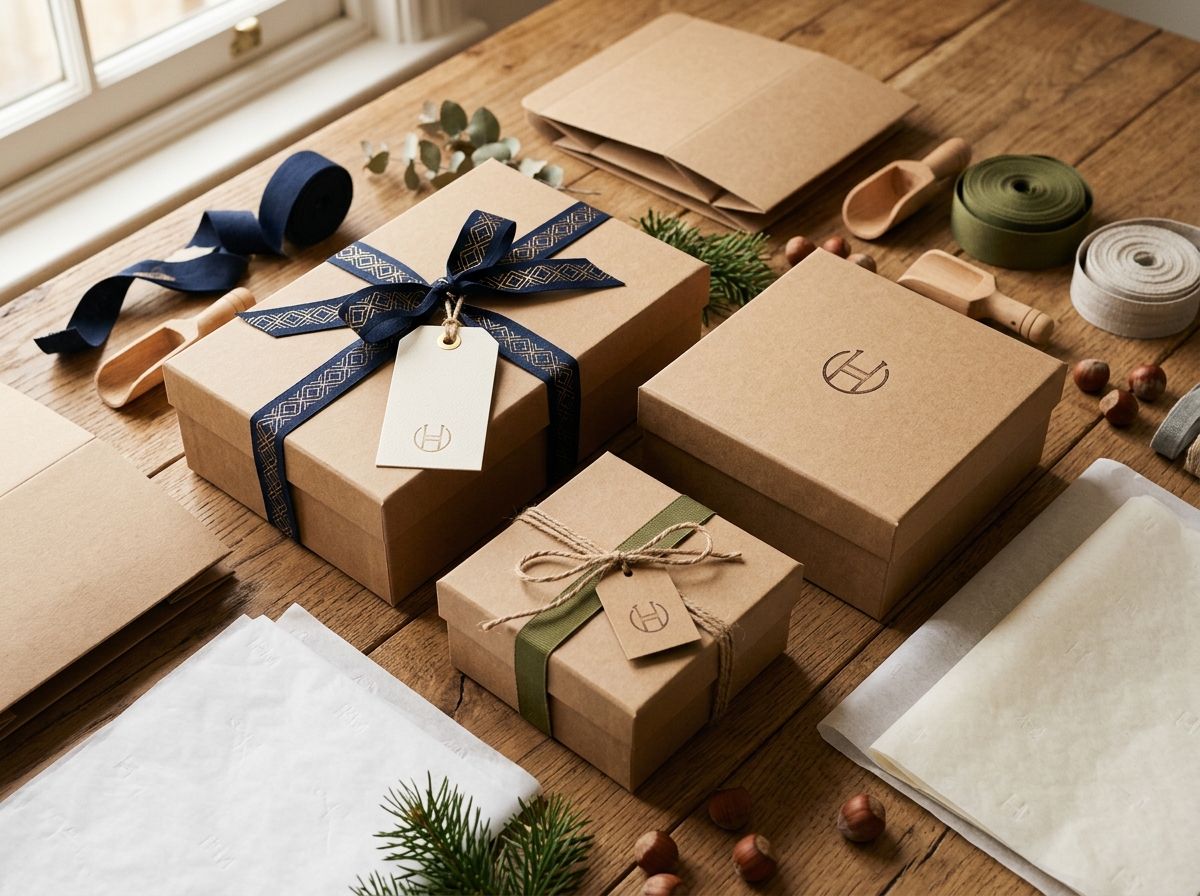
The cost difference is measurable. A kraft gift box in a standard cube size can run one-third the price of a comparable custom rigid box once you factor in tooling and minimum commitments. That margin allows you to reallocate budget toward the customization layer—ribbons, hang tags, or printed tissue—that carries your branding without requiring a packaging engineer.
Stock doesn't mean generic. Minimalist design trends have elevated neutral packaging into a deliberate aesthetic choice. According to industry research, Flexible Packaging Association members report that clean, understated designs now represent a significant portion of corporate packaging requests, reflecting broader consumer preference for simplicity over ornate decoration.
Kraft paper has completed its journey from economy option to intentional brand choice. What once signaled cost-cutting now communicates environmental responsibility and design confidence—two attributes that resonate strongly in corporate gifting contexts.
The material's natural texture provides tactile interest that glossy coated stock cannot replicate. It photographs well in unboxing scenarios, which matters when recipients share gifts on internal channels or social media. And because kraft accepts stamping, foil accents, and custom labels without expensive pre-treatment, it offers a lower barrier to light customization than coated alternatives.
Sustainability messaging layers naturally onto kraft packaging. Research indicates that eco-friendly packaging continues to influence corporate purchasing decisions, with many companies prioritizing sustainable materials as part of broader environmental commitments. A simple kraft cube box paired with a brief note about recyclable materials can reinforce brand values without requiring a dedicated sustainability packaging line.
Once you've selected stock boxes as your base, the budget saved on packaging structure should fund the elements that personalize the experience. This is where affordable corporate gift packaging separates itself from genuinely cheap packaging.
Custom ribbon in brand colors costs significantly less than custom box printing but delivers comparable visual impact when the package is closed. A well-tied grosgrain ribbon transforms a stock box into something that feels considered. Hang tags printed with recipient names or a brief message add a personal touch that fully custom packaging often lacks—ironically, because custom boxes rarely include variable data printing.
Tissue paper offers another high-impact, low-cost customization opportunity. Even unprinted tissue in a brand-aligned color creates a reveal moment when the box opens. If budget allows, a single-color logo print on tissue costs a fraction of box printing while delivering strong brand presence inside the package.
This approach aligns with broader trends in corporate gift presentation. As noted in research from PMMI, the packaging and processing industry has seen growing investment in personalization technologies that enable customization at scale, allowing brands to add individual touches without custom packaging runs.
For programs that include multiple gift tiers—executive clients, key accounts, and general business contacts—this layered approach allows you to maintain consistent base packaging while varying the customization intensity. Executive gifts might receive hand-calligraphed tags and premium ribbon, while broader distribution uses printed labels and standard grosgrain. The boxes remain identical, but the perceived value scales appropriately. This strategy is explored in depth in our guide to tiered corporate gift packaging.
Bulk pricing creates the margin that makes premium presentation affordable, but only if you're ordering the right quantities of the right products. The goal is to hit volume discounts without over-committing to sizes or styles that don't match your actual gift assortment.
Start by auditing your gift contents. If you're packaging items that vary significantly in dimension—wine bottles, gift sets, and small boxed goods—you'll need multiple box sizes. Consolidating your order across fewer SKUs in higher quantities typically unlocks better per-unit pricing than spreading budget across many sizes in smaller runs.
Timing matters as much as quantity. Ordering well ahead of your distribution deadline gives you access to standard lead times and avoids rush fees that can erase bulk discounts. Most wholesale packaging suppliers offer their best pricing on orders placed 6-8 weeks before delivery, which aligns with the planning timeline outlined in our post on when to order corporate holiday gifts for December delivery.
Understanding minimum order quantities also helps you plan realistically. Many suppliers set MOQs that reflect efficient production runs—often 100-500 units depending on the product. If your program distributes 75 gifts, ordering 100 units of a stock box is still more cost-effective than paying setup fees for a custom run of 75. The extra inventory carries into next year's program or serves other packaging needs.
For organizations managing multiple gift programs throughout the year, consolidating orders across occasions—holiday gifts, milestone recognition, client onboarding—can push total volume into higher discount tiers while maintaining packaging consistency that reinforces brand identity across touchpoints.
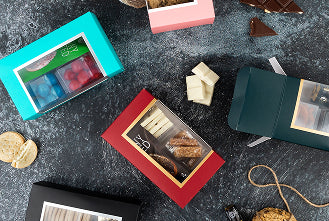
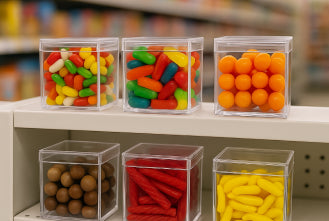
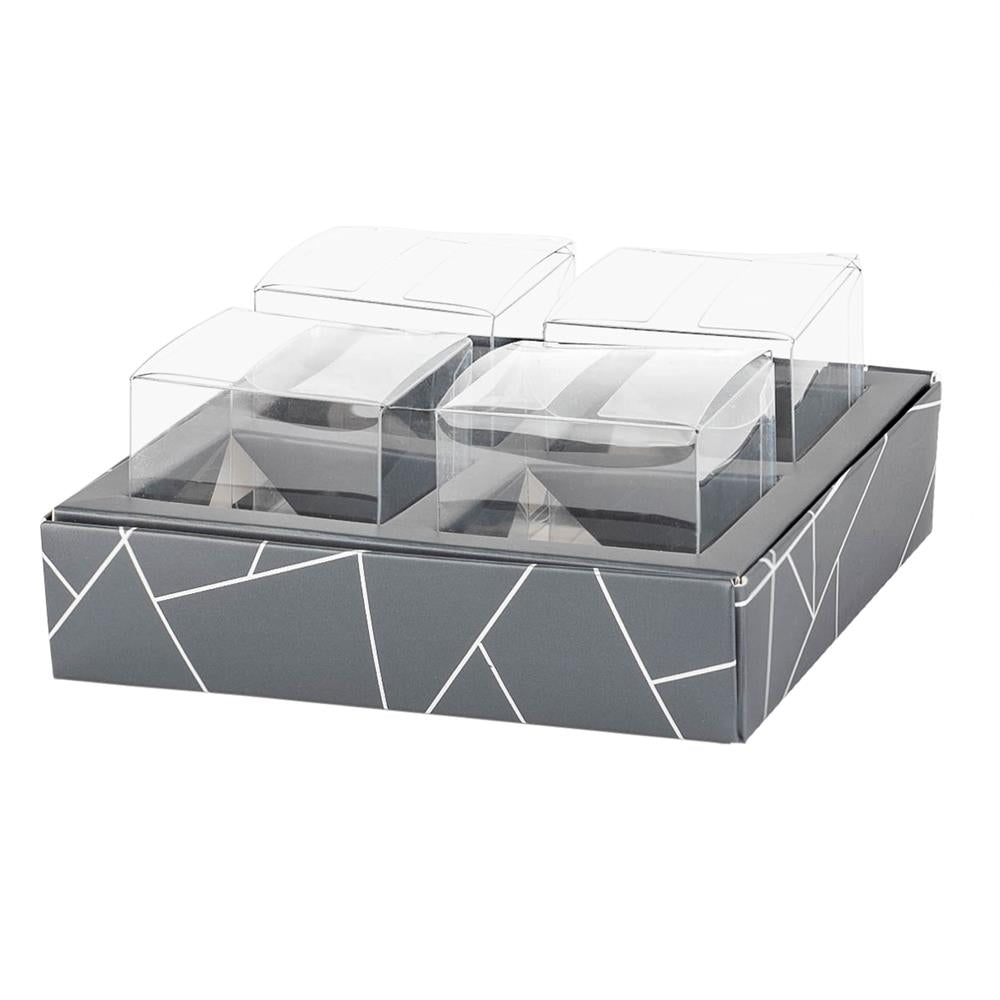
Transparent or windowed packaging can reduce perceived cost if the gift inside doesn't visually justify the presentation effort. Conversely, showing a high-quality product—artisan chocolates, premium coffee, or carefully curated gift sets—can elevate the entire package by letting the contents speak for themselves.
This decision point has real budget implications. Opaque boxes allow you to create anticipation and control the reveal sequence, which matters when the gift itself is modest but thoughtfully selected. Clear boxes or acetate windows work best when the product has strong visual appeal and doesn't require additional packaging or fill to look finished.
For food gifts specifically—cookies, chocolates, or baked goods—windowed packaging serves a dual function: it showcases the product while signaling food safety and freshness. The transparency implies nothing is hidden, which builds trust in corporate gifting contexts where recipients may have dietary restrictions or preferences. Our guide to clear gift boxes versus opaque options explores this decision in greater detail.
Logo-heavy packaging often costs more and achieves less than subtle brand integration. The most effective affordable corporate gift packaging uses restraint as a design principle, not a budget constraint.
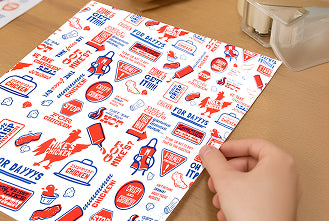
A single-color stamp on kraft paper, a branded sticker on the box closure, or a hang tag with your logo and a brief message can establish brand presence without the expense of full-color box printing. These elements cost pennies per unit but create a finished look that recipients associate with care and attention.
This approach also aligns with recipient preferences. Many corporate clients report that overly branded packaging feels transactional, while understated branding feels personal. The difference between a box covered in logos and one with a small branded detail is the difference between advertising and gifting. For more on this balance, see our analysis of quiet branding versus logo-heavy packaging in corporate contexts.
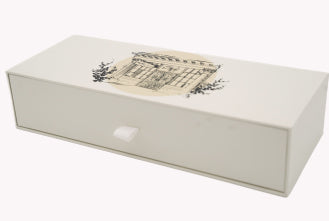
Branded inserts—a card, a product information sheet, or a brief note—offer another cost-effective branding opportunity. These pieces can be digitally printed in small runs, personalized with recipient names or custom messages, and updated seasonally without retooling packaging. A clean white tuck-top box paired with a well-designed insert often outperforms a fully printed box in both cost and perceived quality.
Packaging that recipients keep and reuse extends brand presence far beyond the initial gift moment—and it does so without recurring cost. Rigid boxes with magnetic closures, wooden trays, or sturdy gift boxes with lids become storage solutions, organizers, or secondary gift packaging in recipients' homes and offices.
This strategy works particularly well for budget-conscious programs because the packaging itself becomes part of the gift value. A recipient who uses a box to store keepsakes or office supplies interacts with your brand repeatedly, creating touchpoints that single-use packaging cannot achieve.
The key is selecting packaging that has genuine utility beyond the initial presentation. Flimsy boxes that collapse after opening don't qualify. Well-constructed kraft boxes, wooden serving trays, or stackable containers do. For specific examples and strategies, our post on reusable corporate gift packaging provides detailed guidance on selecting formats that recipients actually keep.

Corporate gifts frequently include food items—cookies, chocolates, specialty snacks, or beverage products. Budget constraints don't eliminate the requirement for food-safe materials, but they do require more careful sourcing.
Many stock kraft and paperboard boxes meet food-safe standards without premium pricing, but you need to verify this with your supplier. Boxes intended for direct food contact should be labeled as such, and any inserts, tissue, or fill materials should also meet food-grade requirements if they'll touch edible products.
For bakery items specifically, boxes with grease-resistant coatings or liners prevent oil migration that can stain outer packaging or compromise structural integrity. These treatments add minimal cost but preserve presentation quality through handling and delivery. If your program includes cookies or baked goods, our guide to cookie and bakery box packaging for corporate gifts covers material selection and sizing in detail.
Affordable corporate gift packaging requires looking beyond box unit cost to total cost per delivered gift. A box that costs $2 but requires $3 in ribbon, tissue, and labor to finish may be more expensive than a $4 box that needs only a label.
Labor is the hidden cost in many corporate gift programs. Complex assembly—multiple inserts, intricate ribbon work, or hand-tied closures—adds time that translates to cost, whether you're paying staff or volunteers. Packaging that assembles quickly and finishes with minimal steps reduces total program cost even if the per-unit box price is slightly higher.
Shipping costs also factor into the equation. Lightweight packaging reduces dimensional weight charges, which can be significant when shipping individually to remote recipients. Flat-pack boxes that assemble on-site save shipping volume, allowing you to transport larger quantities in a single shipment to a central assembly location.
For organizations navigating minimum order quantities and bulk pricing structures, understanding how MOQs affect unit economics is essential. Our detailed breakdown of minimum order quantities for custom corporate gift boxes explains how to evaluate MOQ requirements against your actual program needs.
Budget-conscious corporate gift programs benefit from ordering packaging inventory that serves multiple occasions rather than holiday-specific designs. Neutral kraft boxes, white gift boxes, or black cube boxes work across seasons with only minor customization changes—swap ribbon colors, update hang tag messaging, or change tissue hues to match the occasion.
This approach reduces per-unit cost by allowing you to order larger quantities of versatile packaging rather than smaller runs of occasion-specific designs. A kraft box ordered in bulk for holiday gifts can serve equally well for Q1 client appreciation, employee milestones, or spring events with different ribbon and tag treatments.
Storage considerations matter when ordering ahead or maintaining inventory. Flat-pack boxes minimize storage footprint, and standardizing on a few core sizes reduces the organizational complexity of managing seasonal inventory across multiple programs.
For budget-conscious corporate programs, allocate 15-25% of total gift cost to packaging, customization, and assembly. A $20 gift should carry $3-5 in packaging expense to feel appropriately presented. Stock boxes with custom ribbon and tags typically fall within this range, while fully custom packaging often exceeds it. The percentage can scale down slightly for higher-value gifts—a $100 gift doesn't require $25 in packaging to feel premium.
Stock packaging ships within days to two weeks since it's already manufactured and warehoused. Custom packaging requires 4-8 weeks minimum to account for design approval, tooling, production, and shipping. For corporate holiday programs, stock packaging offers flexibility to order closer to distribution dates, while custom requires early commitment to timelines and specifications.
Yes, when finished thoughtfully. Kraft paired with high-quality ribbon, embossed hang tags, or subtle foil accents creates a sophisticated aesthetic that reads as intentional design rather than cost-cutting. The key is consistency in execution—well-tied ribbon, crisp edges, and clean assembly signal quality regardless of material. Many luxury brands now use kraft specifically because it communicates authenticity and environmental responsibility.
Branded stickers, custom stamps, printed hang tags, and ribbon in brand colors all add identity without printing directly on boxes. Stickers cost $0.10-0.30 per unit for small runs, custom stamps have a one-time setup cost but near-zero per-impression cost, and hang tags can be digitally printed in quantities as small as 50 units. These methods also allow you to personalize messaging or update designs between orders without retooling packaging.
Cube boxes in 4x4x4 inches and 6x6x6 inches cover the majority of corporate gift items—mugs, small gift sets, gourmet food items, and boxed products. For wine or tall bottles, a 4x4x12 inch box is standard. If your program includes varied contents, ordering a mix of these three sizes in bulk typically provides more flexibility and better pricing than ordering many sizes in small quantities.
The most effective affordable corporate gift packaging programs treat packaging as a strategic investment rather than a line-item expense to minimize. The goal isn't the cheapest possible box—it's the optimal balance of cost, brand alignment, and recipient experience that supports relationship-building without straining budgets.
This means planning ahead to access bulk pricing, choosing versatile stock packaging that serves multiple programs, investing customization budget in high-impact details like ribbon and tags, and designing assembly processes that minimize labor without sacrificing finish quality. It means understanding which elements recipients notice—material quality, thoughtful presentation, personal touches—and which exist only to justify vendor markups.
Corporate gift packaging succeeds when the recipient feels valued, not when the box cost the most. Budget constraints force clarity about what actually matters in that exchange, and often produce better results than unconstrained spending that defaults to expensive custom solutions that don't address the relationship-building goal at the heart of corporate gifting.