Cart
0
You may also like


Book a call with our development team to get started.



Apply online and access wholesale pricing.

When you're evaluating rigid boxes vs folding cartons for your product line, you're really deciding between two fundamentally different packaging structures—and the choice affects everything from perceived value to cash flow. Rigid boxes are built from thick chipboard wrapped in printed paper, pre-assembled and ready to use. Folding cartons are printed paperboard that ships flat and assembles during packing. Understanding the structural, cost, and minimum-order differences between these formats helps you match packaging to product positioning without overcommitting capital or underselling your brand.
This guide walks through the construction methods, typical MOQ ranges, cost drivers, and use cases for both packaging types. Whether you're launching a premium gift line or scaling a retail product, you'll leave with a clear framework for when each format makes sense—and when the upgrade to rigid packaging justifies the investment.
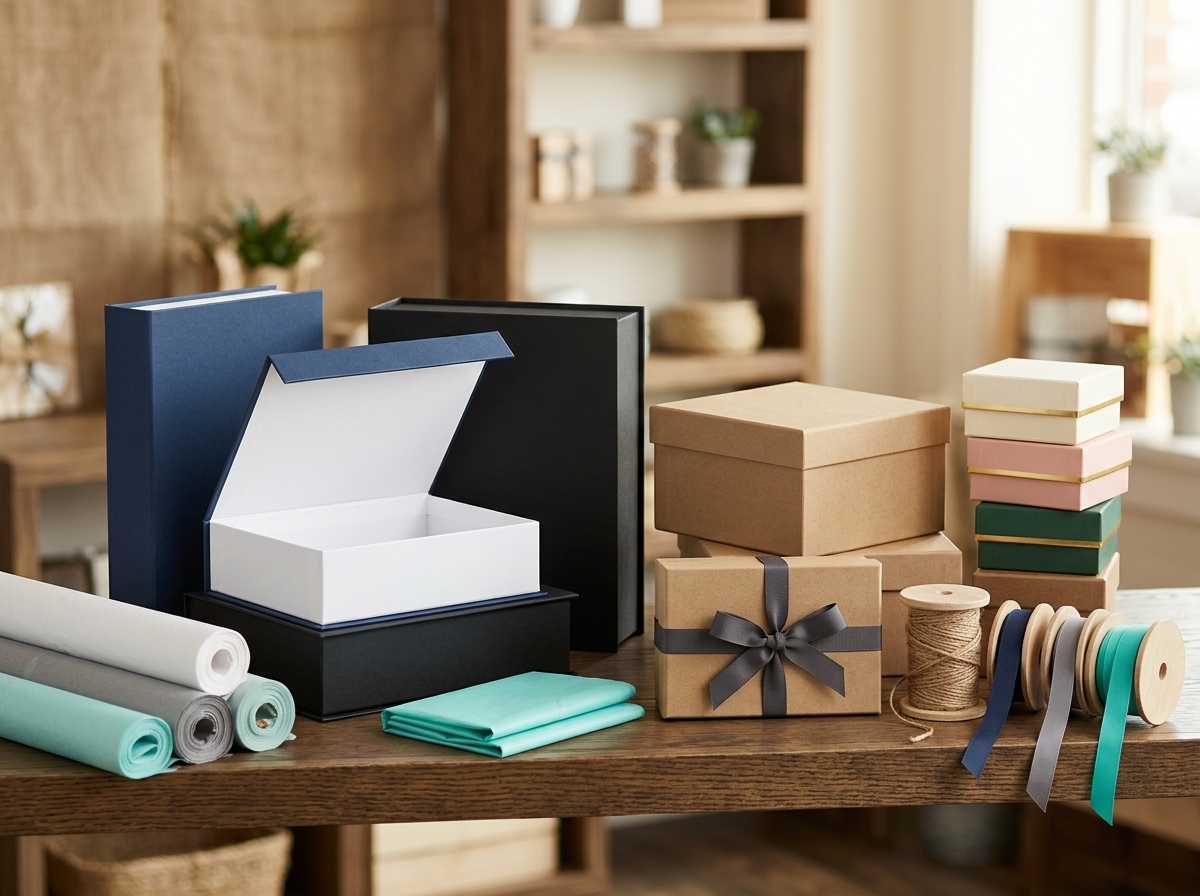
A rigid box is a luxury packaging format constructed from two distinct components: a thick chipboard core and a decorative paper wrap. The chipboard foundation typically ranges from 1.5 mm to 3 mm thick (approximately 36 to 120 point), which is four to five times thicker than standard folding carton paperboard. For heavy or fragile items like glass bottles or electronics, the chipboard can go as high as 4 mm to prevent panel warping during transit.
The wrap—a separate printed or specialty paper—is adhered to the chipboard frame using water-based adhesives. This two-part construction is what gives rigid boxes their permanent shape and premium feel. Unlike folding cartons, rigid boxes cannot collapse or ship flat; they occupy their full dimensional volume from factory to end user. That structural integrity is also why they're favored for high-value products where presentation is part of the brand experience.
Rigid box structures include lid-and-base styles, magnetic closures, book-style hinged boxes, and collapsible formats that assemble on-site with embedded magnets. Each variation serves a different unboxing experience: magnetic closures are standard in beauty and subscription boxes, while lid-and-base formats work well for gift box packaging ideas for retail and e-commerce brands where the product is presented flat.
Production timelines for rigid boxes run longer than folding cartons. Even with a single clean sample round, a rigid box program typically requires 60 to 80 days from approved dieline to landed stock, before design time and before any approval delays. The wrap material introduces its own print tolerance and failure modes, which is why physical sampling is non-negotiable—a rigid box that's 1 mm out of tolerance on the wrap will not close properly.
Folding cartons are printed paperboard packages that are die-cut, scored, folded, and glued into their finished form. The primary material is single-ply paperboard—typically Solid Bleached Sulfate (SBS) for premium applications, Coated Recycled Board (CRB) for high-volume consumer goods, or kraft for natural, uncoated aesthetics. These boards support high-quality printing while maintaining the stiffness and crush resistance needed for retail display and e-commerce shipping.
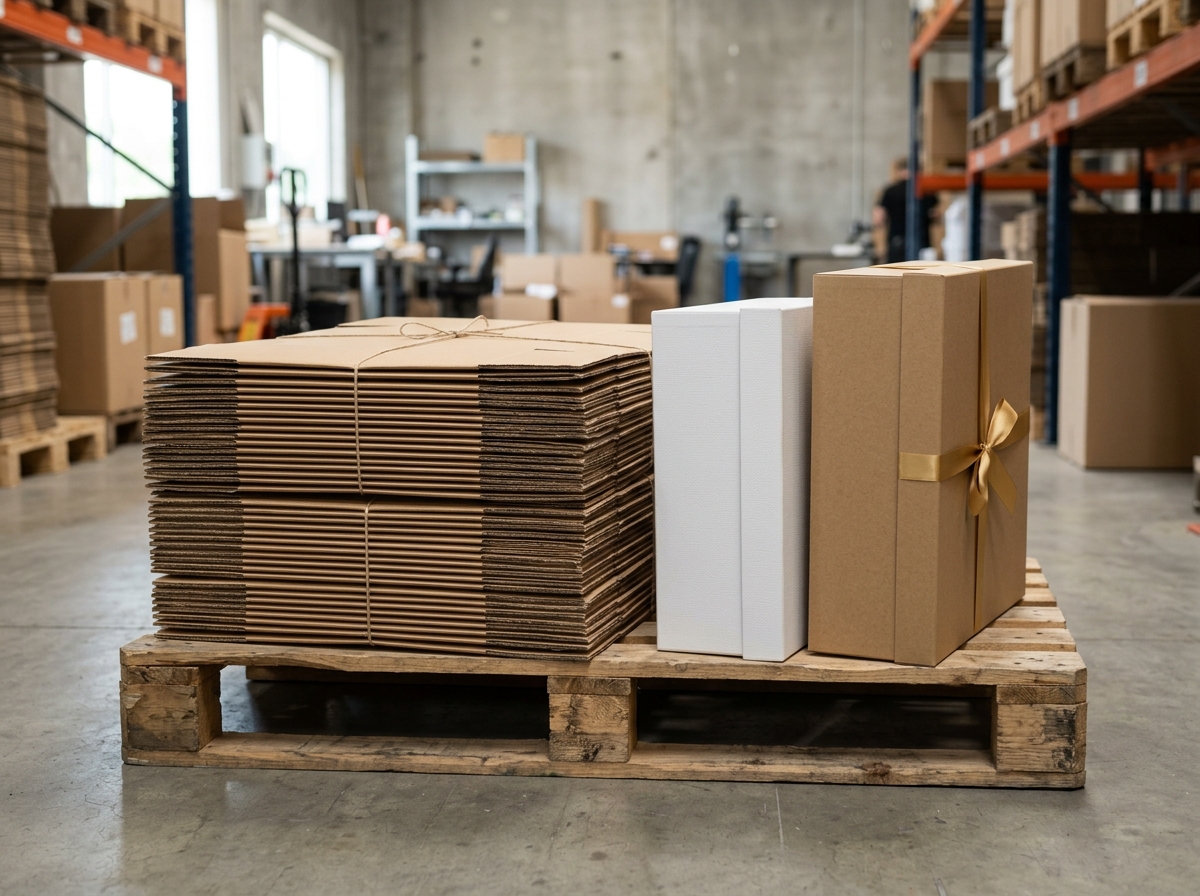
The defining characteristic of folding cartons is that they ship flat and are erected during packing or filling. This format dramatically reduces storage and freight costs compared to pre-assembled rigid boxes. A pallet of flat folding cartons can hold thousands of units in the same footprint that might accommodate only hundreds of rigid boxes.
Common folding carton structures include straight tuck end, reverse tuck end, auto-lock bottom, sleeve-and-tray systems, and windowed boxes. Each style balances ease of assembly with product protection and shelf appeal. Straight tuck and reverse tuck styles are efficient for hand-packing operations, while auto-lock bottoms speed up high-volume production lines by eliminating the need for bottom gluing during filling.
The manufacturing process for folding cartons involves precision printing (offset lithography for high-quality graphics, flexography for large runs, or digital printing for short runs), die-cutting to create the carton shape, scoring to define fold lines, and gluing to form the structural seams. Because the entire package is created from a single sheet of paperboard, tooling is simpler and production timelines are shorter than rigid boxes—often 2 to 4 weeks for custom printed runs after artwork approval.
Understanding how to choose the right packaging material for your product means evaluating not just the aesthetic differences but also the functional requirements of your fulfillment process and the storage constraints of your operation.
The cost difference between rigid boxes and folding cartons stems from materials, labor, and logistics. Rigid boxes require thicker chipboard, a separate wrap material, hand assembly (wrapping the chipboard and attaching closures or inserts), and significantly higher freight costs due to their pre-assembled volume. Folding cartons use a single layer of paperboard, automated converting processes, and ship flat, which reduces both production labor and transportation expense.
Per-unit costs for rigid boxes typically start at $2 to $5 for simple structures and can exceed $10 to $15 for complex magnetic-closure or book-style boxes with premium finishes like foil stamping or embossing. Folding cartons, by contrast, often range from $0.30 to $1.50 per unit for standard printed formats, with premium windowed or specialty-coated versions reaching $2 to $3. The gap narrows slightly at very high volumes, but rigid packaging remains a multiple of folding carton pricing at any scale.
Finishing treatments also differ in cost. Rigid boxes commonly feature foil stamping, debossing, ribbon closures, and custom inserts—all of which add labor and material expense. Folding cartons can incorporate these finishes as well, but the flat structure and automated production make spot UV coating, aqueous varnish, and die-cut windows more economical to execute at volume.
Freight is a hidden but significant cost driver. A shipping container that holds 50,000 flat folding cartons might accommodate only 8,000 to 12,000 pre-assembled rigid boxes, depending on dimensions. For small businesses managing cash flow, this difference can determine whether a packaging investment ties up working capital for three months or twelve. If you're trying to balance premium presentation with budget constraints, exploring eco-friendly packaging options that don't break the budget can help you find middle-ground solutions.
Minimum order quantities for rigid boxes typically start around 500 units for a custom structure, though some manufacturers require 1,000 to 3,000 units depending on complexity and finishing. The higher MOQ reflects the hand-assembly labor and the need to amortize tooling costs for custom dies, magnetic inserts, or specialty closures across enough units to make production economical.
Folding cartons offer more flexibility. Digital printing enables MOQs as low as 250 to 1,000 units, making it accessible for small businesses testing new products or seasonal packaging. Traditional offset or flexographic printing—which delivers richer color and lower per-unit costs at scale—usually requires 2,500 to 10,000 units to justify plate and press setup. The Fibre Box Association notes that setup costs in packaging manufacturing are a fixed expense that must be spread across enough units to remain profitable, which is why per-unit pricing drops dramatically at higher volumes.
For startups or small brands shipping 100 to 200 orders per month, a 5,000-unit folding carton MOQ represents 25 to 50 months of inventory—manageable with careful planning. A 1,000-unit rigid box MOQ at $4 per unit, however, requires $4,000 upfront and occupies significant warehouse space, which can strain early-stage cash flow. If MOQ is a barrier, reading our guide on understanding MOQ: a small business guide to minimum order quantities will help you negotiate terms or identify lower-volume alternatives.
Stock (unprinted) packaging typically carries lower MOQs for both formats. Plain kraft folding cartons or simple two-piece rigid boxes without custom printing can often be ordered in quantities of 100 to 500 units, which allows small businesses to access the structural benefits of each format while deferring the investment in custom branding until order volume justifies it.
Rigid boxes are the right choice when the packaging itself is part of the product value proposition. Categories where rigid packaging consistently outperforms folding cartons include luxury cosmetics, high-end jewelry, premium spirits and wine, subscription boxes, corporate gifting, and collector-edition products. In these contexts, the unboxing experience directly influences perceived value and repeat purchase intent.
Subscription box brands rely on rigid packaging because the box is reused by customers for storage, which extends brand presence beyond the initial unboxing. Beauty and fragrance brands use magnetic-closure rigid boxes to create a tactile, premium opening experience that reinforces product positioning. Corporate gifting programs favor rigid boxes with custom inserts and ribbon closures because the presentation communicates thoughtfulness and investment.
Rigid boxes also excel when product protection is paramount. The thick chipboard structure provides superior crush resistance for fragile items like glass candles, ceramic goods, or delicate electronics. The pre-assembled format eliminates the risk of improper assembly during packing, which can be critical for high-value items where a damaged presentation undermines the customer experience.
However, rigid boxes are rarely cost-effective for products under $30 retail price, high-turnover consumables, or shipping-focused applications where the box is discarded immediately upon receipt. If your product is positioned as a gift or keepsake, the investment makes sense. If it's a functional item purchased for utility, a well-designed folding carton likely delivers better ROI. For gift-focused brands, pairing rigid boxes with a cube kraft gift tuck top box offers a structured, premium presentation at a more accessible price point.
Folding cartons are the workhorse of retail and e-commerce packaging. They're the default choice for food products, health and beauty items, consumer electronics, apparel, and any product where the packaging is opened and recycled within minutes of receipt. The flat-shipping format, lower per-unit cost, and faster production timelines make folding cartons ideal for businesses that need to move quickly, test multiple SKUs, or manage inventory across multiple sales channels.
Retail brands benefit from folding cartons' ability to stand on shelf while displaying product information, branding, and compliance details across multiple panels. Windowed folding cartons allow customers to see the product without opening the package, which reduces returns and increases purchase confidence. Sleeve-and-tray formats offer a middle ground between folding cartons and rigid boxes—an outer sleeve provides branding real estate, while an inner tray protects the product and creates a modest unboxing moment.
E-commerce operations favor folding cartons because they ship flat, assemble quickly during packing, and nest efficiently in outer shipping boxes. A folding carton designed with auto-lock bottom and tuck-top closure can be erected in seconds, which matters when you're packing 200 orders per day. The lighter weight also reduces shipping costs, which directly impacts margin on low-AOV products.
Folding cartons are also the right choice when you need packaging flexibility. Seasonal products, limited-edition runs, and SKU variations are easier to manage with folding cartons because the lower MOQ and shorter lead times allow you to order smaller batches and adjust designs between runs. If you're exploring ways to add visual interest without the cost of rigid packaging, learning how to design an unboxing experience that builds loyalty can help you maximize the impact of a well-executed folding carton.
For bakery and food businesses, folding cartons offer food-safe substrates, grease-resistant coatings, and the structural variety needed for different product formats—from cookie boxes to pastry sleeves. A white gift tuck top box in a compact 2x2x2 size works well for individual treats, party favors, or small gift items where a clean, simple presentation is sufficient.
Many brands use both rigid boxes and folding cartons within the same product line, matching packaging format to price point and purchase occasion. A skincare brand might package its $75 serum in a magnetic-closure rigid box while using a premium folding carton for its $25 cleanser. A chocolate company might reserve rigid boxes for holiday gift assortments and use folding cartons for everyday retail bars.
This tiered approach allows you to signal value differences across your product range while managing packaging costs proportionally. It also gives you flexibility to test premium packaging on a single SKU before committing to a full-line conversion. If the rigid-box SKU outperforms projections or generates measurably higher repeat purchase rates, you have data to justify expanding the format to additional products.
Another hybrid strategy is to use folding cartons as the primary package and add rigid outer packaging for gift-ready versions. A standard retail SKU ships in a folding carton; a gift set bundles two or three units in a rigid box with custom inserts. This approach leverages the cost efficiency of folding cartons for everyday sales while offering a premium gifting option without maintaining separate SKUs.
Some brands also combine folding cartons with custom tissue paper, stickers, or inserts to elevate the unboxing experience without the cost of rigid packaging. If you're working within a tight budget, exploring branded packaging on a budget: stickers, stamps, and inserts can help you create a memorable presentation using folding cartons as the foundation.
Both rigid boxes and folding cartons can be produced using recycled content and FSC-certified paperboard, but the sustainability profile differs slightly. Folding cartons typically use single-ply paperboard that's widely accepted in curbside recycling programs. The flat format also reduces transportation emissions—more units per truckload means fewer trips and lower carbon footprint per package.
Rigid boxes use thicker chipboard, which is also recyclable, but the wrap material and any magnetic or ribbon closures may require separation before recycling. Some municipalities accept rigid boxes in single-stream recycling; others require consumers to remove non-paper components. Brands committed to sustainability should specify water-based adhesives, soy-based inks, and kraft wraps instead of plastic-laminated finishes, all of which improve recyclability.
The Forest Stewardship Council certifies paperboard sourced from responsibly managed forests, and many packaging suppliers offer FSC-certified options for both rigid boxes and folding cartons. If sustainability is a brand pillar, requesting FSC certification and recycled content documentation during the quoting process ensures your packaging aligns with your environmental commitments.
Reusability is another sustainability angle. Rigid boxes are often kept and repurposed by customers for storage, which extends the product's life and keeps the brand visible in the customer's home. Folding cartons are rarely reused, but their lighter weight and efficient shipping offset some of the single-use impact. If your customers value sustainability, communicating the recyclability or reusability of your packaging on the box itself reinforces your commitment.
Choosing between rigid boxes and folding cartons comes down to three factors: your product's price point, your brand positioning, and your business stage. If your product retails above $50, targets gift-givers or collectors, and your brand emphasizes luxury or craftsmanship, rigid boxes likely deliver ROI through higher perceived value and repeat purchase rates. If your product is under $30, purchased for utility, or sold in high-volume retail channels, folding cartons offer better cost efficiency and operational flexibility.
Your business stage also matters. Early-stage brands with limited cash flow should prioritize folding cartons or stock rigid boxes to minimize upfront investment and preserve working capital for product development and marketing. Established brands with proven SKUs and predictable order volume can justify the higher MOQ and per-unit cost of custom rigid packaging because the volume amortizes the investment and the premium presentation supports higher pricing.
If you're unsure which format fits your business, start with folding cartons and plan a future upgrade path. Design your folding carton with premium finishes—spot UV, embossing, or a windowed panel—to maximize perceived value. As your order volume grows and your brand gains traction, you can introduce rigid packaging for your top-selling SKU or a limited-edition release, using customer response to guide further investment.
Ultimately, the best packaging is the one that aligns product, brand, and budget. Rigid boxes and folding cartons each have a place in the packaging ecosystem, and understanding their structural, cost, and MOQ differences ensures you're making decisions based on business fundamentals rather than assumptions about what "premium" has to look like.
Rigid boxes are built from thick chipboard (1.5 mm to 3 mm) wrapped in printed paper and arrive pre-assembled, maintaining their shape throughout shipping and use. Folding cartons are made from single-ply paperboard that ships flat and is erected during packing. This structural difference affects cost, storage, freight, and the unboxing experience.
Rigid boxes typically cost $2 to $5 per unit for simple structures and $10 to $15 for complex designs with premium finishes. Folding cartons range from $0.30 to $1.50 for standard printed formats, with premium versions reaching $2 to $3. The cost gap reflects differences in materials, labor, and shipping volume.
Rigid boxes usually require minimum orders of 500 to 3,000 units depending on complexity. Folding cartons offer more flexibility: digital printing enables MOQs as low as 250 to 1,000 units, while offset printing typically requires 2,500 to 10,000 units. Stock (unprinted) options for both formats may be available in quantities of 100 to 500 units.
Rigid boxes make sense when your product retails above $50, is positioned as a luxury or gift item, or when the unboxing experience directly influences repeat purchases. They're ideal for subscription boxes, premium cosmetics, jewelry, and corporate gifting where the packaging itself is part of the product value. For lower-price-point or high-turnover products, folding cartons deliver better ROI.
Yes, many brands use a tiered packaging approach, matching format to price point and purchase occasion. Premium SKUs or gift sets use rigid boxes, while everyday retail products use folding cartons. This strategy signals value differences across your range while managing costs proportionally and allows you to test premium packaging on select SKUs before expanding.