Cart
0
You may also like

Book a call with our development team to get started.



Apply online and access wholesale pricing.

Thanksgiving is the busiest season for bakeries and caterers, and delivering intact pies is the difference between a five-star review and a refund request. Whether you're transporting a single pumpkin pie across town or delivering dozens of mixed varieties to a corporate event, knowing how to package pies for delivery protects your work and your reputation. The right combination of box selection, internal support, and stacking strategy ensures crusts stay crisp, fillings stay centered, and decorative touches arrive exactly as you intended.
This guide covers the practical steps catering companies and home bakers need to secure pies during 30-minute to 2-hour delivery windows. From choosing the correct thanksgiving pie boxes to assembling cake boards and preventing common transport damage, these techniques work for standard 9-inch fruit pies, deep-dish custard varieties, and everything in between.
The foundation of safe pie transport starts with matching box dimensions to your pie size. A box that's too large allows the pie to shift during turns and stops, while one that's too tight can compress delicate meringue or whipped cream toppings when you close the lid. Standard 9-inch pies require boxes measuring at least 9.5 x 9.5 inches to allow clearance, while 10-inch deep-dish pies need 10.5 x 10.5-inch boxes with a minimum 3-inch height.
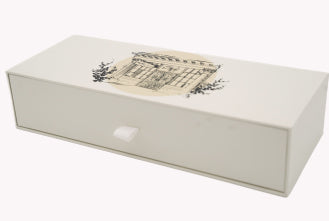
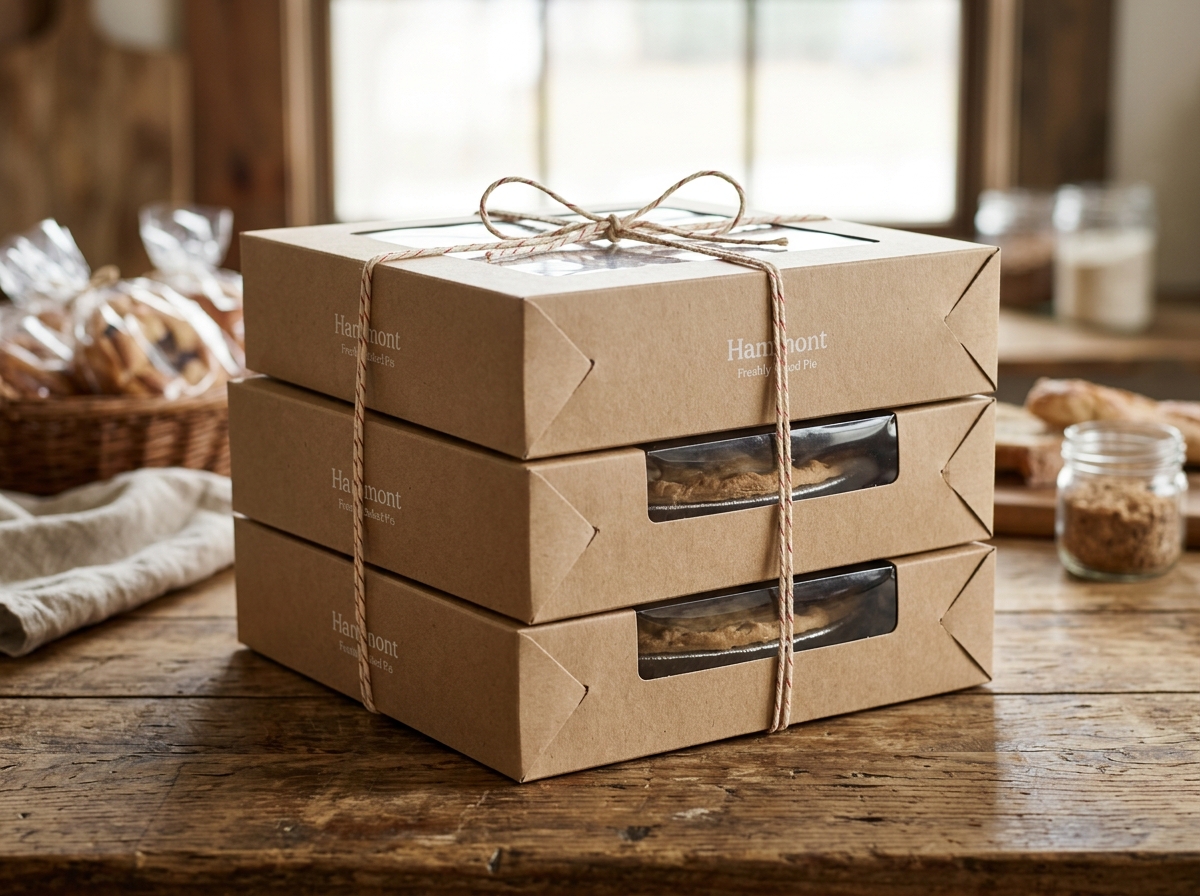
Cake boards provide the structural support that cardboard boxes alone cannot. A corrugated cake board placed under the pie creates a rigid platform that distributes weight evenly and prevents the bottom crust from sagging or tearing when you lift the package. For cube white gift boxes, which offer clean presentation and secure tuck-top closures, pair them with boards cut to fit the interior dimensions precisely.
Material choice matters for both components. Kraft paperboard boxes offer grease resistance and structural integrity, essential for pies with butter-rich crusts or fruit fillings that may leak. SBS (solid bleached sulfate) paperboard provides a smoother, whiter finish for premium presentation. The kraft vs. SBS paperboard comparison helps bakeries decide which material suits their brand and budget. Cake boards should be food-grade corrugated cardboard, typically 1/16-inch thick for single pies or 1/8-inch for stacked arrangements.
Proper box assembly prevents mid-transport collapses that can ruin hours of baking work. Most pie boxes arrive flat and require folding along scored lines. Start by creasing all fold lines firmly before assembling — this creates crisp edges that lock together securely. For tuck-top boxes, fold the side panels inward first, then bring the front and back panels up to create the walls. The bottom flaps should overlap completely and lie flat without gaps.
Reinforce the bottom seams with food-safe tape if you're transporting pies longer than 30 minutes or stacking multiple boxes. The bottom of a pie box bears the most stress, especially when lifted from underneath. A single strip of clear packing tape along the center seam adds insurance without affecting the box's appearance.
Before placing any pie inside, line the box bottom with a cake board cut to match the interior dimensions. The board should sit flush against all four walls to prevent sliding. For pies with liquid fillings like pumpkin or custard, consider placing a small square of parchment paper between the board and the pie plate — this absorbs minor condensation and makes it easier for customers to remove the pie without disturbing the crust.
Even a perfectly sized box won't protect a pie if it can slide during transport. The goal is to create enough friction between the pie plate and the cake board to keep everything stationary through turns, stops, and speed bumps. Most ceramic and glass pie plates have enough surface texture to grip corrugated boards naturally, but disposable aluminum plates are slicker and require additional measures.
For aluminum pie plates, place a ring of museum putty or small dots of food-safe adhesive around the board perimeter before setting the pie down. These create anchor points without leaving residue on the plate. Alternatively, cut a piece of non-slip shelf liner to fit the board — the rubberized texture grips both the board and the plate bottom effectively.
The pie should sit dead center in the box with equal clearance on all sides. Off-center placement means one edge will contact the box wall during movement, potentially denting decorative crimps or smearing edge details. Measure the clearance with a ruler if you're packaging high-value custom orders.
Once positioned, close the lid slowly to check for clearance. Tall meringue peaks or whipped cream piping should have at least half an inch of space between the topping and the box lid. If contact occurs, you need a deeper box — compressing toppings even slightly will leave visible marks. Pie box size specifications include interior height measurements to help you match boxes to your specific pie styles.
The moment you close a pie box lid is when most decorative damage occurs. Rushed closures catch on whipped cream rosettes, drag through meringue peaks, or compress delicate lattice work. The key is to close the lid in one smooth, confident motion without pausing mid-way — hesitation causes the lid to drag across the surface rather than clearing it cleanly.
For pies with tall or fragile toppings, angle the lid slightly as you close it, bringing the back edge down first and then lowering the front. This creates a sweeping motion that reduces the chance of contact. If you're using boxes with tuck-in flaps rather than separate lids, fold the flaps in the correct sequence: sides first, then front, then back. This sequence creates the tightest seal with the least interior disturbance.
Windowed pie boxes require extra care because the acetate or PET panel sits closer to the pie surface than opaque lids. Acetate vs. PET window panels differ in rigidity — PET panels are stiffer and less likely to bow inward, making them the better choice for pies with dimensional toppings. When closing windowed boxes, support the window panel from the outside with your palm as you tuck the flaps to prevent inward flex.
Seal closed boxes with a single strip of branded sticker tape across the front seam or a loop of baker's twine tied around the box perimeter. Tape provides the most secure closure for delivery, while twine offers an artisanal presentation suitable for premium orders. Avoid using excessive tape that customers will struggle to remove — one or two strategic strips are sufficient.
Catering orders often involve delivering eight, twelve, or more pies in a single trip. Proper stacking technique is essential because a collapsed stack can damage every pie in the load. The fundamental rule: never stack pies directly on top of each other without a rigid barrier between each level.
Use a full-size sheet of corrugated cardboard or a commercial bakery board between each stacked box. These dividers distribute the weight of upper boxes across the entire surface of lower boxes rather than concentrating pressure on the pie itself. For three or fewer boxes, 1/8-inch corrugated boards are adequate. For taller stacks, upgrade to 3/16-inch or double-layer boards.
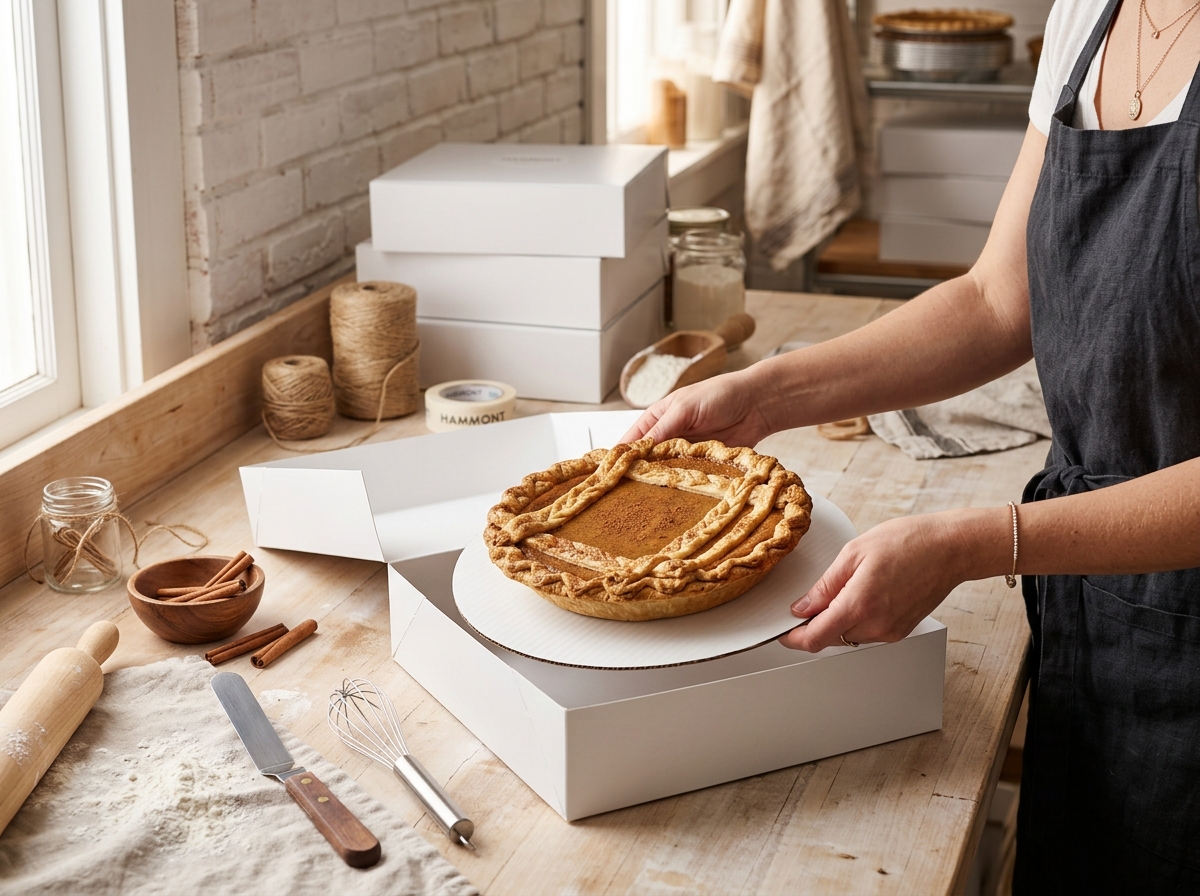
Stack boxes in a pyramid configuration if you're transporting different sizes. Place the largest, heaviest pies on the bottom and progressively smaller or lighter varieties on top. A 10-inch deep-dish apple pie can support a standard 9-inch pumpkin pie above it, but reverse that order and the bottom box will buckle. Custard and cream pies should never go on the bottom of a stack — their fillings are more susceptible to pressure damage than fruit or nut varieties.
Limit stacks to four boxes high in a vehicle. Beyond that height, even small bumps create enough sway to topple the stack or cause boxes to slide off-center. If you need to transport more than four pies, create multiple separate stacks rather than one tall tower. Secure each stack with a vertical loop of stretch wrap or a ratchet strap set to light tension — just enough to prevent lateral movement without compressing the boxes.
Temperature control becomes critical during stacked transport. Pies with dairy-based fillings like pumpkin should be stored in the refrigerator before and after transport. According to the USDA, it is not safe to eat homemade pies with egg-based fillings that have been allowed to sit at room temperature for 2 hours or longer. For deliveries longer than 30 minutes, transport custard and cream pies in insulated carriers with ice packs positioned away from direct contact with the boxes.
The flattest, most stable surface in your vehicle is the floor, not the seats. Car seats are angled for passenger comfort, which means boxes placed on them will constantly slide forward or backward during acceleration and braking. If you must use seats, place a non-slip mat down first and wedge boxes against the seat back with rolled towels or foam blocks.
Cargo areas and trunks work well if you can prevent boxes from sliding during turns. Create a containment system using milk crates, cardboard dividers, or commercial bakery racks. The goal is to eliminate all empty space around your pie stack — boxes can't shift if there's nowhere to shift to. For regular delivery routes, invest in adjustable cargo bars that span the width of your trunk or van, creating a physical barrier that holds stacks in place.
Avoid placing pies in direct sunlight, even for short trips. Interior vehicle temperatures can exceed 140°F on warm autumn days, which will melt butter-based crusts and cause custard fillings to separate. If you're making multiple stops, park in shade and crack windows to maintain air circulation. For caterers making back-to-back deliveries, a portable cooler or insulated delivery bag maintains consistent temperature between stops.
Drive as if you're transporting a newborn because sudden movements affect pies the same way they affect infants — both are top-heavy and prone to tipping. Accelerate gradually, brake early, and take turns at moderate speeds. The extra three minutes you spend driving carefully is nothing compared to the time required to remake a damaged pie or handle a customer complaint.
The most frequent packaging error is using boxes that are too shallow. Bakers often measure the pie height from plate to filling surface but forget to account for crimped crust edges or decorative toppings that add another inch or more. Always measure from the bottom of the pie plate to the highest point of the pie, then add at least half an inch for clearance. A 2.5-inch-tall pie needs a minimum 3-inch box depth.
Another common mistake is packaging pies while they're still warm. Packing pies while warm leads to condensation and soggy crusts. Steam trapped inside a closed box creates moisture that condenses on the lid and drips back onto the pie surface, turning crisp meringue into a weeping mess and making pastry crusts soggy. All pies must cool to room temperature before boxing — for custard and cream varieties, this means refrigerating for at least two hours after baking.
Weak or recycled boxes are a false economy. A box that costs 30 cents less but collapses during transport will cost you far more in remade pies, lost customers, and damaged reputation. Wholesale pricing and minimum order quantities make it affordable to stock quality boxes in the sizes you use most frequently. Calculate the true cost per delivered pie, not just the per-unit box price.
Failing to label boxes creates chaos during multi-pie deliveries. When you're dropping off a dozen different varieties at a Thanksgiving event, you need to identify contents instantly without opening every box. Use printed labels or a permanent marker to note the pie type and any allergen information on the box top. Include handling instructions like "Keep Refrigerated" or "Fragile — Do Not Stack" when relevant.
Food safety regulations apply to pie transport just as they do to preparation and storage. Bacteria multiply rapidly in the temperature danger zone range of temperatures between 40°F and 140°F. Never leave food out in this temperature zone for over 2 hours. For commercial bakeries and caterers, this means implementing temperature monitoring during transport, especially for pies containing eggs, dairy, or cream.
Fruit pies without dairy components are less temperature-sensitive and can safely travel at room temperature for short deliveries. Pies that do not contain dairy products, such as fruit pies, can be stored loosely covered at room temperature for up to two days. However, any pie containing custard, cream cheese, whipped cream, or eggs must remain refrigerated except during the actual transport window.
For deliveries exceeding one hour, use insulated carriers designed for food transport. These maintain internal temperatures without requiring active refrigeration. Place ice packs or frozen gel packs in the carrier but never in direct contact with pie boxes — the extreme cold can cause condensation or even freeze portions of the filling. Wrap ice packs in kitchen towels before placing them in the carrier.
Document your transport procedures if you operate a commercial bakery. USDA Food Safety and Inspection Service guidelines emphasize that food safety responsibilities extend through the entire distribution chain. While these regulations focus primarily on meat and egg products, the same principles of temperature control, contamination prevention, and documentation apply to bakery goods containing similar ingredients.
Different pie varieties present unique packaging challenges. Custard pies like pumpkin and sweet potato have liquid fillings that can slosh if not fully set. These must be completely chilled before transport — a custard that jiggles when you shake the plate gently is not ready for delivery. The filling should be firm enough that it moves as a single mass rather than rippling independently.
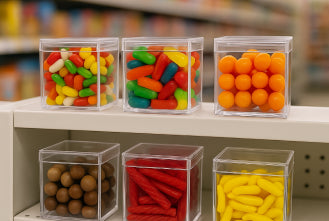
Cream pies topped with whipped cream or meringue require the tallest boxes and the most careful handling. Meringue is particularly fragile because it's essentially structured air — any contact will deflate peaks and leave marks. For meringue pies, consider using boxes with clear acrylic serving trays with lids that provide visibility while maintaining clearance. These rigid containers eliminate the risk of lid contact entirely.
Fruit pies with lattice tops need protection from lateral movement that can catch and tear the delicate pastry strips. Center these pies carefully and use slightly smaller boxes that limit side-to-side play. The lattice should have at least a quarter-inch clearance from all four box walls. If you're transporting apple or cherry pies with high-domed fillings, remember that the filling settles as it cools — measure height after the pie has reached room temperature, not immediately after baking.
Nut pies like pecan have dense, heavy fillings that make the entire pie heavier than fruit or custard varieties. Use thicker cake boards (1/8-inch minimum) under pecan pies to prevent board sag. The weight also means you should never stack more than two pecan pies in a single column — place them on the bottom of mixed stacks or transport them separately.
Thanksgiving week transforms pie packaging from a routine task into a high-stakes operation. Bakeries that typically produce a dozen pies per day may need to package and deliver ten times that volume in the three days before the holiday. Advance preparation is the only way to maintain quality under this pressure.
Order packaging supplies at least three weeks before Thanksgiving. Lead times for pie boxes extend during peak season as suppliers manage increased demand across their entire customer base. Running out of boxes on the Wednesday before Thanksgiving leaves you scrambling for retail alternatives that cost three times as much and may not fit your pies properly.
Pre-assemble boxes during slow periods in the weeks leading up to Thanksgiving. Flat boxes take up minimal storage space, but assembled boxes ready to receive pies save precious minutes when you're packaging dozens of orders in a compressed timeframe. Stack assembled boxes in size groups with cake boards already inserted — this assembly-line approach lets you move from finished pie to packaged pie in seconds rather than minutes.
Create a packaging station separate from your baking area. This dedicated space should include all box sizes, cake boards, tape, labels, and twine organized within arm's reach. A clear workflow from cooling racks to packaging station to delivery staging area prevents bottlenecks and reduces the chance of grabbing the wrong box size in the rush.
For home bakers taking on extra Thanksgiving orders, the same principles apply at a smaller scale. Dedicate counter space specifically to packaging, lay out supplies in advance, and resist the temptation to package pies straight from the oven. The fifteen minutes you save by packaging warm pies will cost you an hour when you have to remake them because the crusts turned soggy.
Leave at least half an inch of clearance between the highest point of your pie and the inside of the box lid. For pies with tall meringue or whipped cream, aim for three-quarters of an inch to one inch. Measure from the tallest peak, not the average filling height. If you're unsure, close the lid slowly while watching from the side — you should see clear space throughout the closure. Any contact, even slight, will leave marks on decorative toppings.
Yes, but follow a weight-based hierarchy. Place the heaviest, most structurally stable pies on the bottom — typically fruit pies and nut pies with firm fillings. Put custard and cream pies in the middle of the stack, and reserve the top position for the lightest or most delicate varieties. Always use rigid divider boards between each box level, and never stack more than four boxes high. Keep pies requiring refrigeration separate from room-temperature fruit pies if possible.
You have three options: order deeper boxes (4-inch or 5-inch depths are available for specialty pies), reduce the height of your toppings, or use a two-piece box with a separate dome lid designed for tall cakes and pies. The dome lid option provides the most clearance but costs more per unit. For occasional tall pies, consider using clear acrylic containers that offer superior height and complete visibility. Never force a pie into a too-shallow box — the resulting damage will cost more than the price difference for a proper container.
Fruit pies without dairy can remain boxed at room temperature for up to two hours during transport. Custard, cream, and any pie containing eggs or dairy should not exceed two hours total time in the temperature danger zone (40°F to 140°F), including transport time. For longer deliveries, use insulated carriers with ice packs. In hot weather, reduce these timeframes by half. If your delivery route requires more than 90 minutes, plan for refrigerated transport or schedule multiple shorter trips.
Yes, for custard and cream pies. These must be fully chilled before packaging to ensure the filling is set and to comply with food safety guidelines. Fruit pies can be boxed at room temperature once they've cooled from baking heat — typically two to three hours after coming out of the oven. Never box any pie while it's still warm, as trapped steam will create condensation that makes crusts soggy and can cause decorative elements to weep or slide. For Thanksgiving deliveries, refrigerate all pies overnight and box them cold the morning of delivery.
Proper pie packaging combines the right materials, careful assembly, and thoughtful transport planning. Whether you're delivering a single pie to a neighbor or coordinating a catering order for fifty, these techniques protect your work and ensure your pies arrive in the same condition they left your kitchen. The time invested in packaging correctly is time saved on remakes, refunds, and reputation repair — and during Thanksgiving week, that time is your most valuable resource.