Cart
0
You may also like


Book a call with our development team to get started.



Apply online and access wholesale pricing.

Galentine's Day packaging needs to work harder than traditional Valentine's formats. While February 14 leans heavily into red and romantic motifs, Galentine's Day celebrates friendships on February 13—and that shift in audience changes everything about color, tone, and format selection. Small bakeries, chocolatiers, and gift sellers are increasingly stocking pink, kraft, and clear packaging that appeals to friend gifting without alienating customers who want a softer, more inclusive Valentine's aesthetic. This guide covers the three dominant Galentine's Day packaging formats, sizing considerations for cookies and candy, and timing strategies for February 13 launches.
The rise of Galentine's Day isn't anecdotal. About one-third of consumers now plan to buy gifts for friends, and retailers who expand beyond couples-only messaging unlock incremental demand without inventing a new holiday. For packaging buyers, that means choosing formats that feel celebratory but not overly romantic—boxes and bags that work equally well for a best friend, a coworker, or a self-care purchase. The right valentine's day candy packaging strategy now includes a Galentine's tier.
Red dominates traditional Valentine's retail, but Galentine's Day packaging performs better in softer palettes. Pink conveys celebration without romantic intensity, while kraft and white offer a neutral base that small businesses can customize with ribbon, tags, or branded stickers. Sustainable gifting trends emphasize minimal packaging, and kraft formats align with that expectation while maintaining a polished, gift-ready appearance.
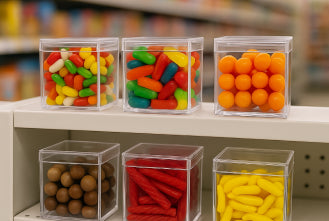
Clear acrylic and PET boxes occupy a middle ground—they showcase product without adding color bias, making them ideal for businesses that want one format to serve both Valentine's and Galentine's customers. A clear acrylic box filled with pink-frosted cookies reads as Galentine's; the same box with red foil truffles reads as Valentine's. Format flexibility matters when you're managing inventory across two adjacent holidays.
The color strategy also affects perceived price point. Pink and neutral packaging tends to photograph well on social media, which matters for a holiday driven by group celebrations and shared experiences. Customers buying for multiple friends often choose cohesive sets, and a kraft box with a pink ribbon offers that repeatability without looking mass-produced.
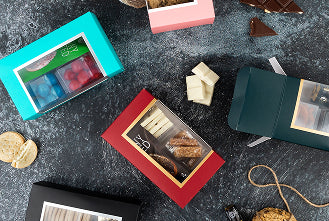
Most successful Galentine's Day packaging programs use a mix of three formats, each serving a different product type and price tier. Clear boxes work for high-visibility items like decorated cookies or layered brownies. Kraft boxes suit rustic or organic product lines and pair well with twine, dried florals, or minimalist branding. Soft pink boxes—whether tuck-top cubes or windowed bakery boxes—signal the occasion without requiring additional decoration.
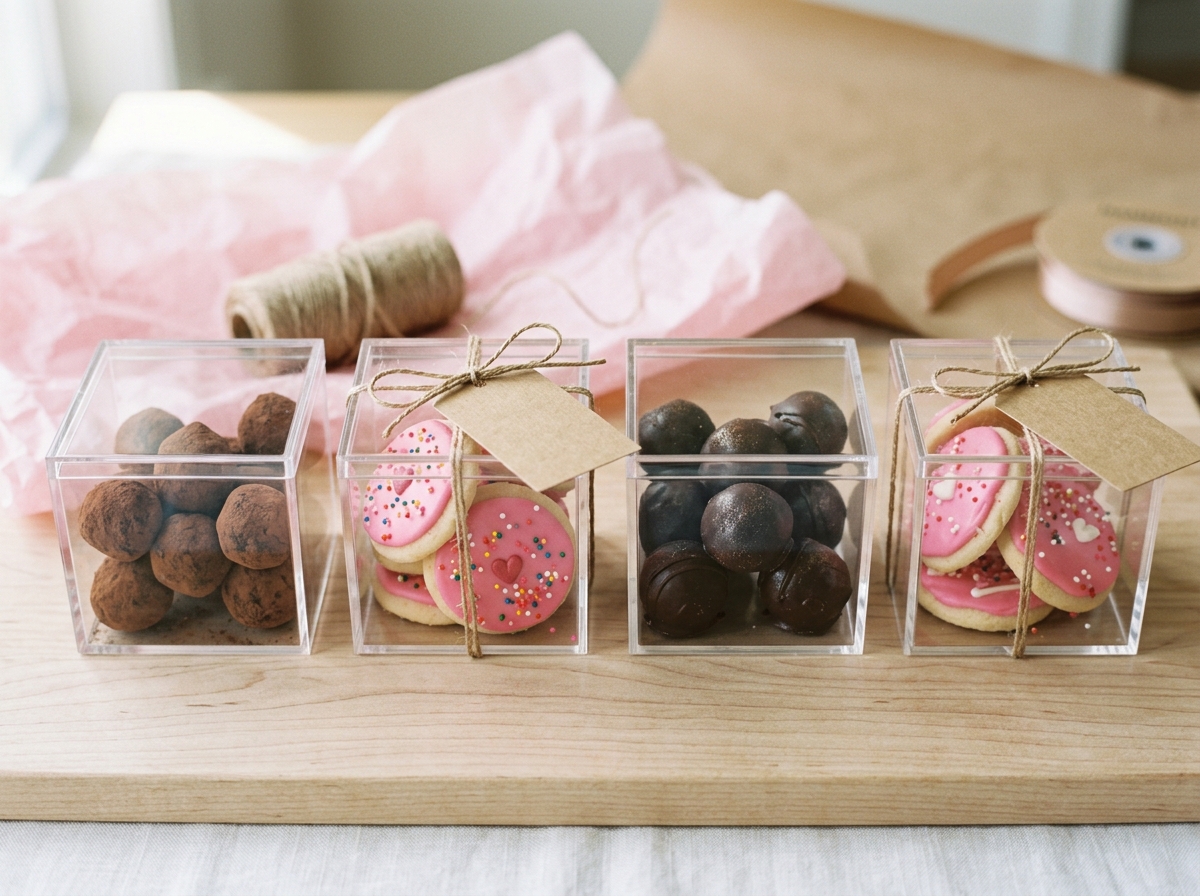
Clear packaging eliminates the guessing game. For cookies, truffles, or candy mixes, visibility drives purchase decisions—especially when customers are buying for people whose preferences they may not know well. A 3x3x3 or 4x4x4 clear acrylic box holds 4-6 standard cookies or 8-12 truffles, depending on size. The separate-lid format allows for easy packing and creates a clean, finished look without tape or adhesive closures.
Clear boxes also extend shelf life perception. Customers buying several days before February 13 want assurance that cookies won't look stale, and a hard acrylic shell signals protection better than a paper box. If you're selling at farmers markets or pop-up events, clear formats withstand handling and stacking without crushing product. For businesses already stocking clear window gift boxes for Valentine candy, adding cube or rectangular acrylic boxes creates a cohesive display with minimal SKU expansion.
Kraft packaging appeals to the segment of Galentine's shoppers prioritizing sustainability. 54% of shoppers under 35 actively seek out sustainable alternatives during holiday seasons, and kraft paper boxes signal environmental consideration without requiring a premium price. A 2x2x2 kraft cube works for single-serving treats or small jewelry items; an 8x5.5x2.5 windowed kraft box accommodates a half-dozen cookies or a candy assortment.
Kraft also serves as a neutral canvas for customization. Businesses can stamp logos, tie with branded ribbon, or attach plantable seed-paper tags to reinforce sustainability messaging. The material photographs warm and approachable, which aligns with the friend-focused tone of Galentine's Day. If your brand already uses kraft for everyday packaging, adding pink or lavender ribbon creates seasonal differentiation without requiring new box inventory.
When you need packaging that reads immediately as Galentine's, soft pink boxes deliver. A 2x2x2 pink cube suits individual favors for Galentine's brunches or parties; larger windowed boxes work for bakery assortments. The key is choosing a blush or dusty rose rather than hot pink—softer tones feel more sophisticated and appeal to a broader age range.
Pink boxes require less additional decoration than neutral formats, which can reduce labor time during high-volume packing periods. A simple white or kraft ribbon is often sufficient, and the color itself communicates the occasion. For businesses running both a Valentine's and Galentine's line, pink boxes help staff and customers distinguish products at a glance, reducing mis-picks during order fulfillment.
Galentine's purchases skew toward smaller quantities than traditional Valentine's gifts. Customers buying for multiple friends typically choose 2-4 pieces per person rather than a full dozen, which shifts the optimal box size down from standard bakery formats. A 4x4x4 clear box holds a comfortable four-cookie stack; a 3x3x3 cube suits three truffles or a small candy mix. Understanding these quantities helps you avoid over-packaging, which adds cost and reduces perceived value.
For party favors—gifts distributed at Galentine's brunches or events—2x2x2 cubes offer the right scale. They're large enough to feel substantial but small enough to pack in multiples without breaking a budget. Cellophane bags also work well for this use case; a 4x6 or 5x7 clear bag holds cookies or candy, and a pink ribbon closure adds the seasonal touch. If you're comparing formats, consider that boxes stack more reliably for transport, while bags require less storage space and often cost less per unit.
Windowed boxes bridge the gap between full visibility and structural protection. An 8x5.5x2.5 box with an acetate or PET window shows product while preventing handling damage, making it a strong choice for retail shelf displays. The window also allows customers to verify freshness and decoration quality, which matters when they're buying for someone else. For more detail on window-box sizing across different candy formats, see the clear window gift box sizing guide.
Cellophane remains one of the most cost-effective ways to elevate simple packaging. A 24-inch cellophane roll wraps gift boxes, baskets, or stacked cookie tins, and a pink or white ribbon tied at the top creates a finished look in seconds. Clear cellophane doesn't compete with your product colors, and it adds a layer of protection against smudging or moisture during transport.
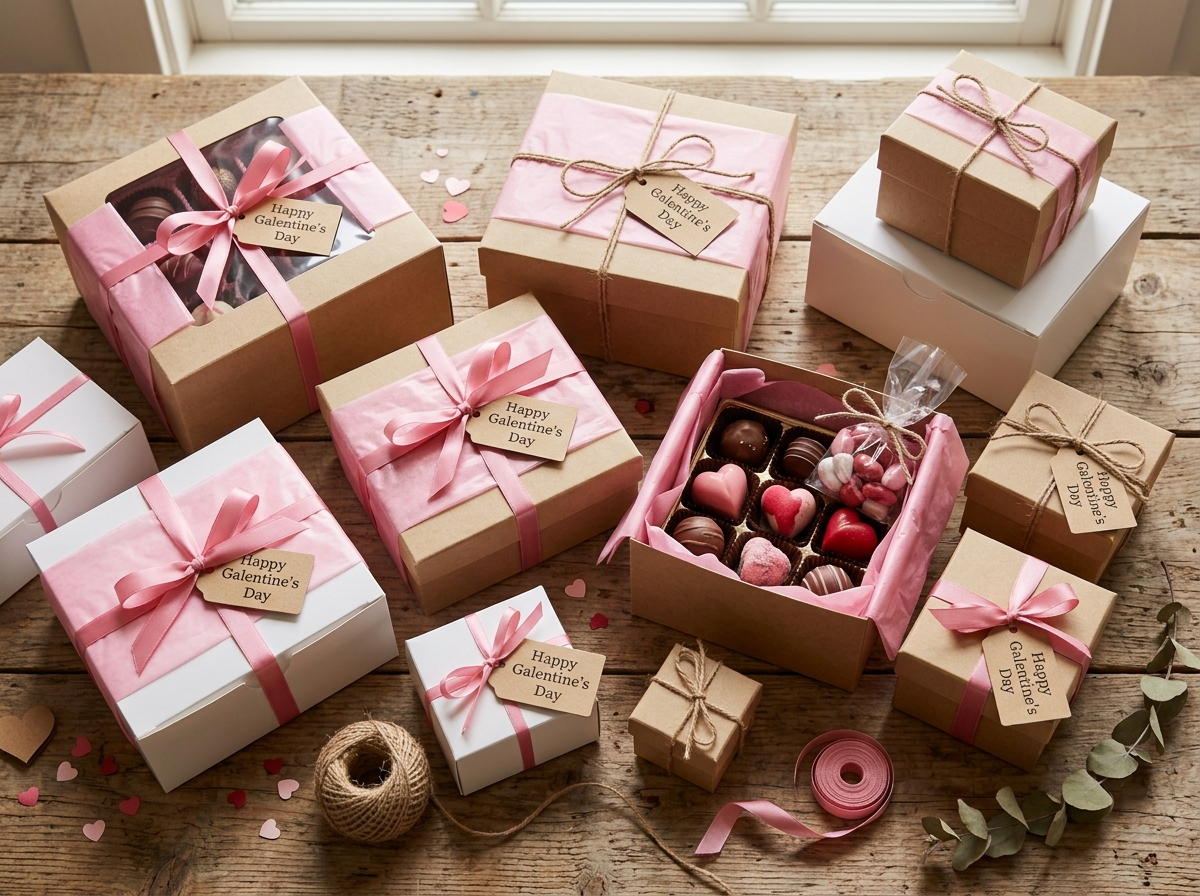
Ribbon choice affects the overall tone. Satin ribbon in blush, lavender, or white feels polished and feminine; natural jute twine paired with a kraft box reads rustic and handmade. If you're managing a high-volume operation, pre-cut ribbon lengths (12-18 inches) speed up packing without sacrificing presentation. For businesses already ordering Valentine's Day candy packaging, adding a second ribbon color for Galentine's creates visual distinction without doubling your supplier count.
Tags and labels offer another low-cost customization layer. A simple "Happy Galentine's Day" tag on a kraft box or cellophane bag personalizes the gift and reinforces the occasion. If you're selling online, including a blank tag allows customers to add their own message, which increases perceived value and reduces the need for separate greeting cards.
Galentine's Day falls on February 13, one day before Valentine's Day, which compresses the retail window and increases the importance of early inventory planning. Most small bakeries and chocolatiers place Valentine's packaging orders in December or early January to secure stock before the holiday rush. Galentine's packaging should follow the same timeline—waiting until late January often means limited color and size availability, especially for pink or specialty formats.
If you're ordering custom-printed boxes or branded ribbon, lead times extend further. Standard turnaround for custom packaging ranges from 3-6 weeks depending on quantity and print complexity, which pushes order deadlines into November or December for a February delivery. Stock (non-custom) packaging typically ships within a few business days, making it a safer choice for businesses testing Galentine's for the first time or adding inventory mid-season. For a detailed breakdown of Valentine's packaging lead times and MOQ planning, see when to order Valentine's Day packaging.
Consider your sales channel when planning quantities. Retail shelf displays require more inventory than online-only sales, and Galentine's Day events (brunches, parties, corporate gifting) can create sudden demand spikes. Ordering 10-20% above your projected need provides a buffer without tying up excessive capital, and leftover neutral formats (kraft, clear, white) transition easily to birthdays, bridal showers, or general gifting through spring.
If you're selling both Valentine's and Galentine's products in the same retail space, clear visual separation prevents customer confusion and reinforces that Galentine's is a distinct occasion. Color-coding works well—group all pink and neutral boxes in one section, red and romantic formats in another. Signage should call out "Galentine's Day" explicitly, with language emphasizing friends, self-care, or group gifting rather than romantic partners.
Bundling also drives Galentine's sales. A "Galentine's Party Pack" with six individually boxed cookies or candies, sold as a set, makes it easy for customers to buy for multiple friends in one transaction. Pre-bundled sets reduce decision fatigue and often command a slight premium over individual units. If you're using small clear acrylic boxes, packing them in a larger carrier bag or tray creates a cohesive gift set that feels more substantial than loose boxes.
Point-of-sale materials matter. Table tents, shelf talkers, or small printed cards explaining Galentine's Day help educate customers who may not be familiar with the February 13 tradition. According to National Retail Federation research, inclusive messaging around friendship and non-romantic love expands the Valentine's season customer base, and retailers who communicate that inclusivity see higher engagement across both holidays.
Heart-shaped boxes occupy an interesting middle ground in Galentine's packaging. Traditional red heart boxes skew romantic, but pink or kraft heart shapes can work for friend gifting—especially when paired with playful messaging or non-romantic graphics. The challenge is that heart shapes often carry higher per-unit costs due to specialty tooling and lower production volumes, which can price them out of the multi-friend purchase scenario that defines most Galentine's shopping.
Neutral cube and rectangular formats offer better economics for customers buying in sets. A dozen 2x2x2 cubes costs less than a dozen heart boxes, and the simpler shape stacks more efficiently for storage and transport. If you're deciding between formats, consider your customer's purchase pattern: single high-value gifts favor decorative shapes like hearts, while multi-recipient purchases favor cost-effective cubes and rectangles. For a detailed comparison of heart-shaped versus clear formats in Valentine's contexts, see heart-shaped candy boxes vs. clear acrylic.
That said, a small selection of heart-shaped options can capture the segment of Galentine's shoppers who want a nod to the Valentine's aesthetic without full romantic intensity. A blush-pink heart box with a "Friends Forever" tag bridges both audiences and differentiates your line from competitors stocking only traditional Valentine's red.
One advantage of pink and neutral Galentine's packaging is its versatility beyond a single holiday. Kraft boxes, clear acrylic cubes, and soft pink formats work year-round for birthdays, bridal showers, baby showers, and general gift giving. Ordering slightly above your February need ensures you have stock for spring events without placing a separate order, which can improve your per-unit cost through higher initial quantities.
Clear boxes in particular have strong carryover potential. A 4x4x4 acrylic box that holds Valentine's truffles in February holds Easter eggs in April, Mother's Day treats in May, or wedding favors in June. If you're evaluating whether to invest in specialty Galentine's packaging, prioritize formats with the longest usable shelf life and the broadest application across your product calendar.
Pink boxes require more intentional positioning outside of February, but they remain viable for feminine-coded events and products. A dusty rose box works for cosmetics, candles (note: Hammont does not sell candles, but packaging for them is a common use case), or spa-themed gift sets throughout the year. The key is avoiding overly Valentine's-specific decoration—a plain pink box with neutral ribbon transitions easily; a box printed with hearts and "XOXO" does not.
For small businesses adding Galentine's to an existing Valentine's program, the question is how to split packaging budget between February 13 and February 14. Industry data suggests starting with a 25-30% allocation to Galentine's formats in your first year, then adjusting based on actual sales. One-third of consumers plan to buy gifts for friends, but not all of those purchases happen on Galentine's Day specifically—some fold into general Valentine's week shopping.
If budget is constrained, prioritize neutral formats (kraft, clear, white) that serve both holidays. A clear acrylic box or kraft cube doesn't commit to one audience, allowing you to shift inventory between Galentine's and Valentine's as demand becomes clear. Specialty pink boxes can be added in year two once you have baseline sales data and understand your customer's color preferences.
Minimum order quantities also affect budget planning. Stock packaging typically has lower MOQs (often 25-100 units) than custom-printed options (500-1,000+ units), making it easier to test Galentine's without large upfront investment. If you're ordering custom Valentine's packaging, ask your supplier if they can add a Galentine's colorway to the same print run—shared setup costs sometimes make small custom batches more economical than ordering separately.
Soft pink, blush, kraft, and white are the most versatile Galentine's Day packaging colors. These palettes convey celebration and femininity without the romantic intensity of red, making them appropriate for friend gifting. Clear packaging also works well because it showcases product without adding color bias, allowing the same format to serve both Galentine's and Valentine's customers. Avoid hot pink or overly bright tones, which can feel juvenile; dusty rose and mauve tones appeal to a broader age range and photograph better for social media sharing.
Stock (non-custom) Galentine's Day packaging should be ordered by mid-January at the latest to ensure availability before the February 13 date. Custom-printed boxes or branded packaging require 3-6 weeks of lead time, pushing order deadlines into late November or December. If you're launching a Galentine's program for the first time, ordering in early January gives you time to test formats and adjust quantities without missing the sales window. Businesses with established Valentine's programs should order Galentine's packaging on the same timeline as their February 14 inventory to consolidate shipping and reduce per-unit costs.
Yes—neutral formats like kraft boxes, clear acrylic cubes, and white windowed boxes work equally well for both holidays. The key is using ribbon, tags, or signage to differentiate the two audiences rather than relying on box color alone. A kraft box with a pink ribbon and "Happy Galentine's Day" tag reads as friend gifting; the same box with red ribbon and a romantic message reads as Valentine's. This approach reduces SKU count and inventory risk while still serving both customer segments. Avoid packaging with printed hearts, "XOXO," or explicitly romantic graphics if you want cross-holiday flexibility.
For Galentine's Day party favors, 2x2x2-inch cube boxes are the most popular size. They hold 1-2 cookies, 3-4 truffles, or a small candy mix, which aligns with the typical quantity customers give when buying for multiple friends. Clear acrylic cubes, kraft tuck-top boxes, and soft pink cubes all work well in this size. If you're packaging liquid or fragile items, consider a slightly larger 3x3x3 box for added protection. Cellophane bags in 4x6 or 5x7 sizes are a cost-effective alternative to rigid boxes and work well for cookies, popcorn, or candy mixes distributed at brunches or group events.
Use color-coded sections and clear signage to separate Galentine's from Valentine's displays. Group all pink, kraft, and neutral packaging in one area with signs emphasizing "Galentine's Day – February 13" and messaging around friendship or self-care. Place red and romantic packaging in a separate section with traditional Valentine's language. Bundled sets labeled as "Galentine's Party Packs" or "Gifts for Your Besties" help customers immediately identify the right products. Table tents or shelf talkers explaining Galentine's Day educate shoppers unfamiliar with the February 13 tradition and reduce confusion between the two holidays.
Galentine's Day packaging represents a measurable shift in how small businesses approach the Valentine's season. By stocking pink, kraft, and clear formats alongside traditional red boxes, bakeries and chocolatiers capture the growing segment of customers celebrating friendships on February 13. The key is choosing versatile packaging that works across both holidays, ordering early enough to secure inventory before the mid-January rush, and using color, ribbon, and signage to differentiate Galentine's from Valentine's in retail displays. As consumer interest in inclusive, non-romantic Valentine's celebrations continues to grow, Galentine's packaging will become a standard component of February product planning—not an afterthought.