Cart
0
You may also like

Book a call with our development team to get started.



Apply online and access wholesale pricing.

If you run a small bakery or chocolate shop, the window to order Valentine's Day packaging closes faster than you think. The ideal ordering period runs from late November through early December—roughly 8 to 10 weeks before Valentine's Day. Miss that window, and you risk paying rush fees, settling for generic stock, or running out of inventory during your busiest week of the year.
This guide covers the valentine packaging lead time you need to plan for, the minimum order quantities (MOQs) most suppliers require, and the production timelines that determine whether your heart boxes arrive on time or arrive too late. If you're placing your first Valentine order or scaling up from last year's volume, understanding these timelines now will save you stress in January.
Valentine's Day is the third-largest retail holiday in the United States. According to the National Retail Federation, consumers spent $27.5 billion on Valentine's Day in 2025, with candy accounting for 56% of gift purchases. For bakeries and chocolatiers, that translates to a concentrated surge in demand during the first two weeks of February.
Unlike evergreen packaging that you can order year-round, Valentine-specific designs—heart-shaped boxes, red and pink cellophane, printed bags with "Be Mine" messaging—are seasonal SKUs. Suppliers produce them in batches, and once those batches sell out, reorders are rare. Most packaging manufacturers allocate production capacity for Valentine items between October and December, then shift to Easter and spring themes in January.
The production process itself requires time. Standard packaging lead times range from 7 to 35 working days from artwork approval to production completion, with production lead time typically spanning 7 to 25 working days depending on packaging type and order quantity. Add shipping, and the total door-to-door timeline extends further. For custom printed boxes, expect longer timelines due to artwork verification and tooling setup.
Choosing the right valentine's day candy packaging early in the planning cycle gives you access to the full range of designs, better pricing on volume orders, and the flexibility to test samples before committing to large quantities.
Minimum order quantities vary widely depending on whether you're ordering stock packaging or custom printed designs. For small bakeries, this is often the biggest planning hurdle—you need enough inventory to cover Valentine's week, but you don't want to overcommit capital or storage space.
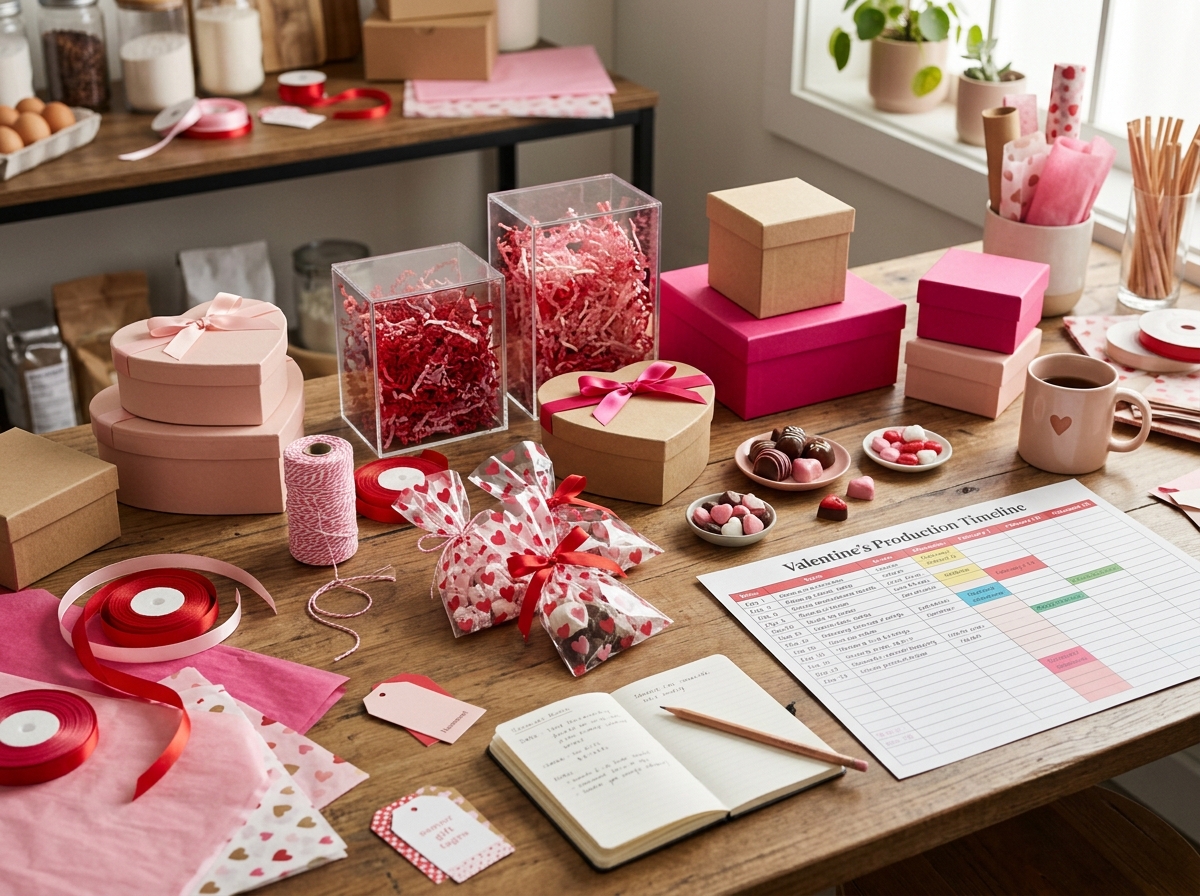
Stock Valentine packaging—plain heart boxes, clear cellophane bags, generic red gift boxes—typically carries lower MOQs. Many suppliers offer minimum order quantities starting at 50 boxes for small bakery packaging, making it accessible for home-based operations or bakeries testing a new product line. These lower minimums allow you to order multiple sizes or styles without a massive upfront investment.
Custom printed packaging requires higher MOQs due to the setup costs involved. Minimum order quantities for custom packaging often begin at 100 units for mailer and folding carton boxes, and 300 units for rigid boxes. If you're adding your bakery logo, custom colors, or unique structural designs, expect minimums in the 100 to 500 unit range. Digital printing has lowered these thresholds compared to traditional offset printing, but the economics still favor larger runs.
For a small bakery planning its first Valentine season, a practical approach is to order stock packaging in the 50 to 100 unit range for your core products, then add a small run of custom printed boxes (100 to 250 units) for premium gift assortments. This balances cost, branding, and flexibility. A clear cellophane wrap can dress up stock boxes without the commitment of custom printing.
The 8 to 10 week lead time is not arbitrary—it's built from the cumulative stages of the packaging supply chain. Here's what happens during that window and why each phase matters.
Weeks 10-9 (Late November): This is when you should be finalizing your Valentine product lineup and estimating packaging quantities. Review last year's sales data if you have it, or estimate based on your regular weekly volume. For most small bakeries, Valentine's week will be 2 to 3 times your normal output. Factor in wholesale accounts, pre-orders, and walk-in traffic.
Weeks 8-7 (Early December): Place your order. If you're ordering custom packaging, this is when you submit artwork files and approve digital proofs. Artwork approval and pre-press preparation typically adds 2 to 5 working days once all artwork files have been submitted in correct format, during which the manufacturer prepares print files and produces a digital proof for approval. Any delays in artwork approval push back the entire timeline.
Weeks 6-4 (Mid-December to Early January): Production happens during this window. For most standard packaging orders, lead time runs between 15 and 30 business days, covering artwork verification, factory production, and shipping. This is also peak production season for many packaging suppliers, as they're fulfilling orders for Valentine's Day, Lunar New Year, and other early-year holidays. Factories may extend lead times by 1 to 2 weeks during this period.
Weeks 3-2 (Late January): Shipping and receiving. Domestic ground shipping typically takes 5 to 10 business days depending on your location. If your supplier is overseas, add 3 to 5 weeks for ocean freight. This is why ordering in late November or early December is critical—it builds in buffer time for shipping delays, customs clearance, or damaged shipments that need replacement.
Week 1 (Early February): Your packaging should be in-house and ready to use by the first week of February at the latest. Valentine's Day order volume spikes in the five days before February 14, and you need time to prep, pack, and fulfill orders without scrambling for boxes.
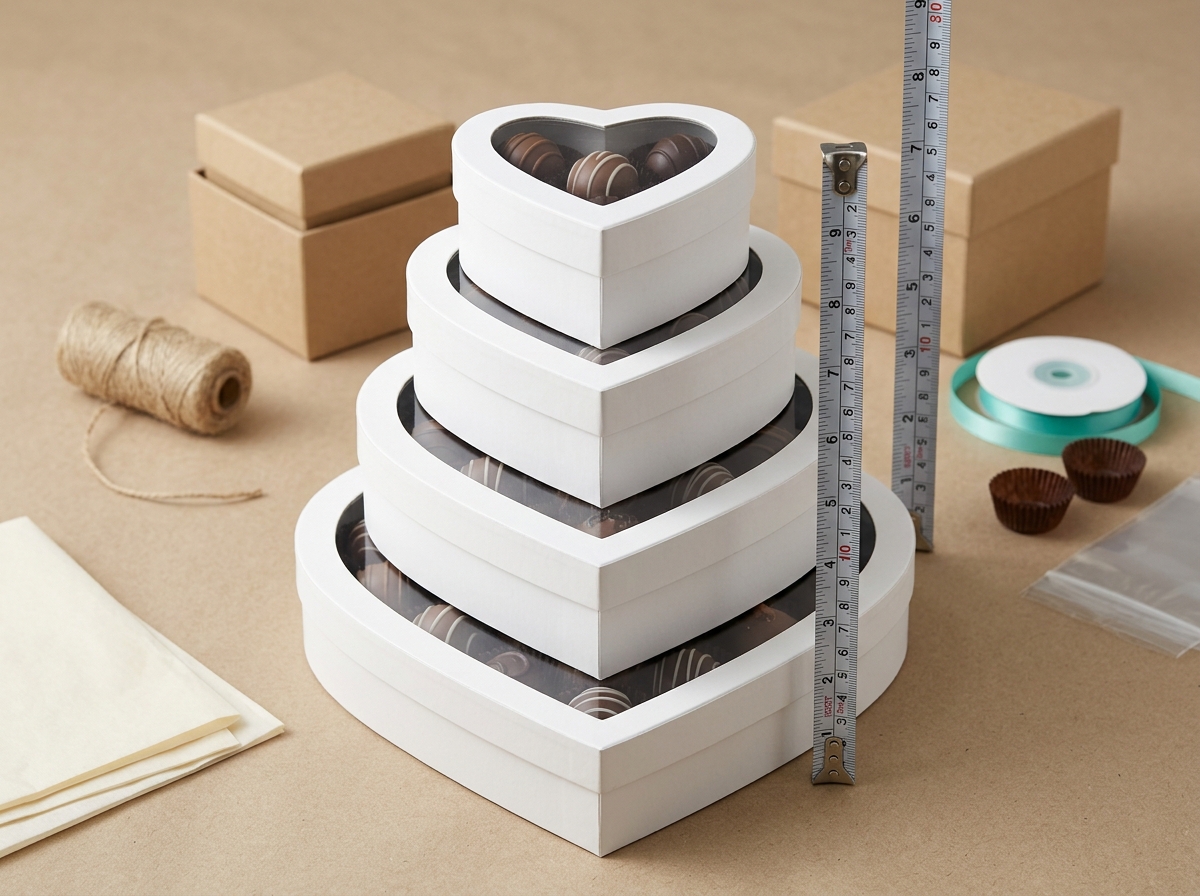
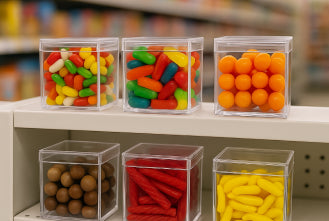
If you're working with a cube tuck-top box for individual truffles or cookies, ordering by early December ensures you have inventory before the rush. For larger items like layered cakes or gift assortments, consider a clear tall gift box that showcases the product while protecting it during transport.
Not all Valentine packaging has the same lead time. The complexity of the design, the materials involved, and the printing method all affect how long production takes. Here's a breakdown of typical timelines for common bakery packaging formats.
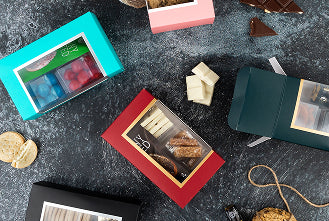
Stock folding cartons and bakery boxes: These are the fastest to source. If the supplier has inventory on hand, you can often receive stock Valentine boxes within 7 to 10 business days. This includes plain kraft boxes, white SBS boxes, and standard windowed bakery boxes. The trade-off is limited customization—you're choosing from existing designs and sizes.
Custom printed folding cartons: Adding your logo or custom graphics extends the timeline. Production runs from about 7 business days after proof approval for standard custom projects, with volume pricing starting around $0.44 per unit, and specialty rigid boxes requiring 100-unit minimums. Digital printing is faster than offset, but offset becomes cost-effective at higher volumes (typically above 500 units).
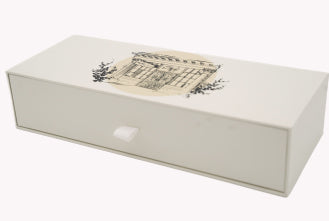
Rigid boxes and specialty structures: Heart-shaped rigid boxes, drawer-style gift boxes, and other premium formats require longer lead times due to the hand-assembly involved. Rigid box orders typically require 15 to 20 business days minimum, with first-time rigid box orders with new tooling taking 20 to 25 business days. If you're launching a luxury Valentine collection, start planning in October.
Cellophane bags and flexible packaging: These are generally the quickest to source and have the lowest MOQs. Stock cellophane bags are often available for immediate shipment, and custom printed bags can be produced in 10 to 14 business days. They're ideal for cookies, candies, and small baked goods that don't require structural protection.
For small bakeries, a hybrid approach works well: order custom rigid boxes for your premium gift sets (where branding justifies the cost and lead time), and use stock folding cartons or cellophane for your everyday Valentine items. This balances presentation, cost, and timeline flexibility.
Ordering too little means running out mid-week and disappointing customers. Ordering too much ties up cash and leaves you with obsolete inventory on February 15. Here's a practical framework for estimating quantities.
Start with historical data: If you operated last Valentine's Day, review your sales records for the week of February 7-14. How many units did you sell? Break it down by product type—cookies, cupcakes, brownies, specialty cakes, gift boxes. If you didn't track packaging usage separately, estimate based on total sales and average items per package.
Adjust for growth and new channels: If you've added wholesale accounts, launched online ordering, or expanded your product line, factor in the incremental volume. A conservative estimate is to increase your baseline by 20 to 30 percent. If you're running Valentine promotions or partnering with local retailers, increase it further.
Account for waste and samples: Not every box will be used perfectly. You'll have damaged units, packaging tests, samples for wholesale buyers, and last-minute design changes. Add 10 to 15 percent to your calculated quantity as a buffer. For example, if you estimate needing 200 boxes, order 220 to 230.
Consider package size distribution: Don't order all one size. If you're selling individual cookies, half-dozen assortments, and full-dozen gift boxes, you'll need small, medium, and large packaging. A typical distribution might be 40 percent small, 40 percent medium, and 20 percent large, but adjust based on your product mix and price points.
Plan for pre-orders and walk-ins: Pre-orders give you firm numbers, but walk-in traffic is harder to predict. If you typically see 60 percent pre-orders and 40 percent walk-ins, ensure your packaging inventory can cover both. Pre-orders let you pack in advance; walk-ins require ready stock.
For example, a bakery expecting to sell 300 Valentine items might order 120 small boxes for individual treats, 120 medium boxes for half-dozen assortments, 60 large boxes for full-dozen gifts, and 30 units of buffer stock—totaling 330 units across three sizes. This approach balances flexibility with cost control.
Even with the best planning, unexpected demand or supply chain delays can happen. Here are strategies to build flexibility into your Valentine packaging plan without overspending.
Order core inventory early, top-up later: Place your main order in early December to lock in your baseline needs. Then, in mid-January, assess actual pre-order volume and place a smaller top-up order if needed. This works best with stock packaging that has shorter lead times. You'll pay slightly more per unit on the second order, but you avoid over-ordering.
Use versatile packaging that works beyond Valentine's: Instead of ordering boxes with "Happy Valentine's Day" printed on them, choose designs with hearts, pink and red colors, or elegant patterns that can be used for anniversaries, bridal showers, or general gift-giving. This extends the useful life of your inventory and reduces the risk of obsolete stock.
Leverage cellophane and ribbon to customize stock boxes: A plain kraft box becomes Valentine-ready when wrapped in red cellophane or tied with a satin ribbon. This approach lets you order neutral stock packaging in higher volumes (lowering your per-unit cost) and customize it on-demand with inexpensive accents. It also gives you flexibility to pivot if Valentine demand is lower than expected—the boxes are still usable for other occasions.
Build supplier relationships for priority treatment: If you order from the same packaging supplier year-round, you're more likely to receive priority scheduling during peak seasons. Suppliers value repeat customers and may offer shorter lead times, lower MOQs, or rush production as a courtesy. Establish those relationships in the off-season, not in January when everyone is scrambling.
Consider local suppliers for faster turnaround: Domestic suppliers typically offer shorter lead times than overseas manufacturers. Domestic shipping within North America typically takes 3 to 7 business days for express shipping and 7 to 12 business days for standard surface shipping. While per-unit costs may be higher, the reduced lead time and shipping costs can offset the difference, especially for smaller orders.
Understanding what not to do is just as important as knowing best practices. Here are the most common missteps that lead to packaging crises in February.
Waiting until January to order: By January, most suppliers are already in production for existing Valentine orders. New orders placed in January face extended lead times, limited design availability, and potential rush fees. Some suppliers stop accepting Valentine orders altogether after mid-January because they can't guarantee delivery before February 14.
Underestimating MOQs and storage needs: Ordering 500 boxes sounds reasonable until you realize they require 20 cubic feet of storage space. Before placing your order, confirm you have the physical space to store the packaging until you need it. Packaging that gets crushed or damaged in a crowded stockroom is wasted money.
Ignoring shipping costs in the budget: The per-unit cost of packaging is only part of the equation. Shipping can add 20 to 40 percent to your total cost, especially for bulky items like rigid boxes or large quantities. Always request a delivered price quote, not just the product price, so you can budget accurately.
Ordering one size only: If you only stock medium boxes, you'll struggle to package individual cookies or large gift assortments efficiently. Customers perceive value differently when a small item rattles around in an oversized box versus being presented in a right-sized package. Order a range of sizes to match your product line.
Skipping the sample request: Photos on a supplier's website don't always match the physical product. Colors may be off, materials may feel cheaper than expected, and dimensions may not fit your products. Request samples before placing a large order, especially if you're working with a new supplier. The cost of samples is negligible compared to the cost of 500 unusable boxes.
Failing to account for damaged goods: Packaging gets damaged in transit, crushed in storage, or ruined during packing. If you order exactly the quantity you need with no buffer, a damaged case of boxes can leave you short during your busiest week. Always order 10 to 15 percent more than your calculated need.
Once you've navigated your first Valentine season, the process becomes easier. You'll have actual sales data, a better sense of customer preferences, and established supplier relationships. Here's how to refine your planning for future years.
Track packaging usage separately from product sales: Don't just record "sold 300 cookies." Record "used 120 small boxes, 60 medium boxes, 30 large boxes, 90 cellophane bags." This granular data makes next year's ordering far more accurate. Many bakeries discover that their assumed packaging mix doesn't match actual usage.
Survey customers about packaging preferences: Do your customers prefer clear boxes that show the product, or opaque boxes with a reveal moment? Do they value eco-friendly materials, or is presentation the priority? Simple post-purchase surveys or informal conversations can guide your packaging decisions for next year.
Negotiate annual pricing with your supplier: If you're ordering packaging for Valentine's Day, Easter, Mother's Day, and the winter holidays, ask your supplier about annual volume pricing. Committing to a total annual quantity often unlocks better per-unit pricing and priority production scheduling.
Standardize packaging across seasons where possible: Instead of ordering completely different packaging for every holiday, consider a core set of neutral boxes and bags that you customize with seasonal ribbons, labels, or inserts. This approach reduces SKU complexity, increases order volumes (lowering costs), and simplifies inventory management.
Build a packaging calendar: Map out all your seasonal packaging needs for the year—Valentine's Day, Easter, Mother's Day, graduations, weddings, Thanksgiving, Christmas. Then work backward from each event to determine ordering deadlines. This bird's-eye view prevents last-minute scrambles and helps you batch orders to save on shipping.
You should place your Valentine packaging order 8 to 10 weeks before February 14, which means ordering in late November or early December. This timeline accounts for production lead times of 15 to 30 business days, shipping time of 5 to 10 days for domestic orders, and a buffer for delays or damaged shipments. Ordering earlier gives you access to the full range of designs and better pricing, while ordering later risks limited availability and rush fees.
Minimum order quantities vary by packaging type and customization level. Stock Valentine boxes typically have MOQs of 50 to 100 units, making them accessible for small bakeries and home-based businesses. Custom printed folding cartons usually require 100 to 250 units, while rigid boxes and specialty structures often have minimums of 300 to 500 units. Digital printing has lowered MOQs compared to traditional offset printing, but custom work still requires higher minimums than stock packaging.
It depends on the packaging type and supplier capacity. Stock packaging with no customization may still be available for delivery in late January or early February, but custom printed packaging ordered in January will likely miss the Valentine deadline. Most suppliers are already in production for existing Valentine orders by January, and new custom orders face extended lead times or rush fees. If you must order in January, focus on stock packaging and be prepared to pay for expedited shipping.
Start by reviewing last year's sales data for the week of February 7-14, breaking it down by product type and package size. If you don't have historical data, estimate based on your typical weekly volume and multiply by 2 to 3 for Valentine's week surge. Add 20 to 30 percent if you've added new sales channels or products, then add another 10 to 15 percent as a buffer for waste, samples, and damaged units. Distribute your total quantity across small, medium, and large sizes based on your product mix—a typical split might be 40 percent small, 40 percent medium, and 20 percent large.
Stock Valentine packaging that's already produced and sitting in a supplier's warehouse can ship within 7 to 10 business days, sometimes faster. Custom packaging requires artwork approval, pre-press setup, production, and shipping, extending the total lead time to 15 to 30 business days for folding cartons and 20 to 30 business days for rigid boxes. Custom packaging also has higher minimum order quantities due to setup costs. If you need packaging quickly, stock options are your best choice, but they offer limited customization and branding opportunities.
Planning your valentine packaging lead time well in advance is one of the most impactful operational decisions a small bakery can make. The difference between ordering in November and waiting until January is the difference between having your first choice of designs at competitive pricing versus settling for whatever is left at premium rates—or worse, running out of packaging during your busiest week. By understanding MOQ ranges, production timelines, and ordering windows, you can approach Valentine's Day with confidence, knowing your packaging will arrive on time and your products will be presented exactly as you envisioned.