Cart
0
You may also like

Book a call with our development team to get started.



Apply online and access wholesale pricing.

Small bakeries and chocolatiers face a critical packaging decision every November: which Valentine's Day candy packaging formats will balance product visibility, gift-ready appeal, and cost efficiency for the February rush. Americans are expected to spend $2.6 billion on candy this Valentine's Day, with chocolate accounting for about 75% of all candy sold during the holiday. For small-batch producers, the right packaging choice directly impacts perceived value, shelf appeal, and whether your truffles or bark end up as impulse purchases or carefully considered gifts.
This guide walks through the format decisions that matter most—heart-shaped boxes versus clear acrylic containers, window displays versus fully wrapped designs, and cellophane bags versus rigid structures—alongside the operational realities of MOQ requirements, 8-10 week lead times, and the emerging Galentine's Day market that now extends Valentine gifting to February 13. Whether you're packaging single truffles or assorted chocolate collections, understanding how format, timing, and presentation intersect will help you compete in one of the year's most lucrative confectionery windows.
Valentine's Day represents the third-largest seasonal opportunity in the U.S. chocolate candy industry, trailing only Easter and Christmas in market share. For small bakeries and chocolatiers, packaging during this window serves three simultaneous functions: product protection, brand differentiation, and gift presentation. Unlike everyday retail packaging, Valentine candy packaging must communicate romance, quality, and gift-readiness at first glance—often from across a crowded retail aisle or farmers market table.
The stakes are particularly high for small producers because packaging directly influences price perception. A truffle in a heart-shaped clear acrylic box commands a different price point than the same truffle in a cellophane bag, even when the product inside is identical. Packaging becomes the primary signal of value when customers cannot taste before purchasing, making format selection one of the most consequential decisions in your Valentine production cycle.
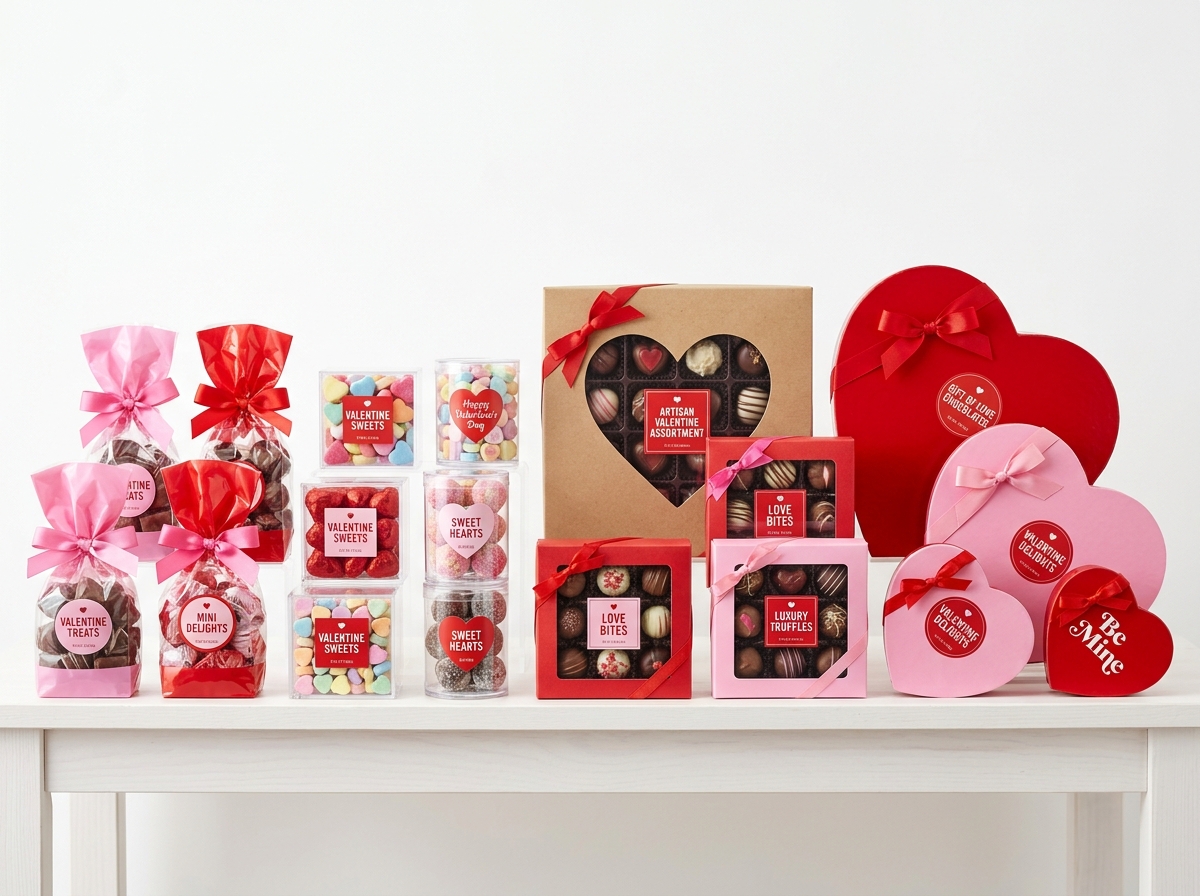
Small bakeries also face unique operational constraints that larger manufacturers do not. Most wholesale packaging suppliers impose minimum order quantities that can strain storage space and cash flow, particularly when ordering 8-10 weeks ahead of the February 14 deadline. Understanding which formats deliver the best return on that upfront investment—and which can transition to Galentine's Day or post-Valentine use—separates profitable Valentine programs from those that leave you with excess inventory in March.
More consumers (57%) purchase candy than any other Valentine's Day gift item, making confectionery the single most popular Valentine gift category. Approximately 58 million pounds of chocolate are purchased in the United States alone in the days leading up to Valentine's Day, with sales concentrated in the final week before February 14. For context, the total sales of all chocolate candy amounted to close to 1.4 billion U.S. dollars in the four weeks ending on the 20th of February 2021.
Consumer preferences during Valentine's week skew heavily toward gift-ready formats. Gift-ready chocolate boxes experience a 4-5x increase in sales compared to regular weeks, driven by their iconic heart-shaped gift boxes and seasonal packaging. This data point matters for small bakeries because it confirms what many producers intuitively understand: packaging that eliminates the customer's need to wrap or transfer the product significantly increases purchase likelihood during Valentine's week.
The National Confectioners Association reports that seasonal confectionery continues to grow as a category, with Valentine's Day serving as a critical anchor for annual sales planning. For small producers, this means Valentine packaging investments should be viewed not as one-time expenses but as recurring annual costs that justify higher per-unit pricing during the season's compressed sales window.
Valentine candy packaging for small bakeries generally falls into five core format categories, each with distinct cost structures, lead time requirements, and customer perceptions. Understanding these categories before placing orders helps you match packaging to your specific product line, price point, and distribution channel.
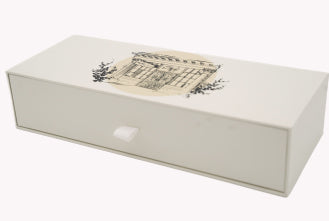
Rigid boxes with separate lids offer the most premium presentation and include heart-shaped boxes, square gift boxes, and rectangular candy boxes. These formats typically require the longest lead times (10-12 weeks for custom printing) but deliver the highest perceived value. Rigid boxes work best for assorted chocolate collections, luxury truffles, and products positioned at $20+ retail price points.
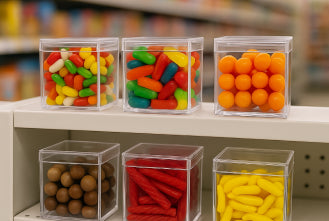
Clear acrylic containers provide product visibility while maintaining structural protection. Clear acrylic boxes with separate lids allow customers to see exactly what they're purchasing, which can increase conversion for visually striking products like chocolate-covered strawberries, colorful candy bark, or decorated cookies. The transparency trades some romantic mystique for purchase confidence, making this format particularly effective for farmers market sales and visual merchandising.
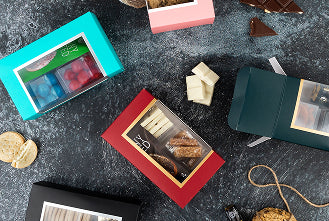
Window boxes split the difference between full visibility and traditional gift box presentation. A decorative pastry box with window provides a branded exterior while showcasing the product through a clear panel. These formats typically cost less than fully custom rigid boxes while maintaining gift-ready appeal, making them popular for small bakeries balancing presentation and budget.
Cellophane bags and pouches represent the most cost-effective and flexible option for Valentine candy packaging. Clear cellophane wrap can be cut to size, heat-sealed, and finished with ribbon or tags for a handmade aesthetic that resonates with customers seeking artisan products. Lead times are minimal, and storage requirements are low, though perceived value typically caps below $15 retail.
Hybrid formats combine rigid bases with flexible or removable elements—for example, a kraft box with a clear cellophane lid, or a neutral gift box with a removable Valentine sleeve. These designs address the post-holiday reuse trend by allowing customers to remove seasonal elements while retaining a functional container.
Heart-shaped candy boxes remain the most instantly recognizable Valentine packaging format, with heart-shaped boxes of chocolates accounting for 10.1% of Valentine's Day candy sales. For small chocolatiers, the question is not whether heart boxes sell—they do—but whether the format aligns with your brand positioning, product type, and operational capacity.
Traditional heart boxes work exceptionally well for assorted chocolate collections where the container itself becomes part of the gift experience. The heart shape immediately signals Valentine intent, eliminating any ambiguity about the product's purpose. This clarity can drive impulse purchases from customers who need a "safe" gift option and have limited time to evaluate alternatives. However, the same specificity that makes heart boxes effective for Valentine's also limits their use outside the February 13-14 window, creating potential inventory challenges if you overorder.
For more detailed guidance on when heart-shaped formats outperform alternatives and which chocolate types benefit most from this presentation style, see our format comparison analysis.
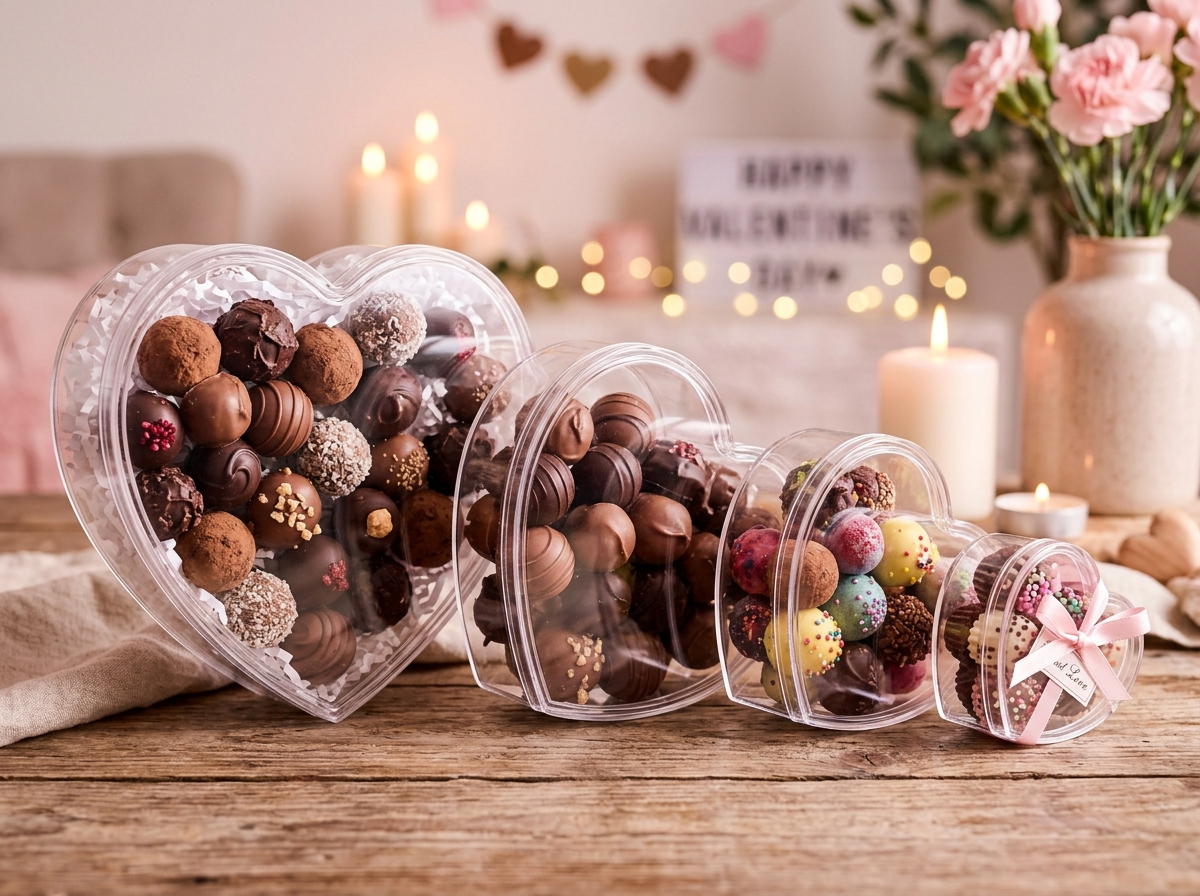
Clear heart-shaped acrylic containers offer a modern variation on the traditional format. Heart shaped clear acrylic boxes maintain the iconic silhouette while providing full product visibility, which can be particularly effective for chocolates with distinctive visual characteristics—gold-dusted truffles, colorful candy coatings, or hand-piped decorations. The clear format also extends usability beyond Valentine's Day, as customers can repurpose the containers for jewelry, small gifts, or desk organization.
Sizing for heart boxes typically ranges from 2-inch favor-sized containers suitable for 1-2 truffles up to 8-10 inch boxes that hold 12-16 piece assortments. Small bakeries should consider starting with mid-range sizes (4-6 inches) that accommodate 4-8 piece collections, as these hit the $15-25 retail price point where Valentine gift purchases concentrate.
Product visibility has become increasingly important in Valentine candy packaging as consumers seek transparency about what they're purchasing. Clear packaging formats address this trend by showcasing the actual product while maintaining protective structure and gift-ready presentation.
Full clear acrylic boxes provide 360-degree visibility and work particularly well for products where appearance is a key selling point. A compact clear acrylic cube showcases individual truffles or small candy assortments while maintaining a premium feel. The rigid structure protects delicate chocolates during transport and display, addressing one of the primary concerns with flexible packaging options.
Window gift boxes combine the branding opportunities of printed packaging with the conversion benefits of product visibility. These formats typically feature a clear panel—either cellophane or PET plastic—set into a printed paperboard box. The partial visibility approach works well when you want to control the first impression (through branded exterior graphics) while still allowing customers to verify product quality and freshness before purchase.
For small bakeries working with products that have variable appearance—hand-decorated cookies, artisan bark with irregular shapes, or truffles with natural cocoa bloom—window boxes provide more control than full-clear formats. You can orient the best-looking pieces toward the window while the box structure conceals less photogenic elements. This controlled visibility maintains quality perception while delivering the transparency modern consumers expect.
Our comprehensive sizing guide covers specific dimension recommendations for different candy types and how to match box depth to product height for optimal presentation.
Gift-ready packaging eliminates the customer's need to wrap, bag, or otherwise prepare the product for gifting—a convenience that commands premium pricing during Valentine's week when time pressure intensifies. For small bakeries, designing packaging that functions as both product container and finished gift presentation can significantly increase average transaction value.
True gift-ready formats incorporate several key elements: finished exterior appearance with no visible tape or assembly marks, integrated handle or carrying method, and sufficient structural integrity to survive transport without additional protection. A tall paper box with window exemplifies this approach by combining a finished printed exterior with a clear panel for product visibility and a tuck-top closure that requires no tape or ribbon to secure.
Magnetic closure boxes represent the premium end of gift-ready packaging. These rigid boxes feature embedded magnets that create a satisfying snap-close action and eliminate the need for separate closure mechanisms. While magnetic boxes typically carry higher per-unit costs, they deliver exceptional unboxing experiences that justify premium pricing for luxury chocolate assortments or high-end truffle collections.
For bakeries seeking gift-ready solutions at more accessible price points, consider boxes that incorporate integrated ribbon handles, pre-attached bows, or fold-over closures that create finished presentation without requiring additional materials. The key is ensuring that the packaging itself looks intentional and complete, not like a shipping container that happens to be decorative.
Additional strategies for creating gift-ready Valentine candy packaging—including closure types, embellishment options, and format selection by price point—are covered in our dedicated gift-ready formats guide.
Cellophane bags and flexible packaging offer small bakeries the most operational flexibility for Valentine candy packaging, with minimal lead times, low minimum order quantities, and adaptable sizing that can accommodate varying product dimensions. While these formats typically deliver lower perceived value than rigid boxes, they excel in specific applications where handmade aesthetics, cost efficiency, or production flexibility take priority.
Clear cellophane bags work particularly well for individually wrapped candies, small truffle collections, or products sold at farmers markets and craft fairs where customers value artisan presentation over corporate polish. The transparent material showcases product while the flexible format accommodates irregular shapes that would require custom rigid boxes.
Heat-sealing cellophane bags creates a professional finished edge and extends product freshness by creating a barrier against humidity and contaminants. Small bakeries can invest in an impulse heat sealer for under $50, transforming basic cellophane bags into professional-looking packages that maintain product quality during the days between production and sale.
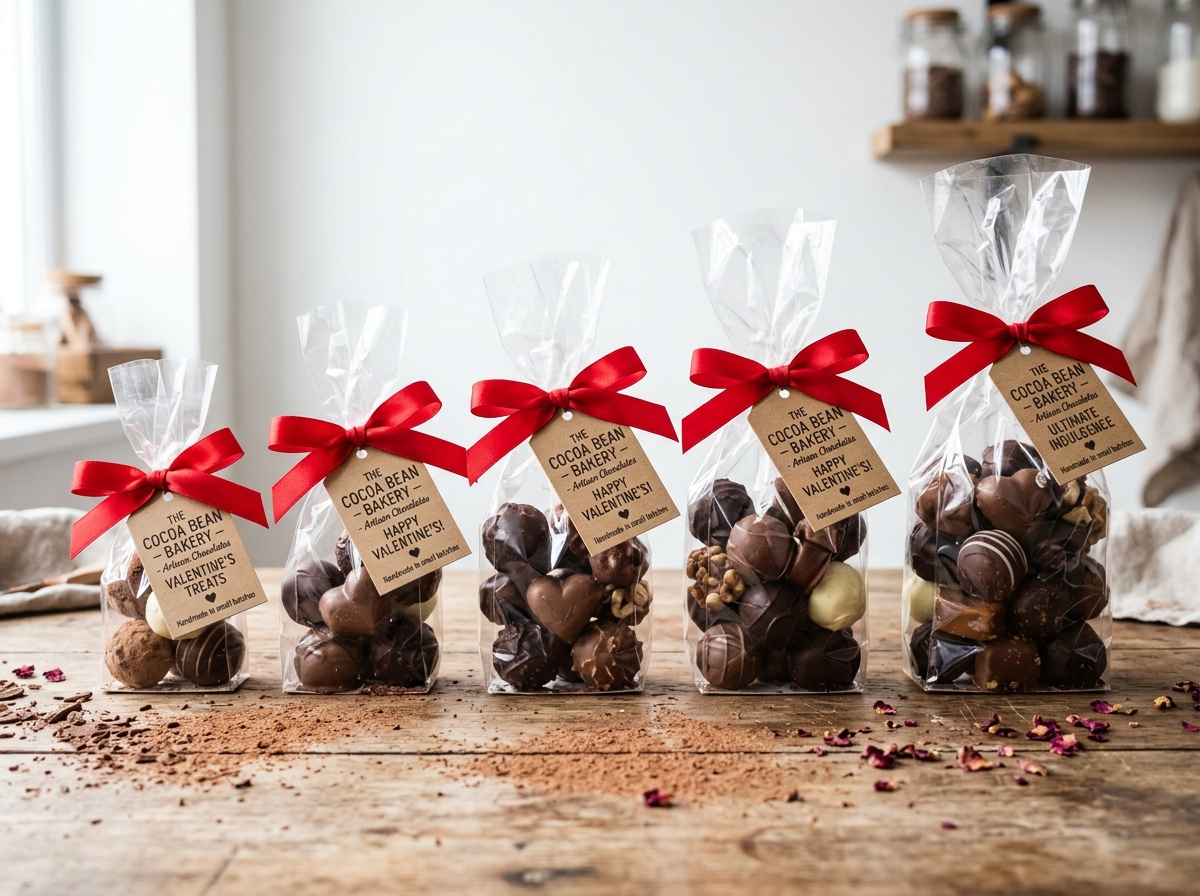
Finishing techniques elevate cellophane bag presentation from basic to gift-ready. Ribbon ties in Valentine colors (red, pink, white) add visual interest and create closure points that keep bags secure during transport. Printed tags or labels applied to the bag exterior provide space for branding, ingredient information, and personalized messages. Some small bakeries use custom stamps or stickers to add branded elements to plain cellophane, creating a handmade aesthetic that resonates with customers seeking alternatives to mass-market candy.
The primary limitation of cellophane bags for Valentine candy packaging is structural protection. Flexible packaging provides minimal crush resistance, making it unsuitable for delicate products like hollow chocolate hearts, thin bark, or elaborately decorated cookies. For these products, cellophane works best as an inner liner within a rigid outer box, combining the freshness benefits of sealed flexible packaging with the protection of structured containers.
For a complete comparison of when cellophane bags outperform rigid boxes and how to calculate cost-per-unit across different formats, consult our format cost analysis.
Matching packaging dimensions to product type prevents common presentation problems that undermine perceived value—boxes that look half-empty, containers where products shift during transport, or packages that require excessive void fill to prevent movement. Small bakeries should approach sizing decisions by working backward from product dimensions rather than selecting boxes first and fitting products second.
Truffles require different spatial considerations than bark or filled chocolates. Standard truffles measure approximately 1-1.25 inches in diameter, which means a 3x3 inch box comfortably holds four pieces with minimal movement. A 4x4 inch format accommodates nine truffles in a 3x3 grid, while 6x6 inch boxes work for 16-piece assortments. The key is maintaining roughly 0.25-0.5 inches of clearance around each piece—enough to prevent crushing but not so much that products appear sparse.
Chocolate bark presents unique sizing challenges because pieces rarely conform to uniform dimensions. Small bakeries typically break bark into irregular shards ranging from 2-4 inches across, which means packaging must either accommodate the largest pieces or require producers to size bark specifically for chosen containers. Shallow rectangular boxes (6x4x1.5 inches or 8x5x2 inches) work well for bark because they maximize surface area while limiting depth, creating full-looking presentations without requiring excessive product volume.
Filled chocolates—bonbons, caramels, nougats—often have specific height requirements that differ from solid truffles. Many filled chocolates measure 0.75-1 inch tall, which means box depth should be at least 1.25 inches to prevent lid contact. Products with delicate toppings (gold leaf, crystallized flowers, hand-piped designs) may require 1.5-2 inch depths to ensure the lid doesn't disturb decorative elements.
Our bakery box sizing guide provides specific dimension recommendations for cookies, decorated treats, and other baked goods commonly sold during Valentine's week.
Valentine's Day packaging requires longer planning horizons than most small bakeries anticipate. The compressed sales window—essentially February 13-14 for most retail channels—means packaging must arrive no later than early February, which pushes order placement back to November or early December for many wholesale suppliers.
Standard lead times for Valentine candy packaging vary significantly by format and customization level. Stock packaging in seasonal colors (red, pink, white boxes) typically ships within 1-2 weeks and requires no minimum order quantities from many suppliers. Custom-printed boxes with your bakery logo and branding require 8-10 weeks from artwork approval to delivery, with most suppliers imposing minimum order quantities of 250-1,000 units depending on box size and printing complexity.
Minimum order quantities create particular challenges for small bakeries with limited storage space and uncertain demand forecasts. A 500-unit MOQ might represent your entire projected Valentine production or exceed it significantly, forcing you to choose between tying up capital in excess inventory or settling for generic packaging that doesn't support premium pricing. Some small producers address this by coordinating group orders with other local bakeries, splitting MOQs while still accessing custom printing.
According to Packaging Digest, seasonal packaging production typically accelerates in September-October as major confectionery brands finalize Valentine programs, which can create capacity constraints at printing facilities during November-December. Small bakeries ordering during this window may encounter extended lead times or reduced flexibility on customization options as suppliers prioritize larger accounts.
For detailed guidance on when to place Valentine packaging orders and how to structure purchases to minimize inventory risk, see our lead time planning guide.
Galentine's Day is typically marked as February 13, creating a distinct sales opportunity for Valentine candy packaging that extends beyond traditional romantic gifting. Galentine's Day has become a powerful cultural and commercial moment centered on female friendship, intentional gifting, and shared experiences, which means small bakeries can effectively double their Valentine season by designing packaging that works for both romantic and platonic gifting occasions.
Galentine's packaging succeeds when it avoids overtly romantic imagery while maintaining festive February appeal. Pink and kraft color palettes work particularly well because they feel celebratory without being couple-centric. Messaging that emphasizes friendship, self-care, or celebration rather than romance allows the same packaging to serve both markets. A clear acrylic box with a removable "Happy Galentine's Day" belly band, for example, functions for February 13 gifting while remaining usable for romantic Valentine's on February 14.
Businesses responded in stages, as greeting cards and novelty items showed early commercial interest and marketing campaigns followed once brands recognized an audience distinct from traditional Valentine's messaging. Feb. 13 was no longer treated simply as the eve of Valentine's Day but as a separate occasion with its own consumer base. For small bakeries, this evolution means Galentine's packaging should be treated as a distinct category rather than an afterthought or Valentine's reject bin.
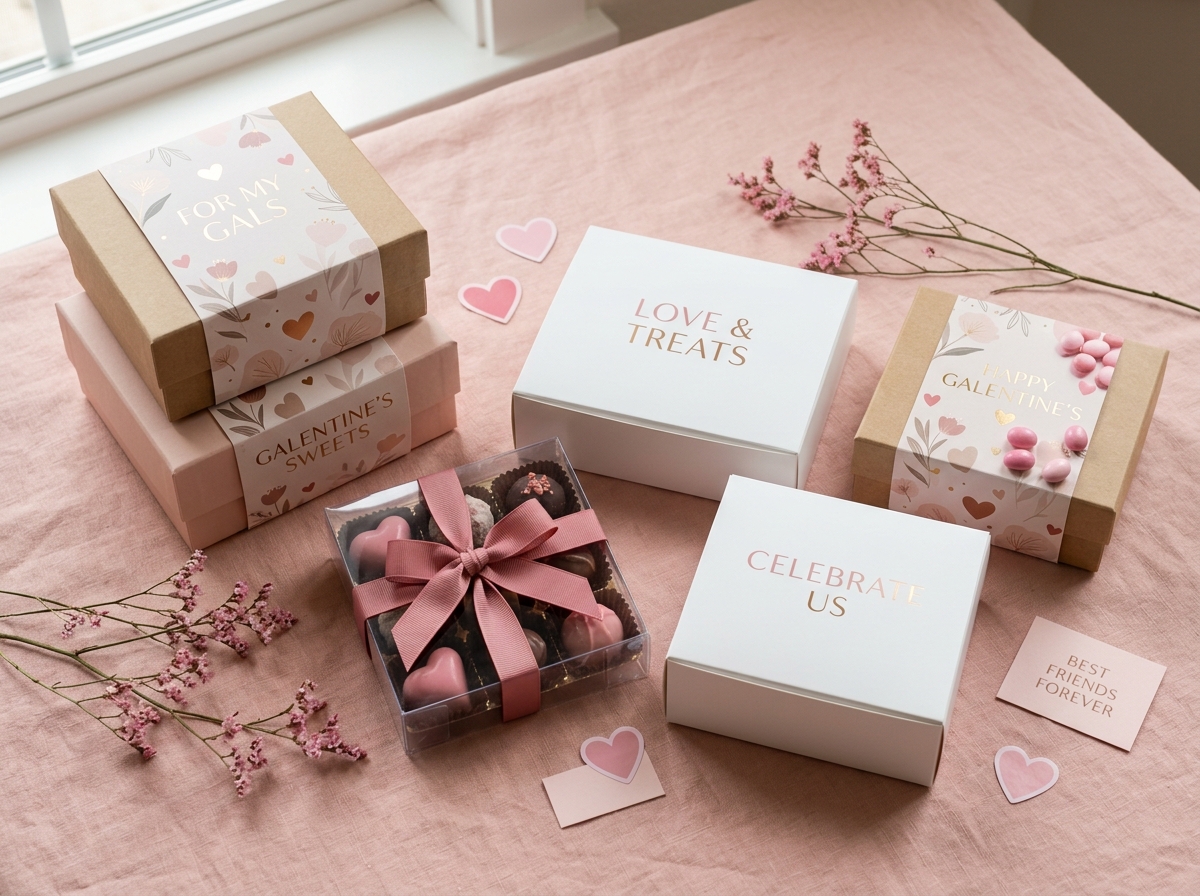
Multi-piece packaging formats work particularly well for Galentine's Day because friend groups often exchange small gifts rather than single larger presents. Four-piece truffle boxes, small candy assortments, or individually wrapped cookies in sets of 4-6 hit the price point and portion size that makes sense for friend-to-friend gifting. These smaller formats also allow customers to purchase multiple units for different friends without significant budget impact.
For comprehensive strategies on designing packaging that serves both Valentine's and Galentine's markets, including color selection, messaging approaches, and format recommendations, consult our Galentine's packaging guide.
Color selection for Valentine candy packaging operates within established consumer expectations while allowing room for differentiation through unexpected combinations or trend-forward palettes. Understanding how color influences purchase decisions helps small bakeries make strategic design choices that support brand positioning and price perception.
Red remains the dominant Valentine color, signaling passion, romance, and traditional gift-giving. Red packaging performs consistently well for products positioned as romantic gifts for partners, particularly when combined with gold or silver accents that add luxury cues. However, red's ubiquity during Valentine's week can also work against differentiation—when every chocolate box on the shelf features red packaging, individual products struggle to stand out.
Pink has evolved from a secondary Valentine color to a primary choice, particularly for products targeting Galentine's Day or non-romantic gifting. Millennial pink and blush tones communicate affection and celebration without the intensity of traditional red, making them effective for products positioned as self-care treats or friend gifts. Pink packaging also photographs well for social media, which matters increasingly as customers share Valentine purchases on Instagram and TikTok.
Kraft and neutral palettes represent the fastest-growing segment of Valentine candy packaging design. Natural kraft boxes with simple typography or minimal graphics appeal to consumers seeking artisan products and sustainable packaging options. These formats work particularly well for small bakeries emphasizing handmade production and local ingredients, as the understated packaging reinforces authenticity rather than competing with it.
According to research on confectionery packaging trends, minimalist design approaches have gained traction as premium chocolate brands seek to differentiate from mass-market options. Clean white backgrounds with selective use of metallic foil, simple geometric patterns, or sophisticated typography can position products as luxury items worthy of higher price points.
Unexpected color combinations—burgundy and gold, navy and rose gold, black and pink—create visual interest while maintaining Valentine relevance. These palettes work particularly well for small bakeries seeking to establish distinctive brand identities that carry across multiple seasonal programs rather than redesigning packaging completely for each holiday.
Post-holiday packaging reuse has emerged as both a sustainability concern and a practical consideration for customers who appreciate functional containers that extend beyond single-use applications. Small bakeries can address this trend by designing Valentine candy packaging with removable seasonal elements or selecting formats that work year-round with minimal modification.
Removable sleeve designs separate seasonal graphics from permanent packaging structure. A neutral kraft or white box with a paper belly band featuring Valentine messaging allows customers to remove the seasonal element while retaining a useful storage container. This approach reduces customer guilt about discarding packaging while potentially increasing purchase likelihood among environmentally conscious buyers who resist single-use items.
Clear acrylic containers naturally support post-holiday reuse because their functionality extends beyond candy packaging. Customers repurpose clear boxes for jewelry storage, desk organization, craft supplies, or gift packaging for other occasions. This extended utility can justify premium pricing because customers perceive value beyond the immediate candy purchase. A clear acrylic storage box that holds Valentine truffles in February becomes a bathroom organizer in March, extending the product's perceived value.
Neutral color palettes in durable materials—kraft boxes with simple graphics, white boxes with minimal text, or natural wood containers—function across multiple seasons and occasions. While these formats may not scream "Valentine's Day" as loudly as traditional red heart boxes, they appeal to customers who value versatility and sustainability over holiday-specific presentation.
For detailed strategies on designing Valentine packaging that customers can reuse throughout the year, including specific format recommendations and closure types that support multiple uses, see our reusable packaging guide.
Valentine candy packaging costs directly impact product margin, which means small bakeries must balance presentation quality against per-unit expenses to maintain profitability during the seasonal rush. Understanding cost structures across different formats helps you make strategic decisions about where to invest in premium packaging and where cost-effective options deliver adequate results.
Per-unit packaging costs vary dramatically by format, material, and order quantity. Basic cellophane bags typically cost $0.10-0.30 per unit including ribbon and tags, making them the most economical option for products retailing under $10. Standard paperboard boxes with windows range from $0.50-1.50 per unit depending on size and printing, positioning them as mid-range solutions for $12-20 retail price points. Premium rigid boxes with magnetic closures or specialty finishes can reach $3-8 per unit, which only makes economic sense for products retailing above $30.
The relationship between packaging cost and retail price typically follows a 5-10% guideline—packaging should represent no more than 5-10% of the final retail price to maintain healthy margins. A $20 chocolate assortment can support $1-2 packaging costs, while a $5 truffle bag needs to stay under $0.50 for packaging to preserve margin. This guideline helps small bakeries work backward from target retail prices to determine realistic packaging budgets.
Volume discounts significantly impact per-unit costs, particularly for custom-printed packaging. A 250-unit order might cost $2.00 per box while a 1,000-unit order drops to $1.20 per box for identical specifications. Small bakeries should evaluate whether storage capacity and demand forecasts support larger orders that reduce per-unit costs, or whether smaller orders at higher per-unit prices provide better risk management.
Hidden costs in packaging programs include storage (boxes consume warehouse space for weeks or months before use), assembly labor (some formats require hand assembly or product insertion that adds labor hours), and void fill materials (tissue paper, shred, or inserts that prevent product movement). When calculating true packaging costs, include these secondary expenses that don't appear on supplier invoices but impact overall program profitability.
Valentine candy boxes for small bakeries typically range from $0.50 to $3.00 per unit depending on format, material, and order quantity. Basic paperboard boxes with windows cost $0.50-1.50 per unit for orders of 250-500 units. Clear acrylic boxes range from $1.00-2.50 per unit. Premium rigid boxes with magnetic closures or custom printing can reach $3.00-8.00 per unit but require larger minimum orders. Most small bakeries target packaging costs at 5-10% of retail price to maintain healthy margins.
Small bakeries should order Valentine's Day packaging by late November or early December to ensure delivery before production begins in January. Stock packaging in seasonal colors typically ships within 1-2 weeks, but custom-printed boxes require 8-10 weeks from artwork approval to delivery. Ordering during September-October can secure better pricing and avoid capacity constraints as major confectionery brands finalize their Valentine programs.
Chocolate truffles work best in shallow boxes with compartments or inserts that prevent movement—typically 3x3 inch boxes for 4 pieces or 4x4 inch boxes for 9 pieces, with 1.25-1.5 inch depth. Clear acrylic boxes showcase truffle appearance while providing crush protection. Chocolate bark requires shallow rectangular boxes (6x4x1.5 inches or 8x5x2 inches) that maximize surface area while limiting depth, since bark pieces are irregular and flat. Window boxes work well for bark by displaying product while the structure prevents breakage.
Yes, packaging can serve both Valentine's Day and Galentine's Day when it avoids overtly romantic imagery while maintaining festive February appeal. Pink and kraft color palettes, clear acrylic boxes, and neutral designs with removable sleeves work for both occasions. Messaging emphasizing celebration or friendship rather than romance allows the same packaging to serve romantic gifting on February 14 and platonic gifting on February 13. Multi-piece formats (4-6 piece assortments) work particularly well for Galentine's friend-to-friend exchanges.
Minimum order quantities for custom Valentine candy boxes typically range from 250 to 1,000 units depending on box size, printing complexity, and supplier. Stock packaging in seasonal colors often has no minimum or requires as few as 25-50 units. Custom printing with bakery logos and branding usually requires 250-500 unit minimums for paperboard boxes and 500-1,000 units for rigid boxes. Some small bakeries coordinate group orders with other local producers to split minimums while accessing custom printing.
Valentine's Day candy packaging represents one of the most concentrated opportunities in the small bakery calendar—a narrow window where packaging decisions directly influence sales velocity, price perception, and customer satisfaction. By understanding format options, lead time requirements, and the expanding market for Galentine's Day packaging, small bakeries and chocolatiers can make strategic packaging investments that maximize return during the February gifting season while building brand equity that extends throughout the year.