Cart
0
You may also like

Book a call with our development team to get started.



Apply online and access wholesale pricing.

When you're planning your Valentine's Day chocolate lineup, packaging format matters as much as what's inside. Heart shaped candy boxes carry over 150 years of emotional equity as a Valentine's Day symbol, yet clear acrylic formats increasingly appear on retail shelves and e-commerce sites. For small bakeries and chocolatiers, the choice isn't purely aesthetic—it affects perceived value, reusability, shipping costs, and ultimately, sales conversion.
Both formats serve distinct buyer motivations. Traditional heart boxes tap into nostalgia and romantic tradition, while clear acrylic emphasizes product visibility and modern minimalism. This guide compares the two on the metrics that matter most: sales performance, cost structure, customer perception, and practical considerations for valentine's day candy packaging operations.
Heart shaped candy boxes remain one of the most recognizable Valentine's Day products in the confectionery industry. National Confectioners Association data shows that approximately 10% of Valentine's Day candy purchases come in heart-shaped boxes, representing a significant share of the $3.4 billion seasonal market. The format debuted in 1868 when Richard Cadbury created the first known heart-shaped candy box, and its staying power reflects deep cultural associations with romance and gift-giving.
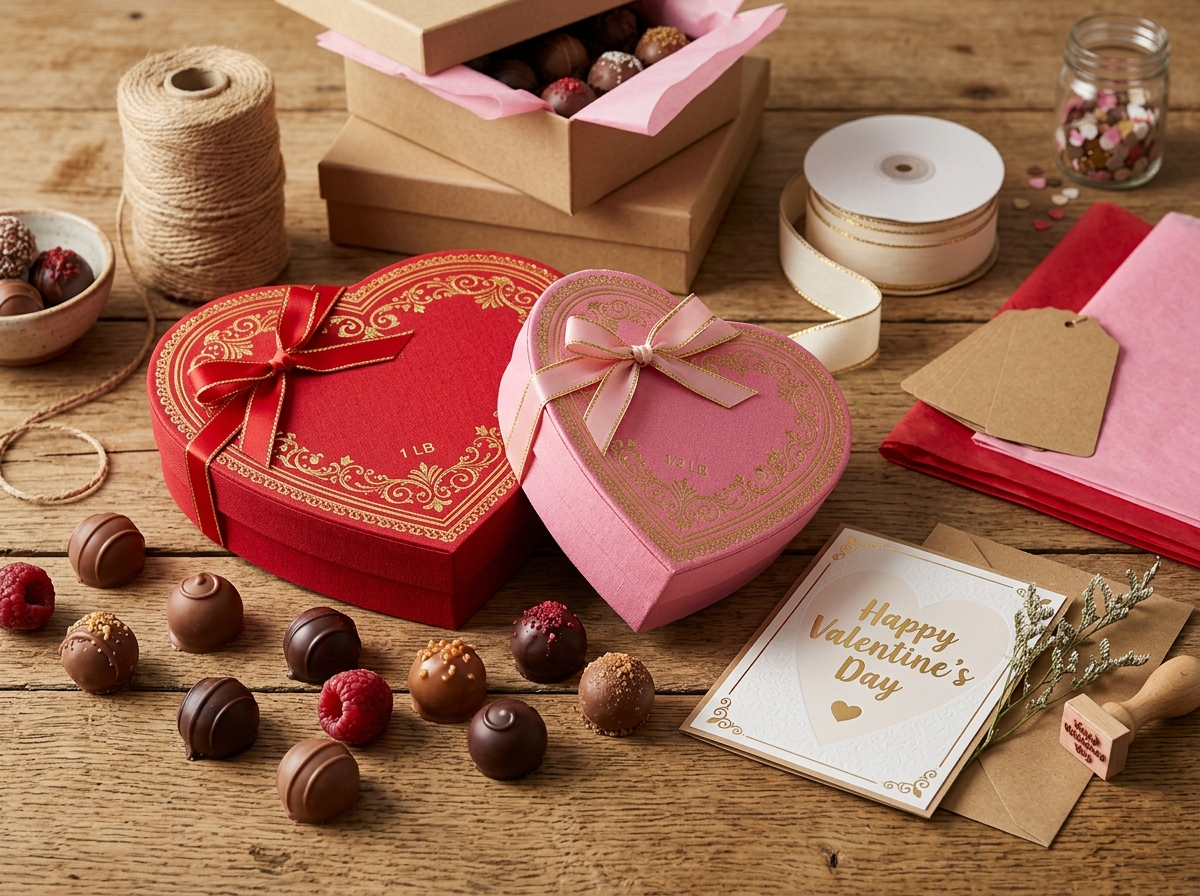
The traditional format typically comes in two standard sizes: 1/2 lb (8 oz) and 1 lb (16 oz). The smaller size measures approximately 6.75 to 7 inches across, while the 1 lb version ranges from 9 to 10 inches. Most feature a two-piece construction—a rigid paperboard base with a fitted lid—often finished with satin ribbon, foil stamping, or embossed patterns. The interior usually includes a plastic tray with individual cavities to hold each chocolate in place during transport.
From a sales psychology perspective, the heart shape functions as instant visual shorthand. Shoppers recognize it from across a store aisle, and the format signals "Valentine's gift" without requiring additional explanation. This recognition advantage is particularly valuable in high-traffic retail environments where impulse purchases drive a significant portion of seasonal sales. The box itself becomes part of the gift—many recipients keep the decorative containers long after the chocolates are gone, extending brand visibility well beyond February 14.
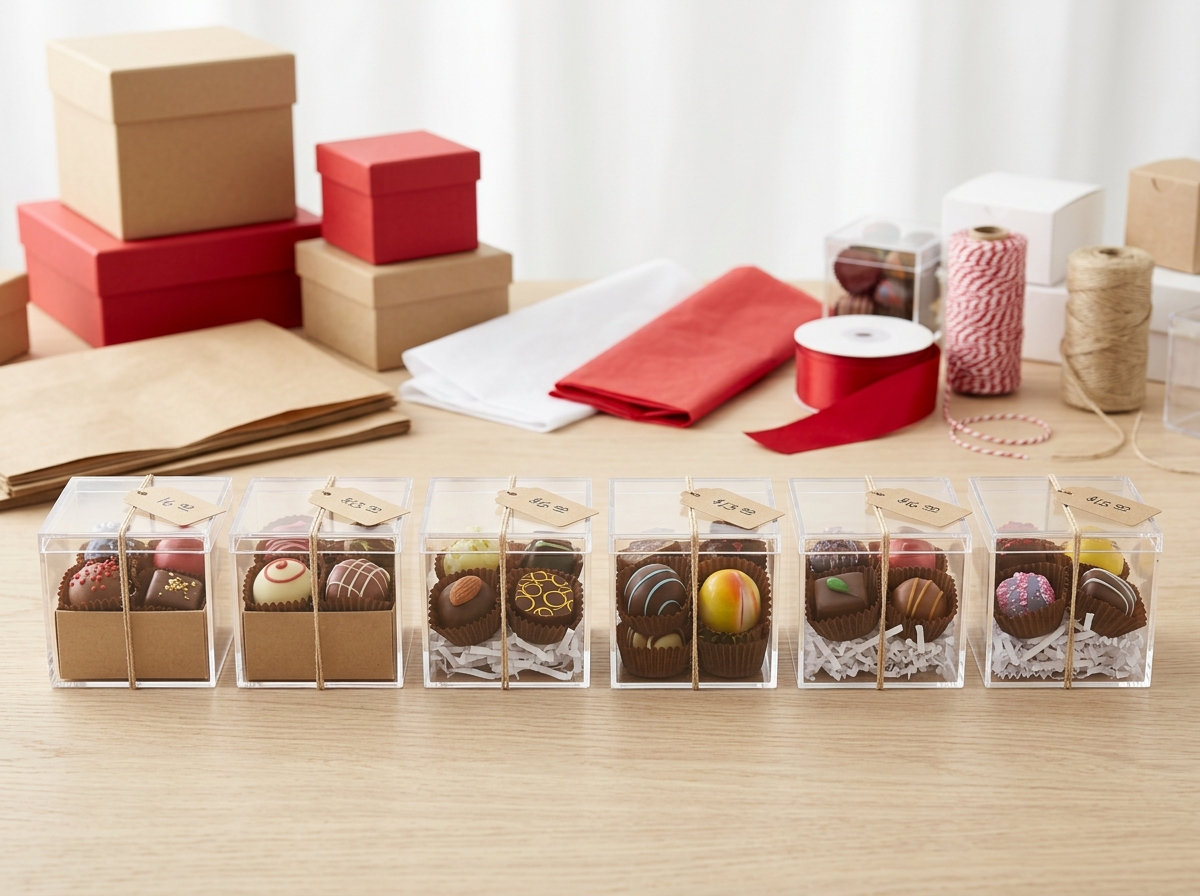
Clear acrylic formats offer a fundamentally different value proposition. Instead of concealing the product until the recipient opens the box, acrylic packaging makes the chocolates the hero from the first glance. This transparency addresses a growing consumer preference for "what you see is what you get" purchasing—buyers want to evaluate quality, variety, and presentation before committing to a purchase.
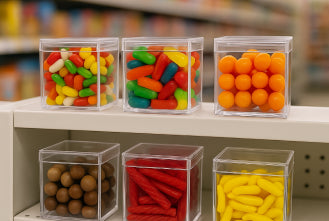
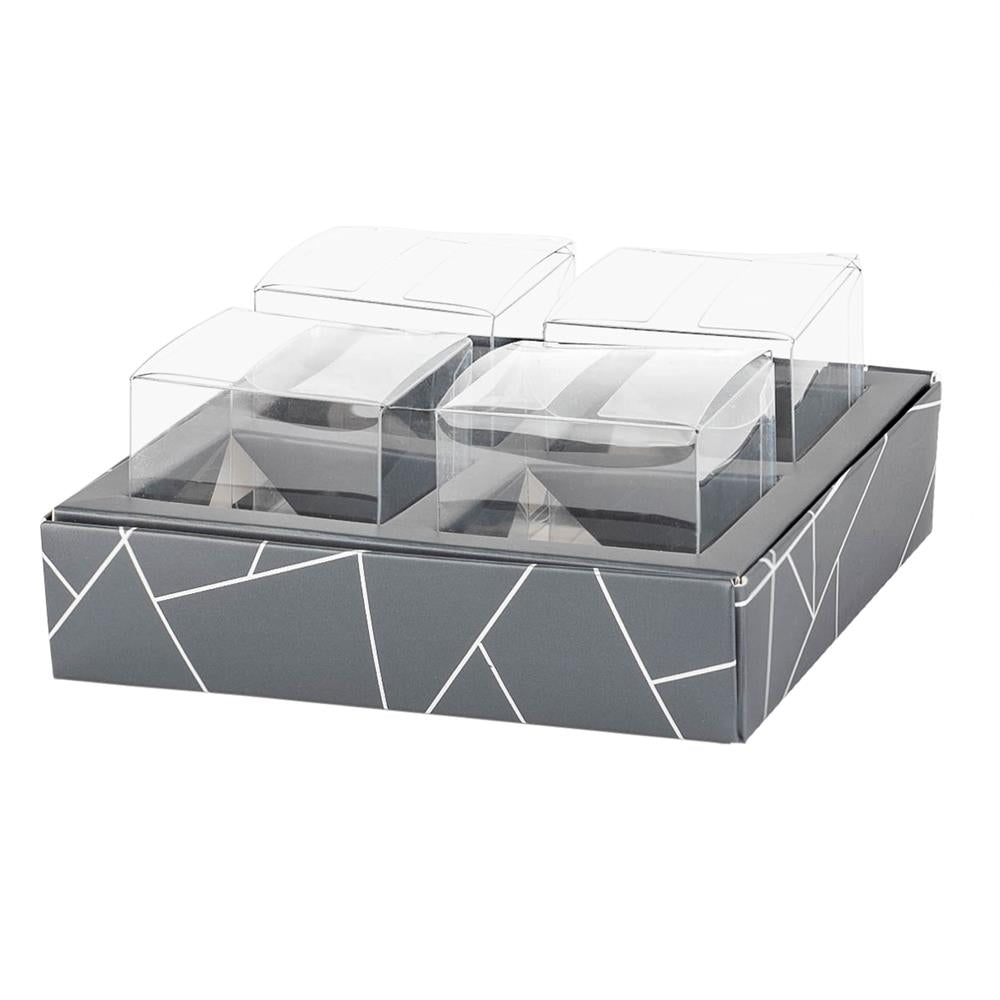
Acrylic candy boxes come in multiple configurations. Square cubes (typically 2x2x2 inches to 4x4x4 inches) work well for individual truffles or small assortments. Rectangular boxes with separate lids accommodate larger collections, and some designs include built-in compartments for organizing different chocolate varieties. The material itself—clear acrylic or PET plastic—is lightweight, shatter-resistant, and provides excellent clarity, with light transmittance often exceeding 90%.
For artisan chocolatiers, clear formats showcase craftsmanship. Hand-painted bonbons, intricate piping work, and colorful ganache fillings become visible selling points rather than hidden surprises. This is especially valuable for premium-priced products where customers need visual confirmation of quality to justify the cost. A clear acrylic box lets the product speak for itself, reducing the need for extensive point-of-sale descriptions or photography.
The reusability factor also plays a role in purchasing decisions. After the chocolates are consumed, acrylic boxes transition easily into storage containers for jewelry, office supplies, cosmetics, or craft materials. This secondary utility adds perceived value—customers aren't just buying packaging they'll discard; they're acquiring a functional item with ongoing use. For environmentally conscious buyers, this extended lifecycle can offset concerns about plastic packaging.
Clear acrylic boxes offer practical advantages for retail display. Uniform cube or rectangular shapes stack cleanly, maximizing vertical space on shelves or countertops. Traditional heart boxes, with their curved edges and varying depths, require more deliberate arrangement and often need individual display stands to prevent toppling. In high-volume retail settings or farmers' market booths with limited space, this efficiency matters.
Direct sales comparisons between formats depend heavily on price point, retail environment, and target demographic. Traditional heart boxes dominate mass-market channels—drugstores, supermarkets, and big-box retailers—where brand recognition and impulse buying drive volume. The format's emotional resonance makes it a safe choice for gift-givers who want a recognizable Valentine's symbol without extensive decision-making.
Clear acrylic formats perform better in premium and specialty contexts. Artisan chocolate shops, farmers' markets, and e-commerce sites catering to design-conscious consumers see stronger conversion with transparent packaging. These buyers typically spend more per transaction and prioritize product visibility over traditional symbolism. The format also appeals to non-romantic Valentine's gifting—friends, coworkers, or self-purchase occasions—where the heart shape might feel overly specific.
Price perception differs between the two formats. A 1 lb heart-shaped box with standard chocolates might retail for $15 to $25, positioning it as an accessible romantic gesture. The same quantity in clear acrylic packaging often commands $20 to $35, reflecting both the perceived premium of visible quality and the reusable container value. For small businesses, this pricing flexibility can improve margin, but it requires confident merchandising and clear communication of the product's artisan credentials.
From a sourcing perspective, heart-shaped candy boxes generally cost less per unit at comparable volumes. Standard 1/2 lb boxes wholesale for $0.50 to $1.50 each, while 1 lb sizes range from $1.00 to $2.50, depending on finish quality and order quantity. The format's long manufacturing history means abundant supply and competitive pricing. Most suppliers stock them seasonally, with lead times of 2 to 4 weeks during peak ordering periods. For guidance on timing your orders, review when to order Valentine's Day packaging to avoid supply shortages.
Clear acrylic boxes typically cost more per unit. A 3x3x3 inch cube might wholesale for $1.50 to $3.00, while larger rectangular formats with separate lids range from $2.50 to $5.00. The higher cost reflects material expense and more complex manufacturing. However, acrylic's durability reduces breakage during shipping and handling, which can offset the initial price difference through lower replacement costs.
Filling efficiency also differs. Heart-shaped boxes with molded plastic inserts hold chocolates securely in fixed positions, speeding up the packing process and reducing movement during transit. Acrylic boxes without compartments require more careful arrangement and may need tissue paper, shredded fill, or custom inserts to prevent chocolates from shifting. For businesses packing high volumes, this labor difference adds up.
Dimensional weight matters for e-commerce operations. Heart boxes, with their curved profiles and empty space around the perimeter, often trigger higher shipping rates relative to product weight. A 1 lb heart box might measure 10 x 10 x 2 inches, creating substantial dimensional volume. Acrylic boxes, especially cubes and compact rectangles, pack more efficiently and reduce wasted space in shipping cartons. For businesses shipping individual orders, this can translate to $2 to $4 savings per package.
Breakage risk is lower with acrylic. The rigid plastic construction withstands compression and impact better than paperboard, reducing the need for excessive cushioning materials. Heart boxes, particularly those with delicate ribbon or foil details, require careful packing to arrive in gift-ready condition. This adds both material cost and packing time.
Packaging format communicates brand identity before a customer tastes a single chocolate. Heart-shaped boxes signal tradition, romance, and familiarity—ideal for brands emphasizing heritage, nostalgia, or mass appeal. They work particularly well for businesses targeting customers who want a recognizable Valentine's gesture without overthinking the purchase. The format also photographs well for social media, with the heart shape instantly signaling the occasion.
Clear acrylic packaging positions a brand as modern, transparent, and quality-focused. It appeals to customers who value seeing what they're buying and appreciate design-forward presentation. This format works well for businesses emphasizing artisan craftsmanship, unique flavor profiles, or premium ingredients. The transparency literally demonstrates "nothing to hide," which can build trust with new customers evaluating an unfamiliar brand.
Consider your customer's purchase context. If you're selling primarily to last-minute shoppers in a retail environment, the instant recognition of a heart box reduces decision friction. If you're building an online following of chocolate enthusiasts who research purchases and value uniqueness, clear acrylic differentiates your product from mass-market options.
Some businesses successfully use both formats in a tiered product strategy. Entry-level offerings in traditional heart boxes capture price-conscious and impulse buyers, while premium collections in clear acrylic target customers willing to pay more for artisan quality and presentation. This approach maximizes market coverage without forcing a single format choice.
Another option: clear heart-shaped acrylic boxes. These combine the recognizable silhouette of the traditional format with the visibility benefits of transparent packaging. They're less common in the wholesale market, which can make sourcing more challenging and expensive, but they offer a middle-ground solution for businesses wanting both emotional resonance and product visibility.
Seasonal flexibility also matters. While heart boxes are Valentine's-specific, clear acrylic boxes work year-round for multiple occasions—weddings, corporate gifts, holiday assortments, or everyday retail. For businesses managing inventory across multiple seasons, acrylic's versatility reduces the risk of format-specific overstock. You can use the same compact acrylic cube for Valentine truffles in February, wedding favors in June, and holiday treats in December.
The right format depends on your specific business model, target customer, and product positioning. Heart shaped candy boxes make sense if you're selling in traditional retail environments, targeting a broad demographic, offering mid-range pricing, or emphasizing Valentine's tradition in your marketing. They're also the safer choice for businesses new to seasonal chocolate sales, as the format's familiarity reduces customer education requirements.
Clear acrylic formats suit businesses with premium products, strong visual presentation, design-conscious customers, or multi-channel sales including e-commerce. They work particularly well if your chocolates have distinctive visual appeal—hand-painted designs, unusual shapes, vibrant colors—that deserve to be seen immediately. The format also fits businesses emphasizing sustainability through reusability or targeting non-romantic Valentine's occasions.
Budget constraints may drive the decision. If you're working with tight margins or testing Valentine's sales for the first time, heart boxes' lower per-unit cost and readily available supply reduce financial risk. If you're established with premium pricing and confident in your product's visual appeal, acrylic's higher cost is easier to justify through improved perceived value and reusability messaging.
Consider testing both formats with a split inventory. Order a smaller quantity of each type and track which sells faster, generates higher average transaction values, and receives more positive customer feedback. Real sales data from your specific customer base will guide future inventory decisions more accurately than industry generalizations.
Regardless of format choice, Valentine's Day packaging requires advance planning. Most wholesale suppliers see peak demand from mid-December through early January, with stock availability tightening as February approaches. Standard heart boxes typically have 2- to 4-week lead times during the season, while custom printing or special finishes may require 6 to 8 weeks. Clear acrylic boxes often stock year-round but can face delays if specific sizes or configurations surge in popularity.
Minimum order quantities vary. Heart boxes from major suppliers often require 50- to 100-unit minimums per size and style, though some wholesalers offer mixed packs for small businesses. Acrylic boxes may have lower minimums—sometimes 12 to 24 units—because they're not season-specific products. Factor these minimums into your sales projections to avoid over-ordering inventory you can't move.
Storage space matters, especially for heart boxes. The curved shape and non-stackable profile mean they occupy more storage volume per unit than rectangular packaging. If you're working from a small kitchen or limited retail space, this can become a constraint. Acrylic boxes' uniform shapes stack efficiently and store more compactly.
Heart shaped candy boxes dominate mass-market retail and traditional gift-giving contexts, capturing approximately 10% of Valentine's Day candy sales. Clear acrylic formats perform better in premium artisan markets and with customers who prioritize product visibility over traditional symbolism. The best format for your business depends on your price point, retail environment, and target demographic rather than a universal "better" choice.
The two standard sizes are 1/2 lb (8 oz), measuring approximately 6.75 to 7 inches across, and 1 lb (16 oz), ranging from 9 to 10 inches. These sizes accommodate typical chocolate assortments while remaining affordable for most Valentine's Day gift budgets. Some specialty suppliers offer larger formats, but the 1/2 lb and 1 lb sizes account for the majority of sales.
Yes, and this reusability adds significant perceived value. Clear acrylic boxes transition easily into storage containers for jewelry, office supplies, cosmetics, or craft materials after the chocolates are consumed. This secondary utility appeals to environmentally conscious buyers and can justify a higher price point compared to single-use packaging formats.
Heart-shaped candy boxes generally cost less per unit, with 1/2 lb boxes wholesaling for $0.50 to $1.50 and 1 lb sizes ranging from $1.00 to $2.50. Clear acrylic boxes typically cost $1.50 to $5.00 depending on size and configuration. However, acrylic's durability reduces breakage during shipping, and its year-round versatility can offset the higher initial cost through multi-season use.
Absolutely. Clear acrylic boxes work year-round for weddings, corporate gifts, holiday assortments, and everyday retail. This versatility reduces the risk of season-specific overstock and makes them a more flexible inventory investment compared to heart-shaped formats, which are primarily Valentine's-specific. The same acrylic box can serve multiple occasions throughout your business calendar.
Both heart shaped candy boxes and clear acrylic formats have earned their place in Valentine's Day chocolate packaging. The traditional heart box leverages over a century of emotional equity and instant recognition, making it ideal for businesses targeting broad demographics and traditional retail channels. Clear acrylic packaging emphasizes transparency, modern aesthetics, and reusability, appealing to premium markets and design-conscious consumers.
Your choice should align with your product quality, pricing strategy, and customer expectations. Test both formats if possible, track sales performance, and let actual customer behavior guide your inventory decisions. The most successful Valentine's packaging strategy isn't about choosing the objectively "best" format—it's about selecting the one that authentically represents your brand and resonates with the specific customers you're trying to reach.
Whether you opt for nostalgic tradition or modern transparency, ensure your packaging arrives on time by planning orders well in advance. Stock your Valentine's line with confidence using versatile acrylic boxes that work across multiple seasons, or embrace the classic appeal of heart-shaped tradition to capture the romantic spirit of the holiday.