Cart
0
You may also like

Book a call with our development team to get started.



Apply online and access wholesale pricing.

Gift-ready candy boxes eliminate the last-minute scramble for tissue paper and ribbon. For small bakeries and chocolatiers managing Valentine's Day volume, they reduce labor costs and speed up fulfillment. For individual gift-givers, they deliver a polished presentation without the wrapping skills. The defining feature: these boxes arrive complete—magnetic closures snap shut, attached bows stay in place, and premium finishes look intentional, not improvised.
The appeal is practical. According to a 2023 survey, 52% of consumers prefer custom-designed packaging that reflects the recipient's personality or the occasion. Gift-ready formats meet that expectation while saving time. This guide covers the structural features that make a candy box truly ready to hand over—no scissors, no tape, no second-guessing whether the recipient will notice you skipped the wrapping step.
For a broader look at Valentine's Day candy packaging options, including heart-shaped boxes and clear display formats, see the full guide. This post focuses exclusively on boxes designed to skip the wrapping station.
A gift-ready candy box requires no additional materials to look finished. The closure mechanism, decorative elements, and structural integrity are built in. Three features define the category: secure closures that don't require tape, integrated decorative elements like pre-attached bows or ribbon slots, and finishes that read as intentional rather than plain.
Magnetic closures are the most common mechanism. Embedded magnets in the lid and base create a satisfying snap-shut that holds during transport. Unlike tuck-top boxes that can pop open or require a sticker seal, magnetic boxes stay closed until the recipient opens them. Unlike traditional folding cartons or those ribbons that loosen over time, boxes with magnets keep the products tightly sealed during travel or display. They also work very well to prevent accidental openings.
Ribbon slots and pre-attached bows are the second category. These boxes include a die-cut slot or channel where ribbon threads through, or a bow permanently affixed to the lid. The ribbon or bow is part of the box structure, not something you add later. For bakeries packaging dozens of boxes per hour, this distinction matters—no one is tying bows at 4 a.m. on February 13.
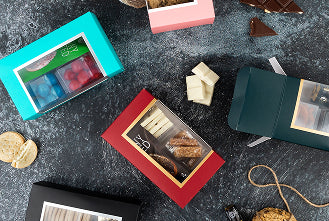
Premium finishes—embossed patterns, metallic foils, soft-touch coatings—signal that the box itself is the presentation. A burgundy swirl nesting box with magnetic closure doesn't need wrapping paper because the damask texture and coordinated bow already communicate effort and care.
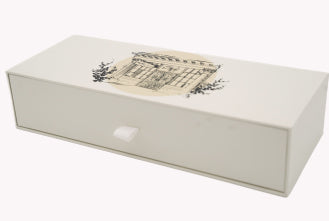
Magnetic closure boxes use rigid board construction—typically 1200-1500 gsm grey board wrapped in printed paper or specialty finishes. The magnets are embedded in the lid flap and the box front panel during assembly. When the lid closes, the magnets align and hold the box shut with 300-500 grams of pull force, depending on magnet size and box dimensions.
There are two styles of magnetic closure boxes: pre-assembled and collapsible. Pre-assembled boxes arrive fully formed and take up more storage space but offer immediate use—ideal for retail bakeries with limited prep time. Collapsible magnetic boxes ship flat and fold into shape along scored lines, saving storage space for businesses ordering in bulk ahead of the season.
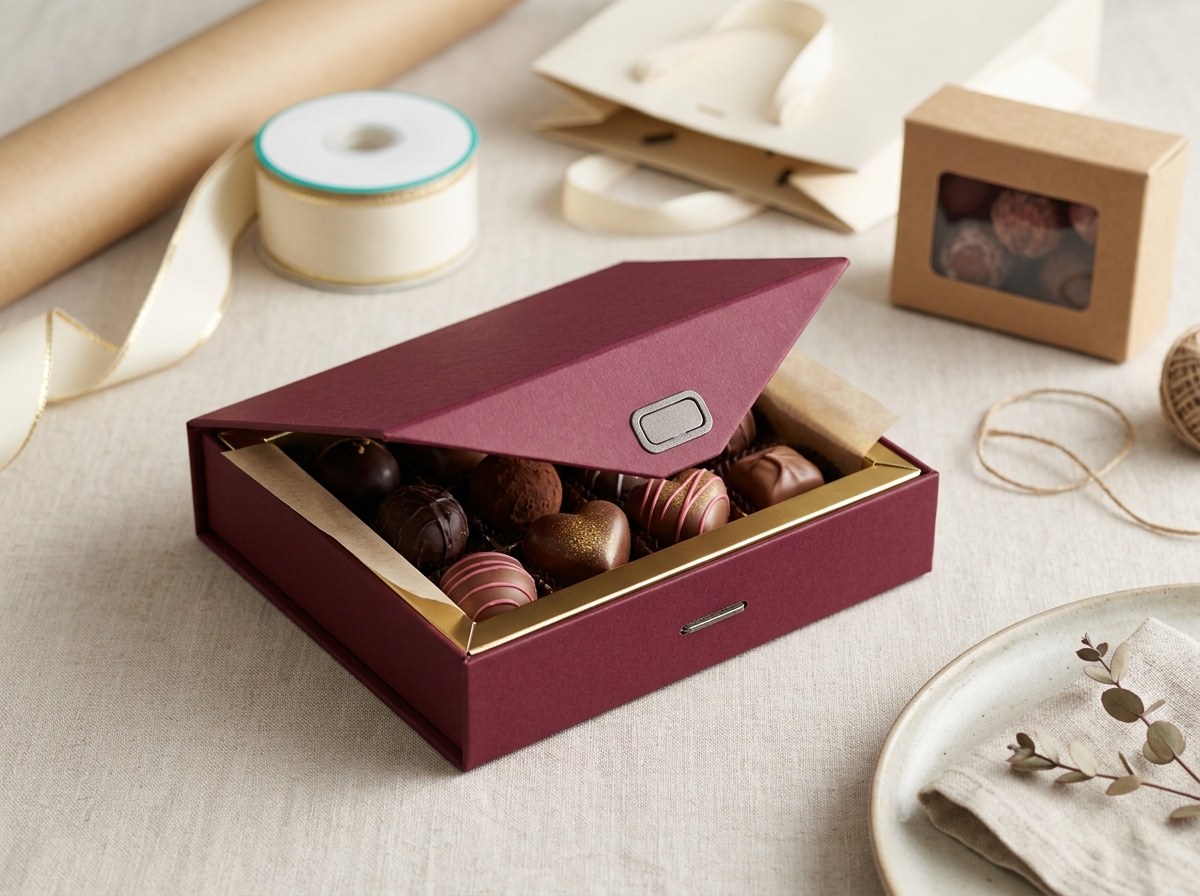
Material choice affects both durability and perceived value. Grey board wrapped in textured paper or linen-finish stock feels substantial and reusable. Unlike disposable packaging, magnetic closure gift boxes are often kept and reused, increasing long-term brand visibility and customer engagement. In fact, many customers keep these boxes for storage, which means your brand stays with them longer. For chocolatiers building a repeat customer base, that extended brand presence justifies the higher per-unit cost.
Food-safe liners are non-negotiable. Magnetic boxes intended for direct candy contact need a grease-resistant or wax-coated interior, or a separate food-safe tray insert. Grey board itself is not food-safe without treatment. Most suppliers offer optional inserts—molded pulp trays, PET plastic dividers, or foil-lined paperboard trays—that fit inside the magnetic box and hold individual chocolates or truffles in place.
Ribbon slots are die-cut openings in the box lid or side panels that allow grosgrain or satin ribbon to thread through. The ribbon is typically included with the box and pre-threaded, so the user only needs to tie a simple knot or bow at the top. This approach works well for compact cube tuck-top boxes where a ribbon accent adds visual interest without requiring a full wrap.
Pre-attached bows are glued or stitched to the box lid during manufacturing. They're usually made from satin, organza, or grosgrain ribbon formed into a rosette, pom-pom, or classic loop bow. The advantage: zero assembly time. The trade-off: bows can get crushed during shipping or storage, so boxes with pre-attached bows need careful handling and protective outer cartons.
Decorative hardware—metal corner protectors, ornamental clasps, or ribbon eyelets—adds a luxury touch to rigid candy boxes. These elements are more common in higher-price-point packaging (think $8–$15 per box wholesale) and are typically reserved for limited-edition Valentine collections or corporate gift programs. For everyday bakery use, the cost and fragility often outweigh the aesthetic benefit.
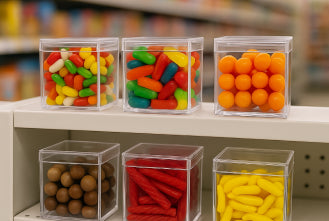
Clear acrylic boxes function as gift-ready packaging because the product is the decoration. A clear acrylic cube filled with Valentine truffles, heart-shaped cookies, or candy-coated almonds doesn't need wrapping—the contents create the visual impact. The box itself is neutral, reusable, and stackable, which appeals to eco-conscious gift-givers who want the packaging to have a second life as storage.
Hybrid formats combine clear acrylic bases with colored lids or ribbon accents. A clear bottom showcases the candy arrangement, while a red or pink acrylic lid adds seasonal color without obscuring the product. Some designs include a ribbon channel molded into the acrylic lid, allowing a contrasting ribbon to wrap around the box and tie on top. The result is a clean, modern presentation that works for both individual gifts and bakery wholesale orders.
One consideration: acrylic boxes don't provide the same cushioning as padded rigid boxes. Delicate chocolates with thin shells or intricate decorations may shift or crack during transport. If you're using clear boxes for fragile items, add a fitted insert or divider tray to keep pieces stationary. For more guidance on sizing clear boxes to specific candy types, see the clear window gift box sizing guide.
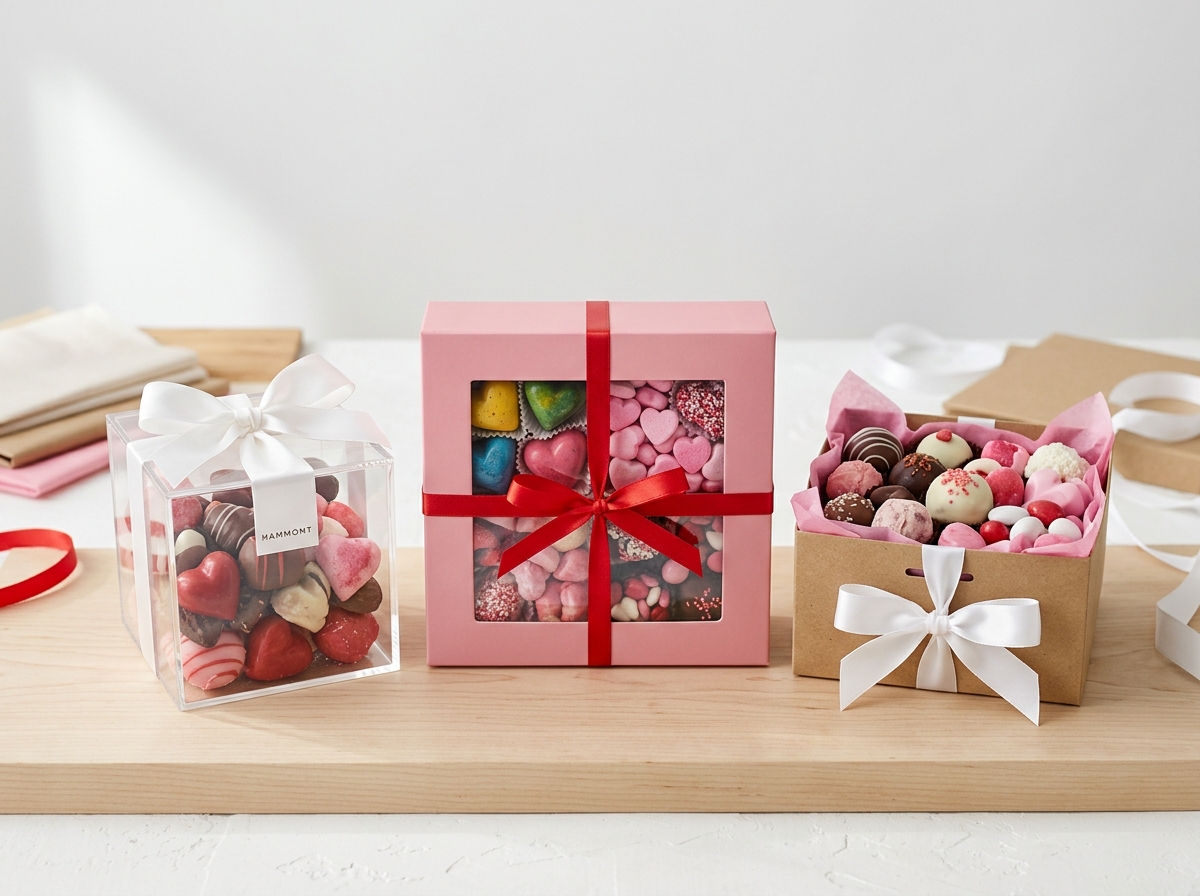
Embossed patterns, foil stamping, and soft-touch coatings transform a plain box into a finished gift. Embossing creates a raised texture—damask swirls, heart motifs, or geometric patterns—that adds tactile interest. Foil stamping applies metallic or holographic film to specific areas, typically borders, logos, or Valentine-themed graphics. Soft-touch coating (also called velvet lamination) gives the box a suede-like feel that signals luxury without adding weight or bulk.
The bright and boisterous designs are being replaced with simple and elegant ones. The contemporary fashion in the industry is to make gift wrapping straightforward. Consumers are becoming increasingly drawn to gift box forms with straightforward designs that highlight important qualities without being ostentatious. For Valentine's Day, that often translates to single-color boxes—deep burgundy, blush pink, or matte black—with minimal text and a single metallic accent.
Specialty papers also play a role. Linen-finish cardstock, pearlescent stock, or kraft paper with a matte varnish all read as intentional choices rather than budget constraints. A kraft box with a simple "Happy Valentine's Day" stamp and a jute ribbon feels rustic-chic, not under-designed. The key is consistency: the paper stock, closure mechanism, and any printed elements need to align with a single aesthetic direction.
Gift-ready boxes are most effective when the box size closely matches the candy quantity. An oversized box with three lonely truffles rattling around looks unfinished, even with a magnetic closure and embossed lid. Conversely, overstuffing a box to the point where the lid barely closes defeats the purpose of a secure closure mechanism.
Standard Valentine candy box sizes for chocolatiers:
For custom or specialty items—oversized truffles, layered candy bark, or filled chocolate boxes—measure the product first and add 0.25–0.5 inches on all sides for clearance. If you're using an insert tray, account for the tray thickness (usually 0.25–0.5 inches) when calculating total box depth.
When comparing heart-shaped candy boxes versus clear acrylic formats, remember that heart-shaped boxes often have irregular interior dimensions. A 6-inch heart box may hold less volume than a 5-inch square box due to the tapered sides. Always check the internal usable space, not just the exterior footprint.
Custom magnetic closure boxes typically require 3–6 week lead times and MOQs starting at 500–1,000 units for domestic suppliers, or 2,000–5,000 units for overseas production. The magnets, rigid board construction, and finishing processes (embossing, foiling) add complexity compared to standard folding cartons, which drives both cost and production time.
Stock (non-custom) gift-ready boxes are available with shorter lead times—often 1–2 weeks—and lower MOQs, sometimes as low as 50–100 units. The trade-off: limited color and size options, and no custom branding. For bakeries testing a new Valentine product line or filling last-minute orders, stock boxes are the pragmatic choice. For established businesses building brand recognition, custom boxes justify the investment.
If you're ordering custom boxes for the first time, request samples before committing to a full production run. Verify that the magnetic closure strength is adequate (a too-weak magnet won't hold the box shut; a too-strong magnet makes opening frustrating), the interior dimensions accommodate your product with the planned insert, and the finish quality matches your expectations. A $200 sample order can prevent a $5,000 mistake.
For detailed guidance on Valentine packaging timelines, including when to place orders for February 14 delivery, see the lead time and MOQ planning guide.
A magnetic closure gift box costs $1.50–$8.00 per unit wholesale, depending on size, finish, and order volume. A plain tuck-top box in the same size costs $0.30–$1.00. Add wrapping paper ($0.10–$0.25 per sheet), ribbon ($0.15–$0.40 per box), and a gift tag ($0.05–$0.15), and the material cost difference narrows to $0.50–$2.00 per box.
The labor cost is where gift-ready boxes pull ahead. Wrapping a box—cutting paper, taping edges, tying a bow, attaching a tag—takes 2–4 minutes per box for an experienced wrapper. At $15/hour labor cost, that's $0.50–$1.00 in labor per box. During Valentine's week, when bakeries are wrapping 50–200 boxes per day, the labor cost compounds quickly. A gift-ready box eliminates that step entirely.
For individual gift-givers, the calculation is different. If you're buying a single box, the $3–$5 premium for a magnetic closure box is negligible compared to the time saved and the reduced risk of a sloppy wrap job. For bulk buyers—corporate gift programs, wedding favors, large-scale events—the cost difference matters, and the decision hinges on whether the brand presentation justifies the per-unit expense.
Gift-ready boxes streamline the final packaging step, but only if the rest of the workflow supports them. The most efficient setup: a dedicated packing station with boxes pre-assembled (or quickly folded from flat stock), inserts or liners staged, and candies arranged on trays in the correct quantities.
Step-by-step process for high-volume Valentine candy packing:
The entire process takes 30–60 seconds per box, compared to 3–5 minutes for wrapping. For a bakery fulfilling 100 Valentine orders, that's the difference between 50 minutes and 5 hours of labor.
One workflow consideration: gift-ready boxes take up more storage space than flat-packed plain boxes. A stack of 100 pre-assembled magnetic boxes occupies roughly 3–4 cubic feet, versus 0.5 cubic feet for 100 flat tuck-top boxes. If storage is tight, collapsible magnetic boxes offer a middle ground—they ship flat and fold into shape in 5–10 seconds per box.
Gift-ready boxes function as self-merchandising units. A stack of magnetic closure boxes filled with Valentine candies and displayed on a bakery counter doesn't need signage or explanation—the boxes themselves communicate "ready to give." The rise of e-commerce gifting and subscription services has created a distinct B2B2C channel, where packaging specifications are set by online retailers and brands for direct-to-consumer shipment, prioritizing durability, brand presentation, and unboxing experience over traditional retail shelf appeal.
For in-store retail, the unboxing experience matters even before purchase. Customers often open and close magnetic boxes on the counter to test the closure mechanism and inspect the contents. A satisfying magnetic snap and a well-fitted interior tray signal quality and justify a higher price point. Clear acrylic boxes eliminate the need for opening—the product is visible from all angles, which speeds purchase decisions and reduces handling.
Stacking and stability are practical concerns. Magnetic boxes with flat lids stack neatly and securely, making them ideal for tiered displays or grab-and-go racks. Boxes with large pre-attached bows or irregular shapes (heart-shaped, pillow boxes) stack poorly and are better suited to single-layer displays or individual presentation on shelves.
Gift-ready boxes, particularly rigid magnetic boxes, are designed for reuse. Organizations such as the Forest Stewardship Council (FSC) and the Sustainable Forestry Initiative (SFI) provide responsibly sourced paper and cardboard materials certifications. These certifications verify that the paper used in paper gift boxes comes from forests managed in an environmentally and socially responsible manner. For bakeries marketing to eco-conscious customers, FSC-certified boxes signal responsible sourcing without requiring additional explanation.
The magnets embedded in magnetic closure boxes complicate recycling. Most curbside programs ask consumers to remove magnets before recycling the paperboard, but compliance is low. Some manufacturers now use biodegradable adhesives and easily removable magnets to improve end-of-life recyclability, though these options are still niche and command a price premium.
Clear acrylic boxes are fully recyclable in most jurisdictions (check local PET recycling guidelines), and their durability encourages reuse. A well-made acrylic box can serve as storage for jewelry, office supplies, or craft materials long after the Valentine candy is gone. For gift-givers who prioritize sustainability, the reusability factor offsets the higher upfront cost and the petroleum-based material.
A gift-ready candy box includes built-in closure mechanisms (magnetic closures, ribbon slots, or secure snap-fit lids) and decorative finishes (embossing, foil stamping, pre-attached bows) that eliminate the need for additional wrapping materials. Regular candy boxes typically require tape, ribbon, or wrapping paper to look finished. Gift-ready boxes save time and labor, particularly for bakeries and chocolatiers packaging high volumes during Valentine's Day.
Magnetic closure candy boxes range from $1.50 to $8.00 per unit wholesale, depending on size, finish quality, and order volume. Smaller orders (100–500 units) trend toward the higher end of that range, while bulk orders (1,000+ units) can bring per-unit costs down to $2.00–$3.00 for standard sizes. Custom branding, premium finishes like soft-touch coating, and specialty inserts add $0.50–$2.00 per box. Stock (non-custom) magnetic boxes are available at lower price points, typically $1.50–$3.00 per unit for smaller quantities.
Yes, but with limitations. Clear acrylic boxes tolerate refrigeration temperatures without cracking or warping, but condensation can form on the interior surface when the box is removed from the cooler and exposed to room temperature. This moisture can cause chocolate bloom (white streaks or spots) or soften decorative elements. If you must refrigerate acrylic-boxed chocolates, allow the sealed box to come to room temperature gradually (30–60 minutes) before opening to minimize condensation. For chocolates that require extended refrigeration, consider using a breathable inner liner or switching to a paperboard box with a clear window instead of a fully acrylic box.
Gift-ready boxes work well for shipping when packed correctly. Magnetic closure boxes and rigid acrylic boxes both provide structural protection for candies during transit. Place the gift-ready box inside a slightly larger shipping carton with 1–2 inches of cushioning material (bubble wrap, crinkle paper, or air pillows) on all sides. This prevents the gift box from shifting and protects decorative elements like pre-attached bows from crushing. Avoid overpacking the outer carton, which can compress the gift box and compromise the magnetic closure alignment. For high-volume shipping, collapsible magnetic boxes ship flat and fold into shape at the destination, reducing dimensional weight charges.
Custom magnetic closure boxes typically require minimum orders of 500–1,000 units for domestic suppliers, or 2,000–5,000 units for overseas manufacturers. Custom printing, embossing, or foil stamping on stock gift-ready boxes (boxes with standard dimensions but custom branding) may have lower MOQs, sometimes 250–500 units, depending on the supplier and finish complexity. If your bakery isn't ready to commit to those volumes, consider ordering stock gift-ready boxes and adding your branding via printed stickers, hang tags, or custom ribbon, which have MOQs as low as 50–100 units.
Gift-ready candy boxes are an investment in efficiency and brand presentation. For bakeries managing Valentine's Day volume, they reduce labor costs and create a consistent, professional appearance across every order. For individual gift-givers, they deliver confidence—the box looks intentional, polished, and ready to hand over without second-guessing the wrapping job. Whether you choose magnetic closures, clear acrylic, or premium finishes, the defining feature remains the same: the packaging is the gift wrap.