Cart
0
You may also like


Book a call with our development team to get started.



Apply online and access wholesale pricing.

Custom tissue paper for packaging is one of the most cost-effective ways to reinforce brand identity during the unboxing experience. Unlike rigid packaging that requires higher minimum order quantities and tooling costs, tissue paper offers a low barrier to entry for small businesses looking to add a professional, branded layer to their shipments. It works across product categories—from apparel and cosmetics to bakery items and handmade goods—and serves dual purposes as both protective cushioning and a visual brand touchpoint.
When a customer opens a box and sees your logo repeated on tissue paper, it signals attention to detail and builds brand recall. The tactile experience of unwrapping tissue-wrapped products also slows down the unboxing moment, creating space for a more memorable first impression. For businesses shipping direct-to-consumer, this small detail can differentiate your brand from competitors using generic packing materials.
Implementing custom packaging ideas for small businesses doesn't require a complete overhaul of your fulfillment process. Custom tissue paper integrates seamlessly into existing workflows and pairs well with standard boxes, mailers, and bags you're already using.
Tissue paper occupies a unique position in the packaging hierarchy. It's visible the moment a package is opened, yet it doesn't carry the same cost burden as custom-printed boxes or rigid containers. This makes it particularly valuable for businesses operating on tight margins or testing new branding directions without committing to large inventory runs.
The material itself is lightweight, which means it adds negligible shipping costs compared to heavier packaging inserts. Standard tissue paper sheets measure 20" x 30", large enough to wrap most small-to-medium products or line the interior of a gift box. Businesses can print logos, brand names, patterns, or custom illustrations in one to six colors depending on the printing method and supplier capabilities.
From a psychological standpoint, branded tissue paper enhances perceived product value. (cite index="11-4">According to a 2023 McKinsey report, 72% of luxury consumers identify visual appeal as a primary driver of perceived value. While tissue paper alone won't transform a budget product into a luxury item, it does contribute to an overall impression of thoughtfulness and quality—especially when combined with other branded elements like stickers, inserts, or ribbon.
Custom tissue also extends your brand presence beyond the initial purchase. Recipients often reuse tissue paper for gift wrapping, drawer liners, or craft projects, which means your logo continues circulating in secondary contexts. This organic exposure is difficult to quantify but adds incremental brand visibility at no additional cost.
Most custom tissue paper is printed on 17–20 GSM (grams per square meter) stock, which is thicker than standard gift-wrapping tissue but still flexible enough to fold and crumple without tearing easily. Heavier weights provide more durability and a premium feel, while lighter weights reduce material costs and are suitable for single-use applications.
Printing methods vary by supplier. Flexographic printing is the most common for tissue paper, allowing for Pantone color matching and crisp logo reproduction. This method works well for solid colors and simple graphics but may not capture fine gradients or photographic images. CMYK process printing offers more color range but can be cost-prohibitive for smaller runs.
Eco-conscious brands should look for Forest Stewardship Council certified tissue paper, which ensures the material comes from responsibly managed forests. (cite index="20-5,20-6">The Forest Stewardship Council is an international organization dedicated to promoting the responsible management of the world's forests. Founded in 1994, the FSC is now the most globally recognized and respected forest certification system. Many suppliers also offer tissue made from 100% recycled content or printed with soy-based inks, aligning with broader sustainability goals without sacrificing print quality.
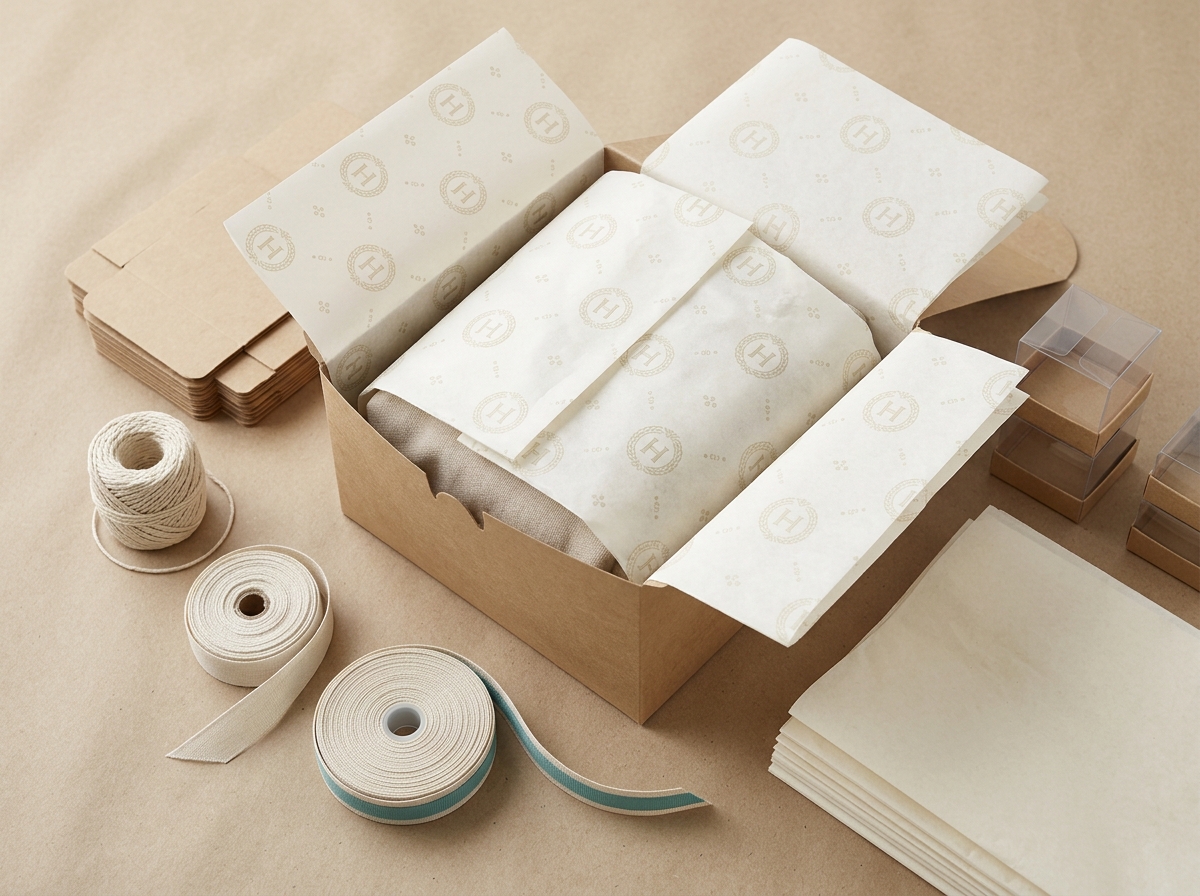
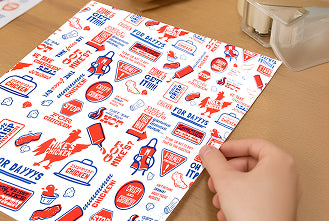
Color options range from classic white or kraft bases to vibrant solids like navy, blush, or forest green. Printing on colored tissue creates a layered effect—white ink on dark tissue, for example, produces high contrast that makes logos pop. Metallic inks (gold, silver, rose gold) are available from some suppliers and add a premium touch, though they typically increase per-unit costs.
When designing artwork for tissue paper, keep in mind that the material is semi-transparent and will be crumpled during use. Simple, bold designs with good contrast perform better than intricate details that may be lost in folds. Repeating patterns or scattered logos work well because they remain visible regardless of how the tissue is wrapped or layered.
One of the biggest advantages of custom tissue paper is the relatively low minimum order quantity compared to custom boxes or bags. Many suppliers offer MOQs starting at 200–500 sheets, making it accessible for small businesses testing branded packaging for the first time. At higher volumes (2,000+ sheets), per-unit costs drop significantly, often to $0.10–$0.30 per sheet depending on size, color count, and supplier.
For context, if you're shipping 50 orders per month and using two sheets of tissue per order, a 500-sheet run would last approximately five months. This allows you to test different designs or seasonal variations without overcommitting to inventory. Businesses with higher order volumes should consider bulk purchasing to maximize cost efficiency, but even at small scales, the investment remains manageable.
Lead times typically range from two to four weeks for custom printing, though some suppliers offer rush production for an additional fee. Plan ahead for seasonal peaks—holiday packaging, Valentine's Day, or other high-volume periods—to avoid delays. Understanding minimum order quantities across all your packaging materials helps you coordinate ordering cycles and manage cash flow more effectively.
Storage is another practical consideration. Tissue paper is bulky relative to its weight, so a 2,000-sheet order will require dedicated shelf space. Sheets are typically bundled in stacks of 100 or 200 and wrapped in protective plastic. Store tissue in a dry environment away from direct sunlight to prevent discoloration or moisture damage.
Adding custom tissue paper to your packing workflow doesn't require specialized equipment or extensive training. The simplest method is to pre-fold sheets and stack them near your packing station, so team members can grab one or two sheets per order without interrupting their rhythm. For products that ship in boxes, layer tissue on top of the product before closing the lid. For bag shipments, wrap the product in tissue before placing it inside.
Layering techniques can enhance the unboxing experience. Start with a neutral tissue (white or kraft) as a protective base layer, then add a branded sheet on top. This creates visual depth and ensures your logo is the first thing customers see when they open the package. Alternatively, use all branded tissue for maximum brand exposure, especially if you're shipping gift-ready items that recipients may open in front of others.
Combining tissue paper with other budget-friendly branding elements like custom stickers, stamps, or thank-you cards creates a cohesive branded experience without requiring fully custom packaging. A kraft gift box lined with branded tissue and sealed with a logo sticker delivers a polished presentation at a fraction of the cost of custom-printed rigid boxes.
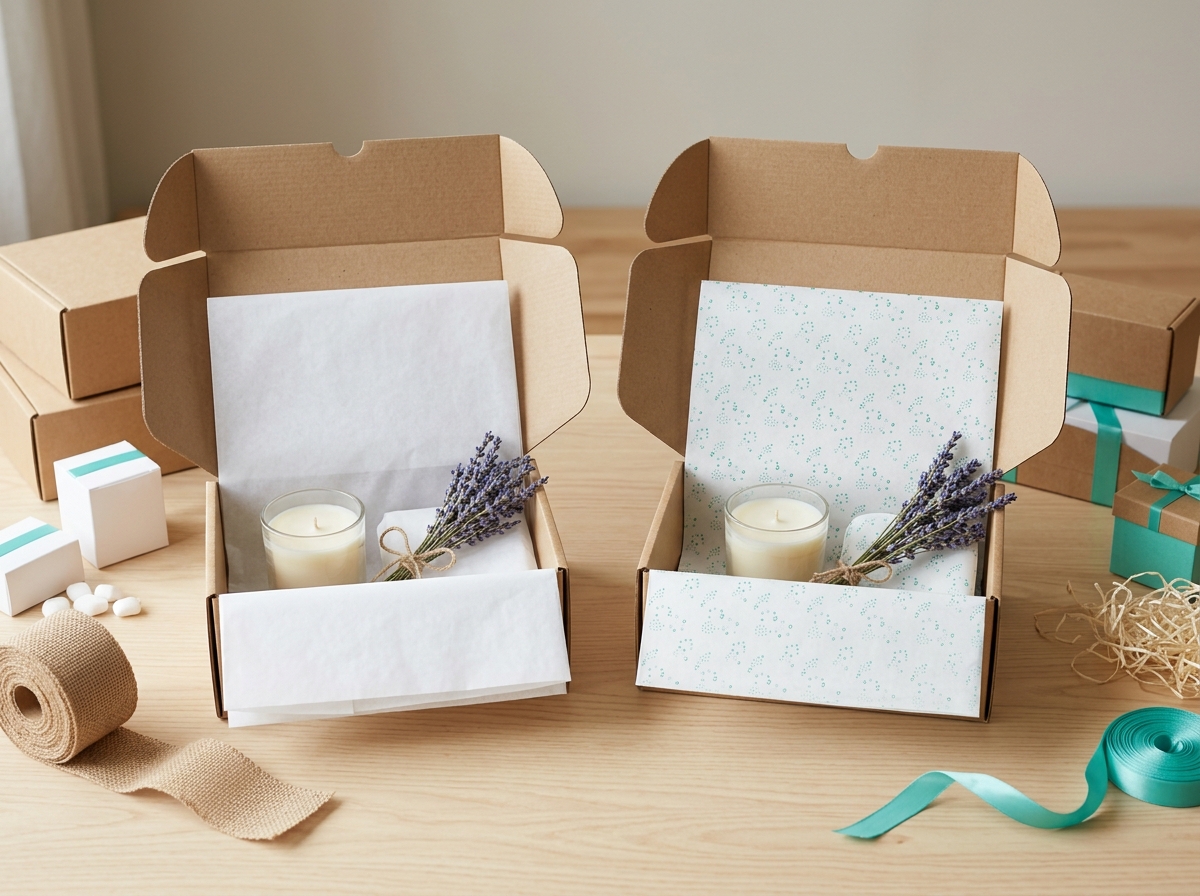
For businesses offering gift wrapping or retail pickup, train staff to wrap products uniformly. Consistent presentation reinforces brand professionalism and ensures every customer receives the same quality experience. Simple folding techniques—like the diagonal wrap or envelope fold—are easy to teach and produce clean results.
If you're shipping fragile items, tissue paper can serve as light cushioning when crumpled and placed around products. While it won't replace bubble wrap or foam for heavy-duty protection, it works well for lightweight goods like apparel, candles (note: Hammont does not sell candles, but tissue is commonly used with such products by other brands), or small accessories. This dual function reduces the need for additional void fill and keeps packaging costs lean.
Custom tissue paper performs best when paired with packaging that complements its aesthetic and functional role. For e-commerce shipments, consider using it inside mailers or corrugated boxes to wrap individual items before they're packed. This is particularly effective for multi-item orders, where each product can be individually wrapped in branded tissue to create a boutique shopping experience.
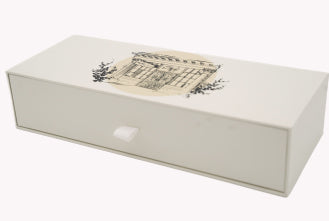
Gift boxes are a natural pairing. A 4x4x4 kraft tuck-top box lined with custom tissue instantly elevates presentation for small gifts, favors, or retail products. The tissue softens the interior and frames the product, making it feel more intentional and gift-ready. For larger items, use tissue to line the bottom and sides of the box, then drape an additional sheet over the product before closing.
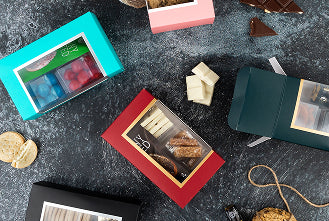
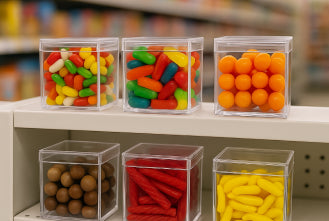
Clear packaging benefits especially from custom tissue. When using cellophane bags or window boxes, a layer of branded tissue visible through the transparent material reinforces your brand while adding color and texture. This technique works well for bakery items, handmade soaps, or other artisan products where the product itself is part of the visual appeal.
Seasonal packaging strategies can incorporate tissue paper as a variable element. Keep your primary packaging (boxes, bags) neutral and swap tissue colors or prints seasonally. For example, use red and green tissue during the holidays, pastels for spring, or metallic prints for special promotions. This approach allows you to refresh your packaging aesthetic without replacing entire inventory stocks. Learn more about seasonal packaging ideas to plan these rotations effectively.
As consumer awareness of packaging waste increases, sourcing sustainable tissue paper has become a competitive differentiator. (cite index="30-3">Consumers in every country surveyed ranked recyclability as the most important factor when considering sustainable packaging, according to recent McKinsey research. Tissue paper made from recycled content or FSC-certified virgin fiber addresses both recyclability and responsible sourcing.
Most tissue paper is recyclable through standard curbside programs, though heavily printed or metallic-ink versions may have limitations depending on local facilities. Communicate disposal instructions to customers if your tissue includes special finishes. Compostable tissue options are emerging but remain less common and may carry higher costs.
When evaluating suppliers, ask about their certification and material sourcing. Reputable suppliers should be able to provide documentation for FSC certification or recycled content claims. Avoid greenwashing—terms like "eco-friendly" or "natural" without third-party verification don't guarantee meaningful environmental benefits.
Balancing sustainability with cost is a common challenge for small businesses. If fully recycled or certified tissue exceeds your budget, consider a hybrid approach: use sustainable tissue for customer-facing shipments and standard tissue for internal packing or non-gift orders. This allows you to align with sustainability values where it matters most to your brand perception without inflating costs across the board. For more guidance, explore affordable eco-friendly packaging options.
Unlike digital marketing where metrics are readily available, measuring the ROI of custom tissue paper requires indirect indicators. Track customer feedback through post-purchase surveys, social media mentions, and unboxing photos shared by customers. An increase in user-generated content featuring your packaging suggests the tissue is contributing to a shareable, memorable experience.
Repeat purchase rates can also signal packaging effectiveness. While many factors influence repeat business, a cohesive branded unboxing experience—anchored by custom tissue—can strengthen brand affinity and make customers more likely to return. Compare repeat rates before and after implementing custom tissue to identify potential correlations.
Customer service interactions offer qualitative insights. If customers mention your packaging in reviews or thank-you emails, it's a sign that the details are noticed and appreciated. Negative feedback about packaging waste or excessive materials should also inform your approach—some customers prefer minimal packaging, and custom tissue may not align with their values.
For businesses offering gift services, track the percentage of orders marked as gifts versus personal purchases. An increase in gift orders after introducing custom tissue may indicate that your packaging is perceived as more gift-ready, reducing friction for customers who want to send products directly to recipients.
Over-designing tissue paper is a frequent misstep. Complex graphics with fine details often look muddy when printed on thin, textured material. Stick to bold logos, simple patterns, or single-color designs that maintain clarity even when crumpled. If you're unsure, request a physical sample from your supplier before committing to a full print run.
Ordering too much too soon is another pitfall. While bulk pricing is attractive, locking yourself into a large inventory of one design limits flexibility. Start with a smaller MOQ to test customer response, then scale up once you've validated the design and confirmed it aligns with your brand evolution.
Ignoring the practical aspects of tissue paper—like bleed-through or ink transfer—can lead to disappointing results. Ask suppliers about ink curing processes and whether the tissue is prone to smudging when handled. This is especially important if your team will be folding and wrapping tissue repeatedly throughout the day.
Finally, don't neglect the tactile experience. Tissue paper that's too thin feels cheap and tears easily, while overly thick stock can be difficult to fold and doesn't drape well. Request samples of different weights to find the balance between durability and flexibility that suits your products and brand positioning.
Custom tissue paper is one component of a broader unboxing strategy. To maximize its impact, think holistically about how each element—box, tissue, inserts, stickers, and product—works together to tell your brand story. The tissue should feel like a natural extension of your visual identity, not an afterthought or disconnected element.
Consider the sequence of discovery. What does the customer see first when they open the box? If it's crumpled packing paper or a plain mailer, the branded tissue inside may not have the intended effect. Lead with your strongest visual—whether that's a custom box lid, a branded sticker seal, or the tissue itself—and build the experience from there.
Consistency across touchpoints reinforces brand recognition. If your tissue uses a specific color palette or logo treatment, carry that through to your website, social media, and other customer-facing materials. This creates a cohesive brand ecosystem where every interaction feels intentional and connected. For deeper insights, read about designing an unboxing experience that builds loyalty.
Don't underestimate the power of small surprises. A handwritten thank-you note tucked into tissue-wrapped products, a sample or discount code, or a sticker sheet can amplify the delight factor and encourage social sharing. These additions cost little but create moments that customers remember and talk about.
Custom tissue paper typically costs between $0.10 and $0.50 per sheet, depending on order volume, sheet size, color count, and printing method. Minimum order quantities usually start at 200–500 sheets. Bulk orders (2,000+ sheets) bring per-unit costs down significantly. Standard 20" x 30" sheets in one or two colors are the most economical option, while metallic inks or specialty finishes increase pricing.
Most suppliers set minimum order quantities between 200 and 500 sheets for custom tissue paper. Some specialty or high-volume printers may require 1,000 or more sheets. Smaller MOQs are ideal for businesses testing branded packaging for the first time or running seasonal designs. Higher MOQs unlock better pricing but require more storage space and upfront investment.
Yes, most custom tissue paper is recyclable through standard curbside programs, especially when printed with water-based or soy-based inks. Look for FSC-certified tissue made from responsibly managed forests or tissue with high recycled content. Heavily coated or metallic-ink tissue may have recycling limitations depending on local facilities. Always communicate disposal instructions to customers if your tissue includes special finishes.
Choose simple, bold designs with high contrast that remain visible when the tissue is folded or crumpled. Repeating logos, scattered patterns, or single-color prints work best. Avoid fine details, gradients, or photographic images that may look muddy on textured tissue. Request physical samples from your supplier to see how your design translates to the material before committing to a full print run.
Custom tissue paper can be used as a decorative layer in food packaging, but it should not come into direct contact with unwrapped food unless it's certified food-safe. For bakery items, wrap products in food-safe paper or bags first, then add branded tissue as an outer layer for presentation. If you're packaging food products, verify that your tissue supplier can provide food-safe certification if direct contact is necessary.