Cart
0
You may also like



Book a call with our development team to get started.



Apply online and access wholesale pricing.

Valentine candy trends 2027 are shifting away from traditional red-and-pink excess toward three defining movements: hyper-personalized packaging that speaks directly to the recipient, minimalist design that prioritizes clean lines and transparency, and wellness positioning that reframes candy as a thoughtful indulgence. Small bakeries and chocolatiers who understand these trends can differentiate their Valentine offerings in a crowded seasonal market, appeal to younger buyers who expect customization, and position products for both gift-giving and self-purchase occasions.
If you're planning your Valentine inventory, understanding these trends now allows you to align Valentine's Day candy packaging choices with what buyers will expect in February 2027. The window for ordering custom or semi-custom formats closes earlier than many small operators anticipate, making trend awareness a practical planning tool rather than abstract industry watching.
Personalized candy packaging has moved from novelty to expectation. Personalization is becoming increasingly important in the candy industry, with personalized packaging and labeling, 3D-printed candy, and candy gift boxes tailored to individual preferences driving purchase decisions across confectionery categories. For Valentine's Day specifically, this means buyers expect the option to add names, messages, or occasion-specific details that make the gift feel intentional rather than generic.
The shift is particularly pronounced among younger consumers. Personalization is reshaping categories from skincare to nutrition to streaming, and confection will not be immune, according to industry analysis. Digital printing and on-demand labeling technologies have made small-run personalization economically viable for bakeries and chocolatiers who previously couldn't justify custom tooling costs.
Practical applications for small producers include printable belly bands that wrap around stock boxes, customizable gift tags that attach to clear rigid acrylic boxes, and QR codes linking to personalized video messages or digital cards. The latter option has gained traction in premium gifting, where the packaging itself becomes a delivery mechanism for a layered experience rather than just a container.
When planning personalized Valentine formats, factor lead time for digital printing services—typically 10 to 14 business days for custom labels or sleeves, longer if you're working with a packaging supplier's design team. Lead time planning becomes more complex when personalization is involved, as each order may require unique file preparation and proofing.
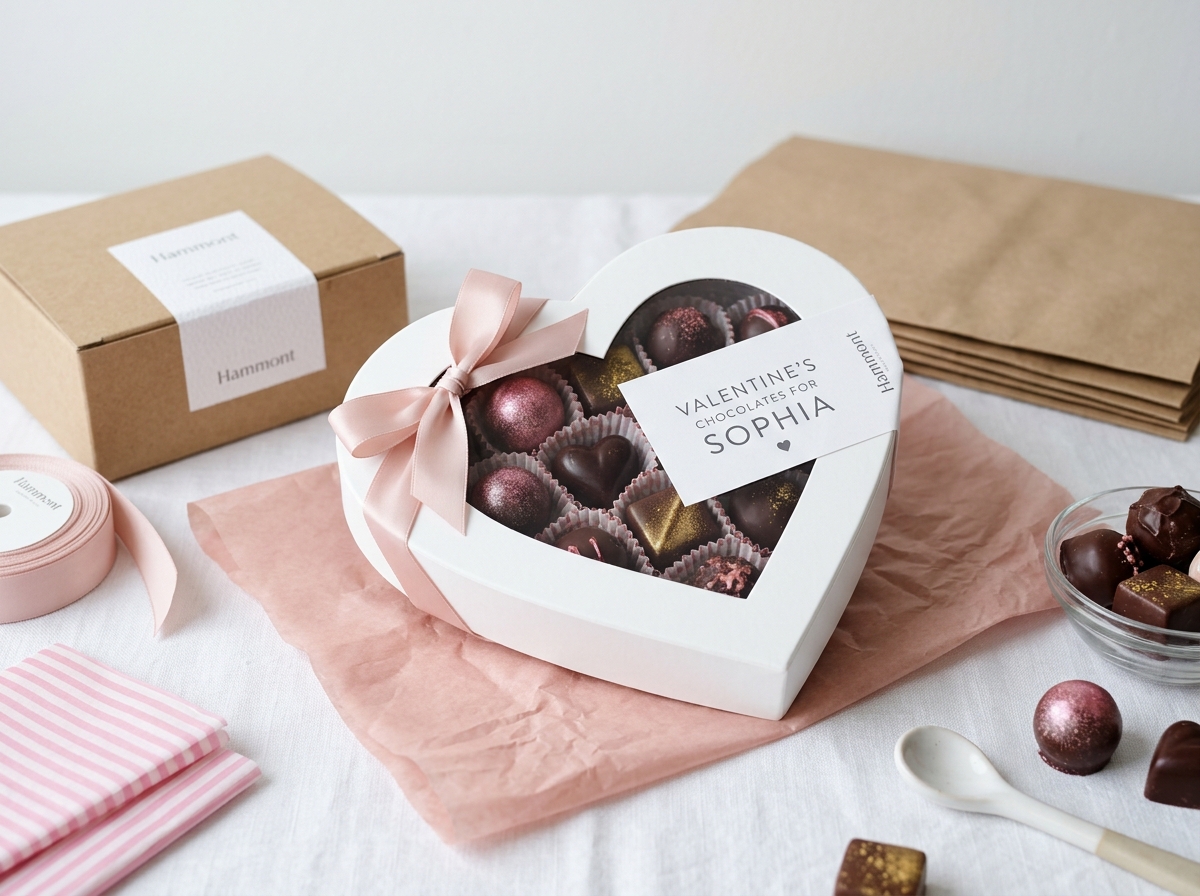
Minimalist candy packaging uses clean layouts, restrained color palettes, simple typography, and limited graphic elements to create a refined shelf presence, according to Packaging Strategies. For Valentine candy, this translates to moving away from busy heart patterns, glitter finishes, and saturated reds toward neutral pinks, soft whites, and kraft tones paired with restrained typography.
The appeal of minimalist Valentine candy packaging lies in its versatility. A clear acrylic box with a simple branded sticker and a single-color ribbon reads as thoughtful and modern rather than mass-market. It appeals to buyers purchasing for Galentine's Day, non-romantic Valentine exchanges, or self-gifting occasions where traditional romantic imagery feels misaligned.
Minimalism also allows the product to be the hero. When truffles, bark, or filled chocolates are visually striking, obscuring them behind opaque, heavily decorated packaging undermines their appeal. Transparent formats paired with minimal labeling let color, texture, and craft speak for themselves—a principle that aligns with the broader clear versus opaque packaging debate in Valentine candy presentation.
Cost considerations favor minimalist design for small producers. Fewer colors, simpler dielines, and stock materials with minimal customization reduce per-unit costs and minimum order quantities. A kraft box with a single-color stamp or a white box with a printed label delivers a contemporary aesthetic without the setup fees associated with full-color lithography or specialty finishes.
Premium quality and personalization are top of mind, while wellness-led and occasion-specific moments influence how and when consumers engage with the category, according to confectionery market research. Valentine candy is no longer positioned solely as a guilty pleasure—it's being reframed as a thoughtful treat that aligns with clean eating, ingredient transparency, and functional benefits.
Practical wellness positioning for Valentine candy includes front-of-pack callouts for organic ingredients, fair-trade certifications, reduced sugar formulations, or allergen-free claims. Consumers are incorporating chocolate into wellness routines, with increasing interest in nutrient-dense formulations, recognizable ingredients, and targeted functional benefits, a trend that extends to seasonal gifting.
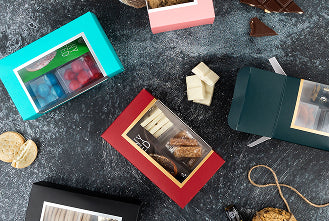
Packaging plays a critical role in communicating wellness attributes. Transparent windows that show whole ingredients—cacao nibs, dried fruit, nuts—reinforce clean-label claims more effectively than text alone. A clear window gift box paired with minimal copy that lists five recognizable ingredients signals a different value proposition than a fully printed box with no product visibility.
Portion control is another wellness-adjacent trend influencing Valentine candy packaging. Single-serve formats, individually wrapped pieces inside a larger gift box, or clearly marked serving sizes address buyer concerns about overindulgence without requiring product reformulation. This approach is particularly effective for self-purchase occasions, where buyers want to treat themselves but appreciate built-in moderation cues.
For small chocolatiers and bakeries, wellness positioning doesn't require functional ingredients or health claims—it can be as simple as ingredient transparency, thoughtful sourcing stories, or packaging that emphasizes craft over mass production. A kraft box with a hand-stamped logo and a small card listing ingredient origins communicates care and intentionality, aligning with wellness values without explicit health messaging.
Clear packaging continues to gain share in Valentine candy, driven by consumer preference for product visibility and the rise of visually driven purchasing decisions. When buyers scroll Instagram or browse retail shelves, they're drawn to packaging that shows rather than tells—transparent boxes, cellophane bags, and windowed formats that make the product immediately legible.
The shift toward transparency intersects with both minimalism and wellness positioning. A clear box requires the product inside to be presentation-ready, which incentivizes better craftsmanship and more attractive finishing. It also supports clean-label claims by making ingredients visible, allowing buyers to assess quality before purchase.
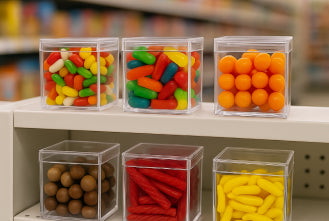
For truffles, bark, and filled chocolates, clear acrylic boxes in standard sizes offer a gift-ready format that requires minimal additional finishing. A 4x4x4-inch box holds six to eight truffles, a 3x3x3-inch cube works for smaller assortments or single-origin bars, and rectangular formats accommodate bark or brittle. Pairing clear boxes with simple ribbon or a branded belly band delivers a polished presentation without obscuring the product.
Cellophane wrapping offers a cost-effective alternative to rigid clear boxes for bakeries working with tighter margins. A cellophane bag tied with ribbon and finished with a custom tag delivers transparency and a handmade aesthetic at a fraction of the cost of rigid packaging. The trade-off is durability and shelf stability, making cellophane better suited for direct-to-consumer sales or farmers market environments than wholesale distribution.
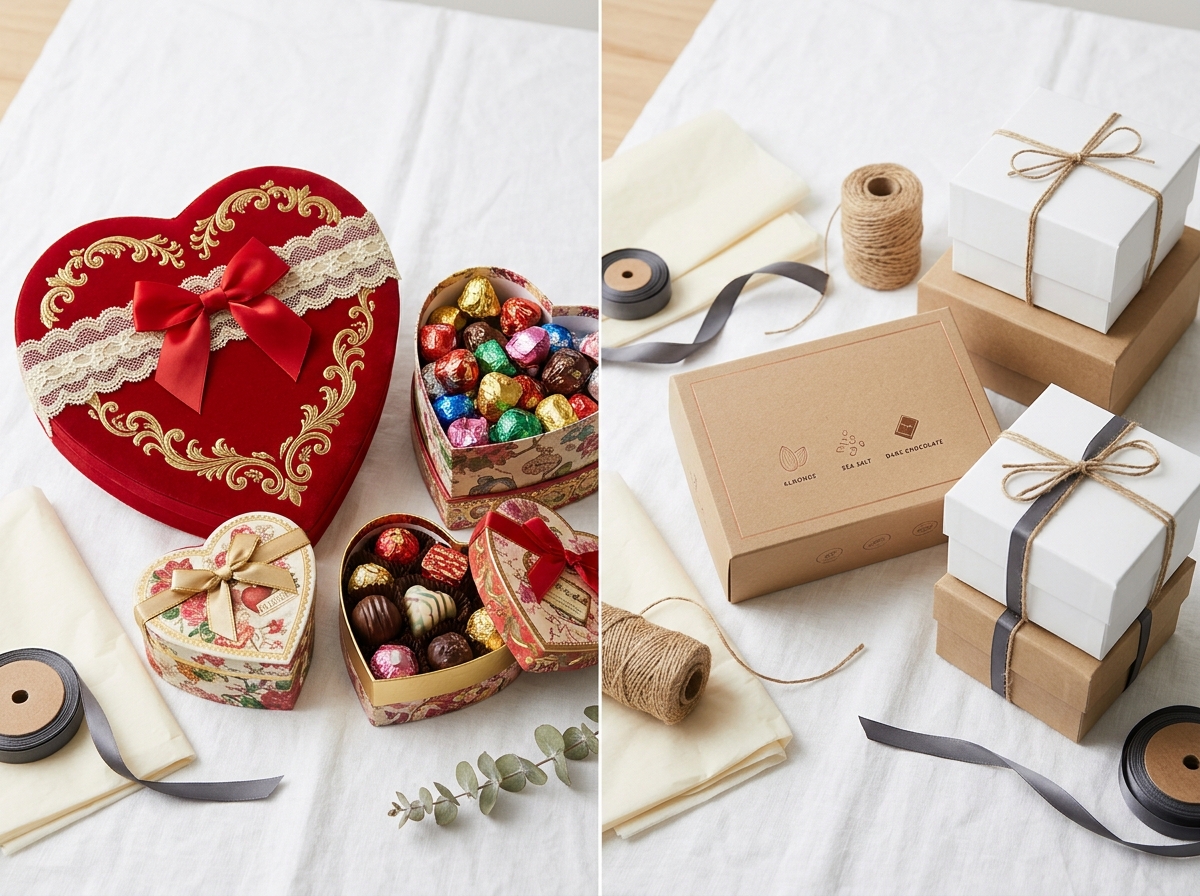
The color palette for Valentine candy packaging is expanding beyond saturated reds and hot pinks. Blush, mauve, terracotta, and neutral tones—often paired with kraft, white, or soft gray—signal a more sophisticated, less overtly romantic positioning. This shift reflects broader design trends and the diversification of Valentine's Day beyond heterosexual romantic gifting.
Neutral palettes work particularly well for Galentine's Day launches, non-romantic exchanges, and self-purchase occasions. A blush-and-kraft color scheme reads as thoughtful and modern without the gendered or romantic assumptions embedded in traditional Valentine colors. It also extends the usability of packaging beyond February 14, making it appropriate for spring gifting, Mother's Day, or general occasions.
For small producers ordering stock packaging, choosing neutral base colors with interchangeable seasonal accents offers more flexibility than committing to red-and-pink inventory that's only saleable for six weeks. A white or kraft box can be dressed for Valentine's Day with a pink ribbon or custom sticker, then redeployed for other occasions with different finishing touches.
Reusable packaging formats are gaining traction in Valentine candy as buyers increasingly evaluate purchases through a sustainability and value lens. A rigid box that can be repurposed for storage, a metal tin that holds desk supplies after the candy is gone, or a fabric bag that becomes a reusable tote extends the life of the packaging beyond the initial gift moment.
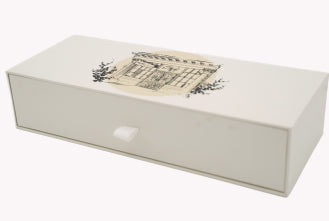
Removable sleeve designs are particularly effective for Valentine candy, allowing the seasonal branding to be discarded while the underlying box remains neutral and reusable. A white or kraft base box with a removable pink sleeve delivers Valentine-appropriate presentation at point of sale, then transitions to a year-round storage container once the sleeve is removed.
The perceived value of reusable packaging can justify a higher price point, an important consideration for small producers competing with mass-market Valentine candy. A $25 assortment in a reusable tin or high-quality rigid box feels more defensible than the same assortment in a disposable format, even if the actual cost difference is minimal.
Advances in digital printing technology have lowered the barriers to custom packaging for small bakeries and chocolatiers. Where traditional offset printing required minimum orders of 5,000 to 10,000 units to be cost-effective, digital printing allows runs as small as 250 to 500 units with reasonable per-unit costs.
For Valentine candy, this means small producers can test custom designs, offer limited-edition packaging, or create occasion-specific formats without committing to inventory that exceeds seasonal demand. A bakery producing 300 Valentine assortments can order custom-printed boxes or labels rather than settling for generic stock packaging with a sticker.
Digital printing also supports variable data printing, where each box or label in a run can feature unique information—names, messages, or batch numbers. This capability underpins the personalization trend, making it economically feasible to offer customized packaging at scale.
When evaluating digital printing for Valentine candy, compare per-unit costs against the premium you can command for custom packaging. If a custom-printed box adds $1.50 to your cost but allows you to charge $5 more at retail, the math favors customization. If the cost increase can't be passed through to the buyer, stock packaging with custom finishing may be a better fit.
Ingredient transparency and nutritional information are moving to the front of candy packaging, driven by consumer demand and industry commitments. The National Confectioners Association emphasizes that chocolate and candy companies are driven by innovation, and their purpose-driven approach includes a focus on packaging sustainability, with many manufacturers voluntarily adding calorie counts and ingredient highlights to front panels.
For Valentine candy, front-of-pack transparency includes listing key ingredients, allergen information, or certifications (organic, fair-trade, vegan) where they're immediately visible rather than buried in back-panel fine print. This approach aligns with wellness positioning and meets buyer expectations for informed purchasing.
Clear packaging inherently delivers transparency by making the product visible, but even opaque formats can incorporate windows, die-cuts, or transparent panels that show ingredients. A windowed gift-ready box that reveals truffles or filled chocolates communicates more about the product than a fully printed box, even if the printed box includes detailed copy.
Flexible packaging—pouches, bags, and flow-wrap formats—continues to grow in candy packaging due to cost efficiency, material reduction, and visual appeal. For Valentine candy, flexible formats work well for bulk items, party favors, or lower-price-point offerings where rigid packaging isn't economically justified.
A stand-up pouch with a clear window, heat-sealed and finished with a custom label, delivers professional presentation at a fraction of the cost of a rigid box. Cost and presentation trade-offs between flexible and rigid formats depend on your price point, distribution channel, and target buyer.
Flexible formats also offer sustainability advantages, using less material and generating less waste than rigid boxes. For buyers who prioritize environmental impact, a recyclable pouch or compostable bag may be more appealing than a rigid box, even if the rigid box feels more premium.
Limited-edition packaging and seasonal exclusivity drive purchase urgency for Valentine candy. When buyers know a particular design, flavor, or format is only available for a short window, they're more likely to purchase immediately rather than deferring the decision.
For small producers, limited-edition Valentine packaging can be as simple as a seasonal label on stock boxes, a special ribbon color, or a numbered series indicating scarcity. The key is communicating the temporary nature of the offering clearly—on packaging, in marketing materials, and at point of sale.
Limited editions also create opportunities for premium pricing. A standard assortment in everyday packaging might retail for $20, while the same assortment in limited-edition Valentine packaging with a numbered certificate or special finishing can command $28 to $32. The perceived exclusivity justifies the premium, even when the underlying product is identical.
Understanding Valentine candy trends 2027 is useful only if it informs practical decisions. For small bakeries and chocolatiers, that means translating trend awareness into packaging choices, ordering timelines, and product positioning.
If personalization is a priority, identify which formats support customization within your budget and lead time constraints. Digital printing, custom labels, and printable belly bands offer different cost-performance trade-offs. If minimalism aligns with your brand, prioritize stock packaging in neutral colors with clean lines, then add seasonal touches through ribbons, tags, or simple stickers rather than committing to custom printing.
If wellness positioning resonates with your buyer base, focus on ingredient transparency and clean-label claims. Choose packaging that shows the product—clear boxes, windowed formats, or minimal coverage that doesn't obscure what's inside. Pair transparent packaging with simple, honest copy that lists ingredients and sourcing details without overreaching into health claims that may not be substantiated.
For producers working with tight margins, flexible formats and stock packaging with custom finishing deliver trend alignment without the cost and risk of fully custom solutions. A kraft pouch with a custom sticker, a clear bag tied with ribbon, or a stock white box with a printed belly band can all execute on 2027 trends at accessible price points.
The three dominant trends are personalization (custom labels, messages, and tailored designs), minimalist design (clean lines, neutral colors, and restrained graphics), and wellness positioning (ingredient transparency, clean-label claims, and functional benefits). Transparent packaging formats and reusable containers are also gaining significant traction as buyers prioritize product visibility and sustainability.
Digital printing for custom labels or belly bands typically adds $0.50 to $2.00 per unit depending on complexity, quantity, and supplier. Minimum orders for digital printing have dropped to 250 to 500 units for many suppliers, making personalization accessible for small producers. Variable data printing that customizes each unit within a run may add $0.25 to $0.75 per unit compared to static digital printing.
Minimalist Valentine candy packaging appeals strongly to younger buyers, non-romantic gift occasions (Galentine's Day, self-purchase), and premium positioning. While traditional red-and-pink designs still perform well for conventional romantic gifting, minimalist formats are growing faster and command higher price points in many markets. The best approach is often to offer both styles and let buyer preference determine the split.
Wellness positioning reframes candy as an intentional, thoughtful indulgence rather than a guilty pleasure. Practically, this means highlighting clean ingredients, transparent sourcing, allergen-free formulations, or portion control. Packaging supports wellness positioning through ingredient visibility (clear windows), front-of-pack transparency (listing key ingredients prominently), and messaging that emphasizes quality and craft over mass production.
Stock packaging with custom finishing (labels, ribbons, tags) should be ordered by late November to early December for February delivery. Custom printed boxes or bags require longer lead times—typically 8 to 12 weeks—meaning orders should be placed by mid-October to early November. Digital printing offers shorter turnarounds (2 to 4 weeks), but popular suppliers book up by late December for Valentine delivery.