Cart
0
You may also like



Book a call with our development team to get started.



Apply online and access wholesale pricing.

Right-sizing packaging for small business operations means selecting box dimensions that match your product size while minimizing wasted space—a decision that directly impacts your bottom line. When carriers calculate shipping costs based on dimensional weight rather than actual weight, every inch of empty space costs money. Small businesses implementing right-sizing strategies report shipping cost reductions of 30-40%, along with material savings and improved customer satisfaction.
This guide walks through the dimensional weight formulas carriers use, identifies common box sizes that work for most small business applications, and provides a practical framework for choosing packaging that protects products without inflating freight charges. Whether you're shipping gift boxes, bakery items, or retail products, understanding how to calculate and optimize package dimensions is foundational to cost-effective retail ready packaging for small businesses.
Dimensional weight—also called DIM weight or volumetric weight—is a pricing technique carriers use to account for package volume, not just scale weight. Shipping companies calculate both the actual weight and the dimensional weight of every package, then bill you for whichever number is higher. This system prevents shippers from sending large, lightweight packages that consume truck space without generating proportional revenue for the carrier.
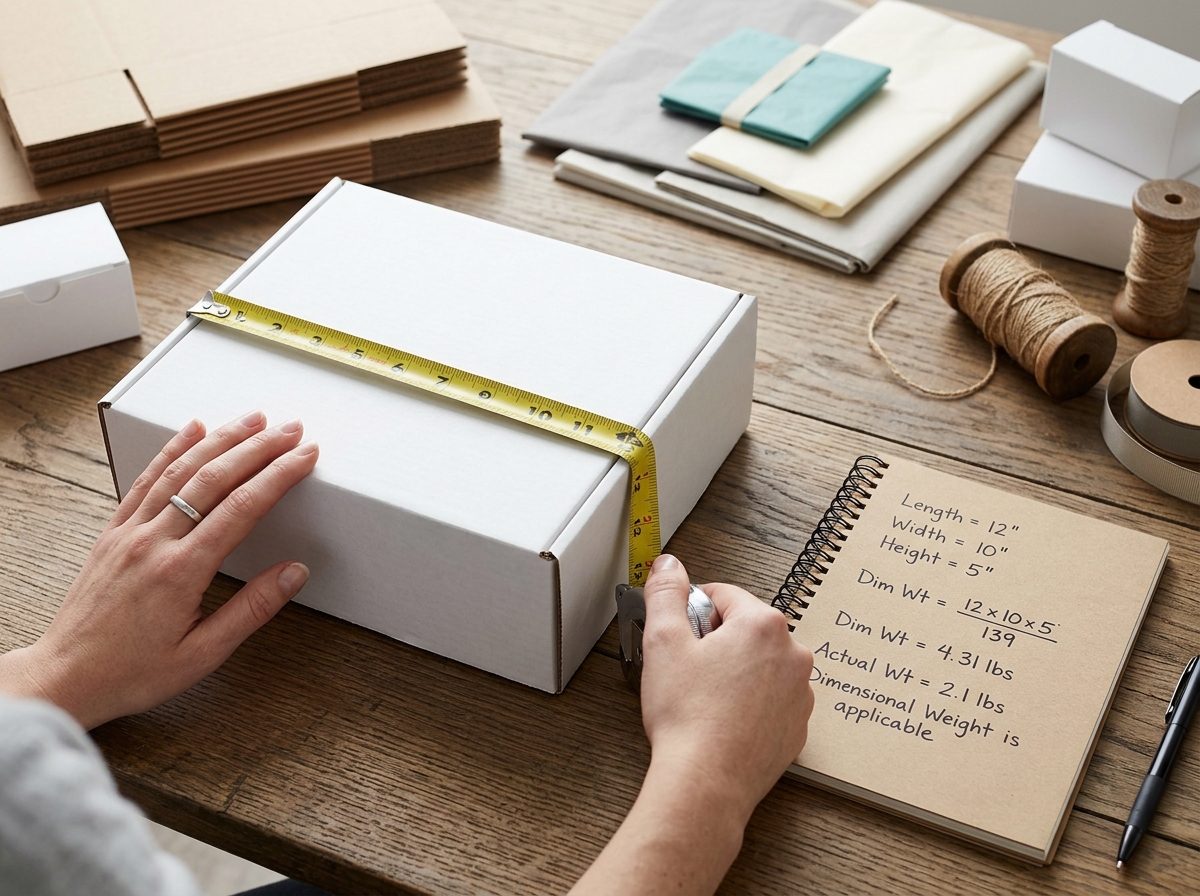
The standard dimensional weight formula is straightforward: multiply length × width × height (all in inches), then divide by the carrier's DIM factor. ShipMonk notes that UPS and FedEx use a DIM factor of 139 for most domestic shipments, while USPS applies the same 139 divisor to packages larger than one cubic foot. The formula looks like this:
Dimensional Weight = (L × W × H) ÷ 139
For example, a box measuring 12 × 10 × 6 inches yields 720 cubic inches. Divided by 139, that equals 5.18 pounds of dimensional weight, rounded up to 6 pounds. If your actual product weighs only 2 pounds, you'll pay shipping rates for a 6-pound package. That 4-pound difference represents pure waste—cost you're absorbing because the box is larger than necessary.
Dimensional weight affects approximately 78% of small business shipments, making package size optimization one of the most impactful cost-control levers available. Businesses that right-size their packaging reduce dimensional weight charges by an average of 25%, a savings that compounds across every order shipped.
Right-sizing delivers measurable benefits across three dimensions: material cost, freight expense, and environmental impact. Research from Supply Chain Brain shows that companies using right-sizing strategies have reduced corrugate use by 12.5% per order, eliminating an average of one square foot of material per carton. When you multiply that reduction across hundreds or thousands of shipments, the material savings alone justify the effort.
Freight savings often exceed material savings. Right-sizing reduces wasted space in transit, allowing more products to fit per truckload. Businesses optimizing their packaging have reduced trailer usage by an average of 14%, which translates to fewer delivery vehicles on the road and lower per-unit transportation costs. For small businesses negotiating carrier rates, demonstrating package efficiency can strengthen your position during contract renewals.
The environmental benefits extend beyond material reduction. Many e-commerce parcels contain up to 40% empty space, requiring excess filler material and generating unnecessary waste. Right-sized boxes eliminate the need for excessive corrugate and fill materials while ensuring products remain properly protected. This approach reduces landfill waste and shrinks the carbon footprint associated with raw material extraction, manufacturing, and transportation.
From a customer experience perspective, right-sized packaging signals thoughtfulness. Consumers increasingly express dissatisfaction with oversized boxes filled with packing peanuts or air pillows. A cube kraft gift box that fits the product snugly creates a better unboxing experience than a large carton with 60% void space.
Most small businesses can cover 80% of their shipping needs with a core set of four to six standardized box sizes. Standardization reduces inventory complexity, lowers per-unit costs through volume purchasing, and simplifies training for packing staff. The key is selecting sizes that accommodate your product range with minimal gaps.
Small cube boxes in the 2×2×2 to 4×4×4 range work well for jewelry, cosmetics, candles, and small gift items. A 2×2×2 white gift box provides 8 cubic inches of volume and yields a dimensional weight of just 0.06 pounds—negligible for rating purposes, meaning you'll pay based on actual weight. These compact formats are ideal for party favors, sample products, and add-on items.
Medium boxes ranging from 6×4×4 to 8×6×4 inches serve as workhorses for small businesses shipping personal care products, baked goods, and retail gifts. An 8×6×4 box (192 cubic inches) generates 1.38 pounds of dimensional weight, making it suitable for products weighing 1 to 3 pounds. This size strikes a balance between protection and efficiency, offering enough interior space for light cushioning without triggering excessive DIM charges.
Larger formats like 10×8×6 or 12×10×6 accommodate bulkier items such as apparel, multi-item gift sets, and boxed products. A 12×10×6 box yields 720 cubic inches and 5.18 pounds of dimensional weight. Use these sizes when actual product weight approaches or exceeds the dimensional weight threshold, ensuring you're not paying a premium for empty space. Understanding what retail-ready packaging formats retailers expect can also guide your size selections when products will move through wholesale channels.
For businesses shipping fragile items like decorated cookies or glassware, consider clear rigid boxes that provide visibility while maintaining structural integrity. Clear acrylic boxes eliminate the need for excess cushioning because the rigid walls prevent crushing, allowing you to right-size more aggressively than with flexible packaging.
Calculating optimal box dimensions starts with accurate product measurements. Measure the length, width, and height of your product at its widest points, then add cushioning allowances. For non-fragile items, add 0.5 to 1 inch per dimension. Fragile products require 1 to 2 inches of clearance per side to accommodate protective materials.
Once you have target interior dimensions, calculate the dimensional weight using the carrier formula. Compare that figure to your product's actual weight. If dimensional weight exceeds actual weight by more than 20%, you're likely paying a DIM penalty and should consider downsizing. If actual weight exceeds dimensional weight, you have room to prioritize other factors like branding or ease of packing.
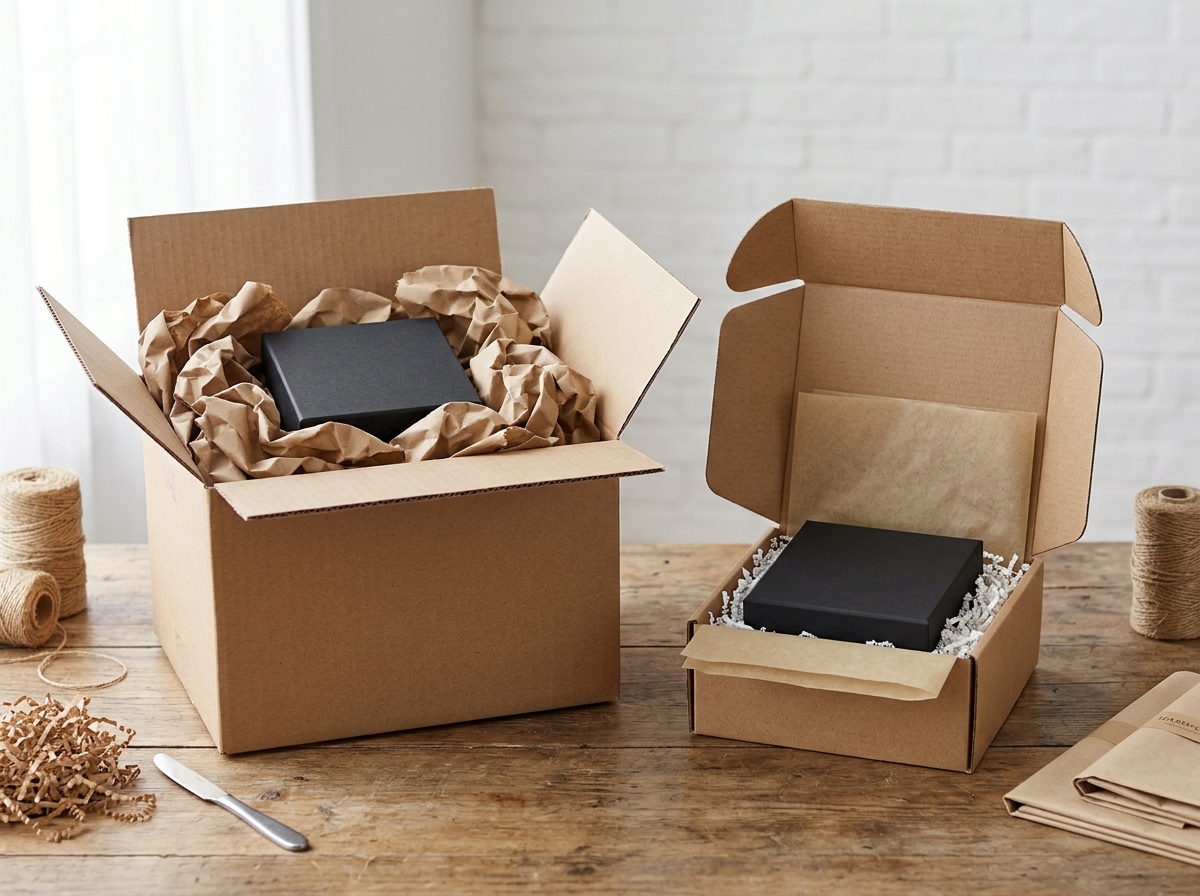
Run a cost comparison across your top five shipping zones. Carriers charge different rates based on destination zones, and dimensional weight can push packages into higher rate tiers. A box that seems efficient for Zone 2 shipments might trigger surcharges for Zone 7. Use carrier rate calculators to model costs across scenarios before committing to a size.
Test your packaging under real shipping conditions. Order sample boxes in multiple sizes, pack representative products, and ship test packages to yourself or colleagues in different regions. Evaluate whether products arrive intact, how much void fill you needed, and whether the unboxing experience meets your brand standards. This hands-on testing reveals issues that spreadsheets miss—such as boxes that collapse under stacking pressure or dimensions that don't fit standard shipping labels cleanly.
Document your findings in a packaging specification guide. For each product or product category, record the recommended box size, required cushioning materials, and any special handling notes. This reference ensures consistency across your team and provides a baseline for future optimization efforts.
Beyond selecting the right box size, several operational strategies help minimize dimensional weight charges. Implementing even two or three of these tactics can yield significant savings.
Standardize your packaging portfolio. Instead of maintaining 15 different box sizes, consolidate to 6 or 7 core formats that cover most orders. Standardization increases your purchasing volume per SKU, unlocking better pricing from suppliers. It also reduces the decision-making burden on packing staff, speeding throughput and reducing errors. Businesses that rationalize packaging sizes report 20% to 30% reductions in per-unit packaging costs.
Use flexible packaging where appropriate. Products that don't require rigid protection—such as apparel, linens, or non-fragile gift items—can often ship in poly mailers or padded envelopes. These formats conform to product dimensions, eliminating void space entirely. Flexible packaging typically weighs less than corrugated boxes, further reducing shipping costs. However, ensure the format aligns with your brand positioning; premium products may require rigid boxes to maintain perceived value.
Implement a dynamic box selection system. If you ship a wide variety of products, consider using multiple box sizes and training staff to select the smallest suitable option for each order. This approach requires more upfront investment in inventory and training but pays dividends for businesses with diverse product catalogs. Some fulfillment operations use dimensioning software that recommends optimal box sizes based on order contents, reducing guesswork.
Negotiate carrier contracts with dimensional weight considerations. When your shipping volume justifies carrier negotiations, discuss dimensional weight divisors and zone-based pricing. Some carriers offer preferential DIM factors or flat-rate options for shippers who meet volume thresholds. Even modest improvements—such as moving from a 139 to a 150 divisor—can generate thousands in annual savings.
Audit your packaging quarterly. As your product mix evolves, packaging that once made sense may become inefficient. Schedule regular reviews to identify opportunities for downsizing, consolidating SKUs, or switching materials. Track metrics like average dimensional weight per order, void fill usage, and damage rates to measure progress over time.
The materials you choose interact with right-sizing in important ways. Lighter materials reduce both actual weight and dimensional weight penalties, but they must still provide adequate protection.
Kraft paperboard offers an excellent balance of strength, weight, and cost for most small business applications. Kraft boxes are typically lighter than white clay-coated boxes of equivalent dimensions, shaving ounces off each shipment. For businesses shipping dozens or hundreds of packages daily, those ounces accumulate into meaningful savings. Kraft also communicates an eco-friendly brand message, which resonates with sustainability-conscious consumers.
Corrugated cardboard provides superior strength for heavier or more fragile products. Single-wall corrugated (with one fluted layer) works for most applications under 20 pounds, while double-wall corrugated handles heavier loads. However, corrugated boxes add weight and bulk, so use them only when product protection demands it. Overengineering packaging—such as using double-wall boxes for lightweight items—wastes material and inflates shipping costs.
Clear PET and acrylic boxes serve dual purposes: they showcase products while providing rigid protection. These materials work particularly well for decorated cookies, confections, and artisan goods where visual presentation drives purchase decisions. The transparency eliminates the need for photography on the package exterior, and the rigid structure often allows you to downsize compared to corrugated alternatives because you don't need as much internal cushioning.
Avoid over-specifying materials. A common mistake is defaulting to the strongest, thickest material available, which adds cost and weight without proportional benefit. Match material strength to the actual stresses your package will encounter during shipping. Products shipping via ground service within regional zones face different handling than those traveling cross-country via multiple carriers. Tailor your choices accordingly.
Transitioning to right-sized packaging requires coordination across purchasing, fulfillment, and customer service. A phased implementation reduces disruption and allows you to refine your approach based on real-world feedback.
Start with a pilot program focused on your highest-volume SKUs. Identify the 10 to 20 products that account for the majority of your shipments, then optimize packaging for those items first. This targeted approach delivers quick wins and builds internal support for broader changes. Measure baseline metrics—dimensional weight per order, material cost per shipment, and damage rates—before making changes so you can quantify results.
Communicate changes to your fulfillment team. Provide clear guidelines on which products ship in which boxes, and explain the rationale behind the changes. Staff who understand the cost implications are more likely to follow protocols consistently. Consider visual aids such as decision trees or product-to-box matching charts posted at packing stations.
Monitor damage rates closely during the transition. Right-sizing should not compromise product protection. If damage claims increase, revisit your cushioning strategy or upsize boxes for affected products. The goal is to eliminate waste, not to cut corners that lead to customer dissatisfaction or return costs that exceed shipping savings.
Gather customer feedback on the new packaging. Include a brief survey in post-purchase emails asking about unboxing experience and package condition upon arrival. Positive feedback validates your approach, while complaints about damaged products or excessive packaging signal areas for adjustment. Customer perception matters—packaging that saves money but frustrates buyers undermines long-term profitability.
Expand the program incrementally. Once you've optimized high-volume SKUs and confirmed that damage rates remain stable, apply the same methodology to additional products. Over six to twelve months, you can right-size your entire catalog without overwhelming your team or disrupting operations.
For businesses shipping highly variable product assortments, custom and on-demand packaging solutions offer additional optimization potential. These approaches require capital investment but can deliver substantial long-term savings.
Custom-fit packaging systems use automated equipment to create boxes sized precisely to each order's dimensions. The machine measures the products, then cuts and folds corrugated material to create a box with minimal void space. This technology eliminates the need for standard box inventories and reduces filler usage by up to 50%. Companies implementing custom-fit systems report 12% savings on transportation costs due to improved pallet density and reduced dimensional weight charges.
On-demand printing allows you to produce packaging in small batches as needed, reducing inventory carrying costs and obsolescence risk. This approach works well for seasonal products, limited editions, or businesses testing new offerings. Digital printing eliminates plate costs and minimum order quantities, making short runs economically viable. However, per-unit costs typically exceed those of pre-printed stock, so evaluate total cost of ownership rather than just unit price.
Modular packaging systems use adjustable inserts or dividers within a standard box, allowing one exterior size to accommodate multiple product configurations. This approach reduces box SKU counts while maintaining right-sized interior dimensions. Modular systems work particularly well for gift box assortments, subscription boxes, and multi-item orders where contents vary significantly.
Evaluate these advanced solutions based on your order volume and product variability. Businesses shipping fewer than 100 packages daily typically achieve better ROI through manual right-sizing with a curated selection of stock boxes. Operations exceeding 500 daily shipments may find that automation pays for itself within 18 to 24 months through labor savings and material reduction.
Small businesses implementing comprehensive right-sizing strategies typically save 30-40% on shipping expenses through dimensional weight reduction, material cost savings, and damage prevention. The exact savings depend on your current packaging efficiency, shipping volume, and product mix. Businesses shipping lightweight products in oversized boxes see the most dramatic improvements, while those already using reasonably sized packaging may achieve 10-15% savings through fine-tuning.
Both UPS and FedEx use the same dimensional weight formula for most domestic shipments: (Length × Width × Height in inches) ÷ 139 = dimensional weight in pounds. The result is rounded up to the next whole pound. For example, a 10×8×6 inch box yields 480 cubic inches ÷ 139 = 3.45 pounds, rounded to 4 pounds. Carriers bill you for whichever is greater: actual weight or dimensional weight.
Most small businesses benefit from maintaining four to six standard box sizes that cover the majority of their product range. Using a single size simplifies operations but often results in excessive void space and higher shipping costs for smaller items. Conversely, maintaining too many sizes increases inventory complexity and reduces purchasing volume per SKU. Aim for a core set of sizes with minimal dimensional overlap, ensuring each size serves a distinct product category.
For non-fragile items, add 0.5 to 1 inch per dimension (length, width, height) beyond your product measurements to accommodate minimal cushioning. Fragile products require 1 to 2 inches of clearance per side for adequate protection. Test your assumptions by shipping sample packages and inspecting them upon arrival. If products shift excessively or show impact marks, increase cushioning. If boxes feel mostly empty, reduce dimensions or switch to lighter filler materials.
Yes, but the approach differs slightly. Subscription boxes and gift sets often contain multiple items of varying sizes, making it harder to predict exact dimensions. Focus on identifying the most common configurations, then select boxes that accommodate those assortments with minimal void space. Use modular inserts or dividers to secure items within the box, preventing shifting during transit. For highly variable assortments, consider offering two or three box sizes and selecting the appropriate one based on each order's contents.
Right-sizing packaging for small business operations extends beyond cost reduction—it's a signal to customers that you're thoughtful about resources and committed to operational excellence. When competitors ship products in oversized boxes filled with plastic air pillows, your right-sized kraft packaging stands out as more professional and environmentally responsible.
The businesses that thrive in 2027 and beyond will be those that optimize every aspect of their operations, including packaging. Dimensional weight pricing isn't going away; if anything, carriers are likely to tighten divisors and expand DIM-based pricing to more service levels. Getting ahead of these trends now positions your business to absorb future changes without scrambling to redesign your packaging program.
Start with the fundamentals: measure your products accurately, calculate dimensional weight for your current packaging, and identify the biggest gaps between actual and billed weight. Source a curated selection of cube gift boxes or other formats that match your product range, then implement a pilot program on high-volume SKUs. Track your results, refine your approach, and expand systematically. Within six months, right-sizing can become a core competency that reduces costs, improves sustainability, and enhances customer experience—three outcomes that directly support long-term business growth.