Cart
0
You may also like



Book a call with our development team to get started.



Apply online and access wholesale pricing.

Retail-ready packaging is secondary packaging designed so products can move directly from shipping case to store shelf with minimal handling. Instead of unpacking individual units by hand, store employees open the case along a perforated line or remove a panel, and the packaging itself becomes the shelf display. This approach reduces labor costs, speeds restocking, and ensures consistent brand presentation across retail locations.
For small businesses entering big-box retail channels, understanding what is retail ready packaging isn't optional — it's a baseline compliance requirement. Walmart, Target, Costco, and regional chains each maintain their own specifications, and non-compliant packaging can trigger chargebacks, delayed shipments, or outright rejection at the distribution center. This guide explains the core definition, the framework retailers use to evaluate packaging, the most common formats, and what each major chain actually requires before they'll stock your product.
Traditional packaging typically involves two separate steps: a primary package (the individual unit consumers see on shelf) and a secondary shipping case that protects the product during transit. When the case arrives at the store, employees unpack each unit and place them on the shelf one by one. Retail-ready packaging collapses those two functions into a single unit.
Also called shelf-ready packaging (SRP), retail-ready packaging is a shipping case that transforms into a point-of-sale display. The case might be a corrugated tray with a perforated lid that tears away, a wraparound sleeve that slides off, or a display-ready shipper that sits directly on the sales floor. The defining characteristic is one-step placement: the case goes from delivery truck to selling position without anyone handling the individual products inside.
The distinction matters because labor is the largest variable cost in retail operations. A case that takes thirty seconds to stock instead of three minutes multiplies across thousands of SKUs and hundreds of stores. Retailers have formalized this efficiency into compliance programs, and suppliers who meet retail ready packaging small business standards from the start avoid costly rework and maintain stronger buyer relationships.
Most retail-ready packaging standards trace back to a framework developed by the Efficient Consumer Response initiative in Europe and later adopted across North American retail. Known as the "Five Easies," this checklist defines what makes packaging genuinely retail-ready. Walmart popularized the framework in the U.S., and it now appears in compliance guides from Target, Kroger, and regional chains.
The five criteria are: easy to identify, easy to open, easy to stock, easy to shop, and easy to dispose. Each addresses a specific friction point in the supply chain, from the distribution center loading dock to the customer pulling a unit off the shelf.
Secondary packaging must display product specifications, brand name, and a scannable barcode on at least two sides of the case. Store associates need to locate the correct SKU from several feet away, often while standing on a ladder or working in a crowded backroom. Clear product photography, large type, and high-contrast graphics make identification faster. According to GS1, the global standards organization that manages barcode systems, proper barcode placement and print quality are non-negotiable — smudged or incorrectly sized barcodes cause scan failures that slow receiving and trigger compliance penalties.
Retail-ready cases should open without a box cutter. Perforations, tear strips, or thumb notches let employees access the product safely and quickly. This requirement protects both the worker (no blade near hands) and the product (no accidental cuts through packaging or merchandise). Walmart specifies that shelf-ready trays must not require knives to open, and cases designed with clean tear lines move through the stocking process faster.
The opened case must fit the retail fixture without repacking. This means understanding shelf depth, modular dimensions, and planogram layouts before finalizing the design. A case that's a half-inch too deep won't sit flush on the shelf; a tray that's an inch too wide blocks the adjacent SKU. Retailers provide fixture specifications during the onboarding process, and smart suppliers request those details before ordering production tooling.
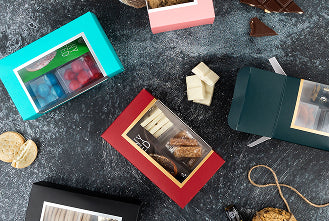
For businesses working with smaller order quantities, cube kraft gift boxes and similar modular formats can serve as inner packs that stack cleanly inside a retail-ready tray, giving you flexibility across multiple retail channels.
Customers need to pull a single unit without knocking over the display or struggling with tight packaging. The front panel of the tray should be low enough that shoppers can see the product and reach it comfortably, but high enough to keep units stable during transport. Walmart's guidelines specify minimum and maximum sidewall heights for shelf-ready trays, and exceeding those limits can disqualify a package from approval.
Empty cases must flatten quickly for recycling. Retailers manage tons of cardboard daily, and packaging that doesn't break down efficiently creates backroom congestion and increases waste-handling costs. Corrugated materials are preferred because they integrate into existing single-stream recycling programs. Designs that combine multiple materials (plastic windows bonded to paperboard, for example) complicate disposal and may not meet retailer sustainability targets.
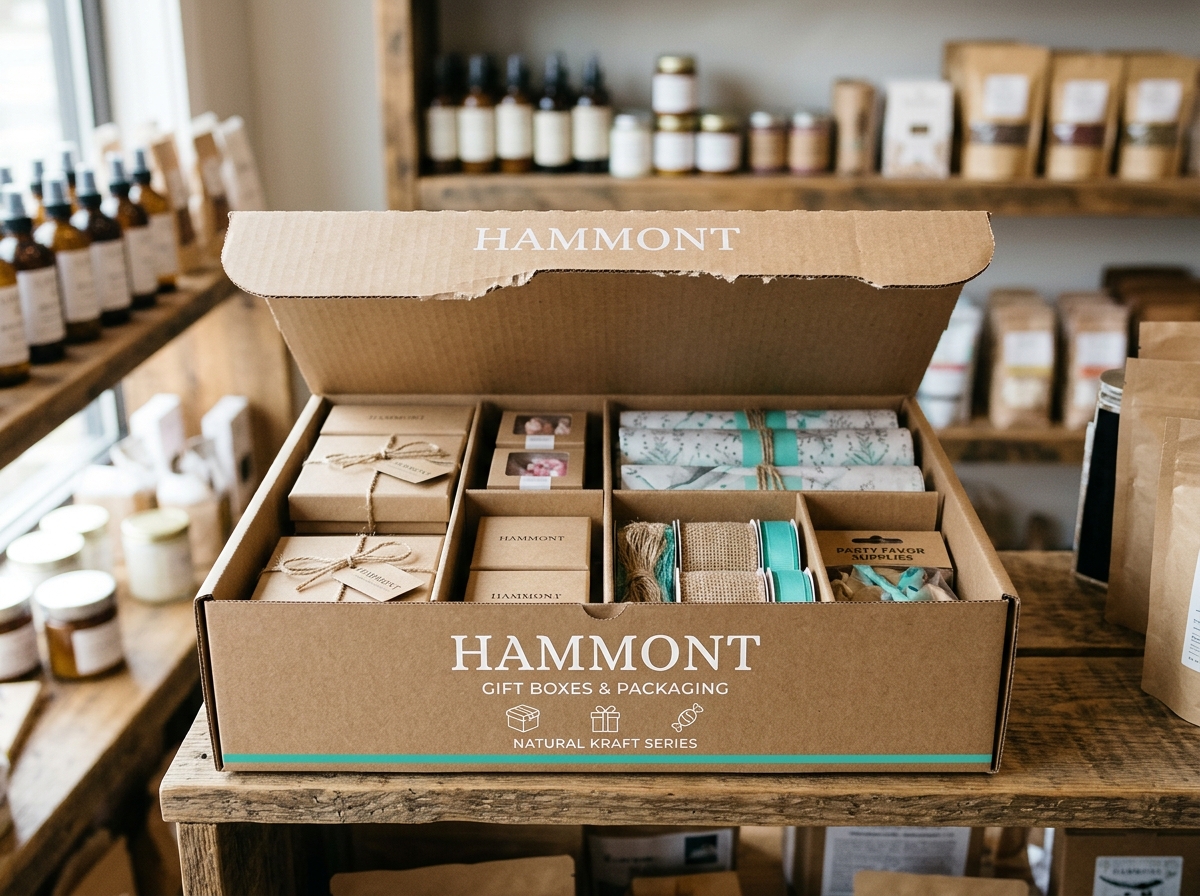
Retail-ready packaging takes several structural forms, each suited to different product types, retail environments, and merchandising strategies. The format you choose depends on whether your product sells from a shelf, an endcap, or a floor display, and whether the retailer stocks it in a traditional aisle or a promotional location.
The most common format is a corrugated tray with a perforated lid or wraparound sleeve. The tray arrives at the store fully packed, the employee removes the top panel or sleeve, and the tray slides directly onto the shelf. The front panel acts as a riser, displaying the brand and product information at eye level. This format works well for products that sit on standard retail shelving and need to be restocked frequently.
Trays are typically made from E-flute or B-flute corrugated board, which balances structural strength with a clean printing surface. The material must survive distribution center handling, forklift clamps, and potential double-stacking on pallets, while still tearing cleanly along the perforation when opened.
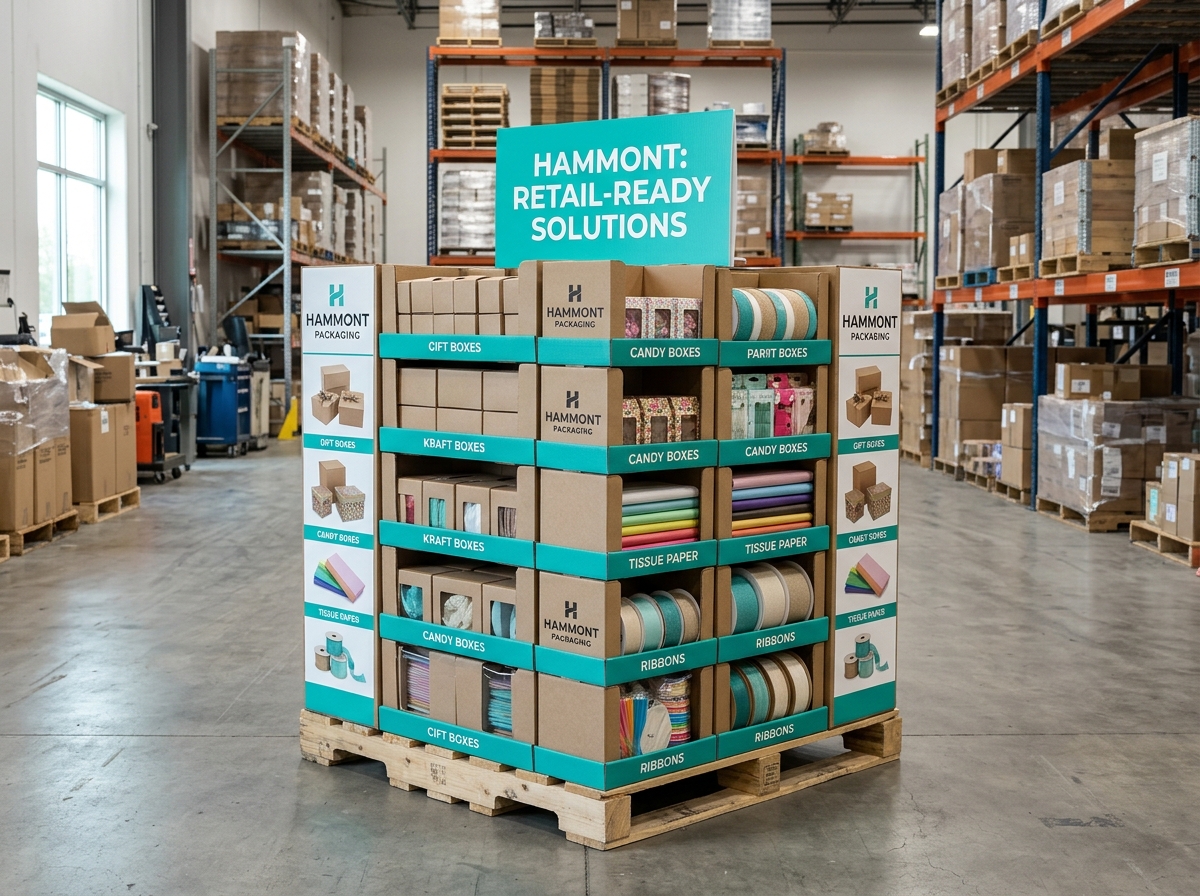
Also called PDQ displays (which stands for "pretty darn quick" or "product display quickly," depending on who you ask), these are free-standing floor units that arrive pre-packed and ready to place. The shipper might be a full-pallet display for a promotional period or a quarter-pallet unit for an endcap. Display-ready shippers often include header cards, side panels with brand graphics, and structural features that encourage impulse purchases.
Costco relies heavily on pallet displays because the warehouse format emphasizes bulk merchandising over traditional shelving. Products sold at Costco often require club-pack configurations — multipacks or larger unit sizes — and the packaging must function as its own display since there's no separate shelf fixture.
Some retail-ready designs use a sleeve that slides off the tray or a panel that peels away to reveal the product. This format works when the inner tray or the product packaging itself is visually strong enough to serve as the display. Sleeves are common in categories where the primary packaging is already retail-ready (bottled beverages, for example) and the secondary case just needs to protect the units during shipping.
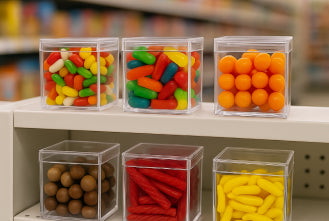
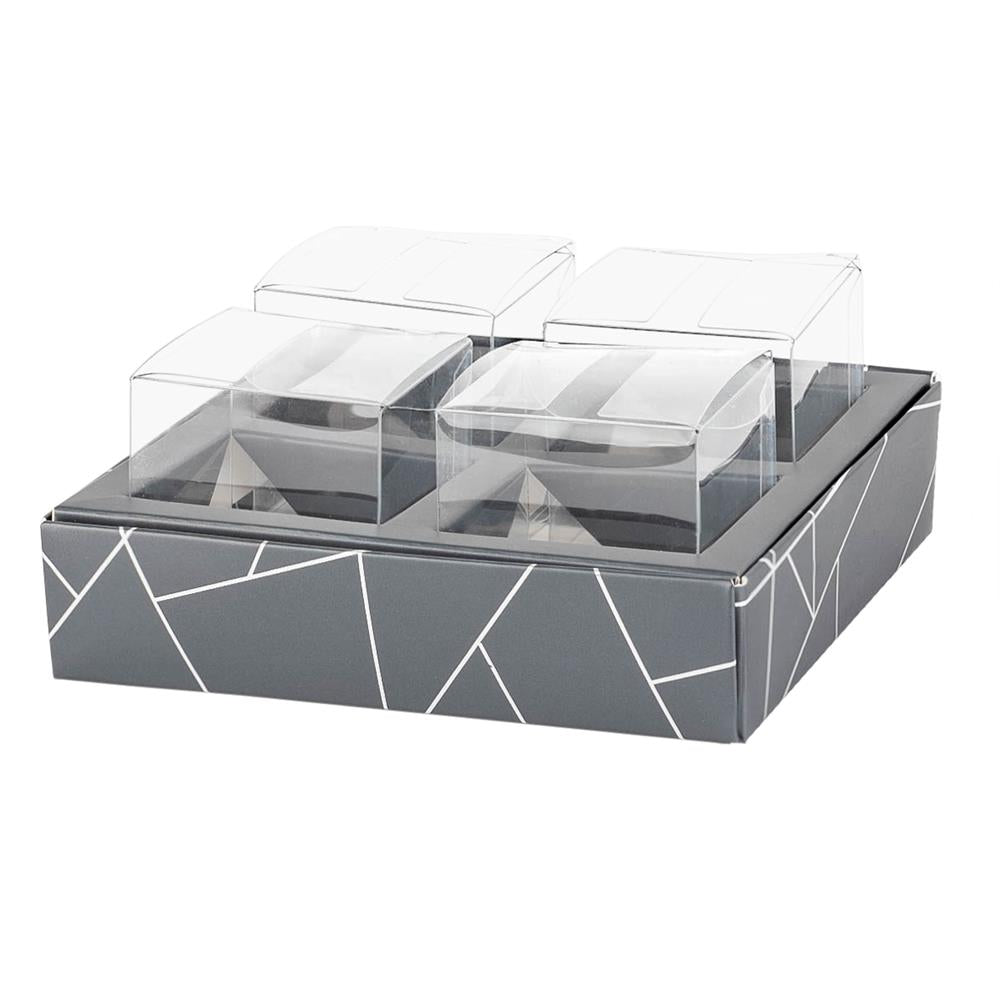
For gift and party supply businesses, modular packaging like clear rigid acrylic boxes can function as both primary packaging and display-ready units when grouped in a retail-ready tray, giving you dual-channel flexibility for wholesale and direct-to-consumer sales.
Walmart's retail-ready packaging standards are detailed in the company's Supply Chain Standards documentation, which covers both shelf-ready trays and PDQ promotional displays. The requirements reflect Walmart's distribution network, which relies heavily on automated handling equipment at the distribution center level.
Shelf-ready packaging at Walmart must not exceed 22 pounds. Cases must fit within specific dimension ranges to work with conveyor systems and automated sorters: minimum dimensions of 6.4 inches by 5.0 inches by 2.0 inches, and maximum dimensions of 36 inches by 24 inches by 16 inches. The height-to-width aspect ratio must stay under 1.6 to prevent tipping on conveyors.
Walmart requires GS1-128 case labeling, which encodes product information, lot numbers, and shipment details in a standardized barcode format. The label must appear on at least two sides of the case, and barcode print quality must meet minimum standards to ensure reliable scanning at receiving. As retailers prepare for GS1 Sunrise 2027, brands will need to transition to GS1-compliant 2D barcodes at point of sale by the end of 2027, adding another layer of compliance to track.
Walmart's Five Easies checklist is non-negotiable. The front panel of a shelf-ready tray must have a minimum sidewall height of 2 inches (3 inches for glass products) to keep units stable, but the lip cannot obscure the brand or primary packaging. Perforations must allow clean opening without tools, and the empty case must flatten for recycling.
Target's packaging guidelines emphasize case-pack configuration and carton quality for efficient distribution center handling. Target uses its Partners Online portal to manage compliance documentation, and suppliers must complete packaging certification before the first shipment. Barcode requirements are particularly strict: Target specifies quiet zones around UPC symbols and minimum print contrast to ensure scannable codes at high-speed sortation.
Case labeling at Target must include the vendor number, item number, quantity, and a GS1-128 barcode formatted to Target's specification. The retailer also focuses on planogram compliance, meaning your shelf-ready packaging dimensions must align with the modular shelving units used across Target stores. A case that doesn't fit the planogram creates stocking delays and may result in the product being held at the distribution center until compliant packaging arrives.
Costco operates on a different model entirely. As a warehouse club, Costco merchandises products on pallets rather than traditional shelving, and the packaging must function as its own floor display. Costco's Structural Packaging Specifications (current edition as of March 2025) are among the strictest in retail because the case itself is the customer-facing presentation, not just a shipping container.
Costco requires standard 48-inch by 40-inch GMA pallets with no overhang. Pallet loads must withstand long-haul transit, forklift handling, mechanical clamping (which can apply up to 2,300 psi of pressure), and warehouse conditions that often run at 80 to 90 percent humidity. Packaging must comply with ISTA pre-shipment tests to confirm structural integrity. Club-pack configurations are mandatory — your standard retail unit won't work at Costco without a multipack format.
Retail cartons at Costco have a 40-pound weight limit, and display-ready trays must arrive with no assembly required. The pallet must be ready to roll onto the sales floor immediately after delivery. For small businesses, this often means working with a co-packer or contract packager experienced in club-store formats, because the structural and testing requirements exceed what most startups can manage in-house.
Most retail-ready packaging uses corrugated cardboard because it's lightweight, recyclable, and printable. E-flute corrugated (1/16-inch thick) is common for shelf-ready trays because it offers a smooth printing surface for high-quality graphics while maintaining enough strength for distribution. B-flute (1/8-inch thick) is used for heavier products or cases that need extra crush resistance.
Litho-laminated corrugated combines offset printing on paperboard with a corrugated liner, delivering the graphic quality of folding cartons with the structural strength of corrugated. This format is popular for premium products and promotional displays where brand presentation is critical. The tradeoff is cost: litho-lam is more expensive than flexographic printing directly on corrugated, and minimum order quantities tend to be higher.
Paperboard (folding carton stock) is used for smaller, lighter retail-ready formats, particularly in categories like cosmetics, over-the-counter pharmaceuticals, and small electronics. Paperboard is specified by caliper (thickness) and coating, and it works well when the product weight is low and the display will sit on a shelf rather than a pallet.
Sustainability is increasingly part of the material decision. Retailers like Walmart, Target, and Costco have public commitments to recyclable packaging, and many are phasing out mixed-material designs that complicate recycling. Corrugated with a small plastic window is generally acceptable if the window is minimal and the materials can be separated at the recycling facility, but large plastic components or laminated films that can't be separated will face pushback.
Barcode compliance is one of the most common failure points in retail-ready packaging. A barcode that scans reliably in your office might fail at a high-speed distribution center sorter, and a single scan failure can delay an entire pallet.
UPC barcodes (EAN-13 or UPC-A) are used on the primary consumer unit. ITF-14 barcodes appear on outer cases and secondary packaging. GS1-128 barcodes encode detailed logistics information and are required by most major retailers for case-level tracking. Each barcode type has specific size, placement, and print-quality requirements, and using the wrong type for the packaging level is a common mistake.
Barcode size matters. Walmart specifies that UPC barcodes must be at least 1.2 inches by 0.5 inches to ensure scanability. The barcode needs a "quiet zone" — a blank margin around the symbol — to prevent adjacent graphics from interfering with the scan. Print contrast is measured as a ratio between the darkest bars and the lightest spaces, and low contrast causes scan failures.
Case labeling must include product details, lot codes, expiration dates (for consumables), and handling instructions. Retailers increasingly require SSCC-18 labels (Serial Shipping Container Codes) on pallets for unique identification and traceability. Costco mandates SSCC-18 labels on two adjacent sides of every pallet using the GS1-128 barcode format, and label accuracy is non-negotiable.
Most retailers require packaging samples and testing documentation before approving a new SKU. ISTA (International Safe Transit Association) testing is the industry standard for validating that packaging can survive distribution. ISTA 1A tests general handling and vibration; ISTA 3E simulates the full shipping environment including drops, impacts, and compression.
Walmart requires suppliers to ship-test displays using a certified ISTA testing lab, and prototypes must demonstrate that the display can ride for 1,200 miles double-stacked without structural failure. Costco's specifications similarly require packaging to withstand forklift clamps, pallet jacks, and high-humidity warehouse conditions.
Prototype testing should happen early in the design process, not after production tooling is ordered. A packaging design that looks strong on paper might fail when subjected to actual distribution forces, and discovering that failure after you've committed to 10,000 units is expensive. Most corrugated converters and packaging engineers recommend building and testing at least two prototype iterations before finalizing the design.
Retailer approval timelines vary. Walmart and Target both have formal packaging certification processes that can take several weeks, and you'll need to submit samples, technical drawings, and test reports before receiving approval. Costco works through the assigned buyer, and packaging specs are typically negotiated as part of the initial purchase order discussion. Plan for at least 60 to 90 days from initial design to retailer approval, and budget for potential revisions.
Retail-ready packaging costs more per unit than a plain shipping case because it combines structural features, high-quality graphics, and often custom tooling. A basic corrugated shipper might cost $0.50 per unit at volume, while a litho-laminated shelf-ready tray with perforations and a full-color printed front panel can run $1.50 to $4.50 per unit depending on size, complexity, and order quantity.
Minimum order quantities for custom retail-ready packaging typically start at 250 to 500 units for simple designs and 1,000 to 3,000 units for more complex structures or litho-lam printing. Tooling costs (die-cutting plates, printing plates) add $500 to $2,500 to the first order, though those costs don't recur on reorders as long as the design stays the same.
The ROI calculation isn't just about the packaging cost — it's about the total landed cost of getting your product onto the shelf. If compliant retail-ready packaging costs an extra $1.00 per case but eliminates a $50 chargeback for non-compliance, saves two minutes of labor per case, and prevents your shipment from being rejected at the DC, the investment pays for itself quickly.
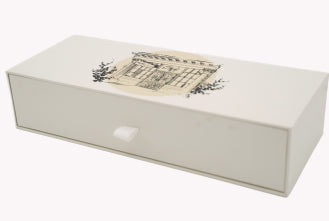
For small businesses testing a retail channel for the first time, consider starting with stock packaging formats that meet the Five Easies criteria. Simple cube black gift tuck top boxes can be grouped in a corrugated tray with a custom-printed wraparound sleeve, giving you retail-ready functionality without the cost and lead time of fully custom tooling.
The terms are used interchangeably. Both refer to secondary packaging designed so products can move directly from the shipping case to the store shelf or sales floor with minimal handling. Some retailers prefer "shelf-ready packaging" (SRP) while others use "retail-ready packaging" (RRP), but the functional definition and requirements are the same.
Retail-ready packaging typically costs 50 to 300 percent more per unit than a plain corrugated shipper, depending on the complexity of the design, printing requirements, and order volume. Simple shelf-ready trays with flexographic printing might add $0.50 to $1.00 per case, while litho-laminated display shippers with custom die-cuts can cost $3.00 to $5.00 per unit at moderate quantities. The cost premium is offset by labor savings at the retail level and reduced risk of compliance penalties.
Not necessarily, but each retailer has unique specifications that may require design adjustments. Walmart's dimension limits, Target's barcode placement rules, and Costco's club-pack requirements are not identical. Many suppliers design a base retail-ready format that meets the most common requirements across multiple retailers, then make minor modifications (label placement, case counts, or tray dimensions) for specific chains. Working with a packaging engineer familiar with multi-retailer compliance can help you design once and adapt efficiently.
The Five Easies is a checklist used by most major retailers to evaluate whether packaging qualifies as retail-ready. The five criteria are: easy to identify (clear branding and scannable barcodes), easy to open (no box cutters required), easy to stock (fits retail fixtures without repacking), easy to shop (customers can access products easily), and easy to dispose (flattens quickly for recycling). Meeting all five is typically a baseline requirement for retailer approval.
Retail-ready packaging is optimized for brick-and-mortar retail, not direct shipping to consumers. The structural features that make a case easy to stock on a shelf (perforated lids, open-front trays) don't provide the protection needed for parcel shipping. Most brands use separate packaging for e-commerce: a sealed corrugated mailer or box designed to survive individual parcel handling. However, the inner product packaging can often be the same across channels, which simplifies inventory management.
Retail-ready packaging represents a shift from viewing secondary packaging as purely protective to recognizing it as part of the merchandising and supply chain efficiency strategy. For small businesses entering retail channels, understanding what is retail ready packaging and meeting the baseline requirements — the Five Easies, retailer-specific dimensions, compliant barcodes, and tested structural integrity — is the cost of entry. The brands that treat packaging as a strategic investment rather than an afterthought are the ones that build sustainable, scalable retail partnerships.