Cart
0
You may also like


Book a call with our development team to get started.



Apply online and access wholesale pricing.

If your wedding date falls between April and August 2027, you're in the sweet spot for ordering wedding favor packaging right now. The wedding favor packaging timeline isn't just about placing an order—it's about coordinating favor selection, packaging delivery, custom label application, assembly, and final storage before the big day. Miss one milestone and you're assembling 150 favors the night before your rehearsal dinner.
This guide walks through the exact wedding favor packaging timeline for spring and summer 2027 weddings, from initial decisions in mid-November 2026 through final delivery. Whether you're ordering stock boxes, applying DIY labels, or working with a small bakery on edible favors, this timeline keeps packaging off your last-minute crisis list.
Three months out is decision time. Your guest count should be nearly final—most couples see fewer than 10% changes after this point. Now you need to lock in what goes inside the favor and what holds it.
Edible favors remain the most popular choice for 2027 weddings because guests actually take them home. Cookies, local honey jars, hot chocolate mixes, and small-batch candies all require food-safe packaging. If your favor is a baked good, you need boxes or bags that prevent moisture and contamination while still looking elegant on a reception table.
Non-edible favors—candles, seed packets, small succulents, or matchboxes—have different packaging needs. Rigid boxes work well for fragile items. Cellophane bags suit lightweight favors that benefit from visibility. Fabric pouches signal a reusable, eco-conscious choice but add to per-unit cost.
At 12 weeks, measure your favor item's dimensions. A 3-inch round cookie needs a box at least 3.5 inches square to allow for cushioning. A 2-ounce honey jar fits comfortably in a 2x2x2-inch cube box. Ordering packaging that's too small is a common mistake that forces last-minute reorders.
Stock packaging—plain kraft boxes, clear bags, simple white boxes—ships within days and costs less. Custom printed boxes with your names and wedding date typically require 4 to 6 weeks of lead time and higher minimum order quantities, often starting at 200 to 250 units. For most couples, stock packaging plus custom labels offers the best balance of personalization and timeline flexibility.
Ten weeks gives you a comfortable buffer for shipping delays, order errors, or discovering you need a different size after the first sample arrives. Standard wholesale packaging suppliers ship stock items within 3 to 7 business days, but you should account for potential restocks, carrier delays, and the reality that your order might arrive while you're traveling for a venue walkthrough.
Order 8 to 10% more packaging than your confirmed guest count. If you're expecting 150 guests, order packaging for 165 favors. The overage covers late RSVPs, vendor gifts, a few extras for your wedding party, and the inevitable assembly mistakes. Running short on favors the week before your wedding creates unnecessary stress.
When ordering, confirm whether boxes arrive flat-pack or pre-assembled. Flat-pack saves on shipping cost and storage space but adds assembly time to your timeline. Pre-assembled boxes cost more and take up more room but eliminate one task from your final week. For orders over 100 units, flat-pack is usually the practical choice—most cube tuck-top boxes fold together in under 10 seconds once you get the rhythm.
If you're working with a bakery or confectioner who's providing both the favor and the packaging, confirm their lead time separately. Some small businesses need 4 to 6 weeks' notice for large custom orders, especially during peak wedding season. Don't assume packaging is included—ask explicitly whether boxes, bags, labels, and ribbons are part of their quote.
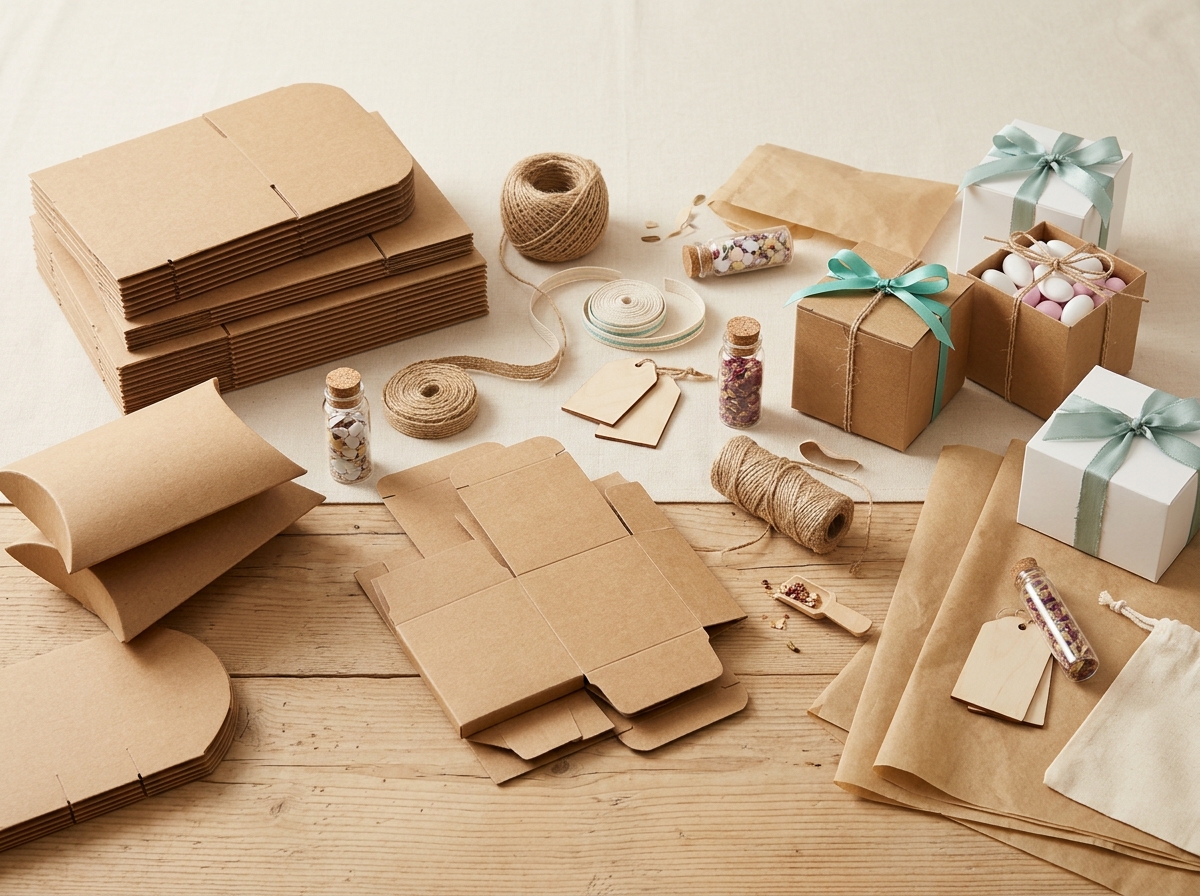
Once your packaging is ordered, turn your attention to personalization. Custom labels, printed tags, ribbon, and twine are what transform a plain kraft box into a wedding favor that photographs well and feels intentional.
Online print services typically require 2 to 3 weeks for custom sticker or tag orders, including proof approval and production. If you're ordering foil-stamped tags or letterpress printing, add another week. Order labels now so they arrive well before your assembly date.
Label size matters. A 2-inch round sticker fits neatly on the top of a small cube box. A 2x3-inch rectangular label works well on the front panel of a larger box. If you're using clear treat bags, plan for a label that sits on the bag closure or a hang tag attached with ribbon.
Keep label copy short: names and date, or a single line like "Thank you for celebrating with us." Long paragraphs don't read well at 10-point type on a 2-inch circle, and guests don't need your love story printed on a cookie box.
Ribbon and twine are finishing details that add perceived value without much cost. A 12-foot spool of 1/4-inch satin ribbon costs a few dollars and ties around 20 to 25 small boxes. Jute twine gives a rustic look; velvet ribbon reads formal. Order enough for your full quantity plus extra for practice ties and mistakes.
If your favors are perishable—cookies, macarons, brownies, or any baked good—six weeks is when you confirm the order with your baker but don't take delivery yet. Most perishable edible favors should be made or delivered no more than 3 to 5 days before the wedding to ensure freshness.
At this stage, finalize flavors, quantities, and packaging responsibility. Will the baker box the items, or are they delivering bulk and you're packaging them yourself? If you're doing the packaging, make sure your boxes are food-safe. Standard kraft gift boxes work for individually wrapped cookies. Cellophane bags are ideal for stacked cookies or candies that benefit from a sealed environment.
For non-perishable favors like honey, jam, or hot chocolate mix, you can take delivery any time after this point. Just make sure you have climate-controlled storage—honey jars shouldn't sit in a hot garage for six weeks, and chocolate melts.
One month out, everything should be in your hands: boxes, bags, labels, ribbon, and any other materials. Open every box and inspect for damage, quantity, and size accuracy before you're too close to the wedding to reorder.
Check that box dimensions match what you ordered. Assemble one sample favor start to finish—box, item, label, ribbon—to confirm everything fits and looks the way you envisioned. This is your last chance to catch a sizing issue or a label that's the wrong color.
If you ordered flat-pack boxes, assemble a few to understand how they fold. Some tuck-top boxes have a learning curve, and you don't want to figure that out the night before assembly day. Practice makes the actual assembly session faster and less frustrating.
Store all materials in a cool, dry place. Humidity can warp cardboard. Heat can melt adhesive on labels. If you're using cellophane wrap or shrink bags, keep them away from direct sunlight to prevent premature shrinking or discoloration.
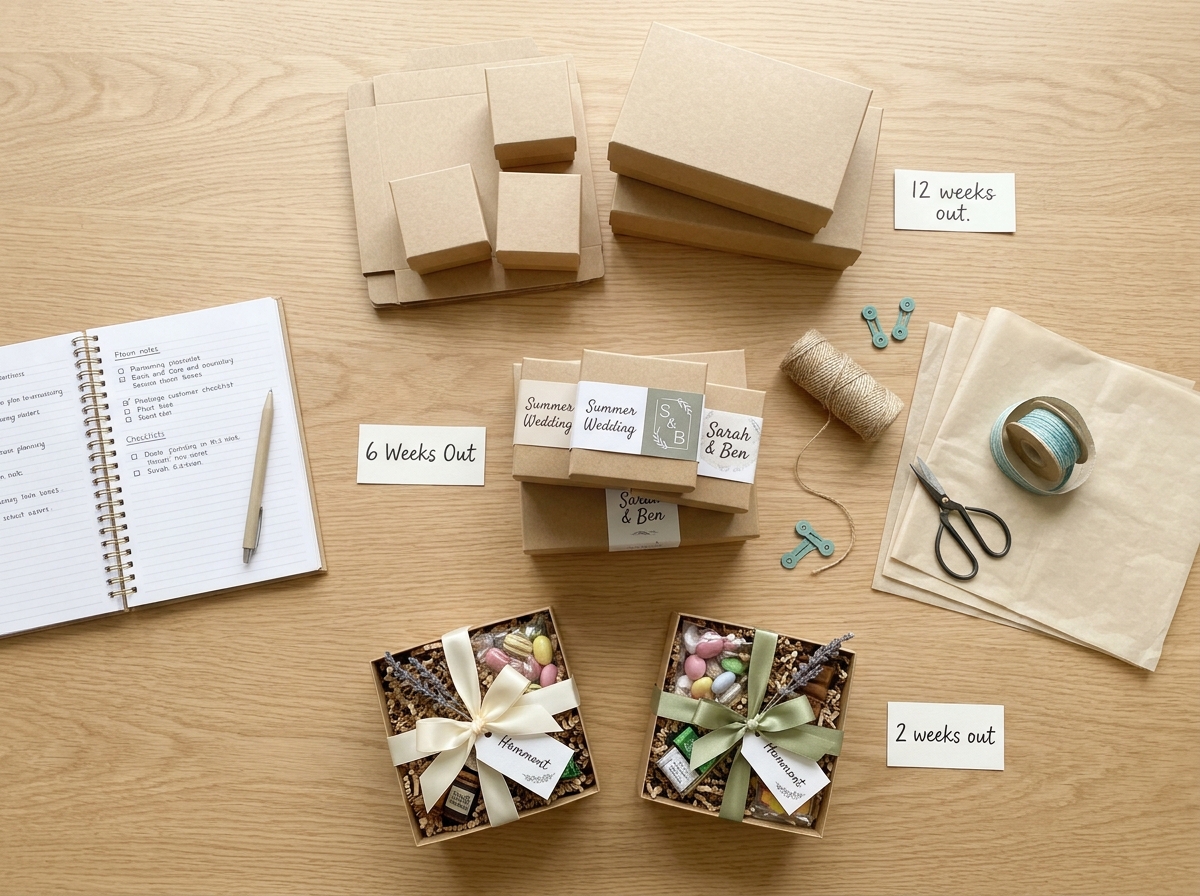
Two to three weeks before the wedding is assembly time for any favor that won't spoil. This includes candles, matchboxes, seed packets, small bottles of olive oil or vinegar, or any shelf-stable edible like honey or tea.
Set up an assembly line. Recruit your wedding party, family members, or a few friends. Lay out all materials on a large table: boxes on one end, items in the middle, labels and ribbon at the other end. Assign each person one task—one person folds boxes, another places the item inside, another applies the label, another ties the ribbon. Production-line style is significantly faster than each person assembling complete favors individually.
Plan for 3 to 5 seconds per favor for simple assembly (item in a box, label on top) and 15 to 20 seconds per favor if you're tying ribbon or adding multiple components. For 150 favors with ribbon ties, budget 45 to 60 minutes of assembly time, not counting setup and cleanup.
As you finish each favor, place it directly into a storage box or bin. Don't leave assembled favors loose on a table where they can get knocked over, dusty, or damaged by pets or kids. Label your storage boxes clearly—"Wedding Favors - Handle with Care"—so no one mistakes them for recycling or donation items in the week before the wedding.
If you're packaging cookies, brownies, or any baked good, wait until 3 to 5 days before the wedding to take delivery and assemble. Baked goods stay freshest when packaged close to the event date.
When your baker delivers, check quantities immediately. If you ordered 160 cookies and received 155, you need to know that day, not the morning of the wedding. Most bakers build in a small overage, but confirm it's in the box.
Use food-safe packaging. If you're using cellophane bags, make sure they're food-grade, not craft-grade. Seal bags with twist ties, ribbon, or heat sealing if you have the equipment. For boxes, line them with food-safe tissue or parchment if the cookie will touch the cardboard directly.
Store assembled perishable favors in a cool, dry location. If your venue has refrigeration and your favor benefits from it (like chocolate-dipped items in summer), arrange that in advance. Otherwise, a climate-controlled room away from heat sources works for most baked goods for a few days.
One week out, contact your venue coordinator to confirm when and where you can deliver favors. Some venues allow drop-off a day or two in advance; others require everything to arrive the morning of the event. Know the timeline so you're not scrambling.
Ask whether the venue will place favors on tables or if you need to handle that. If you're responsible for placement, factor in 30 to 60 minutes on the day-of timeline. If the venue is placing them, provide clear instructions—one favor per place setting, centered above the plate or to the left of the water glass.
Pack favors for transport carefully. Use sturdy boxes or bins with lids. If favors have ribbon or delicate labels, nestle them so they don't shift and crush each other. For a 20-minute drive, simple stacking works. For a longer drive or multiple stops, add tissue or bubble wrap between layers.
On the day of your wedding, favors should be the least of your concerns. If you've followed this timeline, they're assembled, packed, and ready for placement.
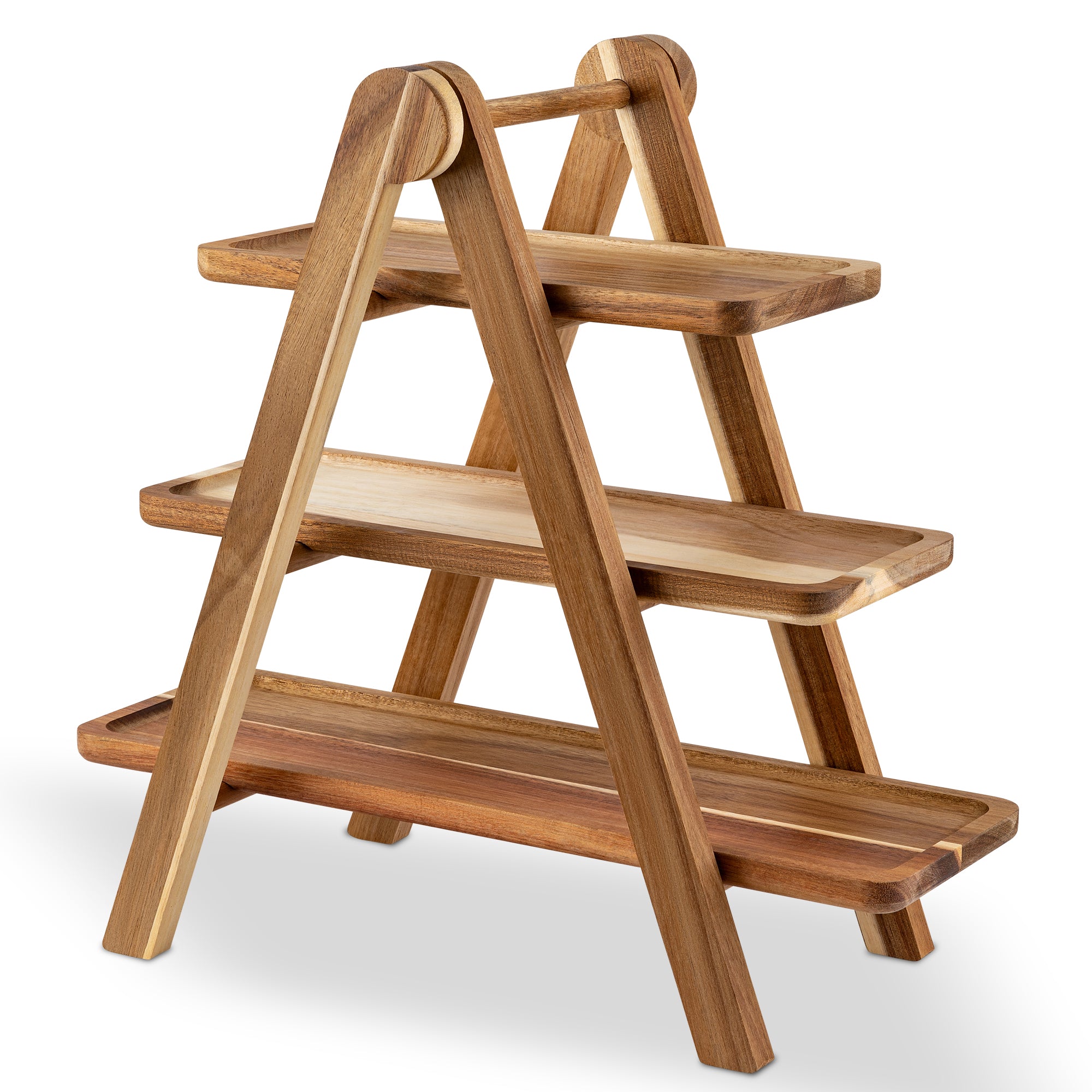
If you're displaying favors on a table rather than at each place setting, arrange them on a decorative tray or tiered stand. Add a small sign that says "Thank you for celebrating with us" or "Please take one." Guests are more likely to take a favor when it's clear they're meant to.
Keep 5 to 10 extra favors in reserve for last-minute additions—vendors who stayed late, a plus-one who wasn't on the original list, or a guest whose favor got damaged. Store them in a box backstage or with your day-of coordinator.
If a favor goes missing or gets damaged, let it go. Your wedding day is not the time to stress over one cookie box. The 149 other guests will be fine, and you'll barely remember it a week later.
Understanding the difference between custom and stock packaging lead times is critical to this timeline. Stock packaging—plain boxes, clear bags, standard sizes—ships within 3 to 7 business days from most wholesale suppliers. Custom printed packaging with your names, wedding date, or a unique design typically requires 4 to 6 weeks from order to delivery, including proof approval and production time.
For couples ordering in mid-November 2026 for a May 2027 wedding, you have 24 weeks—plenty of time for custom packaging if you want it. For a June or July wedding, you still have 28 to 32 weeks, which is more than enough. But if you're reading this in late January or February for an April wedding, custom packaging is cutting it close. Stock boxes with custom labels become your best option.
Minimum order quantities also vary. Stock packaging often has no minimum or minimums as low as 25 to 50 units. Custom printed boxes usually start at 200 to 250 units, which works for mid-size to large weddings but overshoots smaller guest lists. If you're planning an intimate wedding with 75 guests, stock packaging is both faster and more economical.
The most common mistake is ordering too late. Couples underestimate how long packaging takes to arrive, how long assembly takes, and how many other tasks compete for attention in the final month before a wedding. Ordering packaging at 10 weeks and labels at 8 weeks keeps you ahead of the rush.
Another mistake is ordering the wrong size. Measure your favor item before selecting a box. A 3-inch cookie does not fit in a 3-inch box—you need space for the item to sit without crushing. When in doubt, order one size up.
Underordering is a close third. Ordering exactly your guest count leaves no room for errors, late additions, or vendor gifts. An 8 to 10% overage is standard practice in event planning for good reason.
Finally, waiting until the last week to assemble creates unnecessary stress. Non-perishable favors can be assembled 2 to 3 weeks out. Perishable favors should be assembled 3 to 5 days out. Trying to assemble 150 favors the night before your wedding while also confirming final vendor details and packing for your honeymoon is a recipe for exhaustion.
If you're working with a tight budget, stock packaging plus DIY labels is the most cost-effective approach. Plain kraft boxes cost 30 to 60 cents per unit in bulk. Clear cellophane bags run even less—often 10 to 20 cents each. Add a custom sticker printed through an online service for another 15 to 30 cents per label, and you're looking at 50 cents to $1 per favor for packaging.
Skip the ribbon if budget is tight—a well-designed label on a clean kraft box looks intentional and modern. If you do want ribbon, buy spools in bulk rather than pre-cut lengths. A 50-yard spool of satin ribbon costs a few dollars and ties around 80 to 100 favors, bringing the per-unit cost to pennies.
For couples who want a premium look without premium pricing, consider zipper treat bags with a custom label on the front. The resealable closure adds functionality, and the clear window shows off the favor inside. Guests perceive these as higher-end than a simple cellophane bag, but the cost difference is minimal.
Sustainability is a priority for many 2027 couples, and packaging is one area where eco-friendly choices are both accessible and affordable. Kraft paperboard boxes are recyclable and biodegradable. They photograph well, cost less than rigid boxes, and align with the natural, organic aesthetic popular in spring and summer weddings.
Avoid plastic packaging where possible. Clear PET boxes and acrylic containers are not biodegradable and often can't be recycled in curbside programs. If you need visibility for your favor, opt for a kraft box with a clear window or a cellophane bag made from plant-based film, which is compostable in commercial facilities.
Reusable packaging is another sustainable option. Small fabric pouches, tins, or glass jars become part of the gift rather than waste. Guests can reuse a cotton muslin pouch for jewelry or travel. A small tin works for loose tea, buttons, or office supplies long after the wedding favor candy is gone. The upfront cost is higher, but the environmental impact is lower, and guests tend to keep reusable packaging rather than tossing it.
Order stock packaging 10 to 12 weeks before your wedding to allow for shipping, inspection, and potential reorders. If you're ordering custom printed packaging with your names or wedding date, place that order 12 to 16 weeks out to account for proof approval and longer production lead times. Stock packaging with DIY labels offers the best balance of personalization and timeline flexibility for most couples.
Assemble non-perishable favors 2 to 3 weeks before the wedding. This includes items like candles, matchboxes, honey jars, or seed packets. For perishable baked goods like cookies or brownies, wait until 3 to 5 days before the event to ensure freshness. Set up an assembly line with friends or family to speed up the process—production-line style is significantly faster than each person assembling complete favors individually.
Order 8 to 10% more packaging than your confirmed guest count. If you're expecting 150 guests, order supplies for 165 favors. The overage covers late RSVPs, vendor gifts, a few extras for your wedding party, and inevitable assembly mistakes. Running short on favors the week before your wedding creates unnecessary stress and often requires rush shipping at higher cost.
Custom printed boxes have your names, wedding date, or design printed directly on the packaging during manufacturing. They typically require 4 to 6 weeks lead time and minimum orders of 200 to 250 units. Stock boxes with custom labels use plain packaging that you personalize with adhesive stickers or hang tags. Stock boxes ship within days, cost less, and work for any guest count. For most couples, stock packaging plus custom labels offers better timeline flexibility and lower cost.
Yes, as long as the boxes are food-safe. Most kraft paperboard boxes sold for bakery or gift use are food-safe, but confirm with your supplier. If the edible item will touch the box directly, line the box with food-safe tissue or parchment paper. For items with moisture like frosted cookies, use a cellophane bag inside the box or a box with a grease-resistant lining to prevent oil or condensation from weakening the cardboard.