Cart
0
You may also like



Book a call with our development team to get started.



Apply online and access wholesale pricing.

Eco friendly lunar new year packaging lets you honor traditional red and gold aesthetics without compromising environmental values. Businesses and gift-givers increasingly seek sustainable packaging that respects cultural symbolism while reducing waste. The solution lies in recyclable kraft materials with removable red sleeves, FSC-certified papers, and biodegradable options that maintain the festive presentation Lunar New Year demands.
Consumer expectations have shifted dramatically. McKinsey research shows that 67% of consumers consider sustainable packaging important when choosing between competing products, and this sentiment extends to seasonal celebrations. For lunar new year gift boxes, the challenge is meeting these expectations while preserving the vibrant colors and premium feel that tradition requires.
The volume of packaging used during Lunar New Year celebrations is substantial. Families exchange gifts, businesses distribute corporate presents, and retailers package countless sweets and treats. Traditional packaging often combines multiple materials—metallic foils, plastic windows, synthetic ribbons—that make recycling nearly impossible. This creates waste at precisely the moment when renewal and fresh starts are being celebrated.
Sustainable packaging addresses this disconnect. Kraft paper can be recycled up to seven times, and when combined with water-based inks for red printing, the entire package remains curbside recyclable. Freedonia Group reports that compostable and molded fiber packaging are gaining prominence as cost and performance barriers decline, making eco-friendly options increasingly viable for seasonal celebrations.
The cultural significance of red and gold in Lunar New Year traditions doesn't require synthetic materials. Natural kraft paper accepts red dyes beautifully, and gold accents can be achieved with foil stamping on recyclable substrates. The key is understanding which material combinations preserve recyclability and which compromise it.
The removable sleeve design solves the sustainable Lunar New Year packaging puzzle elegantly. A natural kraft box provides the structural foundation—fully recyclable, compostable, and made from renewable fibers. The red sleeve slides over the box, delivering the traditional color while remaining a separate paper element that can be recycled alongside the box or reused for another occasion.
This approach matters for businesses ordering in volume. When planning your Lunar New Year packaging timeline, choosing kraft boxes with sleeves means you can stock the neutral base boxes year-round and add seasonal sleeves only when needed. The kraft foundation works for multiple holidays and everyday gifting, reducing inventory complexity.
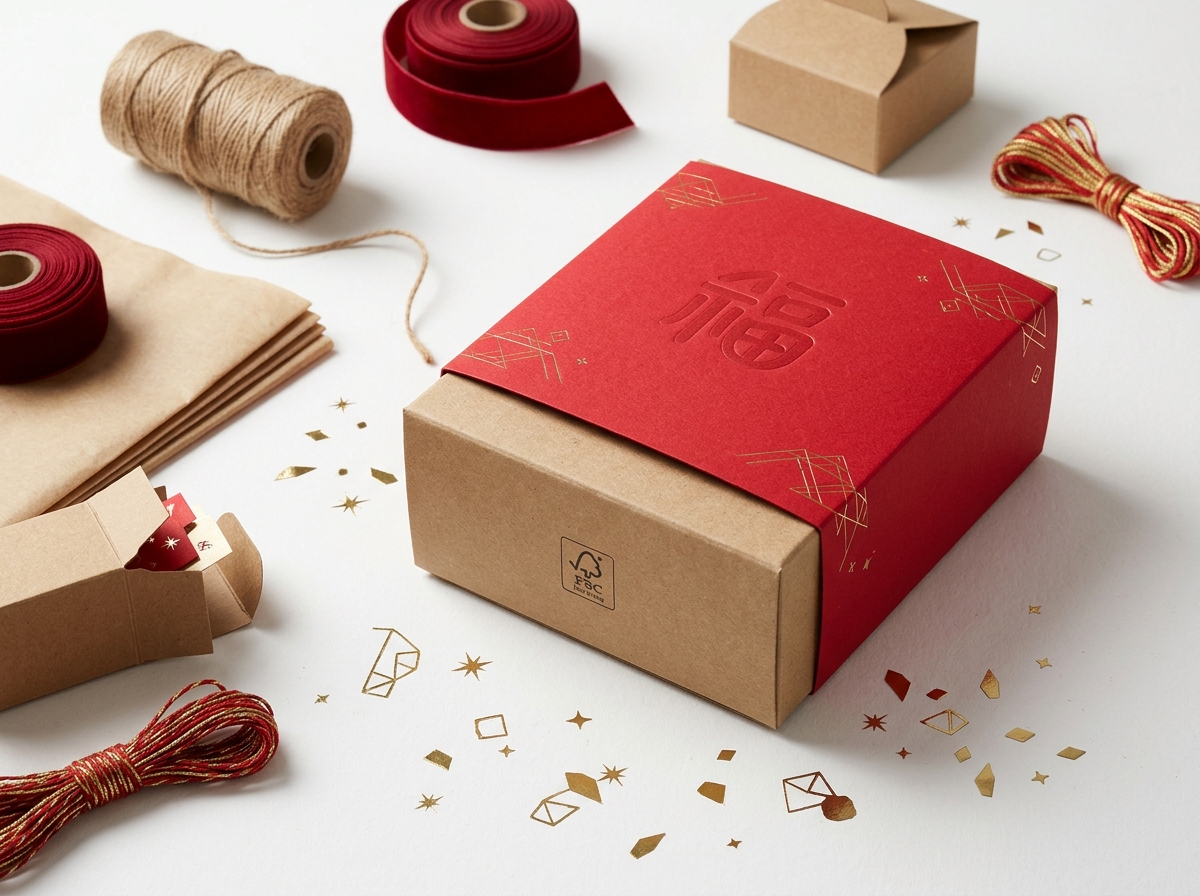
A cube kraft gift box in the 3x3x3 size works well for traditional Lunar New Year candies, small tea tins, or jewelry. The tuck-top closure requires no adhesive, and the uniform cube shape stacks efficiently for retail displays or corporate gifting programs. Pair it with a red paper sleeve printed with gold symbols, and you have packaging that's both culturally appropriate and environmentally responsible.
For larger gifts, the 4x4x4 format accommodates baked goods, premium tea sets, or multiple small items. The structural integrity of kraft paperboard means these boxes don't require plastic reinforcement, even when filled with heavier contents. Water-based red inks on the sleeve ensure the paper remains recyclable through standard municipal programs.
FSC certification provides third-party verification that paper materials come from responsibly managed forests. For Lunar New Year packaging, this certification matters because it backs sustainability claims with auditable proof. Forest Stewardship Council standards ensure that every company in the supply chain maintains chain-of-custody documentation, from forest to finished package.
Three FSC label types appear on packaging: FSC 100% indicates all material comes from FSC-certified forests; FSC Mix combines certified forests with controlled sources and recycled content; FSC Recycled confirms the product is made entirely from reclaimed material. For red and gold Lunar New Year packaging, FSC Mix is often the most practical choice, as it allows manufacturers to incorporate recycled fibers while maintaining the smooth finish needed for quality printing.
The certification applies to the paperboard itself, not to decorative elements. This means you can use FSC-certified kraft as the base material and add non-certified gold foil accents, though the package as a whole would only carry an FSC claim for the paper component. For businesses seeking to make verified sustainability claims, working with suppliers who maintain active FSC chain-of-custody certification is essential.
When comparing box sizes for Lunar New Year candy and sweets, look for FSC marks on product specifications. The certification doesn't affect box dimensions or structural performance—it simply confirms the paper source meets environmental and social standards.
Biodegradable packaging breaks down naturally, but the timeline and conditions matter. Kraft paper is inherently biodegradable—it will decompose in a backyard compost pile within months. Cellophane made from plant cellulose is also biodegradable, though it requires industrial composting facilities to break down efficiently. Understanding these distinctions helps you choose packaging that aligns with your customers' actual disposal options.
For Lunar New Year treats that need visibility, clear cellophane bags made from plant-based materials offer an eco-friendly alternative to petroleum-based plastic. True cellophane (not to be confused with polypropylene) is derived from wood pulp and will biodegrade under the right conditions. These bags showcase colorful candies and cookies while maintaining a smaller environmental footprint than conventional plastic packaging.
Compostable packaging carries specific certifications like BPI (Biodegradable Products Institute) or meets ASTM D6400 standards for commercial composting. These materials break down into nutrient-rich soil within a defined timeframe when processed in industrial composting facilities. For Lunar New Year gifting, compostable options work well when recipients have access to commercial composting programs, which are increasingly common in urban areas.
The challenge with compostable packaging is disposal infrastructure. If recipients lack access to commercial composting and place compostable materials in regular trash, they end up in landfills where anaerobic conditions prevent proper decomposition. For this reason, recyclable kraft paper often delivers better real-world environmental outcomes than compostable materials that may not reach appropriate facilities.
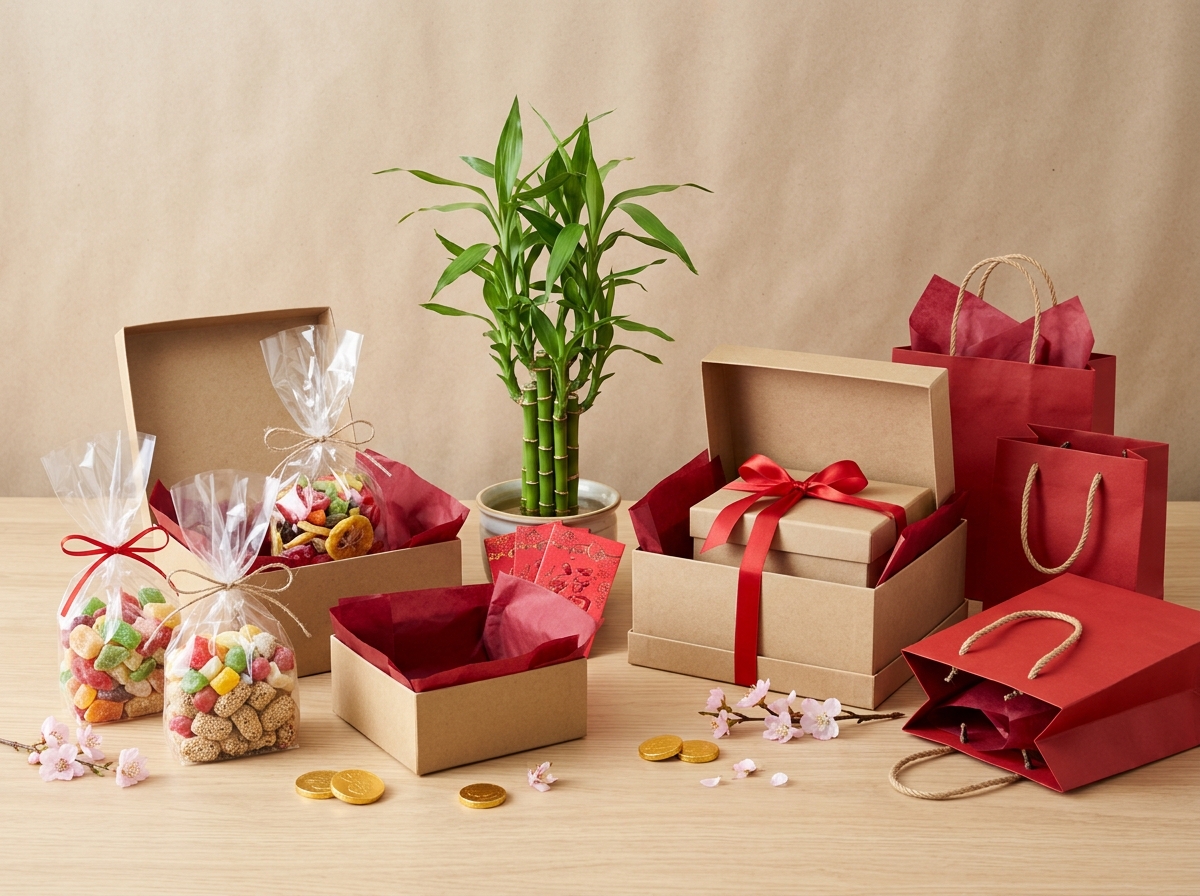
Red symbolizes good fortune and joy in Chinese culture, while gold represents wealth and prosperity. These colors are non-negotiable for Lunar New Year packaging—the question is how to achieve them sustainably. Water-based inks provide vibrant red coverage on kraft paper without the volatile organic compounds found in solvent-based inks. The natural brown of kraft creates visual warmth that complements red rather than competing with it.
Gold accents present more complexity. Metallic foils are typically polyester-based and compromise recyclability when laminated to paper. However, gold foil stamping—where foil is heat-pressed onto paper in specific areas—leaves the majority of the package recyclable. The small foil elements don't prevent paper mills from processing the material. For premium presentations, this technique delivers authentic metallic shine while maintaining the package's recyclable status.
Understanding traditional Lunar New Year colors and symbols helps you make intentional design choices. The zodiac animal for the year, auspicious characters like 福 (fortune), and patterns like clouds or waves can all be printed with eco-friendly inks on sustainable substrates. The visual impact comes from thoughtful design, not material excess.
Natural fiber ribbons offer another sustainable finishing touch. Cotton, jute, and hemp ribbons provide texture and visual interest without introducing synthetic materials. Red cotton ribbon tied around a kraft box creates a striking contrast while remaining fully biodegradable. These details demonstrate that sustainable packaging can be as visually appealing as conventional options.
Sustainable packaging typically costs 5-15% more than conventional alternatives, though this gap is narrowing as production scales increase. For Lunar New Year orders, the cost difference matters most for businesses placing large wholesale orders. A kraft box might cost $0.45 per unit compared to $0.38 for a conventional coated paperboard box—a difference that adds up across thousands of units.
However, this calculation ignores customer perception value. Research shows that 46% of consumers are willing to pay more for products with sustainable packaging, and 78% would switch brands based on sustainable packaging offerings. For businesses, the modest increase in packaging cost can be offset by pricing power and customer loyalty. Corporate clients particularly value sustainable options for Lunar New Year gifting, as it aligns with their own environmental commitments.
Minimum order quantities for custom sustainable packaging can be higher than stock options, typically starting at 1,000-5,000 units. For smaller businesses, using stock kraft gift boxes and adding custom red tissue paper or sleeves provides a middle path. The boxes remain recyclable, and the custom element delivers brand identity without requiring a large production run.
Lead times for sustainable packaging are comparable to conventional options when working with established suppliers. The FSC certification process happens at the mill level, not for individual orders, so choosing FSC-certified materials doesn't extend production timelines. Planning your order 8-12 weeks before Lunar New Year provides adequate time for custom printing while avoiding rush fees.
Businesses ordering Lunar New Year packaging in volume need to verify several specifications beyond the sustainability claims. Confirm that "recyclable" packaging is accepted in standard curbside programs, not just through specialized drop-off locations. Ask suppliers for specific material compositions—"eco-friendly" is marketing language, while "100% post-consumer recycled kraft" is a verifiable specification.
Storage conditions matter for sustainable materials. Kraft paper absorbs moisture, so packaging should be stored in climate-controlled environments. This is particularly relevant for businesses ordering months in advance to secure better pricing or ensure availability. Humidity can cause kraft boxes to warp or lose structural integrity, compromising their presentation value.
Testing packaging with your actual products prevents surprises. A kraft box that works perfectly for lightweight cookies might buckle under the weight of dense candies. Request samples and conduct drop tests, especially if packages will be shipped rather than hand-delivered. Sustainable materials perform differently than plastic-reinforced alternatives, and understanding these characteristics helps you choose appropriate options.
When comparing quotes from suppliers, clarify what certifications are included. Some vendors charge separately for FSC certification documentation, while others include it in the base price. Understanding the total cost, including any certification fees, shipping, and minimum order requirements, allows accurate comparison between sustainable and conventional options.
Sustainable packaging only delivers environmental benefits if recipients dispose of it properly. Including brief recycling instructions on the package or an insert helps ensure materials reach the right waste stream. A small icon showing the package goes in curbside recycling, paired with a note like "This box is fully recyclable—please flatten and place in paper recycling," provides clarity without cluttering the design.
For corporate Lunar New Year gifts, sustainability messaging reinforces brand values. A card explaining that the packaging is FSC-certified and recyclable demonstrates thoughtfulness beyond the gift itself. This is particularly effective when the recipient is another business, as it supports their sustainability reporting and corporate social responsibility initiatives.
Transparency about material choices builds trust. Rather than vague claims like "eco-friendly packaging," specific statements like "made from 100% recycled kraft paper" or "printed with water-based inks" give recipients concrete information. This specificity also protects businesses from greenwashing accusations, which have become a significant reputational risk as consumers become more sophisticated about sustainability claims.
The visual presentation of sustainable packaging matters for premium gifting. Kraft paper's natural aesthetic conveys authenticity and quality when paired with thoughtful design. For Year of the Goat packaging in 2027, incorporating the zodiac symbol with gold foil on natural kraft creates a sophisticated look that honors tradition while signaling environmental consciousness.
Yes, kraft paper printed with water-based red inks remains fully recyclable through standard curbside programs. The inks break down during the paper recycling process without contaminating the fiber. Avoid packaging with plastic lamination, metallic coatings that cover the entire surface, or excessive adhesive, as these elements can compromise recyclability. Small areas of foil stamping typically don't prevent recycling, but verify with your local recycling facility if you have specific concerns.
Biodegradable packaging will break down naturally over time, but the timeline and conditions vary widely. Kraft paper is biodegradable and will decompose in a backyard compost pile within months. Compostable packaging meets specific standards (like ASTM D6400) for breaking down in commercial composting facilities within a defined timeframe, typically 90-180 days. Compostable materials require industrial composting to work properly—they won't break down effectively in landfills. For Lunar New Year packaging, recyclable kraft paper often provides better environmental outcomes because recycling infrastructure is more widely available than commercial composting.
Absolutely. Natural kraft paper provides a sophisticated aesthetic that pairs beautifully with red and gold accents. Techniques like foil stamping, embossing, and custom printing with water-based inks create premium presentations on sustainable substrates. The key is intentional design—using the natural color of kraft as part of the visual story rather than trying to hide it. Many high-end brands have adopted kraft packaging precisely because it conveys authenticity and quality while supporting sustainability goals.
FSC-certified kraft packaging typically costs 5-15% more than non-certified alternatives, though pricing varies by supplier, order volume, and specific product. For a kraft gift box that might cost $0.40 per unit without certification, expect to pay $0.42-0.46 for the FSC-certified version. Larger orders generally reduce the per-unit premium. Many businesses find this cost difference worthwhile because it provides third-party verification for sustainability claims and meets corporate purchasing requirements that increasingly mandate certified materials.
The 3x3x3 cube format works well for small candy assortments, chocolate coins, or a mix of traditional treats like candied lotus seeds and melon seeds. For larger candy trays or multiple treat types, consider 4x4x4 boxes. Square formats stack efficiently and provide equal dimensions that work well for symmetrical arrangements, which align with Lunar New Year aesthetic preferences. If you're packaging flat items like dried fruit slices or rectangular candy boxes, rectangular formats may use space more efficiently. Test your specific products in sample boxes before placing large orders to ensure proper fit and presentation.