Cart
0
You may also like


Book a call with our development team to get started.



Apply online and access wholesale pricing.

Wedding favor packaging in 2027 reflects a decisive shift toward edible gifts, personalized presentation, and reusable formats that guests actually keep. Couples planning spring and summer weddings are choosing packaging that showcases food-safe contents through clear windows, features custom labels with minimalist aesthetics, and prioritizes keepsake value over disposable trinkets. For small business owners—bakers, event planners, and gift box retailers—understanding these trends, along with bulk pricing structures and material specifications, is essential for meeting client expectations in the critical ordering window between November 2026 and February 2027.
This guide covers the practical dimensions, capacity specs, MOQ thresholds, and assembly requirements that distinguish successful wedding favor packaging in 2027. Whether you're a couple ordering 150 units or a planner sourcing wholesale options for multiple events, the following sections provide the specific information needed to select, customize, and present favors that align with current design trends and guest preferences.
The wedding favor market in 2027 is shaped by three converging priorities: edible over decorative, personalized over generic, and reusable over single-use. These shifts are driven by both couple preferences and guest behavior data showing that edible favors are the most popular category, with significantly higher take-home rates than traditional non-consumable items.
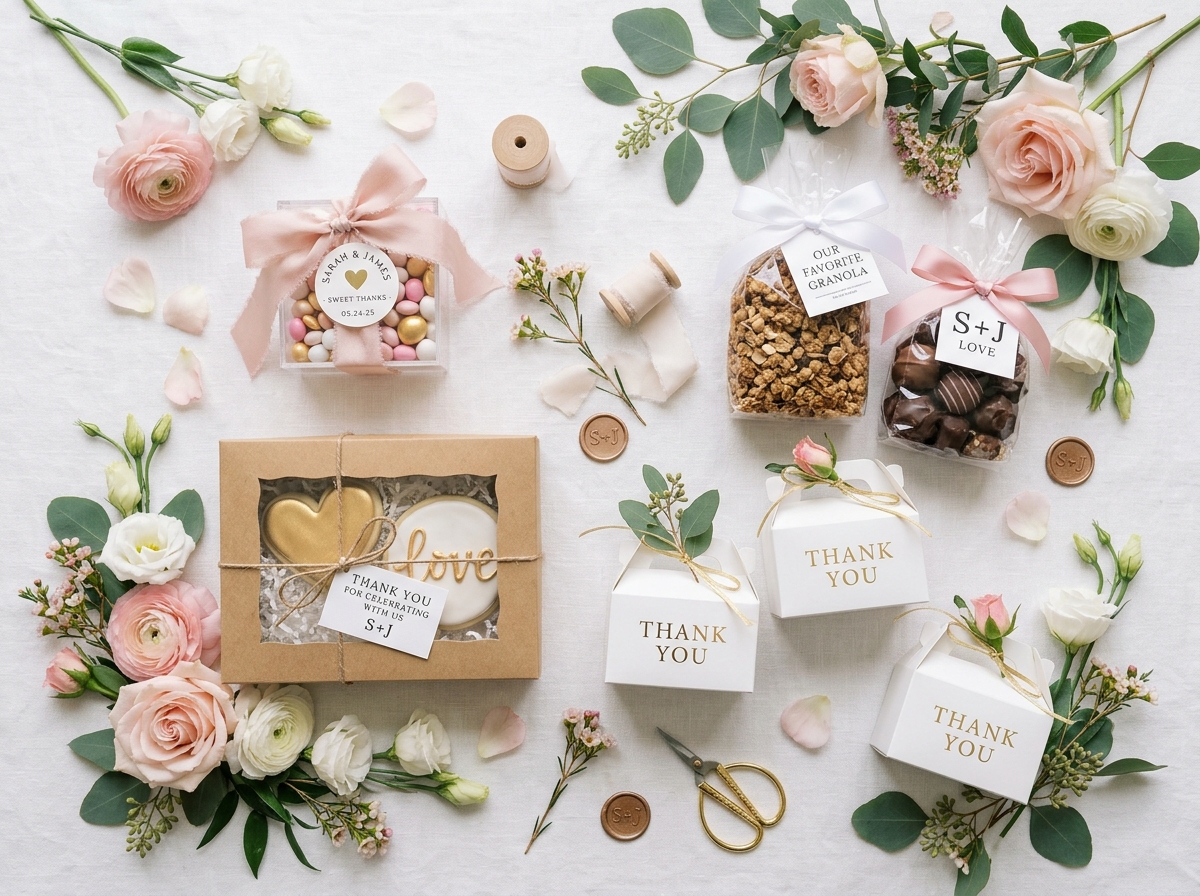
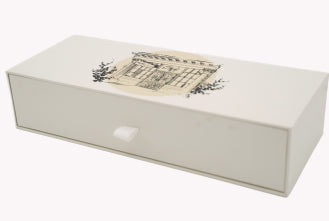
Wedding stationery trends provide a useful parallel: the broader shift across nearly every wedding stationery trend 2027 category points toward texture and personal narrative over simple printed elegance. The same principle applies to favor packaging. Couples are moving away from mass-produced favor boxes with generic designs toward packaging that tells their story through custom labels, venue illustrations, or monograms that coordinate with their broader wedding aesthetic.
The practical timeline matters. Wedding season 2027 runs May through October, and couples typically order favor packaging 12 to 24 weeks ahead of their event date. This places the critical decision and ordering window in mid-November 2026 through early February 2027. Planners working with multiple spring weddings should finalize packaging specs and place bulk orders by January to avoid production delays during peak season.
For small businesses, the 2027 landscape means stocking packaging that supports the three dominant favor categories: baked goods (cookies, brownies, cake pops), artisan food items (honey jars, preserves, tea), and candy or chocolate assortments. Each category requires different packaging attributes—grease resistance for cookies, clear visibility for candy, and structural support for jarred goods—which we'll address in detail in subsequent sections.
Understanding the complete wedding favor packaging timeline helps both couples and vendors align production schedules with event dates and personalization requirements.
Transparent packaging has become the default format for edible wedding favors in 2027, driven by the principle that guests are more likely to take home favors when they can immediately identify the contents. Clear candy boxes, bakery boxes with acetate windows, and cellophane bags dominate the market because they eliminate the guessing game that plagued opaque favor boxes in previous years.
The shift toward clear packaging aligns with broader consumer expectations. According to research published by PMMI, transparency in food packaging has become a significant factor in purchase decisions across retail categories, and wedding favors follow the same pattern. Guests want to see what they're receiving before committing to carry it home.
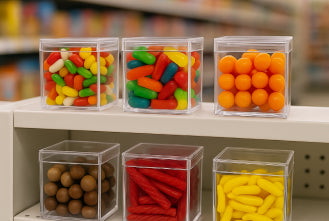
Clear acrylic boxes offer the most visibility and work particularly well for candy assortments, chocolate truffles, and small confections. A heart-shaped clear acrylic box provides both structural protection and complete product visibility, making it ideal for couples who want their favor contents to serve as part of the table décor. These rigid formats typically hold 2 to 4 ounces of candy and stack cleanly for transport and storage.
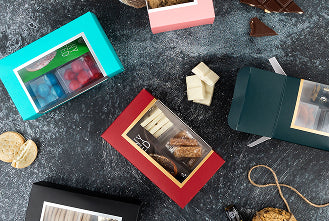
Bakery boxes with windows strike a balance between structure and visibility. A window box measuring 7 inches by 5 inches by 2.5 inches accommodates two large cookies or four to six macarons while providing a clear acetate panel that showcases the contents. The windowed bakery box with sections works particularly well for assorted cookie favors, keeping individual pieces separated during transport.
Cellophane bags remain the most economical clear packaging option and are appropriate for lightweight favors such as candy, popcorn, or individually wrapped cookies. Clear treat bags come in multiple sizes, from small 3.75-inch by 6.25-inch formats for individual servings to larger bags suitable for multiple items. The key advantage is cost: cellophane bags typically run $0.10 to $0.30 per unit at bulk quantities, compared to $0.75 to $2.50 for rigid boxes.
For couples and planners deciding between clear packaging formats, the complete guide to clear candy boxes and when to use cellophane bags versus rigid boxes provide detailed comparisons based on favor type, budget, and presentation requirements.
Personalization in 2027 wedding favor packaging has shifted from fully custom-printed boxes to a more economical and flexible model: neutral base packaging paired with custom labels or stickers. This approach reduces minimum order quantities, shortens production timelines, and allows couples to achieve a personalized look without the cost premium of fully custom printing.
The minimalist aesthetic dominates 2027 wedding design. The 2027 approach is layered: lavender deepened with plum, powder blue anchored by slate, blush warmed with mocha, mint balanced by olive. This color sophistication extends to favor packaging, where couples are choosing kraft, white, or black base boxes and adding personality through labels featuring their monogram, wedding date, or a simple line illustration.
Custom label application methods vary by production scale. For weddings under 100 guests, hand-applied labels are practical and allow for last-minute adjustments. Most couples can label 100 to 150 favor boxes in 2 to 3 hours with help from one or two additional people. For larger weddings or for planners managing multiple events, pre-applied labels ordered from a printing service reduce assembly time significantly.
Label placement matters for visual impact. On clear boxes, labels work best on the lid or base rather than obscuring the acetate window. On bakery boxes, labels can be applied to the solid portions of the box or used as belly bands that wrap around the perimeter. The goal is to add personalization without compromising the visibility that makes clear packaging effective.
Typography and color choices in 2027 favor labels lean toward restraint. Sans-serif fonts, single-color printing, and ample white space characterize the minimalist trend. Couples are moving away from ornate script fonts and multi-color designs in favor of clean, modern typography that coordinates with their broader wedding stationery suite.
For detailed guidance on designing and applying custom labels that align with 2027 aesthetics, see personalized wedding favor labels and design tips and minimalist wedding favor packaging trends.
Reusable wedding favor packaging addresses a persistent problem: guests leave behind favors they perceive as disposable or single-use. In 2027, couples are choosing packaging formats that guests will actually keep and repurpose, transforming the favor box from throwaway packaging into a functional keepsake.
Gable boxes lead the reusable category. These handle-equipped boxes, typically measuring 4 inches by 2.5 inches by 2.5 inches or 6 inches by 3.75 inches by 3.5 inches, are sturdy enough for guests to reuse as storage containers for small items, craft supplies, or desk organization. The built-in handle makes them easy to carry and adds to the gift-like presentation at the reception.
Small rigid boxes with magnetic closures or tuck-top designs also fall into the keepsake category. A 2-inch cube box, such as a black cube tuck-top box, provides a compact, reusable container that guests can repurpose for jewelry, buttons, or other small household items. The key is structural integrity: boxes need to be substantial enough that guests perceive them as worth keeping rather than discarding after consuming the contents.
The sustainability angle reinforces the reusable trend. While not every couple explicitly frames their favor choices in environmental terms, the practical reality is that packaging guests keep reduces waste and aligns with broader 2027 wedding trends toward thoughtful, low-waste celebrations. Research from the Flexible Packaging Association indicates that consumer preferences increasingly favor packaging with extended utility beyond its initial use.
Decorative tins and small jars also serve as reusable packaging, particularly for edible favors like honey, jam, or spice blends. Another popular edible favor is to give small jars of honey, jam, maple syrup or barbecue sauce. Not only does the couple get to share a favorite taste, the jar can be decorated with a personal touch, such as a monogram. It's reusable. The jar becomes the packaging and the keepsake simultaneously, eliminating the need for additional wrapping.
For couples prioritizing reusable formats, the complete guide to reusable wedding favor boxes and gable box specifications and assembly instructions provide detailed selection criteria and sourcing options.
Different edible favors require different packaging attributes. Matching the packaging format to the specific product ensures food safety, maintains product quality during the event, and creates an appropriate presentation for the table setting.
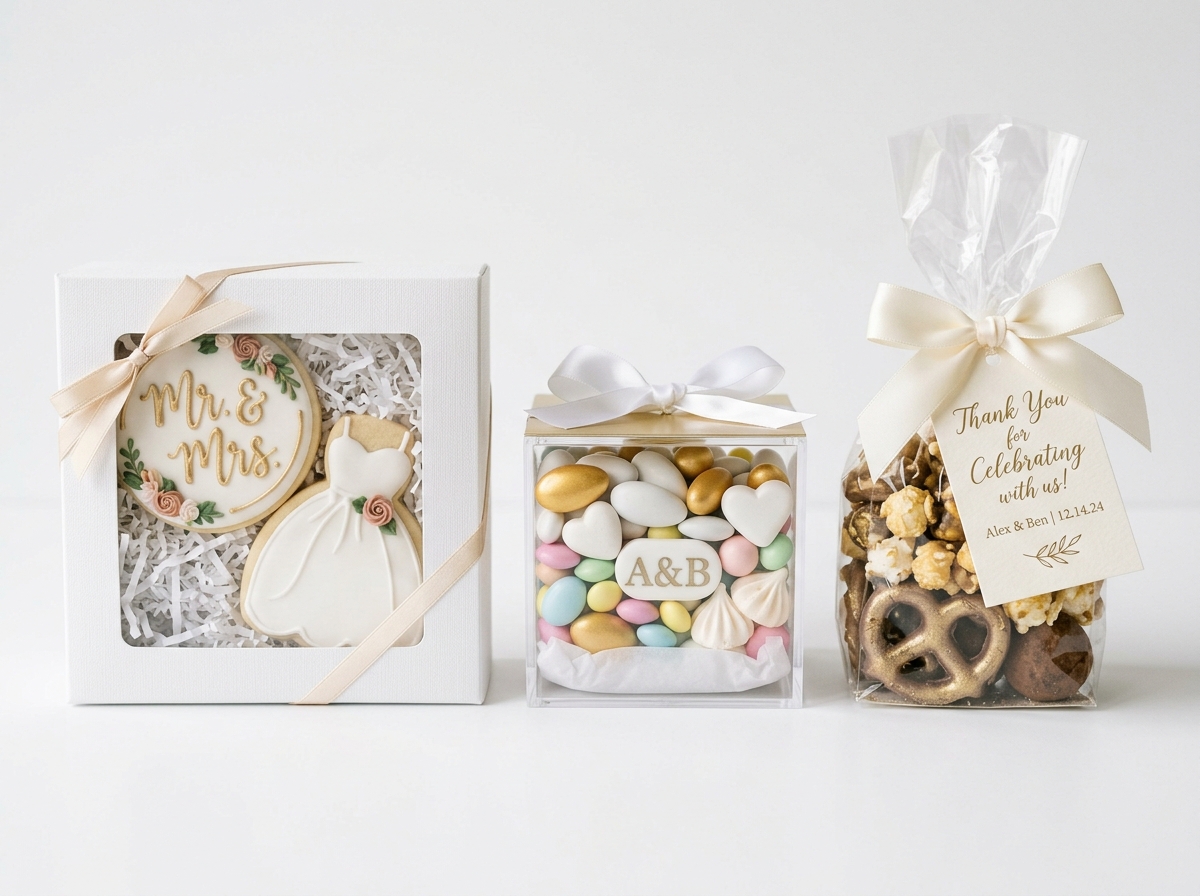
Cookies and baked goods require grease-resistant packaging with adequate air circulation to prevent moisture buildup. Bakery boxes with windows are the standard format because they provide structure, protect delicate cookies from breakage, and showcase the product through a clear panel. A decorative pastry box with window works well for two to four cookies, while larger formats accommodate cookie assortments or brownies. The critical specification is grease resistance: standard kraft or white paperboard should have a food-safe coating or liner to prevent oil migration from butter-based baked goods.
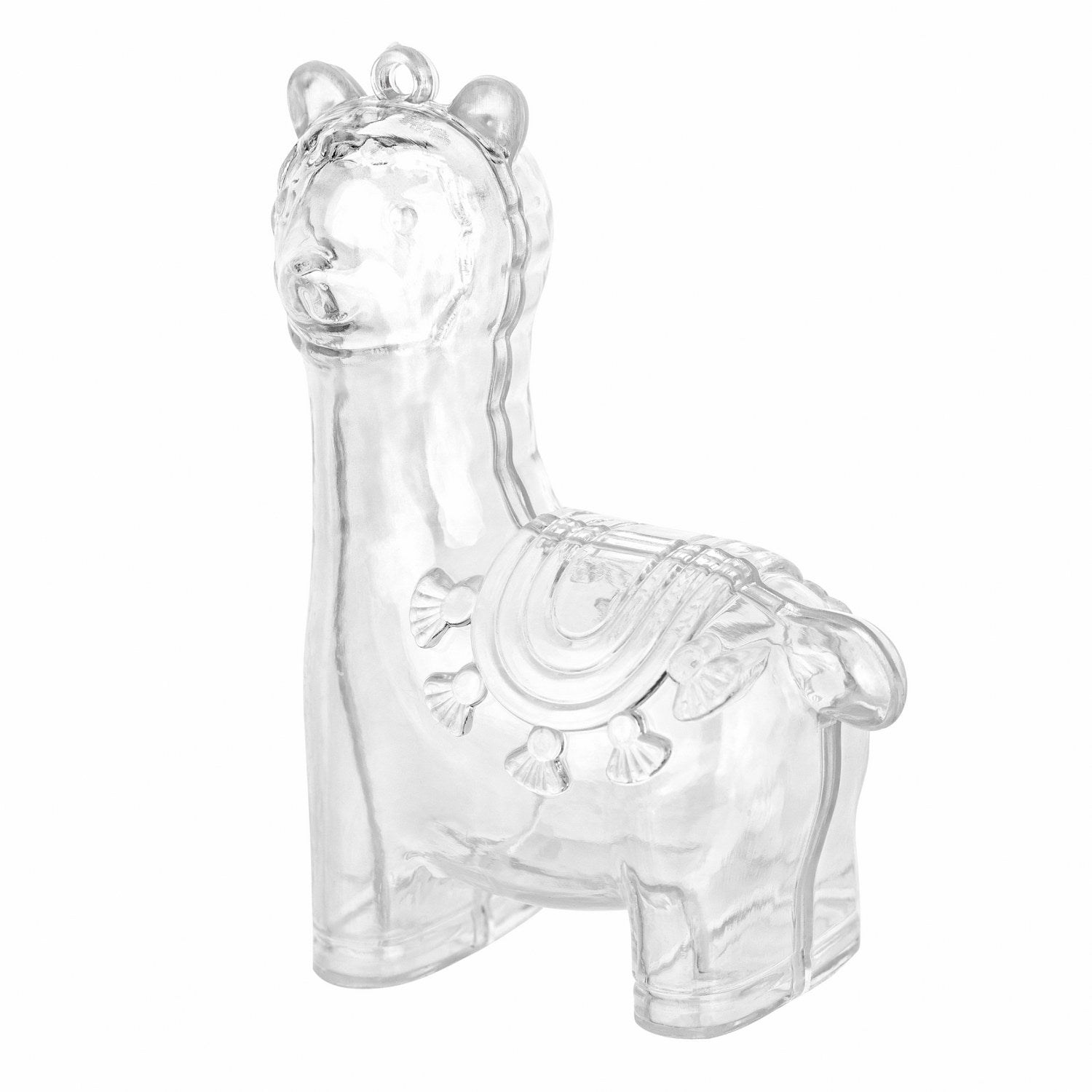
Candy and chocolate perform best in rigid clear boxes that provide crush protection and complete visibility. Small acrylic boxes in novelty shapes—hearts, stars, or themed designs—add visual interest to candy assortments. For larger quantities, clear PET boxes with snap closures keep contents secure during transport. Cellophane bags work for individually wrapped candies but are less suitable for unwrapped chocolates due to the risk of melting or smudging during handling.
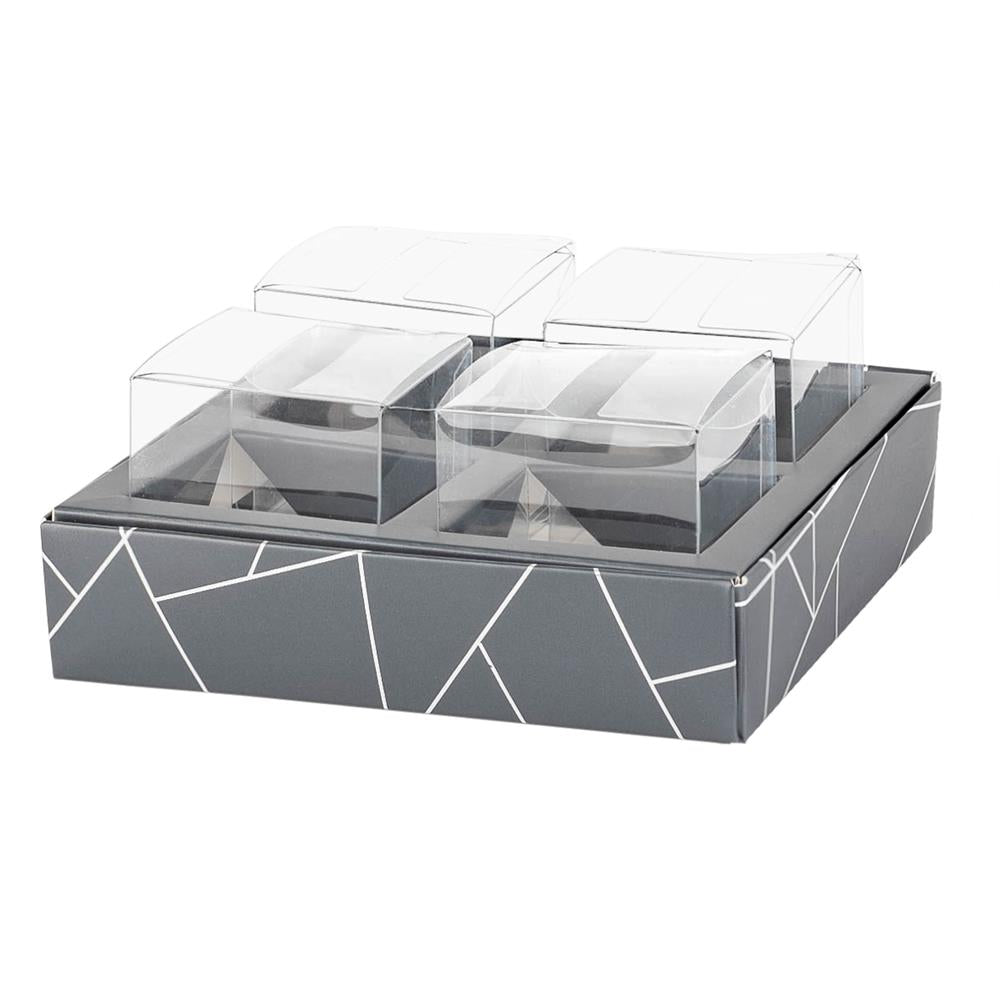
Honey jars, preserves, and liquid or semi-liquid favors need packaging that provides cushioning and prevents tipping. Small gable boxes or rigid gift boxes with interior dividers work well for jarred favors. The packaging should be slightly larger than the jar to allow for tissue paper or shredded paper fill that stabilizes the jar during transport. For multiple small jars, windowed boxes with sections keep items separated and visible.
Tea, coffee, and dry goods work well in cellophane bags, small pouches, or flat boxes. These favors are lightweight and don't require the structural protection needed for baked goods or jarred items. The packaging priority shifts to moisture protection and visual presentation. Resealable cellophane bags or small kraft pouches with custom labels provide both functionality and personalization.
Macarons and delicate pastries demand specialized packaging due to their fragility. Macaron boxes typically feature individual cavities or inserts that prevent movement and protect the delicate shells from cracking. These boxes usually have clear lids for visibility and come in sizes ranging from two-cavity to twelve-cavity formats. The interior insert is non-negotiable for macarons; without it, these fragile confections will not survive transport intact.
For detailed specifications on packaging different favor types, consult bakery box dimensions for cookie favors and the complete edible wedding favors packaging guide.
Color trends for spring and summer 2027 weddings reflect a move toward softer, more nuanced palettes compared to the bold, saturated colors of previous years. These seasonal preferences directly influence packaging color choices, label design, and ribbon or trim selection.
Spring 2027 palettes center on botanical tones with depth. Sage green, dusty lavender, soft blush, and muted terracotta dominate spring wedding color schemes. For favor packaging, this translates to kraft or white base boxes paired with labels or ribbons in these accent colors. The goal is a garden-inspired aesthetic that feels organic rather than overly formal. Floral patterns, when used, are rendered in line-art style rather than photographic realism, maintaining the minimalist trend while incorporating botanical motifs.
Summer 2027 palettes shift toward crisp, clean combinations. Whites, creams, and natural kraft tones serve as the foundation, accented with navy, charcoal, or soft metallics like champagne or rose gold. Summer favor packaging leans into simplicity and contrast, with black-and-white combinations gaining popularity for couples who want a modern, editorial look. The emphasis is on clean lines and high contrast rather than the softer tonal blends of spring.
Beach and destination weddings in summer 2027 favor neutral palettes with coastal influences. Bright colors and nautical navy are out. Destination weddings now feature sun-washed neutrals: sandy beige, warm ivory, terracotta, espresso, and muted pinks, ocean and sage. These earthy tones work well with natural kraft packaging, linen-texture papers, and jute or cotton ribbon trim.
Metallic accents in 2027 favor silver over gold. Gold foil has ruled wedding stationery for a decade. In 2027, silver steps forward — cooler, more modern, and suddenly everywhere in tablescapes, jewelry, and invitation suites alike. This shift extends to favor packaging, where silver foil labels, metallic silver ribbon, or silver-printed boxes coordinate with the broader wedding design. Mixed-metal approaches—combining silver with warm rose gold or copper—provide a compromise for couples who want warmth without returning to traditional yellow gold.
For couples planning spring weddings with floral themes, floral and pastel wedding favor packaging options provides detailed color coordination guidance and supplier recommendations.
Understanding minimum order quantities and bulk pricing structures is essential for both couples and small business owners sourcing wedding favor packaging. MOQs vary significantly by product type and customization level, and pricing typically decreases substantially at key volume thresholds.
Standard stock packaging typically has no minimum order quantity or very low minimums. Plain kraft boxes, white bakery boxes, and clear cellophane bags can usually be ordered in quantities as low as 25 to 50 units without price penalties. This flexibility makes stock packaging ideal for small weddings or for couples who plan to add personalization through separate labels or ribbon rather than custom printing.
Custom-printed packaging carries higher MOQs due to setup costs. Orders start at 50 units, with specialty rigid formats requiring 100 or more units. This 50 to 100 unit threshold is industry standard across most custom packaging suppliers. Couples planning weddings with fewer than 75 guests should carefully evaluate whether fully custom printing is cost-effective compared to stock packaging with custom labels.
Bulk pricing tiers typically break at 100, 250, and 500 units. Per-unit costs can drop 20% to 40% when crossing these thresholds. For example, a custom favor box that costs $1.50 per unit at 75 units might drop to $1.10 at 150 units and $0.85 at 300 units. Planners managing multiple weddings should consider consolidating orders across events to reach higher volume tiers, even if it means carrying inventory between events.
Budget planning for favor packaging should account for the complete per-favor cost, not just the box. A typical breakdown includes the packaging itself (box or bag), any interior fill or cushioning, custom labels or ribbon, and the favor contents. Total per-favor costs for 2027 typically range from $2.50 to $6.00, with packaging representing 15% to 30% of that total. Brides who order wedding favor bags in bulk at 200+ unit counts usually land in the $3 - $5 all-in range, which provides a useful benchmark for complete favor budgeting.
MOQ strategies for small weddings (under 100 guests) should focus on stock packaging with DIY personalization. Purchasing 50 plain white boxes at $0.60 each and adding custom labels at $0.15 each results in a total packaging cost of $0.75 per unit—often less expensive than custom printing at low volumes and with faster turnaround times.
Buffer quantities matter when placing orders. Most experienced planners recommend ordering 8% to 10% above the confirmed guest count to account for last-minute additions, vendor gifts, and keepsakes for the couple. The math below assumes one wedding favor bag per attending adult (children get a separate craft favor) plus a buffer of 8% rounded up to the nearest ten. This buffer prevents the stress of running short and typically adds only marginal cost due to the small quantity increase.
For small businesses serving wedding clients, wholesale wedding favor packaging options for bakers and event planners provides detailed sourcing guidance and volume discount strategies.
Food safety is non-negotiable for edible wedding favors, and packaging material specifications directly impact both product quality and regulatory compliance. Understanding which materials are appropriate for direct food contact versus indirect contact prevents contamination and ensures favors remain fresh and safe throughout the event.
Food-grade paperboard is the standard material for bakery boxes and cookie packaging. This paperboard is manufactured to meet FDA requirements for direct food contact and typically includes a clay coating or food-safe liner that prevents grease and moisture migration. Not all paperboard is food-grade; decorative boxes intended for non-food items may use dyes or coatings that are not approved for food contact. When sourcing bakery boxes, verify that the supplier specifies food-grade or food-safe paperboard.
PET and polypropylene clear plastics are approved for food contact and are the materials used in most clear candy boxes and acetate windows. PET (polyethylene terephthalate) is the same material used in food-grade plastic bottles and provides excellent clarity and moisture resistance. Polypropylene offers similar properties with slightly better heat resistance. Both materials are safe for direct contact with dry and semi-dry foods, including candy, cookies, and baked goods.
Cellophane and polypropylene bags for food use should be explicitly labeled as food-safe. True cellophane is a plant-based material that is biodegradable and food-safe, but many products marketed as cellophane are actually polypropylene (OPP bags), which is also food-safe but not biodegradable. Both work well for wedding favors; the choice depends on whether biodegradability is a priority. Packaging is recycled and food-safe, aligning with eco-conscious values.
Grease resistance is critical for baked goods containing butter, oil, or chocolate. Standard paperboard will absorb oils and develop translucent spots that look unprofessional and can compromise structural integrity. Food-safe coatings, liners, or laminations prevent this issue. When ordering bakery boxes for cookies, brownies, or other oil-containing baked goods, specify grease-resistant or lined boxes.
Moisture barriers matter for favors that need to stay crisp or dry. Cookies, crackers, and candy benefit from packaging with moisture-resistant properties to prevent softening or stickiness, especially for outdoor or warm-weather events. Cellophane bags provide better moisture protection than paper bags, and rigid boxes with tight-fitting lids offer more protection than open-top containers.
Temperature considerations affect material choice for chocolate and heat-sensitive favors. Summer outdoor weddings require packaging that provides some insulation and air circulation. White or light-colored boxes reflect heat better than dark colors. For chocolate favors at summer events, consider adding a small ice pack or gel pack to favor boxes if they will sit on tables in direct sunlight for extended periods, though this is rarely practical for most wedding setups.
Shelf life and packaging are connected. Most wedding cookies and baked goods have a 3 to 7 day optimal freshness window. Packaging should allow enough air circulation to prevent moisture buildup (which causes sogginess) while providing enough protection to prevent drying out. Bakery boxes with small vent holes or slight gaps at closures typically achieve this balance. Fully sealed containers are appropriate only for shelf-stable items like hard candy or individually wrapped confections.
Assembly time is a frequently overlooked factor when couples choose wedding favor packaging. The difference between a 30-second assembly and a 3-minute assembly becomes significant when multiplied across 150 or 200 favors, and many couples underestimate the total time required for favor preparation.
Pre-assembled boxes are the fastest option. Many bakery boxes and small gift boxes arrive flat but snap together in seconds without requiring tape, glue, or tools. These boxes typically feature tuck-top closures or auto-lock bottoms that hold their shape once folded. Expect 15 to 30 seconds per box for assembly, meaning 150 boxes can be assembled in 45 minutes to 1 hour by one person.
Flat boxes requiring tape or adhesive add time. Boxes that need tape on the bottom seam or adhesive strips to secure closures typically require 45 seconds to 1 minute per box, including time to cut tape and position it correctly. For 150 boxes, this extends assembly time to 2 to 2.5 hours for one person. The advantage is often cost savings—flat boxes requiring tape are usually less expensive than auto-lock designs.
Gable boxes with handle assembly fall in the middle range. Most gable boxes arrive flat and require folding the base and inserting the handle tabs into slots. Assembly time averages 30 to 45 seconds per box once you develop a rhythm. The handle adds a premium look and makes the boxes easier for guests to carry, which may justify the slightly longer assembly time.
Filling and sealing adds time beyond box assembly. Placing the favor contents, adding tissue paper or fill, and applying any closure (ribbon, sticker, or tape) typically adds 30 seconds to 1 minute per favor. For favors requiring careful arrangement—such as positioning cookies in a windowed box so they're visible through the acetate—expect closer to 1 to 2 minutes per favor.
Label application can be done during assembly or as a separate step. Applying one or two labels per box adds 10 to 20 seconds per favor. For 150 favors, this represents 25 to 50 minutes of additional time. Pre-printed labels on sheets (rather than individual cut labels) speed up the process, as do label dispensers for couples working with large quantities.
Total assembly time estimates for complete favor preparation (box assembly, filling, sealing, and labeling) typically range from 2 minutes per favor for simple formats to 4 minutes per favor for complex assemblies. This means 150 favors require 5 to 10 hours of total labor. Couples should plan favor assembly as a multi-person activity, ideally 2 to 3 days before the wedding to avoid last-minute stress. Recruiting family members or wedding party members for a "favor assembly party" is common practice and turns the task into a social activity rather than a chore.
Professional assembly services are available through some bakeries, event planners, and packaging suppliers. For couples with limited time or for planners managing multiple events, outsourcing favor assembly at $0.50 to $1.50 per favor can be cost-effective compared to the time investment required for DIY assembly.
For detailed step-by-step assembly guidance, see how to package wedding favors with assembly and presentation tips.
Wedding favor packaging costs range from $0.15 to $2.50 per unit depending on format and customization. Cellophane bags start at $0.10 to $0.30 for stock sizes, kraft or white bakery boxes range from $0.40 to $1.20, and rigid clear boxes or custom-printed formats run $0.75 to $2.50. Bulk orders at 200+ units typically achieve the lower end of these ranges. Custom labels add $0.10 to $0.25 per favor, and ribbon or decorative closures add $0.15 to $0.40. Total packaging cost per favor averages $0.75 to $2.00 for most 2027 weddings.
Order stock packaging 6 to 8 weeks before your wedding date to allow time for shipping and assembly. Custom-printed packaging requires 8 to 12 weeks lead time due to production schedules and proofing cycles. If you're ordering during peak wedding season (April through June for delivery), add 2 additional weeks to these timelines. Rush orders are sometimes available but typically carry 20% to 40% surcharges. For spring and summer 2027 weddings, place packaging orders between December 2026 and February 2027 to ensure on-time delivery.
For two large cookies (3.5 to 4 inches in diameter), use a bakery box measuring at minimum 4 inches by 4 inches by 2 inches. A 5-inch by 5-inch by 2-inch box provides more comfortable fit and prevents cookies from touching the box sides. If the cookies are thick or decorated with frosting, increase the height to 2.5 or 3 inches to prevent the lid from smudging the decoration. Boxes with windows should have the acetate panel positioned to showcase the cookies when the box is closed. Always test-fit your actual cookies in sample boxes before ordering full quantities.
Cellophane bags work well for individually wrapped cookies or for sturdy cookies that won't break easily, such as shortbread or biscotti. For delicate cookies, decorated cookies with frosting, or multiple cookies per favor, rigid bakery boxes provide better protection and presentation. Cellophane bags are most appropriate when cost is the primary concern or when the cookies are already individually wrapped in protective packaging. For upscale weddings or fragile baked goods, rigid boxes with windows deliver a more polished presentation and significantly reduce breakage during transport and handling.
Minimum order quantities for custom-printed wedding favor boxes typically start at 50 to 100 units, depending on the supplier and box complexity. Stock boxes with custom labels have much lower minimums—often as few as 25 units or no minimum at all—making them more practical for small weddings. Specialty formats like rigid boxes with magnetic closures or complex die-cut shapes may require 100 to 250 unit minimums. If your guest count is under 75, consider stock packaging with custom labels rather than fully custom printing to avoid paying for unused boxes or forcing an unnecessarily high order quantity.
Wedding favor packaging in 2027 succeeds when it balances three priorities: showcasing edible contents through clear visibility, adding personalization without excessive cost or complexity, and providing packaging that guests perceive as worth keeping. Whether you're a couple planning your spring wedding or a baker sourcing packaging for client events, the formats, specifications, and bulk ordering strategies outlined in this guide provide the practical foundation for favor packaging that meets both aesthetic expectations and functional requirements. The shift toward edible favors, minimalist personalization, and reusable formats is not a passing trend but a fundamental realignment of what couples and guests value in wedding favors—and the packaging that contains them.