Cart
0
You may also like

Book a call with our development team to get started.



Apply online and access wholesale pricing.

Understanding custom packaging cost for small business operations is one of the most common—and most critical—questions new brand owners face. Whether you're launching a product line, upgrading from generic boxes, or trying to justify a packaging budget to stakeholders, you need real numbers. The short answer: expect to pay anywhere from $0.50 to $5.00 per unit, depending on size, material, print method, and order volume. But that range is too broad to be useful without context. This guide breaks down the specific cost drivers, explains how volume discounts work, and gives you a framework to estimate your own packaging budget with confidence.
Pricing transparency in the packaging industry has historically been opaque, with many suppliers requiring quotes before sharing ballpark figures. That lack of clarity makes it difficult for small businesses to plan cash flow or compare options. By the end of this post, you'll know which variables move the needle on price, where you can trim costs without sacrificing quality, and how to structure your first order to balance budget and brand impact. Let's start with the fundamentals of custom packaging for small businesses and what actually determines the price you'll pay.
Custom packaging cost for small business buyers is shaped by five primary variables: material type, box dimensions, print method, order quantity, and any special finishes or structural features. Each of these factors interacts with the others, so a change in one can amplify or offset costs elsewhere.
Material type is the foundation. Kraft paperboard is typically the most economical option, running $0.50 to $1.50 per unit for simple folding cartons in moderate quantities. Corrugated cardboard—thicker and more protective—adds structural integrity and usually costs $0.75 to $2.00 per unit for small-to-medium boxes. Rigid setup boxes, which use chipboard wrapped in printed paper, offer a premium unboxing feel and range from $2.00 to $5.00 or more per unit. If you're weighing these options in detail, comparing kraft, corrugated, and rigid boxes can clarify which material aligns with your product weight, shipping method, and brand positioning.
Dimensions and die-cut complexity also drive cost. A standard 4" × 4" × 4" cube will almost always be cheaper than a 10" × 8" × 3" rectangular box, even if the latter uses slightly less material, because larger formats require more board, more ink coverage, and sometimes different press setups. Custom die-cut shapes—such as hexagonal or windowed boxes—add tooling fees (typically $150 to $400 for a new die) and may increase per-unit costs by 10 to 30 percent due to material waste and longer setup times.
Print method is where branding costs become visible. Digital printing is ideal for short runs (under 500 units) because it has minimal setup fees, but the per-unit cost is higher—often $1.50 to $3.00 each for full-color custom designs. Offset or flexographic printing becomes cost-effective at higher volumes (500+ units), with per-unit prices dropping to $0.60 to $1.20 once setup costs are amortized. According to the Packaging Gateway, print setup fees can range from $200 to $800 depending on the number of colors and press type, which is why order quantity matters so much.
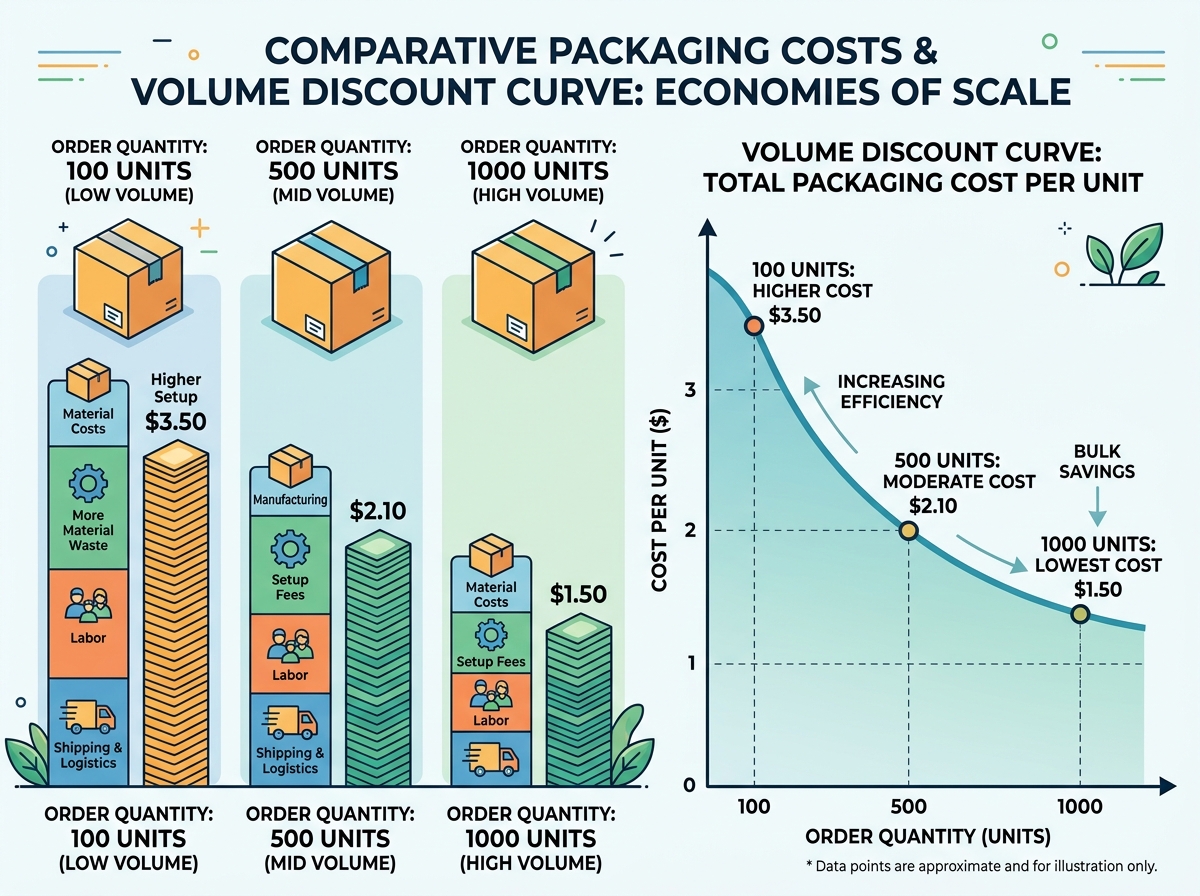
Order quantity is the single largest lever you control. Packaging manufacturers price on economies of scale: the more units you order, the lower your per-unit cost. A 100-unit run might cost $3.00 per box, while a 1,000-unit run of the same box could drop to $1.20 each. Understanding minimum order quantities in packaging helps you plan your first order strategically, balancing upfront cash outlay with long-term per-unit savings.
Special finishes and features—such as foil stamping, embossing, spot UV, magnetic closures, or ribbon ties—add both material cost and labor. A simple foil logo might add $0.20 to $0.50 per unit, while a full magnetic closure system can add $0.75 to $1.50. These details create memorable unboxing moments, but they should be budgeted separately from base box costs.
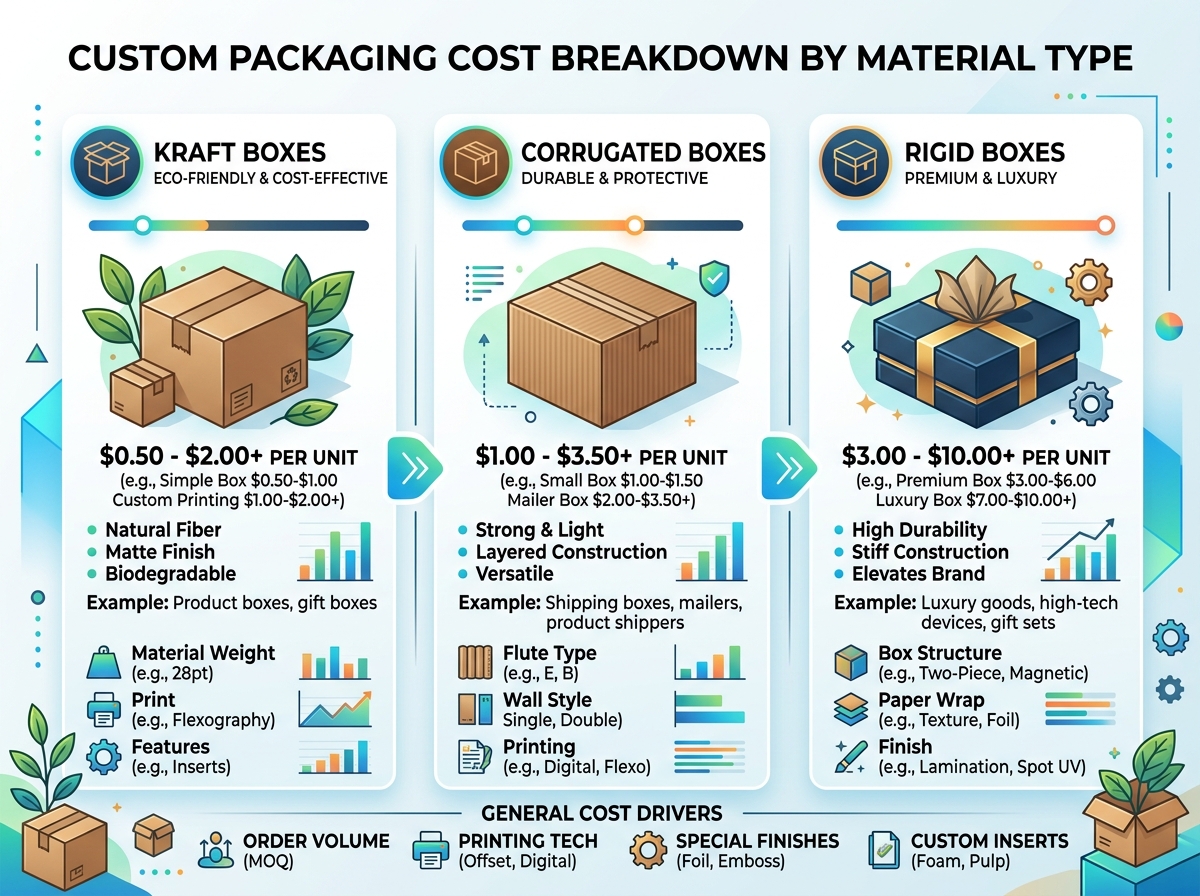
To make these cost drivers concrete, let's walk through real-world pricing scenarios for three common small business packaging formats: folding cartons, mailer boxes, and rigid gift boxes. These examples reflect 2026 market rates and assume full-color printing with a standard logo and brand colors.
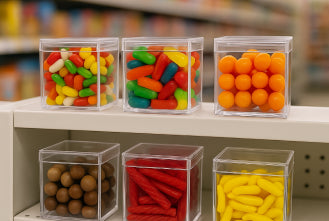
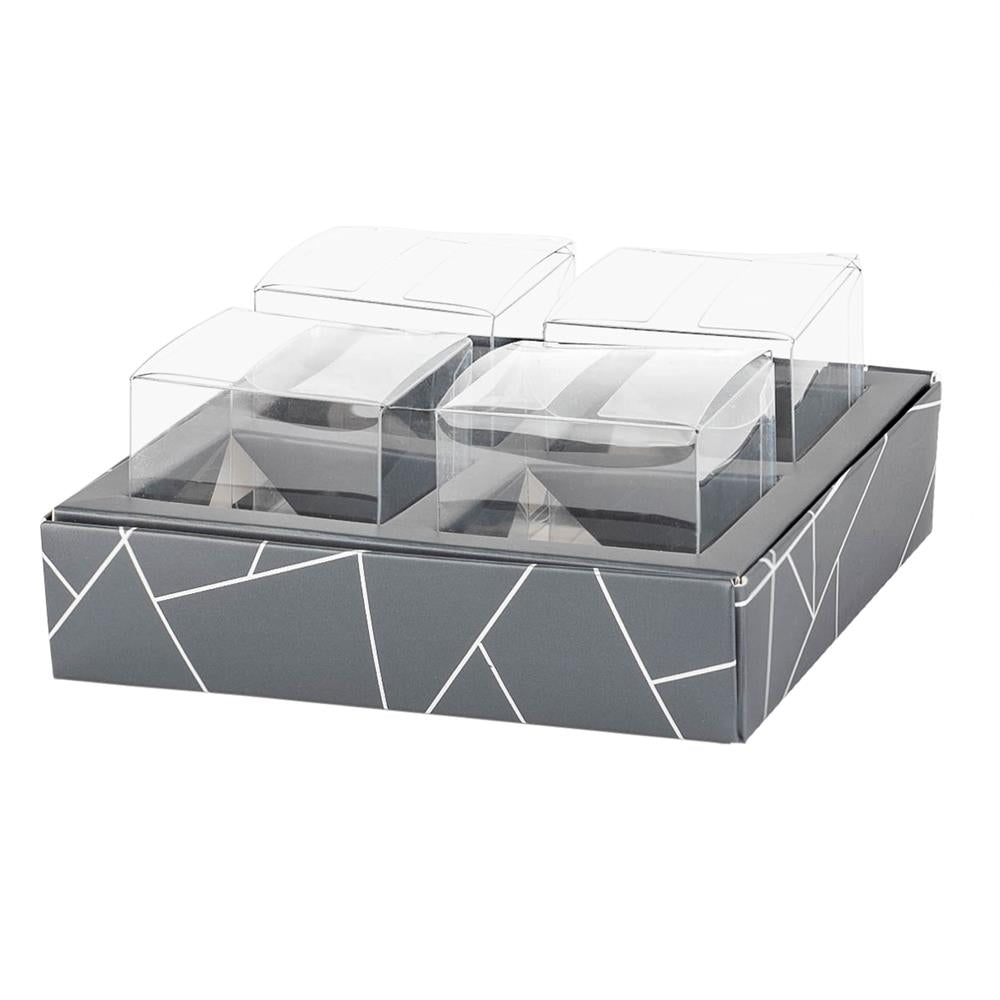
Folding Carton (Kraft, 4" × 4" × 4"): At 250 units with digital printing, expect $2.00 to $2.50 per box. At 1,000 units with offset printing, the cost drops to $0.80 to $1.20 per box. This format works well for lightweight products like candles, soaps, or small retail goods, and a clear acrylic display box can complement it for in-store presentation.
Corrugated Mailer Box (E-flute, 8" × 6" × 3"): At 500 units, pricing typically falls between $1.50 and $2.00 per box with one-color flexo printing on the exterior. At 2,000 units, you can achieve $0.90 to $1.30 per box. Mailer boxes are the workhorse of ecommerce brands, offering both protection and branding in a single package.
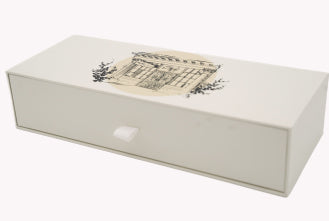
Rigid Gift Box (Chipboard with printed wrap, 6" × 6" × 3"): At 500 units, expect $3.00 to $4.50 per box. At 1,500 units, costs may drop to $2.20 to $3.20 per box. Rigid boxes are ideal for premium products, subscription boxes, or corporate gifting, where the unboxing experience justifies the higher price per unit.
These ranges are estimates; actual quotes will vary by supplier, region, and current material costs. Paper and corrugated board prices fluctuated significantly in 2023 and 2024 due to supply chain pressures, and while markets have stabilized in 2026, it's wise to request updated quotes every six months if you're ordering regularly.
Volume discounts in packaging are not linear—they follow a curve. The steepest per-unit savings occur when you move from very small quantities (under 250) to moderate quantities (500 to 1,000). Beyond 1,000 units, savings continue but at a slower rate. For example, doubling your order from 1,000 to 2,000 units might reduce per-unit cost by 15 to 20 percent, whereas jumping from 100 to 500 units could cut costs by 40 to 50 percent.
This pricing structure reflects the fixed costs of production: die-cutting tools, printing plates, press setup, and quality control all cost roughly the same whether you print 100 boxes or 1,000. The variable costs—material, ink, labor per unit—decrease only slightly with volume. Therefore, the setup fees are amortized over more units as quantities rise, driving down the per-unit price.
For small businesses, the decision to scale up hinges on three factors: cash flow, storage capacity, and demand predictability. Ordering 1,000 units at $1.20 each ($1,200 total) is more cost-effective per unit than 250 units at $2.50 each ($625 total), but only if you have the working capital and confidence that you'll sell through the inventory within a reasonable timeframe. Packaging materials are durable, but designs can become outdated if your branding evolves or if you pivot your product line.
A practical approach is to start with a smaller test run (250 to 500 units) to validate your design and customer response, then scale to 1,000+ units on your second order once you've confirmed demand. Many small businesses also coordinate packaging orders with product restocks to align cash outflows and minimize storage needs.
Beyond the per-unit box cost, several ancillary expenses can catch small business owners off guard. Budgeting for these line items upfront prevents surprises and ensures your total cost of goods sold (COGS) remains accurate.
Die and plate fees: If you're ordering a custom size or shape, expect a one-time die-cutting fee of $150 to $400. Printing plates for offset printing typically cost $100 to $300 per color, though many suppliers waive or reduce these fees for repeat orders or higher volumes.
Design and pre-press services: If you don't have print-ready artwork, many packaging suppliers offer design services for $200 to $800, depending on complexity. Pre-press work—converting your design files to production-ready formats, creating dielines, and proofing—may be included or charged separately at $50 to $150.
Shipping and freight: Packaging is bulky. Freight costs for a pallet of 1,000 folding cartons can range from $100 to $400 depending on your location and the supplier's warehouse. International suppliers may offer lower per-unit costs but add weeks to lead time and hundreds of dollars in shipping and customs fees.
Storage and warehousing: If you're ordering in bulk to capture volume discounts, you'll need space to store the boxes. A pallet of 1,000 mailer boxes occupies roughly 40" × 48" × 48" of floor space. Some businesses use third-party logistics (3PL) providers, which charge monthly storage fees, while others dedicate garage or warehouse space.
Samples and prototypes: Before committing to a full production run, it's wise to order physical samples. Many suppliers charge $50 to $150 for a handful of prototypes, which is a small investment to catch design errors or material mismatches before printing thousands of units.
When you add these costs together, a project that appears to cost $1.50 per box might actually land closer to $1.85 per box when fully loaded. Tracking these expenses separately in your accounting system ensures you're pricing your products appropriately and not eroding margins unknowingly.
Small businesses often operate on tight margins, so finding ways to reduce packaging costs without sacrificing the customer experience is essential. Here are five strategies that deliver savings while preserving brand integrity.
Choose stock sizes over custom dimensions. Many packaging suppliers offer stock box sizes with faster turnarounds and lower per-unit costs because the dies already exist. A 6" × 6" × 4" stock box might cost 20 to 30 percent less than a custom 6.5" × 5.5" × 3.75" box, and the difference in fit may be negligible for your product.
Limit your color palette. Full-color (CMYK) printing is more expensive than one- or two-color printing. If your brand identity allows, consider a bold one-color design on kraft or white stock. This approach not only cuts printing costs but also aligns with the minimalist aesthetic many consumers associate with artisan and eco-conscious brands. Kraft boxes for small businesses are a popular choice for this reason—they're economical, on-trend, and convey authenticity.
Use stickers or stamps for variable information. Instead of printing batch numbers, SKU codes, or seasonal messaging directly on the box, print a clean base design and apply stickers or rubber stamps for variable details. This keeps your packaging flexible and reduces the need for multiple print runs.
Negotiate setup fee waivers for repeat orders. Once you've established a relationship with a supplier and committed to regular orders, ask if they'll waive or reduce setup fees on subsequent runs. Many suppliers are willing to do this to retain steady customers, especially if you're ordering every quarter.
Bundle packaging orders with other materials. If you're ordering tissue paper, stickers, thank-you cards, or other inserts, ask your packaging supplier if they can source these items as well. Bundling reduces shipping costs and sometimes unlocks volume discounts across product categories.
These tactics are particularly effective when you're creating an unboxing experience on a budget, where every dollar saved on the box can be redirected toward inserts, branded tape, or other touchpoints that delight customers.
While every project is unique, you can create a simple cost calculator framework to estimate your packaging budget before reaching out to suppliers. This exercise helps you set realistic expectations and compare quotes more effectively.
Step 1: Define your box specifications. Write down the material (kraft, corrugated, rigid), dimensions (L × W × H), and print method (digital, offset, flexo). Be as specific as possible about colors, finishes, and structural features.
Step 2: Estimate your order quantity. Decide on a realistic first-order volume based on your product launch timeline, storage capacity, and cash flow. Use 250, 500, or 1,000 as benchmarks.
Step 3: Research baseline per-unit costs. Use the ranges provided earlier in this post as starting points. For a kraft folding carton at 500 units with offset printing, assume $1.00 to $1.50 per box. For a rigid box at the same quantity, assume $3.00 to $4.00 per box.
Step 4: Add fixed costs. Include die fees ($200 to $400), plate fees ($100 to $300), design services if needed ($200 to $800), and sample costs ($50 to $150). Divide these by your order quantity to get a per-unit allocation.
Step 5: Factor in freight. Estimate $100 to $400 for domestic shipping of a pallet, or request a freight quote if you have the supplier's location. Divide by your order quantity.
Step 6: Calculate total per-unit cost. Sum the per-unit box cost, the allocated fixed costs, and the allocated freight cost. This gives you a fully loaded per-unit figure to plug into your product pricing model.
For example: 500 kraft boxes at $1.20 each ($600) + $300 in setup fees ($0.60 per box) + $200 freight ($0.40 per box) = $2.20 per box total. If you were budgeting only for the $1.20 box cost, you'd be underestimating by nearly 50 percent.
Not every product or business stage justifies premium custom packaging. Knowing when to invest—and when to opt for simpler solutions—can save you money and prevent overcommitting resources before you've validated product-market fit.
Invest more if: Your product has a high retail price point (above $40), your brand positioning emphasizes luxury or craftsmanship, you're selling in competitive retail environments where shelf appeal matters, or you're targeting gifting occasions where presentation drives purchase decisions. In these scenarios, a well-designed rigid box or a hexagonal gift box tower with ribbon can justify its cost by increasing perceived value and reducing returns.
Hold back if: You're in the early validation phase with fewer than 100 customers, your product is consumable or replenishment-focused (where packaging is discarded quickly), you're selling primarily through wholesale channels where your packaging is replaced by the retailer's, or your target customer prioritizes sustainability and minimalism over elaborate packaging. In these cases, a clean one-color kraft box or a simple mailer with a branded sticker may be the smarter choice.
It's also worth considering the channel mix. Ecommerce brands benefit from protective, branded mailers that survive shipping and create an unboxing moment. Retail brands need packaging that stands out on a shelf and communicates product benefits at a glance. If you're navigating both, understanding the differences in retail versus ecommerce packaging can help you allocate your budget appropriately.
Once you've done your homework and have a clear sense of your specifications and budget, it's time to request quotes from suppliers. The quality of the information you provide directly impacts the accuracy and usefulness of the quotes you receive.
Provide complete specifications: Include material type, dimensions (inside and outside if relevant), print colors, finish type, quantity, and any structural features. Attach a dieline or reference image if possible. The more detail you provide, the fewer rounds of back-and-forth you'll need.
Ask for tiered pricing: Request quotes at multiple quantities—such as 250, 500, 1,000, and 2,000 units—so you can see the volume discount curve and make an informed decision about order size.
Clarify what's included: Confirm whether the quote includes setup fees, design services, shipping, and samples. Some suppliers bundle these, while others itemize them separately.
Request lead times: Production timelines vary widely, from two weeks for digital printing to six weeks or more for offset printing with custom tooling. If you have a product launch date, communicate it upfront.
Ask about reorder terms: Find out if setup fees are waived on repeat orders, how long your dies and plates are kept on file, and whether pricing is guaranteed for a certain period.
Compare quotes not just on per-unit price, but on total project cost, lead time, payment terms, and the supplier's communication quality. A supplier who responds quickly, asks clarifying questions, and provides detailed breakdowns is often worth a slightly higher price because they reduce risk and save you time.
Packaging costs don't exist in a vacuum—they're influenced by raw material markets, labor costs, and broader economic trends. In 2026, several factors are shaping custom packaging pricing for small businesses.
Paper and paperboard prices have stabilized after volatility in 2022–2024, but they remain above pre-pandemic levels. According to RISI, a leading forest products market intelligence firm, containerboard prices have plateaued as supply and demand have rebalanced, but any disruptions in pulp supply or transportation can cause short-term spikes.
Labor and energy costs continue to rise in many manufacturing regions, which affects both domestic and international suppliers. Domestic suppliers often have shorter lead times and lower freight costs, but higher labor expenses. Overseas suppliers—particularly in Asia—may offer lower per-unit costs but require longer lead times, higher minimum order quantities, and more complex logistics.
Sustainability regulations are also influencing material choices. Some jurisdictions now restrict or tax certain plastics and non-recyclable materials, pushing brands toward kraft, corrugated, and other fiber-based options. While these materials are often cost-competitive, any required certifications (such as FSC or SFI) may add a small premium.
Finally, digital printing technology has improved in quality and speed, making short runs more accessible and affordable than ever before. This trend benefits small businesses that want to test designs or run limited-edition packaging without committing to large offset print runs.
Custom packaging typically costs between $0.50 and $5.00 per unit, depending on material, size, print method, and order quantity. Kraft folding cartons start around $0.80 to $1.50 per box at moderate volumes, while rigid gift boxes range from $2.00 to $5.00 per box. Digital printing for short runs (under 500 units) is more expensive per unit than offset printing for larger runs.
Custom die-cutting tools typically cost $150 to $400 for a new shape or size. This is a one-time expense, and most suppliers store your die for future reorders at no additional charge. Standard or stock sizes don't require a custom die, which can save you this upfront cost.
Minimum order quantities vary by supplier and print method. Digital printing often allows runs as low as 50 to 100 units, while offset printing typically requires 250 to 500 units to be cost-effective. Some suppliers set MOQs at 1,000 units for highly custom or complex designs. For more detail, see our guide on minimum order quantities in packaging.
Choose stock sizes instead of custom dimensions, limit your color palette to one or two colors, use stickers for variable information, negotiate setup fee waivers for repeat orders, and bundle packaging orders with other materials like tissue paper or inserts. These strategies maintain brand quality while lowering per-unit costs.
It depends on your cash flow, storage capacity, and demand predictability. Ordering 1,000 units instead of 250 can cut per-unit costs by 40 to 50 percent, but only if you're confident you'll use the inventory within a reasonable timeframe and have space to store it. A common approach is to start with a smaller test run, then scale up once demand is validated.