Cart
0
You may also like

Book a call with our development team to get started.



Apply online and access wholesale pricing.

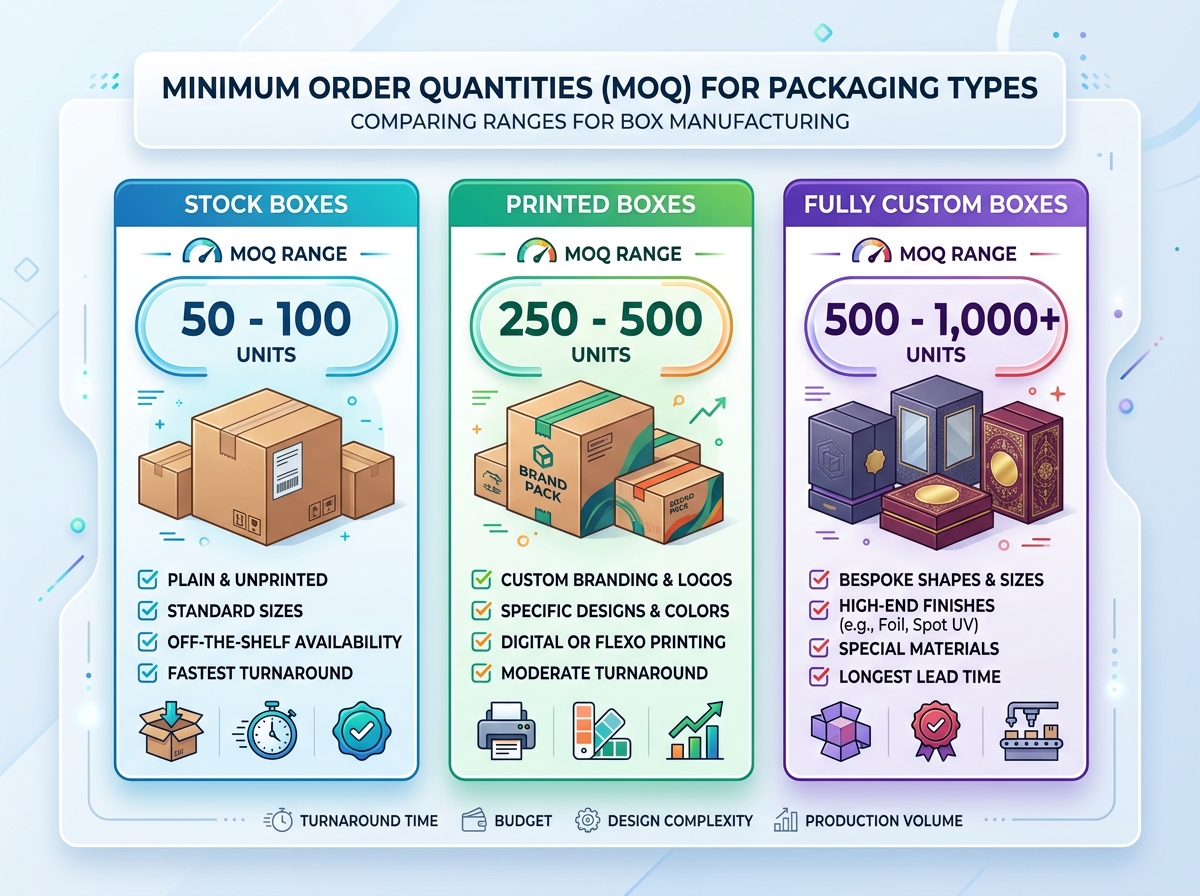
If you've started researching custom packaging for small businesses, you've likely encountered the term MOQ—and wondered whether those minimums fit your budget or inventory needs. MOQ stands for minimum order quantity, the smallest number of units a supplier will produce or sell in a single order. In packaging, MOQs typically range from 50 units for stock items to 1,000 or more for fully custom printed boxes, depending on the level of customization, material, and production method involved.
Understanding what drives these minimums—and how to work within or around them—can mean the difference between launching your branded packaging on schedule or delaying your product release. This guide explains why MOQs exist, what ranges to expect across common packaging categories, and practical strategies to negotiate, split orders, or choose alternatives that align with your cash flow and growth stage.
Packaging manufacturers impose MOQs to cover the fixed costs of production setup. Every custom order requires plate-making for printing, machine calibration, material cutting, and quality checks—expenses that remain constant whether a supplier runs 100 boxes or 10,000. By setting a minimum, the supplier ensures that the per-unit cost absorbs these setup fees and delivers a viable margin.
According to the Packaging Gateway, digital printing has lowered some MOQ thresholds in recent years, but offset lithography—still the industry standard for high-volume, full-color packaging—remains most economical at runs of 500 units or more. Material waste also plays a role: cutting dies for custom shapes or sizes generate scrap, and suppliers need sufficient volume to justify tooling costs.
For small businesses, these minimums can feel prohibitive. A 500-unit MOQ on a $2.50 box means a $1,250 upfront investment before a single product ships. Yet the same economics explain why stock packaging—pre-made boxes and bags available in standard sizes—carries much lower minimums, often 50 to 100 units, because no custom setup is required.
MOQs vary widely depending on whether you choose stock, semi-custom, or fully custom packaging. Here's what small businesses commonly encounter across the most popular categories.
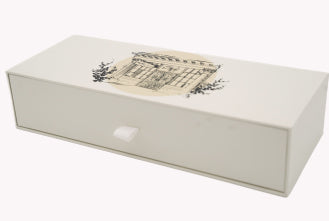
Stock items ship as-is, with no branding or custom dimensions. MOQs are the lowest in this category—often 25 to 100 units—because the supplier has already produced the packaging in bulk. A rectangle gift box tower with ribbon, for example, is available in fixed sizes and ships immediately, making it ideal for businesses testing a new product line or operating on lean inventory.
Cellophane bags, bakery boxes, and standard kraft mailers typically fall into the 50- to 100-unit range. If you need packaging quickly and don't require custom printing, stock options let you start small and reorder as demand grows.
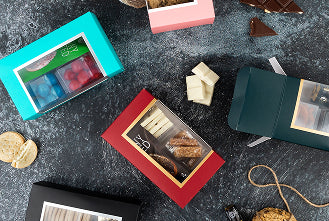
Semi-custom packaging starts with a stock box or bag and adds your logo, brand colors, or product information via printing. MOQs here usually range from 250 to 500 units. The box itself is a standard size, so the supplier skips die-cutting costs, but printing still requires plate setup, ink mixing, and press calibration.
Digital printing can push MOQs lower—sometimes to 100 units—but the per-unit cost rises compared to offset lithography. For small businesses launching a signature product, semi-custom packaging strikes a balance: you gain brand visibility without committing to the 1,000-unit minimums that fully custom structures demand.
Fully custom packaging involves proprietary dimensions, specialty materials (such as rigid setup boxes or textured substrates), and advanced finishes like foil stamping or embossing. MOQs typically start at 500 units and often climb to 1,000 or more, depending on complexity. A custom hexagonal box with a magnetic closure, for instance, requires a cutting die, structural engineering, and hand assembly—all of which make lower volumes cost-prohibitive.
According to Packaging Digest, businesses ordering specialty finishes such as soft-touch lamination or spot UV can expect minimums at the higher end of the range, since these processes require dedicated press time and cannot easily be batched with other jobs.
The substrate you choose and the way it's printed directly affect minimum order quantities. Corrugated cardboard, SBS (solid bleached sulfate), and kraft paperboard are the most common packaging materials, and each has different setup requirements.
Corrugated boxes, often used for shipping and protective packaging, typically carry MOQs of 250 to 500 units when printed. The fluting and lamination process is standardized, so suppliers can run smaller batches efficiently. Folding cartons made from SBS—common for cosmetics, candles, and retail-ready packaging—usually require 500 units or more, especially if you specify custom die-cuts or window panels.
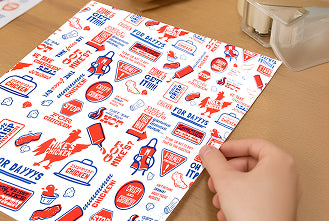
Printing method matters just as much. Offset lithography delivers the sharpest color reproduction and lowest per-unit cost at volume, but setup is expensive, pushing MOQs to 500 or higher. Flexographic printing, used for corrugated and kraft packaging, has moderate setup costs and MOQs in the 250 to 500 range. Digital printing eliminates plates entirely, enabling runs as small as 50 to 100 units, but the per-piece price can be double that of offset at higher volumes.
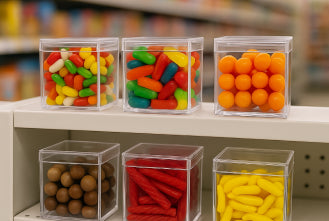
If you're ordering clear acrylic boxes or other rigid containers, expect higher minimums—often 500 to 1,000 units—because thermoforming molds and tooling carry significant upfront costs that must be amortized across the run.
Most small businesses can't commit to 1,000 units of custom packaging on their first order. Fortunately, several strategies let you access branded packaging without overextending your budget or warehouse space.
Launch with stock boxes or bags and use custom stickers, stamps, or hang tags to add branding. A plain kraft box paired with a professionally designed label delivers a polished unboxing experience at a fraction of the cost and with no MOQ beyond the sticker printer's minimum (often 100 to 250 units). As your sales volume grows, transition to semi-custom or fully custom packaging.
Some suppliers will produce the full MOQ but deliver it in two or three shipments over several months, reducing the immediate cash outlay and storage burden. This approach works best when you have predictable monthly sales and can forecast your packaging needs accurately.
If you know another business ordering similar packaging—same size, same material, different print—ask your supplier whether you can share a production run and split the MOQ. This tactic is most viable with semi-custom packaging, where the base box is identical and only the printed artwork differs.
Not all manufacturers impose the same MOQs. Wholesale suppliers focused on small businesses often stock a broad range of semi-custom options with minimums as low as 100 to 250 units. Digital-first packaging companies may offer even lower thresholds, though you'll pay a premium per unit. Compare total cost—not just per-piece price—across suppliers to find the best fit for your volume and timeline.
While low MOQs reduce risk, there are scenarios where committing to a larger order makes strategic sense. If you've validated product-market fit and have consistent monthly sales, a 500- or 1,000-unit order can cut your per-unit packaging cost by 30 to 50 percent compared to a 100-unit digital run. That savings flows directly to your margin or lets you invest in better materials and finishes that elevate brand perception.
Seasonal businesses—such as those selling holiday gift sets or event favors—often place a single large order to cover the entire season, locking in pricing and ensuring inventory availability during peak demand. A business selling gourmet cookies might order a year's supply of bakery boxes in one MOQ, knowing the packaging is shelf-stable and the per-box cost drops significantly at volume.
Custom packaging also serves as a marketing asset. A distinctive hexagon gift box tower with ribbon can become synonymous with your brand, creating shareable unboxing moments that drive word-of-mouth and social media engagement. In this context, the MOQ is less a barrier and more an investment in brand equity.
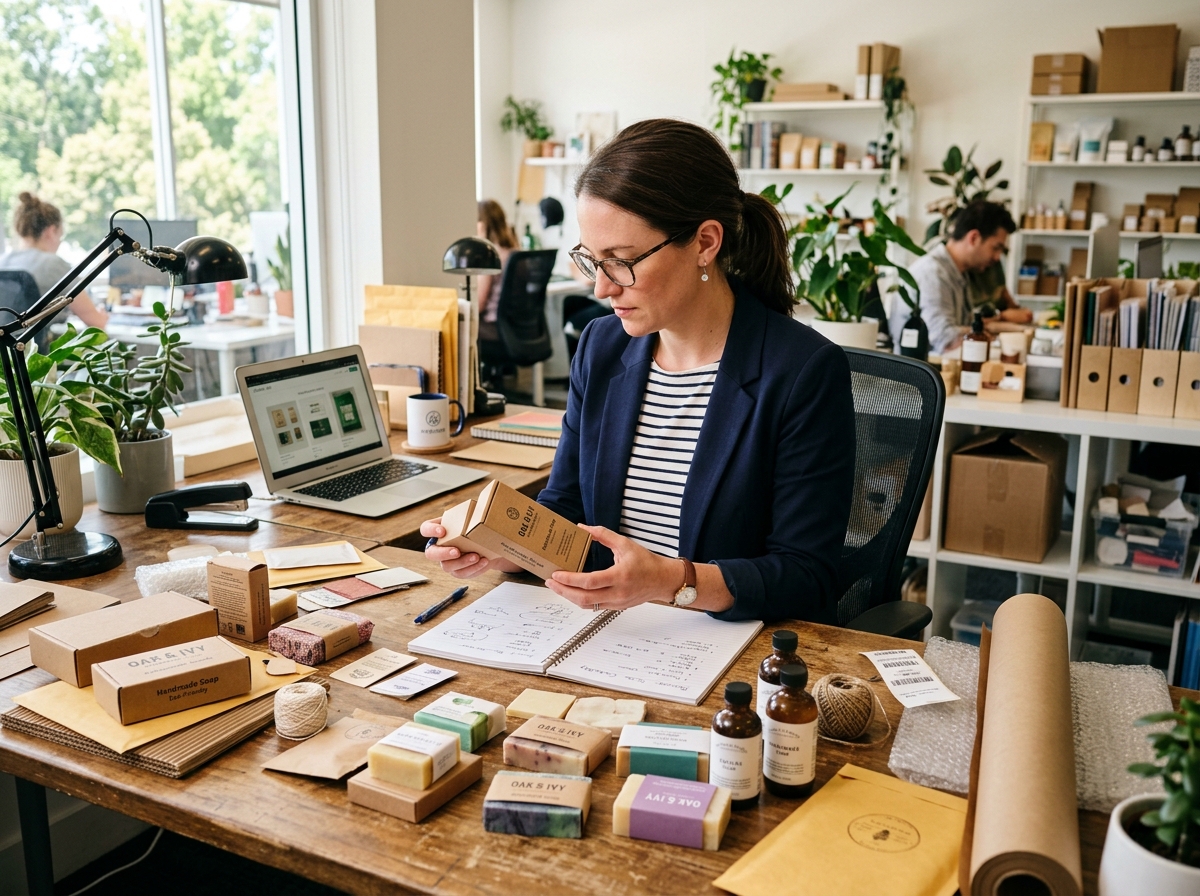
Before committing to any MOQ, calculate your packaging cost as a percentage of product retail price and assess how long the inventory will last. A common benchmark is to keep packaging costs between 5 and 15 percent of the product's selling price, though luxury goods often allocate 20 percent or more to premium packaging.
If a 500-unit MOQ represents six months of sales, and you have the cash flow and storage space, the order is likely manageable. If it represents two years of sales, the risk of design changes, product pivots, or excess inventory becomes significant. In that case, opt for a lower-MOQ stock or semi-custom solution until your volume justifies the investment.
Also consider lead time. Custom packaging orders typically require four to eight weeks from artwork approval to delivery, and that timeline can stretch during peak seasons. Stock packaging ships within days, giving you flexibility to test, iterate, and respond to customer feedback without waiting months for a new print run.
One frequent mistake is ordering the minimum without accounting for defects, shipping damage, or design tweaks. Always add a 5 to 10 percent buffer to your calculated need. If you need 450 boxes for an upcoming product launch, order 500 to cover quality control rejections and any last-minute samples for press or influencer kits.
Another pitfall is locking in a design too early. If you're still refining your brand identity or product lineup, a 1,000-unit custom box order can become obsolete before you've used half the inventory. In the early stages, prioritize flexibility over per-unit savings.
Finally, don't overlook storage costs. A pallet of 1,000 boxes can occupy significant warehouse space, and if you're operating out of a garage or small studio, that volume may not be practical. Factor in the cost of storage—or the opportunity cost of tying up space—when evaluating whether a higher MOQ makes financial sense.
Print-on-demand packaging services have emerged in recent years, allowing businesses to order as few as 10 to 50 custom boxes at a time. The per-unit cost is substantially higher—often two to three times the price of a 500-unit offset run—but the model eliminates inventory risk and lets you test multiple designs or seasonal variations without committing to large volumes.
Another alternative is hybrid inventory: order stock packaging in bulk to secure a low per-unit cost, then print variable elements (such as product names or SKU information) on demand using desktop printers or label services. This approach works well for businesses with diverse product lines that share a common box size.
At Wrapt by Hammont, we recognize that not every business is ready for 1,000-unit custom runs. Our catalog includes a wide range of stock and semi-custom packaging with accessible minimums, designed to support businesses at every growth stage. Whether you're launching your first product or scaling into new retail channels, you'll find options that balance quality, cost, and flexibility—without the pressure of prohibitive MOQs.
MOQ stands for minimum order quantity—the smallest number of units a packaging supplier will produce or sell in a single order. It exists to cover the fixed costs of setup, tooling, and production, ensuring the supplier can manufacture profitably.
Most suppliers require 250 to 500 units for semi-custom boxes (stock sizes with custom printing) and 500 to 1,000 units for fully custom boxes with unique dimensions or specialty finishes. Digital printing can lower minimums to 100 units, but per-unit costs increase.
Some suppliers will reduce MOQs for an additional setup fee or higher per-unit price. Others offer phased delivery, producing the full minimum but shipping in installments. Building a long-term relationship or committing to repeat orders can also give you leverage to negotiate.
Calculate how many months of sales the MOQ represents and whether you have the cash flow and storage capacity to manage the inventory. If the order covers more than six months of sales and you're still validating product-market fit, consider starting with stock packaging or a lower-MOQ alternative.
Stock packaging typically has very low minimums—25 to 100 units—and some print-on-demand services allow orders as small as 10 units. However, per-unit costs are significantly higher than bulk custom orders, so these options work best for testing, limited editions, or very low-volume products.