Cart
0
You may also like

Book a call with our development team to get started.



Apply online and access wholesale pricing.

Custom packaging for small businesses is more than a shipping necessity—it's a tangible brand touchpoint that influences customer perception, repeat purchases, and word-of-mouth marketing. For small business owners, the challenge lies in balancing professional presentation with realistic budgets and minimum order requirements. This guide walks through material selection, cost structures, MOQ expectations, branding strategies, and supplier evaluation so you can make informed packaging decisions that support growth without overextending resources.
Whether you're launching a bakery, selling handmade goods online, or expanding a retail product line, understanding packaging options helps you create a cohesive brand experience while managing cash flow and inventory. Let's break down what you need to know.
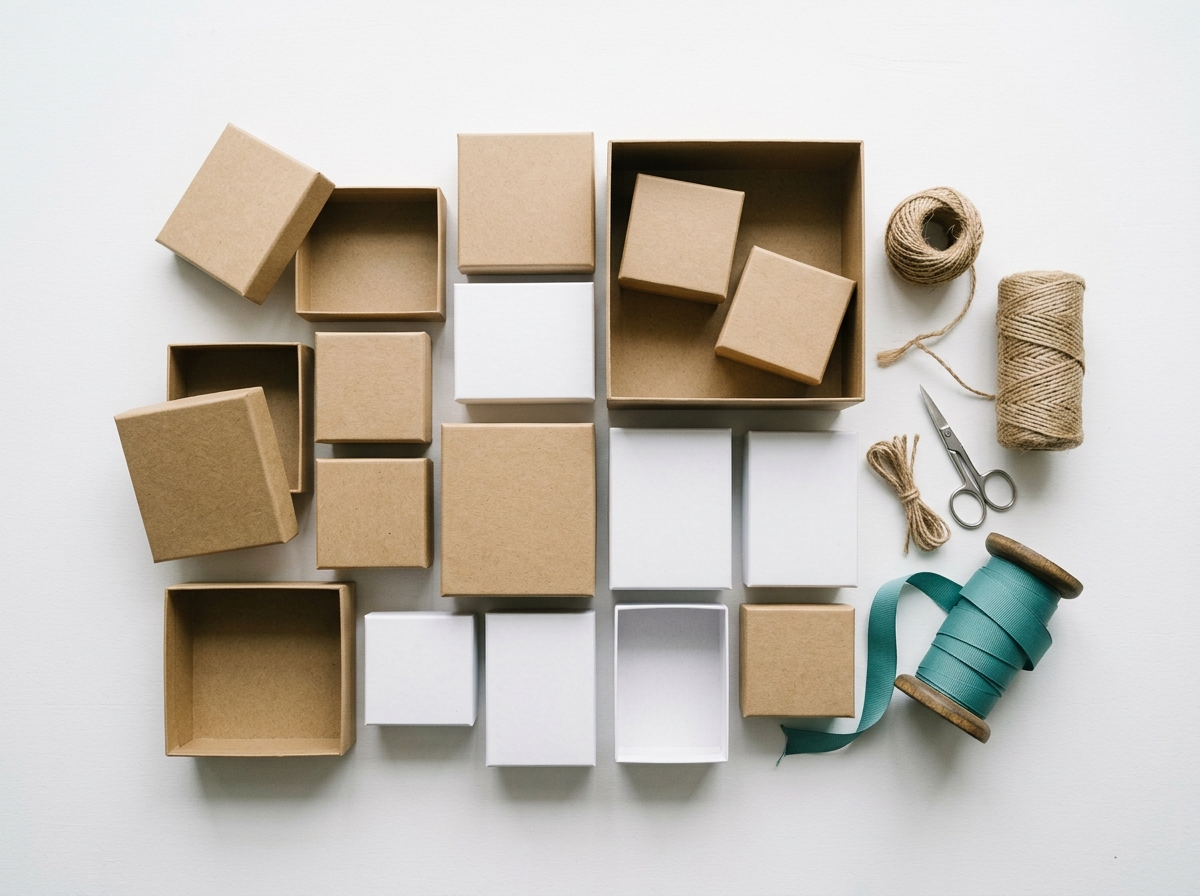
Packaging serves three core functions for small businesses: protection, presentation, and promotion. The protective role is straightforward—your product must arrive intact. But presentation and promotion are where custom packaging delivers measurable return on investment.
Research from Dotcom Distribution's annual packaging survey shows that 40% of online shoppers are more likely to make repeat purchases from brands that use premium packaging, and nearly 60% share unboxing experiences on social media when packaging feels special. For small businesses competing against established brands, packaging is one of the few areas where a thoughtful, low-cost investment can level the playing field.
Custom packaging also reduces the need for additional marketing materials. A well-designed box with your logo, color palette, and brand messaging functions as a silent salesperson—reinforcing brand identity every time a customer opens a package or carries a shopping bag. This is particularly valuable for businesses selling through multiple channels, where consistent packaging creates recognition across farmers markets, retail partnerships, and online orders.
Beyond marketing, packaging affects operational efficiency. Standardized box sizes reduce shipping costs by minimizing dimensional weight charges. Custom inserts or dividers protect fragile items and reduce damage claims. For bakeries and food businesses, food-safe packaging with proper ventilation or grease resistance protects product quality and meets health regulations.
Minimum order quantity is the smallest number of units a supplier will produce in a single order. MOQ exists because setup costs—die cutting, printing plates, color matching—are fixed expenses that must be amortized across the production run. For small businesses, understanding typical MOQ ranges by packaging type prevents sticker shock and helps with cash flow planning.
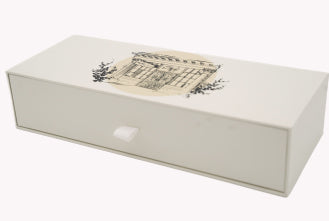
Simple folding cartons and tuck-top boxes typically carry MOQs of 100 to 500 units when ordered from domestic suppliers focused on small business accounts. These are often digitally printed, which eliminates the need for expensive printing plates. Custom printed kraft boxes with one or two-color logos generally require 500 to 1,000 units, as they often use flexographic printing that requires plate setup. Rigid setup boxes—the kind with separate lids and bases—usually start at 1,000 units or higher due to labor-intensive assembly.
For businesses just starting out, these quantities can feel daunting. A practical approach is to begin with stock packaging—unbranded boxes in standard sizes—and add custom elements like stickers, stamps, or printed tissue paper. Once sales volume justifies a larger inventory commitment, transition to fully custom printed boxes. Our detailed What is MOQ in Packaging? A Small Business Guide to Minimum Order Quantities">guide to MOQ in packaging explains how to evaluate whether your business is ready for custom orders and how to negotiate with suppliers.
Unit cost decreases as order quantity increases, but the curve flattens after a certain point. A 250-unit order might cost $1.20 per box, while 500 units drops to $0.85, and 1,000 units to $0.65. Doubling from 1,000 to 2,000 might only save an additional $0.10 per unit. For small businesses, the sweet spot is often the minimum quantity that qualifies for the steepest part of the discount curve—typically between 500 and 1,000 units for most packaging types.
Overordering to chase per-unit savings ties up capital and warehouse space. It also creates risk if you rebrand, change product sizes, or discover a design flaw after the first customer orders. A better strategy is to order conservatively at first, gather customer feedback, then scale up once packaging is proven.
Material selection depends on product weight, fragility, brand positioning, and budget. The three most common materials for small business packaging are kraft paperboard, solid bleached sulfate (SBS) paperboard, and corrugated cardboard. Each has distinct performance characteristics and cost profiles.
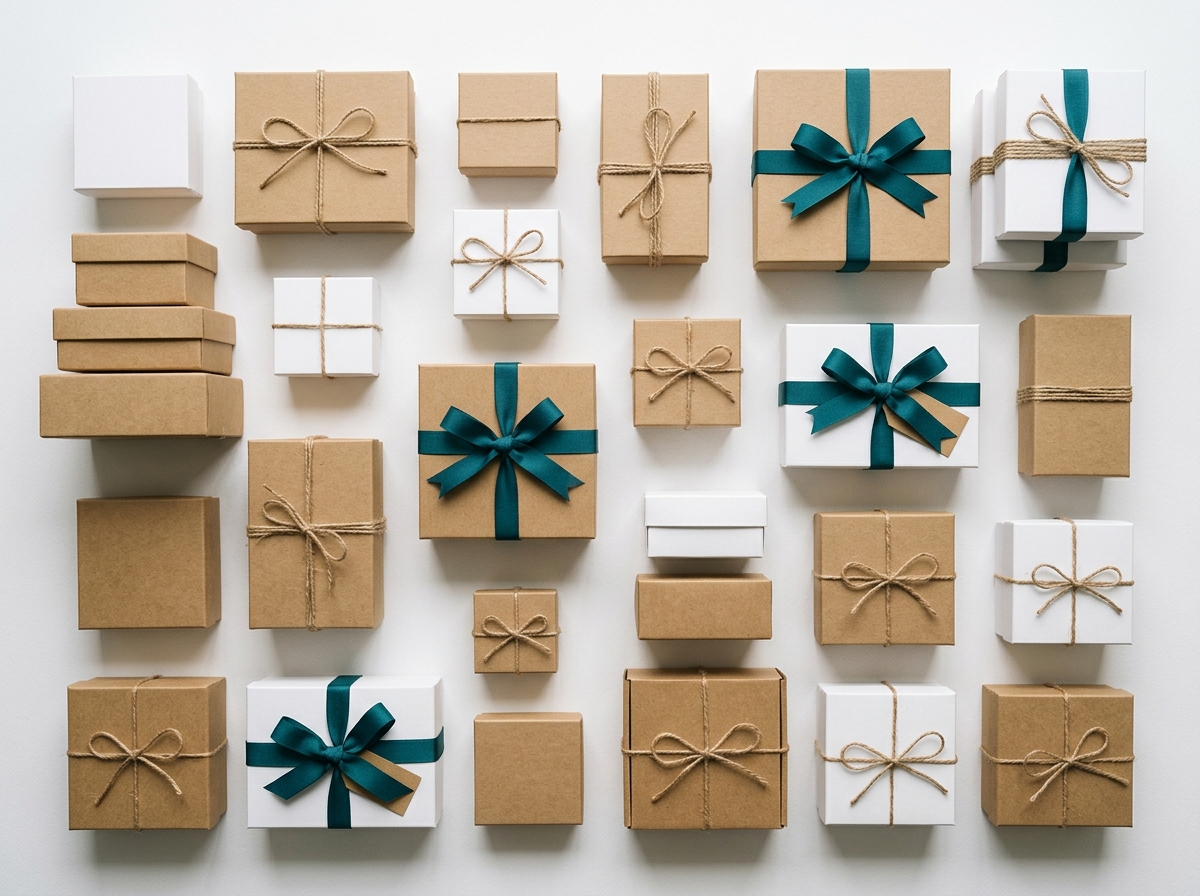
Kraft paperboard is made from unbleached wood pulp, giving it a natural brown color and a rustic, eco-friendly appearance. It's strong, recyclable, and cost-effective. Kraft boxes work well for bakery items, handmade soaps, candles, and artisan goods where the natural aesthetic aligns with brand values. The material accepts printing well, though the brown base limits color vibrancy—designs with one or two ink colors tend to look cleaner than full-color photography. For small businesses seeking Custom Kraft Boxes for Small Business: Eco-Friendly Packaging That Fits Your Budget">affordable, eco-conscious packaging, kraft is often the best starting point.
SBS paperboard is bleached white and coated, providing a smooth, bright surface ideal for full-color printing. It's the material used for most retail cosmetics, electronics, and premium gift boxes. SBS costs more than kraft—typically 20 to 40 percent higher per unit—but delivers a polished, high-end look. If your brand positioning emphasizes luxury or if your product competes on shelf space with established brands, SBS may justify the investment.
Corrugated cardboard consists of a fluted layer sandwiched between flat linerboard sheets, creating cushioning and structural strength. It's the standard for shipping boxes and mailer boxes used in ecommerce. Corrugated is heavier and bulkier than paperboard, so it's less common for in-store retail packaging, but it's essential for protecting products during transit. Single-wall corrugated (one fluted layer) handles most small business needs; double-wall is reserved for heavy or fragile items.
Beyond these three, some businesses use rigid setup boxes (chipboard covered in printed paper), plastic clamshells for visibility and tamper resistance, or specialty materials like grease-resistant paperboard for food. Our How to Choose Custom Packaging Materials: Kraft vs Corrugated vs Rigid Boxes">materials comparison guide offers a deeper dive into durability, cost, and environmental impact for each option.
If you're packaging food, ensure your boxes meet FDA requirements for direct food contact. Many kraft and SBS boxes are food-safe by default, but custom printing inks and coatings must also be compliant. Water-based inks and aqueous coatings are generally food-safe; solvent-based inks are not. Grease-resistant coatings prevent oil from cookies, pastries, or fried foods from seeping through the box. Discuss food safety with your supplier during the quoting process—reputable packaging companies will ask about your product type and recommend appropriate materials.
Custom packaging costs break into three buckets: setup fees, per-unit production costs, and shipping. Setup fees cover die cutting (the metal rule that cuts box shapes), printing plates, and color matching. For digital printing, setup fees are minimal—often $50 to $150. For offset or flexographic printing, setup can range from $200 to $800 depending on the number of colors and complexity.
Per-unit costs vary widely by material, size, printing method, and order quantity. As a rough benchmark for small businesses ordering 500 to 1,000 units:
These figures assume domestic production in the United States. Overseas manufacturing can reduce per-unit costs by 30 to 50 percent, but MOQs are typically higher (2,000 to 5,000 units), lead times stretch to 8 to 12 weeks, and shipping costs add back some of the savings. For small businesses, domestic suppliers offer flexibility and faster turnaround, which is often worth the premium.
Shipping costs for packaging materials depend on box dimensions and order size. A pallet of 1,000 folding cartons might cost $150 to $300 to ship domestically, adding $0.15 to $0.30 per unit. Always request delivered pricing when comparing quotes. For a detailed breakdown of what to expect at different order volumes, see our article on How Much Does Custom Packaging Cost for Small Businesses in 2026?">custom packaging costs in 2026.
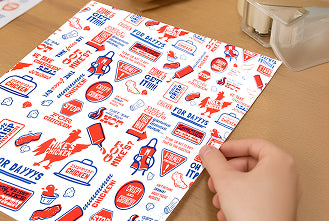
Digital printing uses inkjet or laser technology to apply designs directly to packaging material, with no plates required. It's cost-effective for runs under 500 units and allows for variable data printing (unique codes, names, or messages on each box). However, color matching is less precise than offset, and per-unit costs don't drop significantly as quantity increases.
Offset and flexographic printing use metal plates to transfer ink. Setup is expensive, but per-unit costs plummet at higher volumes. Offset delivers superior color accuracy and is the standard for retail packaging. For small businesses, the decision point is usually around 500 to 750 units: below that, digital is cheaper; above it, offset wins.
Branded packaging doesn't require a four-color photographic print job. Many successful small businesses use one or two ink colors on kraft or white stock, which keeps costs low while still creating a recognizable identity. A well-designed logo, a tagline, and your website URL can be enough to make packaging feel intentional.
When designing for print, work in vector formats (Adobe Illustrator or PDF) to ensure crisp reproduction. Provide your supplier with Pantone color codes for brand colors—this ensures consistency across print runs. If your design includes fine text or intricate details, ask your supplier about minimum line weights and font sizes for your chosen print method. Flexographic printing, common for kraft boxes, has less detail resolution than offset, so simpler designs work best.
If full custom printing is outside your budget, consider hybrid approaches. Order stock boxes in your brand's primary color (many suppliers offer kraft, white, black, and pastel options) and add custom stickers, rubber stamps, or printed tissue paper. This approach keeps per-unit costs under $0.30 while still delivering a branded experience. Custom stickers can be ordered in quantities as low as 100 from specialty printers, and rubber stamps are a one-time investment of $20 to $50.
Another budget-friendly tactic is to use custom packaging for your hero product or gift sets, and stock packaging for everyday items. A bakery might use custom printed boxes for wedding cake orders and special occasion cookies, while using plain kraft boxes with stickers for daily retail sales. This tiered approach allocates branding dollars where they have the most impact. For more ideas, explore our guide to Branded Packaging Ideas for Small Businesses: Logos, Colors, and Print Techniques Explained">branded packaging strategies.
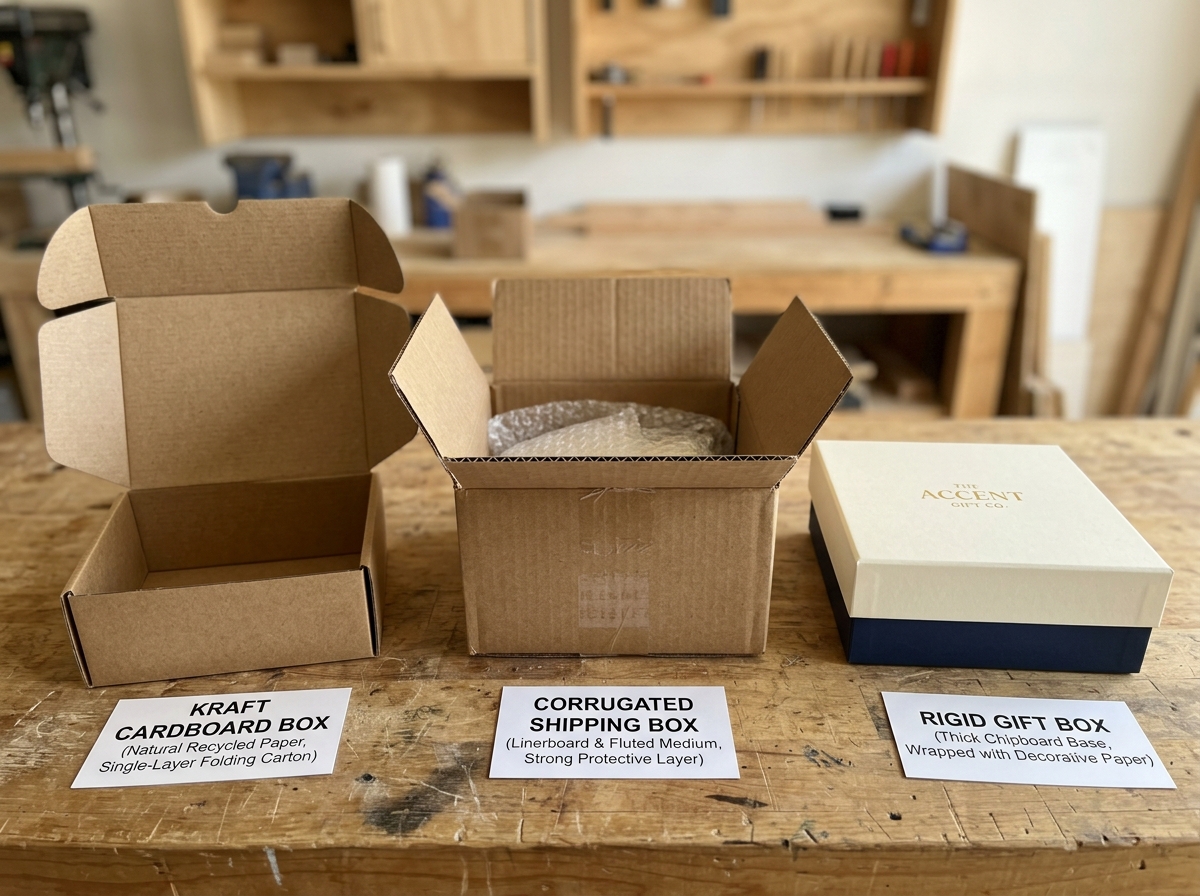
Stock packaging refers to pre-manufactured boxes in standard sizes, available for immediate purchase in small quantities—often as few as 25 or 50 units. Stock boxes cost more per unit than custom orders at comparable volumes, but they eliminate setup fees and MOQ barriers, making them ideal for businesses testing a new product, experiencing unpredictable demand, or operating on very tight budgets.
Custom packaging offers brand differentiation and precise sizing. A box tailored to your product dimensions reduces filler material, cuts shipping costs, and creates a more professional unboxing experience. Custom also allows you to print brand messaging, care instructions, or QR codes directly on the box, reducing the need for inserts.
For new businesses, a practical progression is to start with stock packaging while refining your product and building sales volume. Once you're consistently moving 100 to 200 units per month, transition to custom packaging. This ensures you have the cash flow and demand to justify the MOQ and upfront investment. If your product line includes multiple SKUs, you might use custom packaging for your best sellers and stock for slower-moving items.
Hybrid models also work well. A small candle company might use stock glass jars (standardized across the industry) but invest in custom printed boxes and labels to create brand identity. A bakery could use stock cake boxes for daily orders and custom printed boxes for wedding and event cakes. The key is to allocate custom packaging investment where it delivers the highest return—typically your most visible, gift-oriented, or premium-priced products.
Consumer expectations around sustainability have shifted from nice-to-have to table stakes, particularly for small businesses whose customers often prioritize ethical purchasing. According to a McKinsey survey, more than 60 percent of consumers consider sustainability when making purchase decisions, and they're willing to pay a modest premium for packaging that aligns with environmental values.
The most accessible sustainable option for small businesses is kraft paperboard, which is made from renewable wood pulp, biodegrades naturally, and is widely recyclable in curbside programs. Kraft boxes communicate eco-consciousness visually—customers recognize the brown, unbleached material as an environmental choice. Corrugated cardboard is similarly sustainable, with high recycled content (often 70 to 100 percent post-consumer waste) and near-universal recyclability.
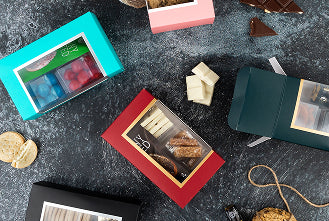
Avoid packaging with plastic windows, metallic foils, or heavy coatings unless they're genuinely necessary for product protection. These additions complicate recycling and undermine sustainability messaging. If a window is essential for product visibility, look for suppliers offering compostable cellulose windows instead of PET plastic.
Certifications like FSC (Forest Stewardship Council) signal responsible forestry practices. FSC-certified packaging costs slightly more—typically 5 to 15 percent—but provides third-party verification that appeals to environmentally conscious customers. Some suppliers also offer carbon-neutral shipping or use soy-based inks, which are renewable and lower in VOCs than petroleum-based inks.
Right-sizing packaging is one of the most impactful sustainability strategies. Oversized boxes require more material, more filler, and higher shipping emissions. Custom packaging designed to fit your product snugly reduces waste and transportation costs. For a comprehensive look at material choices, certifications, and customer communication strategies, read our article on Sustainable Packaging for Small Businesses: Materials, Certifications, and Customer Expectations">sustainable packaging solutions.
Packaging requirements differ sharply between retail and ecommerce environments. Retail packaging must attract attention on a shelf, communicate product benefits quickly, and withstand handling by multiple customers. It often needs to stand upright, include a hang tab for peg displays, or fit standard shelf depths. Graphics and text must be legible from several feet away, and the structure should allow customers to pick up and examine the product without damaging the box.
Ecommerce packaging prioritizes protection during shipping, efficient stacking, and an engaging unboxing experience. It doesn't need to be shelf-ready, so you can optimize for shipping dimensions rather than display. Mailer boxes—corrugated boxes that ship flat and fold into shape without tape—are popular for ecommerce because they're easy to pack, protect contents well, and offer printable surfaces for branding. Unboxing is a private moment between customer and brand, so interior printing, tissue paper, and thank-you cards add value.
Hybrid businesses—those selling both online and in physical retail locations—face a packaging dilemma. Designing one package that works for both channels is possible but requires compromise. A box with a hang tab and front-facing graphics works on a shelf but may feel over-engineered for ecommerce. Conversely, a plain mailer box is cost-effective online but invisible in retail.
One solution is to use the same primary packaging (the box that holds the product) for both channels, but add a printed sleeve or belly band for retail that can be removed for ecommerce orders. Another approach is to accept the need for two SKUs—one retail-optimized, one ecommerce-optimized—and manage inventory accordingly. For businesses just starting out, focusing on a single channel simplifies logistics and reduces minimum order commitments. Our guide to Retail Packaging vs Ecommerce Packaging: Which Does Your Small Business Need?">retail versus ecommerce packaging helps you weigh the trade-offs.
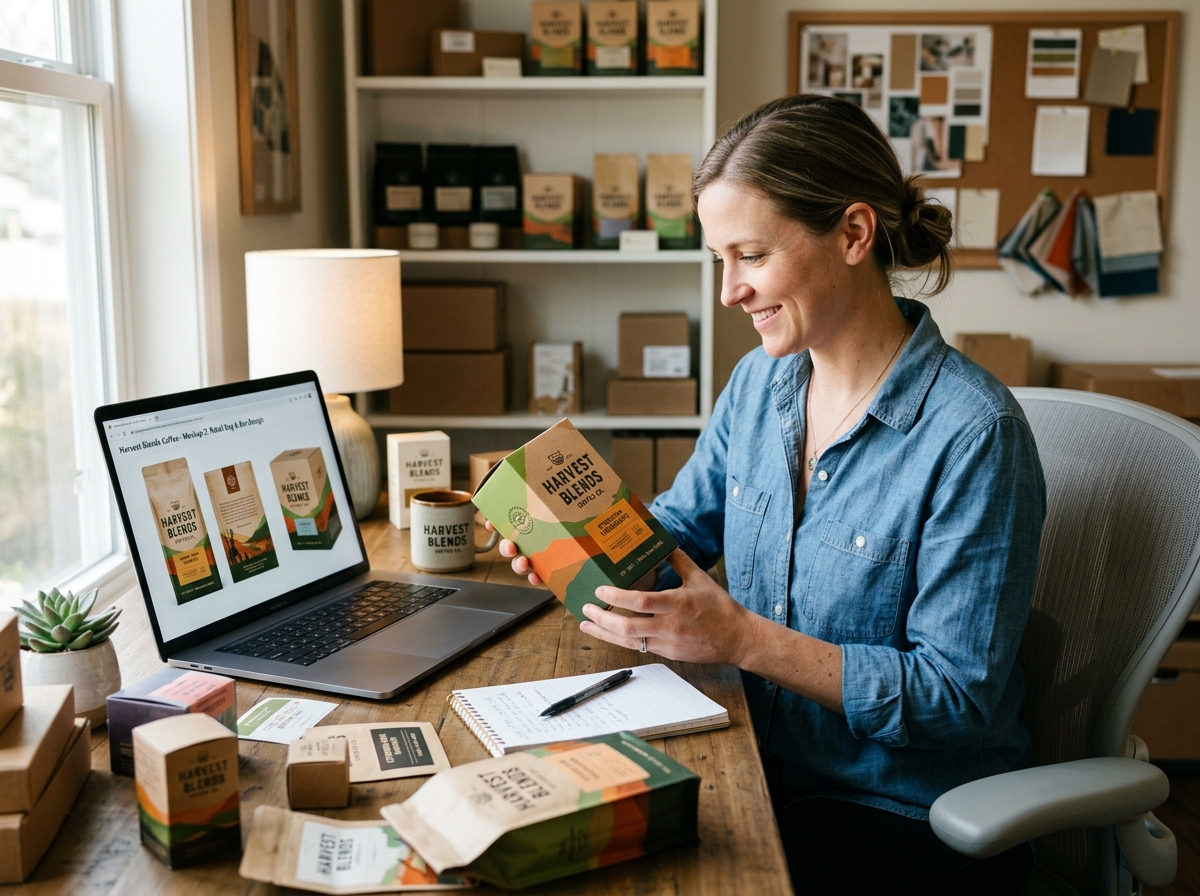
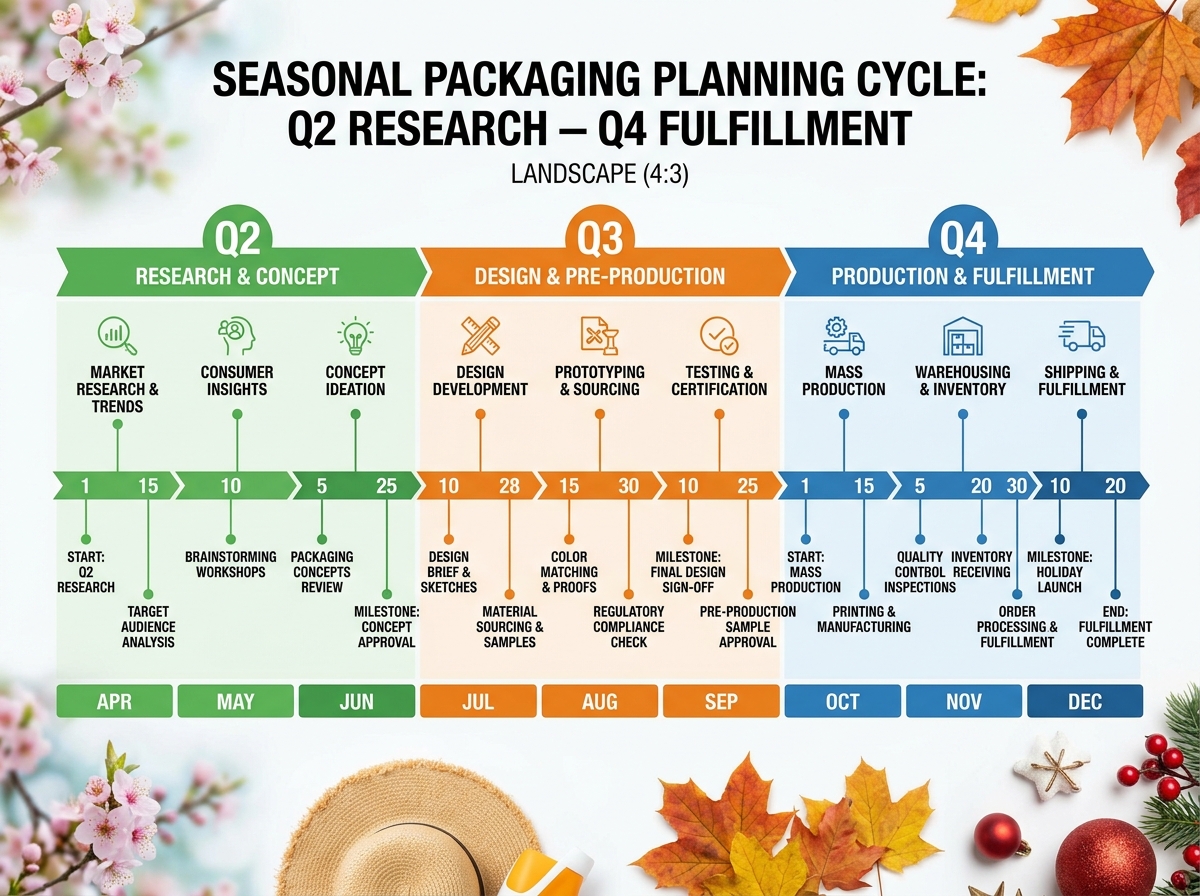
Most small businesses experience seasonal sales spikes—holiday gift-giving in Q4, wedding season in spring and summer, back-to-school in late summer. Custom packaging lead times range from two to eight weeks depending on complexity and supplier capacity, so planning ahead is essential to avoid stockouts during peak periods.
A practical planning timeline for Q4 (the busiest retail season) is to finalize packaging designs by mid-August, place orders by early September, and receive inventory by mid-October. This allows a buffer for design revisions, production delays, and shipping variability. For businesses with predictable seasonal demand, ordering a six-month supply during slower months can lock in pricing and ensure availability.
The risk in seasonal ordering is overcommitment. If you order 2,000 boxes for the holidays and sell only 1,200, you're left with 800 units of inventory that ties up cash and storage space. Worse, if your product or branding changes, that inventory becomes obsolete. A conservative approach is to order enough to cover 80 percent of projected demand, with a plan to use stock packaging or rush orders if you exceed expectations. Most suppliers offer rush production (one to two weeks) for an additional 15 to 30 percent fee, which can be a worthwhile insurance policy.
For businesses with multiple product lines or SKUs, consider which items justify custom seasonal packaging. A bakery might invest in custom holiday boxes for cookie assortments and gift sets, while using year-round stock boxes for individual pastries. This targeted approach maximizes the impact of seasonal branding without overextending inventory. Our article on Seasonal Packaging Planning for Small Businesses: How to Prepare for Q4 Without Overordering">seasonal packaging planning provides a month-by-month checklist.
Choosing a packaging supplier is a balance of cost, quality, service, and reliability. For small businesses, supplier responsiveness and flexibility often matter more than rock-bottom pricing—you need a partner who will answer questions, provide samples, and accommodate smaller orders.
Start by requesting samples of the exact material, size, and print method you're considering. Evaluate structural integrity (does the box hold its shape when packed?), print quality (are colors accurate and edges crisp?), and finish details (are folds clean and glue seams secure?). If you're ordering food packaging, confirm food-safe certifications in writing.
Ask about lead times for both initial orders and reorders. A supplier who can turn around a reorder in two weeks provides more flexibility than one requiring six weeks. Inquire about their minimum reorder quantity—some suppliers allow smaller reorders once the initial setup is complete.
Payment terms matter for cash flow. Many suppliers require 50 percent deposit upfront and the balance before shipping. Some offer net-30 terms for established customers. Clarify what's included in the quoted price: does it cover shipping, or is that added later? Are design services included, or will you need to provide print-ready files?
Check reviews and references, especially from other small businesses. Large suppliers focused on enterprise accounts may have high MOQs and slow response times. Regional suppliers or those specializing in small business accounts often provide better service, even if per-unit pricing is slightly higher. Hammont's wholesale packaging offerings are designed with small business flexibility in mind, offering accessible MOQs and straightforward ordering.
One of the most common mistakes small businesses make is ordering too much packaging too soon. Enthusiasm for a new product or brand refresh can lead to ordering 2,000 boxes before testing the design with real customers. If the box size is slightly off, the colors don't match your website, or customer feedback suggests a different approach, you're stuck with unusable inventory. Start with the minimum order quantity, gather feedback, then scale up.
Another frequent error is neglecting to account for product variations. If your product line includes multiple sizes or seasonal variations, ensure your packaging accommodates the range—or accept that you'll need multiple box SKUs. A candle company that offers 4 oz, 8 oz, and 12 oz jars needs boxes sized for each, or a single box with custom inserts to secure different sizes.
Ignoring shipping costs is a costly oversight. A beautifully designed box that's oversized or oddly shaped can trigger dimensional weight pricing from carriers, doubling your shipping expense. Design packaging to fit standard shipping rate tiers, and test packed weight and dimensions before committing to a large order.
Underestimating lead times causes last-minute scrambles and expensive rush fees. Custom packaging is not an overnight process. Build lead time into your product launch or seasonal planning, and communicate timelines clearly with your supplier.
Finally, many small businesses overlook the importance of print-ready files. Supplying low-resolution images, RGB color files (instead of CMYK), or designs without bleed and trim marks leads to production delays and disappointing results. Work with a designer experienced in packaging, or ask your supplier if they offer design services. For a full list of pitfalls and prevention strategies, see our post on common packaging mistakes.
If you're ready to move forward with custom packaging, the process typically follows these steps. First, define your requirements: product dimensions, desired box style (tuck-top, mailer, rigid setup), material preference, and branding elements (logo, colors, tagline). Measure your product carefully, including any interior packaging like tissue or inserts, and add at least a quarter-inch of clearance on all sides.
Next, request quotes from three to five suppliers. Provide the same specifications to each so you can compare apples to apples. Ask for itemized quotes that break out setup fees, per-unit costs, and shipping. Request samples of their work, ideally in the material and print method you're considering.
Once you've selected a supplier, you'll move into the design phase. If you have print-ready artwork, provide it in the supplier's required format—usually a vector PDF with outlined fonts, CMYK colors, and bleed/trim marks. If you need design help, many suppliers offer templates or in-house design services for a fee. Approve a digital proof carefully, checking spelling, color codes, and layout. Some suppliers also offer a physical proof (a single printed sample) for an additional cost, which is worthwhile for high-value orders.
After approval, production typically takes two to six weeks depending on print method and supplier capacity. Plan for shipping time on top of that—domestic ground shipping adds three to seven business days. Once your packaging arrives, inspect a sample from the shipment before using it in production. Check print quality, structural integrity, and dimensions. If there's an issue, document it with photos and contact your supplier immediately.
For businesses placing their first order, it's wise to start with a single packaging type—your most popular product or the one with the highest perceived value. Prove the concept, refine the process, and expand to additional SKUs once you're confident in the workflow. Our step-by-step guide on How to Order Custom Packaging for the First Time: A Step-by-Step Guide">ordering custom packaging for the first time walks through each stage in detail.
Custom packaging is an investment in brand identity and customer experience. For small businesses, the key is to approach it strategically—start with manageable quantities, choose materials and designs that align with your brand and budget, and work with suppliers who understand your scale and constraints. Whether you're packaging handmade soaps, baked goods, or retail products, the right packaging protects your product, communicates your values, and turns every delivery into a memorable brand moment.
As you plan your packaging strategy, consider how each decision—material, print method, order quantity—supports your broader business goals. Custom packaging isn't just about looking professional; it's about creating a consistent, recognizable experience that builds customer loyalty and differentiates your brand in a crowded market. For more guidance on creating an impactful unboxing experience without overspending, explore our article on Creating an Unboxing Experience on a Small Business Budget">unboxing experiences for small businesses, and for product-specific packaging ideas, see our guide to Custom Gift Boxes for Small Business: Packaging Ideas for Bakeries, Candles, and Handmade Goods">custom gift boxes for bakeries and handmade goods.
With the right packaging partner and a clear understanding of your options, you can create packaging that feels premium and intentional—even on a startup budget. The investment pays dividends in customer perception, repeat purchases, and the kind of word-of-mouth marketing that helps small businesses grow.