Cart
0
You may also like

Book a call with our development team to get started.



Apply online and access wholesale pricing.

Finding the right custom gift boxes for small business isn't just about protecting your product—it's about creating a memorable first impression that turns one-time buyers into repeat customers. Whether you're packaging artisan cookies, hand-poured candles, or handmade soaps, the box you choose communicates your brand values before a customer ever opens it. For bakeries, candle makers, and craft entrepreneurs, the challenge is balancing professional presentation with realistic budgets and minimum order quantities.
The good news: you don't need a corporate budget to create packaging that looks premium. By understanding which box styles work best for your product category, how to size boxes correctly, and where to invest in small details like windows or ribbon, you can build a packaging strategy that scales with your business. This guide walks through practical custom packaging for small businesses solutions tailored to three of the most common small business verticals.
Not all gift boxes are created equal, and the wrong choice can undermine even the highest-quality product. A bakery shipping delicate macarons needs visibility and ventilation; a candle maker requires heat-resistant materials and snug fits to prevent shifting; a soap maker benefits from boxes that protect against moisture while showcasing artisan details.
According to a 2023 report by the Packaging Strategies industry group, 72% of consumers say packaging design influences their purchasing decisions, and for small businesses competing against mass-market brands, that first tactile experience is critical. Your packaging must solve functional problems—stacking stability, product protection, shelf life—while also serving as a silent salesperson.
Material choice is the first decision point. Kraft paperboard offers an eco-friendly, artisan aesthetic that resonates with customers seeking handmade or natural products. Coated paperboard (SBS) provides a smooth, printable surface for vibrant branding. Rigid boxes—constructed from thicker chipboard wrapped in printed paper—deliver luxury unboxing moments but come with higher per-unit costs. For businesses just starting out, understanding what MOQ means in packaging helps you plan inventory without overcommitting capital.
Bakery packaging has unique requirements: it must allow airflow to prevent condensation, provide visibility so customers can see the product before purchase, and maintain structural integrity even when stacked or transported. Three box styles dominate the bakery space, each with specific use cases.
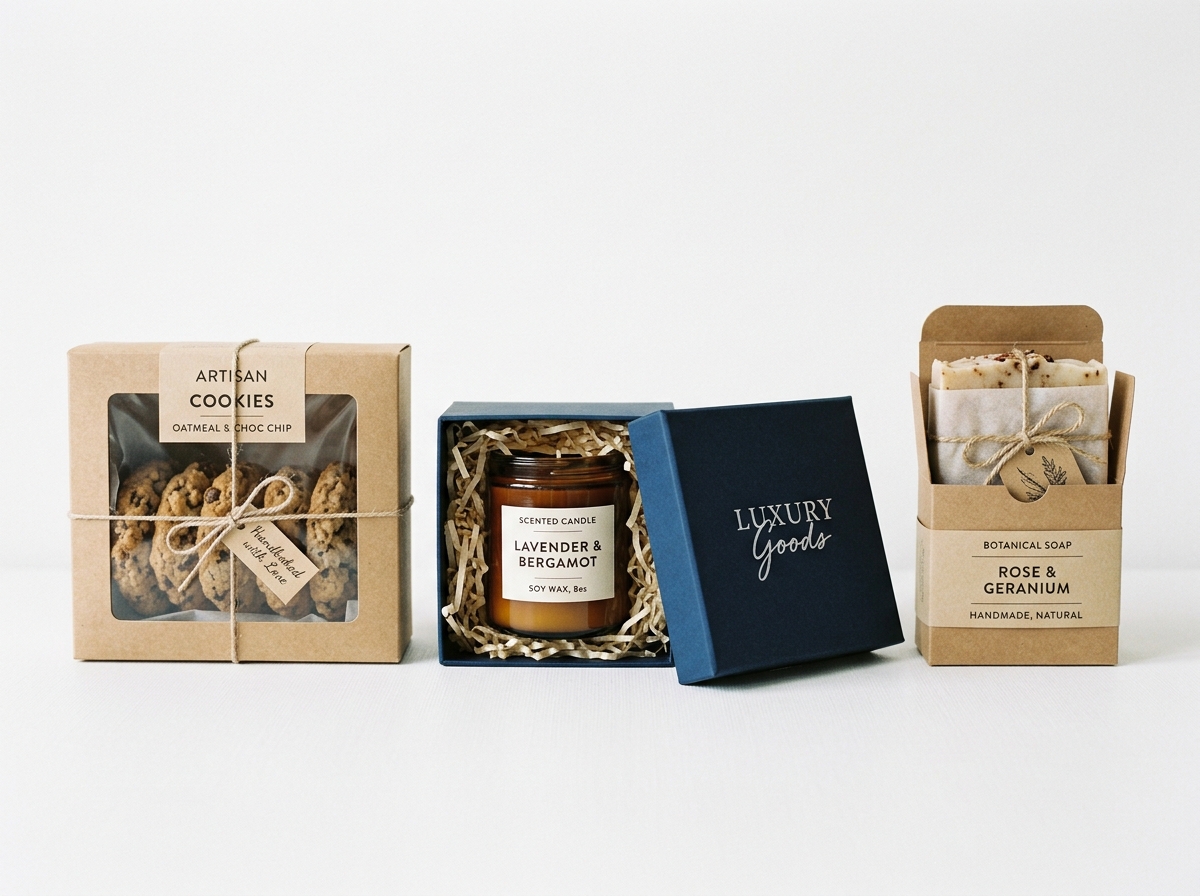
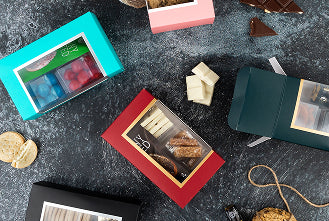
Window boxes feature a die-cut opening covered with a food-safe PET or acetate film, allowing customers to see your cookies, brownies, or pastries without opening the package. This transparency builds trust—customers know exactly what they're buying—and reduces the need for additional photography on your website or at farmers markets. Standard window sizes range from 2×3 inches for small cookie boxes up to 4×6 inches for larger pastry assortments.
For small bakeries, white or kraft window boxes in common sizes (6×6×3 inches for a half-dozen cookies, 8×8×4 inches for brownies or bars) offer the best balance of cost and versatility. These dimensions fit standard baking sheet outputs and stack efficiently for transport. If you're selling at retail locations, window boxes also function as point-of-sale displays—the product sells itself.
Tuck-top boxes (also called auto-bottom or snap-lock boxes) ship flat, assemble in seconds without tape or glue, and provide full enclosure for products that don't require visibility. They're ideal for individually wrapped items like biscotti, granola bars, or cake slices. The tuck closure keeps the box secure during transport but opens easily for the customer.
Sizing matters here: leave at least a quarter-inch clearance on all sides of your product to account for minor size variations in handmade goods. A 4×4×2-inch tuck-top works well for four individually wrapped cookies; an 8×5×3-inch box accommodates a small loaf cake or six muffins. Many small bakeries start with kraft boxes for small business in two or three core sizes, then add custom printing as order volume grows.
Traditional bakery boxes with tuck-in flaps remain the workhorse for larger items—full-sized cakes, pie assortments, or catering orders. These are typically white clay-coated kraft, which provides grease resistance and a clean presentation. Standard sizes include 10×10×5 inches (layer cakes), 9×9×4 inches (pies), and 14×10×4 inches (sheet cakes).
While these boxes are functional, they're less "giftable" on their own. Small bakeries often elevate them by adding a belly band (a printed paper wrap around the middle), a branded sticker seal, or tying with baker's twine. This approach keeps per-unit costs low while still creating a cohesive brand moment.
Candle packaging faces a different set of challenges. Glass vessels are fragile and heavy; wax can melt or scuff during shipping; and customers expect a premium unboxing experience that justifies the price point of handmade candles, which often retail between $20 and $40.
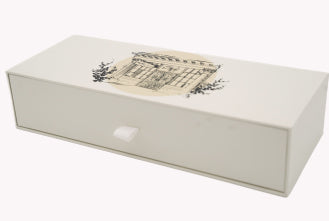
Two-piece rigid boxes—a separate base and lid, often wrapped in printed paper or linen texture—are the gold standard for candle gifting. The construction uses thick chipboard (typically 1.5mm to 2mm), which provides crush resistance during shipping and a satisfying weight in the customer's hands. Rigid boxes cost more per unit than folding cartons (often $1.50 to $4.00 each depending on size and finish), but they also command higher perceived value and can be reused by customers for storage, extending your brand presence in their home.
Sizing a rigid box for a candle is straightforward: measure the diameter and height of your candle vessel, then add a half-inch to the diameter and three-quarters of an inch to the height to allow for tissue paper or padding. For example, a standard 8-ounce candle in a 3.25-inch diameter tumbler fits comfortably in a 3.75×3.75×4-inch rigid box. If you're packaging multiple candles or adding matchbooks and care cards, step up to a 5×5×4-inch or 6×6×4-inch box.
Inserts are non-negotiable for shipping candles. Corrugated or molded pulp inserts cradle the vessel and prevent movement inside the box. Some small candle makers use crinkle paper or tissue as a budget alternative, but for ecommerce orders traveling through parcel networks, a fitted insert reduces breakage claims significantly. According to data from the Dotcom Distribution 2022 Omnichannel Retail Report, 30% of customers say they would not reorder from a brand after receiving a damaged product, making protective packaging a direct revenue consideration.
For candle makers on a tighter budget, folding cartons with tuck closures in kraft or white offer a middle ground. These don't deliver the same luxury feel as rigid boxes, but when paired with custom stamps, stickers, or letterpress belly bands, they can still create a strong brand impression. The key is consistency—whatever packaging tier you choose, apply it uniformly across your product line so customers recognize your brand instantly.
Handmade product packaging is perhaps the most diverse category, encompassing everything from bar soaps and bath bombs to jewelry, stationery, and small textiles. The common thread: these products are often sold at craft fairs, pop-up markets, and online shops where presentation directly impacts purchase decisions.
For bar soaps, tuck-top kraft boxes in the 3×3×1.5-inch to 4×3×2-inch range are popular. Kraft communicates natural ingredients and eco-consciousness, which aligns with customer expectations for handmade soap. Many soap makers leave one end of the box open or add a small die-cut window so customers can smell the product—scent is a primary purchase driver. If your soaps have textured tops or embedded botanicals, a window also showcases that craftsmanship.
Jewelry requires a different approach. Small rigid boxes with cotton or foam inserts—often 3×3×1 inch for rings and earrings, 5×3×1.5 inches for bracelets—protect delicate items and create a premium gifting moment. These boxes are typically available in white, black, or kraft, and small businesses often customize them with printed belly bands or interior stamps. For businesses just starting out, stock boxes with custom stickers or ribbon offer a cost-effective entry point before investing in fully printed packaging.
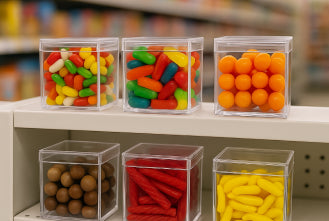
Bath bombs, candles, and other round or irregularly shaped items benefit from clear boxes or resealable treat bags that allow full product visibility. Clear PET boxes (similar to the plastic clamshells used for retail toys) are lightweight, inexpensive, and stackable, though they lack the tactile warmth of paperboard. Many small businesses use clear boxes for individual product sales and upgrade to custom printed boxes for gift sets or seasonal collections.
Once you've selected your core box style, small add-ons can significantly enhance perceived value without requiring custom printing or high minimums. These details are especially important for small businesses competing in crowded online marketplaces where product photography and unboxing videos drive conversions.
Tissue paper is the most cost-effective upgrade. A single sheet of colored or printed tissue (typically 20×30 inches, folded and tucked around the product) adds a layer of anticipation to the unboxing process. White, kraft, or a single brand color keeps costs low; custom-printed tissue with your logo typically requires minimums of 1,000 to 5,000 sheets but can be amortized across multiple product lines.
Ribbon and twine transform a plain box into a gift-ready package. Satin ribbon (in widths from 3/8 inch to 1 inch) offers a polished, elegant look; cotton twine or jute cord feels rustic and artisan. Many small businesses keep two or three ribbon colors on hand that coordinate with their brand palette and seasonal offerings. A simple bow or knot takes seconds to tie and signals to the customer that the product is special.
Stickers and stamps are the fastest path to branded packaging. Custom die-cut stickers (available from print-on-demand services with no minimums) can be applied to stock boxes, tissue paper, or directly onto products. Rubber stamps with your logo, website, or a "handmade with love" message add personality and require only an ink pad. Both options scale easily—you can order 100 stickers to test a design, then reorder thousands once you've validated demand.
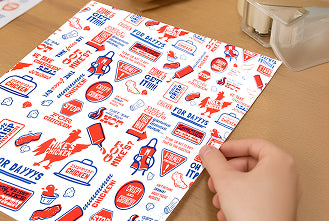
Belly bands—printed paper strips that wrap around the middle of a box—are another flexible branding tool. They can be printed on standard cardstock using a home or local printer, then cut to size. A belly band allows you to use stock white or kraft boxes while still incorporating your logo, product details, or a seasonal message. For businesses creating an unboxing experience on a small business budget, belly bands offer high visual impact for minimal investment.
One of the most common mistakes small businesses make is ordering boxes that are too large or too small for their products. Oversized boxes waste material, increase shipping costs, and make products shift during transit. Undersized boxes require forcing products in, which damages both the item and the packaging.
Here's a practical sizing guide for common small business products:
Always order samples before committing to large quantities. Most packaging suppliers offer sample packs or single units at slightly higher per-piece costs, which is worthwhile insurance against ordering the wrong size. Test your actual product in the sample box, pack it as you would for shipping, and evaluate whether there's adequate protection without excess space.
Custom printing—adding your logo, brand colors, or product information directly to the box—is often the long-term goal for small businesses, but it's not always the right first step. Fully custom printed boxes typically require minimums of 500 to 1,000 units per design and SKU, with setup fees ranging from $100 to $500 depending on the number of colors and box complexity.
For businesses just launching or testing new product lines, stock boxes with custom stickers or stamps offer flexibility. You can order 100 white tuck-top boxes and 100 kraft tuck-top boxes, then apply the same sticker to both, allowing you to pivot based on customer feedback without being locked into a single design. As your business grows and you have reliable sales data, you can transition to custom printing for your top-selling SKUs while keeping stock boxes for seasonal or limited-edition products.
Another consideration: printing methods. Digital printing has lower minimums (sometimes as few as 100 boxes) but higher per-unit costs and limited color accuracy for brand matching. Offset printing requires higher minimums but delivers crisp, consistent color and lower per-unit costs at scale. Flexographic printing is common for corrugated boxes and offers a middle ground. Understanding these trade-offs helps you make informed decisions as your packaging needs evolve.
Sourcing packaging is a balancing act between cost, quality, lead time, and service. Large wholesale suppliers offer the lowest per-unit prices but often require high minimums and long lead times. Local packaging distributors provide faster turnaround and lower minimums but at higher costs. Online marketplaces and print-on-demand services eliminate minimums entirely but sacrifice cost efficiency.
For most small businesses, a hybrid approach works best: order core box styles in moderate quantities (250 to 500 units) from a wholesale supplier to lock in lower pricing, and keep a small inventory of stock boxes from a local or online source for rush orders or new product testing. This strategy balances cash flow with operational flexibility.
When evaluating suppliers, ask about:
Many small businesses also explore regional packaging manufacturers, especially for custom or specialty boxes. While overseas suppliers (particularly in Asia) offer the lowest costs, lead times of 8 to 12 weeks and higher shipping costs can negate savings for small orders. Domestic suppliers typically have faster turnaround and easier communication, which matters when you're troubleshooting a packaging issue or need a rush reorder.
Efficient packaging isn't just about the box—it's about the entire workflow from product completion to shipment. Small businesses often underestimate the time required to assemble boxes, wrap products, apply stickers, tie ribbons, and pack for shipping. As order volume grows, these minutes add up.
Batch your packaging tasks. Instead of fully packing each order as it comes in, dedicate specific time blocks to assembly. Fold and crease 50 boxes at once, cut 50 ribbon lengths, pre-print 50 packing slips. This assembly-line approach reduces setup time and helps you spot inefficiencies (e.g., a box that's difficult to fold or ribbon that frays when cut).
Organize your packaging station with all materials within arm's reach: boxes, tissue, ribbon, scissors, tape, stickers, packing slips. Use bins or shelves to separate materials by product line or box size. Label everything clearly so team members or helpers can step in without extensive training.
Standardize your packaging as much as possible. If you offer five different candle scents, use the same box size and packaging materials for all five. This simplifies inventory management, reduces errors, and creates a cohesive brand experience. Save customization for limited editions or premium gift sets where the extra effort justifies the time investment.
Kraft tuck-top boxes in one or two core sizes offer the best balance of cost, versatility, and brand appeal for new businesses. They ship flat (reducing storage space), require no tape or glue to assemble, and can be customized with stickers or stamps as your budget allows. Expect to pay $0.40 to $1.00 per box depending on size and order quantity.
Stock boxes with custom stickers, stamps, or belly bands are perfectly acceptable and often smarter for businesses with limited cash flow or evolving product lines. Custom printing makes sense once you have consistent sales volume (typically 500+ units per quarter of a single SKU) and a finalized brand identity. Many successful small businesses use stock boxes for years before transitioning to custom printing.
Use window boxes when product visibility drives purchase decisions—decorated cookies, colorful macarons, or artisan pastries benefit from being seen. Choose solid boxes when products are individually wrapped, when you want to include a printed menu or ingredient list on the box exterior, or when your branding is strong enough that customers trust the contents without seeing them. Window boxes typically cost 10-20% more than solid boxes due to the film insert.
Most 8-ounce candles in standard tumblers (approximately 3.25 inches in diameter and 3.5 inches tall) fit well in a 3.75×3.75×4-inch or 4×4×4-inch box, allowing room for tissue paper or a small insert. Always measure your specific vessel and add at least a half-inch to diameter and three-quarters of an inch to height for padding.
Minimum order quantities vary by supplier and printing method. Traditional offset printing typically requires 500-1,000 boxes per design. Digital printing can go as low as 100-250 boxes but at higher per-unit costs. Many small businesses start with stock boxes and add custom elements (stickers, stamps, bands) that have no minimums, then transition to custom printing as volume grows. Some online suppliers now offer print-on-demand gift boxes with no minimums, though per-unit costs are significantly higher.