Cart
0
You may also like


Book a call with our development team to get started.



Apply online and access wholesale pricing.

When you're launching a bakery, meal kit service, or specialty food brand, choosing the right packaging isn't just about presentation—it's about safety, compliance, and protecting your customers. Food-safe packaging for small business means understanding which materials meet federal regulations, how to prevent grease bleed-through, and where to find affordable options that won't compromise quality. Whether you're boxing cookies for a farmers market or sealing meal kits for delivery, the packaging that touches your food must meet strict standards set by the FDA.
In this guide, we'll walk through the regulatory basics every small food business owner needs to know, the most common packaging materials and their applications, and practical compliance steps you can take today. By the end, you'll understand how to select packaging that keeps your products fresh, your brand protected, and your business on the right side of food safety law.
Food-safe packaging refers to any material designed to come into direct contact with food without transferring harmful chemicals or contaminants. Packaging Strategies notes that materials suppliers must consider safety beyond aesthetics when determining which packaging materials contact food and beverages. The FDA regulates these materials as food contact substances, and any substance that migrates from packaging into food is considered an indirect food additive.
Not all packaging requires direct FDA approval. As long as manufacturers use substances already authorized by the FDA for their intended use, they meet legal requirements. The FDA maintains a public database called Substances Added to Food, which lists nearly 4,000 materials—including those no longer authorized. This database helps small business owners verify that their packaging suppliers are using compliant materials.
For small food businesses, this means asking your packaging supplier for documentation. Reputable vendors will provide certificates of compliance or material data sheets confirming that their products meet FDA standards for food contact. If a supplier can't provide this information, that's a red flag.
The Federal Food, Drug and Cosmetic Act (FFDCA) is the key legislation covering food contact materials in the United States. Under this law, any food contact substance that qualifies as a food additive must be authorized by the FDA before it can legally enter the U.S. market. The FDA holds enforcement authority and can take legal action against companies that fail to comply with food packaging safety regulations.
The regulations are organized in Title 21 of the Code of Federal Regulations (21 CFR). Section 175 covers indirect food additives including adhesives and coatings, while Section 176 addresses paper and paperboard components. These sections list authorized substances and the conditions for their use, including temperature limits, food type restrictions, and maximum migration levels.
For new food contact substances, manufacturers must register the product with the FDA through a Food Contact Notification (FCN). The FDA has 120 days to raise objections; if they don't object, the packaging materials are automatically legal. Small businesses typically don't apply for FCNs themselves—instead, you'll rely on pre-approved substances from established packaging suppliers.
When selecting custom packaging ideas for small businesses, always verify that your chosen materials have the appropriate FDA clearances for your specific food application. Different foods—acidic, fatty, or dry—interact differently with packaging materials, so compatibility matters.
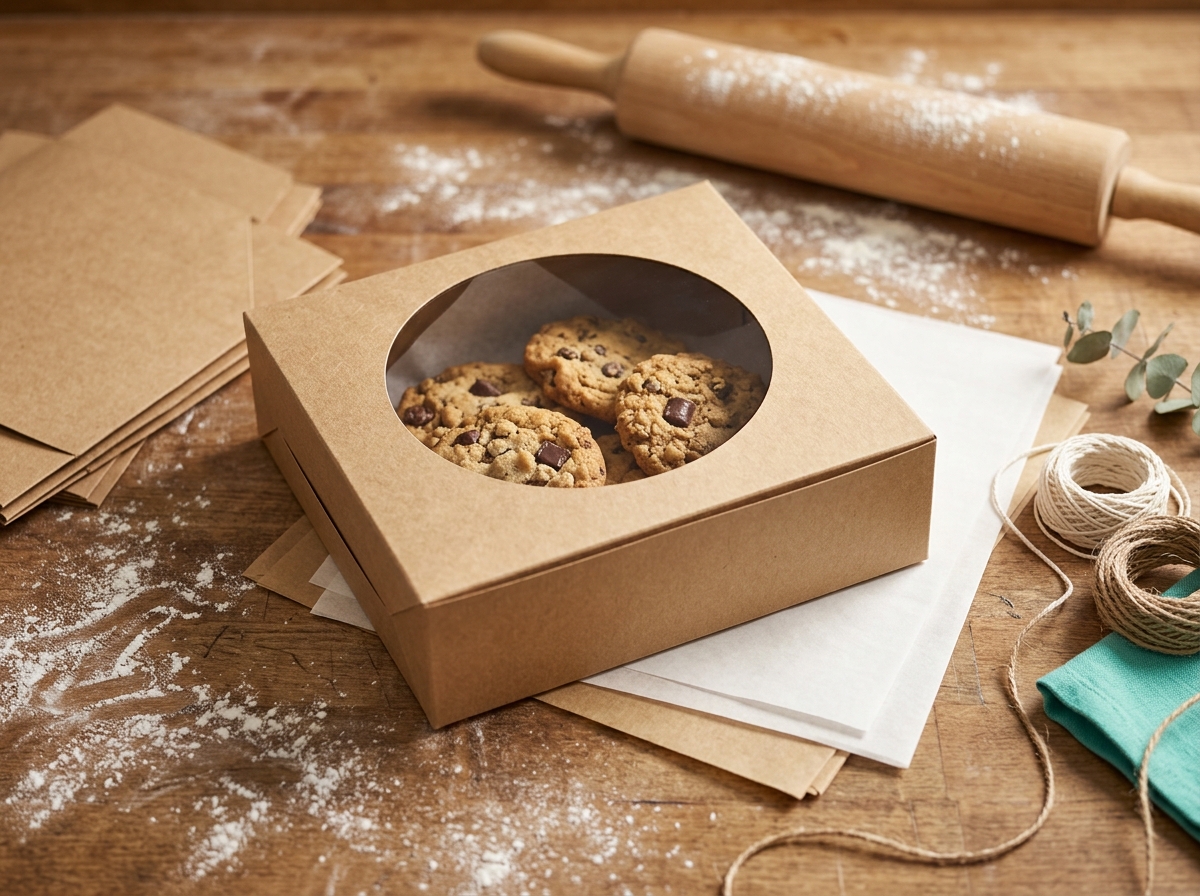
Small food businesses typically work with four main categories of food-safe packaging: paper and paperboard, cellophane and plastic films, foil-sealed containers, and specialty grease-resistant materials. Each has distinct advantages depending on your product type and distribution method.
Kraft paperboard is a workhorse for bakeries and confectioners. It's FDA-compliant, affordable, and available in countless sizes and styles. Cube kraft gift boxes work well for cookies, brownies, and small pastries, while larger tuck-top boxes accommodate full-size cakes or pie slices. The tuck-top design provides a secure closure without adhesives, which is ideal for food applications.
Uncoated kraft paperboard is breathable, which helps prevent condensation buildup on baked goods. However, it offers limited grease resistance. For products with higher oil content—donuts, fried pastries, or butter-rich cookies—you'll want to pair your boxes with grease-resistant liners or choose coated paperboard options.
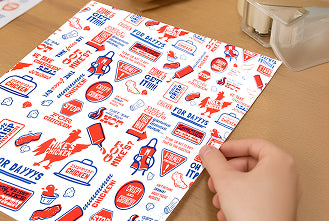
Grease-resistant paper undergoes a manufacturing process that reduces its porosity, creating a dense surface that resists oil and moisture penetration. This material is essential for wrapping items like croissants, pizza slices, or any baked goods with visible grease or butter content.
Traditionally, grease resistance was achieved using fluorinated compounds (PFAS), but these substances have come under regulatory scrutiny due to environmental and health concerns. Many manufacturers now offer PFAS-free alternatives that use mechanical processing or plant-based coatings to achieve similar barrier properties. When sourcing grease-resistant paper, ask suppliers specifically whether their products are PFAS-free—this is increasingly important for both regulatory compliance and consumer perception.
Grease-resistant liners serve a dual purpose: they protect the structural integrity of your packaging (oil-soaked boxes collapse and tear), and they maintain food safety by preventing oils from seeping through to the exterior, where they could pick up contaminants.
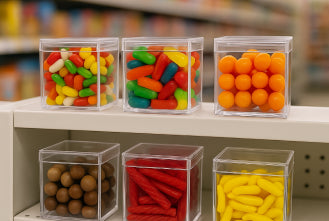
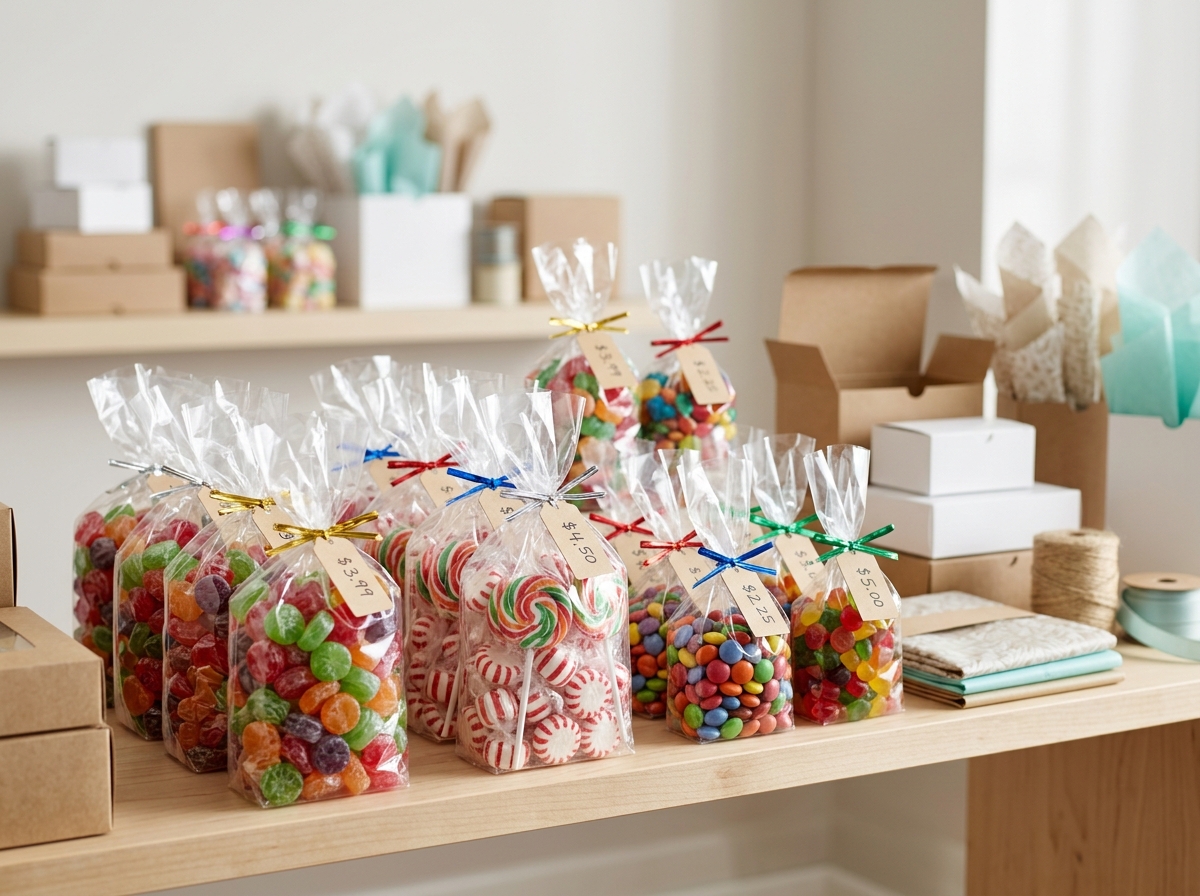
Cellophane and food-grade plastic bags offer visibility and versatility. Clear packaging lets customers see your product—an advantage for colorful cookies, candies, or trail mixes. Food-safe cellophane bags come in various thicknesses and can be heat-sealed or tied with twist ties for tamper-evident closures.
For small businesses, the key specification is food-grade certification. Not all plastic films are approved for direct food contact. Polypropylene (PP) and polyethylene (PE) are common FDA-approved options. Avoid using decorative or craft-grade cellophane for food products—these materials may contain dyes or coatings not intended for food contact.
Cellophane works particularly well for dry goods: biscotti, granola, popcorn, or candy. For items with any moisture content, you'll need bags with moisture barrier properties or foil linings to prevent staleness and maintain shelf life.
For meal kits, coffee, tea, or any product requiring extended shelf life, foil-sealed bags provide superior moisture and oxygen barriers. These multi-layer laminates typically combine plastic films with aluminum foil, creating an airtight seal that preserves freshness far longer than paper or standard plastic.
Foil-sealed bags are more expensive than simple cellophane, but they're essential for products that will sit on shelves or in pantries for weeks. They also offer excellent protection during shipping, preventing crushing and moisture intrusion. Many come with resealable zip closures, adding convenience for customers who use the product over multiple occasions.
When choosing packaging materials for your product, consider your distribution timeline. If you're selling at a weekend market and customers will consume items within days, simpler packaging may suffice. If you're shipping nationwide or stocking retail shelves, invest in barrier packaging that protects product quality over time.
Bakery products present unique packaging challenges due to moisture content, grease levels, and fragility. A cookie that's perfectly crisp at packaging time can turn soggy if trapped with its own moisture, while a delicate macaron can shatter in a box that's too large or lacks protective inserts.
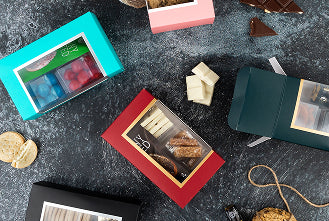
Window boxes are popular for bakery items because they showcase your work while providing structure. The window itself—typically made of food-grade PET plastic—must be securely attached to prevent gaps where contaminants could enter. The box interior should accommodate your product without excessive movement, which causes crumbling and breakage during transport.
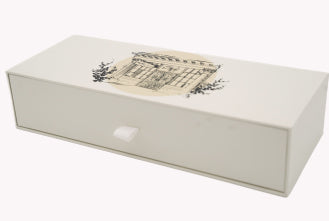
For cookies and brownies, consider individual wrapping before boxing. This serves two purposes: it maintains freshness by limiting air exposure, and it creates portion control for customers buying assortments. Small white gift boxes work well for individually wrapped items or small favor portions.
Cupcakes require boxes with inserts or dividers to prevent tipping and frosting damage. The box height must accommodate your tallest frosting design plus a small clearance—typically 4 to 5 inches for standard cupcakes. Inserts should fit snugly enough to prevent sliding but not so tight that removing cupcakes damages the decoration.
Meeting food packaging compliance doesn't require a legal team, but it does require diligence. Start by documenting your packaging sources. Keep records of supplier names, product specifications, and any compliance certificates they provide. If you're ever audited or face a customer complaint, this documentation proves you took reasonable steps to ensure safety.
Next, match your packaging to your product type. The FDA considers factors like temperature, acidity, fat content, and alcohol content when evaluating food contact safety. A box that's safe for dry cookies might not be appropriate for a moist cake with cream cheese frosting. When in doubt, ask your supplier for guidance on approved uses.
Label your packaging correctly. While this guide focuses on the packaging itself, remember that food labeling regulations also apply. Your packages must include ingredient lists, allergen warnings, net weight, and your business contact information. These requirements exist alongside—not instead of—packaging material compliance.
Consider conducting periodic reviews of your packaging suppliers, especially if you're scaling up. A supplier that was fine for farmers market quantities might not have the certifications needed for retail distribution or food service contracts. As your business grows, your packaging standards may need to evolve too.
Food-safe packaging doesn't have to break your budget, but it does require strategic purchasing. The key is understanding minimum order quantities (MOQ) and balancing compliance with cash flow.
Most wholesale packaging suppliers offer food-grade options at reasonable per-unit costs, but MOQs can range from 50 to 500 units depending on the item. For startups, this means choosing versatile packaging that works across multiple products. A standard 4x4x4 kraft box can hold cookies, brownies, small cakes, or candies—reducing the number of SKUs you need to stock.
Generic, unbranded food-safe packaging is your friend in the early stages. You can customize plain kraft boxes with stickers, stamps, or printed inserts without committing to large print runs of custom-printed boxes. This approach also gives you flexibility to adjust your branding as your business evolves. Learn more about budget branded packaging ideas that maintain a professional look without custom printing costs.
When you're ready to scale, understanding MOQ for small business packaging helps you plan inventory and negotiate better pricing. Many suppliers offer tiered pricing—ordering 1,000 units instead of 500 might drop your per-unit cost by 20% or more.
Sustainability and food safety aren't mutually exclusive, but they do require careful material selection. Many customers now expect eco-friendly packaging, and small food businesses can meet this demand without sacrificing compliance.
Kraft paperboard is inherently more sustainable than plastic—it's biodegradable, recyclable, and often made from recycled content. However, not all "eco-friendly" packaging is food-safe. Recycled paper products may contain contaminants from previous uses, making them unsuitable for direct food contact unless they've been specifically processed and certified for food use.
Compostable cellophane made from plant-based materials (like cellulose from wood pulp) offers a sustainable alternative to petroleum-based plastics. These materials are FDA-approved for food contact and break down in commercial composting facilities. The trade-off is cost—compostable films typically run 30-50% more than conventional plastic bags.
PFAS-free grease-resistant paper represents another sustainable choice. As regulations tighten around fluorinated compounds, switching to PFAS-free options now positions your business ahead of future requirements. These papers use mechanical processing or plant-based coatings to achieve grease resistance, making them safer for both consumers and the environment.
For more guidance on balancing sustainability with budget constraints, explore affordable eco-friendly packaging options that work for small-scale food producers.
Food-safe packaging maintains its compliance only if stored and handled correctly. Boxes and bags should be kept in a clean, dry environment away from chemicals, cleaning supplies, or non-food items. Even FDA-approved materials can become contaminated through improper storage.
Establish a dedicated packaging area in your production space. This doesn't need to be a separate room—a clean shelf or cabinet that's used only for packaging materials works fine for most small operations. The goal is preventing cross-contamination from cleaning products, raw ingredients, or non-food items.
Inspect packaging before use, especially if you buy in bulk and store materials for extended periods. Look for signs of moisture damage, pest intrusion, or physical damage that could compromise food safety. Damaged packaging should be discarded, not used.
Train anyone who handles your packaging on proper procedures. This includes washing hands before handling packaging materials, using clean surfaces for assembly, and never placing packaging materials directly on floors or other potentially contaminated surfaces. These practices seem basic, but they're essential for maintaining the food-safe status of your packaging.
As your food business grows, your packaging needs will evolve. Recognizing when to upgrade prevents problems before they impact your brand or compliance status.
Consider upgrading when you're entering new distribution channels. Farmers market packaging that works for same-day sales may not provide adequate protection for mail order or retail shelf life. Wholesale accounts often require specific packaging features: barcodes, nutrition labels in specific formats, or tamper-evident seals.
If you're receiving customer complaints about packaging—grease stains, crushed products, or staleness—it's time to reassess. These aren't just quality issues; they can indicate that your current packaging isn't providing adequate food protection. Addressing packaging problems quickly protects your reputation and prevents more serious food safety concerns.
Seasonal volume spikes also trigger packaging strategy reviews. If you're producing ten times more cookies in December than June, you need packaging systems that scale efficiently. This might mean switching to suppliers with no MOQ penalties for reorders, or investing in packaging that ships flat and assembles quickly.
Small food businesses typically don't need to seek direct FDA approval for packaging. Instead, you must use materials that are already FDA-approved for food contact. Reputable packaging suppliers provide food-safe products made from authorized substances. Always request documentation from suppliers confirming their materials meet FDA food contact standards for your specific application—dry goods, fatty foods, or acidic products may have different requirements.
These terms are often used interchangeably, but both refer to materials approved for direct food contact that won't transfer harmful chemicals to food. Food-safe packaging meets FDA standards outlined in Title 21 of the Code of Federal Regulations. When purchasing packaging, look for explicit "food-safe" or "FDA-approved for food contact" labeling rather than decorative or craft-grade materials, which may not meet food safety standards.
Recycled paper can be food-safe, but only if it's been specifically processed and certified for food contact use. Standard recycled paper may contain contaminants from previous uses that make it unsuitable for direct food contact. If you want to use recycled content for sustainability reasons, purchase from suppliers who explicitly certify their recycled paperboard as food-safe and provide documentation of FDA compliance.
Ask your packaging supplier directly whether their grease-resistant products contain PFAS (per- and polyfluoroalkyl substances). Reputable suppliers now offer PFAS-free alternatives using mechanical processing or plant-based coatings. Request written confirmation or specification sheets documenting the absence of fluorinated compounds. As regulations around PFAS tighten, choosing PFAS-free options now protects your business from future compliance issues.
Shipping requires more robust packaging than local sales. Start with food-safe boxes or bags that directly contact your product, then add protective outer packaging to prevent crushing during transit. For delicate items like cookies or pastries, use boxes with minimal empty space to prevent shifting. Consider individual wrapping to maintain freshness and prevent breakage. Grease-resistant liners protect both your product and the packaging structure during shipping. Many small bakeries use a structured kraft gift box as the primary food container, then place it in a corrugated shipping box with cushioning material.
Food-safe packaging for small business isn't just about meeting regulations—it's about building customer trust and protecting your brand as you grow. By understanding FDA requirements, choosing appropriate materials for your specific products, and working with reputable suppliers who provide documentation, you create a foundation for long-term success.
Start with versatile, food-safe basics: kraft boxes in a few key sizes, grease-resistant liners, and clear cellophane bags for visibility. Document your suppliers and keep compliance certificates on file. As you scale, revisit your packaging strategy to ensure it still meets both regulatory requirements and your evolving distribution needs.
The investment you make in proper food-safe packaging pays dividends in customer satisfaction, reduced waste from damaged products, and peace of mind knowing you're meeting your legal obligations. Whether you're boxing cookies for a holiday market or launching a meal kit service, the right packaging protects what matters most—your food, your customers, and your business.