Cart
1
You may also like


Book a call with our development team to get started.



Apply online and access wholesale pricing.

When a bakery commits to sustainability, packaging choices become brand statements. Eco friendly pie boxes communicate values before a customer takes the first bite—and in 2026, those values drive purchasing decisions. For bakeries supplying Thanksgiving orders, farmers' markets, or wholesale accounts, selecting recyclable or compostable pie packaging isn't just about reducing environmental impact. It's about aligning with consumer expectations, meeting retailer sustainability requirements, and building trust through transparent material choices.
This guide covers kraft paperboard options with high recycled fiber content, FSC-certified materials, compostable alternatives, and how to communicate eco-credentials without greenwashing. Whether you're sourcing thanksgiving pie boxes for seasonal volume or building a year-round sustainable packaging program, understanding material certifications and end-of-life pathways helps you make decisions that balance performance, cost, and environmental responsibility.
Sustainability has moved from marketing differentiator to baseline expectation. Packaging Insights reports that "Substantiated Sustainability" tops 2026 packaging trends, with consumers demanding verified environmental claims backed by scientific evidence rather than vague marketing language. Bakeries face pressure from multiple directions: retail partners require sustainability reporting, municipal waste programs penalize non-recyclable materials, and customers increasingly choose brands that demonstrate measurable environmental commitments.
For pie packaging specifically, the challenge lies in balancing food safety requirements with eco-friendly materials. Pies contain fats and moisture that can compromise paperboard integrity, requiring grease-resistant treatments that must remain food-safe and environmentally responsible. The packaging must protect delicate crusts during transport while maintaining recyclability or compostability at end of life—a technical balancing act that rules out many conventional solutions.
Kraft paperboard remains the most practical eco friendly pie box material for most bakeries. Its natural brown appearance signals sustainability to customers, it accepts food-safe grease-resistant coatings, and it integrates seamlessly into existing municipal recycling streams. Unlike white SBS (solid bleached sulfate) paperboard, kraft requires less chemical processing and often contains higher percentages of recycled fiber.
When evaluating kraft options, prioritize boxes with at least 18% post-consumer recycled (PCR) content. Some suppliers offer kraft with 35% or higher recycled fiber, though availability varies by region and order volume. The recycled content percentage should appear on product specifications—if a supplier can't provide this number, request it before committing to an order. For bakeries managing wholesale pie box pricing considerations, higher recycled content sometimes carries a modest premium, but the cost difference has narrowed significantly as PCR material supply has matured.
Kraft paperboard pie boxes work well for standard 9-inch and 10-inch formats, with structural integrity comparable to virgin fiber boxes when properly manufactured. The material handles standard bakery applications—room temperature pies, refrigerated transport, and short-term display—without performance compromises. However, kraft's porous nature means grease-resistant coatings become critical for high-fat fillings like pecan or custard pies.
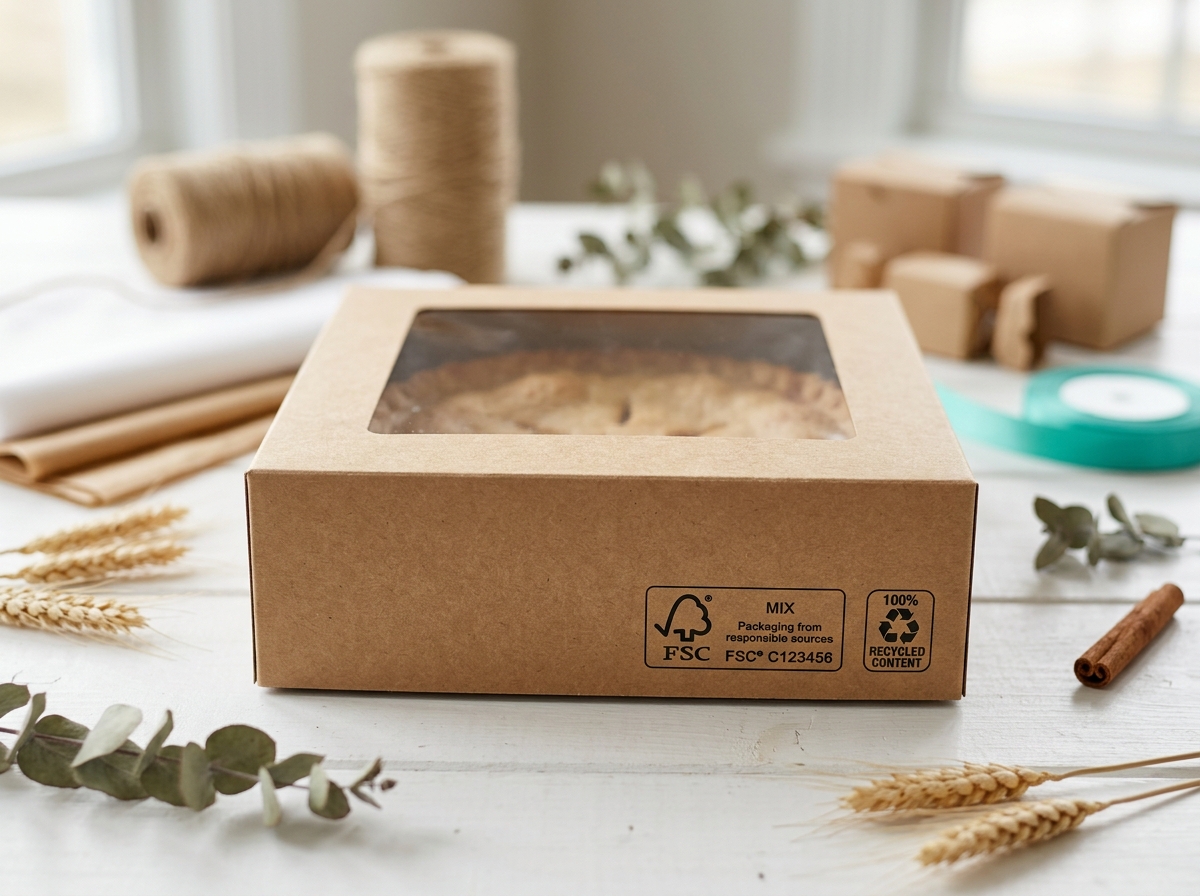
Forest Stewardship Council (FSC) certification provides third-party verification that paperboard fiber originates from responsibly managed forests. FSC certification tracks materials through a documented chain of custody from forest to finished product, with independent audits at each supply chain stage. For bakeries building sustainability narratives, FSC certification offers credible proof that packaging choices support forest health, biodiversity protection, and fair labor practices.
Three FSC certification levels apply to pie boxes: FSC 100% uses fiber entirely from FSC-certified forests, FSC Recycled contains 100% post-consumer recycled content, and FSC Mix combines certified virgin fiber with recycled content and controlled wood sources. Most bakery packaging falls into the FSC Mix or FSC Recycled categories, balancing sustainability goals with cost and availability constraints.
The FSC logo on packaging serves dual purposes: it provides a recognizable trust signal to eco-conscious customers, and it satisfies corporate sustainability reporting requirements for bakeries supplying retail chains or corporate accounts. Many large retailers now require FSC certification for supplier packaging, making it a market access issue rather than an optional enhancement. When comparing kraft vs. SBS paperboard options, verify that both materials carry FSC certification if your customer base or distribution channels demand it.
Uncoated kraft paperboard absorbs fats and moisture from pie fillings, leading to structural failure and potential food safety issues. Grease-resistant coatings create a barrier between paperboard and food while maintaining recyclability—but not all coatings are created equal from an environmental perspective.
Traditional polyethylene (PE) coatings provide excellent grease resistance but render paperboard non-recyclable in most municipal systems. The plastic coating must be separated from paper fiber during recycling, a process most facilities can't perform economically. For genuinely eco friendly pie boxes, specify water-based or bio-based barrier coatings that maintain recyclability. These coatings use natural waxes, plant-based polymers, or aqueous dispersions that don't interfere with paper recycling processes.
Performance differences exist: water-based coatings handle moderate grease exposure for 24-48 hours, suitable for most pie applications, while bio-based polymer coatings approach PE performance for extended contact with high-fat fillings. Discuss your specific pie types with suppliers—a pumpkin pie with modest fat content has different coating requirements than a butter-rich chess pie. For bakeries concerned with food-safe pie packaging compliance, verify that any grease-resistant coating carries FDA approval for direct food contact with bakery products.
Natural kraft gift boxes work well for individual pie slices or smaller format desserts when paired with appropriate barrier treatments, offering customers a reusable container that extends brand presence beyond the initial purchase.
Compostable packaging appeals to bakeries targeting zero-waste operations or serving communities with robust composting infrastructure. Materials like PLA (polylactic acid) bioplastic, bagasse (sugarcane fiber), and uncoated kraft with compostable coatings break down in composting environments—but "compostable" requires careful qualification.
Most compostable pie boxes require commercial composting facilities that maintain temperatures above 140°F with controlled moisture and oxygen levels. These industrial conditions don't exist in backyard compost piles, meaning "compostable" packaging sent home with customers often ends up in landfills where it won't decompose effectively. Commercial composting access varies dramatically by region: urban areas with municipal organics collection programs can support compostable packaging, while rural bakeries may lack nearby facilities entirely.
Before committing to compostable options, verify that your customer base has access to appropriate composting infrastructure. A compostable pie box that goes to landfill delivers no environmental benefit over conventional packaging—and may perform worse if customers assume it will decompose in any environment. Some municipalities explicitly exclude compostable packaging from organics collection due to contamination concerns, making recyclable kraft a more practical choice despite its lower "sustainability" marketing appeal.
For bakeries with verified composting access, bagasse pie boxes offer strong performance with legitimate end-of-life benefits. The material provides heat resistance up to 220°F and natural grease resistance from the sugarcane fiber structure. Bagasse typically costs 15-30% more than kraft paperboard, with availability improving but still limited compared to conventional options.
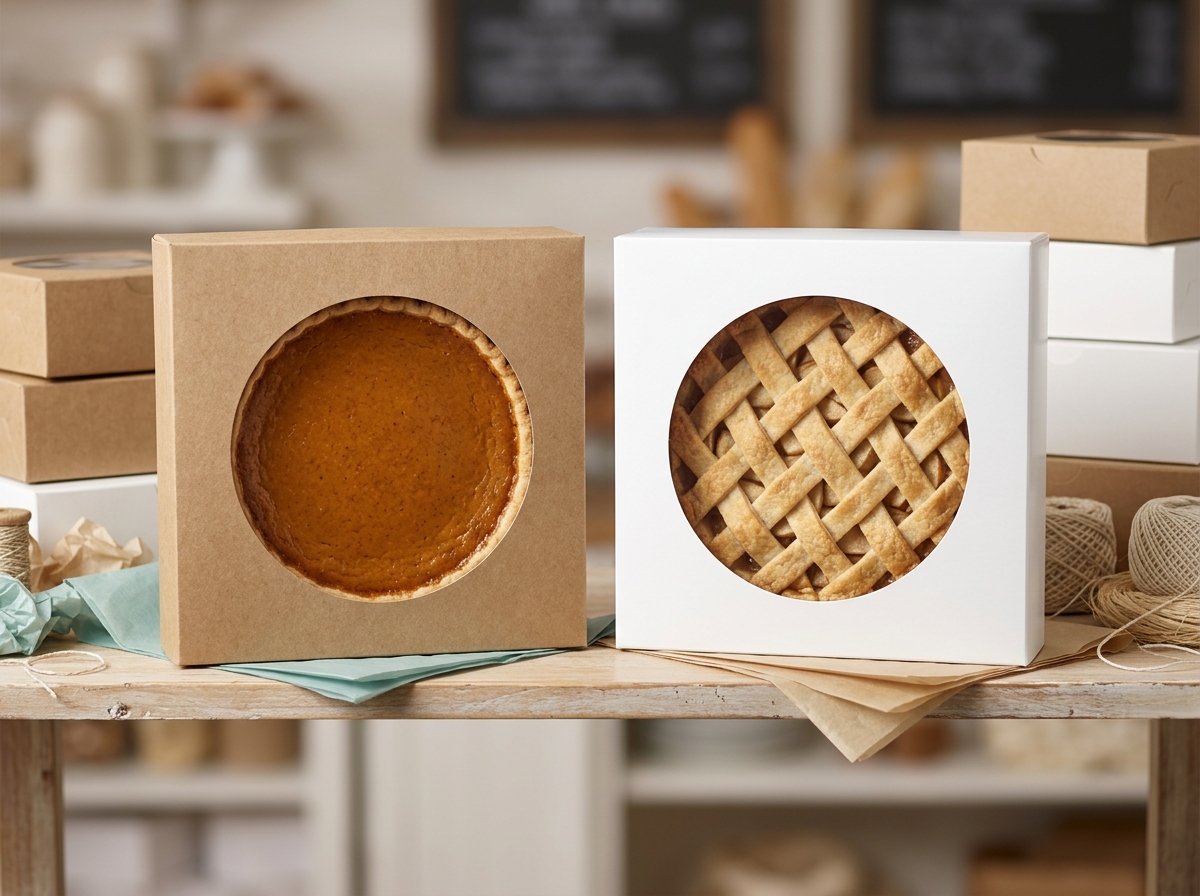
Sustainability claims require substantiation. Vague terms like "eco-friendly," "green," or "earth-conscious" without supporting details invite skepticism and potential regulatory scrutiny. When marketing pie packaging as sustainable, specify the measurable attributes: "made with 35% post-consumer recycled fiber and FSC-certified paperboard" or "recyclable in municipal programs—remove any food residue before recycling."
Include disposal instructions directly on packaging when possible. A small "Please Recycle" symbol with brief guidance helps customers complete the sustainability loop. For compostable options, specify "commercially compostable—requires industrial composting facility" to prevent confusion with home composting or conventional recycling streams.
Transparency builds trust more effectively than aspirational language. If your packaging isn't perfect—perhaps you use a small amount of PE coating for performance reasons—acknowledge it while highlighting the sustainable attributes you have achieved. Customers respect honest communication about trade-offs more than they reward overstated claims that don't withstand scrutiny.
Eco friendly pie boxes must still protect pies during transport, stack efficiently for storage, and arrive at customers in pristine condition. Sustainability can't compromise core functionality—a collapsed box that ruins a pie wastes far more resources than slightly less sustainable packaging that performs reliably.
Start with kraft paperboard featuring high recycled content and FSC certification as your baseline. This combination delivers measurable environmental benefits, broad recyclability, and cost parity with conventional options in most markets. Reserve compostable alternatives for specific applications where composting infrastructure exists and customers understand proper disposal.
Consider total lifecycle impact beyond just the box material. Efficient compact cube boxes that optimize shipping density reduce transportation emissions, sometimes offsetting material differences. Right-sizing packaging to pie dimensions eliminates excess material while improving presentation—a 9-inch pie doesn't need a 10-inch box regardless of how sustainable the paperboard is.
Switching to eco friendly pie boxes requires coordination with your ordering calendar. Sustainable options may carry different minimum order quantities or lead times compared to conventional packaging, particularly for specialty materials like FSC-certified kraft or compostable alternatives.
For bakeries planning seasonal transitions, align packaging changes with natural reorder cycles rather than forcing mid-season switches that leave you with orphaned inventory. If Thanksgiving represents your peak pie volume, introduce sustainable packaging in late summer when you're placing advance orders for seasonal supplies. This timing allows for sample testing, customer communication preparation, and supply chain confirmation before high-volume periods when packaging failures have maximum impact.
Test sustainable packaging with a subset of products before full rollout. Use eco friendly pie boxes for farmers' market sales or direct customers while maintaining conventional packaging for wholesale accounts until you've validated performance. This staged approach reduces risk while building confidence in new materials.
Yes, when properly manufactured. Kraft paperboard pie boxes with high recycled content deliver structural performance equivalent to virgin fiber boxes for standard bakery applications. The key is ensuring adequate grease-resistant coating for your specific pie types—high-fat fillings require more robust barriers regardless of whether the base paperboard is recycled or virgin. Test samples with your actual products before committing to large orders, particularly if you're transitioning from PE-coated boxes to water-based barrier coatings.
It depends on the coating and contamination level. Boxes with water-based or bio-based coatings remain recyclable even with minor grease exposure, though heavily soiled boxes should be composted if possible or landfilled if contamination is severe. Instruct customers to remove any remaining pie pieces and wipe excess grease before recycling. Small amounts of food residue don't typically disqualify paperboard from recycling streams, but entire pie remnants or saturated boxes can contaminate recycling batches.
Kraft paperboard with recycled content typically costs within 5-10% of virgin SBS boxes at comparable order volumes, with the gap narrowing as recycled fiber supply has increased. FSC certification adds minimal cost—often less than $0.02 per unit—when ordered at wholesale quantities. Compostable alternatives like bagasse or PLA-coated boxes carry 15-30% premiums, though prices vary by supplier and order size. For most bakeries, the cost difference for recyclable kraft is negligible enough that customer preference and brand positioning justify the choice.
No, kraft paperboard and compostable pie boxes have the same storage requirements as conventional packaging. Keep boxes in dry conditions away from direct moisture exposure, and maintain stable temperatures to prevent warping. Kraft paperboard is slightly more sensitive to humidity than PE-coated SBS, so avoid storing boxes in damp basements or near steam equipment. Standard bakery storage conditions—climate-controlled dry goods areas—work fine for all eco-friendly packaging options.
Yes, kraft paperboard accepts standard printing methods including flexographic and digital printing. Specify soy-based or water-based inks to maintain recyclability—petroleum-based inks can interfere with paper recycling processes. Many suppliers offer custom printing at order quantities starting around 1,000-2,500 units, making branded sustainable packaging accessible even for smaller bakeries. Keep in mind that custom printing extends lead times by 2-4 weeks compared to stock boxes, so plan accordingly for seasonal needs.